汝阳盆地是豫西地区的一个中—新生代断陷盆地,自2006年以来发现了一个以巨型蜥脚类恐龙为代表的恐龙动物群.本文描述了近期发现于汝阳盆地下白垩统郝岭组中的若干恐龙蛋蛋壳碎片.基于以下对蛋壳宏观形态和显微特征的分析,这些蛋壳碎片可以归入长形蛋科(Elongatoolithidae)的长形蛋属(Elongatoolithus):蛋壳外表面具分散瘤点状或线性脊状的纹饰;蛋壳自内而外分为锥体层和柱状层,二层之间的界线不清晰;锥体层中锥体排列紧密;柱状层中具波浪状的平行生长纹.这一发现代表了长形蛋属在早白垩世地层中的首次记录,进一步拓展了该蛋属的地史和古地理分布.由以往已知的化石关联推测,这些蛋壳可能与该层位中的窃蛋龙类如刘店洛阳龙(Luoyanggia liudianensis)等具有相关性,表明汝阳盆地在早白垩世晚期具有适宜该类恐龙生存与繁殖的环境.
Oviraptorosauria is a clade of maniraptoran dinosaurs that lived in the Cretaceous, with primitive toothed forms known from the Early Cretaceous, while the toothless forms lived towards the end of Cretaceous. Yulong mini is the first oviraptorid hatchling collected from the Upper Cretaceous Qiupa Formation of Luachuan, central China. Here, we describe a new non-hatchling individual of Yulong mini, which came from the same deposit of Luanchuan County. The new specimen includes three dorsal and 29 caudal vertebrae, partial pectoral girdles, and forelimbs. Phylogenetic analysis recovered the new specimen as a sister taxon of Yulong mini and is closely related to Nankangia from Ganzhou, which is located at the base of the oviraptorid phylogenetic tree. Osteohistological analysis suggests that it likely represents a subadult approximately five (or six) years old. Combining anatomical, phylogenetic, and osteohistological evidence, we assign the new specimen to Yulong mini, representing the first non-hatchling specimen of this taxon. We propose that the digit reduction in oviraptorosaurians was accompanied by a general forelimb reduction and an increased strength of the pectoral girdle. We also speculate that the variations in manus morphology could imply functional differences, which possibly relate to the ecologies of oviraptorosaurians.
Two new species, Lasiosyne integera sp. nov. and Lasiosyne parva sp. nov., are described from the Lower Cretaceous, Yixian Formation of Huangbanjigou Village, Liaoning Province, northeastern China. These two new fossil species can be assigned to the extinct Mesozoic beetle family Lasiosynidae, based on their elongate suboval body, filiform antenna, striate elytron with lateral edge emarginated at the middle, abdomen with five ventrites, and slightly narrow and simple 5-segmented tarsus. This Mesozoic family was placed in infraorder Elateriformia with a mixture of several characters among superfamilies of Dascilloidea, Elateroidea, Buprestoidea, and Byrrhoidea. These two new species enhance the diversity of the genus Lasiosyne during the mid-Mesozoic. In addition, they also provide additional information for future phylogenetic studies of Lasiosynidae evolution.
Tooth replacement rate is an important feature related to feeding mechanics and food choices for dinosaurs. However, only a few data points are available for sauropod dinosaurs, partially due to rarity of relevant fossil material. Four somphospondylan sauropod species have been recovered from the Lower Cretaceous Aptian–Albian Haoling Formation in the Ruyang Basin, Henan Province of central China, but no cranial material has been reported except for a single crown. Here we report the discovery of the rostral portion of a left dentary with replacement teeth in its first five alveoli. Comparative anatomical study shows the partial dentary can be assigned to a member of early diverging somphospondylans. The non-destructive tooth length-based approach to estimating tooth formation time and replacement rate is adopted here. The estimated tooth replacement rate is 76 days, faster than that of Brachiosaurus (83 days) and much lower than typical late diverging lithostrotian titanosaurians (20 days). Thus, this discovery adds an intermediate tooth replacement rate in the evolution of titanosauriform sauropods and supports the idea that evolution of tooth replacement rate is clade-specific. This discovery also provides more information to understand the Ruyang sauropod assemblage, which includes one of the most giant dinosaurs to have walked our Earth (Ruyangosaurus giganteus).
A new enantiornithine bird is described on the basis of a well preserved partial skeleton from the Upper Cretaceous Qiupa Formation of Henan Province (central China). It provides new evidence about the osteology of Late Cretaceous enantiornithines, which are mainly known from isolated bones; in contrast, Early Cretaceous forms are often represented by complete skeletons. While the postcranial skeleton shows the usual distinctive characters of enantiornithines, the skull displays several features, including confluence of the antorbital fenestra and the orbit and loss of the postorbital, evolved convergently with modern birds. Although some enantiornithines retained primitive cranial morphologies into the latest Cretaceous Period, at least one lineage evolved cranial modifications that parallel those in modern birds.
Rheanischia new genus, type species Rheanischia brevicornis new species (Eucnemidae, Anischiinae) is described from the Lower Cretaceous of Liaoning, China. The presence of this species in early Cretaceous deposits provides new insight into the evolution of basal lignicolous Eucnemidae clades. Both Anischiinae and Palaeoxeninae species diversified in a world dominated by gymnosperms, before the main radiation of angiosperms. More than 95% of modern eucnemid larvae have a Palaeoxenus-type highly modified head structure, but contrary to the Palaeoxenus larva, they develop in angiosperm wood. Anischiinae utilize angiosperms as well, but their head capsule shows no such modifications. These facts prove that highly specialized morphological features do not offer definite proof of similar way of life in the distant past, nor should non-modified structures be taken as proof for another kind of substrate choice. Eucnemidae have invaded angiosperms with two quite different morphological adaptations. This fact may have implications for the evolution of all clicking elateroids.
河南淅川盆地的恐龙蛋发现与研究始于1974年,淅川盆地恐龙蛋具有非常高的多样性,共计发现4个蛋科、6个蛋属、6个蛋种,尤其以树枝蛋类最为丰富。近年来,河南地质博物馆对全省地质遗迹调查过程中,在淅川盆地再次有新的恐龙蛋类型的发现,本文对其中的部分标本进行记述,根据壳单元呈多分叉的不规则树枝状,蛋壳厚度为1.62~1.74 mm,锥体间隙明显,壳单元自锥体上部开始出现分枝,蛋壳中部大多具有3~4个分枝,近蛋壳外表面形成融合层,蛋壳具有复杂的气孔系统等特征区别于其他类型的树枝蛋类,建立一新蛋种:大石桥树枝蛋(Dendroolithus dashiqiaoensis oosp. nov.)。通过对淅川盆地恐龙蛋分类与对比、不同类型恐龙蛋在地层中的分布研究,将有助于盆地内白垩纪红层的划分,也将为秦岭东段各盆地中同一时期红层的划分与对比、古地理、古环境和古气候等研究提供更加翔实的古生物学证据。
Recent molecular studies have suggested that the clicking beetle families Elateridae, Eucnemidae, Throscidae, and Cerophytidae evolved in the Jurassic and diversified in the Cretaceous. These studies paid little attention to fossils, using them only as dating tools. The identification of Elateridae fossils is challenging, as external synapomorphies are not known for this family. Elateridae can be identified only as something not belonging to the other related families, all of which have diagnostic synapomorphies. Most subfamilies and tribes of Elateridae do possess definite diagnostic characters, however, making their identification feasible. We checked the 28 Elateridae described from Chinese Mesozoic deposits. Twelve were Elateridae, seven were Eucnemidae, and one was a Throscidae. Three species could be Eucnemidae, but showed aberrant characters. Five species could not be placed and may not belong to Elateroidea at all. On the basis of these results we suggest that all previously described Elateridae fossils should be re-checked. They should be searched for synapomorphies defining Eucnemidae, Throscidae, and Cerophytidae. If such characters are not present, a click beetle type of fossil can be placed in Elateroidae incertae sedis. The Mesozoic Chinese Elateridae fossils all belong to clades that do not exist today, whereas the Mesozoic Eucnemidae subfamilies are extant ones. This may be the source of the disagreement between Elateridae fossil age and datings based on molecular studies. One new combination was made: Desmatus ponomarenkoi (Chang, Kiretjshuk & Ren, 2009) NEW COMBINATION (= Paradesmatus ponomarenkoi Chang, Kirejtshuk & Ren, 2009).
豫南南阳盆地西峡赵营村上白垩统高沟组含有较多的恐龙蛋化石,其中最为著名的是"路易贝贝"胚胎化石.对含化石地层中恐龙蛋的保存特征和古气候重建,可进一步认识白垩纪恐龙灭绝的古环境背景和原因.本文实测赵营村剖面厚约267.8 m,主要由下伏泥盆系南湾组(厚7.9 m)、上白垩统高沟组(厚259.9 m,未到顶)组成.通过地层沉积物结构构造观测和样品采集,在室内进行了元素、碳酸盐碳氧同位素组成、有机质饱和烃生标化合物等测试.结果表明,高沟组沉积物主要源于熊耳山岩浆岩的风化和短距离迁移,恐龙蛋化石主要保存于海拔200~800 m的山麓至平原过渡带的河漫滩环境,以原地埋藏为主.降雨量的变化造成河漫滩与河道频繁变化,从而导致恐龙在山麓与河漫滩之间来回迁栖.生物标志化合物分析表明,含恐龙蛋化石地层有机质主要来源于水生植物、菌藻类和陆生植物,但植被总体不发育.利用地层沉积岩Si/Al、CIA、Rb/Sr比值,以及 δ13C、δ18O等环境指标对高沟组古气候重建,该时期发生了较为快速的旋回变化,经历了暖干—暖湿—干旱—暖湿—干旱的古气候演变过程,总体上呈逐渐干旱化的趋势.通过赵营村晚白垩世早期恐龙蛋化石的埋藏、以及地层的古环境重建,说明古气候、古环境状况可能是影响恐龙生存的主要因素,大量恐龙蛋不能完全孵化以及气候的干旱化导致植被恶化可能是恐龙逐渐消亡的原因.
An alvarezsaurid dinosaur skeleton was discovered from the Late Cretaceous Qiupa Formation of Luanchuan, Henan Province of centtral China. It represents a new alvarezsaurid dinosaur Qiupanykus zhangi gen. et sp. nov. A phylogenetic analysis recovers Qiupanykus nested within the unresolved clade, which includes Asian and north American taxa. The skeleton of the new specimen is preserved in association with eggshells. The eggshell morphologies show that these eggs belong to oviraptorid eggs, skeletal remains of which were discovered from the same area. The alvarezsaurid skeleton associated with eggshell fragments may indicate that these eggs were broken by the strong thumb-claws of the former and that alvarezsaurid dinosaurs may be egg-eaters.
Four carcharodontosaurid teeth from the Cretaceous deposits of Ruyang County, Henan Province of central China are described in detail. The discovery of these large teeth indicates that some of the largest predatory dinosaurs coexisted with the gigantic plant-eating dinosaurs of this fauna, and these predators were likely the top consumers in the food chain. The teeth also further corroborate the biogeographic model by previous researchers that the carcharodontosaurids were broadly distributed rather than restricted to Gondwana, and this report expands the known non-Gondwanan record of the clade. Gigantic sauropod dinosaurs such as Ruyangosaurus and Huanghetitan ruyangensis were also found in the same area.
"Baby Louie" dinosaur fossil embryo, located at the bottom of Upper Cretaceous Gaogou Formation in Xixia Basin, was excavated from Zhaoying Village of Yangcheng Township in Xixia County of Nanyang City, Henan Province. Upper Cretaceous strata of Xixia Basin can be divided from bottom to top into Gaogou Formation, Majiacun Formation and Sigou Formation. "Baby Louie"is embryonic skeleton fossil of Macroelongatoolithus xixaensis. Gaogou Formation is rich in dinosaur egg fossils and little dino?saur bone fossils as well as a few fossil fragments of bivalve, gastropods, Ostracods, Charophyceae, plant pollen, and plant fossil togeth?er with abundant trace fossils. According to geological age of fossils in combination with conformable contact between Majiacun For?mation and Gaogou Formation as well as fossil assemblage of Sigou Formation, angular contact between Gaogou Formation and Low?er Devonian Nanwan Formation and stratigraphic correlation with surrounding basin layers, the authors hold that geological epoch of Gaogou Formation in Xixia Basin should be Late Cretaceous Coniacian. The lower and middle Gaogou Formation seems to be terrig? enous clastic rocks of semi-arid red continental type molasse-like formation belonging to alluvial fan and braided river sedimentation of intermittent muddy waters, whereas the upper part of Gaogou Formation seems to be alluvial fan and traction current deposit. The horizontal paleo-geographic environment of"Baby Louie"is flat and wide alluvial fan facing south at the alluvial end, which can be classified as alluvial fan facies-fan end subfacies-flowing microfacies.
Palaeoxenus sinensis Chang, Muona & Teräväinen sp. nov. (Coleoptera, Eucnemidae) is described on the basis of a Cretaceous larva found from the Yixian Formation in Huangbanjigou, Liaoning Province, China. The only previously known member of this clade is a southern Californian endemic, Dohrn's elegant eucnemid beetle (Palaeoxenus dohrni), a species that develops in conifers, especially the incense cedar (Calocedrus decurrens). The new find proves that the highly specialized main eucnemid lineages had evolved 123 Mya, before the main radiation of the angiosperms and probably as an adaptation to development in gymnosperms.
A new genus and species Platycteniopus diversoculatus is described from the Lower Cretaceous (Yixian Formation, Laoning, China). The new genus belongs to the tribe Cteniopodini as shown by six visible abdominal ventrites (ventrite 6 is sternite VIII), in comparison with other Alleculinae which have five abdominal ventrites; epistomal canthus of eyes not emarginate; anterior margin of first abdominal ventrite not bordered. On the other hand, Platycteniopus diversoculatus has some characters not typical for Cteniopodini: bifid mandibles and serrate antennae. The oldest representative of the tribe has combination of characters of tribes Alleculini and Cteniopodini. Recent representatives of Cteniopodini are associated with flowers of angiosperms, while other groups of Alleculinae, especially Gonoderini and Alleculini are mainly saprophagous and lichenophagous. Age of Platycteniopus finding coincides with the beginning of the angiosperms heyday.
 Dong Ren (任东)合作论文数College of Life Sciences, Capital Normal University20
 Li Xu合作论文数20Songhai Jia合作论文数17Hanyong Pu合作论文数14Jiming Zhang合作论文数9Xingliao Zhang合作论文数7
 Alexander G. Kirejtshuk合作论文数Inst Zool, Russian Acad Sci7Lü Junchang合作论文数6
 Junchang Lv (吕君昌)合作论文数Institute of Geology, Chinese Academy of Geological Sciences6
 Chungkun Shih合作论文数6Xuefang Wei合作论文数5
 Jyrki Muona合作论文数Eläinmuseo5
 Yanchen Zhao合作论文数4Haolun Li合作论文数3Diansong Gao合作论文数3Martin Kundrát合作论文数Department of Biological Sciences, Macquarie University3Yiyang Zhang合作论文数2Xia Meng-li (夏梦丽)合作论文数2
 Waisum Ma合作论文数2ShiQuan Zhou (周世全)合作论文数2Lili Yang (杨丽丽)合作论文数2Zecheng Pan (潘泽成)合作论文数2
 Chengjun Zhang (张成君)合作论文数School of Earth Sciences, Lanzhou University2Yoshitsugu Kobayashi合作论文数2
 Yanhua Wu (吴延华)合作论文数2
 Maxim Nabozhenko合作论文数2
 Yuong-Nam Lee合作论文数School of Earth and Environmental Sciences, Seoul National University1Lue Junchang合作论文数1Haiyan Tong合作论文数1tianran li合作论文数1Fang Ding合作论文数1Lili YANG (杨丽丽)合作论文数1Kai-Yong FANG (方开永)合作论文数1XIAO Le (肖乐)合作论文数1SHANG Yu-hua (尚玉华)合作论文数1
 Xuanyu Zhou (周炫宇)合作论文数Hokkaido Univ Museum, Hokkaido Univ1Chang Fei (常飞)合作论文数1Chen Wang (王晨)合作论文数Capital Normal University College of Political Science and Law1
 Di Liu (刘翟)合作论文数Wuhan Institute of Virology, Chinese Academy of Sciences;University of Chinese Academy of Sciences1
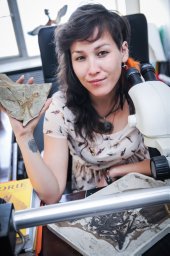 Jingmai O'Connor合作论文数Key Laboratory of Vertebrate Evolution and Human Origins of the Chinese Academy of Sciences, Chinese Academy of Sciences;Key Laboratory of Vertebrate Evolution and Human Origins of the Chinese Academy of Sciences, Chinese Academy of Sciences1Jia Ting合作论文数1Xiaoxiong Pan合作论文数1LiLi Yang合作论文数1
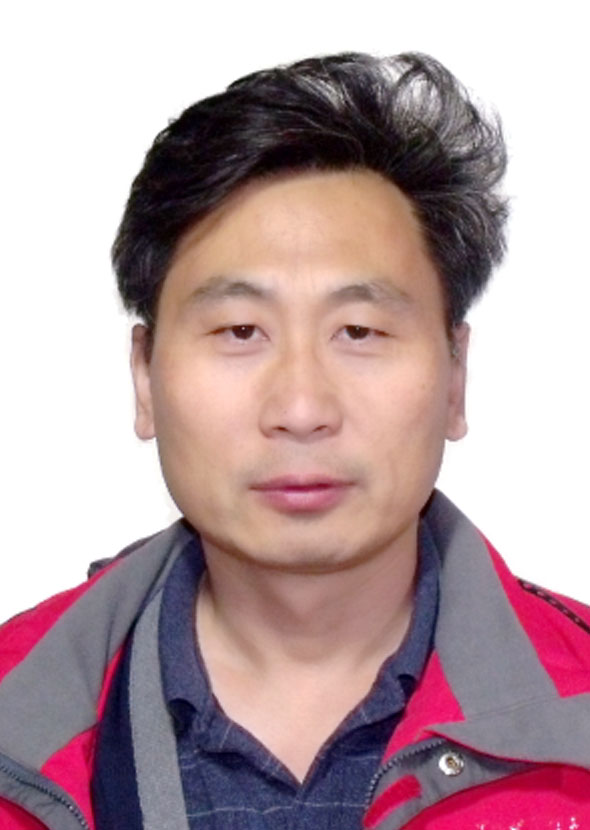 Hai-Lu You (尤海鲁)合作论文数Institute of Vertebrate Paleontology and Paleoanthropology, Chinese Academy of Sciences;University of Chinese Academy of Sciences1
 Qiang Wang (王强)合作论文数Guangzhou Institute of Geochemistry, Chinese Academy of Sciences;College of Earth and Planetary Sciences, University of Chinese Academy of Sciences;University of Chinese Academy of Sciences1Pingjuan Liu (刘平娟)合作论文数College of Life Sciences, Capital Normal University1Haiqing ZHANG (张海清)合作论文数1




