Empathetic spoken dialogue systems require not only semantically appropriate responses but also emotionally aligned prosodic expression. However, cascade pipelines often discard acoustic cues during speech-to-text conversion, while end-to-end speech models lack interpretable control over emotion and knowledge integration. To address these challenges, we propose PRISM, a multi-agent framework for empathetic spoken dialogue that decouples speech perception, response generation, and speech synthesis into coordinated components. PRISM introduces a prosody-to-language translation mechanism to stabilize large language model reasoning and enables on-demand invocation of external knowledge tools for empathetic dialogue generation. Experimental results demonstrate that PRISM achieves consistent improvements in empathy, prosodic appropriateness, and text response generation quality across objective and subjective metrics. Our code is available at: https://github.com/Bxzfrm/PRISM.
Empathetic speech dialogue requires not only understanding linguistic content but also perceiving rich paralinguistic information such as prosody, tone, and emotional intensity for affective understandings. Existing speech-to-speech large language models either rely on ASR transcription or use encoders to extract latent representations, often weakening affective information and contextual coherence in multi-turn dialogues. To address this, we propose ES4R , a framework for speech-based empathetic response generation. Our core innovation lies in explicitly modeling structured affective context before speech encoding, rather than relying on implicit learning by the encoder or explicit emotion supervision. Specifically, we introduce a dual-level attention mechanism to capture turn-level affective states and dialogue-level affective dynamics. The resulting affective representations are then integrated with textual semantics through speech-guided cross-modal attention to generate empathetic responses. For speech output, we employ energy-based strategy selection and style fusion to achieve empathetic speech synthesis. ES4R consistently outperforms strong baselines in both automatic and human evaluations and remains robust across different Large Language Model (LLM) backbones. Code: https://github.com/Bean0901/ES4R.
Large Language Models (LLMs) demonstrate remarkable capabilities in leveraging comprehensive world knowledge and sophisticated reasoning mechanisms for recommendation tasks. However, a notable limitation lies in their inability to effectively model sparse identifiers (e.g., user and item IDs), unlike conventional collaborative filtering models (Collabs.), thus hindering LLM to learn distinctive user-item representations and creating a performance bottleneck. Prior studies indicate that integrating collaborative knowledge from Collabs. into LLMs can mitigate the above limitations and enhance their recommendation performance. Nevertheless, the significant discrepancy in knowledge distribution and semantic space between LLMs and Collab. presents substantial challenges for effective knowledge transfer. To tackle these challenges, we propose a novel framework, SeLLa-Rec, which focuses on achieving alignment between the semantic spaces of Collabs. and LLMs. This alignment fosters effective knowledge fusion, mitigating the influence of discriminative noise and facilitating the deep integration of knowledge from diverse models. Specifically, three special tokens with collaborative knowledge are embedded into the LLM's semantic space through a hybrid projection layer and integrated into task-specific prompts to guide the recommendation process. Experiments conducted on two public benchmark datasets (MovieLens-1M and Amazon Book) demonstrate that SeLLa-Rec achieves state-of-the-art performance.
Medical reasoning models remain constrained by parametric knowledge and are thus susceptible to forgetting and hallucinations. DeepResearch (DR) models ground outputs in verifiable evidence from tools and perform strongly in general domains, but their direct transfer to medical field yields relatively limited gains. We attribute this to two gaps: task characteristic and tool-use scaling. Medical questions require evidence interpretation in a knowledge-intensive clinical context; while general DR models can retrieve information, they often lack clinical-context reasoning and thus "find it but fail to use it," leaving performance limited by medical abilities. Moreover, in medical scenarios, blindly scaling tool-call can inject noisy context, derailing sensitive medical reasoning and prompting repetitive evidence-seeking along incorrect paths. Therefore, we propose DeepMed. For data, we deploy a multi-hop med-search QA synthesis method supporting the model to apply the DR paradigm in medical contexts. For training, we introduce a difficulty-aware turn-penalty to suppress excessive tool-call growth. For inference, we bring a monitor to help validate hypotheses within a controlled number of steps and avoid context rot. Overall, on seven medical benchmarks, DeepMed improves its base model by 9.79% on average and outperforms larger medical reasoning and DR models.
The rapid development of LLMs incurs prohibitive memory footprints and intensive computational demands. Quantization-Aware Training (QAT) techniques have emerged as a promising solution to address these challenges by explicitly simulating quantization effects during model training, yielding low-bit models that achieve accuracy comparable to their full-precision counterparts. In this work, we provide a target-centric survey of QAT, aimed at clarifying both its theoretical foundations and its evolving implementation landscape. We systematically review existing QAT methods through a target-centric taxonomy and synthesize cross-target differences in error characteristics, numerical formats, and strategy transferability. We further summarize QAT evaluation paradigms and discuss challenges in optimization and deployment, outlining potential directions for future research.
An ideal emotional dialogue system should have emotion perception capability in conversation across various new scenarios, thereby extracting user needs to guide dialogue generation. However, due to the lack of sufficient training data in new scenarios, improving the model’s zero-shot emotion perception capability in conversation has become a new challenge. Moreover, current research mostly focuses on single tasks, which cannot comprehensively reflect the model’s emotion perception ability. In this paper, we propose an Internal-to-External Chain-of-Thought method (IoECoT) for the emotion perception in conversation. First, the personality information of target user are extracted from the dialogue history as internal factors, while the polarity of utterances serves as external factors. Guided by internal factors, the model perceives emotions based on external factors. By evaluating the model’s performance on both Emotion Recognition in Conversation (ERC) and Emotion Inference in Conversation (EIC), we comprehensively assess its emotion perception capabilities. We conduct extensive experiments, and IoECoT outperforms other baselines on multiple Large Language Models (LLMs) and four datasets, demonstrating that our approach enhances LLMs’ emotion perception performance in zero-shot setting. Code is released at: https://github.com/betterfly123/IoECoT .
Emotional dialogue research includes two influential strategy traditions. Empathetic dialogue prioritizes understanding a speaker's emotional experience. Emotional support conversation selects and sequences support for the seeker's current needs. Sustained use introduces a further goal. Effective support should sustain users' capacities for emotion regulation, coping, self-endorsed decisions, and social connection across the interaction lifecycle. We propose capability-sustaining emotional dialogue (CSED) as a longitudinal research paradigm that aligns supportive strategy with this goal and organizes data, models, system design, evaluation, and governance around repeated use, non-use, transition, and termination. A targeted literature-and-corpus audit motivates this position. In a PRISMA-ScR-guided sample, 95
Multimodal harmful meme detection is typically formulated as image–text harmfulness classification. A model may correctly predict harmfulness while misidentifying the attacked target or its supporting evidence. We therefore extend harmful meme detection with fine-grained target identification, asking what type of target is attacked, who is targeted, and where the target appears in the meme. The model predicts harmfulness for every meme and, for harmful memes, outputs the target category, target entity, textual mention, and visual region. To support this task, we introduce Meme3W, which unifies multiple public harmful meme datasets and provides human-verified annotations for harmful instances. We further introduce Joint Record Accuracy (JRA), a strict record-level metric requiring the harmfulness label and all target-identification fields to be jointly correct. Experiments with representative multimodal large language models reveal a substantial gap between harmfulness accuracy and JRA. To narrow this gap, we propose HarmTrace, an anchor-calibrated decoupled optimization framework. HarmTrace strengthens target-entity supervision through entity-aware supervised fine-tuning. It then applies Conditional Target-identification Policy Optimization (CTPO) to decouple harmfulness and target-identification advantages, restricting target-identification optimization to label-correct responses for harmful examples. CTPO uses a Virtual Positive Anchor (VPA) as a fully correct reference for target-identification advantage normalization. HarmTrace improves both JRA and harmfulness accuracy across the evaluated backbones, with JRA on the Qwen3-VL-8B backbone increasing from 17.58% to 52.51%. Our code is publicly available at https://github.com/llly1234/HarmTrace-for-Harmful-Memes.
Efficiently aligning visual features with Large Language Models (LLMs) remains a critical bottleneck in Multimodal LLMs. Existing query-based alignment modules (e.g., Q-Former) rely on randomly initialized queries, resulting in an inefficient cold start exploration process. Furthermore, they enforce uniform cross-attention across all layers, leading to computational redundancy. Our empirical analysis reveals that query tokens initialized with language priors can rapidly capture global semantics, leading to early representation convergence after only a few layers. In this paper, we propose **Cat-MoD**, a **Ca**ption **t**oken Guided Asymmetric **M**ixture-**o**f-**D**epths framework. It incorporates a **Hybrid Query Construction** module where Guide Tokens initialized from coarse-grained linguistic priors rapidly anchor global semantic context, and randomly initialized Explorer Tokens remain active to capture fine-grained visual details. Exploiting this early convergence, we introduce an **Asymmetric Mixture-of-Depths** mechanism, where a similarity-aware router dynamically prunes redundant tokens from expensive cross-attention layers while preserving their context in self-attention. Experiments on multiple benchmarks demonstrate that Cat-MoD matches or surpasses baseline performance, while substantially reducing alignment FLOPs by approximately 37% during both training and inference, offering a highly efficient solution for multimodal alignment. Code: https://github.com/JasonOrange0726/Cat-MoD.
Model merging dramatically reduces storage and computational resources by combining multiple expert models into a single multi-task model. However, existing methods struggle to maintain performance gains as the number of merged models increases. In this paper, we investigate the key obstacles that limit the scalability of model merging. We prove that the limited effective parameter space imposes a strict constraint on the number of models that can be successfully merged. Through Gaussian Width analysis, we show that marginal benefits diminish according to a strictly concave function as more models are merged. Using Approximate Kinematics Theory, we further prove the existence of a unique optimal threshold beyond which additional models yield negligible improvements. To address this limitation, we propose a straightforward Reparameterized Heavy-Tailed method to extend the merged model’s coverage and enhance performance. Empirical results on 19 benchmarks, including both knowledge-intensive and general-purpose tasks, validate our theoretical analysis. We believe that these results spark further research beyond the current scope of model merging.
The emergence of Large Language Models (LLMs) has catalyzed a paradigm shift in programming, giving rise to "vibe coding", where users can build complete projects and even control computers using natural language instructions. This paradigm has driven automated webpage development, but it introduces a new requirement about how to automatically verify whether the web functionalities are reliably implemented. Existing works struggle to adapt, relying on static visual similarity or predefined checklists that constrain their utility in open-ended environments. Furthermore, they overlook a vital aspect of software quality, namely latent logical constraints. To address these gaps, we introduce WebTestBench, a benchmark for evaluating end-to-end automated web testing. WebTestBench encompasses comprehensive dimensions across diverse web application categories. We decompose the testing process into two cascaded sub-tasks, checklist generation and defect detection, and propose WebTester, a baseline framework for this task. Evaluating popular LLMs with WebTester reveals severe challenges, including insufficient test completeness, detection bottlenecks, and long-horizon interaction unreliability. These findings expose a substantial gap between current computer-use agent capabilities and industrial-grade deployment demands. We hope that WebTestBench provides valuable insights and guidance for advancing end-to-end automated web testing. Our dataset and code are available at https://github.com/friedrichor/WebTestBench.
The surge in rich multimodal content on social media platforms has greatly advanced Multimodal Sentiment Analysis (MSA), with Large Language Models (LLMs) further accelerating progress in this field. Current approaches primarily leverage the knowledge and reasoning capabilities of parameter-heavy (Multimodal) LLMs for sentiment classification, overlooking autonomous multimodal sentiment reasoning generation in resource-constrained environments. Therefore, we focus on the Resource-Limited Joint Multimodal Sentiment Reasoning and Classification task, JMSRC, which simultaneously performs multimodal sentiment reasoning chain generation and sentiment classification only with a lightweight model. We propose a Multimodal Chain-of-Thought Reasoning Distillation model, MulCoT-RD, designed for JMSRC that employs a "Teacher-Assistant-Student" distillation paradigm to address deployment constraints in resource-limited environments. We first leverage a high-performance Multimodal Large Language Model (MLLM) to generate the initial reasoning dataset and train a medium-sized assistant model with a multi-task learning mechanism. A lightweight student model is jointly trained to perform efficient multimodal sentiment reasoning generation and classification. Extensive experiments on four datasets demonstrate that MulCoT-RD with only 3B parameters achieves strong performance on JMSRC, while exhibiting robust generalization and enhanced interpretability.
Existing fraud detection methods predominantly rely on transcribed text, suffering from ASR errors and missing crucial acoustic cues like vocal tone and environmental context. This limits their effectiveness against complex deceptive strategies. To address these challenges, we first propose SAFE-QAQ, an end-to-end comprehensive framework for audio-based slow-thinking fraud detection. First, the SAFE-QAQ framework eliminates the impact of transcription errors on detection performance. Secondly, we propose rule-based slow-thinking reward mechanisms that systematically guide the system to identify fraud-indicative patterns by accurately capturing fine-grained audio details, through hierarchical reasoning processes. Besides, our framework introduces a dynamic risk assessment framework during live calls, enabling early detection and prevention of fraud. Experiments on the TeleAntiFraud-Bench demonstrate that SAFE-QAQ achieves dramatic improvements over existing methods in multiple key dimensions, including accuracy, inference efficiency, and real-time processing capabilities. Currently deployed and analyzing over 70,000 calls daily, SAFE-QAQ effectively automates complex fraud detection, reducing human workload and financial losses. Code: https://anonymous.4open.science/r/SAFE-QAQ.
Argumentation generation has attracted substantial research interest due to its central role in human reasoning and decision-making. However, most existing argumentative corpora focus on non-interactive, single-turn settings, either generating arguments from a given topic or refuting an existing argument. In practice, however, argumentation is often realized as multi-turn dialogue, where speakers defend their stances and employ diverse argumentative strategies to strengthen persuasiveness. To support deeper modeling of argumentation dialogue, we present the first large-scale S trategic A rgumentative D ialogue dataset, SAD, consisting of 392,822 examples. Grounded in argumentation theories, we annotate each utterance with five strategy types, allowing multiple strategies per utterance. Unlike prior datasets, SAD requires models to generate contextually appropriate arguments conditioned on the dialogue history, a specified stance on the topic, and targeted argumentation strategies. We further benchmark a range of pretrained generative models on SAD and present in-depth analysis of strategy usage patterns in argumentation.
Personality-conditioned LLM agents (PC-Agents) are increasingly used in emotional support, social simulation, and role-playing, motivating the development of lifelong agents that remain coherent over extended interactions. A key component of such coherence is personality evolution: agents should undergo plausible, psychology-grounded changes as they experience life events in different contexts. Although prior work shows that LLM personalities can shift under contextual perturbations, how these shifts vary across traits, events, personas, and models remains poorly understood. We study event-induced personality change after 11 major life events, using the Big Five traits as a psychometric anchor and interpreting the resulting trajectories against longitudinal evidence from human personality psychology. Across four diagnostic axes, PC-Agents exhibit measurable trait shifts at similar rates for event-trait pairs with and without documented human change directions. Even when shifts follow the expected direction, their magnitudes usually fall below human effect-size ranges. Gender and cultural-region prompts show little moderating effect, while persona-level dispersion is compressed three- to four-fold relative to human samples. To enable systematic comparison, we introduce BFI-Adapt, a reusable benchmark for scoring the directional fidelity of event-induced personality change, and use it to rank 14 models. A validation suite shows that the measured shifts exceed no-event retest noise, remain stable under independently paraphrased prompts, exhibit limited and model-dependent convergence with scenario-based behavioral choices, and persist across intervening unrelated dialogue. Together, these checks establish the measured trajectories as robust event-conditioned response patterns. Our results suggest that current PC-Agents simulate the mean of human personality dynamics, but not its shape.
Moving beyond the traditional binary classification paradigm of Multimodal Sarcasm Detection, Multimodal Sarcasm Target Identification (MSTI) presents a more formidable challenge, requiring precise localization of fine-grained targets such as textual phrases and visual regions. Existing approaches predominantly rely on implicit cross-modal alignment, offering limited interpretability and suboptimal fine-grained localization. To address these limitations, we propose GRASP, Grounded Chain-of-Thought ReAsoning with Dual-Stage Optimization for Multimodal Sarcasm Prediction and Target Identification, a framework that integrates visual grounding with explicit Chain-of-Thought (CoT) reasoning to move beyond black-box MSTI. Specifically, we curate MSTI-MAX, a refined dataset that mitigates class imbalance and enriches multimodal sarcasm cues. We introduce Grounded CoT reasoning, which explicitly anchors sarcasm-related visual regions within the reasoning trajectory and prompts the model to articulate rationales before predicting the final classification labels and sarcasm targets. Furthermore, we employ a dual-stage outcome-supervised joint optimization strategy: Supervised Fine-Tuning with a coordinate-aware weighted loss, followed by Fine-Grained Target Policy Optimization. Extensive experiments demonstrate that GRASP outperforms existing baselines in fine-grained sarcasm target identification across modalities, and an LLM-as-a-Judge evaluation quantitatively measures the quality of internal reasoning chains. Our dataset and source code will be released on GitHub.
Personalized Emotional Support Conversation (ESC) systems (i.e., supporters) assist users (i.e., seekers) in navigating negative emotional states through personalized, empathetic interactions; these systems are often equipped with a persona extractor. Currently, personalized ESC systems face two key challenges. First, while existing persona extractors attempt to infer persona from dialogue to understand seekers, they often struggle to distinguish the speakers’ roles and thus only consider the utterances from seeker’s side. Second, incorporating personal information without consideration of contextual relevance risks damaging the naturalness and coherence of responses. Therefore, we present a novel Adaptive Persona Context Modulation approach (APCM) for the ESC task. For more effective persona extraction, we reconstruct the Persona-Chat dataset to adapt to our task and propose a role-cognitive persona extractor, thus enhancing the comprehensive understanding for the seeker’s persona from utterances by both sides while preventing role ambiguity. For persona-context integration, our model introduces an Adaptive Attention Balancing Module that dynamically adjusts the influence of persona and context information during response generation, better reflecting real-world conversation patterns where the seeker’s persona is only considered in appropriate circumstances. Extensive experiments on benchmark datasets demonstrate the effectiveness of APCM, achieving state-of-the-art (SOTA) performance in emotional support dialogue generation. Our code is available at https://github.com/hurricanewhk/APCM .
Large Reasoning Models (LRMs) often suffer from overthinking, a phenomenon in which redundant reasoning steps are generated after a correct solution has already been reached. Existing early reasoning exit methods primarily rely on output-level heuristics or trained probing models to skip redundant reasoning steps, thereby mitigating overthinking. However, these approaches typically require additional rollout computation or externally labeled datasets. In this paper, we propose NEAT, a Neuron-based Early reAsoning exiT framework that monitors neuron-level activation dynamics to enable training-free early exits, without introducing additional test-time computation. NEAT identifies exit-associated neurons and tracks their activation patterns during reasoning to dynamically trigger early exit or suppress reflection, thereby reducing unnecessary reasoning while preserving solution quality. Experiments on four reasoning benchmarks across six models with different scales and architectures show that, for each model, NEAT achieves an average token reduction of 22% to 28% when averaged over the four benchmarks, while maintaining accuracy.
Multimodal Large Language Models (MLLMs) rely on strong linguistic reasoning inherited from their base language models. However, multimodal instruction fine-tuning paradoxically degrades this text's reasoning capability, undermining multimodal performance. To address this issue, we propose a training-free framework to mitigate this degradation. Through layer-wise vision token masking, we reveal a common three-stage pattern in multimodal large language models: early-modal separation, mid-modal alignment, and late-modal degradation. By analyzing the behavior of MLLMs at different stages, we propose a plateau-guided model merging method that selectively injects base language model parameters into MLLMs. Experimental results based on five MLLMs on nine benchmarks demonstrate the effectiveness of our method. Attention-based analysis further reveals that merging shifts attention from diffuse, scattered patterns to focused localization on task-relevant visual regions. Our repository is on https://github.com/wzj1718/PlaM.
 Shi Feng (冯时)合作论文数Department of Computer Science, School of Computer Science and Engineering, Northeastern University207
 Yifei Zhang (张一飞)合作论文数MOE Key Laboratory of Medical Image Computing, School of Computer Science and Engineering, Northeastern University134
 Ge Yu (于戈)合作论文数College of Computer Science and Engineering, Northeastern University114
 Xiaocui Yang合作论文数DeCLaRe Lab, Singapore University of Technology and Design57
 Yubin Bao (鲍玉斌)合作论文数School of Computer Science and Engineering, Northeastern University45
 Kaisong Song (宋凯嵩)合作论文数Machine Intelligence Technology Lab, Zhejiang Tmall Tehchnology Co., Ltd;Institute for Aritificial Intelligence, Alibaba Group29
 Yongkang Liu (刘永康)合作论文数School of Computer and Communication Engineering, Northeastern University at Qinhuangdao24
 Ming Wang合作论文数School of Information Management & Engineering, Shanghai University of Finance and Economics18
 Yiqun Zhang (张逸群)合作论文数Northeastern University14
 Xiaoguang Li (李晓光)合作论文数辽宁大学信息学院13
 Dongling Chen合作论文数11JingLian Liu (刘井莲)合作论文数9
 Hinrich Schütze合作论文数Fakultät Für Mathematik, Informatik Und Statistik, Ludwig-Maximilians-Universität München;Institut Für Informatik, Ludwig-Maximilians-Universität München;Data Science Lab, Ludwig-Maximilians-Universität München;Center for Information and Language Processing, Ludwig-Maximilians-Universität München9Fangling Leng (冷芳玲)合作论文数School of Computer Science and Engineering, Northeastern University8
 Guoren Wang (王国仁)合作论文数School of Computer Science & Technology, Beijing Institute of Technology8Wen Qu (屈雯)合作论文数Information Science and Technology College, Dalian Maritime University8
 Huanliang Sun (孙焕良)合作论文数School of Computer Science and Engineering, Shenyang Jianzhu University;Zhongxin International College of Engineering, Shenyang Jianzhu University8
 Wei Gao合作论文数School of Computing and Information Systems, Singapore Management University8
 WeiJi Zhao (赵卫绩)合作论文数7
 Jie Song (宋杰)合作论文数Software College, Northeastern University7Weichao Wang合作论文数Noah's Ark Lab, Huawei Technologies7
 Soujanya Poria合作论文数The School of Electrical and Electronic Engineering, Nanyang Technological University7Fanheng Kong合作论文数6Wenfang Wu合作论文数6Longcan Wu合作论文数6Xiangju Li合作论文数School of Computer Science and Engineering, Northeastern UniversityShenyang110000China6
 Baoyan Song (宋宝燕)合作论文数College of Computer Science, Liaoning University6
 Ling Chen合作论文数Centre for Artificial Intelligence, School of Computer Science, University of Technology Sydney6
 Kam Fai Wong (黃錦輝)合作论文数Department of Systems Engineering and Engineering Management, Faculty of Engineering, The Chinese University of Hong Kong6Fang Yu合作论文数6Qian Li合作论文数University of Technology Sydney5
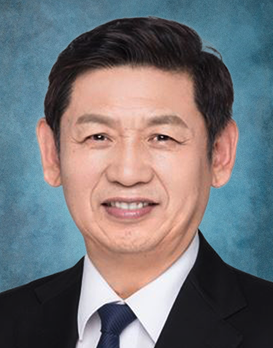 Chengqi Zhang (张成奇)合作论文数Academy for Artificial Intelligence, The Hong Kong Polytechnic University;Department of Data Science and Artificial Intelligence, Faculty of Computer and Mathematical Sciences, The Hong Kong Polytechnic University;The Hong Kong Polytechnic University Shenzhen Research Institute5
 Xiangmin (Emily) Zhou合作论文数School of Computer Science, RMIT University5Chu Wang合作论文数4
 Ercong Nie (聂耳聪)合作论文数Schuetze NLP Lab, Center for Information and Language Processing, Ludwig Maximilians University of Munich;Munich Center for Machine Learning4Haotian Miao合作论文数4yaqi wang合作论文数4Yu Xiong合作论文数4
 Zhenfei Yang合作论文数Department of Electronic and Computer Engineering, Hong Kong University of Science and Technology Hong Kong4
 Derong Shen (申德荣)合作论文数School of Computer Science and Engineering, Northeastern University4Zihan Wang (汪子涵)合作论文数Tsinghua University4
 Shafiq Joty合作论文数School of Computer Science and Engineering, Nanyang Technological University;College of Computing and Data Science, Nanyang Technological University;Salesforce AI Research4Mingxiu Cai合作论文数3Nan Yang合作论文数3Lin Wang (王琳)合作论文数3
 Xiaochun Yang (杨晓春)合作论文数School of Computer Science and Engineering, Northeastern University3
 Binyang Li (李斌阳)合作论文数School of Cyber Science and Engineering, School of International Relations3




