An analogue of the Schur-Weyl duality for the automorphism group of the approximately finite dimensional (AFD) II 1-factor is produced.
A complete description of indecomposable characters of the infinite symmetric inverse semigroup is given. The method essentially uses the decomposition of the elements of this semigroup into a product of independent quasi-cycles and the multiplicativity theorem. Realizations of all factor representations of finite type are constructed.
В статье дается полное описание неразложимых характеров на бесконечной симметрической инверсной полугруппе. Метод существенно опирается на разложение элементов этой полугруппы в произведение независимых квазициклов и теорему мультипликативности. Также построены реализации всех факторпредставлений конечного типа.
Let (S) over bar (infinity) denote the set of all bijections of natural numbers. Consider an action of (S) over bar (infinity) on a measure space (X, M, mu), where mu is an (S) over bar (infinity) quasi-invariant measure. We prove that there exists an (S) over bar (infinity)-invariant measure equivalent to mu.
This paper is a survey of the mathematical work of Grigori Iosifovich Olshanski, the author of fundamental research papers concerning representations of infinite-dimensional groups, determinantal point processes, and multidimensional special functions. We shall also briefly discuss new directions and new opportunities that have arisen in connection with his discoveries. Olshanski studied in the Faculty of Mechanics and Mathematics of Moscow State University in 1964–1969. In his diploma thesis (see [1]) he obtained Frobenius duality for spaces of type L(G/Γ), where G is a nilpotent Lie group and Γ is a lattice. In 1972 he finished his postgraduate studies in the Department of the Theory of Functions and Functional Analysis of the faculty, with A. A. Kirillov as his advisor, and in 1973 he defended his Ph.D. thesis, Representations of reductive groups over local non-Archimedean fields. He then investigated representations of the group of automorphisms of Bruhat–Tits trees in [2], a paper which definitely attracted attention; on trees he also refined and perfected some of the methods that he later used in his investigations of classical groups [4]. Perhaps the main work of Olshanski was development of the theory of representations of infinite-dimensional classical groups. His further studies were connected with this work in one way or another, and in many respects it also determined the originality of his views on classical groups, special functions, random processes, and combinatorics. The work was published in a series of papers over the years 1978–1991 (beginning in [3], with the final publications1 being [19] and [21], and moreover, this was the topic of his D.Sc. thesis [15], defended in 1990 at the Leningrad Branch of the Steklov Mathematical Institute).
Изучается понятие стабильного унитарного представления группы (или $\star$-представления $\mathbf C^\star$-алгебры) относительно некоторой группы автоморфизмов этой группы (или алгебры). Приводится полное описание с точностью до квазиэквивалентности представлений группы финитных подстановок счетного множества, стабильных относительно группы всех ее автоморфизмов. В частности, решается старый вопрос о факторпредставлениях, ассоциированных с допустимыми представлениями Ольшанского-Окунькова. Доказывается, что они индуцированы с факторпредставлений типа $II_1$ двухблочных подгрупп Юнга. Класс стабильных представлений будет предметом дальнейших исследований. Библиография: 18 наименований.
On 27 February 2014 Professor Vladimir Fedorovich Molchanov, Doctor of the Physical and Mathematical Sciences, observed his 75th birthday. He is a specialist in representation theory and non-commutative harmonic analysis, the author of 48 research papers and a contributor, together with N.Ya. Vilenkin and A.U. Klimyk, to the volume Representation theory and non-commutative harmonic analysis II (Encyclopaedia Math. Sci., 59) [1]. Vladimir Fedorovich was born in 1939 in Krasnoyarsk. His family moved to Tambov in the fall of 1945, after the demobilization of his father, an officer in the Soviet Army. After finishing Tambov secondary school no. 1 with a gold medal in 1955, he enrolled in the Faculty of Mechanics and Mathematics of Moscow State University, followed by postgraduate studies there under the guidance of F. A. Berezin. Since 1965 he has worked in the Department of Mathematical Analysis (as its head since 1966) of Tambov State Pedagogical Institute (now G. R. Derzhavin Tambov State University). We briefly discuss his best-known results.
Denote by \( \mathbb{N} \) the set of positive integers {1, 2,…}. Let \( {{\mathfrak{S}}_{\mathbb{X}}} \) stand for the group of all finite permutations of the set \( \mathbb{X}=-\mathbb{N}\cup \mathbb{N} \). Consider the subgroups \( {{\mathfrak{S}}_{\mathbb{N}}}=\left\{ {s\in {{\mathfrak{S}}_{\mathbb{X}}}:\;s\left( {-k} \right)=-k\;{\rm{for}}\;{\rm{all}}\;k\in \mathbb{N}} \right\} \) and \( \mathfrak{D}=\left\{ {s\in {{\mathfrak{S}}_{\mathbb{X}}}: - s(k)=s\left( {-k} \right)\;\;{\rm{and}}\;\;s\left( \mathbb{N} \right)=\mathbb{N}} \right\} \). Given a spherical representation π of the pair \( \left( {{{\mathfrak{S}}_{\mathbb{N}}}\cdot {{\mathfrak{S}}_{{-\mathbb{N}}}},\mathfrak{D}} \right) \), we construct a spherical representation Π of the pair \( \left( {{{\mathfrak{S}}_{\mathbb{X}}},\mathfrak{D}} \right) \) such that the restriction of Π to the group \( {{\mathfrak{S}}_{\mathbb{N}}}\cdot {{\mathfrak{S}}_{{-\mathbb{N}}}} \) coincides with π. Bibliography: 6 titles.
Let \(\mathfrak{S}_\mathbb{X} \) be the group of all finite permutations on a countable set \(\mathbb{X}\), and let Π = (1 \(\mathbb{X}\),..., n \(\mathbb{X}\)) be a partition of \(\mathbb{X}\) into disjoint subsets such that | i \(\mathbb{X}\)| = ∞ for all i. We set \(\mathfrak{S}_\Pi = \{ s \in \mathfrak{S}_\mathbb{X} |s(^i \mathbb{X}) = ^i \mathbb{X}\) for all i}. A positive definite function φ on \(\mathfrak{S}_\mathbb{X} \) is called a KMS state if the corresponding vector in the space of the GNS representation is cyclic for the commutant of this representation. A complete description of all factor KMS states which are invariant (central) with respect to the subgroup \(\mathfrak{S}_\Pi \) is obtained.
We study the notion of a stable unitary representation of a group (or a star-representation of a C-star-algebra) with respect to some group of automorphisms of the group (or algebra). In the case of the group of finitary permutations of a countable set we give a complete description, up to quasi-equivalence, of the representations which are stable with respect to the group of all automorphisms of the group. In particular, we solve an old question concerning factor representations associated with Ol'shansky-Okun'kov admissible representations. It is proved that these representations are induced by factor representations of type II1 of two-block Young subgroups. The class of stable representations will be the subject of further research.
Представления S ∞ , допустимые относительно подгрупп ЮнгаПусть N -множество натуральных чисел, а S∞ -множество конечных перестановок N. Для разбиения Π множества N на бесконечные части A1, A2, . . .обозначим через SΠ подгруппу в S∞, элементы которой остав-
Let be the set of positive integers and the set of finite permutations of . For a partition of the set into infinite parts we denote by the subgroup of whose elements leave invariant each of the sets . We set for any. A factor representation of the group is said to be -admissible if for some it contains a nontrivial identity subrepresentation of the subgroup . In the paper, we obtain a classification of the -admissible factor representations of . Bibliography: 14 titles.
Let $\mathfrak{S}_\infty$ be the group of all finite bijections $\mathbb{N}\to\mathbb{N}$. Denote by $\widehat{\mathfrak{S}}_{\infty}^2$ the set of all unitary irreducible {\it admissible} representations of $\mathfrak{S}_\infty^2=\mathfrak{S}_\infty\times \mathfrak{S}_\infty$. We study the factor representations of $\mathfrak{S}_\infty$ that are the restrictions of the representations from $\widehat{\mathfrak{S}}_{\infty}^2$ to $\mathfrak{S}_\infty\times\mathbf{e}$, where $\mathbf{e}$ is the unit element of $\mathfrak{S}_\infty$. It turn out that these representations are of type ${\rm I}$, ${\rm II}_1$ or ${\rm II}_\infty$. The full description for the classes of the quasiequivalent representations is given.
 Анатолий Моисеевич Вершик合作论文数6Rais Sal'manovich Ismagilov合作论文数4Yurii Aleksandrovich Neretin合作论文数4Rais Salmanovich Ismagilov合作论文数4Sergey Gefter合作论文数V. N. Karazin, Kharkiv National University4Artem Vasil'evich Dudko合作论文数3Leonid Petrov合作论文数3
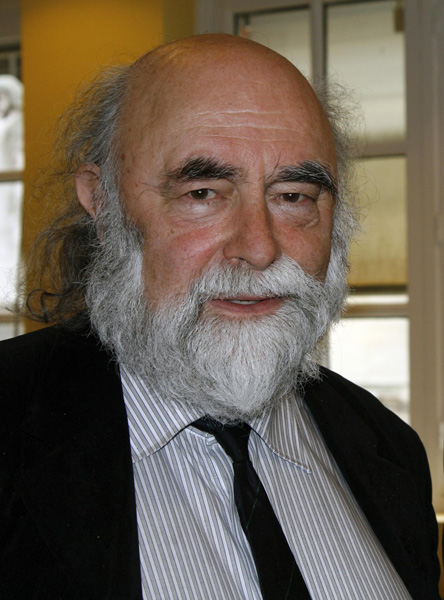 Anatoly M. Vershik合作论文数Leningrad/St.Petersburg State University;St.Petersburg Department of Steklov Institute of Mathematics;Laboratory of Representation Theory and Dynamical Systems3Artem Dudko合作论文数3
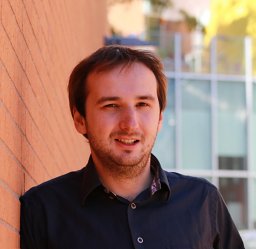 Vadim Gorin合作论文数Institute for Information Transmission Problems, Massachusetts Institute of Technology3
 Valentyn Golodets合作论文数3Владимир Федорович Молчанов合作论文数2Александр Александрович Кириллов合作论文数2alexandr vladimirovich karabegov合作论文数2Andrei Yur'evich Okounkov合作论文数2Александр Игоревич Буфетов合作论文数2Vy Golodets合作论文数2
 Alexander Molev合作论文数Faculty of Science, University of Sydney2Буфетов Алексей Игоревич合作论文数2Сергей Михайлович Хорошкин合作论文数2S. G. Gindikin合作论文数2S. D. Sinel'Shchikov合作论文数2Yu. A. Neretin合作论文数2Vladimir Alexandrovich Marchenko合作论文数1Владимир Александрович Марченко合作论文数1Alexander Ivanovich Molev合作论文数1Дмитрий Викторович Аносов合作论文数1D. V. Anosov合作论文数1Ya. G. Sinai合作论文数1сергей дмитриевич синельщиков合作论文数1Cергей Иванович Безуглый合作论文数1Семен Григорьевич Гиндикин合作论文数1сергей петрович новиков合作论文数1
 Andrei Okounkov合作论文数Center for Advanced Studies, Skolkovo Institute for Science and Technology;Department of Mathematics, Columbia University in the City of New York;International Laboratory of Representation Theory and Mathematical Physics, Higher School of Economics1
 A. A. Kirillov合作论文数1
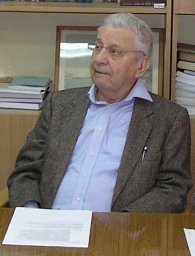 Alexei Marchenko合作论文数Herzen Russian State Pedagogical University1
 Maxim Nazarov合作论文数Department of Mathematics;University of York;Department of Mathematics, University of York1Alexei Borodin合作论文数1
 Yakov Sinai合作论文数Department of Mathematics, Princeton University1Anatolii M Stepin合作论文数1Aleksandr I Bufetov合作论文数1
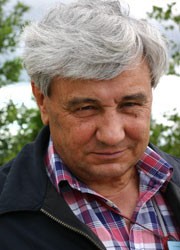 Sergei Petrovich Novikov合作论文数Institute for Physical Science and Technology, College of Computer, Mathematical & Natural Sciences, University of Maryland1V. F. Molchanov合作论文数1Alexandre I Danilenko合作论文数1
 Alexandre I. Danilenko合作论文数Institute for Low Temperature Physics & Engineering, Ukrainian National Academy of Sciences1Sergey M Khoroshkin合作论文数Institute for Theoretical and Experimental Physics1Dmitry V Anosov合作论文数1B. Ya. Golodets合作论文数1




