The present article analyzes the Earth as a complex self-regulating system from both geological and general evolutionary perspectives. It thoroughly examines the Earth’s structure within a systemic approach, as well as in terms of self-regulation and evolution of our planet. We analyse the planetary geotectonics and geodynamics, the major forces, energy sources, flows, types of interactions between matter and geospheres as well as other factors and phenomena that affect both the maintenance of balance and the geological evolution. We also reveal advantages and limitations of the leading theories explaining global tectonics and dynamics, as well as the evolution of the planet. The analysis of the Earth’s structure and geodynamics is presented against the background of comparisons with other planets and in the context of general evolutionary laws and ideas and we show how the most important manifestations, forms, and patterns of geological evolution fit the characteristics of the evolution of our world and the universe in general. This article will be of interest to anyone interested in geological evolution and its role in megaevolution.
The present article is devoted to social evolution both as a part of universal evolution / Big History and as a specific process that have led humanity to outstanding successes and heights (while creating in the meantime serious crises and major problems). It considers differences and similarities between social evolution, on the one hand, and cosmic as well as biological evolution, on the other. It analyzes main rules of evolution and proposes definitions of evolution, in general, and social evolution, in particular. Grinin & Korotayev examine its most important mechanisms, introduce the concept of social aromorphosis, and analyse the concept of unilinear and multilinear evolution. They show that only by considering the evolution as multilinear one can identify the major trends and patterns of social evolution and evolution in general. The authors view social evolution both as changes in not so long-term perspective and as a larger process that we call social macroevolution. In their understanding, social macroevolution is a special dimension of social evolution that encompasses a series of the most important and milestone transformations that have led to the emergence and development of the World System (and, accordingly, a theory that focuses on their analysis). The genesis of the World System and a number of its further changes are the key elements of the social macro-evolutionary process. The main trends of macroevolution, such as the irreversibility of evolution, its particular direction, variability, are expressed both in the systemic features and in the transformations of the World System.
The revolutionary process in the 21st century has undergone significant changes, and with the decay of democracy and the transformation of the world order, the number of revolutionary episodes with new goals and tactics has only increased. Across the Global South, with the population growth, millions of people began to take part in revolutionary protests, and in the Middle East and the Sahel, the rise of radical Islam led to the emergence of bloody Islamist armed insurgencies. Existing data sources focus on longer historical periods, which complicates the analysis of current processes, and have a number of shortcomings, such as the “streetlight effect,” i.e. the omission of cases that can distort the effects associated with the data. Therefore, we present our own database describing successful and failed revolutionary events from 2000 to 2024 with their unique characteristics, such as goals, tactics, number of participants, the roles of the military, other states and ethnic minorities. The article describes all the presented variables, their operationalization and the data collection process with examples, as well as the methods used to minimize such problems as selection bias and description bias. Empirical tests of conventional factors of the emergence, success and outcomes of revolutions are conducted as well, depicting the compliance of the results with the theory of revolutions. As a result, the database expands the opportunities of the research of revolutions, which are integral elements of the changing international order and the reconfiguration of the World System.
The article analyzes the direction, mechanisms, and causes through which President Trump’s actions contribute to the destruction of the foundations of U.S. influence in the world and to the transformation of the world order. For almost two decades we have been observing such an important phenomenon as the reconfiguration of the World-System, which means that the World-System is in a systemic crisis and in a state of deep transformation which is rapidly changing the political landscape – both domestic and international. This crisis is expressed in the intensification of contradictions, the growth of conflicts, and the spread of other turbulent and destructive political processes that destabilize the global situation, even as the climate crisis deepens. These processes are closely connected with the weakening and destruction of the existing world order and with preparations for the formation of a new one. The article shows the causes and stages of development of this process. It concludes that, with the new administration of Donald Trump, a new phase in the acceleration of World-System reconfiguration has begun under the influence of the chaotic actions of the United States. This phase can be described as radical reconfiguration. As a result, we are caught in a whirlpool of destabilizing events that indicate the fairly rapid erosion of the previous world order. The question being discussed is whether the activities of Trump and Trumpists can be viewed as a kind of revolution from above.
This article by Grinin and Korotayev advocates universal evolutionism in the Big History perspective — a framework that views cosmic, biological, and social development as a single, continuous process from the Big Bang to the present and the future. While evolutionary ideas have ancient roots, the authors clarify that Herbert Spencer, not Charles Darwin, first formulated a universal concept of evolution applicable to all domains of nature. Despite its potential, integrated evolutionary studies remain underdeveloped. This is attributed to a historical crisis caused by early, simplistic unilinear models and, more critically, a modern tension between necessary specialization and the overwhelming complexity of macroevolutionary research. The authors argue that an evolutionary "megaparadigm" is essential in our globalizing world to unify knowledge across disciplines, providing common analytical tools and terminology to compare different evolving systems. It is also essential for the development of Big History. The proposed approach is based on several common aspects, including fundamental concepts (matter, energy, complexity, self-organization, self-regulation, multilinearity etc.), general system properties, shared trajectories, and overarching vectors like increasing complexity. It focuses on qualitative transformations and seeks to identify large-scale patterns while respecting the unique drivers of each evolutionary domain (cosmic, planetary, geological, biological, social). The authors conclude by championing interdisciplinary collaboration and comparative studies as the path forward, aiming to synthesize knowledge and advance evolutionary theory to a new, more integrated level.
В настоящей статье даются некоторые характеристики сложного процесса модернизации в африканских странах, указываются как важные сходства с модернизирующимися странами в других регионах, так и важные особенности африканской модернизации. Мы, с одной стороны, указываем на достижения модернизации, но с другой – показываем корреляцию модернизации в Африке с процессами дестабилизации, включая сепаратизм, революционные события, гражданские войны, исламистский экстремизм. Также в статье показывается влияние исламизма на особенности модернизации в исламских странах Африки. Выявление влияния процессов быстрой модернизации в странах Африки на процессы дестабилизации является важной задачей, благодаря чему возможны минимизация социальной энтропии и дестабилизации.
Currently, the global system finds itself in a profound crisis, one that necessitates a fundamental reconfiguration and the establishment of a new world order as the only viable path forward. However, the journey toward this emerging order is protracted, arduous, marked by intense conflicts, and remains uncertain in many respects. Simultaneously, competition is escalating across various domains, including the contestation over principles governing coexistence and development. The article analyzes how the transformation processes of the world system can ultimately lead to the destruction of the existing American- led world order and the formation of a new world order based on alternative principles. The article considers the dynamics of such changes over the past decades through comparisons between Western nations and the BRICS countries, including graphical representations. It analyzes the growing role of the BRICS+ association in the formation of a new world order, which is undoubtedly an alternative to and a counterbalance to the United States and the collective Western bloc of nations. The article offers forecasts on some possible contours and principles of the world order. The growing role of new forms of relationships and alliances in the formation of a new world order is emphasized. In particular, it analyzes the potential contributions of BRICS+ to the world community, along with the aspects and directions that can become a model for shaping important principles and mechanisms central to a new world order.
Since the beginning of the Great Recession in 2008 the world-system has become increasingly in a state of crisis, which continues to deepen. Since Russia’s special military operation in Ukraine (SMO) in February 2022, the world-system has entered a new phase of development that combines international, economic and other crises. The geopolitical aspects of the world-system crisis and the consequences of the military conflict are now being actively debated, but there is almost no research on how these crises and military actions affect and will continue to affect the environmental situation in the region and in the world in general. In this paper we analyze different aspects and reasons and explain how and why the deepening crisis of the World-system has had and will have a negative impact on the ecology of the world.
В настоящей статье ставилась задача исследовать связь между развитием цивилизаций и динамикой научно-технического прогресса. Для этого было проведено предварительное исследование динамики научно-технической активности в процессе жизненного цикла шести цивилизаций Древности и Средневековья (месопотамской, древнеегипетской, античной, китайской, средневековой европейской и исламской). Для каждой из цивилизаций произведены оценки продолжительности жизненного цикла, пиков инновационно-технологической активности, восходящих и нисходящих трендов, выявлены основные субциклы в рамках общих жизненных циклов. Кроме того, выявлена достаточно определенная тенденция к сокращению жизненного цикла цивилизаций, что имеет смысл связать с наблюдавшимся в последние тысячелетия драматическим ускорением темпов научно-технического прогресса (хотя это ускорение, как показано в настоящей статье, и протекало крайне неравномерно, особенно на локальном уровне). Исследование показало, что подъем и пик развития цивилизаций тесно связаны с подъемом изобретательской активности и развитием материальных технологий. В то же время было выявлено, что не все цивилизации одинаково склонны к развитию материальных технологий. Общая идея, вытекающая из сравнения цивилизаций в техническом аспекте, такова, что если в обществе есть сословия или группы, имеющие материальные и юридические возможности, а также определенную свободу для развития сельского хозяйства, ремесла, мореплавания, торговли и т. п. и прямой интерес в трудосбережении, то развитие изобретательства идет активнее. И наоборот, там, где сословия, группы закрепощены ограничениями (как в Индии), развитие технологий идет слабо. Примером развития изобретательства могут служить античная и особенно европейская средневековая цивилизации (и тем более европейская цивилизация Нового времени). В других случаях государство может быть мотором развития технологий, как это демонстрирует Китай. Наконец, в ряде случаев изобретательство подпитывается необходимостью в военно-технических изобретениях.
In this paper, Grinin et al. survey general similarities and differences between biological and social macroevolution and phases of Big History. The comparison of biological and social evolution is an important but (regrettably) understudied subject. The authors have endeavored to make a systematic comparison between biological and social evolution at different levels of analysis and in various aspects. They have formulated a considerable number of general principles and rules of evolution, and worked to develop a common terminology to describe some key processes in biological and social evolution. In particular, Grinin et al. have introduced the notion of ‘social aromorphosis’ to describe the process of widely diffused social innovation that enhances the complexity, adaptability, integrity, and interconnectedness of a society or social system. This work has convinced the authors that it might be possible to find mathematical models that can describe important features of both biological and social macroevolution. In the Appendix the authors consider a concrete mathematical model that they deem capable of describing important features of both biological and social macroevolution.
In the 21st century, a fifth generation of revolution studies has emerged, characterized by several key features. It is distinguished by macro and systemic approaches to analyzing revolutionary processes, the study of specific trends (such as urban civic revolutions) and contemporary factors, including the role of information technologies. Researchers of this generation pay special attention to revolutionary waves and their diffusion, clearly differentiate between armed and nonviolent revolutionary events, and focus on studying non-violent forms of protest. Methodologically, the works rely on global databases and modern quantitative methods of analysis.
In the early 2000s, after Jack Goldstone’s article on the formation of a fourth generation of revolution researchers, interest in the study of these generations grew. Since 2019, discussions have even begun that a fifth generation of researchers of revolution has come or may come to replace it. At the same time, the points of view on what kind of generation this is, whether it has formed, what tasks it faces, etc., vary considerably. The authors of the article believe that the fifth generation of theorists already exists, but this generation has not yet fully revealed itself. However, the analysis of the fifth generation of researchers is a major task that cannot be accomplished in one article. Therefore, the main objective of this article is to argue in detail and develop the thesis that each generation of revolution researchers has its own revolutions, which have distinctive characteristics. The specificities have led to a variety of scientific and political approaches, specific research methods, and much more.
Материалы этого круглого стола являются результатом продолжения разговора относительно роли философии в решении глобальных проблем современности, которые обсуждались с тремя всемирно известными почетными президентами Международной федерации философских обществ (И. Кучуради, У. Макбрайдом и Л. Скарантино) в их интервью, опубликованном в первом номере журнала «Век глобализации» за 2025 г. В редакцию поступили многочисленные отклики от читателей нашего журнала, которые не только дали комментарии и разносторонние оценки опубликованному материалу «Философия перед лицом мировых проблем в XXI в.», но и внесли много новых идей и предложений, значительно расширивших предмет разговора относительно философского осмысления предельно актуальных мировых проблем, с которыми сегодня столкнулось глобальное человечество. Как содержание данного обсуждения, так и состав его участников, а также их географическая распределенность наглядно показывают, что широкие круги представителей современной российской философии не менее, чем их зарубежные коллеги, озабочены судьбой и перспективами развития как отдельных стран и народов, так и мира в целом.
В статье исследуются тенденции, влияющие на государственную состоятельность и устойчивость в странах афразийской макрозоны нестабильности, которые рассматриваются в контексте трансформации мирового порядка и связанного с этим процесса реконфигурации Мир-Системы. Предпринята попытка использования концепта государственной состоятельности для построения соответствующего индекса в отношении стран афразийской макрозоны нестабильности. Основываясь на методологии Дж. Хансена и Р. Сигман, авторы статьи уточнили и расширили набор показателей, который позволил получить оценки уровня государственной состоятельности. Кроме того, был существенно расширен временной диапазон анализируемых наблюдений вплоть до 2024 г. В концептуальном плане государственная состоятельность имеет три измерения в виде принуждающей, административно-бюрократической и экстрактивной способностей. Такая концептуализация в целом отражает современные представления о государстве и его прерогативах. При всех ограничениях и концепт, и предлагаемые подходы к измерению дают полезные результаты. Как свидетельствуют приведенные данные по динамике государственной состоятельности в странах афразийской макрозоны нестабильности, полученные оценки обладают достаточной точностью (при соотнесении со страновой и региональной экспертизой) и в дальнейшем могут быть использованы в прогнозировании изменений индекса. В целом использование рассматриваемого индекса позволило выявить основные тренды изменения государственной устойчивости и государственной состоятельности ключевых стран афразийской макрозоны нестабильности (включая и страны Африки южнее Сахары). Показатели индекса могут быть также использованы для уточнения политики России (и объединений/организаций с ее участием) при выстраивании отношений со странами афразийской макрозоны в части оценки возможных рисков.
The subjective well-being of the population — or the ‘level of happiness’ — is a popular topic for scientific research and socio-political discussions both domestically and internationally. In this regard, a direction of research is gaining traction; its proponents consider the level of happiness to be a predictor of the current socio-political stability. An analysis of the literature revealed that, despite the abundance of works on the topic of subjective wellbeing, its relationship with income — as well as with the political activity of the population — there are only a few articles devoted to the analysis of the impact of this indicator on socio-political instability. This article attempts to carry out a cross-country analysis of the impact of deviations in subjective well-being below the value that would be expected at the given level of economic development. The proposed quantitative analysis has made it possible to reveal the presence of a statistically significant influence of this deviation on the revolutionary activity of both an armed and unarmed nature. It is noteworthy that the identified patterns do not apply to all groups of countries — only to middle-income economies — and that each subgroup also has its own patterns. Thus, the mean values of subjective life satisfaction, which are lower than what could be expected with the given level of economic development, are significant predictors of the risks of armed revolutionary insurgencies in lower middle-income countries. At the same time, in upper middle-income countries, they are already predictors of unarmed revolutionary uprisings.
One of the most important trends noted by researchers in the revolutionary events of recent decades is the rapid increase in the share of unarmed revolutionary uprisings and, accordingly, a decrease in the share of armed revolutionary insurgencies. The study of this trend is of great importance. This work continues previous research on unarmed revolutionary destabilization. Unlike in past studies, the authors here have significantly expanded the time range taken into account, considered together the main factors in the onset of unarmed (~ “nonviolent”) revolutionary uprisings, and significantly improved the methodology by combining these factors within one model. As a result, the study found that most variables are related to the probability of an onset of unarmed revolutions in a curvilinear manner, which explains the weak statistical relationship for some variables in the works of predecessors. The following have a non-linear relationship: the duration of the regime’s existence, economic growth, the level of democracy, the degree of corruption within the regime, urbanization, GDP per capita, the “youth bulge”, oil production, levels of discrimination. In addition, the key determinants of the onset of unarmed revolutionary uprisings were identified and ranked in order of their importance. The analysis performed allows us to assume that the onset of unarmed revolutionary uprisings is most likely in upper middle income states with young political regimes, high populations, very low (as well as very high) rates of economic growth, intermediate political regimes (partial democracy or, especially, partial autocracy), a high level of corruption of the regime (despite the fact that an extremely high level of corruption still has a rather inhibiting effect on the likelihood of an unarmed revolution onset), significant financial assistance from the United States, a fairly high level of coverage of population with modern formal education, a very long incumbent duration, a fairly high proportion of urban residents in the total population, the presence of a certain culture of protest, as well as low or no oil income. At the same time, it is confirmed that the likelihood of the outbreak of unarmed revolutions has increased markedly after the end of the Cold War due to changes in the global geopolitical situation.
Since the beginning of the Great Recession in 2008 the world-system has become increasingly in a state of crisis, which continues to deepen. Since Russia's special military operation in Ukraine (SMO) in February 2022, the world-system has entered a new phase of development that combines international, economic and other crises. The geopolitical aspects of the world-system crisis and the consequences of the military conflict are now being actively debated, but there is almost no research on how these crises and military actions affect and will continue to affect the environmental situation in the region and in the world in general. In this paper we analyze different aspects and reasons and explain how and why the deepening crisis of the World-system has had and will have a negative impact on the ecology of the world.
There are grounds for claiming that a new ('fifth') generation of revolution studies has emerged in the 21st century. It can be noted that the characteristics of this generation are as follows: a tendency toward a macro-level outlook, encompassing both historical and geographical dimensions, coupled with a propensity toward a systemic approach; study of distinct types of revolutionary processes, such as Mark Beissinger's 'urban civic revolutions', and the pivotal revolutionary innovations, including the impact of new information technologies in recent revolutions; innovations regarding the factors and causes of revolutions and innovations in the analysis of the factors influencing the choice of revolutionary strategy and revolution outcomes; a special interest in the topic of revolutionary waves/'the diffusion of revolution'; a strong understanding that armed and unarmed revolutionary events are characterized by significantly different factors, structure, and consequences; a focus on the study of unarmed revolutionary episodes/'non-violent maximalist campaigns'; the use of global databases of revolutionary events; extensive use of modern methods of quantitative analysis.
The article is devoted to the history of the development of ICT and AI, their current and expected future achievements, and the problems (which have already arisen but will become even more acute in the future) associated with the development of these technologies and their widespread application in society. It shows the close connection between the development of AI and cognitive science, the penetration of ICT and AI into various spheres, particularly health care, and the very intimate areas related to the creation of digital copies of the deceased and posthumous contact with them. A significant part of the article is devoted to the analysis of the concept of ‘artificial intelligence’, including the definition of generative AI. The authors analyse recent achievements in the field of Artificial Intelligence. There are given descriptions of the basic models, in particular the Large Linguistic Models (LLM), and forecasts of the development of AI and the dangers that await us in the coming decades. The authors identify the forces behind the aspiration to create AI, which is increasingly approaching the capabilities of the so-called general/universal AI, and also suggest desirable measures to limit and channel the development of artificial intelligence. It is emphasized that the threats and dangers of the development of ICT and AI are particularly aggravated by the monopolization of their development by the state, intelligence services, major corporations and those often referred to as globalists. The article provides forecasts of the development of computers, ICT and AI in the coming decades, and also shows the changes in society that will be associated with them. The study consists of two articles. The first, published in the previous is-sue of the journal, has provided a brief historical overview and characterized the current situation in the field of ICT and AI. It has also analyzed the concepts of artificial intelligence, including generative AI, changes in the understanding of AI related to the emergence of the so-called large language models and related new types of AI programs (ChatGPT and similar models). The article has discussed the serious problems and dangers associated with the rapid and uncontrolled development of artificial intelligence. This second article describes and comments on the current assessments of breakthroughs in the field of AI, analyzes various predictions, and provides the authors' own assessments and predictions of future developments. Particular attention is paid to the problems and dangers associated with the rapid and uncontrolled development of AI, with the fact that advances in this field become a powerful means of control over the population, imposing ideologies, priorities and lifestyles, influencing the results of elections, and a tool to undermine security and geopolitical struggles.
 Andrey Korotayev合作论文数Russian State University202
 Anton Grinin合作论文数74
 Arno Tausch合作论文数Profesor Asociado de Ciencias Políticas, la Universidad de Innsbruck;Universidad de Cádiz;la Universidad de Innsbruck, Universidad de Cádiz23
 Коротаев Андрей Витальевич合作论文数17a v korotaev合作论文数17Sergey Malkov合作论文数17Ilya Ilyin合作论文数16Julia Zinkina合作论文数15
 Ivan Aleshkovski合作论文数14Alexey Andreev合作论文数14
 Sergey Shulgin合作论文数Int Lab Demog & Human Capital, Russian Presidential Acad Natl Econ & Publ Adm14
 David Gilbert Christian合作论文数Department of Modern History, Politics and International Relations, Faculty of Arts, Macquarie University13
 Vadim Ustyuzhanin合作论文数12с ю малков合作论文数11A. A. Akaev合作论文数10Коротаев Андрей合作论文数9
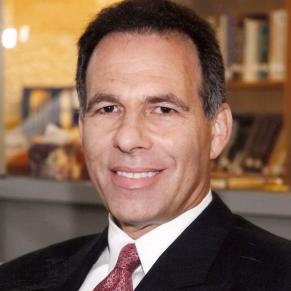 Jack A. Goldstone合作论文数Schar School of Policy and Government, George Mason University8
 Alisa Shishkina合作论文数National Research University Higher School of Economics6
 leonid m issaev合作论文数Higher School of Economics in Moscow, National Research University6V. A. Sadovnichy合作论文数5I. Ilyin合作论文数4Stanislav Bilyuga合作论文数National Research University Higher School of Economics4
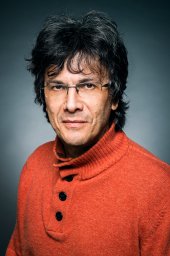 A. V. Markov合作论文数Lomonosov Moscow State Univ4
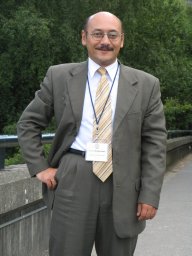 Dmitri M. Bondarenko合作论文数Institute for African Studies4В. А. Садовничий合作论文数3
 Jameelah Musieva合作论文数3
 Kira Meshcherina合作论文数3
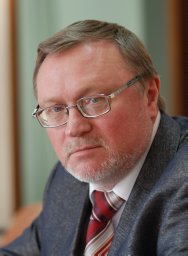 Kradin Nikolay合作论文数Institute of History, Archaeology and Ethnology, Far East Branch of the Russian Academy of Sciences3Зинькина Юлия Викторовна合作论文数2И. В. Ильин合作论文数2Natalia Kovaleva合作论文数2Ilya Medvedev合作论文数2
 Robert L. Carneiro合作论文数American Museum of Natural History2
 S. V. Tsirel'合作论文数Mining Institute Saint Petersburg2Peter Herrmann合作论文数2Sergey Yu. Malkov合作论文数1Станислав Билюга合作论文数1Andrew Zhdanov合作论文数1л м исаев合作论文数1L. Isaev合作论文数1Yana Stepanishcheva合作论文数1
 Albina Gallyamova合作论文数1ю в божевольнов合作论文数1
 Elijah A. Sumernikov合作论文数1
 Maxim Slav合作论文数1Olga I. Davydova合作论文数1
 Evgeny Ivanov合作论文数Higher Sch Econ, Fac Social Sci, Doctoral Sch Polit Sci, Lab Monitoring Risks Sociopolit Destabilizat, Moscow, Russia1Lowell Gustafson合作论文数1
 Timothy Earle合作论文数Department of Anthropology, Weinberg College of Arts & Sciences, Northwestern University1




