The lithospheric-ionospheric interaction and the complex of accompanying anomalous physical phenomena caused by critical geodeformations and electrification of rocks are considered as precursors of earthquakes based on the criticality theory. It is shown that scaling of dislocation changes in critical geodeformations, which can be represented as a transition to a turbulent state of coseismic rheological flows, is responsible for the anomalous properties of physical phenomena. The resulting instability of physical processes provides a high energy of anomalous phenomena, contributing to their detection as precursors of earthquakes. The work was supported by IKIR FEB RAS State Task (subject registration 124012300245-2).
The results of the observations of atmospherics and whistlers initiated by high-altitude electrical discharges that occurred during the eruption of the Kamchatka volcanoes (Bezymianny and Shiveluch (Russia)) on 7 and 10 April 2023 are presented. Recording of atmospherics and associated whistlers was carried out by a VLF (very low frequencies) radio direction finder. Two-hop whistlers were identified by dispersion coefficient, which corresponded to the double passage of the signal from Kamchatka to Australia and back. The heights of the electric discharges were determined by means of interferograms of direct and reflected from the ionosphere radiofrequency atmospherics. The high-altitude distribution of an electric discharge is obtained, the penetration of which into the ionosphere is responsible for the generation of whistlers. The characteristics of volcanic electrical discharges and whistlers can be used to estimate the height of an explosive eruption.
The power-law compound and time-fractional Poisson process is considered as a statistical model of anomalous phenomena in the hereditarian theory of criticality. This model can be useful in studies of energy-active zones. Regardless of their nature, anomalous phenomena have universal statistical properties, among which, first of all, it should be noted scale invariance. In the proposed model, the special role of scaling in the properties of anomalous phenomena is shown taking into account the heredite effects, the physical meaning of which is explained by examples of analogies between anomalous phenomena of different nature. Critical process modes and exceptional values of critical indexes are determined. The structural instability of the process caused by scaling and catastrophes in its statistical characteristics are discussed. The obtained results are used to study seismic data and determine the critical indices of the deformation process.
To understand how the temporal non-locality («memory») properties of a process affect its critical regimes, the power-law compound and time-fractional Poisson process is presented as a universal hereditary model of criticality. Seismicity is considered as an application of the theory of criticality. On the basis of the proposed hereditarian criticality model, the critical regimes of seismicity are investigated. It is shown that the seismic process has the property of «memory» (non-locality over time) and statistical time-dependence of events. With a decrease in the fractional exponent of the Poisson process, the relaxation slows down, which can be associated with the hardening of the medium and the accumulation of elastic energy. Delayed relaxation is accompanied by an abnormal increase in fluctuations, which is caused by the non-local correlations of random events over time. According to the found criticality indices, the seismic process is in subcritical regimes for the zero and first moments and in supercritical regimes for the second statistical moment of events’ reoccurrence frequencies distribution. The supercritical regimes indicate the instability of the deformation changes that can go into a non-stationary regime of a seismic process.
Mechanisms of the influence of solar activity on optical characteristics of the thermosphere and the possibility of studying them, using lidar observations and monitoring the glow of the night sky, are considered. The need for an integrated approach to remote observations is substantiated by the example of the dynamics of spectral lines of optical emission over Kamchatka, which arises as a result of changes in the state of the thermosphere, and which can be used for remote lidar sensing in adaptive mode.
The article considers the fractional Poisson process as a mathematical model of deformation activity in a seismically active region. The dislocation approach is used to describe five modes of the deformation process. The change in modes is determined by the change in the intensity of the event stream, the regrouping of dislocations, and the change in and the appearance of stable connections between dislocations. Modeling of the change of deformation modes is carried out by changing three parameters of the proposed model. The background mode with independent events is described by a standard Poisson process. To describe variations from the background mode of seismic activity, when connections are formed between dislocations, the fractional Poisson process and the Mittag–Leffler function characterizing it are used. An approximation of the empirical cumulative distribution function of waiting time of the foreshocks obtained as a result of processing the seismic catalog data was carried out on the basis of the proposed model. It is shown that the model curves, with an appropriate choice of the Mittag–Leffler function’s parameters, gives results close to the experimental ones and can be allowed to characterize the deformation process in the seismically active region under consideration.
Extremely weak lidar reflections in the thermosphere, which correlate with ionosonde data, were detected in 2008 and 2017 over Kamchatka during seasons of low aerosol filling of the atmosphere at solar activity minima. Here, these reflections are considered in comparison with mesospheric and stratospheric lidar signals that makes it possible to determine favorable conditions for thermospheric lidar observations. In 2014, it was shown that lines of transitions between the excited states of atomic nitrogen ions fall within the 532 nm lidar signal emission band, and in 2017, lidar reflections in the thermosphere were simultaneously obtained at 561 and 532 nm excited transitions of atomic oxygen and nitrogen ions, thereby the resonant nature of thermospheric lidar reflections was established and confirmed. Here, using lidar signals at wavelengths of 561 and 532 nm in the altitude range of 30–400 km, by solving the inverse problem, we restore the light scattering coefficients corresponding to these wavelengths that makes it possible to compare the optical characteristics of the thermosphere, mesosphere, and upper stratosphere and to determine the relationship between resonant, Rayleigh, and aerosol light scattering at different heights of the atmosphere. In conclusion, using the scattering coefficients in the thermosphere, we find the cross-sections of light scattering at the 561 and 532 nm transitions of atomic oxygen and nitrogen ions and explain why the scattering coefficients for O+, 561 nm are less than for N+, 532 nm, while the concentration of O+ is two orders of magnitude higher than N+. The results obtained here are of interest for understanding the ionization effect of solar activity on the optical characteristics of the atmosphere that determine weather and climate changes.
Используя лидарные сигналы на длинах волн 561 и 532 нм в диапазоне высот 30-400 км, путем решения обратной задачи восстанавливаем коэффициенты рассеяния света, соответствующие этим длинам волн, что позволяет сравнить оптические характеристики термосферы, мезосферы и верхней стратосферы и определить соотношения между резонансным, рэлеевским и аэрозольным рассеянием света на разных высотах атмосферы. Используя коэффициенты рассеяния в термосфере, находим сечения рассеяния света на длинах волн 561 и 532 нм переходов возбужденных атомарных ионов кислорода и азота и объясняем, почему коэффициенты рассеяния для O+, 561 нм меньше чем для N+, 532 нм, в то время как концентрация O+ на два порядка выше чем N+. Полученные здесь результаты представляют интерес для понимания ионизационного эффекта солнечной активности на оптические характеристики атмосферы, которые определяют погодные и климатические изменения. Using lidar signals at wavelengths of 561 and 532 nm in the altitude range of 30-400 km, by solving the inverse problem, we restore the light scattering coefficients corresponding to these wavelengths, which makes it possible to compare the optical characteristics of the thermosphere, mesosphere and upper stratosphere and determine the relationship between the resonant, Rayleigh and aerosol scattering of light at different altitudes of the atmosphere. Using the scattering coefficients in the thermosphere, we find the cross sections of light scattering at wavelengths of 561 and 532 nm for the transitions of excited atomic oxygen and nitrogen ions and explain why the scattering coefficients for O+, 561 nm are smaller than for N+, 532 nm, while the concentration of O+ is two orders of magnitude higher than N+. The results obtained here are of interest for understanding the ionization effect of solar activity on the optical characteristics of the atmosphere, which determine weather and climate changes.
Используя лидарные сигналы на длинах волн 561 и 532 нм в диапазоне высот 30-400 км, путем решения обратной задачи восстанавливаем коэффициенты рассеяния света, соответствующие этим длинам волн, что позволяет сравнить оптические характеристики термосферы, мезосферы и верхней стратосферы и определить соотношения между резонансным, рэлеевским и аэрозольным рассеянием света на разных высотах атмосферы. Используя коэффициенты рассеяния в термосфере, находим сечения рассеяния света на длинах волн 561 и 532 нм переходов возбужденных атомарных ионов кислорода и азота и объясняем, почему коэффициенты рассеяния для O+, 561 нм меньше чем для N+, 532 нм, в то время как концентрация O+ на два порядка выше чем N+. Полученные здесь результаты представляют интерес для понимания ионизационного эффекта солнечной активности на оптические характеристики атмосферы, которые определяют погодные и климатические изменения.
The transparency of the atmosphere affects the quality of astronomical observations and optical communications, but above all, it directly controls the fluxes of radiation, which is of particular interest for the study of weather and climate changes. The transparency of the atmosphere also affects the success of observing thermospheric lidar reflections. Since they are a consequence of the high transparency of the atmosphere, the reflections can be used as characteristics of atmospheric transparency.
There is still a problem of a correct and accurate description of the dynamo and its uses in various fields of physics. To solve this problem, a special and universal representation of dynamo is proposed. The magnetic induction equation of dynamo is presented in the form of a Lienard relaxation oscillator with cubic nonlinear restoring force corresponding to the Mexican hat or champagne bottle potential which is used to determine the Higgs fields which are considered here in its general sense. Universal dynamo paradigm in field theory which can be used to describe disasters is proposed. Using solar activity as an example, it is shown how a dynamo induces a magnetic analogue of the Higgs fields with a broken symmetry of the magnetic field. Various dynamo modes are considered and different dynamo numbers are estimated. The dynamo effect can be used in field theory as an alternative to spontaneous symmetry breaking. Opportunities for the promotion of the new dynamo paradigm are discussed.
We have studied atmospheric gravity waves (AGWs) and nighttime medium-scale traveling ionospheric disturbances (MSTIDs) by applying three-dimensional spectral analysis technique to 557.7- and 630.0-nm airglow images at Shigaraki (SGK) (35 degrees N, 136 degrees E, 1999-2017) and Rikubetsu (RIK) (44 degrees N, 144 degrees E, 1999-2017), Japan, Athabasca (ATH), Canada, (55 degrees N, 247 degrees E, 2005-2017), and Magadan (MGD), Russia (60 degrees N, 151 degrees E, 2008-2017), focusing on their horizontal wavenumber spectra. For the AGWs in 557.7-nm images, the power spectra in summer are stronger than in other seasons, probably due to stronger tropospheric convection. The highest energy content of the waves are mostly at wavelengths between 20 and 300 km at MGD, ATH, and RIK, while it is above 200 km at SGK. The largest power spectral density is obtained at RIK at wavelengths of 30-100 km and then ATH. The slopes of the horizontal wavenumber spectra varies from -2.77 to -3.22. From the MSTIDs in 630.0-nm images, the power spectra in summer at RIK and SGK are stronger than those in other seasons regardless of solar activity. The power spectra in solar quiet time are stronger than those in solar active time at all four stations. These features can be explained by the Perkins instability with coupling between sporadic E and F layers. The spectral slope decreases with increasing latitudes. Weak positive correlations were obtained between the daily wave power of AGWs in 557.7-nm images and MSTIDs in 630.0-nm images, suggesting that the MSTIDs in the thermosphere may be partially generated by the AGWs from the mesopause region. Plain Language Summary In this paper we study atmospheric gravity waves (AGWs) and nighttime medium-scale traveling ionospheric disturbances (MSTIDs) observed at four stations in Japan, Canada, and Russia, in 557.7- and 630.0-nm airglow images over more than 10 years. The 557.7-nm airglow has an emission layer at altitudes of 90-100 km (mesopause region). The waves seen in the 557.7-nm airglow images mainly indicates AGWs. The 630.0-nm airglow has an emission layer at altitudes of 200-300 km (bottomside ionosphere). The waves seen in the 630.0-nm airglow images mainly indicates MSTIDs in the ionosphere. The AGWs in the mesopause region are the main driver of global atmospheric circulation in the middle atmosphere. The MSTIDs in the bottomside ionosphere are one of the causes of the satellite positioning error. We show typical energy content, propagation direction, and wavelengths of these waves at these two altitudes and discuss possible reason of the observed characteristics. These results contribute to our understanding of generation and propagation of AGWs and MSTIDs in the upper atmosphere.
Relaxation oscillations in energy active natural zones are considered as causes of sudden catastrophes. A general approach to the study of dynamical systems of a fast-slow type is proposed, the relaxation oscillations of which give an adequate description of catastrophic events. The general properties of such systems are discussed using the example of solar activity and geomagnetic dynamo. The analogies between magnetic dynamos, laser systems, charge particles precipitation in the ionosphere, lightning discharges and earthquakes are considered. It is shown that these analogies are based on the presentation of various natural phenomena using dynamic systems of a fast-slow type.
A brief review report is presented on materials for studying the resonant propagation of laser radiation in the ionosphere excited by precipitations of charged particles. The results of research and perspectives for the development of scientific area are discussed. The solution for the problem of wave propagation in random fractal and resonant media, taking into account the backscattering features, which can be used for remote sensing of the characteristics of the excited ionosphere is considered.
This paper reports results from observations of broadband geophysical processes using laser interferometer strainmeters and special acoustic instruments. We demonstrate examples of synchronous recordings of earth strain variations and geoacoustic oscillations of the ground surface in Kamchatka and in the Moscow Region, as well as results from a parallel analysis of these data, showing that the method proposed here can be used to separate local and global disturbances in these processes.
Nonlinear oscillations in the dynamic system of gravitational and material fields are considered. The problems of singularities and caustics in gravity, expansion and baryon asymmetry of the Universe, wave prohibition of collapse into black holes, and failure of the Big Bang concept are discussed. It is assumed that the effects of the expansion of the Universe are coupling with the reverse collapse of dark matter. This hypothesis is used to substantiate the vortex and fractal structures in the distribution of matter. A system of equations is proposed for describing turbulent and fluctuation processes in gravitational and material fields. Estimates of the di usion parameters of such a system are made in comparison with the gravitational constant.
The results of wideband geophysical processes observations by means of laser strainmeters and special geo-acoustic equipment are presented. The examples of synchronous registering of strain-seismic and geo-acoustic earth oscillations in Kamchatka and Moscow region as well as parallel analysis of the obtained data are shown. These results reveal the possibility of the introduced technics application for local and global disturbances of investigated processes separation.
We studied atmospheric gravity waves (AGWs) and nighttime medium‐scale traveling ionospheric disturbances (MSTIDs) using a three‐dimensional spectral analysis technique for airglow images at wavelengths of 557.7 nm (altitude: 90–100 km for AGWs) and 630.0 nm (200–300 km for MSTIDs), obtained from Athabasca (ATH), Canada (55°N, 247°E, 2005–2017), and Magadan (MGD), Russia (60°N, 151°E, 2008–2017), over 10–13 years. The AGW propagation direction in summer was from northwestward to northward in ATH and northeastward in MGD with phase speeds of 20–60 m/s. In winter at ATH, they are more omnidirectional with weak preference from northwestward to southward with a speed less than 40 m/s, while another weaker power exists from northeastward to southeastward from 70 to 120 m/s. In winter at MGD, there was no dominant direction in the phase‐velocity spectra with spectral power an order smaller than ATH. We suggest that these AGW characteristics were caused by wind filtering and intensity and locations of tropospheric sources. The MSTIDs at ATH propagated southwestward in spring and winter and northeastward in summer and fall. The MSTIDs at MGD propagated northeastward, eastward, and westward in spring, fall, and winter, respectively, with weaker power than that at ATH. The phase speeds are mostly less than 100 m/s except for fall. The propagation direction tends to change from south‐southwestward in the evening to north‐northeastward after the midnight at both ATH and MGD. We discuss possible reasons for these MSTID characteristics at high latitudes based on Perkins and E‐F coupling instabilities, high‐latitude plasma convection, and thermospheric neutral winds.
Lidar is considered as an electron energy detector of ionosphere precipitations, and the cleaning of radiation belts is like the energy pumping of the ionosphere layer. The excitation efficiency of ionosphere plasma components by precipitations and the features of resonant backscattering of laser radiation in the active ionosphere are discussed. It is shown that in the quantum system in which the lidar plays the role of a master oscillator and the ionosphere layer of the amplifier, different modes of nonlinear oscillations are possible depending on the intensity of the precipitation. Analogies are being made with other natural nonlinear systems.
 Teiji Uozumi合作论文数20Vasily V. Bychkov合作论文数Institute of Cosmophysical Research and Radio Wave Propagation FEB RAS, Russian Academy of Sciences18
 Kazuo Shiokawa (塩川和夫)合作论文数Division for Ionospheric and Magnetispheric Research, Institute for Space-Earth Environmental Research, Nagoya University;Center for International Collaborative Research, Institute for Space-Earth Environmental Research, Nagoya University18N. V. Cherneva合作论文数Institute of Cosmophysical Research and Aeronomy, Russian Academy of Sciences17
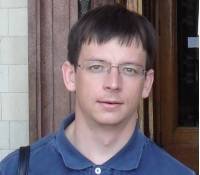 Andrey Perezhogin合作论文数Inst Cosmophys Res & Radio Wave Propagat FEB RAS16K. Yumoto合作论文数16Yu. V. Marapulets合作论文数14
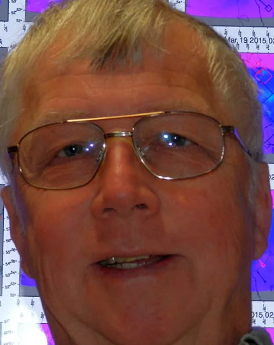 Martin Connors合作论文数Faculty of Science and Technology, Athabasca University11
 Akimasa Yoshikawa (吉川顕正)合作论文数Department of Earth and Planetary Sciences, Faculty of Science, Kyushu University10Richard a Marshall合作论文数10Ian Schofield合作论文数9
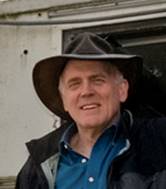 Robert H. Holzworth合作论文数Department of Earth and Space Sciences, University of Washington9Igor Poddelsky合作论文数9A. V. Kuptsov合作论文数7Igor Larionov合作论文数7
 Daniel J. Mcnamara合作论文数7Stepan I. Solovyev合作论文数7
 Baishev Dmitriy Gavrilevich合作论文数Yu.G. Shafer Institute of Cosmophysical Research and Aeronomy of Siberian Branch of the Russian Academy of Sciences;Laboratory of Magnetosperic and Ionospheric Researches, Shicra Sb Ras7
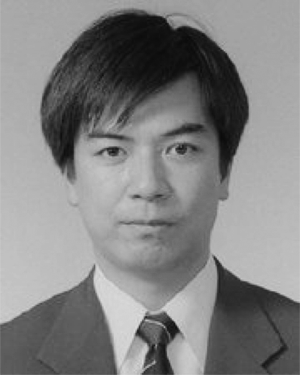 Tsutomu Nagatsuma合作论文数7Shin-Ichi Ohtani合作论文数7Ilya N. Seredkin合作论文数6M. S. Permyakov合作论文数6
 Konstantin V Koshel合作论文数Pacific Oceanological Institute of FEB RAS 436a g bugrov合作论文数5Vi Klyatskin合作论文数5akihiro ikeda合作论文数5Igor Poddelskiy合作论文数5Av Volkov合作论文数5Chae-Woo Jun合作论文数Institute for Space-Earth Environmental Research (ISEE),, Nagoya University5Yumoto Kiyohumi (湯元清文)合作论文数Department of Earth and Planetary Sciences, Space and Earth Electromagnetism, Faculty of Sciences, Kyushu University5S. N. Krivonozhkin合作论文数5R. Otadoy合作论文数5
 Janos Lichtenberger合作论文数5A Shishkarev合作论文数5
 M. G. C. Cardinal合作论文数5T. V. Gordienko合作论文数5V. A. Gordienko合作论文数5
 Yuichi Otsuka (大塚雄一)合作论文数Division for Ionospheric and Magnetospheric Research, Institute for Space-Earth Environmental Research, Nagoya University;Graduate School of Engineering, Nagoya University5
 Potalova Ekaterina合作论文数5A. O. Shcherbina合作论文数4A. Yoshikawa合作论文数4
 Nozomu Nishitani合作论文数4atsushi yoshikawa合作论文数4Olga Sheremetyeva合作论文数Russian Acad Sci, Inst Cosmophys Res & Radio Wave Propagat4S. Abe合作论文数4Gleb Vodinchar合作论文数RAS, Inst Cosmophys Res & Radio Wave Propagat FEB4
 Vladimir Mochalov合作论文数Russian Acad Sci, Inst Cosmophys Res & Radio Wave Propagat4Marichev, V.N.合作论文数4Hideaki Kawano合作论文数4




