Recent results on a study of exclusive processes of e^+e^- annihilation into hadrons below 2 GeV obtained at the SND detector are presented. The analyses are based on data collected at the VEPP-2000 collider. In particular, we present the measurements of the e^+e^-→ηγ , e^+e^-→π^+π^-π^0 , e^+e^-→ωπ^0 cross sections and the preliminary results on study of the e^+e^-→ηπ^+π^-2π^0 process. The results obtained are compared with previous measurements.
This paper presents a quantitative analysis of the impact of inelastic collisions of ultra-relativistic electrons and positrons, passing through oriented crystalline targets, on the channeling efficiency and on the intensity of the channeling radiation. The analysis is based on the numerical simulations of the channeling process performed using the MBN EXPLORER software package. The ionizing collisions, being random, fast and local events, are incorporated into the classical molecular dynamics framework according to their probabilities. This methodology is outlined in the paper. The case studies presented refer to electrons with energy epsilon ranging from 270 to 1500 MeV and positrons with epsilon = 530 MeV incident on thick (up to 1 mm) single diamond, silicon and germanium crystals oriented along the (110) and (111) planar directions. In order to elucidate the role of the ionizing collisions, the simulations were performed with and without account for the ionizing collisions. The case studies presented demonstrate that both approaches yield highly similar results for the electrons. For the positrons, the ionizing collisions reduce significantly the channeling efficiency. However, it has been observed that this effect does not result in a corresponding change in the radiation intensity.
The 𝑒+𝑒− → 𝑛𝑛 cross section was measured at energies from the threshold to 1908 MeV in the center of mass (c.m.). The experiment to measure the cross section has been carried out at the VEPP-2000 𝑒+𝑒− collider in 13 energy points. The SND detector is used to detect the produced neutron-antineutrons (𝑛𝑛) events. A special time measurement system on the calorimeter was used to select the time-delayed 𝑛𝑛 events. The measured 𝑒+𝑒− → 𝑛𝑛 cross section is 0.4–0.6 nb. The neutron effective timelike form factor in the energy range under study varies from 0.3 to 0.6.
The results of the search for the e & thorn;e- & thorn; e --* eta 0 gamma 0 gamma process in the center-of-mass energy range from 1.075 to 2 GeV are presented. We analyze data with an integral luminosity of 746 pb-1 - 1 accumulated with the SND detector at the e & thorn;e- & thorn; e - collider VEPP-2000 in 2010-2024. The eta 0 0-* eta pi 0 pi 0 0 pi 0 decay is used in the analysis, with the subsequent eta and pi 0 0 decays into gamma gamma. Upper limits not exceeding 13 pb have been set on the e & thorn;e- & thorn; e --* eta 0 gamma 0 gamma cross section at the 90% confidence level.
The cross section for the e + e --* K S K L process is measured in the center-of-mass energy range from 1000 to 1100 MeV in the experiment with the SND detector at the VEPP-2000 e + e - collider. The measurement is carried out in the K S-* 2,r0 0 decay mode. Data with an integrated luminosity of 20 pb-1 - 1 recorded in 2018 at 18 energy points are used in the analysis. The systematic uncertainty in the measured cross section at the maximum of the % resonance is 0.9%. The mass, width of the % meson, and the product of the branching fractions B ( %-* K S K L ) B ( %-* e + e - ) are determined from the fit to the cross section energy dependence.
Results are presented from measuring the e^+e^-→ nn̅ cross section and effective neutron timelike form factor. Data are collected in 2020–2021 at the VEPP-2000 e^+e^- collider in the 1891 to 2007 MeV center-of-mass range of energies. The general purpose nonmagnetic SND detector is used to detect neutron–antineutron events. The time-of-flight approach is used to select nn̅ events. The measured cross section is 0.4–0.6 nbn. The neutron form factor in the investigated range of energies varies from 0.3 to 0.2.
The e^+e^-→ηγ cross section is measured in the center-of-mass energy range from 1.07 to 2.00 GeV in the decay channel η→ 3π^0 , π^0→γγ . The data set with an integrated luminosity of 242 pb ^-1 accumulated in the experiment with the SND detector at the VEPP-2000 e^+e^- collider is analyzed.
The results of the search for the e^+e^-→η^'γ process in the center-of-mass energy range from 1.075 to 2 GeV are presented. We analyze data with an integral luminosity of 746 pb^-1 accumulated with the SND detector at the e^+e^- collider VEPP-2000 in 2010–2024. The η^'→ηπ^0π^0 decay is used in the analysis, with the subsequent η and π^0 decays into γγ. Upper limits not exceeding 13 pb have been set on the e^+e^-→η^'γ cross section at the 90% confidence level.
The process e^+e^-→π^+π^-π^0 was studied in the energy range between 1.075 and 1.975 GeV on the basis of data characterized by an integrated luminosity of about 70 pb ^-1 that were accumulated in an experiment with the Spherical Neutral Detector (SND) at the VEPP-2000 e^+e^- collider. The respective Dalitz distributions were analyzed within a model that includes ρ(770)π , ρ(1450)π , and ωπ^0 intermediate states. As a result, the energy dependences of the total cross section for the process e^+e^-→π^+π^-π^0 and the cross sections for the ρ(770)π and ρ(1450)π intermediate states were measured along with the phase shift of the ρ(770)π amplitude with respect to the ρ(1450)π and ωπ^0 amplitudes. For the first time, a simultaneous approximation of the cross sections for the processes e^+e^-→ρ(770)π and ρ(1450)π and the relative phase of the respective final states was performed on the basis of the vector-meson dominance model. The contributions of the ω , ϕ , ω(1420) , and ω(1650) resonances were taken into account. The approximation showed that the decay ω(1650)→π^+π^-π^0 proceeds predominantly through the ρ(1450)π intermediate state, while the decay ω(1420)→π^+π^-π^0 receives a dominant contribution from the ρ(770)π mechanism. The results of this study refined the results of earlier measurements with the SND setup.
The e^+e^-→ nn̅ cross section was measured at center of mass (c.m.) energies from the threshold to 1908 MeV. The experiment to measure the cross section has been carried out at the VEPP-2000 e^+e^- collider in 13 energy points. The SND detector is used to detect the produced neutron–antineutrons ( nn̅ ) events. A special time measurement system on the calorimeter was used to select the time-delayed nn̅ events. The measured e^+e^-→ nn̅ cross section is 0.4–0.6 nb. The neutron effective timelike form factor in the energy range under study varies from 0.3 to 0.6.
The e+e− → ηγ cross section is measured in the center-of-mass energy range from 1.07 to 2.00 GeV in the decay channel η → 3π0, π0 → γγ. The data set with an integrated luminosity of 242 pb−1accumulated in the experiment with the SND detector at the VEPP-2000 e+e− collider is analyzed.
In experiment at the VEPP-2000 e(+)e(-) collider the process e(+)e(-) -> n (n) over bar has been studied in the energy from the threshold up to 2 GeV. To identify n (n) over bar events the multichannel NaI(Tl) electromagnetic calorimeter of the SND detector was used. The measured e(+)e(-) -> n (n) over bar process cross section is from 0.6 to 0.3 nb. The effective neutron timelike form factor is derived and compared with the proton form factor. The ratio | G(E)|/|G(M)| of the neutron electric and magnetic form factor is obtained from the measured angular distribution and found to be between 1 and 2.
The process $e^+e^- \to \omega\pi^0 \to \pi^+\pi^-\pi^0\pi^0$ is studied in the center-of-mass energy region $1.05-2.00$ GeV using data with an integral luminosity of about 35 pb$^{-1}$ collected with the SND detector at the VEPP-2000 $e^+e^-$ collider. In the energy range under study, the value of the measured Born cross section varies from 0.7 to 18 nb. The statistical uncertainty of the cross section is $2-23$%, while the systematic uncertainty is in the range of $3.0-14.2$%. The results are consistent with previous measurements but have better accuracy.
The SND is a non-magnetic detector at the VEPP-2000 e+e− collider (BINP, Novosibirsk) designed for hadronic cross-section measurements in the center-of-mass energy range up to 2 GeV. The important part of the detector is a segmented electromagnetic calorimeter (EMC) with three layers of NaI(Tl) counters. The EMC signal shaping and digitizing electronics based on FADC allow one to obtain both the signal amplitude and the arrival time. We describe the EMC signal processing and how the EMC measured time is applied in event reconstruction and physics analysis.
In experiment at the VEPP-2000 e^ + e^ - collider the process e^ + e^ - → nn̅ has been studied in the energy from the threshold up to 2 GeV. To identify nn̅ events the multichannel NaI(Tl) electromagnetic calorimeter of the SND detector was used. The measured e^ + e^ - → nn̅ process cross section is from 0.6 to 0.3 nb. The effective neutron timelike form factor is derived and compared with the proton form factor. The ratio | G E |/| G M | of the neutron electric and magnetic form factor is obtained from the measured angular distribution and found to be between 1 and 2.
The process $e^+e^- \to \omega\pi^0 \to \pi^+\pi^-\pi^0\pi^0$ is studied in the center-of-mass energy region $1.05-2.00$ GeV using data with an integral luminosity of about 35 pb$^{-1}$ collected with the SND detector at the VEPP-2000 $e^+e^-$ collider. In the energy range under study, the value of the measured Born cross section varies from 0.7 to 18 nb. The statistical uncertainty of the cross section is $2-23$%, while the systematic uncertainty is in the range of $3.0-14.2$%. The results are consistent with previous measurements but have better accuracy.
The e + e − → π 0 π 0 γ process was studied in the SND experiment at VEPP-2M e + e − collider in the energy region 0.60–0.97 GeV. From the analysis of the energy dependence of measured cross section the branching ratios B ( ω → π 0 π 0 γ ) = (6 . 6 +1 . 4 − 0 . 8 ± 0 . 6) · 10 − 5 and B ( ρ → π 0 π 0 γ ) = (4 . 1 +1 . 0 − 0 . 9 ± 0 . 3) · 10 − 5 were obtained.
AbstractThe process $$e^+e^-\rightarrow n{\bar{n}}$$ e + e - → n n ¯ is studied in the experiment at the VEPP-2000 $$e^+e^-$$ e + e - collider with the SND detector. The technique of the time measurements in the multichannel NaI(Tl) electromagnetic calorimeter is used to select $$n{\bar{n}}$$ n n ¯ events. The value of the measured cross section in the center-of-mass energy range from 1.894 to 2 GeV varies from 0.5 to 0.35 nb. The effective neutron timelike form factor is derived from the measured cross section and compared with the proton form factor. The ratio of the neutron electric and magnetic form factors is obtained from the analysis of the antineutron polar angle distribution and found to be consistent with unity.
 Serednyakov Sergey Ivanovich合作论文数Budker Institute of Nuclear Physics, Siberian Division, Russian Academy of Sciences244Vladimir P. Druzhinin合作论文数213
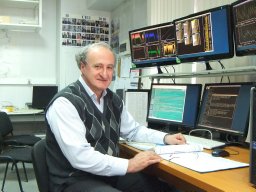 Zurab K. Silagadze合作论文数Budker Institute of Nuclear Physics203E. V. Pakhtusova合作论文数202T. V. Dimova合作论文数192S. V. Koshuba合作论文数178Yu. M. Shatunov合作论文数172Andrei V Berdyugin合作论文数167Nikolai N. Achasov合作论文数161K. I. Beloborodov合作论文数159A. D. Bukin合作论文数153Vladimir B. Golubev合作论文数Novosibirsk State University141Vladimir N. Ivanchenko合作论文数126Andrei A. Salnikov合作论文数SLAC National Accelerator Laboratory, Stanford University122
 Sergey Burdin合作论文数Department of Physics, School of Physical Sciences, Faculty of Science and Engineering, University of Liverpool122A. G. Bogdanchikov合作论文数Budker Institute of Nuclear Physics119I. A. Koop合作论文数110Alexander Bogdanchikov合作论文数Budker Institute of Nuclear Physics;Russian Academy of Sciences;Novosibirsk State University104
 Gerald Eigen合作论文数Department of Physics and Technology, University of Bergen103
 Philip J Clark合作论文数Institute for Particle and Nuclear Physics, School of Physics and Astronomy, The University of Edinburgh100
 Bjarne Sandvik Stugu合作论文数Department of Physics and Technology University of Bergen100
 Masahiro Morii合作论文数Department of Physics, Harvard University99A. V. Vasiljev合作论文数98
 Blair Ratcliff合作论文数SLAC National Accelerator Laboratory;Stanford University98
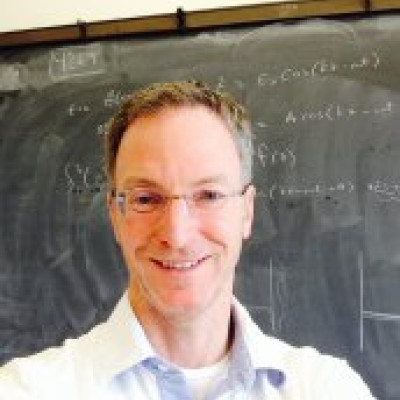 Carlo Dallapiccola合作论文数Department of Physics, College of Natural Sciences, University of Massachusetts Amherst98
 Ben Brau合作论文数Department of Physics, College of Natural Sciences, University of Massachusetts Amherst97
 W. (Wouter) Verkerke合作论文数Institute of Physics, Faculty of Science, University of Amsterdam97
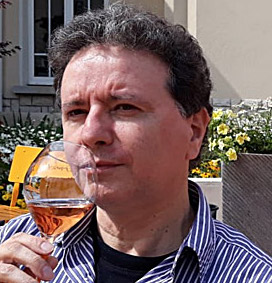 Fabio Anulli合作论文数Istituto Nazionale di Fisica Nucleare97
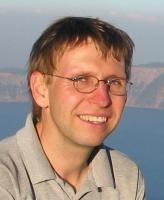 Wolfgang Walkowiak合作论文数Experimental Particle Physics Group, Department of Physics, University of Siegen97
 Glen Cowan合作论文数Centre for Particle Physics and Astronomy, Department of Physics, Royal Holloway, University of London96
 Heiko Lacker合作论文数Institut für Physik, Mathematisch-Naturwissenschaftliche Fakultät, Humboldt-Universität zu Berlin;Department of Physics, Humboldt-Universität zu Berlin96
 Andrew J. Lankford合作论文数Department of Physics & Astronomy, School of Physical Sciences, University of California, Irvine95G. Crosetti合作论文数95
 David Leith合作论文数Stanford Linear Accelerator Center95
 Amir Farbin合作论文数Department of Physics, College of Science, The University of Texas at Arlington95S. Prell合作论文数95
 Juerg Beringer合作论文数Physics Division, Lawrence Berkeley National Laboratory94Av Bozhenok合作论文数93J. Brau合作论文数93
 Wahid Bhimji合作论文数Lawrence Berkeley National Laboratory93A. A. Botov合作论文数92
 James Cochran合作论文数Department of Physics and Astronomy, College of Liberal Arts and Sciences, Iowa State University91
 Teresa Barillari合作论文数Max Planck Institute for Physics91
 Roger Barlow合作论文数School of Computing and Engineering, University of Huddersfield91S. Passaggio合作论文数90
 Stephane Willocq合作论文数Department of Physics, College of Natural Sciences, University of Massachusetts Amherst90
 Abraham Seiden合作论文数Santa Cruz Institute for Particle Physics, University of California, Santa Cruz;Department of Physics, University of California, Santa Cruz90W. Kozanecki合作论文数89
 Tim Adye合作论文数Particle Physics Department, Rutherford Appleton Laboratory89




