For the first time to our knowledge, a single-phase solid solution Sr(MoO_4) 0.8 (WO_4) 0.2 was used as an active medium of a Raman laser. Using the high-intensity synchronous picosecond pumping satisfying the condition of phase capture of the parametric Raman interaction on the second vibrational mode made it possible to oscillate six components of Raman radiation with a combined frequency shift on the first (888 cm -1 ) and second (327 cm -1 ) vibrational modes in the wavelength range of 1194-1396 nm. Oscillation efficiency of the multiwavelength Raman laser radiation was as high as 10%. By detuning the Raman laser cavity length, the pulse shortening down to 6 ps for the Raman laser radiation components with the combined frequency shift was obtained, which is an order of magnitude shorter than the pumping pulse duration (64 ps). Keywords: stimulated Raman scattering, single-phase solid solution, vibrational mode, synchronous pumping.
When excited by a powerful picosecond pulse of the second harmonic of a YAP:Nd laser, inelastic scattering lines with frequency detunings in the range of 10–130 GHz relative to the laser line were detected in suspensions of morphologically similar AltMV and PVX viruses. This scattering has a threshold nature, and the sets of its spectral lines are different for different virus samples.
For the first time to our knowledge, a single-phase solid solution Sr(MoO4)0.8(WO4)0.2 was used as an active medium of a Raman laser. Using the high-intensity synchronous picosecond pumping satisfying the condition of phase capture of the parametric Raman interaction on the second vibrational mode made it possible to oscillate six components of Raman radiation with a combined frequency shift on the first (888 cm–1) and second (327 cm–1) vibrational modes in the wavelength range of 1194-1396 nm. Oscillation efficiency of the multiwavelength Raman laser radiation was as high as 10%. By detuning the Raman laser cavity length, the pulse shortening down to 6 ps for the Raman laser radiation components with the combined frequency shift was obtained, which is an order of magnitude shorter than the pumping pulse duration (64 ps).
The generation of a crystalline anti-Stokes parametric Raman laser with collinear phase matching under intracavity synchronous pumping by a 1064-nm passively Q-switched longitudinally mode-locked YAG:Nd3+ laser has been studied. A CaMoO4 crystal is chosen as an active medium. This crystal has optimal birefringence for matching Stokes–anti-Stokes parametric Raman four-wave interaction at a phase-matching angle of 71° and an angular phase-matching width of 4°, which is insensitive to angular phase mismatch. The conditions for generating a single ultrashort anti-Stokes pulse at a wavelength of 973 nm with a duration of 9 ps and energy of up to 9 μJ are determined.
Theoretical and experimental studies were conducted on providing conditions for the generation of multiple radiation components with a small wavelength spacing in a crystalline synchronously pumped SRS laser with combined frequency shift on high-frequency and low-frequency vibrational modes of an SRS-active crystal. A theoretical analysis has shown an important role of four-wave parametric Raman interactions on the low-frequency vibrational mode of the crystal provided the conditions of coherence and of nonlinear phase capture of such interactions are satisfied. For the first time, SRS generation was carried out at five closely spaced wavelengths of 1194, 1242, 1294, 1336, and 1396 nm in a SrMoO 4 crystal under synchronous pumping by a high intensity picosecond YAlO 3 :Nd 3+ laser at a wavelength of 1079 nm satisfying the condition of nonlinear phase capture.
In vivo liquid biopsy, especially using the photoacoustic (PA) method, demonstrated high clinical potential for early diagnosis of deadly diseases such as cancer, infections, and cardiovascular disorders through the detection of rare circulating tumor cells (CTCs), bacteria, and clots in the blood background. However, little progress has been made in terms of standardization of these techniques, which is crucial to validate their high sensitivity, accuracy, and reproducibility. In the present study, we addressed this important demand by introducing a dynamic blood vessel phantom with flowing mimic normal and abnormal cells. The light transparent silica microspheres were used as white blood cells and platelets phantoms, while hollow polymeric capsules, filled with hemoglobin and melanin, reproduced red blood cells and melanoma CTCs, respectively. These phantoms were successfully used for calibration of the PA flow cytometry platform with high-speed signal processing. The results suggest that these dynamic cell flow phantoms with appropriate biochemical, optical, thermal, and acoustic properties can be promising for the establishment of standardization tool for calibration of PA, fluorescent, Raman, and other detection methods of in vivo flow cytometry and liquid biopsy.
The possibility of stable generation of intense characteristic Cs radiation upon electronic excitation of a Mo anode target heat treated in Cs and O2 vapors is demonstrated. The radiation source is a microfocus transmission type X-ray tube with a beryllium window and an S20 photocathode. A Cs-Mo-O layer is formed on the initial target in the form of a 1-µm-thick Mo film during heat treatment. The L and K spectral series are measured in an anode—cathode voltage range of 10—47 kV. A stable generation mode is observed at an electron flux power density up to 600 W/cm2. The energy of the Cs Kβ spectral line is in the region of photoabsorption peaks of the I and Xe atoms, which are widely used in the composition of contrast agents for medical diagnostics. This allows obtaining two- and three-dimensional images with the maximum contrast.
Behavior of liquid mercury exposed to 25-ns laser pulses is investigated using acoustic and optical diagnostics. It is found that when pressure pulses generated in the target change, an additional peak appears as the laser intensity increases, which can be due to the motion of the metal–nonmetal transition front. This assumption agrees with a decrease in the reflected laser pulse and with the behavior of the pressure pulses in the case of free and loaded irradiated surfaces.
A point source of X-ray radiation with an energy range of up to 40 keV has been developed on the basis of a specially designed image converter tube. The source is capable of operating in pulsed and continuous modes. The main purpose of this is to use the source for testing X-ray streak cameras. The device can also be used in X-ray microscopy and spectroscopy as a reference radiation source, in biomedical research, and in other fields.
In the explosive reaction of composites based on porous silicon with perchlorate oxidizers, a new effect has been discovered: the intensity accompanying the explosive reaction reaches its maximum value in tens of microseconds from the beginning of the explosive reaction, a sharp drop in intensity to zero then occurs for tens of microseconds (“zero shelf”), and short light and electromagnetic pulses are finally emitted. The recorded emission line width about 1 nm allows one to interpret a light pulse as a laser effect. The conditions for observing the zero shelf, the possible cause of its appearance, and the emission mechanism of a short light pulse are discussed.
A multiple narrowing of the stimulated Raman scattering (SRS) spectrum in water has been observed (350-400 cm -1 to 100 cm -1 ) when pumped by 64-ps laser pulses train (λ=540 nm). Additionally, laser pulses temporal broadening has been detected when exciting SRS in water. Duration of the Stokes component pulses in the incident direction has been measured and amounted to ~77 ps.
Nanosecond laser ablation of metal target under the action of radiation pulses with periodically modulated intensity is investigated. Generated pressure pulses are detected by piezo-transducer (lithium niobate) on the back target side. Such approach permits to measure simultaneously recoil pressure behavior and calculate the irradiated surface displacement during laser action by comparison modulated parts of laser and acoustic signals. Nanosecond laser pulses contain 10–15 short peaks of 60 ps duration (1.08 μm wavelength) which provide fluence values up to 30 J cm−2 in the pulse. Plasma light emission is also registered with the help of photodiode. At the considered fluences surface displacement during the pulse turns out to be considerably smaller than theoretical estimation for free vacuum vaporization and measured experimental displacement which follows from the arrival time delay of another pressure signals generated with subsequent laser pulse directed to the same spot. Such behavior can be evidence that crater formation in the considered irradiation regime occurs after the pulse end.
The recently published experimental data on the acoustic monitoring of the impact of a train of picosecond laser pulses with a total duration of about 500 ns and energy density up to 2 J cm−2 on a metal have been analyzed. During monitoring, the behavior of the acoustic signal delay τn with respect to the laser signal has been recorded. A comparison of the average acoustic delay τ0 for successive laser trains directed to the same target point (with a train-to-train interval of 30 s) shows a small variation in τ0 (< 0.1 ns), which is indicative of weak effect of ablation on the behavior of τn during a laser train. Under the conditions of additional laser irradiation in the intervals between trains, acoustic delay measurements demonstrate an increase in the average delay τ0 for subsequent trains, which may be related to the metal surface ablation caused by the additional irradiation.
The efficiency of the injection from the linear accelerator into the damping ring of the injection complex at Budker Institute of Nuclear Physics has been experimentally studied. The estimations of the injection efficiency are in good agreement with the measurements. A method for increasing the efficiency of injection from the linear accelerator into the damping ring has been implemented in order to enhance the productivity of the injection complex. To this end, the RF cavity has been replaced and the RF frequency was changed from 700 to 11 MHz. Recent measurements have shown a two-fold increase in the productivity. Besides that, the behavior of the longitudinal profile of a bunch during the first turns in the damping ring and the dependence of the profile on the beam current have been studied.
A new-generation dissector has developed on the basis of a modified PIF-01 image converter tube for the timing diagnostics of charged particle beams in accelerators. Pilot models of the detector have been produced. The time resolution obtained in the dynamic tests at the laser facility is ~2 ps, which is better by more than an order of magnitude than the corresponding parameter of the available LI-602 dissector. The pilot models of the new dissector have been successfully tested in experiments at the Metrology Light Source (MLS) accelerator (Berlin, Germany).
 Н. С. Воробьев合作论文数18P. B. Gornostaev合作论文数14
 O. I. Meshkov合作论文数11
 Vladimir A. Smirnov合作论文数Skobeltsyn Institute of Nuclear Physics, Moscow State University10Pavel P Pashinin合作论文数10N. S. Vorobiev合作论文数9V. L. Dorokhov合作论文数9M. Ya. Schelev合作论文数9V. I. Lozovoi合作论文数8A. E. Zubko合作论文数7V. A. Makushina合作论文数6Av Kilpio合作论文数6D. Batani合作论文数6A Kilpio合作论文数5A. S. Komel’kov合作论文数5A. A. Samokhin合作论文数5
 A. K. Vereshchagin合作论文数5R. I. Fishman合作论文数4V Vovchenko合作论文数4I Krasuyk合作论文数4I Stuchebrukhov合作论文数4SV ANDREEV合作论文数4
 Danila Nikiforov合作论文数4s r ivanova合作论文数4Dmitry P. Tereshchenko合作论文数4
 Viacheslav Senkov合作论文数4A. I. Zarovskii合作论文数4Oleg Anchugov合作论文数4R V Serov合作论文数4G. Lucchini合作论文数4Alexander G. Papashvili合作论文数4
 Vladislav Shukshin合作论文数4I. V. Pirshin合作论文数4
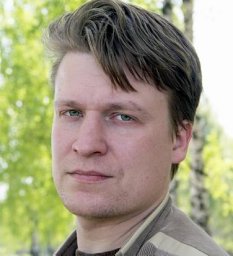 Sergey N Smetanin合作论文数Kovrov State Academy of Technology4T. P. Kulechenkova合作论文数3V. M. Freiman合作论文数3V Chernomyrdin合作论文数3e i zinin合作论文数3Dg Kochiev合作论文数3Ya Suchkov合作论文数3K. A. Gubina合作论文数3Yu. M. Mikhal’kov合作论文数3A. A. Karpova合作论文数3Irina S. Voronina合作论文数3
 S. S. Gizha合作论文数Russian Acad Sci, Lebedev Phys Inst3
 Lyudmila Ivleva合作论文数3
 Vladimir Zharov合作论文数Department of Otolaryngology — Head and Neck Surgery, College of Medicine, University of Arkansas for Medical Sciences3
 Galina Levina合作论文数Perm'3Federico Canova合作论文数INFM, Universita degli Studi di Milano Bicocca3




