The method of Genome-Wide Association Studies (GWAS) steadily becomes the basis for searching for candidate genes of monogenic and multifactorial diseases, including type 1 and 2 diabetes mellitus, coronary heart disease, obesity, vascular diseases, and others. To date, approximately 40 loci associated with type 2 diabetes mellitus (T2DM) have been identified and genetic predisposition factors for cardiovascular diseases have been determined. In some cases, the GWAS results not only enable understanding of the pathophysiologic basis for diseases, but also may give rise to new drugs. However, the question naturally arises about the possibility of implementing the accumulated knowledge to predict the development of diseases, including T2DM and its vascular complications. This review summarises the literature data on the possibilities to use the GWAS results to calculate the risk of developing diabetes and cardiovascular diseases. Determination of the individual genetic risk will allow for the primary prevention of diseases and will apparently be the basis of personalised predictive medicine in the near future.
Aim. To evaluate changes in functional activity and insulin resistance (IR) in patients with different types of onset of diabetes mellitus(DM). Materials and methods. We examined 166 subjects which were subdivided into 4 study groups and 1 control group. Assessment of totalbeta-cell functional activity and degree of IR (according to HOMA-model) was conducted in patients with different variants of DM onsetand in the group of high risk for type 1 DM. Results. The most significant decrease in beta-cell functional activity was found in patients with type 1 diabetes mellitus (HOMA-F 8.9%).Onset of LADA (Latent autoimmune diabetes in adults) and type 2 diabetes mellitus (T2DM) was also characterized by decreasein beta-cell functional activity (HOMA-F 39.2% and 63.9%, respectively), as well as by development of IR: HOMA-IR 3.7 and 7.2,respectively. Conclusion. Clinical onset of LADA and T2DM occurs against the background of decreased beta-cell functional activity and compromisedperipheral insulin sensitivity.
Aims. To assess the development of medical care and pharmacological treatment at Endocrine Research Centre (ERC), Moscow, forthe period of 2010-2011 years.Materials and Methods. We analyzed files of 100 patients with type 2 diabetes mellitus (T2DM), who underwent hospitalization to ERCafter January 1, 2010. Key parameters were assessed by means of a study chart, applied for every patient file. Mean values, medians,fractions and confidence intervals (CI) were calculated for studied parameters. Various methods of parametric and non-parametricstatistics were used for comparison of acquired values. Results. Files of 100 patients with T2DM, hospitalized to Endocrinology Research Centre, were analyzed to obtain clinical characteristicsand evaluate initial (prior to hospitalization) and optimized (after hospitalization) therapeutic schemes, as well as spendingpatterns. Mean patient age exceeded 63 years, mean duration period of T2DM was greater than 14.4 years. 86% of patients weredecompensated for glycemic metabolism. 8% were diagnosed with less than 3 diabetes complications, 66% were found to have from 3to 6 complications. Almost all studied cases (98%) featured elevated blood pressure, 63% - diabetic retinopathy on different stages,59% - IHD, 51% - cataract, 49% - CKD. Lower limb angiopathy was found in 30% of cases, diabetic foot syndrome - in 15%.2 patients lost their vision due to diabetic complications and 3 patients experienced lower limb amputation. Arterial hypertension wascompensated in 14 cases from total of 98.Correction of therapy decreased fraction of patients on oral hypoglycemic agents and intermediate acting insulin (NPH), while prescriptionfrequency of short acting insulin and rapid acting human insulin analogues (as well as long acting analogues) showed oppositetrend. Optimization of therapy also included prescription of hypolipidemic drugs for majority of patients, as well as various agents forcorrection of coagulation abnormalities, treatment for CVD and other complications of T2DM.Due to described measures cost of per day treatment for 100 patients increased 2.28 times: from 8 982 RUB to 20 440 RUB (averagecost per day increased from 89.8 RUB to 204.1 RUB).Following the correction, fraction of patients with fasting glycemia 9.0 mmol/l dropped from 37% to 9%, and that with postprandial glycemia >10.0 mmol/l - from 27% to 1%.Mean fasting glycemia level decreased from 8.6 mmol/l to 6.8 mmol/l.Conducted analysis shows that prime expenditures (more that 36% from total cost structure) were associated with hospital stay (includingintensive care unit). Conclusion. Considering expanding nature of DM epidemic, there is an urgent need for effective healthcare management and preventionof severe cardiovascular complications. Priority should be established on balancing efficiency of hypoglycemic agents with theirsafety for short- and long-term prognosis.
The article presents a clinical example of integrated surgical management in patient with multifocal atherosclerosis, chronic kidney disease and neuro-ischemic form of diabetic foot syndrome.
Aim. To perform cost-effectiveness analysis of prescription of pharmaceutical products and dressing materials and their consumption volume for inandout-patient treatment of diabetic foot syndrome (DFS). To analyse efficacy of the treatment in terms of modern therapeutic standards. Materials and methods. This retrospective study is based on the medical documentation of 139 DM1 and DM2 patients with DFS from differentmedical facilities of Moscow (2007). 72 patients were given general out-patient care by surgeons of city polyclinics, 50 ones received specialized aidin the regional Diabetic Foot Cabinet. 67 patients were hospitalized: 20 for general care in the department of purulent surgery of a military hospital,27 for specialized care in the department of purulent surgery of a city hospital, 20 for high-technology care in the endocrinological clinic of the FirstMoscow State Medical University. Results. Therapeutic strategy for DFS patients used in the regional Diabetic Foot Cabinet met the current therapeutic standards. General out-patientcare by surgeons of city polyclinics was at variance with the algorithms adopted in this country. Pharmacoeconomic analysis of the spectrum of pharmaceuticalproducts used for in- and out-patient treatment of DFS patients revealed frequent and ungrounded application of drugs whose woundhealing effect remains to be confirmed (pentoxifylline, thioctoic and alpha-lipoic acids). Conclusion. Additional training courses for surgeons of Moscow polyclinics are needed to improve the quality of medical aid to DFS patients. Suchpatients must be referred to regional Diabetic Foot Cabinets. Pentoxifylline, thioctoic and alpha-lipoic acids need to be substituted by pharmaceuticalswith validated therapeutic efficacy.
Aim. To analyse frequency distribution of alleles and genotypes of -23 HphI, a polymorphic marker of the INS gene, for evaluation of its associationwith DM1. Materials and methods. The study included two group of subjects: healthy ones and DM1 patients. Genotyping was performed by real time amplification. Results. Comparative analysis demonstrated association between -23 HphI polymorphic marker of INS gene, and type 1 diabetes mellitus. Conclusion. The use of the case-control method revealed association of -23 HphI, a polymorphic marker of the INS gene, with type 1 diabetes mellitus.
Aim. To carry out cost-effectiveness analysis of treatment options for type 2 diabetes using different groups of medicines, to prognosticate late diabeticcomplications and the cost of their management. Materials and methods. A total of 3678 DM2 patients (with mean HbAc1 level 9.3%) were examined in 23 regionsin the framework of the Diabetesmellitus subprogram of the Federal target program "Prevention and control of socially significant diseases". Two hypothetical therapeutic modalitieswere considered: treatment with NovoMix 30 and oral hypoglycemic (OHG) agents. The CORE model was used to analyse anticipated expendituresand DM outcomes. Results. Simulation revealed a greater decrease of HbA1c levels (-1.7%), reduction of total cholesterol, LDL, systolic AP (-4.1%) and risk of cardiovasculardiseases coupled to increase of HDL in patients treated with NovoMix 30. Maximum life expectancy was 17.2 yr compared with 16.5 yrin the OHG group and overall cost of the treatment 1,650,725 and 1,586,234 rubles respectively. Savings for the treatment of diabetes using NovoMix30 amounted to 19,832 rubles per patients due to reduced indirect expenditures including management of renal, cardiac, ophthalmologic , and cerebrovascularcomplications. Conclusion. Simulation of late results of DM2 treatment demonstrated enhanced pharmacoeconomic efficiency of modern insulin analogs comparedwith OHG agents.
Aim. To evaluate clinical efficiency of sulodexide (glycosoaminoglycan) for the treatment of patients with type 2 diabetes mellitus (DM2) and diabeticnephropathy (DN) at the stage of microalbuminuria (MAU). Materials and methods. A total of 30 patients with DM2 and MAU were examined 15 of whom were given sulodexide (200 mg daily) for 6 months.The following parameters were measured before, 3 and 6 months after the onset of therapy: HbA1c level, biochemical characteristics, highly sensitiveCRB, MAU in morning urine samples, soluble intercellular and vascular cell adhesion molecules-1, blood coagulation and anticoagulation factors(PTI, fibrinogen, thrombin time, coagulation factors VII, VIII, X, Willebrand factor), tissue plasminogen activator, and its inhibitor. Results. Sulodexide produced significant positive effect on albumin excretion in urine. It exerted antithromotic and profibrinolytic action and improvedendothelial function. Taken together, these properties of sulodexide give reason to recommend it as a protector of different vascular segments. Conclusion. Significant positive effect of sulodexide on albumin excretion in urine coupled to its multifactor activity, convenience of therapeutic application,low risk of complications, good tolerability, and safety in aged patients with DM2 permit to consider it as a promising tool for the treatmentof DM2 with MAU.
To study the association with diabetes mellitus type 1, we analyzed the distribution of allele and genotype frequencies of polymorphic marker rs2292239 of ERBB3 gene, encoding epidermal growth factor receptor type 3 and polymorphic marker rs3184504 of SH2B3 gene, encoding adaptor protein LNK. The study included groups of T1DM patients and unrelated controls of Russian origin. Genotyping was performed using RFLP and real-time amplification methods. No statistically significant association with type 1 diabetes was found for the polymorphic marker rs2292239 of ERBB3 , while the analysis of the distribution of allele and genotype frequencies of the polymorphic marker rs3184504 of SH2B3 gene revealed the association with T1DM in the Russian population.
 Marina Shestakova合作论文数18
 T V Kochemasova合作论文数12A Iu Baryshnikov合作论文数7Peterkova V A合作论文数7
 Valery V. Nosikov合作论文数7Boldyreva M N合作论文数6Alekseev L P合作论文数6Gorelysheva V A合作论文数6T. V. Osipova合作论文数6t m milenkaya合作论文数5Valentina A. Peterkova合作论文数5ER Polosukhina合作论文数5N B Smirnova合作论文数4Vera Anatol'evna Gorelysheva合作论文数4т м миленькая合作论文数4DA Chistyakov合作论文数4Tamara Leonidovna Kuraeva合作论文数4a v kosygina合作论文数3l a chugunova合作论文数3D G Kurbatov合作论文数3T. Nikonova合作论文数3Maksimova V P合作论文数3Mitish V A合作论文数3Doronina L P合作论文数3
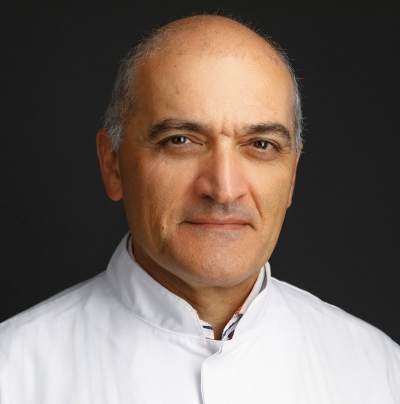 Gagik Galstyan合作论文数Diabetic Foot Department, Diabetes Institute, Endocrinology Research Centre3A. Yu. Baryshnikov合作论文数3
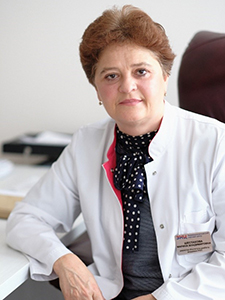 Marina V. Shestakova合作论文数Endocrinology Research Centre3L. N. Shcherbacheva合作论文数3Iz Bondarenko合作论文数3Vasily V. Sosunov合作论文数3L. I. Zilberman合作论文数3Olga Mikhailovna Smirnova合作论文数2O. M. Smirnova合作论文数2K. V. Savost’yanov合作论文数2v a peterkova合作论文数2a p knyazeva合作论文数2E. Y. Lavrikova合作论文数2с а терехин合作论文数2s a dubsky合作论文数2l d chirkova合作论文数2a v eroshenko合作论文数2I A Eroshkin合作论文数2K V Savost'anov合作论文数2Yu S Paskhalova合作论文数2A Yu Tokmakova合作论文数2Yu. I. Suntsov合作论文数2a yu baryshnikov合作论文数2Любовь Иосифовна Зильберман合作论文数2Tl Kuraeva合作论文数2




