Chinese space station has entered its construction stage, starting a new journey of manned spaceflight. According to the operation requirements of Chinese space station, an atmospheric density multidirectional detector for the core module was independently developed to obtain density changes in spatial and temporal distribution at operating altitude. The detector could provide services of flight control management, precise positioning, and analysis for the space station and accumulate long-term autonomous detection data to provide basis for studying physical models and effects in neutral geospace environments. The atmospheric density detection for the core module of the space station was achieved by two atmospheric density multidirectional detectors that were symmetrically installed, each equipped with sensors in three directions. The basic working principle of the detector is as follows. The in-track gas inflow entered the sensor at high speed. According to the theory of molecular gas dynamics, the atmospheric density could be calculated from the pressure and temperature in the sensor. Furthermore, special techniques, e.g., nanoscale thermal cathode coating, were used to extend the working life of the detector beyond 15 years. This thesis mainly introduced the scientific objectives, payload configuration, and long-life design. In addition, preliminary results of in-situ detection were used to analyze the variations of atmospheric density on the operating orbit, showing the changes on the dayside and nightside orbits. The dayside and nightside peak-to-valley ratio during the quiet time of the space environment from September 11 to 14 and November 19 to 22, 2021, was between 2 and 3. During the strong geomagnetic storm on November 4, 2021, the measured peak atmospheric density increased to 1.966 times, whereas the peak model value increased to 1.483 times. The model of the geomagnetic storm recovery period was 6 h, while the measured data was 12 h later than model. During the geomagnetic storm event on March 13, 2022, the measured atmospheric density increased to 1.424 times, and the model value increased to 1.250 times. The global rise of atmospheric density began in the southern hemisphere and extended to the northern hemisphere, which was opposite the location of the disturbance source on November 4, 2021. According to statistics of six geomagnetic storm events in 2021 and 2022, the increase in the ratio of atmospheric density was positively related to the intensity and duration of the geomagnetic storm, and the maximum ratio could reach 96.6%. The disturbance source of atmospheric density varied its location with the injection position of energy particles, which might appear at the poles or near the equator. During the quiet time from December 11 to 31, 2021, the relative deviation between the measured value and the daily mean of the model was less than 10%. Compared to model, measured data exhibited a larger variation amplitude, wider propagation range, longer duration, more sensitive response, and smaller wave structures, which could reflect more abundant details in the change. The measured data would constitute a long-term independent database for the study of space environment physics and effects.
我国空间站已经进入建造阶段,开启了载人航天新征程.根据我国空间站试验任务需求,自主设计研制了空间站核心舱大气密度多向探测器,探测获取空间站运行高度上大气密度的时空分布变化,为空间站的飞控管理、精密定位和分析服务,并积累长期自主探测数据,为地球空间中性环境物理模式和效应研究提供基础数据.本文主要介绍了探测器的探测目标、载荷配置、长寿命设计等情况,同时使用在轨探测初步结果进行了运行轨道上大气密度的变化特性分析,呈现出日侧和夜侧轨道圈上大气密度变化, 2021年9月11~14日和11月19~22日空间环境平静期日侧和夜侧的峰谷比在2~3之间; 2021年11月4日的较强地磁暴期间实测大气密度峰值增加至1.966倍,而模式值峰值增加至1.483倍,磁暴恢复期模式为6 h,而实测数据晚12 h; 2022年3月13日的磁暴事件期间,实测大气密度增加至1.424倍,模式值增加至1.250倍,大气密度全球抬升从南半球开始,扩展到北半球,与2021年11月4日扰动源位置相反;统计了2021~2022年期间6次磁暴事件,大气密度抬升比例与磁暴强度、持续时间呈正相关; 2021年12月11~31日空间环境平静期,实测值和模式的日均值相对偏差小于10%.实测数据与模式数据相比,增变幅度大、传播范围广、持续时间长、响应更加灵敏.实测数据将为地球空间环境物理与效应研究提供长期自主数据库.
The spherical satellite is Chinese first spherical small satellite, integrating atmospheric composition, atmospheric density detection and precision orbit determination. The payload is the Orbital Atmosphere Detector, which was launched into a near-circular polar orbit with the orbit altitude of 520 km and an inclination angle of 97.4° on 14 October, 2021. The scientific objectives, operating principle and the ground calibration results of the Orbital Atmosphere Detector are presented in this paper. The preliminary in-situ observed results are analyzed and discussed. The observed mass densities are strongly correlated with F10.7 and Kp. The peak-tovalley ratio of observed mass densities during the quiet period of solar and geomagnetic activity on 3 November 2021 was 3.02; the peak of observed mass density increased from 2.8×10 -13 to 8.0×10 -13 kg/m~3 during the strong geomagnetic storm event on 4 November, 2021, an increase of 2.857 times compared to the MSIS00 model of 1.316 times. The observed data show that the increase in atmospheric density started at the South Pole and spread to the middle and low latitudes, while the MSIS00 model only shows a weak symmetrically increase between the northern and southern hemispheres during the storm. The observed results show that the observed data objectively reflect the spatial and temporal distribution of thermosphere density during the quiet period and the geomagnetic storm event, and thermosphere atmospheric model correction can be implemented based on a large amount of observed data.
In order to test and calibrate the satellite payloads-electron detectors, the medium- and high-energy electron accelerators with extremely weak beam current to simulate the space electron radiation environment have been developed, including the experimental terminal which has a vacuum chamber and a vacuum rotation plate. All above form a system which is so-called National Space Science Center-Space Electron Facility, for short “NSSC-SEF”. The main specifications are electron beam energy range 10 2000 keV, beam current 103 109/(cm2 s), beam spot Ø50 mm, beam un-uniformity < 10
超低轨道由于其轨道较低,在该轨道运行的航天器在对地观测、科学研究方面具有其独特优势,但对该轨道的大气密度变化特性认知不足。在阐述国内外超低轨道大气密度原位探测发展历史及现状的基础上,总结了现有超低轨道大气密度原位探测技术,对我国超低轨大气密度原位结果进行了初步分析和讨论,分析结果表明:在2020年10月空间环境平静期250 km和350 km高度大气密度相差一个量级;升降轨期间超低轨道大气密度每公里分别下降0.025×10 -12 kg/m 3 、0.04×10 -12 kg/m 3 ,均小于模式值的0.5倍;北纬40°时,处于午夜的升轨段(~250 km)大气密度是处于正午的降轨段(~420 km)大气密度的11.2倍,高度的影响大于地方时的影响;不同纬度下,实测日均值和模式日均值的比值从高纬的0.49降为低纬的0.39,模式值偏大。在超低轨道上,实测值总体上比模式值小,可为大气物理研究和应用研究提供基础数据。
Space biological effects are mainly a result of space radiation particles with high linear energy transfer (LET); therefore, accurate measurement of high LET space radiation is vital. The radiation in low Earth orbits is composed mainly of high-energy galactic cosmic rays (GCRs), solar energetic particles, particles of radiation belts, the South Atlantic Anomaly, and the albedo neutrons and protons scattered from the Earth's atmosphere. CR-39 plastic nuclear track detectors sensitive to high LET are the best passive detectors to measure space radiation. The LET method that employs CR-39 can measure all the radiation LET spectra and quantities. CR-39 detectors can also record the incident directions and coordinates of GCR heavy ions that pass through both CR-39 and biosamples, and the impact parameter, the distance between the particle's incident point and the seed's spore, can then be determined. The radiation characteristics and impact parameter of GCR heavy ions are especially beneficial for in-depth research regarding space radiation biological effects. The payload returnable satellite SJ-10 provided an excellent opportunity to investigate space radiation biological effects with CR-39 detectors. The space bio-effects experiment was successfully conducted on board the SJ-10 satellite. This paper introduces space radiation in low Earth orbits and the LET method in radiation-related research and presents the results of nuclear tracks and biosamples hitting distributions of GCR heavy ions, the radiation LET spectra, and the quantities measured for the SJ-10 space mission. The SJ-10 bio-experiment indicated that radiation may produce significant bio-effects.
In order to test and calibrate the satellite payloads—electron detectors,the mediumand high-energy electron accelerators with extremely weak beam current to simulate the electron radiation environment of space have been built,including the experimental terminal which have a vacuum chamber and a vacuum rotation plate.This work focuses on the physical design and simulation of extremely weak,uniform,parallel electron beam of the medium-energy one,by using electron trajectory program Egun.The simulation results of electron trajectory in the initial focusing system,the accelerating tube and the twice beam broaden on different conditions including without grid,with ideal grid and with 1 mm diameter aperture grid in the spherical electron gun are presented.Finally,the beam density,105~109 cm-2.s-1 within the φ50mm target area,can be weakened by 8 orders of magnitude from the electron gun to the target area,and could satisfy the requirement of electron detectors testing and calibration experiment.
Thermal ion mass discrimination is one of the key techniques for the space plasma detection.In order to measure the energy spectra and composition of space plasma,the Thermal Ion Mass Spectrometer (TIMS) utilizes a hemisphere electrostatic analyzer accompanied with a time of flight unit based on ultra-thin carbon foil.It has been used broadly in space plasma measurement.Three key techniques,such as 5 mV high resolution sweeping high voltage,10~20nm ultra-thin carbon foil treatment,and 30kV acceleration high voltage,have been resolved in the process of TIMS development.The prototype of TIMS has been calibrated by the calibration system in the University of Bern.The calibration results show that the performances of TIMS are as follows.The energy measurement range is from 0.499eV to 29.94keV,and the energy resolution is 10.5%.The field of view is 360° ×8.4°,and the angular resolution is 22.5°× 8.4°.The main ion species including H+,He+,O+ can be resolved.On the basis of the research work in this study,more advanced plasma instruments with higher mass resolution,larger field of view and more miniature design can be developed.
In order to meet the requirements of data collecting and processing of micro/nano satellites,an integrated payloads data processing unit is designed,which is used as the hub for data exchange between payloads and satellite.This unit has the functions of collecting multi-channel digital data and high precision analog data,receiving incoming data,decoding instructions and load mode control.Through the dual control bus redundancy and fault bus dynamic switch,the communication reliability is improved.This unit is of low power consumption,high integration degree and worthy of using in micro/nano satellites.
Combining the GRO (Global Navigation Satellite System Radio Occultation) and LRO (Low Earth Orbit Radio Occultation) techniques to probe the Earth's atmosphere is a main development direction of RO (Radio Occultation).In this study,the mathematical criteria of a RO event have been described.Then the effects of the main orbit parameters of LEO satellite on the RO events amount and their global distribution have been discussed by a simulation study.The results showed that:the lower the LEO satellite orbit is,the more GRO events are;when the inclination is between 30° and 75°,there are more GRO events and their Earth coverage is higher.The LRO events distribute on the Earth evenly when the LEO-LEO RO satellite set in the polar orbits.This study can provide a scientific reference for GRO and LRO satellite constellation design.
Generally an external RAM is used to cache data to be sent by 1553B bus on payloads, but using ex-ternal RAM will increase system power consumer and area , as well to system complexity .A data transmission scheme using 1553B chip internal RAM for double-buffer is proposed.FPGA is the core control unit, and BU-65170 is the control chip of 1553B bus.To simplify hardware design, not external RAM, but two different spaces in BU-65170 internal RAM are used for double-buffer, updated and accessed in return , to achieve 1553B bus data transmission reliably .The scheme has been successfully applied to the payload of GNOS occultation Detector .
自然界的真实蜂巢与工业上常用的蜂窝三明治夹层结构存在构型上的差异.对比二者的差异并分别进行三维建模.然后利用有限元分析方法,对二者因结构差异而导致的力学性能的差异进行对比分析,得到两种结构在受到轴向力和径向力时其变形和内部应力分布的区别.通过对仿真结果的分析,揭示真实蜂巢在力学性能方面所具备的独特生物学智慧,且将真实蜂巢独特的力学性能特性应用到某些航天载荷的结构设计上,取得了良好的效果.
The radio occultation (RO) technique using signals from the global navigation satellite system, is widely used to observe the atmosphere for applications such as numerical weather prediction (NWP) and global climate monitoring. Since 1995, there have been turborogue sounder on board global positioning system/meteorology, black jack sounder on board challenging minisatellite payload and gravity recovery and climate experiment, IGOR sounder on board constellation observing system for meteorology, ionosphere and climate, GRAS on board meteorological operational, which have been recieving a large number of RO data, but their observed signals come only from global positioning system (GPS). These RO data have been wildly used in NWP and climate monitoring, however they cannot meet the requirements for high accuracy and real time atmosphere observation, in this case compatible RO sounder to obtain more RO observations is significant. Global navigation satellite system occultation sounder (GNOS) on board the fengyun3 C (FY3 C) satellite, which is the first Bei Dou system (BDS)/GPS compatible RO sounder in the world, was launched on 23 September 2013. Up to now, lots of RO observations have been obtained. In this study, the components of GNOS are introduced; one-day GNOS RO events and their global distribution are analyzed; compared with the GPS RO observations, the accuracy and consistency of BDS real-time positioning results and BDS RO products are analyzed. The preliminary results show that the BDS can enhance the number of RO events by 33.3%; the average deviation and standard deviation of BDS real time positioning results are 6 m and 7 m, respectively; the BDS/GPS difference standard deviation of refrectivity, temperature, humidity, pressure and ionospheric electron density are lower than 2%, 2 K, 1.5 g/kg, 2%, and 15.6%, respectively. The BDS observations/products are consistent with those of GPS, therefore BDS RO products can bring benefit to numerical wheather prediction and global chlimate change analysis.
By utilizing data obtained on Chinese satellite in the middle Earth orbit from solar activity descending phase to solar activity ascending phase, the properties of high energy electron environment in the middle Earth orbit are analyzed, such as spatial distribution, flux intensity, temporal variations, and response to geomagnetic storms. The investigating results indicate that the spatial distribution of high energy electron in the middle Earth orbit is stable; the fluxes of electrons decrease with energy increasing; the high energy electron environment is a dynamical system which disturbs evidently on different timescales; the evolvement of this system is stimulated by geomagnetic storms, but the correlation between the evolvement and the storms is nonlinear.
: After spacecraft launched into space environment , molecule contamination and tiny particle contamination deposit on spacecraft surface and constitute the surface contamination layer. This contamination phenomenon has different levels of negative impacts on some technical systems. The on-orbit detection results of spacecraft surface contamination both in China and abroad were discussed. Surface contamination deposition changes and control factors were preliminarily evaluated. The result shows that deposition changes of surface contamination within the first 1 to 2 years after launch are controlled by the spacecraft outgassing mass by itself , outgassing rate , spacecraft surface temperature and air flow direction. The deposition mass within early period is larger , which is controlled by more surface outgassing by spacecraft itself within early period and higher deposition rate after launch. And the deposition mass is more in the ram area than in the yield area. The surface deposition in the later period shows obvious drop or slow fluctuations , and possesses omnidirectional characteristics. Some control factors with omnidirectional effect were discussed , among which high-energy particle flux and solar ultraviolet radiation flux may be the main control factors.
A rapid radiocarbon 14 C increase of 12 0 / 00 in AD774–775 has been reported in cedar and oak tree rings. So far, the origin of the 14 C increase is still uncertain and the possible origin is either supernova or solar particle event. The most possible origin of 14 C increase is strong solar flares and Coronal Mass Ejections (CMEs) with strong particles emission. Comprehensive approaches to identify the strong historical solar particle events based on the rapid 14 C/ 10 Be increase in tree/coral rings and ice cores, long duration strong auroras and geomagnetic storms are introduced. Evidence of the super auroras in AD775 was first found in a Chinese Chronicles Jiutangshu and it supports the views that the rapid 14 C increase and strong auroras around AD775 are most possibly caused by strong solar storms with intense particles emission. It was identified that the solar event around AD775 would be the strongest solar particle event in the past 11400 years. The discovery is significant for the research on the history of solar activities, space weather and forecast, radiation of solar energetic particles and protection.
As an important parameter of space environment, thermospheric atmospheric density has been characterized by a variety of models after years of research. However, atmospheric model errors are generally large, and the deviation even excesses 100% especially during geomagnetic storm events. Comparison between the observation and model (NRLMSISE00) of global atmospheric density at different altitudes during magnetic disturbance events with various intensities is discussed in this paper. The observation data was obtained from Chinese in situ atmospheric density explorer and CHAMP satellite for nearly 10 years (2003-2014). Here we concentrate on the variations of atmospheric density during the four strong geomagnetic storm events (November 2003, July 2004, August 2005, and September 2005, Kp reached 9), and during two medium geomagnetic storm events (April 2006 and April 2012, Kp reached 7 and 6). The observation value of Chinese satellite rose by more than 2 to 3 times, and even up to about 5. 7 times on August 24, 2005 when strong geomagnetic disturbance event occurred. The observation value of CHAMP satellite rose by more than 0. 8 times, and even up to about 4. 0 times on August 24, 2005 when strong geomagnetic disturbance event occurred. But the model data show neither obvious fluctuations nor strong regional disturbances. The observation value of atmospheric density at 560km had a significant rise in the high latitudes of the Northern and Southern hemisphere during medium-intensity geomagnetic disturbance, which was much higher than the model data. The observation data of atmospheric density at 350km also rose significantly in the Earth's nightside, which was also greater than the mode data. It is indicated that atmospheric models cannot respond well to the global strong atmospheric density disturbances during geomagnetic storms and it should be further improved.
The response of N 2 number density in thermosohere during two geomagnetic disturbance on March and October 2012 is analysed in this paper, data taken by Atmospheric Environment Detector on board Tiangong-1 spacecraft are used. Discuss the abnormal increase range, time and space characteristics, low latitude distribution and features of summer and winter hemisphere of N 2 number density during the geomagnetic storms. These results are as follows: the abnormal increase of N 2 number density is closely related to geomagnetic disturbance and its intensity, abnormal increase phenomenon usually appears in the high latitudes region of summer hemisphere, N 2 number density increase during the geomagnetic disturbance is closely related to the mechanism of atmospheric heat.
The spacecraft surface and internal material can adsorb molecules and particles on the ground during material processing , and will quickly release them after entering into the vacuum space .The spacecraft will be contaminated by the deposition layer on its surface due to outgassing in the space environment .This phenomenon has different levels of negative impacts on some engineer-ing systems such as solar energy system , optical remote sensing system , and passive temperature control system .Tiangong 1 target vehicle carried a QCM ( Quartz Crystal Microbalance ) to provide real-time contamination deposition measurements and monitor the changes of contamination deposi -tion for the first time in .It was confirmed that the deposition mass and contamination phenomenon did exist .Analysis of the monitoring data indicated that the deposition mass on the surface increased with the time , especially sharply during the period of rendezvous and docking , and the deposition rise had a negative relationship with the temperature .The effect of attitude transformation needs to be further discussed .
 Yueqiang Sun (孙越强)合作论文数National Space Science Center, Chinese Academy of Sciences;University of Chinese Academy of Sciences43
 ShiJin Wang (王世金)合作论文数35
 Jinbao Liang (梁金宝)合作论文数National Space Science Center, Chinese Academy of Sciences33Zong-hai YE (叶宗海)合作论文数18Sizhong Shen (沈思忠)合作论文数中国科学院空间科学与应用研究中心14
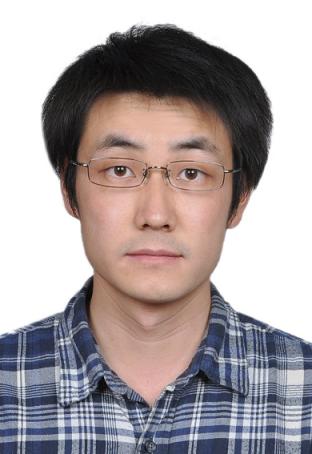 Weihua Bai (白伟华)合作论文数National Space Science Center, Chinese Academy of Sciences12
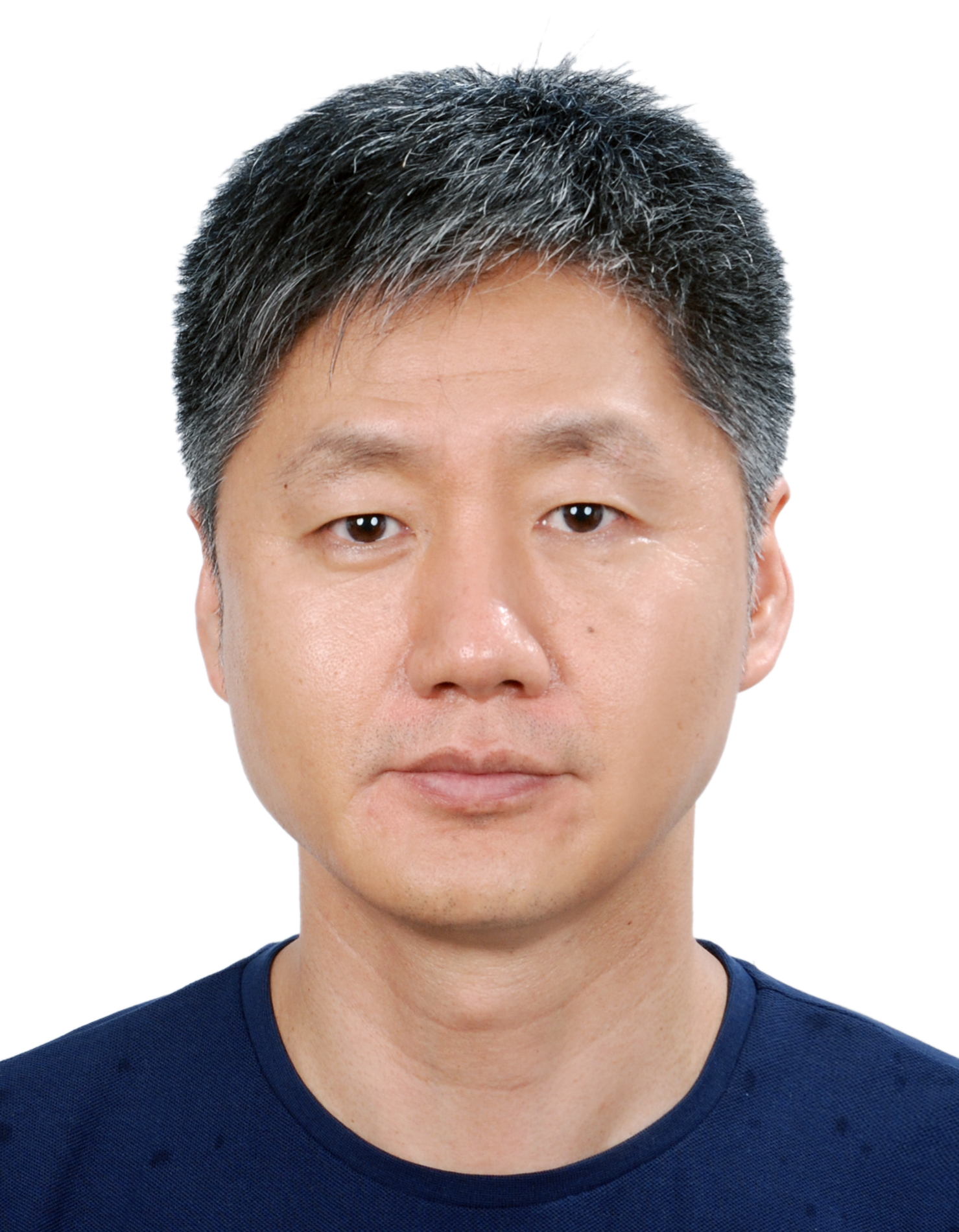 Qifei Du (杜起飞)合作论文数National Space Science Center, Chinese Academy of Sciences;University of Chinese Academy of Sciences12
 Yongping Li (李永平)合作论文数National Space Science Center, Chinese Academy of Sciences;University of Chinese Academy of Sciences11Yingying Di (翟应应)合作论文数Chinese Academy of Sciences10Hongjin Huang (黄红锦)合作论文数10GuoTai Qin (秦国泰)合作论文数10
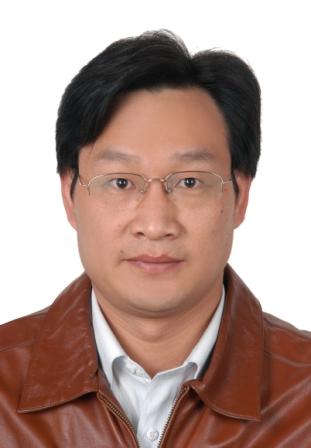 Baoquan Li (李保权)合作论文数National Space Science Center, Chinese Academy of Sciences;University of Chinese Academy of Sciences10
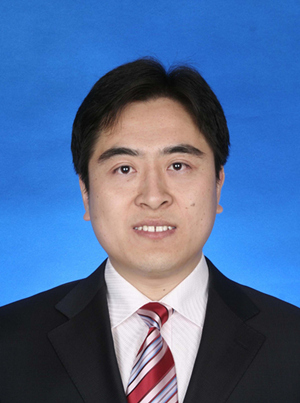 Xianguo Zhang (张贤国)合作论文数National Space Science Center, Chinese Academy of Sciences9Wei ZHANG (张微)合作论文数8
 Shenyi Zhang (张珅毅)合作论文数National Space Science Center, Chinese Academy of Sciences8
 Lei Li (李磊)合作论文数National Space Science Center, Chinese Academy of Sciences;University of Chinese Academy of Sciences8
 Huaan Lin (林华安)合作论文数Chinese Academy of Sciences7
 Chi Wang (王赤)合作论文数State Key Laboratory of Solar Activity and Space Weather, National Space Science Center, Chinese Academy of Sciences;University of Chinese Academy of Sciences7
 Linggao Kong (孔令高)合作论文数School of Frontier Sciences, Nanjing University7
 Aibing Zhang (张爱兵)合作论文数National Space Science Center, Chinese Academy of Sciences6
 Tao Jing (荆涛)合作论文数National Space Science Center, Chinese Academy of Sciences6
 GuoHong Shen (沈国红)合作论文数National Space Science Center, Chinese Academy of Sciences6yunlong lin (林云龙)合作论文数5Peng Tao合作论文数5Jinrong Cai (蔡金荣)合作论文数Center for Space Science and Applied Research, Chinese Academy of Sciences5Huajiao Chen (陈华姣)合作论文数5Hua Zhao (赵华)合作论文数5
 Ji Wu (吴季)合作论文数National Space Science Center, Chinese Academy of Sciences5Jiangzhao Ai合作论文数4Xiaoliang Zheng合作论文数4
 Xiaochao Yang (杨晓超)合作论文数National Space Science Center, Chinese Academy of Sciences;University of Chinese Academy of Sciences4
 Binquan Zhang (张斌全)合作论文数National Space Science Center, Chinese Academy of Sciences;University of Chinese Academy of Sciences4ZHENG Xiangzhi合作论文数4HuanXin Zhang (张焕新)合作论文数4
 XiangGuang Meng (孟祥广)合作论文数National Center for space science, Chinese Academy of Sciences4
 Yumei He (何玉梅)合作论文数Institute of Geology and Geophysics, Chinese Academy of Sciences;University of Chinese Academy of Sciences4Yuerong Cai (蔡跃荣)合作论文数4
 Xiaoxin Zhang (张效信)合作论文数National Satellite Meteorological Centre4Chunqin Wang (王春琴)合作论文数4Jilong Peng (彭吉龙)合作论文数4Zhusheng Wang合作论文数3guifu chen (陈贵福)合作论文数3Qingyong Ren (任清勇)合作论文数3WANG Shi-Jin合作论文数3GuangWei Cao (曹光伟)合作论文数3JinXia Zhang (张金霞)合作论文数3Zhang Benjamin A合作论文数3Fei Wei (韦飞)合作论文数3Xinyue Wang (王馨悦)合作论文数National Space Science Center, Chinese Academy of Sciences;University of Chinese Academy of Sciences3




