In order to test and calibrate the satellite payloads-electron detectors, the medium- and high-energy electron accelerators with extremely weak beam current to simulate the space electron radiation environment have been developed, including the experimental terminal which has a vacuum chamber and a vacuum rotation plate. All above form a system which is so-called National Space Science Center-Space Electron Facility, for short “NSSC-SEF”. The main specifications are electron beam energy range 10 2000 keV, beam current 103 109/(cm2 s), beam spot Ø50 mm, beam un-uniformity < 10
In order to test and calibrate the satellite payloads—electron detectors,the mediumand high-energy electron accelerators with extremely weak beam current to simulate the electron radiation environment of space have been built,including the experimental terminal which have a vacuum chamber and a vacuum rotation plate.This work focuses on the physical design and simulation of extremely weak,uniform,parallel electron beam of the medium-energy one,by using electron trajectory program Egun.The simulation results of electron trajectory in the initial focusing system,the accelerating tube and the twice beam broaden on different conditions including without grid,with ideal grid and with 1 mm diameter aperture grid in the spherical electron gun are presented.Finally,the beam density,105~109 cm-2.s-1 within the φ50mm target area,can be weakened by 8 orders of magnitude from the electron gun to the target area,and could satisfy the requirement of electron detectors testing and calibration experiment.
A collimating telescope was used to make alignment of the Shanghai Electron Beam Ion Trap (EBIT) facility. To get precise result, high precision adjustments and special tools were designed and adopted. Several experiments have been made to test the reliability and precision of these adjustments and tools. After careful alignment, the EBIT can be operated stably with an electron beam of 100kV/110mA. It was shown that the method of alignment is successful.
A new electron beam ion trap (EBIT) is under constructiin in Shanghai. In this paper we describe the design and the features of this apparatus. Finally the current status of Shanghai EBIT is shown.
A new in-vacuum wiggler of hybrid type was constructed for Beijing Synchrotron Radiation Facility (BSRF) .It is a 2.0 Tesla (while operation at the gap of 12mm), which will provide high flux in the hard X-ray region and will mainly be used for the high pressure diffraction experiments. The magnetic structure design, the mechanical structure design, the vacuum system and the results of magnetic field measurement of the in- vacuum wiggler are described in this paper. Also given is the characteristics of the synchrotron radiation of this wiggler and its compares to the current operation wigglers.
The general features of the first in-vacuum wiggler designed and constructed in Beijing Electron Positron Collider (BEPC) as a part of the BSRF upgrade project are introduced. The measured magnetic field of the in-vacuum wiggler reaches 2.0 Tesla when operated at the gap of 12mm, which will provide high flux in the hard X-ray region and will be mainly used for the high temperature and high pressure diffraction experiments. The key technologies and difficulties for the magnetic and mechanical design of the in-vacuum wiggler are described. The main parameters and the requirements for the in-vacuum wiggler are given too. Also, the magnetic field measurement results are shown.
The Shanghai FEL User Facility (SFEL) for interdisciplinary studies is based on a rf linear accelerator. The prime goal of SFEL is to provide a broadly tunable laser beam from near-Ill to far-lit with tens of MW at peak power. A linear accelerator will operate in three modes: ~ 3 MeV mode, 20 ~ 30 McV mode and 40 ~ 50 MeV mode. In 20 ~ 30 MeV mode, the accelerator consists of a ns grid gun driven at 476 MHz, a 476 MHz subharmonic buncher, a 2856 MHz T-W type of bunchcr with high field gradients, and a SLAC type linac.
The Shanghai FEL (SFEL) project at SINR is based on a RF linac in collaboration with the SIOFM. The prime goal of the project is to provide laser beams from the ultraviolet,visible to mid-IR with a few tens of MW in peak power and of Watts in average power. In the future, the wavelength region will be extend to the far-IR and vacuum ultraviolet. The SFEL will be a user facility for interdisciplinary studies.
 yuhui jing (景毓辉)合作论文数4Y Fu-Jia合作论文数2Ensheng Fu (傅恩生)合作论文数2Xikai Zhu合作论文数2shi caitu合作论文数2Yonglin Chen合作论文数2PanLin Guo (郭盘林)合作论文数2
 Naxiu Wang (王纳秀)合作论文数中国科学院大学核科学与技术学院2
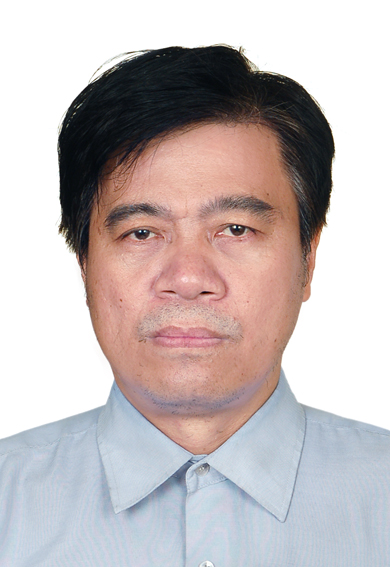 Quanling Peng (彭全岭)合作论文数中国科学院大学高能物理研究所2
 Yueqiang Sun (孙越强)合作论文数National Space Science Center, Chinese Academy of Sciences;University of Chinese Academy of Sciences2
 Wentao Ji (冀文涛)合作论文数School of Energy and Power Engineering, Xi'an Jiaotong University;Moe Key Laboratory of Thermo-Fluid Science and Engineering, Xi'an Jiaotong University2
 Aibing Zhang (张爱兵)合作论文数National Space Science Center, Chinese Academy of Sciences2
 Wenjing Wang (王文静)合作论文数Institute of Electrical Engineering, Chinese Academy of Sciences2
 Ping Zhou (周平)合作论文数Department of Automation, School of Information Science and Technology, University of Science and Technology of China;Chinese Academy of Sciences2
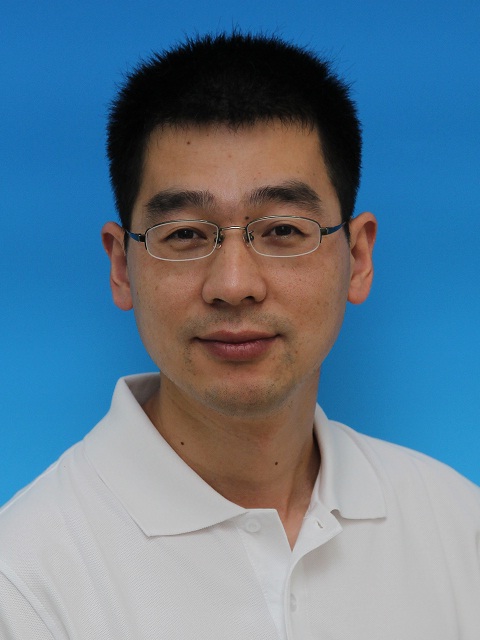 Tao Jing (荆涛)合作论文数National Space Science Center, Chinese Academy of Sciences2
 Guangwu Zhu (朱光武)合作论文数National Space Science Center, Chinese Academy of Sciences2Dashi Li合作论文数2Z Xi-Lin合作论文数1luoying xiong合作论文数1Xu Xiangyi合作论文数1J Chen (陈绩)合作论文数1Heping Yan合作论文数1DiKui Jiang (蒋迪奎)合作论文数1
 Xiaofeng Zhao (赵晓峰)合作论文数School of Materials Science and Engineering, Shanghai Jiao Tong University1
 Peirong Gong (龚培荣)合作论文数Shanghai Institute of Applied Physics, Chinese Academy of Sciences;University of Chinese Academy of Sciences1Ming Chen合作论文数1
 Jinbao Liang (梁金宝)合作论文数National Space Science Center, Chinese Academy of Sciences1Yun Cao (曹云)合作论文数1
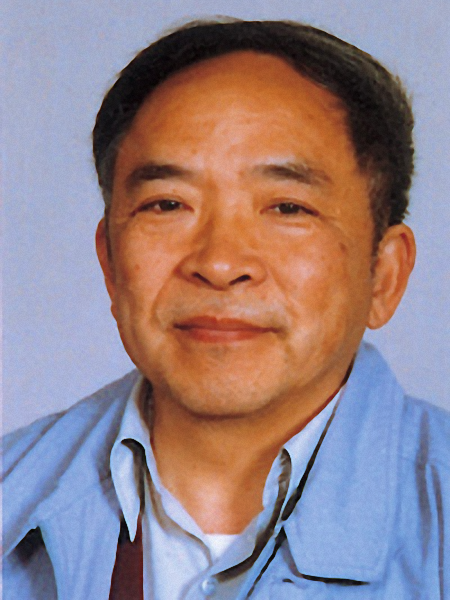 Zhijiang Wang (王之江)合作论文数Shanghai Institute of Optics and Fine Mechanics, Chinese Academy of Sciences1




