We present a tolerance-sensitivity-driven, manufacturability-aware strategy integrating optical design and alignment for optomechatronic imaging, validated in a fluorescence laparoscope. A chromatically corrected, structurally optimized design achieves near co-focal imaging across 450-1000 nm and anchors tolerance analysis and alignment planning. Simulations show strong axial-misalignment sensitivity, with decentering tolerances as tight as +/- 0.01 mm, near fabrication limits. We implement a hybrid alignment approach combining active compensation with passive constraints and validate it on batch prototypes. Five units were fabricated, aligned, and evaluated per YY 0068.1-2008; all met specification (100% yield), with central angular resolution similar to 8.9 cycles/deg in the visible (spec >= 7.92 ) and similar to 6.0 cycles/deg near 1000 nm (spec >= 4.18 ), a 75 degrees field of view, and distortion <= 4 % . The co-optimization preserves broadband image quality and high optical resolving power without tightening manufacturing tolerances, enabling scalable production and offering a transferable methodology for related endoscopic systems.
This paper presents a design of a large imaging plane wide-band zoom optical system, by analyzing the Gaussian principle of the mechanically compensated zoom system, the initial structural parameters are determined. The optimized system has a zoom range of 18-35.5 mm and distortion is less than 2%. It achieves wide-band parfocality (400-850 nm), meeting the usage requirements for 4 K resolution sensors. The system is designed with a spherical lens, and tolerance analysis indicates its suitability for mass production. Experimental results show that the system achieves a center resolution of 174 lp/mm and 104 lp/mm in the visible spectrum and NIR-I band, respectively, which significantly improves the resolution and sensitivity of the endoscope adapters.
In steel manufacturing, steel continuous casting billets are essential intermediate products, making surface defect detection (SDD) a critical task. To address the challenge of limited industrial datasets that hinder the accuracy of deep learning methods, this paper introduces the steel continuous casting billets SDD (SCCB-SDD) dataset, constructed from real production data. We also propose STCNet, a novel detection model that combines Transformer and Convolutional neural network architectures. Designed for industrial applications, STCNet employs a star-operation backbone TinystarNet for feature extraction. It further incorporates an intra-scale interaction encoder with convolutional additive self-attention to strengthen same-scale feature learning. An adaptive cross-scale fusion encoder integrates multi-scale information effectively. In our experiments, raw images from the SCCB-SDD dataset were manually annotated, with defect regions cropped into compact, information-dense samples to reduce background noise and accelerate model convergence. Results show that STCNet outperforms mainstream competing methods, achieving a mean Average Precision (mAP@50) of 92.1% with only 7.1 million parameters and 15.9 giga floating-point operations per second (GFLOPs). Furthermore, to validate the generalization capability of the model, we conducted evaluations on the GC10-DET dataset, where STCNet achieved 66.4% mAP@50 and 30.1% mAP@75, outperforming mainstream competing methods. These results demonstrate that STCNet achieves a strong balance between accuracy and efficiency, emphasizing its practical value for industrial billet defect detection. The source code and dataset are publicly available at https://github.com/Lislttt/STCNet.
As one of the important parameters of flow characteristics,flow velocity occupies an important position in the study of vertical pipeline lifting efficiency.To more accurately measure flow velocity and reveal the flow dynamics of vertical pipeline conveying systems,we focus on the solid-liquid two-phase flow in pipelines.In this paper,we study the method of pipeline velocity measurement and reveal the flow characteristics of the pipeline system.First,we use a high-speed camera to transform the flow velocity measurement into a computer vision problem,and combine the computer vision problem with deep learning technology to propose an A-RAFT(attention-based recurrent all-pairs field transforms)neural network model based on the attention mechanism.The model uses a convolutional layer to extract feature information and reduces the computational load through a pooling layer.Additionally,we introduce a correlation layer to perform inter-correlation operations on the feature information and calculate pixel displacement.In this process,the attention mechanism focuses on regions with flow velocity changes,enhancing the ability of the network to estimate velocity field variations.This helps the model better select and focus on key features in the input data,providing more accurate feature information for matching.Consequently,the estimation accuracy of the model is improved,particularly for the boundary regions of solid particles in solid-liquid two-phase flow.The model also effectively estimates flow rates for particles of varying shapes and sizes,with enhanced overall performance and accuracy.In addition,this paper constructs a combined real and virtual dataset for training the neural network model.The dataset is based on nine types of classical single-phase flow field data,and real particle texture information is fused into the dataset through real experiments to enhance data diversity.This dataset effectively simulates the optical flow changes of the pixels in the front and back frames in real experiments.The proposed model is evaluated with this dataset,and the results show that the model achieves high-precision velocity field computation on synthetic images,and the estimation error is 15.6%lower than those of other existing models.In the simulation experiments of solid particle transportation in vertical pipelines,the proposed model demonstrates accurate estimation performance on the collected real flow field data,with relative errors of lower than 5%for the measurement of particle velocities.These errors are derived from comparisons with the true values.The results validate the method in terms of both estimation accuracy and the generalization ability of the model.This study can provide new insights for solid-liquid two-phase flow characterization in energy extraction,tunneling,wastewater treatment,and long-distance pipeline transportation.
Abstract Assembly plays a crucial role in industrial manufacturing in industrial manufacturing, but the efficiency of conventional manual methods for parts pairing is limited. Previous research has demonstrated the feasibility of deep learning for point cloud feature extraction and 3D reconstruction. An innovative method utilizing deep learning for high-precision feature extraction and surface reconstruction is introduced to optimize parts pairing in this paper. Geometric dimensions and surface topography data are obtained by defining key assembly features and utilizing the Random Sample Consensus method. Deep learning is then used to directly regress the Surface Distance Function from point samples, facilitating comprehensive part surface modeling and supporting assembly simulation in the digital twin. To validate this approach, a case study demonstrates successful matching of 30 shaft parts and 30 hole parts after optimization, with an increase in average uniformity by 0.024. This highlights the proposed method’s superior effectiveness and accuracy in feature extraction and surface reconstruction.
Coarse particle vertical pipeline hydraulic transport has been widely used in deep sea mining, petrochemical industry and shaft slag removal. The precise measurement of the velocity of coarse particles within a solid- liquid two-phase flow in a vertical pipe constitutes a pivotal and challenging aspect when investigating particle motion characteristics. We introduce a method for measuring coarse particle velocity that combines a GMM motion detection model with flow direction constraint matching. In this approach, a high-speed camera system captures the flow image of solid-liquid two-phase flow within a pipeline, and the GMM model analyzes the image to detect the motion particles. Subsequently, a rapid particle matching algorithm, incorporating flow direction constraints, is formulated to establish the particle matching relationships. Simulation and real experiments substantiate the efficacy of this method. Moreover, the method achieves high-precision matching with an accuracy of up to 99%. For videos captured at 30 frames per second (fps), the method enables real-time speed measurement, with an overall measurement error of less than 5%. In summary, this is an effective method for measuring coarse particle velocity field which is important to the study of the motion characteristics of solid-liquid two-phase flow.
Assembly stands as a crucial process in industrial manufacturing, but traditional manual parts pairing is often inefficient. Previous research has highlighted the potential of deep learning for feature extraction and 3D reconstruction from point clouds. We introduces an innovative method based on deep learning for high-precision feature extraction and surface reconstruction aimed at parts pairing. By defining essential assembly features and employing the random sample consensus method, geometric dimensions and surface topography data are acquired. Subsequently, deep learning is utilised to directly regress the surface distance function from point samples, enabling detailed surface modelling of parts and supporting assembly simulation within the digital twin framework. A case study for validation reveals that after optimisation, 30 shaft parts and 30 hole parts are successfully matched, with an average uniformity increase of 0.024. This demonstrates the proposed method's superior effectiveness and accuracy in feature extraction and surface reconstruction.
We present the design and fabrication of an on-chip FBG interrogator based on arrayed waveguide grating (AWG) technology. The spectral overlap between adjacent channels in the integrated AWG is significantly enhanced through a combination approach involving the reduction of the output waveguide spacing and an increase in the input waveguide width. As a result of these design choices, our AWG demonstrates excellent spectral consistency, with spectral cross talk exceeding 30 dB. The interrogator seamlessly combining optical and circuitry components achieves full integration and enables a wide range of interrogation wavelengths, including C-band and L-band. With an interrogation range extending up to 80 nm, it theoretically has the capacity to simultaneously interrogate the wavelengths of 20 FBG sensors. Experimental findings demonstrate an absolute interrogation accuracy of less than 2 pm for the fully integrated interrogator. With its compact size, cost-effectiveness, exceptional precision, and ease of integration, the proposed interrogator holds a substantial promise for widespread application in the realm of FBG sensing.
Depth completion is crucial for many robotic tasks such as autonomous driving, 3-D reconstruction, and manipulation. Despite the significant progress, existing methods remain computationally intensive and often fail to meet the real-time requirements of low-power robotic platforms. Additionally, most methods are designed for opaque objects and struggle with transparent objects due to the special properties of reflection and refraction. To address these challenges, we propose a Fast Depth Completion framework for Transparent objects (FDCT), which also benefits downstream tasks like object pose estimation. To leverage local information and avoid overfitting issues when integrating it with global information, we design a new fusion branch and shortcuts to exploit low-level features and a loss function to suppress overfitting. This results in an accurate and user-friendly depth rectification framework which can recover dense depth estimation from RGB-D images alone. Extensive experiments demonstrate that FDCT can run about 70 FPS with a higher accuracy than the state-of-the-art methods. We also demonstrate that FDCT can improve pose estimation in object grasping tasks.
Appearance inspection is crucial for quality control during the manufacturing of large complex products. In-situ visual inspection based on image processing and machine learning can significantly reduce the production costs by avoiding the stages of transshipment and relocation, etc. However, imaging and model training are challenged by the complex background, illuminance, and changing environment of the production site. In addition, large dataset is hard to be obtained with object-level annotations owing to the high cost of manual annotation in practical situations. In this paper, we proposed an Incremental Dual network Detection Model (IDDM) for efficient and high-precision inspection of the appearance of large complex product base on in-situ images. A dual network structure is used to implement the incremental training of the model based on metric learning and batch labeling of unlabeled data during the training on a small number of well-labeled samples. The regions of interest are extracted based on multi-feature and refined to improve the positional accuracy of the defects in complex background. On the public dataset, the experimental results derived on various annotation scales showed a better performance of the proposed IDDM compared to the supervised object-detection baselines. The mean Average Precision (mAP) was 51.8% with a 25% labeled ratio and the processing speed was 22 frames per second (FPS). In addition, the proposed method was applied to the defect detection of the snow groomer surface as an industrial case.
随着市场竞争加剧和企业运营要求的提高,引入具备视觉能力的物流机器人已成为提高制造、运营、管理能力的重要措施.云边协同智能视觉传感器能够将边缘计算和云计算相结合,兼具边缘机器视觉的算法轻量化及即时决策和云计算的大规模运算及智能决策能力,可提高智慧工厂的效率和业务优化水平.
Optical imaging usually shows significant differences in underwater environments with different characteristics. The general underwater imaging model ignores the influences of turbidity on the attenuation of light. For turbid water with different particle types and concentrations, we introduced background light correction and turbidity factors to express the influences. A parametric turbid underwater image generation model based on dark channel prior theory was proposed, in which, the transmission map changes with the turbidity while the image tone changes with the background light correction. Based on experiments, the high similarity between generated images and real images confirmed that our model can fit the imaging in different bodies of water. Thus, the model can be used to generate a greater diversity of samples of turbid underwater images. We also applied the model to turbid underwater image enhancement. The image quality evaluation results indicated that the model can enhance turbid underwater images well.
针对传统物流实验教学受到硬件装备和环境场地等资源制约、实验项目较为单一和时效性差问题,分析了基于虚拟仿真平台开展物流实验教学的可行性和优势,提出了基于虚拟仿真平台进行分层次实验设计和教学实践的方案,给出了具体的教学示例.实践表明,新的教学形式以实践为主,以讨论为辅,改变了传统的以讲解为主、以观看为辅的形式,取得了较好的效果.讨论了物流实验教学方案的发展和改进方向.
Powder bed defects usually inevitably appear in the process of powder spreading during laser powder bed fusion owing to the characteristics of the powder material and the performance of the spreading equipment. This may lead to instability with regard to subsequent processes and the quality of the final part. Defect detection based on the imaging process is an effective way to achieve non-contact, efficient, and accurate online monitoring, and it has received widespread attention. In this paper, an imaging method for online collection of powder bed is proposed based on the experiments of various lighting strategies, whose influences on defect analysis are evaluated. Subsequently, an adaptive segmentation algorithm for defect extraction is proposed that automatically searches for the best threshold by evaluating the gray histogram of the powder bed image. Finally, different convolution neural networks were applied to implement the classification of the defects, and their performances were evaluated and compared. The results of the on-site experiments demonstrate that the proposed method has good accuracy and efficiency in the multi-defect detection of a powder bed.
数值仿真是研究激光增材制造过程中各类物理现象、揭示零件缺陷形成机理、优化增材制造工艺参数的重要手段,该领域学者针对增材制造过程中的热分析、金属粉末颗粒性质分析、微观结构分析、质量缺陷成因分析等方面,开展了大量研究,提出了相应的数学模型和方法.激光增材制造过程的数值仿真是一个在空间和时间上均跨越多个尺度的复杂问题,微观、介观、宏观尺度下数值仿真所关注的对象和所使用的方法各不相同;多数研究聚焦于某一尺度下的过程仿真,另一部分研究则基于不同模型的数据关系建立模型间的耦合关系,实现热-相、热-力的综合分析.对现阶段激光增材制造数值仿真领域的主要技术进行了综述,在梳理数值仿真基本流程的基础上,对其中涉及的热源模型,粉末模型,力学模型以及微观结构模型进行了介绍,讨论了其特点和适用性;结合相关技术领域的发展,探讨了激光增材制造数值仿真技术的发展方向,旨在为本领域的技术研究与发展提供参考.
物流及其所连接的各方,无不面临多样化、个性化、定制化的需求冲击,无论生产制造还是商贸流通,都要面对近年来诸多不确定性的挑战.为了应对挑战,涌现出了众多新技术与管理元素,横贯物流自动化装备、物流机器人、AI决策等新兴技术,纵连物流仓储、配送全环节,而数字孪生技术的发展,进一步促使物流管理智慧化与物流系统智能化,基于物流系统关键要素的有机融合实现数字物流革命.
针对单一特征对粉末床缺陷表达不明确导致检测效果不佳的问题,提出了一种基于特征融合的增材制造过程粉末床缺陷视觉检测方法.该算法分别使用SIFT方法、灰度共生矩阵和Hu不变矩提取尺度空间特征、纹理特征和几何特征,借助词袋模型对每张图像构建3组视觉单词直方图,通过串行融合3组视觉单词直方图得到新的特征矩阵,采用特征选择对融合后特征矩阵进行降维,并传人随机森林分类器中进行训练.实验结果表明,不同特征对粉末床不同类型缺陷检测具有不同的贡献,优化特征融合参数后,算法平均准确率达到97.46%,缺陷检测效果明显提升.
The existing pedestrian tracking applications are challenging to balance real-time performance and accuracy. We propose a detection–tracking–correction strategy based on the improved single-shot multi-box detector (SSD), Deep-SORT, and the improved multi-stage object detection architecture (Cascade-R-CNN), which takes both real-time performance and accuracy into consideration. For the detection mechanism, the SSD network is fast and efficient, but the disadvantage of the SSD network is relatively low accuracy. Therefore, the tricks such as cross-entropy loss function, deconvolution, and non-maximum suppression are introduced to improve the SSD network. Then, the improved SSD network is used as the central pedestrian detector to ensure real-time performance. For the tracking mechanism, the Deep-SORT is used to improve the mismatch between tracking and detection. For the correction mechanism, the improved Cascade R-CNN (introducing deformable convolution and group normalization) is used as the reference network to correct the detection errors. The experiment on the data set OTB-100 shows that the proposed strategy has good stability and adaptability in various complex scenes, and the conditions of missed detection and false detection are significantly reduced.
基于虚拟仿真平台的物流运输路径优化实验,将虚拟仿真平台与实验教学相融合,在虚拟场景中构建实际的物流环节,解决物流实验教学所面临的资源欠缺、实验单一、学生参与度不足、实验项目专业性不强等关键问题.分析了物流实验教学的特性,介绍了所使用的虚拟仿真平台,研究了物流运输优化实验的教学方法,从提升实验项目专业性的角度出发,围绕物流专业知识,使学生能够深度参与到物流运转过程中,直观地理解专业知识在不同场景、不同环节的应用.
Underwater image analysis is crucial for many applications such as seafloor survey, biological and environment monitoring, underwater vehicle navigation, inspection and maintenance of underwater infrastructure etc. However, due to light absorption and scattering, the images acquired underwater are always blurry and distorted in color. Most existing image enhancement algorithms typically focus on a few features of the imaging environments, and enhanced results depend on the characteristics of original images. In this study, a local cycle-consistent generative adversarial network is proposed to enhance images acquired in a complex deep-water environment. The proposed network uses a combination of a local discriminator and a global discriminator. Additionally, quality-monitor loss is adopted to evaluate the effect of the generated images. Experimental results show that the local cycle-consistent generative adversarial network is robust and can be generalized for many different image enhancement tasks in different types of complex deep-water environment with varied turbidity.
 Fuzhou Du (杜福洲)合作论文数School of Mechanical Engineering & Automation, Beihang University9
 Xiaoqing Tang (唐晓青)合作论文数School of Mechanical Engineering & Automation, Beihang University7Xianhui Zong合作论文数5
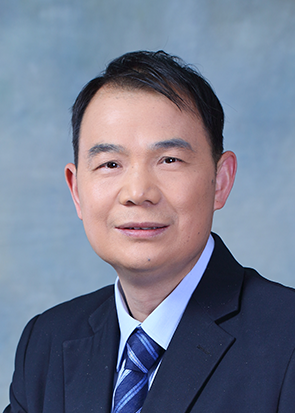 Ketai He (贺可太)合作论文数School of Metallurgical Engineering, University of Science and Technology Beijing4
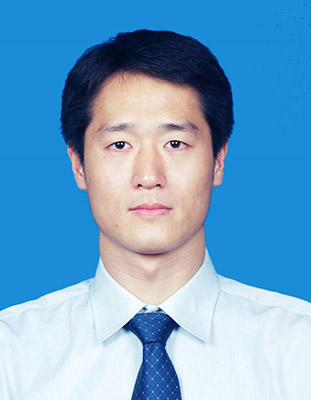 Zhipeng Feng (冯志鹏)合作论文数School of Mechanical Engineering, University of Science and Technology Beijing4
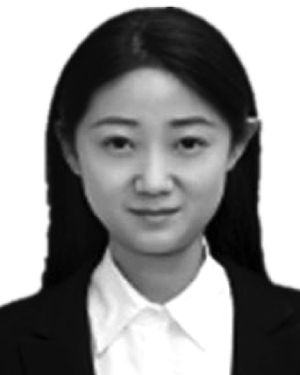 Shudi Yang合作论文数3
 Liqiang Wang (王立强)合作论文数College of Optical Science and Engineering, Zhejiang University3Xinghao Chen (陈星浩)合作论文数2
 Xiaoming Ma合作论文数2Xiao Lu (鲁晓)合作论文数2
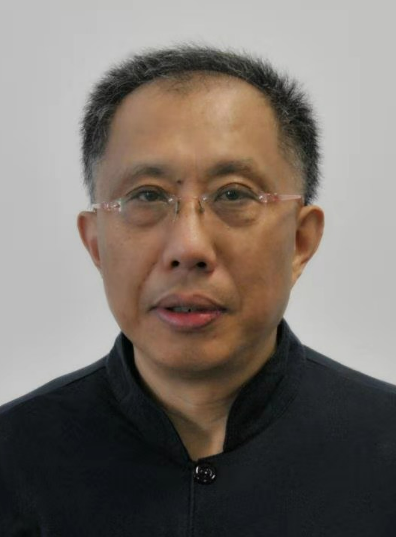 Haifeng Wang (王海风)合作论文数College of Electrical Engineering, Sichuan University2
 Jing Shi合作论文数Department of Industrial and Manufacturing Engineering, North Dakota State University2
 Wenjuan Du (杜文娟)合作论文数College of Electrical Engineering, Sichuan University2
 Fei Ma (马飞)合作论文数School of Metallurgical Engineering, University of Science and Technology Beijing2Qiheng Zhu合作论文数1Haiyue Wang合作论文数1Jiahe Zhang合作论文数1Jiaxiong Wu合作论文数1Yuan Zhuang合作论文数1
 Min Zou合作论文数1Jianbo Xin合作论文数1
 Boshen Liu合作论文数1R. Dunn合作论文数1Mingfeng Ge合作论文数1Limin Yang合作论文数1jie jin (金杰)合作论文数1
 Wenfei Dong (董文飞)合作论文数Suzhou Institute of Biomedical Engineering and Technology, Chinese Academy of Sciences1
 Bo Yuan (袁波)合作论文数College of Optical Science and Engineering, Zhejiang University1
 Qing Yang (杨青)合作论文数State Key Laboratory of Extreme Photonics and Instrumentation, College of Optical Science and Engineering, Zhejiang University1
 Chen Wang (王晨)合作论文数Spatial AI & Robotics Lab, Department of Computer Science and Engineering, School of Engineering and Applied Sciences, University at Buffalo1
 Huan Liu合作论文数Huawei Technologies Canada Co., Ltd.1
 Xiaohua Zhang (张晓化)合作论文数School of Civil Aviation, Northwestern Polytechnical University1
 Leixin Meng合作论文数Lanzhou University, Lanzhou University1
 Ning Zhao (赵宁)合作论文数School of Metallurgical Engineering, University of Science and Technology Beijing1
 Wenying Ding (丁文英)合作论文数School of Metallurgical Engineering, University of Science and Technology Beijing1
 Lechang Yang (杨乐昌)合作论文数School of Mechanical Engineering, University of Science and Technology Beijing;Department of Advanced Design and Systems Engineering, City University of Hong Kong1
 Dadong Wang合作论文数University of New South Wales;Quantitative Imaging Research Team, CSIRO1
 Xinxin Guo合作论文数China University of Geosciences, China University of Geosciences1
 R. W. Dunn合作论文数1




