The advanced fast ion-dominated high beta plasma is achieved using multi-MW neutral heating beams. To facilitate the diagnostics of this fast ion-dominated plasma, a high-energy and high-current diagnostic neutral beam (DNB) injector was designed and built by the Budker Institute of Nuclear Physics. The DNB injector made active measurements of ion temperature and rotational velocity possible with the help of charge-exchange spectroscopy for impurity ions and, most importantly, for the main ion (deuterium) component. A DNB energy of 40 keV was chosen to assure low beam attenuation in the plasma and to enable spectroscopic measurements along the entire plasma column. The diameter (level 1/e) of the ballistically focused DNB in the plasma is about 8 cm. To achieve a high temporal resolution, unique methods of beam modulation with a frequency of up to 10 kHz were implemented. The achieved high DNB current of 8 A in atomic hydrogen in combination with the beam modulation enables to obtain an acceptable signal-to-noise ratio of the measured spectra.
An overview of the neutral beam injectors developed at the Budker Institute of Nuclear Physics in Novosibirsk during the last 10 years is presented. These neutral injectors are used for plasma diagnostics, heating and current drive in modern fusion devices with magnetic confinement. An arc or a radio-frequency (RF) discharge generates a plasma in the ion sources of the injectors, and a positive hydrogen or deuterium ion beam is extracted and accelerated by a multiaperture ion-optical system (IOS). The accelerated ion beam is converted into a neutral one in a gas target. The precision multiaperture IOS with spherically concave electrodes provides ballistic focusing of the neutral beam. The high-energy, high-power beam injector based on negative ions, which is currently under development, is described as well. It comprises a RF negative ion source and a wide-aperture electrostatic accelerator separated from the source by a low-energy beam transport line, thereby improving the injector reliability.
— The review presents the experiments performed with the KEDR detector at the e^ + e^ - collider VEPP-4M in the energy range of √(s) = 1.84–3.88 GeV. The cross section of e^ + e^ - annihilation to hadrons was measured at 22 points of this range and the search for narrow resonances was conducted below 3.1 GeV. The masses of J / . -0emψ and ψ (2S) mesons were measured with a record accuracy better than 3 ×10^ - 6 ; their partial and total widths were determined. Measurements of the tau lepton mass and masses of charged and neutral D mesons were performed with high precision. The measurements of the ψ (3770) parameters are discussed, and attention is drawn to some inconsistency of the procedure employed by the Particle Data Group for determining its parameters.
The injection complex that heats plasma of Globus-M2 spherical tokamak consists of two injectors which supply high-energy beams of hydrogen (deuterium) atoms into the device’s plasma. Injectors are autonomous and allow for preparing and setting up the device and measuring the parameters of the atomic beam independently of the other injector and of the tokamak. The authors provide detailed analysis of each injector’s configuration, substantiate their selection of the experiment layout for introducing beams into the tokamak plasma, set forth characteristics of both injectors’ atomic beams injected into the tokamak plasma, and discuss the results of experiments on additional heating of Globus-M2 tokamak plasma obtained by injecting two atomic beams.
Using the 1.32 pb^-1 statistics collected at the J/ψ peak with the KEDR detector at the VEPP-4M e^+e^- collider, we measured the branching fractions of J/ψ meson decays to the final states 2( π ^+π ^-)π ^0 , K^+K^-π ^+π ^-π ^0 , 2( π ^+π ^-) and K^+K^-π ^+π ^- . The results obtained for the decays J/ψ→ 2( π ^+π ^-)π ^0 , J/ψ→ K^+K^-π ^+π ^-π ^0 contradict the measurements performed by other groups in the last century, but agree well with recent results of BABAR and BESIII collaborations.
Abstract Using the 1.32 $$\hbox {pb}^{-1}$$ pb - 1 statistics collected at the $$J/\psi $$ J / ψ peak with the KEDR detector at the VEPP-4M $$e^{+}e^{-\, }$$ e + e - collider, we measured the branching fractions of $$J/\psi $$ J / ψ meson decays to the final states 2( $$\pi ^{+}\pi ^{-})\pi ^{0}$$ π + π - ) π 0 , $$K^{+}K^{-}\pi ^{+}\pi ^{-}\pi ^{0}$$ K + K - π + π - π 0 , 2( $$\pi ^{+}\pi ^{-})$$ π + π - ) and $$K^{+}K^{-}\pi ^{+}\pi ^{-}$$ K + K - π + π - . The results obtained for the decays $$J/\psi \rightarrow $$ J / ψ → 2( $$\pi ^{+}\pi ^{-})\pi ^{0}$$ π + π - ) π 0 , $$J/\psi \rightarrow K^{+}K^{-}\pi ^{+}\pi ^{-}\pi ^{0}$$ J / ψ → K + K - π + π - π 0 contradict the measurements performed by other groups in the last century, but agree well with recent results of BABAR and BESIII collaborations.
Using the 1.32 pb(-1) statistics collected at the J/psi peak with the KEDR detector at the VEPP-4M e(+)e(-) collider, we measured the branching fractions of J/psi meson decays to the final states 2(pi(+)pi(-))pi(0), K+K- pi(+)pi(-)pi(0), 2(pi(+)pi(-)) and K+K- pi(+)pi(-). The results obtained for the decays J/psi -> 2(pi(+)pi(-))pi(0), J/psi -> K+K- pi(+)pi(-)pi(0) contradict the measurements performed by other groups in the last century, but agree well with recent results of BABAR and BESIII collaborations.
Using the 1.32 pb^-1 statistics collected at the J/ψ peak with the KEDR detector at the VEPP-4M e^+e^- collider, we measured the branching fractions of J/ψ meson decays to the final states 2( π ^+π ^-)π ^0 , K^+K^-π ^+π ^-π ^0 , 2( π ^+π ^-) and K^+K^-π ^+π ^- . The results obtained for the decays J/ψ→ 2( π ^+π ^-)π ^0 , J/ψ→ K^+K^-π ^+π ^-π ^0 contradict the measurements performed by other groups in the last century, but agree well with recent results of BABAR and BESIII collaborations.
For plasma heating and stabilization in open magnetic traps, the high-power neutral beam injector with tunable beam energy was developed at Budker Institute of Nuclear Physics. The initial energy of the beam particles is 15 keV, and it can be subsequently increased to 40 keV. In this case, the neutral beam power increases from 1.7 to 3.5 MW. A distinctive feature of this injector is the fact that, as the accelerating voltage considerably changes, the ion beam current remains constant. The injectors based on the ion sources with tunable energy are used in experiments at the C-2W open trap (USA).
A prototype of a powerful high-voltage neutral beam injector, based on acceleration of negative hydrogen ions and their neutralization, is under development at Budker Institute of Nuclear Physics (BINP). The design of the BINP high-voltage injector includes several innovative components, important for injector operation stability and overall efficiency. It includes a multi-aperture long-pulse surface-plasma negative ion source with thermostabilized grid, ithe magnetic system with concaved field lines in the ion-optic system (IOS) and the distributed cesium deposition system. The injector scheme incorporates a wide-aperture low-energy beam transport (LEBT) section, plasma target for negative ionneutralization, and recuperators of non-neutralized ions. Several test stands were constructed at BINP for injector component studies. This paper describes the results of experiments on negative ion beam production, transport through LEBT, ion acceleration to energy up to 240 keV and transport through the high voltage beam transport (HEBT) section to the distance ∼10 m from the source. The parameters of the transported beam, which were measured at several points along the beam line and at the beam dump calorimeter, are presented. The beam transport efficiency as a function of various ion source, LEBT and HEBT parameters is measured and compared with the calculated values. The results dof plasma neutralization target study are presented as well.
The present work continues a series of the KEDR measurements of the R value that started in 2010 at the VEPP-4M e+e− collider. By combining new data with our previous results in this energy range we measured the values of Ruds and R at nine center-of-mass energies between 3.08 and 3.72 GeV. The total accuracy is about or better than 2.6% at most of energy points with a systematic uncertainty of about 1.9%. Together with the previous precise R measurement at KEDR in the energy range 1.84–3.05 GeV, it constitutes the most detailed high-precision R measurement near the charmonium production threshold.
A stand based on a magnetron, circulator, parallel-coupled accelerating structure, electron gun, diagnostic equipment, and modulator has been being created at the Budker Institute of Nuclear Physics (BINP) for testing the accelerator and injection part of a compact linear accelerator. The installation operates in the S-band with a pulsed power of 3–3.5 MW and average magnetron power up to 3 kW. This work contains descriptions and results of preliminary launching of the stand.
Concept of photon neutralizer for large ITER like NBI system has been proposed. The use of proposed concept allows beam neutralization with significantly lower requirements concerning optical radiation quality in comparison With resonance schemes, also there is no need for complicated stabilization and tuning system.
An overview of studies into the physics and technology of ion and neutral beams carried out at the Bunker Institute of Nuclear Physics, SB RAS since 1960 up to now is presented. These studies were initiated by Academician G I Budker for the charge-exchange injection of particles into storage rings. Sub-sequently, a whole series of ion sources were created and particle beams were produced for applications in accelerators and plasma devices for plasma heating and diagnostics.
An atomic injector with a beam power of 1 MW for heating plasma in the TCV tokamak (Lausanne, Switzerland) by a beam of neutral atoms was developed and put into operation in 2015–2016 at the Budker Institute of Nuclear Physics SB RAS (Novosibirsk). Plasma in the injector is formed in a plasma emitter by a high-frequency magnetic field, which is created by a high-power semiconductor generator with an output power of 40 kW at a frequency of 4 MHz. The facility operates in the pulse mode with a pulse duration of 2 s and a pause of 5 min. The generator is manufactured in the form of a modular system consisting of 16 identical generator modules, whose high-frequency power is summed, control modules, and a power-supply source. The generator allows modulation of the output power in the range of 30–100% by changing the power-supply voltage. The general structure of the generator and its elements and the results of its commissioning are presented.
Present work continues a series of the KEDR measurements of the $R$ value that started in 2010 at the VEPP-4M $e^+e^-$ collider. By combining new data with our previous results we measured the values of $R_{text{uds}}$ and $R$ at nine points of the center-of-mass energy between 3.08 and 3.72 GeV. The total accuracy is about or better than $2.6%$ at most of energy points with a systematic uncertainty of about $1.9%$.
The product of the electronic width of the ψ(2S) meson and the branching fraction of its decay to the muon pair was measured in the e+e−→ψ(2S)→μ+μ− process using nine data sets corresponding to an integrated luminosity of about 6.5 pb−1 collected with the KEDR detector at the VEPP-4M electron–positron collider:Γee×Bμμ=19.3±0.3±0.5eV. Adding the previous KEDR results on hadronic and leptonic channels, the values of the ψ(2S) electronic width were obtained under two assumptions: either with the assumption of lepton universalityΓee=2.279±0.015±0.042keV or without it, summing up hadronic and three independent leptonic channelsΓee=2.282±0.015±0.042keV.
 A.A. Ivanov合作论文数Budker Institute for Nuclear Physics28
 E. A. Kuper合作论文数25i n okunev合作论文数23
 Sergey Evgenyevich Karnaev合作论文数23
 E. Levichev合作论文数23
 V. A. Kiselev合作论文数23G. V. Karpov合作论文数23G. Ya. Kurkin合作论文数23v v anashin合作论文数22V. A. Petrov合作论文数22
 Aleksandr N Skrinsky合作论文数22
 O. I. Meshkov合作论文数22I. Yu. Basok合作论文数21v g prisekin合作论文数21S.G. Pivovarov合作论文数21a k barladyan合作论文数21S. B. Oreshkin合作论文数21e a simonov合作论文数21Ga Savinov合作论文数21Ap Onuchin合作论文数21s a nikitin合作论文数21K. Yu. Todyshev合作论文数Budker Institute of Nuclear Physics21GM TUMAIKIN合作论文数21Ve Blinov合作论文数21Alexey Buzykaev合作论文数Budker Institute of Nuclear Physics;JINR21
 Anton Viktorovich Bogomyagkov合作论文数21V. S. Bobrovnikov合作论文数21Sergey Peleganchuk合作论文数Novosibirsk State University;Budker Institute of Nuclear Physics21E. M. Baldin合作论文数21b shwartz合作论文数21
 Valery Ivanovich Telnov合作论文数Novosibirsk State University;Budker Institute of Nuclear Physics21S. E. Baru合作论文数21Viacheslav Kulikov合作论文数21
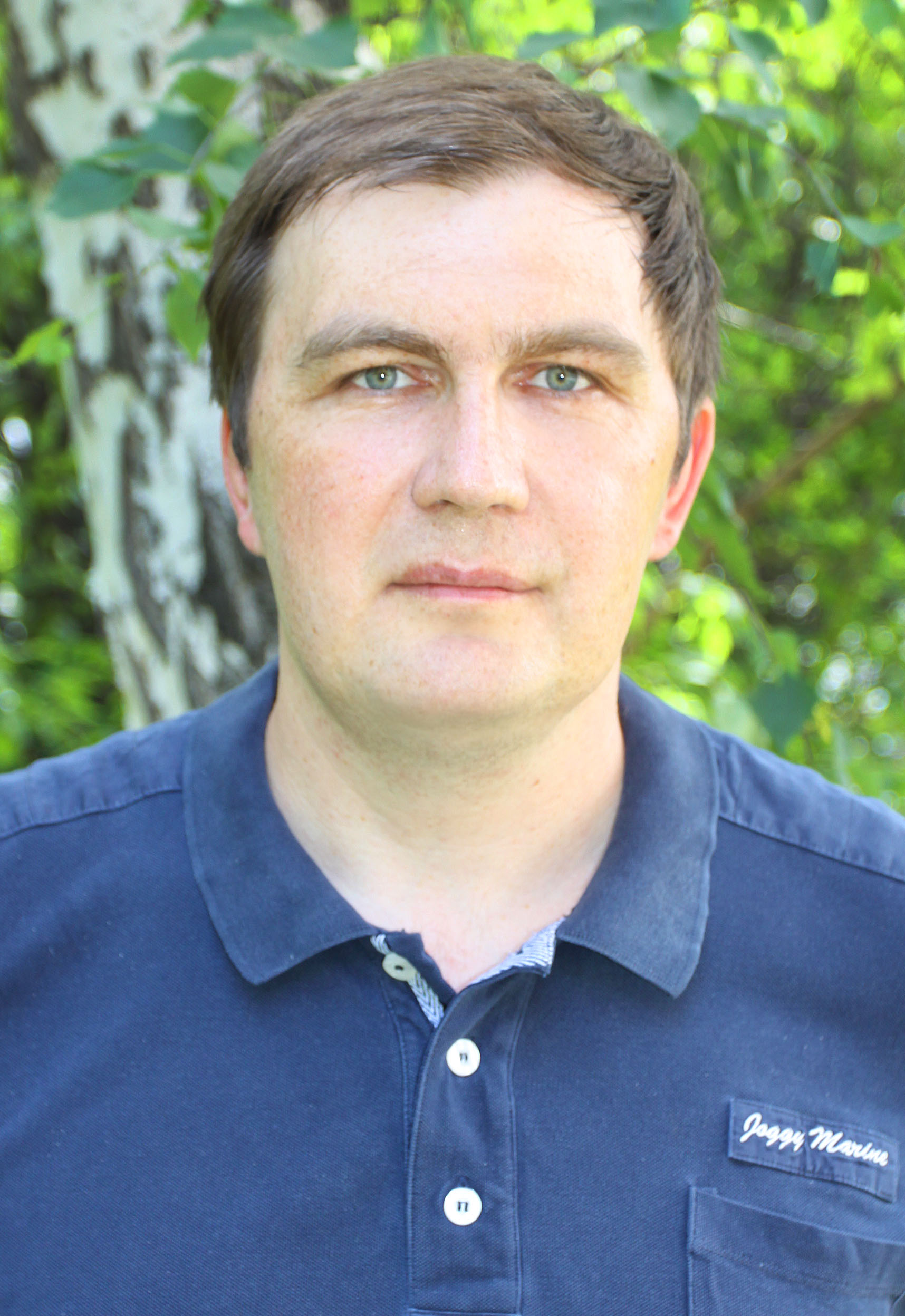 Vladimir Viktorovich Zhulanov合作论文数Budker Institute of Nuclear Physics/Department of Physics, Physicotechnical Section, Novosibirsk State University21
 Alexander E. Bondar合作论文数Budker Institute of Nuclear Physics, Russian Academy of Sciences;Department of Physics, Novosibirsk State University21A. Bobrov合作论文数21V. A. Tayursky合作论文数21V.M. Malyshev合作论文数Nizhni Novgorod State Technical University21
 A. N. Zhuravlev合作论文数21A.A Ruban合作论文数21S. V. Sinyatkin合作论文数21A. Yu. Barnyakov合作论文数21I. I. Morozov合作论文数21D.N. Grigoriev合作论文数21S. I. Mishnev合作论文数21A. G. Shamov合作论文数21M. Yu. Barnyakov合作论文数20d a maksimov合作论文数20A. A. Osipov合作论文数20




