Instruction tuning of Large Vision-language Models (LVLMs) has revolutionized the development of versatile models with zero-shot generalization across a wide range of downstream vision-language tasks. However, the diversity of different training tasks from various sources and formats would lead to inevitable task conflicts, where different tasks conflict for the same set of model parameters, resulting in sub-optimal instruction-following abilities. To address that, we propose the Mixture of Cluster-conditional LoRA Experts (MoCLE), a novel Mixture of Experts (MoE) architecture designed to activate task-customized model parameters based on instruction clusters. A separate universal expert is further incorporated to improve generalization abilities of MoCLE for novel instructions. Extensive experiments on InstructBLIP and LLaVA demonstrate the effectiveness of MoCLE.
Learning with high-resource data has demonstrated substantial success in artificial intelligence (AI); however, the costs associated with data annotation and model training remain significant. A fundamental objective of AI research is to achieve robust generalization with limited-resource data. This survey employs agnostic active sampling theory within the Probably Approximately Correct (PAC) framework to analyze the generalization error and label complexity associated with learning from low-resource data in both model-agnostic supervised and unsupervised settings. Based on this analysis, we investigate a suite of optimization strategies tailored for low-resource data learning, including gradient-informed optimization, meta-iteration optimization, geometry-aware optimization, and LLMs-powered optimization. Furthermore, we provide a comprehensive overview of multiple learning paradigms that can benefit from low-resource data, including domain transfer, reinforcement feedback, and hierarchical structure modeling. Finally, we conclude our analysis and investigation by summarizing the key findings and highlighting their implications for learning with low-resource data.
Diffusion models have emerged as the leading paradigm in generative modeling, excelling in various applications. Despite their success, these models often misalign with human intentions and generate results with undesired properties or even harmful content. Inspired by the success and popularity of alignment in tuning large language models, recent studies have investigated aligning diffusion models with human expectations and preferences. This work mainly reviews alignment of diffusion models, covering advancements in fundamentals of alignment, alignment techniques of diffusion models, preference benchmarks, and evaluation for diffusion models. Moreover, we discuss key perspectives on current challenges and promising future directions on solving the remaining challenges in alignment of diffusion models. To the best of our knowledge, our work is the first comprehensive review paper for researchers and engineers to comprehend, practice, and research alignment of diffusion models.
Inpatient medication recommendation requires clinicians to repeatedly select specific medications, doses, and routes as a patient's condition evolves. Existing benchmarks formulate this task as admission-level prediction over coarse drug codes with multi-hot diagnostic and procedure code inputs, failing to capture the per-timepoint, information-rich nature of real prescribing. We propose RxEval, a prescription-level benchmark that evaluates LLM prescribing capability by multiple-choice questions: each question presents a detailed patient profile and time-ordered clinical trajectory, requiring selection of specific medication-dose-route triples from real prescriptions and patient-specific distractors generated via reasoning-chain perturbation. RxEval comprises 1,547 questions spanning 584 patients, 18 diagnostic categories, and 969 unique medications. Evaluation of 16 LLMs shows that RxEval is both challenging and discriminative: F1 ranges from 45.18 to 77.10 across models, and the best Exact Match is only 46.10
Recent breakthroughs in reasoning language models have significantly advanced text-based reasoning. On the other hand, Multi-modal Large Language Models (MLLMs) still lag behind, hindered by their outdated internal LLMs. Upgrading these is often prohibitively expensive, as it requires complete vision-language alignment retraining which is costly. To address this issue, we introduce Perception-Reasoning Decoupling, which modularizes the MLLM’s reasoning component and makes it easily replaceable. This approach redefines the MLLM's role to convert multi-modal inputs into detailed textual outputs that can be processed by any powerful, external, text-only LLM reasoners. To align the MLLM's perceptual output with the final reasoning task, we propose a novel reinforcement learning algorithm called Visual Perception Optimization (VPO). VPO rewards the MLLM based on the correctness of answers generated by the external reasoner to produce faithful and query-relevant captions. Together, this decoupling pipeline and VPO form our Reasoning-Aligned PerceptIon Decoupling (RAPID) approach. Empirical results show that RAPID achieves significant performance gains on multi-modal reasoning benchmarks. Crucially, RAPID enables a novel inference-time scaling paradigm: Once trained with VPO, the MLLM can be paired with any state-of-the-art LLM reasoner for consistent performance improvement without retraining. The implementation of our method is available at: https://anonymous.4open.science/r/RAPID2-80CD/.
Federated heterogeneity refers to the disparities in data distributions, model architectures, and communication capabilities across various devices or institutional entities. In real-world scenarios, statistical heterogeneity can often lead to ineffective aggregation, severely impacting generalization performance and resulting in biased or unstable model weights. Theoretically, distributional robustness analysis indicates that the generalization performance of a learning model can be bounded with respect to any heterogeneity distribution. This insight motivates us to reconsider the aggregation strategy in federated statistical heterogeneity scenarios, and we thus propose a new weighting aggregation protocol that considers the generalization bound disagreement of each local model. Specifically, we estimate the upper and lower bounds of the second-order origin moment of the shifted distribution for the current local model, and using these bound disagreements as the aggregation proportions for weights in each communication round. Our experiments demonstrate that this proposed aggregation protocol significantly improves the performance of several representative Federated Learning algorithms on benchmark datasets.
Student learners typically engage in an iterative process of actively updating its hypotheses, like active learning. While this behavior can be advantageous, there is an inherent risk of introducing mistakes through incremental updates including weak initialization, inaccurate or insignificant history states, resulting in expensive convergence cost. In this work, rather than solely monitoring the update of the learner's status, we propose monitoring the disagreement w.r.t. $\mathcal{F}^\mathcal{T}(\cdot)$ between the learner and teacher, and call this new paradigm ``Mentored Learning'', which consists of `how to teach' and `how to learn'. By actively incorporating feedback that deviates from the learner's current hypotheses, convergence will be much easier to analyze without strict assumptions on learner's historical status, then deriving tighter generalization bounds on error and label complexity. Formally, we introduce an approximately optimal teaching hypothesis, $h^\mathcal{T}$, incorporating a tighter slack term $\left(1+\mathcal{F}^{\mathcal{T}}(\widehat{h}_t)\right)\Delta_t$ to replace the typical $2\Delta_t$ used in hypothesis pruning. Theoretically, we demonstrate that, guided by this teaching hypothesis, the learner can converge to tighter generalization bounds on error and label complexity compared to non-educated learners who lack guidance from a teacher: 1) the generalization error upper bound can be reduced from $R(h^*)+4\Delta_{T-1}$ to approximately $R(h^{\mathcal{T}})+2\Delta_{T-1}$, and 2) the label complexity upper bound can be decreased from $4 \theta\left(TR(h^{*})+2O(\sqrt{T})\right)$ to approximately $2\theta\left(2TR(h^{\mathcal{T}})+3 O(\sqrt{T})\right)$. To adhere strictly to our assumption, self-improvement of teaching is proposed when $h^\mathcal{T}$ loosely approximates $h^*$. In the context of learning, we further consider two teaching scenarios: instructing a white-box and black-box learner. Experiments validate this teaching concept and demonstrate superior generalization performance compared to fundamental active learning strategies, such as IWAL, IWAL-D, etc.
Visual Instruction Tuning (VIT) aims to enhance Multimodal Large Language Models (MLLMs), yet its effectiveness is often compromised by corrupted datasets with issues such as hallucinated content, incorrect responses, and poor OCR quality. Previous approaches to address these challenges have focused on refining datasets through high-quality data collection or rule-based filtering that can be costly or limited in scope. In this paper, we conduct a systematic investigation into the impact of corrupted data on MLLMs and discover that, although corrupted data degrade model performance, such adverse effects are largely reversible, and MLLMs are corrupted but not broken. Specifically, we find that disabling a small subset of parameters can almost fully restore performance. Moreover, corrupted MLLMs inherently possess the capability to differentiate between clean and corrupted samples, facilitating dataset cleaning without external intervention. Building on these insights, we introduce a corruption-robust training paradigm that significantly surpasses existing strategies for mitigating the effects of corrupted data.
Modern large language models (LLMs) often struggle to dynamically adapt their reasoning depth to varying task complexities, leading to suboptimal performance or inefficient resource utilization. To address this, we introduce DynamicMind, a novel tri-mode thinking system. DynamicMind empowers LLMs to autonomously select between Fast, Normal, and Slow thinking modes for zero-shot question answering (ZSQA) tasks through cognitive-inspired prompt engineering. Our framework's core innovations include: (1) expanding the established dual-process framework of fast and slow thinking into a tri-mode thinking system involving a normal thinking mode to preserve the intrinsic capabilities of LLM; (2) proposing the Thinking Density metric, which aligns computational resource allocation with problem complexity; and (3) developing the Thinking Mode Capacity (TMC) dataset and a lightweight Mind Router to predict the optimal thinking mode. Extensive experiments across diverse mathematical, commonsense, and scientific QA benchmarks demonstrate that DynamicMind achieves superior ZSQA capabilities while establishing an effective trade-off between performance and computational efficiency.
Many modern deep learning applications require balancing multiple objectives that are often conflicting. Examples include multi-task learning, fairness-aware learning, and the alignment of Large Language Models (LLMs). This leads to multi-objective deep learning, which tries to find optimal trade-offs or Pareto-optimal solutions by adapting mathematical principles from the field of Multi-Objective Optimization (MOO). However, directly applying gradient-based MOO techniques to deep neural networks presents unique challenges, including high computational costs, optimization instability, and the difficulty of effectively incorporating user preferences. This paper provides a comprehensive survey of gradient-based techniques for multi-objective deep learning. We systematically categorize existing algorithms based on their outputs: (i) methods that find a single, well-balanced solution, (ii) methods that generate a finite set of diverse Pareto-optimal solutions, and (iii) methods that learn a continuous Pareto set of solutions. In addition to this taxonomy, the survey covers theoretical analyses, key applications, practical resources, and highlights open challenges and promising directions for future research. A comprehensive list of multi-objective deep learning algorithms is available at https://github.com/Baijiong-Lin/Awesome-Multi-Objective-Deep-Learning.
Model merging, which combines multiple models into a single model, has gained popularity in recent years. By efficiently integrating the capabilities of various models, this significantly reduces the parameter count and memory usage. However, current methods can only produce one single merged model. This necessitates a performance trade-off due to conflicts among the various models, and the resultant one-size-fits-all model may not align with the preferences of different users who may prioritize certain models over others. To address this issue, we propose preference-aware model merging, and formulate this as a multi-objective optimization problem in which the performance of the merged model on each base model's task is treated as an objective. In a single merging process, the proposed parameter-efficient structure generates a Pareto set of merged models, with each representing a Pareto-optimal solution for a preference. Users can then select merged models tailored to their preferences from this learned Pareto set. Experimental results demonstrate that the proposed Pareto Merging produces diverse trade-off models and achieves higher test accuracy compared to state-of-the-art merging baselines.
Multi-label learning with label noise presents significant real-world challenges due to dependencies among labels, complicating the transition from clean to noisy labels. Mainstream approaches, such as robust loss functions, and noise transition models, often fall short due to their high sensitivity to noise rate or transition matrix estimation, especially on complex datasets. To address these challenges, we introduce a novel Sandbox mechanism, which iteratively estimates multiple labels. Unlike traditional methods that depend on an explicit, often restrictive linear transition matrix, Sandbox mechanism utilizes an implicit optimal transport process, constraining label refinements between noisy labels and model predictions within a predefined polytope, effectively limiting error propagation, enhancing stability, and offering greater flexibility. In each iteration, we develop a simple yet effective method, termed as Safe Optimal Transport (SOT), to refine noisy labels more reliably towards the ground truth. By involving the interpolated references and complementary orientations, SOT effectively estimates true labels using the Sinkhorn-Knopp algorithm. Our extensive evaluations on various benchmark datasets demonstrate that Sandbox consistently outperforms existing state-of-the-art techniques. Comprehensive ablation studies further elucidate its effectiveness.
Adversarial training has achieved remarkable advancements in defending against adversarial attacks. Among them, fast adversarial training (FAT) is gaining attention for its ability to achieve competitive robustness with fewer computing resources. Existing FAT methods typically employ a uniform strategy that optimizes all training data equally without considering the influence of different examples, which leads to an imbalanced optimization. However, this imbalance remains unexplored in the field of FAT. In this paper, we conduct a comprehensive study of the imbalance issue in FAT and observe an obvious class disparity regarding their performances. This disparity could be embodied from a perspective of alignment between clean and robust accuracy. Based on the analysis, we mainly attribute the observed misalignment and disparity to the imbalanced optimization in FAT, which motivates us to optimize different training data adaptively to enhance robustness. Specifically, we take disparity and misalignment into consideration. First, we introduce self-knowledge guided regularization, which assigns differentiated regularization weights to each class based on its training state, alleviating class disparity. Additionally, we propose self-knowledge guided label relaxation, which adjusts label relaxation according to the training accuracy, alleviating the misalignment and improving robustness. By combining these methods, we formulate the Self-Knowledge Guided FAT (SKG-FAT), leveraging naturally generated knowledge during training to enhance the adversarial robustness without compromising training efficiency. Extensive experiments on four standard datasets demonstrate that the SKG-FAT improves the robustness and preserves competitive clean accuracy, outperforming the state-of-the-art methods. Code and checkpoints are available at SFG-FAT Code Implementation.
Online Social Network (OSN) has become a hotbed of fake news due to the low cost of information dissemination. Although the existing methods have made many attempts in news content and propagation structure, the detection of fake news is still facing two challenges: one is how to mine the unique key features and evolution patterns, and the other is how to tackle the problem of small samples to build the high-performance model. Different from popular methods which take full advantage of the propagation topology structure, in this paper, we propose a novel framework for fake news detection from perspectives of semantic, emotion and data enhancement, which excavates the emotional evolution patterns of news participants during the propagation process, and a dual deep interaction channel network of semantic and emotion is designed to obtain a more comprehensive and fine-grained news representation with the consideration of comments. Meanwhile, the framework introduces a data enhancement module to obtain more labeled data with high quality based on confidence which further improves the performance of the classification model. Experiments show that the proposed approach outperforms the state-of-the-art methods.
GPT-4o, an omni-modal model that enables vocal conversations with diverse emotions and tones, marks a milestone for omni-modal foundation models. However, empowering Large Language Models to perceive and generate images, texts, and speeches end-to-end with publicly available data remains challenging for the open-source community. Existing vision-language models rely on external tools for speech processing, while speech-language models still suffer from limited or totally without vision-understanding capabilities. To address this gap, we propose the EMOVA (EMotionally Omni-present Voice Assistant), to enable Large Language Models with end-to-end speech abilities while maintaining the leading vision-language performance. With a semantic-acoustic disentangled speech tokenizer, we surprisingly notice that omni-modal alignment can further enhance vision-language and speech abilities compared with the bi-modal aligned counterparts. Moreover, a lightweight style module is introduced for the flexible speech style controls including emotions and pitches. For the first time, EMOVA achieves state-of-the-art performance on both the vision-language and speech benchmarks, and meanwhile, supporting omni-modal spoken dialogue with vivid emotions.
Large Multimodal Models (LMMs) have shown generalized zero-shot capabilities in diverse domain question-answering (QA) tasks, including graph QA that involves complex graph topologies. However, most current approaches use only a single type of graph representation, namely Topology Representation Form (TRF), such as prompt-unified text descriptions or style-fixed visual styles. Those "one-size-fits-all" approaches fail to consider the specific preferences of different models or tasks, often leading to incorrect or overly long responses. To address this, we first analyze the characteristics and weaknesses of existing TRFs, and then design a set of TRFs, denoted by F_ZS, tailored to zero-shot graph QA. We then introduce a new metric, Graph Response Efficiency (GRE), which measures the balance between the performance and the brevity in graph QA. Built on these, we develop the DynamicTRF framework, which aims to improve both the accuracy and conciseness of graph QA. To be specific, DynamicTRF first creates a TRF Preference (TRFP) dataset that ranks TRFs based on their GRE scores, to probe the question-specific TRF preferences. Then it trains a TRF router on the TRFP dataset, to adaptively assign the best TRF from F_ZS for each question during the inference. Extensive experiments across 7 in-domain algorithmic graph QA tasks and 2 out-of-domain downstream tasks show that DynamicTRF significantly enhances the zero-shot graph QA of LMMs in terms of accuracy
The brute-force scaleup of training datasets, learnable parameters and computation power, has become a prevalent strategy for developing more robust learning models. However, due to bottlenecks in data, computation, and trust, the sustainability of this strategy is a serious concern. In this paper, we attempt to address this issue in a parsimonious manner (i.e., achieving greater potential with simpler models). The key is to drive models using domain-specific knowledge, such as symbols, logic, and formulas, instead of purely relying on scaleup. This approach allows us to build a framework that uses this knowledge as "building blocks" to achieve parsimony in model design, training, and interpretation. Empirical results show that our methods surpass those that typically follow the scaling law. We also demonstrate our framework in AI for science, specifically in the problem of drug-drug interaction prediction. We hope our research can foster more diverse technical roadmaps in the era of foundation models.
As the capabilities of large language models (LLMs) continue to expand, aligning these models with human values remains a significant challenge. Recent studies show that reasoning abilities contribute significantly to model safety, while integrating Mixture-of-Experts (MoE) architectures can further enhance alignment. In this work, we address a fundamental question: How to effectively incorporate reasoning abilities and MoE architectures into self-alignment process in LLMs? We propose Mixture of insighTful Experts (MoTE), a novel framework that synergistically combines reasoning chains and expert mixtures to improve self-alignments. From a data perspective, MoTE employs a structured reasoning chain comprising four key stages: Question Analysis, Answer Guidance, Safe Answer, and Safety Checking. This approach enhances safety through multi-step reasoning and proves effective even for smaller and less powerful LLMs (e.g., 7B models). From an architectural perspective, MoTE adopts a multi-LoRA framework with step-level routing, where each expert is dedicated to a specific reasoning step. This design eliminates the need for balance losses, ensures stable training, and supports adaptive inference lengths. Experimental results demonstrate that MoTE significantly improves model safety, jailbreak resistance, and over-refusal capabilities, achieving performance comparable to OpenAI's state-of-the-art o1 model.
In deep time series forecasting, the Fourier Transform (FT) is extensively employed for frequency representation learning. However, it often struggles in capturing multi-scale, time-sensitive patterns. Although the Wavelet Transform (WT) can capture these patterns through frequency decomposition, its coefficients are insensitive to change points in time series, leading to suboptimal modeling. To mitigate these limitations, we introduce the multi-order Wavelet Derivative Transform (WDT) grounded in the WT, enabling the extraction of time-aware patterns spanning both the overall trend and subtle fluctuations. Compared with the standard FT and WT, which model the raw series, the WDT operates on the derivative of the series, selectively magnifying rate-of-change cues and exposing abrupt regime shifts that are particularly informative for time series modeling. Practically, we embed the WDT into a multi-branch framework named WaveTS, which decomposes the input series into multi-scale time-frequency coefficients, refines them via linear layers, and reconstructs them into the time domain via the inverse WDT. Extensive experiments on ten benchmark datasets demonstrate that WaveTS achieves state-of-the-art forecasting accuracy while retaining high computational efficiency.
Despite their wide application across various fields, current molecular property prediction models struggle with the challenge of activity cliff, which refers to the situation where molecules with similar chemical structures display remarkable different properties. This phenomenon hinders existing models' ability to learn distinctive representations for molecules with similar chemical structures, and results in inaccurate predictions on molecules with activity cliff. To address this limitation, we first present empirical evidence demonstrating the ineffectiveness of standard training pipelines on molecules with activity cliff. We propose a novel approach that reformulates molecular property prediction as a node classification problem, introducing two innovative tasks at both the node and edge levels to improve learning outcomes for these challenging molecules with activity cliff. Our method is versatile, allowing seamless integration with a variety of base models, whether pre-trained or randomly initialized. Extensive evaluation across different molecular property prediction datasets validate the effectiveness of our approach.
 Quanming Yao (姚权铭)合作论文数Department of Electronic Engineering, Tsinghua University44
 Ivor Tsang合作论文数Agency for Science, Technology and Research41
 Dit-Yan Yeung (楊瓞仁)合作论文数Department of Computer Science and Engineering, School of Engineering, The Hong Kong University of Science and Technology26
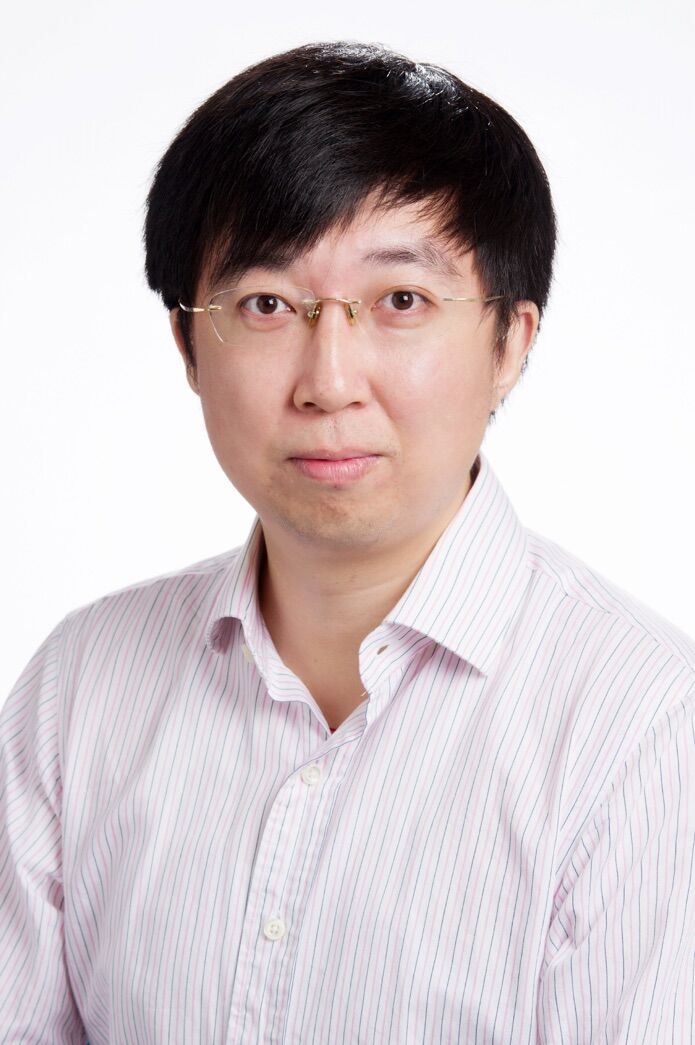 Yu Zhang (张宇)合作论文数Department of Computer Science and Engineering, College of Engineering, Southern University of Science and Technology20
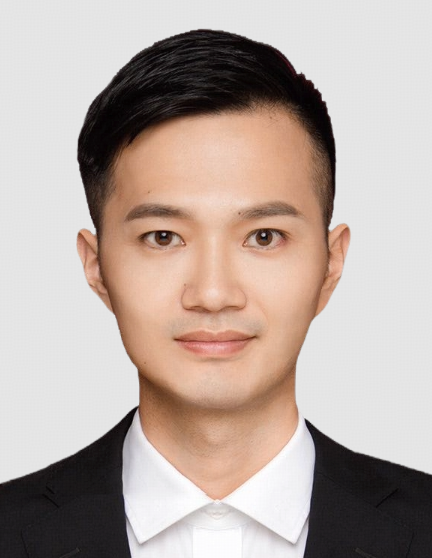 Weisen Jiang (江伟森)合作论文数Department of Computer Science and Engineering, Chinese University of Hong Kong15
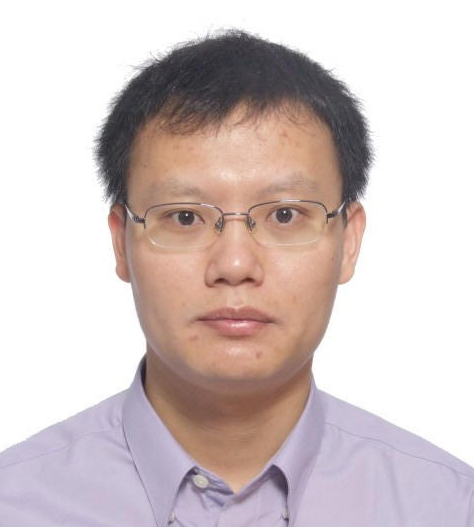 Zhenguo Li合作论文数Noah's Ark Lab, Huawei Technologies;Department of Computer Science and Engineering, Hong Kong University of Science and Technology15
 Jie Gui (桂杰)合作论文数Department of Intelligence Security, School of Cyber Science and Engineering, Southeast University15
 Zhihua Zhang (张志华)合作论文数School of Mathematical Sciences, Peking University14
 Yaqing Wang (王雅晴)合作论文数Yanqi Lake Beijing Institute of Mathematical Sciences and Applications13
 Qiang Yang (杨强)合作论文数Department of Data Science and Artificial Intelligence, Faculty of Computer and Mathematical Sciences, Hong Kong Polytechnic University13
 Shutao Li (李树涛)合作论文数Chang'an University12
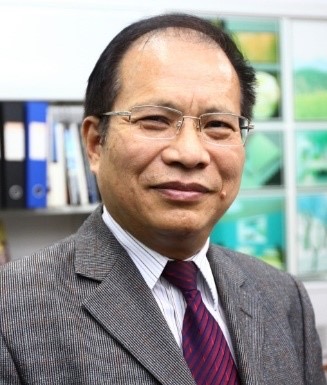 Yuan Yan Tang (唐遠炎)合作论文数Department of Computer and Information Science, Faculty of Science and Technology, University of Macau;Smart City Research Center, Zhuhai UM Science & Technology Research Institute;Department of Computer Science, Hong Kong Baptist University11
 Kai Zhang (张凯)合作论文数School of Computer Science and Technology, East China Normal University11
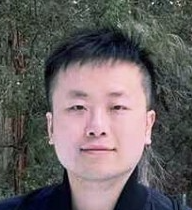 Shuai Zheng合作论文数Boson AI10
 Han Shi合作论文数10Hansi Yang (杨瀚思)合作论文数10
 Bao-Liang Lu (吕宝粮)合作论文数Center for Brain-like Computing and Machine Intelligence, Department of Computer Science and Engineering, Shanghai Jiao Tong University;Center for Brain-Machine Interface and Neuromodulation, RuiJin Hospital, Shanghai Jiao Tong University School of Medicine;RuiJin-MiHoYo Laboratory, RuiJin Hospital, Shanghai Jiao Tong University School of Medicine10
 Lu Hou (侯璐)合作论文数Noah's Ark Lab, Huawei9
 Hang Xu (徐航)合作论文数Huawei Noah‘s Ark Lab;2030 Lab, Huawei ADS9
 Haoyue Bai合作论文数Department of Computer Sciences, School of Computer, Data and Information Sciences, University of Wisconsin-Madison8
 Zhili Liu (刘智立)合作论文数Department of Computer Science and Engineering, Hong Kong University of Science and Technology;AI theory Lab, Huawei Noah’s Ark Lab8
 Wei Bi (闭玮)合作论文数Tencent AI Lab8XXX合作论文数 8
 Lionel M. Ni (倪明选)合作论文数Department of Computer Science and Engineering, School of Engineering, Hong Kong University of Science and Technology;Fok Ying Tung Graduate School, Hong Kong University of Science and Technology8
 Kai Chen (陈铠)合作论文数Department of Computer Science and Engineering, School of Engineering, Hong Kong University of Science and Technology8
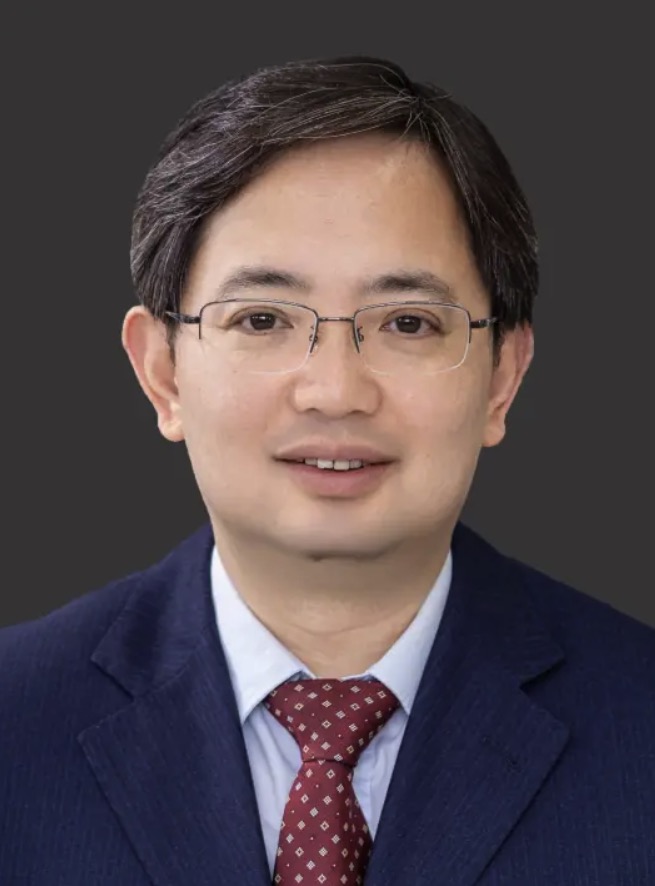 Zhi-Hua Zhou (周志华)合作论文数School of Artificial Intelligence, Nanjing University8
 Yunhao Gou (苟耘豪)合作论文数Department of Computer Science and Engineering, Hong Kong University of Science and Technology;Huawei Noah’s Ark Lab7
 Bo Han (韓波)合作论文数Department of Computer Science, Faculty of Science, Hong Kong Baptist University7Leon Wenliang Zhong合作论文数6
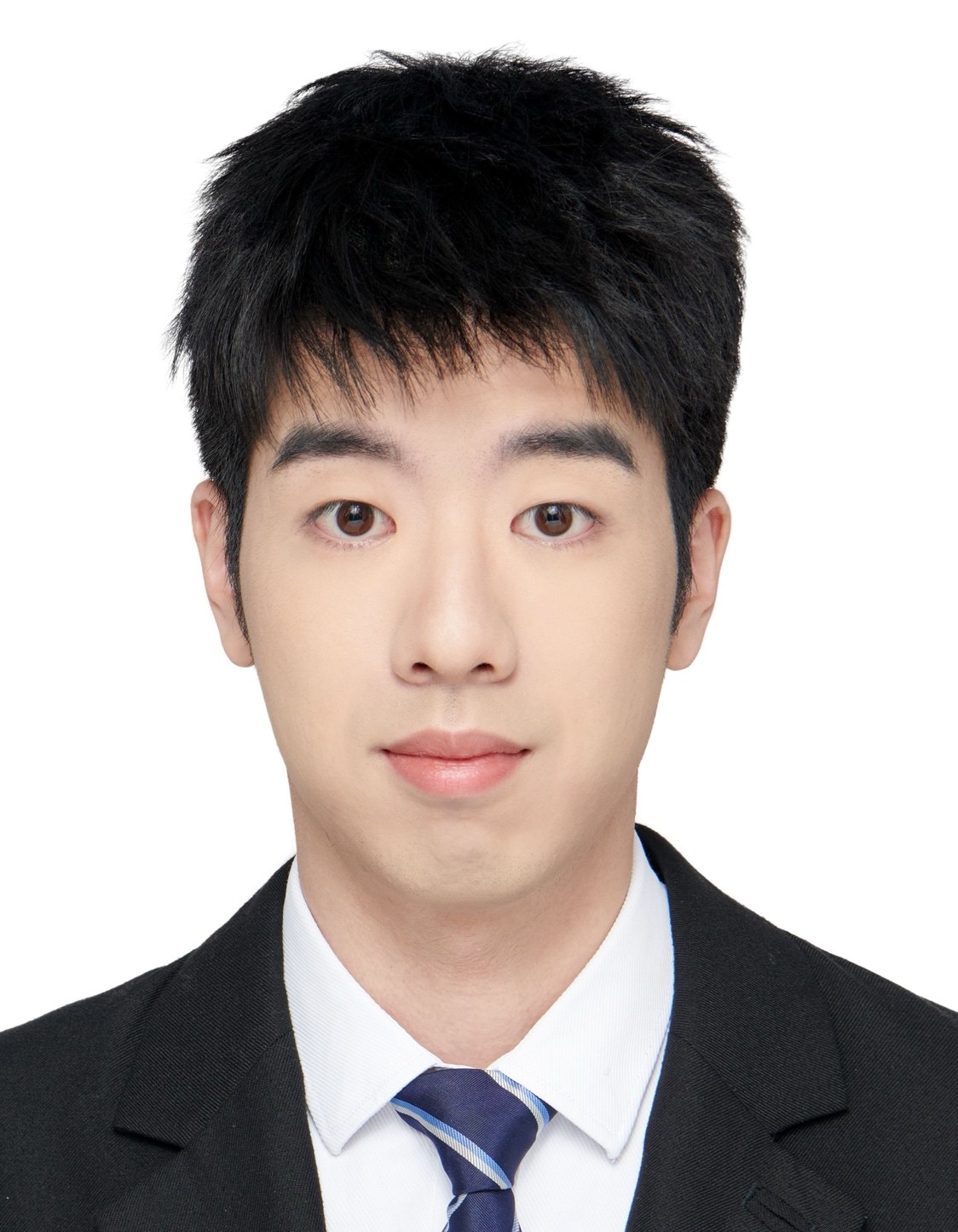 Weiyu Chen合作论文数Department of Computer Science and Engineering, The Hong Kong University of Science and Technology6Xiawei Guo合作论文数4Paradigm6Ruiliang Zhang合作论文数Hong Kong University of Science and Technology6
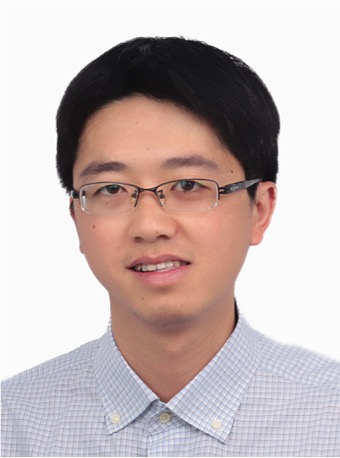 Yu-Feng Li (李宇峰)合作论文数Learning and Mining from Data Group, Department of Computer Science and Technology, School of Artificial Intelligence, Nanjing University;State Key Laboratory for Novel Software Technology, Nanjing University6
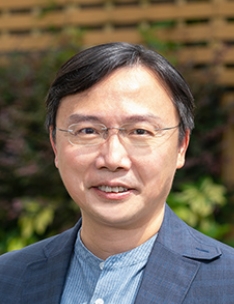 William Kwok-Wai Cheung (張國威)合作论文数Department of Computer Science, Hong Kong Baptist University;Centre for Health Informatics, Hong Kong Baptist University6
 Simon Ho合作论文数6
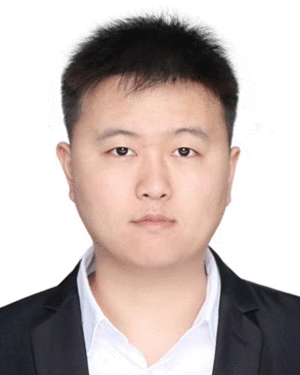 Xiaofeng Cong合作论文数University of Udine5
 Xiaodan Liang (梁小丹)合作论文数School of Intelligent Systems Engineering, Sun Yat-Sen University5
 Mu Li (李沐)合作论文数Boson AI5
 Runsheng Yu合作论文数ByteDance5
 Sinno Jialin Pan合作论文数Department of Computer Science and Engineering, Faculty of Engineering, The Chinese University of Hong Kong5
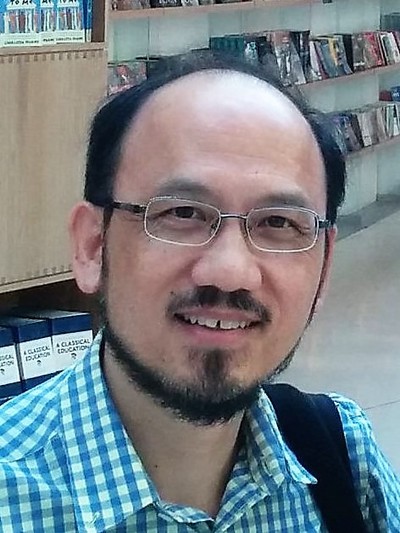 Brian Kan Wing Mak (麥鑑榮)合作论文数Department of Computer Science and Engineering, School of Engineering, The Hong Kong University of Science and Technology5
 Changshui Zhang (张长水)合作论文数Department of Automation, Tsinghua University5
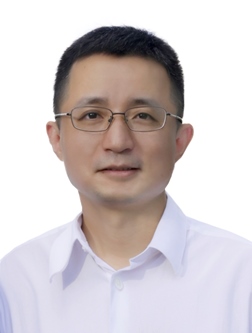 Weike Pan (潘微科)合作论文数Department of Computer Science and Technology, College of Computer Science and Software Engineering, Shenzhen University;Software Engineering Research Center, College of Computer Science and Software Engineering, Shenzhen University5
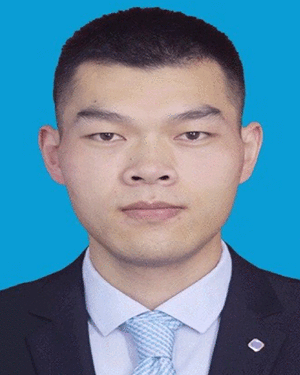 Nan Yin合作论文数Mohamed Bin Zayed University of Artificial Intelligence4
 Lifeng Shen (沈礼锋)合作论文数Chongqing Key Laboratory of Computational Intelligence, Chongqing University of Posts and Telecommunications4
 Jianhua Han合作论文数Huawei Noah Ark's Lab4
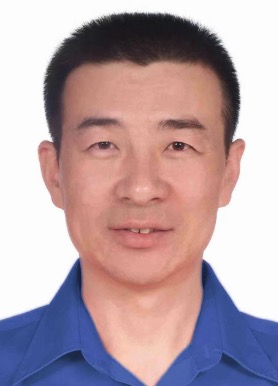 Xun Liang (梁循)合作论文数School of Information, Renmin University of China4
 Yongqi Zhang (张永祺)合作论文数The Hong Kong University of Science and Technology (Guangzhou)4
 Baijiong Lin (林百炅)合作论文数The Hong Kong University of Science and Technology (Guangzhou)4