We have observed remarkable multiple-line electron spin-resonance spectra in sensitive terahertz laser pho-toresponse measurements of the two-dimensional electron gas of an asymmetric InAs quantum well in the integer quantum Hall effect regime. Near filling factor 7 with the magnetic field oriented at large angles theta from the normal to the sample surface, rather than the expected single-electron spin-resonance line, we observed several sharp pairs of features at fields across the corresponding quantum Hall plateau. At a unique angle theta c, the dominant central pair merges into a single line close to the estimated magnetic field of electron spin resonance. For theta > theta c this line splits into two sharper features whose separation in magnetic field increases with increasing theta. Surprisingly, for theta < theta c the central feature disappears. The explanation of this behavior, as well as the observation of additional pairs of sharp features with larger magnetic-field separations, is based on strong spin orbit coupling effects and the concomitant effective magnetic fields associated with pairs of oppositely directed, persistent quantum Hall edge currents combined with the behavior of edge channels near the center of the odd plateaus. Modeling the splitting of the spin resonances due to these effective spin orbit magnetic fields is in reasonable agreement with observations. These results show that it is possible to probe the widths of quantum Hall edge channels through the spectral specificity of the electron spin resonance and possibly manipulate spins with THz photons having wavelengths several orders of magnitude larger than the edge-channel widths.
The energy vs. crystal momentum E(k) diagram for a solid (band structure) constitutes the road map for navigating its optical, magnetic, and transport properties. By selecting crystals with specific atom types, composition and symmetries, one could design a target band structure and thus desired properties. A particularly attractive outcome would be to design energy bands that are split into spin components with a momentum-dependent splitting, as envisioned by Pekar and Rashba [Zh. Eksperim. i Teor. Fiz. 47 (1964)], enabling spintronic application. The current paper provides "design principles" for wavevector dependent spin splitting (SS) of energy bands that parallels the traditional Dresselhaus and Rashba spin-orbit coupling (SOC) - induce splitting, but originates from a fundamentally different source -- antiferromagnetism. We identify a few generic AFM prototypes with distinct SS patterns using magnetic symmetry design principles. These tools allow also the identification of specific AFM compounds with SS belonging to different prototypes. A specific compound -- centrosymmetric tetragonal MnF2 -- is used via density functional band structure calculations to quantitatively illustrate one type of AFM SS. Unlike the traditional SOC-induced effects restricted to non-centrosymmetric crystals, we show that antiferromagnetic-induced spin splitting broadens the playing field to include even centrosymmetric compounds, and gives SS comparable in magnitude to the best known ('giant') SOC effects, even without SOC, and consequently does not rely on the often-unstable high atomic number elements required for high SOC. We envision that use of the current design principles to identify an optimal antiferromagnet with spin-split energy bands would be beneficial for efficient spin-charge conversion and spin orbit torque applications without the burden of requiring compounds containing heavy elements.
A theory of spin injection across a ballistic ferromagnet-semiconductor-ferromagnet junction is developed for the Boltzmann regime. Spin injection coefficient γ is suppressed by the Sharvin resistance of the semiconductor r∗ N = (h/e 2)(π2/SN ), where SN is the Fermi-surface cross-section. It competes with the diffusion resistances of the ferromagnets rF , and γ ∼ rF/r ∗ N ≪ 1 in the absence of contact barriers. Efficient spin injection can be ensured by contact barriers. Explicit formulae for the junction resistance and the spin-valve effect are presented.
Mathematical Sciences, and author of numerous reviews in Uspekhi Fizicheskikh Nauk (UFN) [Physics±Uspekhi] journal, Moisei IsaakovichKaganov, passed away onAugust 31, 2019 at the age of 98. Moisei Isaakovich became famous for his brilliant work on the physics of metals and dielectrics and the physics of magnetic phenomena. His scientific style was characterized by a broad view of the subject under study, an original approach to problems, and an independent way of thinking. Moisei Isaakovich will also remain in our memory as a remarkable popularizer of science. In his popular scientific books and papers, he comprehensively presented contemporary scientific problems and achievements for a wide range of readers and, which is particularly important, infected many generations of the readers of the journal Kvant (Quantum) with his love of science and cognition of the world. Moisei Isaakovich Kaganov (MIK) was born on June 4, 1921 in Kharkov. In 1939, he was admitted as a student to the Department of Physics at the Kharkov State University, but his studies did not last long. In December of the same year, MIK was conscripted into the army. He was in the war from beginning to end, serving till early 1946. In 1946, MIK returned to the university and, having done two diploma studies with his fellow student Viktor Moiseevich Tsukernik, graduated in 1949. This work and friendship between students were the beginning of their years-long fruitful collaboration in a whole number of fields, mainly in the theory of magnetic phenomena. The subject of one study about absorption of electromagnetic radiation by a spin wave system was proposed by Aleksandr Ilyich Akhiezer, and another one concerning the permittivity of a polycrystal was proposed by Ilya Mikhailovich Lifshitz. MIK considered I M Lifshitz to be his teacher. The cooperation with I M Lifshitz lasted many years and with time transformed into a strong friendship. Simultaneously, MIKworked a long time together with A I Akhiezer. In October of 1949,MIK began working at the Ukrainian Institute of Physics and Technology (UIPT), where he remained till April 1970. In 1970, invited by P L Kapitza, he and I M Lifshitz left for Moscow for the Institute of Physical Problems (IPP, now Kapitza Institute), where he worked for 24 years until his retirement in 1994. Both in Kharkov and in Moscow, MIK combined his scientific work with teaching activity. He first taught at Kharkov State University and then became a professor at Lomonosov Moscow State University, where he delivered courses on the electron theory of metals and quantum solid-state theory, both very popular with students. After MIK retired in 1994, he went to Boston in the USA, where one of his daughters had settled. The range of MIK's scientific interests spanned from the problems of classical electrodynamics of continuum media to practical problems of the physics of metals. In the early 1950s, at the cryogenic laboratory of UIPT, experiments on solidstate physics were started, and MIK, together with I M Lifshitz, got involved in the electron theory of metals. This became a basic subject for MIK for many years. One of his first papers in this field that became widely known was ``Kinetics of superconductivity destruction'' (I M Lifshitz, M IKaganov,Dokl. Akad. Nauk SSSR, 1953, v. 90, p. 579), in which the authors calculated the electromagnetic field distribution in a layer of normal metal emerging on a sample surface when superconductivity gets destroyed. In a normal metal layer, either a normal or an anomalous skin effect is realized, depending on the field oscillation frequency and the electron free path. According to MIK, he got to take part in that study as an expert on the anomalous skin effect. MIK returned to the skin effect time and again. Together withMYa Azbel', he formulated the theory of an anomalous skin effect in metals with an arbitrary electron spectrum (Dokl. Akad. Nauk SSSR, 1955, v. 102, p. 49). Together with VMTsukernik, he solved the problem of the influence of thermoelectric forces on the skin effect in metals (Zh. Eksp. Teor. Fiz., 1958, v. 35, p. 474 [Sov. Phys. JETP, 1959, v. 8, Uspekhi Fizicheskikh Nauk 190 (2) 221 ± 222 (2020) Translated by M V Tsaplina PERSONALIA PACS number: 01.60.+q
We present experimental data and associated theory for correlations in a series of experiments involving repeated Landau-Zener sweeps through the crossing point of a singlet state and a spin-aligned triplet state in a GaAs double quantum dot containing two conduction electrons, which are loaded in the singlet state before each sweep, and the final spin is recorded after each sweep. The experiments reported here measure correlations on time scales from 4 mu s to 2 ms. When the magnetic field is aligned in a direction such that spin-orbit coupling cannot cause spin flips, the correlation spectrum has prominent peaks centered at zero frequency and at the differences of the Larmor frequencies of the nuclei, on top of a frequency-independent background. When the spin-orbit field is relevant, there are additional peaks, centered at the frequencies of the individual species. A theoretical model which neglects the effects of high-frequency charge noise correctly predicts the positions of the observed peaks, and gives a reasonably accurate prediction of the size of the frequency-independent background, but gives peak areas that are larger than the observed areas by a factor of 2 or more. The observed peak widths are roughly consistent with predictions based on nuclear dephasing times of the order of 60 mu s. However, there is extra weight at the lowest observed frequencies, which suggests the existence of residual correlations on the scale of 2 ms. We speculate on the source of these discrepancies.
My recollections of Kirill Borisovich go back to the 1946/47 Academic year at the Physics Department of Kiev University. Probably, these are the earliest dates in this special issue of the journal of “Low Temperature Physics” dedicated to Tolpygo’ 100th anniversary. He was a great theorist who shaped the development of theoretical physics in Ukraine, first in Kiev and afterwards in Donetsk, and strongly influenced experimental work. Kirill Borisovich served as our instructor at practices in “Electrodynamics” that were termed “seminars”. They followed and supported the lectures by Solomon Isaakovich Pekar* on this chapter of theoretical physics. These were the first post-WWII years, the central street of the city Kreshchatik still was in ruins. Our small class, about 24 students, was enrolled in 1944, less than a year after the liberation of the city from Nazis. It included six veterans of the war, and other students spent years either under occupation or in evacuation. Therefore, everybody had a weak background still from high school, and the situation was aggravated by the fact that the Chair of the Physics Department was a Party functionary having only little knowledge in physics and no interest in it. Students were not warned regarding the problem, and no measures were taken for mitigating it. As a result, even good and devoted lecturers were forced to reduce requirements. I joined the class in 1946 after returning to Kiev from Kazan where I completed the second year of education at the Department of Physics and Mathematics of the University of Kazan. There teaching and requirements were kept at a decent level even under the difficult conditions of the war-time, and I sensed the difference immediately. The problem with our class became explicit in 1949 at the final State exam in physics, with V.E. Lashkaryov** as Examiner and N.N. Bogoliubov*** as the Head of the Committee, when a quarter of the class ended with a mark of 2 and had to retake the exam to earn the minimal required 3. And it was to this class which came a young and enthusiastic instructor who had a lot of knowledge which he was eager to share with us. I was excited by the interesting problems that he prepared for seminars. These were the circumstances in which I met Kirill Borisovich for the first time, and it was only afterwards when I learned that he served in the army for six years, from 1939 to 1945, and taught us being only a second year graduate student. Service in the army during WWII was a severe school and those who managed to go through it retaining excitement about science constituted an important part of the post-war generation of Soviet scientists. It is easy to figure out that Kirill Borisovich could not feel any special satisfaction while teaching our class but he persistently did his best and never showed even the slightest dissatisfaction. Feeling strong disparity between the level of education at the Kazan University and the Physics Department of Kiev University, I considered switching to the Department of Mathematics and Mechanics where the situation was
There are such instances in the development of science when experiment becomes not only ripe to absorb concepts already existing in the theory but directly requires them. Such an instant happened in physics of two-dimensional (2D) systems in 1983 when two prominent experimental groups reported data indicating splitting of electron and hole energy bands by spin–orbit coupling (SOC) in GaAs heterostructures [1, 2]. This is why the 1984 paper by Bychkov and Rashba [3] that appeared in response to these findings and described them from a unified standpoint attracted immediate attention inside the community and strongly influenced future developments in physics of heterostructures. Currently its impact goes far beyond this field. This 1984 paper is closely related to the papers of my group on wurtzitetype crystals published back around 1960 [4–6]. It was also preceeded by a 1984 paper of the same authors that is currently featured in the ‘ Golden Archive’ of JETP Letters. I discuss below the principal concepts and the effect of the whole group of papers. The basic requirements are uniaxial symmetry of the system and absence of inversion symmetry. They are satisfied for hexagonal wurtzite-type crystals and for heterostructures grown from cubic crystals due to the breaking of cubic symmetry by asymmetric confinement of 2D electrons. Whenever these conditions are fulfilled, SOC contributes to the electron Hamiltonian a term ( ) ˆ σ α = × ⋅ H k z R known currently as the Rashba term. Here ẑ is the unit vector along the symmetry axis, k is a 2D momentum in the plane perpendicular to it, σ is the vector of Pauli matrices, and α is the strength of SOC. Because k enters into HR linearly, in the lower order than into the kinetic energy ħ / m k 2 2 2 , topology of the energy spectrum changes. Instead of the parabolic spectrum with a minimum at = k 0, there appear two ( ) E k surfaces with a self-crossing conical (Dirac) point at = k 0 and the minimum at a circle of the radius ħ / α = k m 0 2. At small E, constant-energy surfaces are tori with a topological transition to spindle-tori at the Dirac-point energy when the orifice of the torus closes. The term HR locks electron spin s to k as s k z × ∥( ˆ). Equivalently, one can change → ( ˆ) σ + × k k k z 0 in the traditional formula for kinetic energy. Comparing this k with the kinematic momentum ħ ( / ) = − e c k k A kin shows that ( ˆ) σ× z plays the role of a vector-potential A but with noncommuting components. Hence, the theory is non-Abelian. This property is manifested in the Aharonov–Casher effect. Among the most prominent early results were also the electric dipole spin resonance (EDSR) and topological quantum phase transition in 3D in a magnetic field B z ∥ ˆ. The first is strong electron-spin resonance driven by resonant electric field ̃ ( ) t E and the second is abrupt switching from paramagnetism to diamagnetism when Fermi level crosses the Dirac point. And an exotic Landau level falling out from the serial dependence is a progenitor of the zero-energy level in graphene. SOC causes beats in Shubnikov–de Haas and de Haas–van Alphen oscillations that allow measuring α. EDSR provided a clue to and initiated interest in electrical manipulation of electron spins, the focus of the current field of spintronics. Precession of electron spins in the effective spin–orbit field ( ˆ) α ∝ × B k z so at a characteristic length / π ≈ k so 0 underlines the concept of the Datta–Das spin transistor. Their suggestion stimulated research on SOC in low-dimensional systems, in particular, in gate control of α, and emergence of spintronics as a branch of science and technology aimed in integrating electron spin into information processing. SOC that originally played only marginal role in condensed matter physics is currently at its heart and penetrates all its branches including applications. Concepts and methods E I Rashba
The central-spin problem is a widely studied model of quantum decoherence. Dynamic nuclear polarization occurs in central-spin systems when electronic angular momentum is transferred to nuclear spins and is exploited in quantum information processing for coherent spin manipulation. However, the mechanisms limiting this process remain only partially understood. Here we show that spin-orbit coupling can quench dynamic nuclear polarization in a GaAs quantum dot, because spin conservation is violated in the electron-nuclear system, despite weak spin-orbit coupling in GaAs. Using Landau-Zener sweeps to measure static and dynamic properties of the electron spin-flip probability, we observe that the size of the spin-orbit and hyperfine interactions depends on the magnitude and direction of applied magnetic field. We find that dynamic nuclear polarization is quenched when the spin-orbit contribution exceeds the hyperfine, in agreement with a theoretical model. Our results shed light on the surprisingly strong effect of spin-orbit coupling in central-spin systems.
We investigate capacitively coupled two-qubit quantum gates based on quantum dots. For exchange-only coded qubits electron spin $S$ and its projection $S_z$ are exact quantum numbers. Capacitive coupling between qubits, as distinct from interqubit exchange, preserves these quantum numbers. We prove, both analytically and numerically, that conservation of the spins of individual qubits has dramatic effect on performance of two-qubit gates. By varying the level splittings of individual qubits, $J_a$ and $J_b$, and the interqubit coupling time $t$, we can find an infinite number of triples $(J_a, J_b, t)$ for which the two-qubit entanglement, in combination with appropriate single-qubit rotations, can produce an exact CNOT gate. This statement is true for practically arbitrary magnitude and form of capacitive interqubit coupling. Our findings promise a large decrease in the number of nonlocal (two-qubit) operations in quantum circuits.
Vsevolod Feliksovich “Seva” Gantmakher was an innovator in the field of quantum transport. His discoveries provided a powerful tool and a direct means to study an unprecedented range of phenomena in Fermi liquids. The Gantmakher effect, which has become a household name and the basis for many developments, eventually opened the door to quantum mesoscopic physics. A pivotal figure in Russian physics, Seva was a mentor for generations of students and one of the founders of the peer-refereed grant system in Russia. As editor-in-chief of JETP Letters for more than 20 years, he navigated the journal through the difficult post-Soviet period.Vsevolod Feliksovich GantmakherPPT|High resolutionSeva was born on 8 October 1935 in Moscow to the family of a prominent mathematician. In 1954 he was admitted to the Moscow Institute of Physics and Technology, or Phystech. As a sophomore he started experimental work at the Institute for Physical Problems, the home of Peter Kapitza and Lev Landau. Landau’s fermiology, the hot area of the day, called for new experimental techniques for mapping out exotic shapes of Fermi surfaces and exploring the related transport phenomena.Seva’s new idea was to switch from microwave frequencies, used previously for spectroscopy of cyclotron orbits, to radio frequencies. The RFs couple efficiently to grazing electrons in a thin “skin” layer at metal surfaces, which allows researchers to select specific cyclotron orbits and probe them through ballistic penetration of the RF field into a metal. That groundbreaking work propelled Seva to the world stage. Perhaps the best way to gauge its impact on contemporaries, and to tap into the flavor of the epoch, is to quote Robert Chambers, who at a 1968 conference presented Seva’s research in his absence:It is not often that an experimentalist derives a new technique as simple, elegant and powerful as the Gantmakher effect, and it is not often that the originator of the new technique has both the experimental and the theoretical expertise to explore its possibilities as thoroughly as Gantmakher has done. He was invited to describe his work at the Gordon Conference on Metals in 1967 … and again at the present meeting, but unhappily he has been prevented from accepting any of these invitations, and the present writer has reluctantly spoken in his place.After completing his PhD in 1964 under Yuri Sharvin on the high- frequency properties of metals, Seva moved to the newly established Institute of Solid State Physics in Chernogolovka, which became the stage for his long and productive career. Always on the lookout for new and exciting things, he created a laboratory that explored frontiers of electron transport, covering topics as diverse as transverse focusing, hot carriers, superconductivity, and localization; his personal favorite in his later years was localization of Cooper pairs. Such breadth, as well as the creative atmosphere and Seva’s personality—demanding but always fair and benevolent—helped to attract the best young researchers.Seva’s career spanned some exciting but difficult periods of his country’s history. As a wise man said, we don’t decide on what times we live in, “all we have to decide is what to do with the time that is given to us.” Which is what Seva did flawlessly. He is remembered fondly for the multiple ways he shaped the academic community, in particular how he promoted and supported the rules of scientific ethics.No less important was his firm standing on civil issues. After becoming a professor at Phystech, he acted as an academic representative in undergraduate admissions. At the time, the Soviet system at all levels discriminated against certain “undesirable” ethnicities, especially those of Jewish and German descent. That made undergraduate admissions at prestigious universities a politically charged issue. Seva did his best to improve the chances of the applicants who were subjected to discrimination. His interventions were defining moments in the lives of many future physicists, including one of us (Geim). When, 40 years ago, the admission committee went into a whisper about “another one,” Seva broke in with a firm “I’ll take him.”His books Electrons and Disorder in Solids (Oxford University Press, 2005) and Carrier Scattering in Metals and Semiconductors (written with Yehoshua Levinson, Elsevier, 1987) have remained eminently popular. Seva’s creation and pride, the JETP Letters website (http://www.jetpletters.ac.ru/ps/index-v-ten_1.shtml), remains the only place where all the back issues from its founding in 1965 through 1995 are readily available. His awards include the 1968 Young Researcher Prize from the Soviet government and the 2009 Kapitza Medal of the Russian Academy of Sciences.Seva was a charming and cheerful person whose sports preferences and lifestyle changed gradually with age, from mountaineering and motorcycling to cross-country skiing and driving a car. His exceptional sense of humor, generosity, openness, and wisdom invariably attracted people to him. The New Year’s Eve parties in his apartment were the joy of Chernogolovka. He lived a highly productive and vibrant life until his death on 5 March 2015 following a battle with cancer. He will be sorely missed by his family, friends, and colleagues.© 2015 American Institute of Physics.
In his review of the book Polarons by David Emin (Physics Today, October 2014, page 54), Jozef Devreese properly emphasizes the role of large polarons as both a general theoretical concept and a physical object. Polarons are electrons dressed by a cloud of virtual phonons in solids. To the best of our knowledge, they present the first example of propagating self-localized excitations in a quantum field theory. Devreese lists brilliant theorists who were inspired by the theory of polarons and significantly contributed to it, but he makes a serious omission when it comes to the roots of the polaron theory and the very origin of the term "polaron."The general idea of electron trapping by a crystal lattice goes back to the seminal 1933 paper by Lev Landau.11. L. D. Landau, Phys. Z. Sowjetunion 3, 664 (1933). That paper, which Devreese mentions, is primarily concerned with the resulting lattice defects, such as color centers in sodium chloride. Landau does not specify the trapping mechanism and contrasts a trapped electron with what he refers to as a freely moving electron.The polaron was proposed, and the term coined, by Solomon Pekar. In two papers22. S. Pekar, Zh. Eksp. Teor. Fiz. 16, 335 (1946); J. Phys. USSR 10, 341 (1946). published in 1946, he developed a self-consistent theory of a large polaron as a spontaneously trapped state of an electron strongly coupled to the induced polarization of atomic displacements in an ionic crystal. In his initial papers, Pekar considered polaron states to be "local," but in the follow-up papers33. S. I. Pekar, Zh. Eksp. Teor. Fiz. 17, 868 (1947); S. I. Pekar, Zh. Eksp. Teor. Fiz. 18, 105 (1948). he identified polarons, rather than band electrons, as charge carriers in ionic crystals. That concept was developed and substantiated in a joint 1948 paper by Landau and Pekar in which they calculated the effective mass of a large, strongly coupled polaron.44. L. D. Landau, S. I. Pekar, Zh. Eksp. Teor. Fiz. 18, 419 (1948), trans. in Ukr. J. Phys. 53, 71 (2008). Regarding the role of polarons as charge carriers, that paper states that Pekar proposed "a new point of view concerning the electron conduction of ionic crystals. According to it, the current carrier is just a polaron, rather than a free electron in the conduction band."The paper by Landau and Pekar appeared at the time of burgeoning progress in quantum electrodynamics (QED). In contrast to QED, the polaron theory is free from divergences, and the renormalized electron energy and mass remain finite. Also in contrast to QED, the polaron theory was initially a strong-coupling theory. For those reasons, it attracted much attention beyond the condensed-matter community. The extension to intermediate and weak coupling quickly followed.55. See the excellent review by H. Fröhlich, Adv. Phys. 3, 325 (1954). https://doi.org/10.1080/00018735400101213 Today the physics of polarons continues to thrive and expand into new areas.REFERENCESSection:ChooseTop of pageREFERENCES <
 Vadym Apalkov合作论文数Dept Phys & Astron, Georgia State Univ13Ib Levinson合作论文数12E. F. Sheka合作论文数11
 Bertrand I. Halperin合作论文数Department of Physics, Harvard University11Sergei V. Iordanskii合作论文数9K. B. Tolpygo合作论文数9V. L. Broude合作论文数9
 Lev Pitaevskii合作论文数9YA BYCHKOV合作论文数8
 Fedor Vasilievich Kusmartsev合作论文数Department of Physics, Khalifa University8
 Leonid S. Levitov合作论文数Department of Physics, Massachusetts Institute of Technology8a s ioselevich合作论文数7Lev Gor'kov合作论文数Florida State University7Aleksandr F Andreev合作论文数7Hans-Andreas Engel合作论文数Department of Physics;Harvard University7
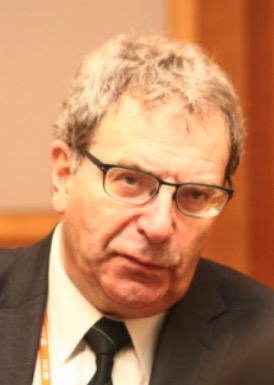 Alexander L. Efros合作论文数Materials Science and Technology Division, United States Naval Research Laboratory7Yu. A. Bychkov合作论文数7Виталий Владимирович Кведер合作论文数6леонид вениаминович келдыш合作论文数6Vi Melnikov合作论文数6
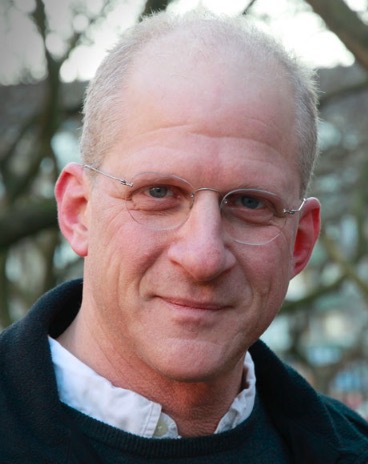 Charles Marcus合作论文数Department of Materials Science and Engineering, University of Washington;Pacific Northwest National Laboratory;Niels Bohr Institute, University of Copenhagen6Д.Е. Хмельницкий合作论文数6ME Portnoi合作论文数5юрий андреевич осипьян合作论文数5
 Ferdinand Kuemmeth合作论文数Niels Bohr Institute, Exercise and Sports, Faculty of Science, University of Copenhagen5
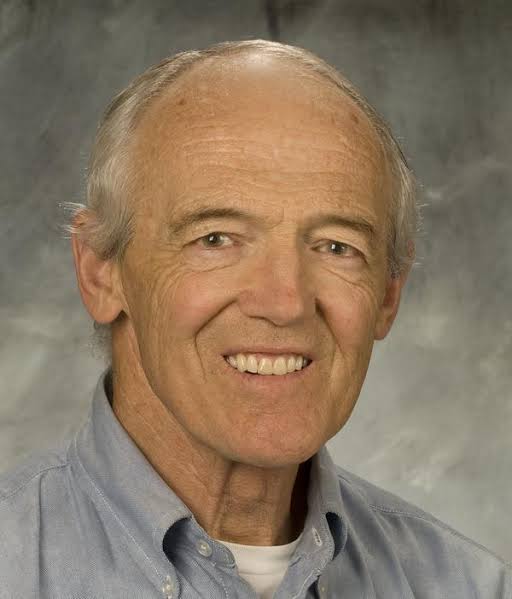 Arthur Gossard合作论文数College of Engineering, University of California, Santa Barbara5O. V. Snitko合作论文数5A.A. Gogolin合作论文数5
 Arijeet Pal合作论文数Department of Physics and Astronomy, Faculty of Mathematical & Physical Sciences, University College London5G. M. Eliashberg合作论文数5v l pokrovskii合作论文数5жорес иванович алферов合作论文数4ю а бычков合作论文数4александр федорович андреев合作论文数4M.A. Krivoglaz合作论文数4
 Igor V. Kukushkin合作论文数Institute of Solid-State Physics Chernogolovka, Russian Academy of Sciences4B. I. Ivlev合作论文数Institute for Theoretical Physics;Academy of Sciences4V M Tuchkevich合作论文数4исаак маркович халатников合作论文数3владислав борисович тимофеев合作论文数3Vladimir L. Broude合作论文数3Jacob Taylor合作论文数3Edelshte.Vm合作论文数3
 Aleksandr Smirnov合作论文数Burdenko Neurosurgical Center3V.P. Mineev合作论文数3Kp Meletov合作论文数3
 Mikhail Alekhsandrovich Ivanov合作论文数3
 Michael Shulman合作论文数Sloan School of Management, Massachusetts Institute of Technology;Suno3
 Hugh Churchill合作论文数Harvard University, Harvard University3




