Mathematical Sciences, and author of numerous reviews in Uspekhi Fizicheskikh Nauk (UFN) [Physics±Uspekhi] journal, Moisei IsaakovichKaganov, passed away onAugust 31, 2019 at the age of 98. Moisei Isaakovich became famous for his brilliant work on the physics of metals and dielectrics and the physics of magnetic phenomena. His scientific style was characterized by a broad view of the subject under study, an original approach to problems, and an independent way of thinking. Moisei Isaakovich will also remain in our memory as a remarkable popularizer of science. In his popular scientific books and papers, he comprehensively presented contemporary scientific problems and achievements for a wide range of readers and, which is particularly important, infected many generations of the readers of the journal Kvant (Quantum) with his love of science and cognition of the world. Moisei Isaakovich Kaganov (MIK) was born on June 4, 1921 in Kharkov. In 1939, he was admitted as a student to the Department of Physics at the Kharkov State University, but his studies did not last long. In December of the same year, MIK was conscripted into the army. He was in the war from beginning to end, serving till early 1946. In 1946, MIK returned to the university and, having done two diploma studies with his fellow student Viktor Moiseevich Tsukernik, graduated in 1949. This work and friendship between students were the beginning of their years-long fruitful collaboration in a whole number of fields, mainly in the theory of magnetic phenomena. The subject of one study about absorption of electromagnetic radiation by a spin wave system was proposed by Aleksandr Ilyich Akhiezer, and another one concerning the permittivity of a polycrystal was proposed by Ilya Mikhailovich Lifshitz. MIK considered I M Lifshitz to be his teacher. The cooperation with I M Lifshitz lasted many years and with time transformed into a strong friendship. Simultaneously, MIKworked a long time together with A I Akhiezer. In October of 1949,MIK began working at the Ukrainian Institute of Physics and Technology (UIPT), where he remained till April 1970. In 1970, invited by P L Kapitza, he and I M Lifshitz left for Moscow for the Institute of Physical Problems (IPP, now Kapitza Institute), where he worked for 24 years until his retirement in 1994. Both in Kharkov and in Moscow, MIK combined his scientific work with teaching activity. He first taught at Kharkov State University and then became a professor at Lomonosov Moscow State University, where he delivered courses on the electron theory of metals and quantum solid-state theory, both very popular with students. After MIK retired in 1994, he went to Boston in the USA, where one of his daughters had settled. The range of MIK's scientific interests spanned from the problems of classical electrodynamics of continuum media to practical problems of the physics of metals. In the early 1950s, at the cryogenic laboratory of UIPT, experiments on solidstate physics were started, and MIK, together with I M Lifshitz, got involved in the electron theory of metals. This became a basic subject for MIK for many years. One of his first papers in this field that became widely known was ``Kinetics of superconductivity destruction'' (I M Lifshitz, M IKaganov,Dokl. Akad. Nauk SSSR, 1953, v. 90, p. 579), in which the authors calculated the electromagnetic field distribution in a layer of normal metal emerging on a sample surface when superconductivity gets destroyed. In a normal metal layer, either a normal or an anomalous skin effect is realized, depending on the field oscillation frequency and the electron free path. According to MIK, he got to take part in that study as an expert on the anomalous skin effect. MIK returned to the skin effect time and again. Together withMYa Azbel', he formulated the theory of an anomalous skin effect in metals with an arbitrary electron spectrum (Dokl. Akad. Nauk SSSR, 1955, v. 102, p. 49). Together with VMTsukernik, he solved the problem of the influence of thermoelectric forces on the skin effect in metals (Zh. Eksp. Teor. Fiz., 1958, v. 35, p. 474 [Sov. Phys. JETP, 1959, v. 8, Uspekhi Fizicheskikh Nauk 190 (2) 221 ± 222 (2020) Translated by M V Tsaplina PERSONALIA PACS number: 01.60.+q
Памяти Михаила Адольфовича Миллера, Андронов А.А., Болотовский Б.М., Гапонов-Грехов А.В., Гильденбург В.Б., Долин Л.С., Железняков В.В., Зверев В.А., Кондратьев И.Г., Литвак А.Г., Суворов Е.В., Таланов В.И.
Doctor of Physicomathematical Sciences, Chief Research Scientist of the Division of Theoretical Physics at the P N Lebedev Physics Institute (FIAN), died on July 9, 2004. Zharkov was born on December 19, 1926 in Chelyabinsk. His parents were CPSU functionaries. In 1934, the family moved to Moscow. In June 1941, Nazi Germany attacked the USSR and the Great Patriotic War began. In the first months of the war Zharkov was evacuated to the city of Sverdlovsk in the Urals. By that moment the boy had completed six grades of school. In his two years in Sverdlovsk he taught himself the curriculum for the other four grades of high school (7 ± 10), took the final exams, and received a high school graduation certificate. In 1943, Zharkov enrolled in the Ferrous Metallurgy Department of the S M Kirov Sverdlovsk Industrial Institute. Having completed the freshman year, he returned to Moscow and was accepted into the sophomore year of the Department of Physics at Moscow State University. He graduated in 1948. The same year he took entrance exams to postgraduate courses of the P N Lebedev Physics Institute of the USSR Academy of Sciences and was accepted. His supervisor in the postgraduate years was M A Markov, who had earlier supervised his graduation thesis at the university. In the first years of research work Zharkov worked on quantum field theory. His first paper [ZhETF 20 492 (1950) (Sov. Phys. JETP)] was devoted to the theory of the neutrino and antineutrino and the role that these particles play in betadecay and other nuclear processes. He was able to show that double reflection for the fermion field can be considered an identity transformation and a rotation by 2p, reducing to a reversal of sign. This lead to four categories of spinors and to the possibility of formulating a theory of beta-decay in which there is no distinction between the neutrino and antineutrino. In January 1952, Zharkov submitted and successfully defended his thesis for Candidate's degree entitled ``Formation of a pair of p-mesons by a photon on nucleons''. The purpose of the work was to interpret the experimental data already available at the time and to clarify a more general aspect of the convergence of higher-order approximations of the perturbation theory in themeson theory of nuclear forces. From 1952 onwards Zharkov worked in the Theoretical Physics Department of FIAN. Over several subsequent years, Zharkov worked in various fields of quantum field theory and the theory of nuclear forces. His papers dealt with aspects of renormalization of divergent series, scattering of mesons and nucleons by nucleons, isobar theory, etc. These publications brought him recognition and respect from colleagues in the field. However, approximately in the middle of the 1950s Zharkov began turning more and more to a very different branch of physics, namely, low-temperature physics and the theory of superconductivity. Beginning around the 1960 he switched completely to this field, which was a new area for him, and was again able to obtain many first-class results. We will mention some of them here. He carried out important research that allowed a description of the behavior of finitesized superconducting systems in electromagnetic fields. Zharkov developed a theory describing hysteretic behavior of hollow superconductors in a magnetic field, constructed theories on finite-sized quantum interferometers and on weakly bound layered superconducting structures, proposed an explanation for the experimentally observed `giant thermoelectric effect' in superconductors, and developed a theory on the interaction between nonequilibrium phonons and electrons in superconductors placed in a high-frequency external field. The monograph Nonequilibrium Electrons and Phonons in Superconductors, written by G F Zharkov and A M Gulyan, was devoted to nonequilibrium processes in superconductors. This book was also published in English. Zharkov showed that in some cases experimentally established anomalies are caused by the finite size of real Uspekhi Fizicheskikh Nauk 174 (11) 1269 ± 1270 (2004) Translated by V I Kisin PERSONALIA PACS number: 01.60.+q
®ËÓÑÄÂâ ÐÂÖÍ ÒÑÐÇÔΠÕâÉÇÎÖá ÖÕÓÂÕÖ.4 ÏÂâ 2000 Å. Ä ÄÑÊÓÂÔÕÇ 88 ÎÇÕ ÖÛÇÎ ËÊ ÉËÊÐË ÂÍÂAEÇÏËÍ ¯ÂÙËÑÐÂÎßÐÑÌ ¡ÍÂAEÇÏËË ÐÂÖÍ µÍÓÂËÐÞ, ÎÂÖÓÇÂÕ ¤ÑÔÖAEÂÓÔÕÄÇÐÐÑÌ ÒÓÇ-ÏËË Ä ÑÃÎÂÔÕË ÐÂÖÍË Ë ÕÇØÐËÍË µÍÓÂËÐÞ, ©ÂÔÎÖÉÇÐÐÞÌ AEÇâÕÇÎß ÐÂÖÍË µÍÓÂËÐÞ, ÒÓÑ×ÇÔÔÑÓ, AEÑÍÕÑÓ ×ËÊËÍÑ-ÏÂÕÇÏÂÕËÚÇÔÍËØ ÐÂÖÍ ¡ÎÇÍÔÂÐAEÓ ªÎßËÚ ¡ØËÇÊÇÓ.£ÞAEÂáÜËÌÔâ ×ËÊËÍ, ÒÇAEÂÅÑÅ, ÚÇÎÑÄÇÍ ËÔÍÎáÚËÕÇÎßÐÑ ÄÞÔÑÍËØ ÏÑÓÂÎßÐÞØ ÍÂÚÇÔÕÄ, ÒÂÕÓËÑÕ Ë ÖÚËÕÇÎß ÐÇÔÍÑÎß-ÍËØ ÒÑÍÑÎÇÐËÌ ×ËÊËÍÑÄ, ÑÐ ÃÞÎ ÑAEÐËÏ ËÊ ÔÑÊAEÂÕÇÎÇÌ ÊÐÂÏÇÐËÕÑÌ ØÂÓßÍÑÄÔÍÑÌ ÛÍÑÎÞ ÕÇÑÓÇÕËÚÇÔÍÑÌ ×ËÊËÍË
4 ÏÂâ 1998 ÅÑAE ÔÍÑÐÚÂÎÔâ ÄÞAEÂáÜËÌÔâ ×ËÊËÍ-ÕÇÑÓÇÕËÍ, ÚÎÇÐ-ÍÑÓÓÇÔÒÑÐAEÇÐÕ ²ÑÔÔËÌÔÍÑÌ ÂÍÂAEÇÏËË ÐÂÖÍ ¥ÂÄËAE ¡ÃÓÂÏÑÄËÚ ¬ËÓÉÐËÙ.¦ÅÑ ÓÂÃÑÕÞ ÑÍÂÊÂÎË ÔÖÜÇÔÕÄÇÐÐÑÇ ÄÎËâÐËÇ Ð ÓÂÊÄËÕËÇ ÏÐÑÅËØ ÓÂÊAEÇÎÑÄ ÕÇÑÓÇÕËÚÇÔÍÑÌ ×ËÊËÍË,
Давид Абрамович Киржниц (к 70-летию со дня рождения), Андреев А.Ф., Болотовский Б.М., Гинзбург В.Л., Жарков Г.Ф., Кардашев Н.С., Келдыш Л.В., Линде А.Д., Ритус В.И., Файнберг В.Я., Фейнберг Е.Л., Фрадкин Е.С.
Виталий Лазаревич Гинзбург (К семидесятилетию со дня рождения), Болотовский Б.М., Гуревич А.В., Дрёмин И.М., Жарков Г.Ф., Келдыш Л.В., Киржниц Д.А., Ритус В.И., Файнберг В.Я., Фейнберг Е.Л., Фрадкин Е.С., Чернавский Д.С.
Рффект Вавилова — Черенкова Рё эффект Допплера РїСЂРё движении источников СЃРѕ скоростью больше скорости света РІ вакууме, Болотовский Р‘.Рњ., Гинзбург Р’.Р›.
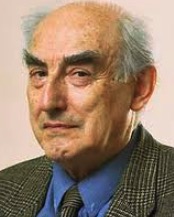 Vitaly L. Ginzburg合作论文数P.N.Lebedev Physical Institute, Russian Academy of Sciences7
 Aleksandr F Andreev合作论文数6El Feinberg合作论文数5Lv Keldysh合作论文数5A. V. Gurevich合作论文数Lebedev Physical Institute, Russian Academy of Sciences5Vladimir I Ritus合作论文数5M M Fiks合作论文数4
 Lev Pitaevskii合作论文数4Vy Fainberg合作论文数3d a kirzhnits合作论文数3Es Fradkin合作论文数3N S Kardashov合作论文数3V. E. Cherkovets合作论文数3N F Ovchinnikov合作论文数3Vitalii D Shafranov合作论文数3GF ZHARKOV合作论文数2михаил андреевич васильев合作论文数2Emmanuel I. Rashba合作论文数2Natalya M. Kreines合作论文数2
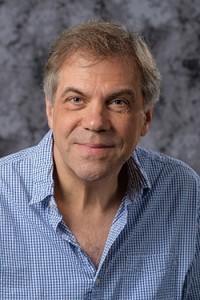 Andrey Chubukov合作论文数William I. Fine Theoretical Physics Institute, School of Physics and Astronomy, College of Science and Engineering, University of Minnesota;Department of Physics, University of Minnesota2D A Kirzhnits合作论文数2
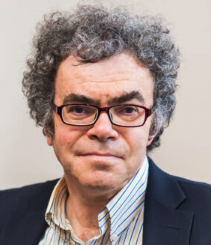 Leonid S. Levitov合作论文数Department of Physics, Massachusetts Institute of Technology2Sergei M Stishov合作论文数Los Alamos National Laboratory2A. A. Abagyan合作论文数2Анатолий Е. Шабад合作论文数2v l pokrovskii合作论文数2Д.Е. Хмельницкий合作论文数2виктор яковлевич френкель合作论文数1Aa Vedenov合作论文数1A. V. Gaponov-Grekhov合作论文数1I. G. Kondrat'ev合作论文数1Lp Pitayevskii合作论文数1леонид вениаминович келдыш合作论文数1Mikhail A. Vasil'ev合作论文数1александр викторович гуревич合作论文数1V G Bar'yakhtar合作论文数1v b gil denburg合作论文数1Eg Maksimov合作论文数1Igor Viktorovich Tyutin合作论文数1An Skrinskii合作论文数1Aleksandr Yu Grosberg合作论文数1L S Dolin合作论文数1Aleksandr A Andronov合作论文数1KV Brushlinskii合作论文数1Vv Zheleznyakov合作论文数1виталий лазаревич гинзбург合作论文数1м а соловьев合作论文数1Sv Peletminskii合作论文数1Bb Kadomtsev合作论文数1




