This paper investigates the spillover effects of China Securities Regulatory Commission's (CSRC) random inspections transmitted through board interlock networks. We find that controlling shareholders' tunneling in focal firms has been inhibited when their interlocked firms were randomly inspected by CSRC. Mechanism analysis reveals that the spillover effects arise from information transmission through board interlock networks and governance effects of interlocking directors. Specifically, consistent with information transmission mechanism, the spillover effects are more pronounced when the inspected interlocked firms are subsequently subject to more severe regulatory enforcement. In line with governance effect mechanism, the spillover effects are stronger when interlocking directors serve on audit committees. Moreover, professional expertise and reputation of interlocking directors enhance the spillover effects. Further analysis shows that the spillover effects are also reflected in reducing focal firm's earnings management and stock price crash risk. Our findings confirm the effectiveness of CSRC's random inspections and demonstrate that spillover effects transmitted through board interlock networks offers a viable governance mechanism for pervasive controlling shareholders' tunneling in emerging market like China.
Random inspections by the China Securities Regulatory Commission strengthen ex-ante supervision, but research on their economic consequences remains insufficient. Using such inspections as a quasi-natural experiment, we select A-share listed high-tech companies from 2014 to 2020 to empirically examine the impact of this preventive regulation on firms’ innovation investments. The regulation has a significant enhancing effect on innovation investment, particularly among firms with high financing constraints and financing costs, prompting them to increase their innovation investments by alleviating financing constraints. Additionally, random inspections have a more pronounced effect on private companies, those with low market value, less investor attention and media attention, indicating that they alleviate firms’ financing constraints and promote innovation through the screening effect and the spotlight effect, respectively.
This study examines the efficacy of an innovative public enforcement mechanism: the China Securities Regulatory Commission (CSRC) random inspections. Since 2016, the CSRC has carried out random inspections in which both inspectors and inspection targets are randomly selected. The selected inspectors conduct on-site inspections focusing on information disclosure, corporate governance, and other normative operations of the selected listed companies. Unlike other public enforcement mechanisms, the inspection targets in this approach are completely random. Random inspections are thought to save regulatory costs and overcome problems such as selective enforcement, with the potential to create an effective deterrent for listed companies, resulting in a "governance effect". However, random inspections may also induce a "gambler's fallacy" among executives in the inspected companies, resulting in the "bomb-crater effect". We find that internal control quality decreases significantly in randomly inspected companies, supporting the bomb-crater effect hypothesis. Moreover, the deterioration in internal control quality caused by CSRC random inspections is more pronounced in firms with overconfident executives and in non-state-owned enterprises. In addition, the reduced quality of internal controls triggered by random inspections leads to lower-quality accounting information, an increased likelihood of financial restatements, and more frequent non-standard audit opinions. Overall, our results reveal the presence of bomb-crater effect in CSRC random inspections.
SUMMARY This study draws on human capital theory to measure the quality of accounting personnel based on their education level and investigate whether the education level of the client firm’s accounting personnel affects auditors’ assessment of audit risk by examining audit outcomes. It shows that auditors charge higher fees and are more likely to make audit adjustments for companies whose accounting personnel have a lower level of education. The relationship between the education level of accounting personnel and audit fees (audit adjustments) is robust to an instrumental variable model, an entropy balancing approach, and a difference-in-differences analysis. Audit firms strategically assign more experienced partners to audit companies whose accounting personnel’s average education levels are relatively low. Taken together, these findings suggest that the education level of clients’ accounting personnel affects auditors’ assessment of audit risk and audit outcomes. JEL Classifications: M40; M42; J01; J24.
Using a survey of corporate insiders from 1,148 Chinese listed firms, this paper examines the direct effects of compliance with mandated Internal Control over Financial Reporting (ICFR) disclosure. In contrast with their U.S. counterparts, vast majorities of respondents recognize compliance benefits and perceive these benefits to outweigh the costs. However, the degree to which the firm is susceptible to market forces is a major determinant of the effects of compliance. The paper shows the evidence which supports the idea that the effectiveness of mandated ICFR disclosure depends crucially on the broader market and institutional environment in which firms operate.
Previous studies of tax enforcement neglect the effect of tax-penalty discretionary benchmarks on corporate financial reporting quality. In China, province-level variations in implementing tax-penalty discretionary benchmarks provide a quasi-natural experiment to explore how tax enforcement standardisation affects corporate financial reporting quality. We show that when tax-penalty benchmarks are implemented in every province, there is a more pronounced positive relationship between tax enforcement standardisation and corporate financial reporting quality compared with the ex-ante period. Moreover, this positive relationship is primarily driven by firms with higher degrees of tax avoidance and collusion with tax collectors. Consequently, the implementation of tax-penalty benchmarks means that the standardisation of tax enforcement can improve corporate financial reporting quality. In turn, tax enforcement standardisation can optimise the external governance environment for listed firms and improve financial information disclosure in capital markets.
The psychological factors of senior executives have an important impact on the firm’s financial policies. In this paper, we investigate the association between CEO risk-taking entrepreneurial spirit and firm cash holdings, and find that firms with higher CEO risk-taking entrepreneurial spirit have less cash holdings. Further, we find that financing constraints can mitigate the negative association between CEO risk-taking entrepreneurial spirit and firm cash holdings, whereas financing needs enhances the association between them. Mechanism test illustrates that CEO risk-taking entrepreneurial spirit affects firm cash holdings through corporate investment. Finally, the results reveal that CEO risk-taking entrepreneurial spirit not only promotes the value of cash holdings, but also is significantly positively associated with both accounting performance and market performance. Our findings shed lights on the impact of executive psychological factors on financial decisions and have important implications for cash-holding decisions of listed firms.
健全税务行政处罚裁量基准制度是法治政府建设过程中地方税务部门税收征管治理改革的重要举措.文章以2016年起各省级税务局陆续出台的《税务行政处罚裁量基准》为准自然实验场景,探究了税收征管规范化与公司审计定价的关系.研究发现,各地方税务行政处罚裁量基准实施后,税收征管规范化显著提高了公司审计定价,而且这种关系尤其体现在避税程度较高和征纳合谋程度较高的公司中.研究结果表明,伴随着税务行政处罚裁量基准的实施,税收征管规范化促使审计师通过加大审计投入降低公司涉税违法风险,进而优化了上市公司外部治理环境.
舞弊是企业内部治理的顽疾,正日益成为全球性的焦点问题.利用2021年"企业反舞弊联盟"的问卷调查数据,基于舞弊三角理论,分析中国企业反舞弊现状及其成因.研究显示:企业反舞弊形势仍然严峻;舞弊案件主要发生在销售与采购环节;舞弊者中29岁左右的人占比最大;女性舞弊者远远低于男性,但有上升趋势;高层舞弊者人数不多,但造成的损失重大;大部分舞弊者事前与顾客或供应商的关系异常;舞弊损失金额与舞弊行为持续时间正相关;内部举报是舞弊发现的第一渠道;审计新技术的应用有助于更早发现舞弊;最重要的舞弊证据是会计数据;解雇是企业惩罚舞弊者的最常见手段;不能将舞弊者法办的主要原因是缺乏足够的证据.进一步分析发现:机会是发生舞弊的第一要素,其中内部控制问题排名第一;借口是发生舞弊的第二要素,其中舞弊带来的后果不严重是最主要的借口;贪婪在压力因素中排位最前.在此基础上,基于舞弊成因数据分析,有针对性地提出政策建议.
This paper investigates how executive individualism affects excess perk consumption. We exploit data from listed firms in China over the period 2008–2017. We adopt the rice index proposed by Talhelm et al. (2014) as the measure of executive individualism. Our empirical results show that higher executive individualism results in higher excess perk consumption, which is mainly from traveling, company car, and meeting expenses. We suggest that this effect occurs because executive individualism is positively correlated with both CEO overconfidence and earnings management, leading to a higher probability of misbehaving. This effect is more pronounced among male executives, older executives, and those with lower levels of religious piety. The implementation of eight-point regulation, which mainly targets luxury consumption in government units and state-owned enterprises (SOEs), significantly attenuates the effect of executive individualism on excess perk consumption in SOEs. Various robustness tests confirm our results.
Like the chief executive officer (CEO), the chief financial officer (CFO) is an important corporate player. However, compared to the role of CEOs, research on the factors influencing corporate innovation has paid very little attention to the role of CFOs. Based on the perspective of role theory, we measure CFO role performance by organizational identification to explore the role of CFOs in corporate innovation. Employing the availability of CFO organizational identification data from a survey of listed firms in China, we find that: (1) CFO organizational identification is negatively associated with innovation output in state-owned enterprises (SOEs) and positively associated with innovation output in non-state-owned enterprises (non-SOEs); (2) corporate misconduct experience positively moderates the relationship between CFO organizational identification and innovation in SOEs; (3) CFO financial industry experience positively moderates the relationship between CFO organizational identification and innovation in non-SOEs. Our results show that CFOs play the supervisor role in innovation in SOEs and the supporter role in innovation in non-SOEs. Our research provides theoretical and practical references for companies to sustainably drive innovation.
Previous research on corporate governance has extensively explored the motives of corporate fraud. However, this research has paid little attention to employees, the real executors of fraud, resulting in the psychological and behavioral decision-making process of employees who commit fraud in enterprises becoming a “black box” that has not yet been opened. Based on the theory of planned behavior, our study integrates the existing research findings on driving factors of employee fraud and anti-fraud practical experience, extracts the key factors of employee fraud motive, and develops a multidimensional scale of employee fraud motive. The exploratory factor analysis (EFA) generates three subscales, comprising 14 items, measuring attitude, subjective norm and perceived behavioral control of employee fraud motive. The confirmatory factor analysis (CFA) supports the reliability, discriminant validity and convergent validity of the new scale. The multiple regression results show that the score of employee fraud motive is positively correlated with the amount of employee fraud occurrence, indicating that the predictive validity of the scale holds. Overall, the scale developed in our study displays good reliability and validity, and is worth spreading.
Corporate financial distress is related to the interests of the enterprise and stakeholders. Therefore, its accurate prediction is of great significance to avoid huge losses from them. Despite significant effort and progress in this field, the existing prediction methods are either limited by the number of input variables or restricted to those financial predictors. To alleviate those issues, both financial variables and non-financial variables are screened out from the existing accounting and finance theory to use as financial distress predictors. In addition, a novel method for financial distress prediction (FDP) based on sparse neural networks is proposed, namely FDP-SNN, in which the weight of the hidden layer is constrained with L_1/2 regularization to achieve the sparsity, so as to select relevant and important predictors, improving the predicted accuracy. It also provides support for the interpretability of the model. The results show that non-financial variables, such as investor protection and governance structure, play a key role in financial distress prediction than those financial ones, especially when the forecast period grows longer. By comparing those classic models proposed by predominant researchers in accounting and finance, the proposed model outperforms in terms of accuracy, precision, and AUC performance.
This paper examines the determinants of internal audit outsourcing from the macro perspective of financial ecological environment. We find that in regions with a poor financial ecological environment, firms are more likely to outsource internal audit and more inclined to outsource to other service providers than to accounting firms that provide financial report audit services for them. Furthermore, those firms with high financing constraints and non-state-owned firms are more likely to outsource internal audit in poor financial ecological environments. Firms outsourcing internal audit in poor financial ecological environments will have low debt financing costs. These results suggest firms in weak financial ecological environments tend to use internal audit outsourcing to enhance investor confidence and reduce financing costs. This paper helps expand the literature related to the determinants of internal audit outsourcing from a macro perspective, and provide a reference for improving the resource-allocation efficiency of the governance-oriented internal audit.
健全税务行政处罚裁量基准制度是法治政府建设过程中地方税务部门税收征管治理改革的重要举措.本文以2016年起各省级税务局陆续出台的《税务行政处罚裁量基准》为准自然实验场景,探究了税收征管规范化对公司股价同步性的影响.研究发现,相比实施前,各地方税务行政处罚裁量基准实施后,税收征管规范化显著降低了公司股价同步性,这种关系尤其体现在避税程度高、征纳合谋程度高和内部控制质量低的公司中.实证结果表明,随着税务行政处罚裁量基准制度的实施,税收征管规范化显著降低了公司股价同步性,增加了公司股价信息含量.因此,税收征管体制规范化能够优化上市公司外部治理环境,对改善资本市场信息披露环境具有重要实践意义.
Previous studies have found that CEOs manage their firms through traditional methods such as leadership and management practices. In this study, we investigate how the parasocial relationship (PSR) between middle-level managers and CEOs affects the organizational trust and the organizational identification (OI) of middle managers. We find that the PSR between middle managers and CEOs has a positive effect on the OI of middle managers, which is mediated by the organizational trust of middle managers. Purpose: Middle managers and CEOs are the key components of a firm and are crucial to firm strategies and control systems. Middle managers play a vital role in information transmission like in the organizational hierarchy while CEOs influence low-level employees through middle managers. In this study, we investigate how the PSR between middle managers and CEOs affects organizational trust and OI. Design/Methodology: In this study, the data concerning OI, integrity perception, and organizational trust are derived from a survey conducted by the internal control research group of the China Securities Regulatory Commission (CSRC). The research group began the survey on September 5, 2014, for the firms listed in the A-share market, accounting firms with securities and future practice qualifications, and institutional investors through the accounting department of the CSRC, the Shanghai Stock Exchange, the Shenzhen Stock Exchange, and the Asset Management Association of China. The research group members surveyed 2,536 A-share firms listed on the Shanghai Stock Exchange and Shenzhen Stock Exchange. As of October 31, 2014, 2,154 sets of questionnaires with a total of 12,551 questionnaires were received, with a response rate of 84.95%. The financial and accounting data are from the China Stock Market and Accounting Research (CSMAR) database. Findings: We find that the PSR between middle managers and CEOs has a positive effect on the OI of middle managers, which is mediated by the organizational trust of middle managers. This study extends the application of the parasocial interaction (PSI) theory, organizational trust theory, and social identity theory in listed firms. Practical Implication: There are practical implications for internal relationship management, corporate governance, and performance management. CEOs should value the influence of organizational trust and improve his/her own social and work abilities on middle-level managers as the organizational trust of middle-level managers has a significant positive impact on their sense of responsibility, ethical behavior, organizational commitment, job satisfaction, and performance. CEOs should adopt various methods to influence different managers because organizational trust mediates the relationship between the PSR and OI. Originality/Value: Our study is one of the first attempts to apply the PSI theory to the corporate world. Given the dynamics of present-day markets and changing stakeholder demands, there is little insight into how this relationship affects organizational health and functioning. Much less what a PSR between CEO and middle management looks like in practice. Our study attempts to fill the gap by investigating how CEOs might come to affect middle managers through their practices and behaviors.
高管作为企业决策的直接制定者和执行者,其心理特征对企业行为产生重要的影响.已有研究发现,高管个人对企业的税收规避决策产生重要的影响.CEO在做出税收规避决策时需要考虑其收益和成本,对企业认同感不同的CEO在考虑收益和成本时存在较大的差异,进而导致不同的税收规避政策.以税收规避的收益和成本理论以及代理理论为基础,利用2014年中国上市企业调查问卷的组织认同数据,采用名义所得税率与实际所得税率的差值测量税收规避,选择2013年至2015年中国沪深两市5209个企业的观测值作为研究样本,采用最小二乘回归方法,探讨CEO组织认同与税收规避的关系,并按企业内部的信息透明度和外部的税收征管力度进行分组,深入分析不同情景下CEO组织认同与税收规避之间的关系.研究结果表明,CEO组织认同与税收规避显著负相关,即CEO组织认同越高,税收规避越少.在信息透明度较高和税收征管力度较弱的企业中,CEO组织认同与税收规避显著负相关.进一步研究CFO组织认同对税收规避的影响,发现CFO组织认同与税收规避负相关,但不显著,并且不影响CEO组织认同与税收规避之间的关系.稳健性检验中,使用有效税率替代税收规避,采用主成分分析法构建CEO组织认同,检验结果仍然保持不变.CEO组织认同对税收规避产生重要的影响,并且在信息透明度较高和税收征管力度较弱的情景下这一影响依然存在.研究结果有助于理解中国制度背景下企业的税收规避行为,也为税务机关、监管机构和企业提供有益启示,在实践中对上市企业完善高管人力资源计划具有一定的指导意义.
基于社会认同理论,利用中国证监会问卷调查数据和CSMAR(国泰安)数据库的财务数据,分析企业所得税优惠、高管团队组织认同与创新投入之间的关系,研究发现:企业所得税优惠对创新投入有显著正向影响;高管团队组织认同正向调节企业所得税优惠和创新投入两者的关系,即在高管团队组织认同高的企业中,企业所得税优惠对创新投入的促进作用更显著.进一步研究发现,在非国有企业中所得税优惠对企业创新投入的促进作用更显著.该研究结果说明,在企业所得税优惠政策进一步细分的基础上,同时激发企业主观能动性才更能发挥税收优惠政策对企业创新的推动作用.
 Wanfu Li合作论文数12MeiHua Zhou (周美华)合作论文数11DeMing Yang (杨德明)合作论文数9Wei Shu (舒伟)合作论文数7
 Yanchao Wang (王彦超)合作论文数MBA Education Center, Central University of Finance and Economics7Chunli Liu (刘春丽)合作论文数School of Management, Hefei University of Technology7
 Dongjie Lin (林东杰)合作论文数School of Public Finance and Taxation, Central University of Finance and Economics7Xiaojian Tang (汤晓建)合作论文数6
 Qingquan Xin (辛清泉)合作论文数School of Economics and Business Administration, Chongqing University6Youliang Liao (廖友亮)合作论文数4Junqin Huang合作论文数4
 J. Cao合作论文数Department of Mechanical Engineering;Northwestern University;Department of Mechanical Engineering, Northwestern University4
 Ying Chen合作论文数4WeiMin Hu (胡为民)合作论文数3
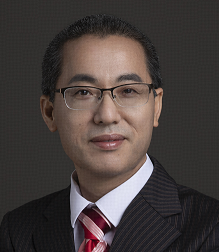 Shuiping Shi (石水平)合作论文数School of Management, Jinan University3
 Shanmin Liu (刘善敏)合作论文数School of Economics and Management, South China Normal University3Dongying Du (杜东英)合作论文数3
 Junsheng Zhang (张俊生)合作论文数School of Business, Sun Yat-Sen University3Zi-Tian Wang合作论文数2Haoran Zhu合作论文数2Shao-jun YAN (严韶俊)合作论文数2Ting-hui HUANG (黄婷晖)合作论文数2fan xie (谢凡)合作论文数2Haiyan Zhou合作论文数2Yao Yang (阳尧)合作论文数2
 Ferdinand A Gul合作论文数Department of Accounting, Deakin Business School, Deakin University2
 Zhifeng Yang (楊志鋒)合作论文数College of Business, Stony Brook University2
 Min Zhang (张敏)合作论文数Business School, Renmin University of China2
 Jifeng Guo合作论文数2Lina Xie (谢丽娜)合作论文数2Jin Liu (刘瑾)合作论文数2
 Jing Du (杜静)合作论文数School of Civil Engineering, Southeast University2
 Weiwen Li (李炜文)合作论文数School of Business, Sun Yat-sen University2
 Clive Lennox合作论文数Marshall School of Business, University of Southern California/Leventhal School of Accounting, University of Southern California2Minghui Lan合作论文数1Xi Yang合作论文数1yiyi he (何漪漪)合作论文数1Yiyi He合作论文数1lisheng zhao (赵丽生)合作论文数1
 Jing Zhao (赵静)合作论文数College of Economics, Shenzhen University1Shuning Xu (许书凝)合作论文数1Jingchang Huang合作论文数1Ying Zuo合作论文数1




