Abstract Aim: This study aimed to evaluate the effectiveness of hypertension management and analyse the factors associated with blood pressure reduction within China’s primary healthcare system. Background: Hypertension is one of the leading risk factors for global disease burden and is strongly associated with cardiovascular diseases. In China, hypertension is a serious public health problem, but few studies have evaluated the effectiveness of hypertension management in China’s primary healthcare system. Methods: The study sites were 24 primary healthcare institutions, selected using multistage stratified random sampling method. In each institution, hypertension patients aged at least 35 years who agreed to participate and had no disabilities or mental health problems were enrolled for hypertension management. Participants received comprehensive interventions in the primary healthcare system via a team. After a one-year intervention, data from 6575 hypertension patients were analysed to check the effectiveness of hypertension management and examined factors associated with hypertension control. Findings: There was an overall mean reduction of 4.5 mmHg in systolic blood pressure (SBP) and 1.9 mmHg in diastolic blood pressure (DBP). The blood pressure reduction after one year was greater in rural patients than in urban patients, 6.6 mmHg versus 3.4 mmHg for SBP and 2.6 mmHg versus 1.6 mmHg for DBP, respectively. The hypertension control rate also increased more in rural areas (22.1%) than in urban areas (10.6%) after the one-year intervention. Age, body mass index, region and being in an urban area had a significant negative association with the reduction of SBP (P < 0.05). Education level and baseline SBP showed a significant positive association (P < 0.05). Conclusions: Community-based hypertension management by general practitioners was feasible and effective. The effectiveness of hypertension management in rural areas was greater than in urban areas. Intervention strategies should pay more attention to patients in rural areas and western China.
The objective of this study was to examine the association between patient satisfaction with community health service (CHS) and self-management behaviors in patients with type 2 diabetes mellitus (T2DM). In all, 1691 patients with T2DM from 8 community health centers in 5 provinces in China participated in the present study. The dependent variables included 4 measures of self-management behaviors: regular self-monitoring of blood glucose (SMBG), prescribed medication adherence, recommended dietary changes, and regular exercise. The independent variable was patient satisfaction with CHS. Multivariable logistic regression models were performed to examine the association between patient satisfaction with CHS and self-management behaviors. The mean satisfaction score in the participants was 3.14 (out of a maximum of 5). After adjusting for covariates including demographic factors, health status, health knowledge, and socioeconomic status (SES), diabetic patients with high CHS satisfaction had better medication adherence (odds ratio [OR] 1.25, 95% confidence interval [CI] 1.02-1.55), increased exercise management (OR 1.19, 95% CI 1.06-1.35), and more SMBG (OR 1.16, 95% CI 1.03-1.32); all these associations varied across SES groups. The association between satisfaction and medication adherence was significant among participants younger than 65 years with lower education (OR 2.15, 95% CI 1.37-3.37), income (OR 1.62, 95% CI 1.13-2.32), and lower-status occupations (OR 1.69, 95% CI 1.16-2.47). Among participants younger than 65 years and had lower education attainment, the association between satisfaction and diet management was observed. There were positive associations between satisfaction and regular exercise among subgroups of participants younger than 65 years, except for lower education group. A significant association between satisfaction and SMBG among participants >= 65 years old, who also had lower SES and higher-status occupations, was also observed. The study findings suggested that T2DM patient satisfaction with CHS was moderate. High satisfaction with CHS indicated better medication adherence, exercise management, and SMBG, and these associations varied by SES.
目的 了解0~2岁儿童家长育儿知识的知晓情况及其影响因素,为进一步开展儿童家长健康教育及健康促进提供依据和参考.方法 采用方便抽样方法在全国东中西部14省市选取了14家社区卫生服务中心和13家乡镇卫生院.采用自行设计的《儿童家长知识及行为调查问卷》对2014年1~6月份接受儿童健康管理的4 639名0~2岁儿童家长进行育儿相关知识问卷调查.结果 在调查的4 639名儿童家长中,东部地区、城市、文化程度高、家庭月收入高及为儿童母亲的0~2岁儿童家长育儿知识知晓水平较高(均有P<0.05).多因素非条件Logistics回归分析显示居住在城市、儿童家长的文化程度高和为孩子的母亲的儿童家长育儿知识知晓水平越高.结论 基层医疗卫生机构中0~2岁儿童家长育儿知识知晓水平有待提高,基层医疗卫生机构应开展形式多样的、有针对性的儿童家长健康教育.
This study aims to evaluate the prevalence and sociodemographic factors of anemia in children <36 months old in China. In this study, data of 24 235 children were investigated from 32 primary health care (PHC) facilities in 11 province-level regions. Pearson &khgr;2-test and logistic regression model were used to estimate potential risk factors associated with anemia. The overall prevalence of anemia was 24.4%, and 32.8% children from rural areas were anemic, but no statistically significant difference was observed between male and female. Predictors of anemia are different regions of China, cesarean delivery, premature birth and neonatal asphyxia. We also found that education level and income of children’s parents are important determinants of childhood anemia. In additional, feeding practice would affect anemia among children aged 6–12 months. Our results could provide some insights for prevention and control of childhood anemia in PHC facilities.
Background Antibiotic resistance is one of the world’s biggest public health issues, and the situation in China is particularly grave. The objective of this study is to investigate the antibiotics usage pattern among Chinese children and provide further insight in developing strategies for promoting public health education. Methods This is a cross-sectional study, in the study, participants are from 53,665 guardians of children aged 0–6 years, who were recruited with multistage stratified random cluster sampling in 2013/2014 from 46 community health centers in 14 provinces across China Mainland. Children’s guardians completed surveys on their previous experience on using antibiotics in treating diarrhea of their children without a prescription from any pediatrician. Odds ratios (ORs) and 95% confidential intervals (CIs) for the association between antibiotic use and its predictors were estimated using multilevel logistic regression models, with antibiotic rational use group as a reference group. Results The prevalence of antibiotic misuse among children with diarrhea in the eastern, middle and western areas of China and associations between antibiotic misuse and its predictors were studied. The average rate of antibiotic misuse is 35.12%. Multilevel logistic regression revealed that living in urban areas (OR = 0.79 (0.76, 0.83)), female children (OR = 0.92 (0.88, 0.96)), guardians having higher education (OR = 0.60 (0.55, 0.66)), being raised by parents (OR = 0.90 (0.85, 0.94)), guardians having basic health knowledge (OR = 0.82 (0.79, 0.86)) are protective factors and children’s age (1–3 years OR = 1.62 (1.54, 1.71)); 4–6 years OR = 1.90 (1.77, 2.03)) is a risk factor of antibiotic misuse among children aged 0–6 years with diarrhea in China. Conclusions Our findings confirmed that there has been a high rate of antibiotic misuse without a prescription in children with diarrhea in China, which requires considerable attention. Suitable regulations and interventions are needed to solve this problem.
目的 了解城市社区卫生服务机构医务人员的健康教育内容的情况,为研发社区健康教育适宜技术提供基线数据.方法 采用方便抽样方法抽取全国12省市14个社区卫生服务中心所有在岗的医生、护士和预防保健人员,对其基本情况、健康教育服务现状及需求等情况进行问卷调查,发放调查问卷750份,收回有效问卷720份.结果 78.06%(562人)、69.58%(501人)和68.06%(490人)的医务人员在从事健康教育过程中进行了重点人群、重点疾病、生活方式和干预危险因素的健康教育,倾向选择此类健康教育内容的为事业编和合同制员工、大专和本科学历、护理和临床的医务人员;医务人员认为生活方式和干预危险因素和慢性病等重点疾病的健康教育是居民最需要的内容;东部地区、男性的医务人员对健康教育内容评价较差.结论 目前医务人员进行的健康教育以重点人群、重点疾病、生活方式和干预危险因素的内容为主,需要加强重点人群、重点疾病、生活方式和干预危险因素等健康教育内容的研发.
目的 了解城市社区居民对高血压和糖尿病危险因素的知晓情况及其影响因素,为进一步开展健康教育及健康促进、研发社区健康教育相关的适宜技术和资料提供依据和参考.方法 按照方便抽样的方法,选择全国12省市的14家社区卫生服务中心,在知情同意的原则下,对来社区卫生服务中心就诊的社区居民进行问卷调查.结果 在调查的6 620名社区居民中,随着年龄的增大,社区居民对高血压和糖尿病危险因素的知晓率下降(x2 =131.382,P<0.001);患有高血压或糖尿病的社区居民较未患的知晓率高,差异有统计学意义(x2=8.962,P=0.003);多因素非条件Logistic回归分析显示家庭月收入、工作状态和是否患有高血压或糖尿病这3个变量进入回归方程.结论 社区老年人群对高血压和糖尿病危险因素的知晓率较低,应该加强社区老年居民的健康教育,研发社区健康教育相关的适宜技术尤为重要.
目的 探讨我国居民对社区卫生服务利用及满意度的情况,为提高社区卫生服务质量提供参考依据.方法 采用多阶段分层整群随机抽样方式,于2010年对8个项目试点区的26 385名居民进行问卷调查.结果 居民对社区卫生服务机构的知晓率和利用率分别为93.1%和77.9%.非条件logistic回归分析结果显示,文化程度(OR=0.76,95%CI:0.73~0.79)、婚姻状况(OR=1.08,95%CI:1.04~1.13)、职业(OR=0.77,95%CI:0.74~0.79)、社会医疗保险(OR=1.25,95%CI:1.16~1.35)、步行时间(OR=0.58,95%CI:0.56~0.60)、担心被传染(OR=1.53,95%CI:1.36~1.71)和误诊(OR=0.89,95%CI:0.80~0.99)及知晓社区卫生服务机构(OR=0.08,95%CI:0.07~0.10)是居民常去社区卫生服务的独立影响因素.居民对社区医务人员的服务态度满意度平均值最高[(3.91±0.84)分],其次是解释交流[(3.89±0.82)分],就医环境[(3.80±0.79)分],服务价格和看病花费的满意度平均值最低.结论 应落实国家政策和法规、加大宣传、增加投入、加强人才建设等措施,提升社区卫生服务质量,提高居民对社区卫生服务的满意度.
目的 分析北京市0~3岁儿童神经心理发育现状并探讨其影响因素,为促进婴幼儿更好地发育提供科学依据.方法 通过分层整群随机抽样方法抽取2012年~ 2013年在北京市儿童医院及区妇幼保健院进行日常保健的1 654名儿童作为研究对象.采用首都儿科研究所编制的中国儿童发育量表对0~3岁儿童进行5大能区神经心理测查,根据量表计算出5大能区发育商,了解北京市0~3岁儿童神经心理发育现状并对其影响因素进行分析.结果 在调查的1 654名北京市0~3岁儿童中,25名儿童发育商低下,且5大能区发育水平参差不齐,以精细动作发育落后最为显著.单因素分析发现母亲生育年龄、喂养方式、母亲文化程度、父亲文化程度、主要看护人对北京市0~3岁儿童神经心理发育商存在影响.线性回归方程显示,以母亲为主要看护人、采用母乳喂养、父亲文化程度较高的儿童发育商较高.结论 北京市0~3岁儿童发育商呈正态分布,该组儿童发育商在中等水平,样本的代表性好.但精细动作发育与其他能区发育相比较为落后,且部分月龄落后于0~3岁儿童实际月龄,此年龄儿童的精细动作发育有待提高.在开展0~3岁儿童早期教育时应加强对其精细动作发育的指导,并且重视可干预因素对儿童神经心理发育的影响,父母应当抽出更多的时间与孩子沟通,增加亲子接触机会,增加亲子依恋.
Objective To build up the workload evaluation model of community health facilities in Xicheng District, Beijing. Methods Focus groups and questionnaire surveys were conducted to build the model from March to August in 2014,and field observations were used to testify the model. The model was also simplified. Results Community health services provided in community health facilities in Xicheng District, Beijing were classified into 5 categories. One clinic visit was defined as one standard equivalent,based on which,the equivalent values of 134 types of services were determined,thus forming an evaluation model. The simplified model only included the top 30 types of services in term of equivalent value. Conclusion The model provides a set of standards for workload evaluation of community health facilities, which helps to compare workloads among different facilities,and provides a reference for the performance appraisal of relevant personnel.
目的:探讨2型糖尿病(T2DM)患者血浆C反应蛋白(CRP)水平及其影响因素。方法将T2DM 患者按照年龄、性别、不同肥胖程度分组,并比较各组患者的血浆CRP水平,采用多元线性回归分析CRP的影响因素。结果 T2DM患者血浆CRP水平随着年龄、肥胖程度增加而升高,且与空腹血糖(FPG)、高密度脂蛋白胆固醇(HDL-C)、低密度脂蛋白胆固醇(LDL-C)等水平相关(P<0.05)。结论 T2DM患者血浆CRP水平受多种因素的影响。
目的 了解亚运村地区北京户口与非京户口儿童保健服务现状与需求.方法 选择前来亚运村社区卫生服务中心进行日常保健的0~3岁儿童家长作为调查对象.采用文献法和专家咨询法制定0~3岁儿童家长调查问卷,对其进行拦截调查的方式问卷调查.率的比较采用x2检验.结果 在调查的195名0-3岁儿童家长中,母亲占42.0%,儿童户口为非京占32.8%,单因素分析发现北京户口儿童与非京户口儿童以及儿童主要抚养人对于亚运村地区儿童保健服务满意度差异有统计学意义(P<0.05).儿童家长主要选择到社区卫生服务中心进行儿童保健,体检时医生主要提供身高体重的测量,儿童家长主要通过书刊、电视和媒体获得育儿知识.分别有41.2%的本市儿童家长和66.1%的非京户口儿童家长认为目前儿童保健内容可以满足需求,儿童家长最希望社区卫生服务中心开展的服务均为健康咨询服务.大多数的儿童家长认为应当由专业的儿童保健医生来进行儿童保健.结论 儿童保健服务应当针对不同层次人群开展能够满足自身需求的服务项目,服务项目的提供应当多样化,健康咨询服务有必要在社区卫生服务机构当中开展.社区卫生服务中心应当重视对于家长提供正确育儿知识,同时适当增加社区卫生服务机构专业儿童保健医师数量,并增加这部分医师的交流、培训机会.
目的:探讨不同省市儿童主要看护人育儿知识水平和育儿行为实践情况并对其影响因素进行分析,以便有效地预防疾病的发生和发展,降低儿童常见病的发病率.方法:随机抽取全国8个城市的8所社区卫生服务中心和4所乡镇卫生院辖区内6 347名儿童主要看护人作为调查对象,采用自行设计的知信行间卷对看护人进行知信行间卷调查.对儿童主要看护人育儿知识和育儿行为情况的影响因素进行分析.结果:调查的6 347名儿童主要看护人中,母亲占72.9%,其中辅食添加相关问题中“您是否对孩子进行纯母乳喂养到6个月”的行为实践正确率为51.3%,如何预防维生素D缺乏性佝偻病方面问题的知晓率较低.单因素分析发现,城市与农村地区之间的差异、看护人文化程度、家庭月收入、职业、儿童抚养方式及是否接受过科学喂养的健康教育对问题知晓率有影响.Logistic回归分析显示,看护人文化程度低、家庭月收入低、儿童抚养方式及没有接受过喂养健康教育的儿童主要看护人回答合格率较低.结论:我国儿童主要看护人的育儿知识水平和育儿行为实践情况总体不高,儿童主要看护人育儿知识和育儿行为有待提高,基层医疗卫生机构应该开展多种形式的儿童主要看护人的育儿知识健康教育讲座从而转变其育儿行为.适当增加母亲的产假时间,鼓励母亲亲自抚养儿童.
目的 比较3种标准在我国社区老年人群中对MS诊断的一致性,为比较和验证各种MS诊断标准的应用价值提供依据.方法 采用多阶段分层抽样方法在5座城市共调查6 295名年龄≥60周岁的社区居民,使用统一的流行病学调查表进行问卷调查,并进行体格检查、血生化标本的收集和测定.分别应用国际糖尿病联盟(IDF)、美国国家胆固醇教育计划成年人治疗方案第三次报告(NCEP-ATPⅢ)、中华医学会糖尿病学会分会(CDS,修订)的3种诊断标准计算该人群MS的患病率,研究3种标准在中国老年人群中应用的一致性.结果 分别应用IDF、NCEP-ATPⅢ和CDS修订标准判定我国社区60岁以上老年人MS患病率分别为21.2%、38.6%、25.5%.按照IDF或NCEP-ATPⅢ诊断标准计算的MS患病率女性高于男性,差异有统计学意义(P<0.01).按照CDS的诊断标准(修订)计算不同性别人群MS患病率差异无统计学意义(P>0.05).NCEP-ATPⅢ与CDS诊断标准(修订)一致率最高,为87.0%,Kappa值为0.71.结论 在社区卫生工作中对MS进行诊断和防控时,选择不同的标准将在一定程度上影响对疾病流行程度的评估.
Objective To study the awareness of prevention and treatment knowledge and self-management ability among community patients with type 2 diabetes mellitus and to provide the base for prevention and treatment of type 2 diabetes mellitus.Methods By conventional sampling method,1 006 patients with type 2 diabetes mellitus in 8 community health centers from 5provinces or municipalities in China were selected as the subjects. The investigation was performed by self-designed questionnaire and face to face manner for awareness of prevention and treatment knowledge and self-management ability. The data were analyzed statistically with χ2-test. The multi-regression logistic model was used to screen the factors of influencing the awareness rates of fasting plasma glucose and regular plasma glucose measurement. Results The average age of 1 006 subjects was(65.2±10.4) years,63.42% of subjects was females. The awareness rate of plasma glucose level was 74.75%(547/1 006),the proportion of regular plasma glucose measurement one time a week was 27.44%(276/1 006),the proportion of regular plasma glucose measurement at least one time a month was 54.37%(547/1 006). The multi-regression logistic analysis indicated that the awareness rate of plasma glucose level in subjects with high education level,medical insurance for urban workers or free medical care,and the new rural cooperative medical insurance was higher(OR=1.300,95%CI: 1.040-1.625; OR=2.047,95%CI: 1.340-3.127; OR=1.829,95%CI: 1.125-2.974,respectively); also the rate of regular plasma glucose measurement in subjects with elder,higher income,medical insurance for urban workers or free medical care and the new rural cooperative medical insurance was higher(OR=1.479,95% CI: 1.155-1.893; OR =1.452,95% CI: 1.026-2.055; OR =3.107,95% CI: 1.932-4.999; OR =2.019,95% CI: 1.215-3.353,respectively). Conclusion The health education and promotion among community patients with type 2 diabetes mellitus should be improved for enhancing the awareness rate of prevention and treatment of type 2 diabetes mellitus and self-management ability.
目的:了解国家基本公共卫生服务项目实施以后各地儿童保健方面实施现状.方法:采用定量调查和定性访谈方式对机构进行问卷调查和个人访谈,了解基层卫生服务机构在实施儿童健康管理服务项目时的政策、人员情况、服务提供情况,采用SAS9.1进行数据分析.结果:对23家社区卫生服务机构和23家乡镇卫生院进行了调查,所有机构均开展了儿童健康管理服务,各月龄阶段的管理存在着多种模式.每个社区卫生服务中心平均3名儿保人员,乡镇卫生院2名儿保人员.0~6岁儿童健康档案已经与国家要求基本一致,电子建档率城市78.3%,农村为65.2%.结论:基层卫生服务机构已成为儿童保健工作的网底,从业人员能够满足基本需求,儿童保健模式多样,实施上与国家要求基本一致.建议在国家层面应尽早制定和颁布关于基层卫生服务机构儿童保健规范化门诊要求,以及针对基层的儿童保健技术规范.
OBJECTIVE:To analyze the impact of implementation on health management programs among the community-based 0-36-month-olds regarding their growth and development.METHODS:18 Monitoring Bodies in 8 pilot areas were selected to enroll this study, using a multistage stratified cluster sampling method. All the children aged 0 to 36 months were followed, according to the health management specification, and their health archives were collected.RESULTS:A total of 13 464 children were involved in the specified management program with a total of 59 648 person-time under follow-up, with 54.26% of them were boys. Results from the multi-layer linear model indicated that the average height of children in the specified management group was higher than that in the non-standardized management group. Children in the specification management group, their weight gain had also been more effectively controlled. At the same time, with the increasing number of follow-ups according to the specification, the prevalence rates of under weight, stunt, emaciation and overweight were all significantly decreased (P < 0.05).CONCLUSION:The implementation of the community-based programs on 0-36-month-olds regarding their health management specification had improved children's growth and development.
Objective:To evaluate impacts of appropriate technology of disease control and prevention in community on the satisfaction among patients.Methods:Eight communities were selected as pilots,investigations of satisfactions among patients at baseline and 3-year follow up after intervention were conducted by the third-party institution.Pre-Post design was employed to estimate the impacts.Results:Appropriate technology of disease control and prevention in community resulted in increasing patient satisfaction on service attitude and service technology by 10.4% and 3.01% and increasing the satisfaction on service price,service consequence and overall satisfaction by 14.3%,4.96% and 12.6% respectively.Conclusion:Appropriate technology of disease control and prevention in community has impact on increasing satisfaction among patients by advancing general practitioner's skill and attitude and increasing patients' compliance and effectiveness of treatment.However,patients's atisfaction on service skills should be further strengthened.
Objective:To investigate the growth and development,the prevalences of common diseases,such as anemia and rickets of 0-3-year-old children in experimental districts after implementation of 0-36-month-old children health management standard,evaluate the effect of implementation of 0-36-month children health management standard.Methods:The health records and data of 0-3-year-old children who received 0-36-month-old children health management in experimental districts in 2008,2009,and 2010 were collected,respectively.χ2 test was used to analyze the changes of growth and development,the prevalences of anemia and rickets of 0-3-year-old children in experimental districts after implementation of 0-36-month-old children health management standard.Results:A total of 13 747 children from 8 experimental districts participated in 0-36-month-old children health management from 2008 to 2010,63 228 person times were followed up and a certain effects were obtained: the problems about growth and development,such as low body weight,emaciation,malnutrition and overweight,and the prevalences of anemia and rickets were improved among 0-3-year-old children in experimental districts(P<0.05).Conclusion:The implementation of 0-3-year-old children health management standard promotes the growth and development and improves the health status of children in experimental districts.
目的探讨血浆C反应蛋白水平与代谢综合征(MS)组分的相关性。方法采用统一的流行病学调查表,由经过培训的调查员收集被试的人口统计学特征、疾病情况、行为生活方式等资料;对研究对象进行体格检查并采集空腹静脉血,实验室检测血糖、血浆总胆固醇(TC)、甘油三酯(TG)、高密度脂蛋白胆固醇(HDL-c)、尿酸、肌酐、高敏C反应蛋白(hs-CRP)等生化指标。将1 937名社区中老年居民根据体检情况分为MS病例组、高危组和健康对照组,分析血浆hs-CRP与MS的相关性。结果相关分析显示血浆hs-CRP水平与年龄、TC、空腹血糖、尿酸、舒张压(DBP)呈正相关,与HDL-c呈负相关(P<0.001)。偏相关分析进一步控制其他MS组分,血浆hs-CRP水平仍与年龄、TC、空腹血糖、尿酸、DBP呈正相关,与HDL-c呈负相关(P<0.001)。随着MS组分聚集数量的增加,血浆hs-CRP水平呈现上升趋势(P=0.001)。当MS组分≥2个时,中老年人群血浆hs-CRP水平明显升高(P<0.05)。结论血浆hs-CRP与MS及其组分有关联。
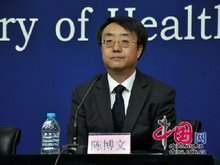 Bowen Chen (陈博文)合作论文数Children's Hospital Capital Institute of Pediatrics32
 HuiMin Yang (杨慧敏)合作论文数20Xiaoguo Zheng合作论文数20RuiLi Li (李瑞莉)合作论文数19LiHong Wang (王利红)合作论文数14YIN Tao (殷涛)合作论文数13
 Delu Yin (尹德卢)合作论文数13Xin Qianqian合作论文数9
 Demin Han (韩德民)合作论文数Beijing Tongren Hospital, Capital Medical University;Beijing Institute of Otolaryngology;School of Public Health, Capital Medical University9
 Yangfeng Wu (武阳丰)合作论文数Department of Epidemiology and Biostatistics, School of Public Health, Peking University;Peking University Clinical Research Institute9MingMing Cui (崔明明)合作论文数8
 Gaoqiang Xie (谢高强)合作论文数 Peking University Clinical Research Institute8YueXiang Wang (王月香)合作论文数7
 Jun Ma (马军)合作论文数School of Public Health, Peking University7Qi Xu (许琪)合作论文数5yan song (宋妍)合作论文数4Lihong Wang合作论文数4
 Yi Song (宋逸)合作论文数School of Public Health, Peking University4Ying Nong (农英)合作论文数3YiPing Lv (吕一萍)合作论文数3YanYu Lv (吕岩玉)合作论文数3Mei Song (宋玫)合作论文数3XiaoYan Ding (丁晓燕)合作论文数3
 Guangfa Wang (王广发)合作论文数School of Pharmaceutical Sciences, Southern Medical University3
 Xin Chen (陈欣)合作论文数China-Japan Friendship Hospital3
 Nan Su (苏楠)合作论文数China-Japan Friendship Hospital3
 Nan Li (李楠)合作论文数Peking University Third Hospital3Min Lv (吕敏)合作论文数3
 Jiangtao Lin (林江涛)合作论文数China-Japanese Friendship Hospital3DING Xiao-yan (丁小燕)合作论文数2aili guo (郭艾莉)合作论文数2ZhenJun Zang (臧振君)合作论文数2YanLan Xiao (肖燕兰)合作论文数2XiangJiang Rong (荣湘江)合作论文数2Yan Li (李研)合作论文数2WanNian Liang (梁万年)合作论文数2
 Zhenyu Ju (鞠振宇)合作论文数College of Life Science and Technology, Jinan University;Institute of Aging and Regenerative Medicine, Jinan University2
 Chenggang Jin (金承刚)合作论文数School of Social Development and Public Policy, Beijing Normal University2Jingkun Huangfu (皇甫竞坤)合作论文数1Zhao-Yang Fan (樊朝阳)合作论文数1Ning-yan LI (李宁燕)合作论文数1Shu-ting Zong合作论文数1Shanshan Li (Li S)合作论文数1L Wang合作论文数1xiao luo (罗晓)合作论文数1Yan LI (李妍)合作论文数1Yu Lei合作论文数1Bo-wen Chen合作论文数1




