Ensuring the safe operation of neural network-controlled systems in the presence of uncertain measurements is a critical challenge. Inaccurate state estimation can lead to unsafe controller behavior, necessitating safety guarantees that can effectively handle measurement errors. Existing methods rely on pre-determining the measurement error bound ϵ and synthesizing ϵ -robust barrier certificates based on this bound. However, in practical applications, ϵ is often unavailable during the design phase, which limits the applicability of existing techniques. This paper addresses the problem from a novel perspective by proposing an iterative method for synthesizing robust barrier certificates. First, we synthesize a barrier certificate for a given system, and then the maximum tolerable error bound and the most vulnerable region is calculated through an optimization problem. Second, we design an iterative optimization framework that progressively strengthens the barrier certificate by repairing its most vulnerable regions, resulting in certificates with increasingly larger tolerable error bounds. Experiments on benchmark examples demonstrate that the proposed approach can generate barrier certificates that are more robust than those of state-of-the-art work.
To ensure the correctness and efficiency of floating-point programs, automatic optimizing techniques for floating-point programs have been attached attention from academia in recent years. The core idea is to summarize transformation rules from classical numerical analysis theory and rewrite floating-point programs automatically with more stable algorithms, which produces more stable, efficient and maintainable programs. However, efficiency becomes the bottleneck of these techniques. As more and more transformation rules are discovered and summarized, the rule base used by the optimizing framework becomes larger and larger. It is more difficult to scan the whole rule base as usual. In this paper, we propose an experience-guided acceleration strategy for floatingpoint optimization. Based on the principle of similar causes of floating-point errors, the strategy extracts the corresponding symbolic and structural features of successfully optimized floating-point programs, and saves the rule sequences involved in the optimization of the programs into a hash-based optimization experience database. When optimizing a floating-point program, the optimizer first calculates the similarity between symbolic and structural features of the program and that of records in the experience base. Rule sequences associated with records having higher similarity are preferred to be used in rewriting and optimizing the program. With more and more programs to be optimized, the experience base increases gradually and a hashed-partition design ensures the efficiency of record-searching. The above approach has been evaluated on the FPBench benchmark and the open source engine OpenRelativity. The results show that compared to the traditional optimizing approach, it can achieve a 6.04x speedup in average. In addition, it improves accuracy for floating-point programs effectively as well as the traditional optimizing approach does. Therefore, our approach improves the usability of automatic optimizing techniques significantly.
软件是新一代信息技术的灵魂,?是关系国民经济和社会全面发展的基础性、战略性产业.?近年来,?区块链、云计算、人工智能等许多新兴技术迅速发展,?软件工程与工业控制、制造、科学计算、数值计算、物联网等各领域进一步加强融合,?正引领并促进这些领域的高速发展.?为了满足各个领域的相关要求,?软件也对应呈现出许多新的特征,?包括计算需求不断增强、实时性和可靠性的要求不断提高、对效率和安全性要求更为严格等,?从而导致对应的领域软件在开发过程中面临新的挑战.?本专题关注从软件工程的角度有效地处理各领域软件面临的问题,?保障领域软件的可靠性和性能,?实现领域软件智能化,?提高软件在对应领域中的协同性等领域软件工程相关技术.
随着互联网、物联网、云计算等新计算平台、新应用模式及智能化等新软件模式的广泛运用,软件系统内外各种来源的非确定性不断增强.从软件系统内部的不确定性来看,并发程序是一类典型的非确定性软件系统.并发程序由于其随机性高的特点,容易导致并发缺陷且难以调试.从软件系统外部的不确定性来看,软件所处的网络环境和所服务的用户需求变得更加动态多变,这就要求软件系统能够主动应对这些动态变化.具有自适应和持续演化能力的软件系统需要在环境和需求的自动感知与理解、适应行为的自主决策以及适应行为的精准实施等环节处理各种不确定性,以保障系统能够持续、稳定地提供服务.从软件构造途径的不确定性来看,包含深度神经网络部件的数据驱动智能化软件系统是另一类非确定性软件系统,其非确定性来自于机器学习模型的归纳本质.此类系统日益应用于一些安全相关的领域,这就对其软件质量提出了更高的要求.本专题关注软件质量保障中非确定性问题所面临的挑战以及相关软件质量保障技术.
目的 探讨手术导航系统切除颅底附近病变的安全性和准确性。方法 收集自2018年1月至2020年8月在南京市口腔医院使用手术导航技术进行颅底手术的患者,共计12例,其中包括4例咽旁肿瘤、2例腮腺肿瘤、3例腭及软腭肿瘤、1例上颌窦癌、1例右上颌后牙牙龈鳞癌、1例颞下颌关节区钙盐沉积症。该系统通过将二维断层扫描重建为三维图像,使外科医生可以进行术前设计、模拟操作,以及提供术中即时反馈。结果 12例患者均完整切除病灶,未出现脑脊液漏、大出血、颅神经损伤等并发症。结论 计算机导航技术是一种安全、可靠、可提供精确术前及术后定位的颅底手术辅助技术,对于颅底这一结构复杂、各种重要神经、血管交错的区域,具有巨大的应用价值。
软件测试在提高移动应用的安全性和可靠性方面扮演着重要角色.然而,目前主流的移动应用界面测试技术存在着许多不足:人工编写脚本和录制回放技术需要消耗大量的人力成本,自动化测试在移动应用界面测试的应用场景上受到了诸多限制.针对这些问题,提出一种基于手绘制导的移动应用界面测试方法.该方法通过设计一种简单直观且具有较强表达能力的手绘语言来帮助测试者轻松表达其测试意图,测试者仅需在待测应用的界面图像上做简单绘制,就能生成对应的测试模型,并以此为基础生成界面测试所需的测试用例.以近年来在相关文献中已经用作移动应用界面测试的评估用例集为基准来评估该方法的测试效果.评估结果表明:在提供很少人力成本的条件下,手绘图形所表达的用户测试意图在制导移动应用界面测试上能起到非常关键的作用.
目的:分析牙源性钙化囊肿(COC)临床组织病理学特征及治疗方法.方法:对诊断为牙源性钙化囊性瘤和COC病例临床特征、影像学表现、组织病理学特点,治疗及随访进行回顾性分析.结果:44例患者(男性20例、女性24例),好发年龄10~30岁.上颌骨24例,下颌骨20例,主要位于颌骨前份.其中14例与牙齿相关,主要为尖牙和多生牙.影像学上40例表现为单房型透射影,4例为多房型透射影.病理分型以单纯型(30例,68.18%)和牙瘤型(11例,25.00%)多见.治疗方法,38例行囊肿刮治术,4例开窗减压术,2例颌骨节段性截骨术,经术后2年随访,所有患者术后恢复良好,均无复发.结论:根据病理类型其治疗要点有所不同,囊肿刮治术仍是主要治疗方法,术后复发率低,预后较好.
Objective: To analyze the clinical characters and surgical treatment of primary parapharyngeal space (PPS) tumors. Methods: A total of 23 cases of primary PPS tumors which were treated from November 2011 to December 2017 were included for the retrospective analysis in this study. Results: Twenty-three cases of patients with primary PPS tumors were analyzed in this study. Surgical approach was as follows: transcervial approach applied in 7 cases, transparotid approach in 4 cases, transoral approach in 2 cases, transmandibular approach in 4 cases, and the combined approaches on 6 cases. Besides, among 7 cases with upper PPS tumor, we applied the surgical navigation system in the surgery of 3 cases. The mean surgery duration of these cases, 3.5 h, was shorter than unused ones, while the mean maximum size (MMS) of tumors, 5.7 cm, was also larger. So far, 23 cases had no recurrence and metastasis. The most frequent histopathological type of all the cases was pleomorphic adenoma (8 cases), followed by Schwannoma (5 cases). With an 8-to-72-months follow up, 23 cases had no recurrence, metastasis or death. Conclusions: Surgical resection is preferred in the treatment of PPS tumors. In the upper PPS tumor cases, the surgical navigation system could reduce the operative duration significantly and is more suitable for larger tumors.
Purpose: This study evaluated the surgical treatment of tumors arising from the parapharyngeal space (PPS) in a single-center setting. Materials and Methods: This retrospective study was conducted with 28 patients who underwent surgery for primary PPS tumors from 2011 to 2018. Patient clinical features, histologic tumor type, surgical approach, complications, and follow-up data were evaluated. Results: All patients underwent surgery in this series. The transmandibular approach was most frequently performed (35.7%), followed by the transcervical (28.6%), transparotid (17.9%), and transoral (17.9%) approaches. A surgical navigation system was applied to the surgery of 4 cases with superior PPS tumors. The mean surgical duration of these cases (205.0 minutes) was shorter than that of cases without surgical navigation, and the mean maximum size (MMS) of tumors (5.8 cm) was larger (P < .01). Eleven different tumor types were diagnosed after surgery (78.6% benign and 21.4% malignant). For postoperative complications, there were 10 cases of lower lip numbness, 4 of facial nerve dysfunction, 2 of trismus, and 1 each for the remaining types. During 4- to 81-month follow-up, 27 patients had no recurrence, metastasis, or death and 1 patient was lost to follow-up. Conclusion: The histopathologic diagnoses were consistent with those of previous reports. Surgical resection is the main treatment for PPS tumors, with relatively low rates of recurrence and death. For superior PPS tumors, the surgical navigation system can substantially shorten the operative duration and is more suitable for larger tumors. (C) 2019 American Association of Oral and Maxillofacial Surgeons
Adenomatoid odontogenic tumors (AOT) are exceptionally rare, accounting for 2.2-7.1% of all odontogenic tumors. The present study reviewed incidence, treatment, clinical features, and radiographic features of AOT patients and proposed an alternative treatment for large AOT. These AOT patients were admitted between June 2006 to June 2017 and retrospectively reviewed. Gender, age, lesion site, affected tooth, types, and treatment of these patients were recorded. A total of 13 AOT patients were documented. Age range was 11 to 65 years, with a mean age of 21.15 years. High incidence was found in the second decade of life (8 cases; 66.67%). Females were affected more than males, with a ratio of 1.6:1. The maxilla had 6 cases (46.15%) and the mandible had 7 cases (53.85%), with a ratio of 1: 1.17. Moreover, 10 follicular cases (76.92%), 3 extra-follicular cases (23.08%), and 0 extra-osseous cases were found. In follicular AOT, the most commonly impacted tooth was canine (8; 80.00%). A total of 10 cases (83.33%) were treated with enucleation, 2 cases (16.67%) were treated with fenestration decompression, and 1 case was not treated due to poor general conditions. After two years of follow-ups, 1 (8.3%) case had a relapse. There were no clear signs of recurrence in the remaining cases. In conclusion, AOT was more common in females, most in the second decade of life, usually associated with canines. Conservative surgical enucleation is the treatment for AOT. However, for large AOT, fenestration decompression may be an effective treatment.
Vulnerability detection is an important way of improving the security of software.However,the development of the Internet makes it possible for hackers to attack software systems with new techniques.This paper focuses on a new kind of vulnerability that relates to numerical stability.It poses new threat to software security as hackers are able to bypass security protection by the new kind of vulnerability,and numerical analysis is difficult to detect such a vulnerability.In the paper,the vulnerability related to numerical stability is defined from the perspective of software behavior variation caused by numerical errors,and an automatic detection approach is proposed.The approach combines the static analysis and symbolic execution,and detects the vulnerability by three steps:symbolic extraction,static attack analysis,and dynamic attack verification with high precision values.This new approach is evaluated on a few famous open source projects.The results show that the proposed approach effectively detects the vulnerabilities related to numerical stability hidden in the real-world projects.
软件安全性是衡量软件是否能够抵御恶意攻击的重要性质.在当前互联网环境下,黑客攻击无处不在,因而估计软件中可能含有的漏洞数量与类型,即对软件进行安全评估,变得十分必要.在实际中,用户不仅需要对未发布或者最新发布的软件实施安全性评估,对已发布软件也会有一定的安全评估需求,例如,当用户需要从市场上互为竞争的多款软件中做出选择,就会希望能够花费较低成本、较为客观地对这些软件进行第三方的评估与比较.提出了一种由自然语言数据驱动的智能化软件安全评估方法来满足这一要求.该方法基于待评估软件现有用户的使用经验信息来评估软件的安全性.它首先自适应地爬取用户在软件使用过程中对软件的自然语言评价数据,并利用深度学习方法与机器学习评估模型的双重训练来获得软件的安全性评估指标.由于所提出的自适应爬虫能够在反馈中调整特征词,并结合搜索引擎来获得异构数据,因而可通过采集广泛的自然语言数据来进行安全评估.另外,使用一对多的机器翻译训练能够有效地解决将自然语言数据转换为语义编码的问题,使得用于安全评估的机器学习模型可以建立在自然语言的语义特征基础上.在国际通用漏洞披露数据库(CVE)和美国国家漏洞数据库(NVD)上对该方法进行了实验,结果表明,该方法在评估软件漏洞数量、漏洞类型以及漏洞严重程度等指标上十分有效.
Objective:To explore the clinical application of computer aided navigation in removal of foreign bodies in the oral and maxillofacial regions and evaluate the clinical effect.Methods:From January 2014 to December 2016,5 patients with foreign bodies in oral and maxillofacial regions were treated at Nanjing Stomatological Hospital.Preoperative CT or CBCT scanning were undertaken for all patients and the scanning data were imported to computer aided navigation system as digital imaging and communication in medicine (DICOM) for 3D reconstruction.The data were used for preoperative planning and intra-operative navigation.The clinical effect was evaluated by observing the accuracy of intra-operative navigation,the operation time,and the postoperative condition of patients.Results:With the computer aided navigation,a total of 28 foreign bodies were found in 5 cases,including 5 glass fragments,16 splinters,and 7 metals.One metal fragments could not be accurately located due to the loose of navigation reference frame.After re-fixed the reference frame,all foreign bodies were removed by minimally invasive access without any complications,the accuracy of computer aided navigation was less than 1mm,and the operating time was shorten.Conclusion:Computer aided navigation technology not only can accurately locate the foreign body in maxillofacial region,but also reduce the operation time and the postoperative complications,increase the accuracy and safety of surgery.Computer aided navigation had significant clinical values in the removal of foreign bodies in the oral and maxillofacial regions.
Compared with the traditional surgery, computer - assisted surgery shows great advantages such as higher accuracy and decreased intervention time. Because of complexity of oral and maxillofacial anatomy,as well as the existence of important nerves and blood vessels,maxillofacial surgery is undoubtedly much difficult to be handled. Using computer-aided navigation,surgical plan and real-time navigation,the unexpected damaging of the important tissues can be prevented and the accuracy of surgery can be improved. Therefore,it has been widely used in maxillofacial surgery. Considering the features of maxillofacial surgery,new technologies have been developed upon the original navigation, including the combination of ultrasonic technology,3D printing,jaw plate and electromagnetic navigation system,which enriched the indications of computer-aided navigation.
OBJECTIVE:As compared with the normal anatomy, structures of the skull base and its surroundings have been dramatically altered of the lesion near the skull base. How to remove the lesion at the skull base was mainly depending on surgeon's personal experience during past years. In this study, the authors explored the safety and accuracy of the surgical navigation system in resecting lesions near the skull base.METHODS:The surgical cases consisted of 15 patients who underwent surgery involving the skull base with the using of surgical navigation technology. Five patients had adenoid cystic carcinoma at minor salivary glands of the palate extending to the skull base and 10 patients were suffered from bony ankylosis of temporomandibular joint. After the system converted patient's computed tomography scans into three-dimensional reconstructive images, preoperative planning and simulation of the operation process could be made by surgeons. During the operation, the virtual images were matched with the patient through individual registration. The system provided surgeon with feedback about the operation on the screen instantly with moving the navigated pointer.RESULTS:The application of surgical navigation system was safe and reliable for resecting the ankylotic bone and identifying the extent of tumors resection near the skull base. No complications including cerebrospinal fluid leak, cranial nerve injuries, severe bleeding happened to those patients.CONCLUSIONS:Given the safety and accuracy of the surgical navigation system, surgery near the skull base appeared to be an ideal field for using with its complex anatomy.
Loop is an important program structure in computer.Many applications need to estimate the maximum iteration number of loops in programs by loop bound analysis.Existing loop bound analysis uses conservative methods to derive outer loop bounds,which estimates the bounds higher than the real ones.In this paper,we propose an automatic inner bound analysis,which generates bounds slightly lower than the real ones.When users combine the inner bound analysis with traditional outer bound analysis,they can restrict every real loop bound in an interval and get more information about the loops.We implement the inner bound analysis by a scope-condition guided symbolic execution.The insight of our technique is that when symbolic execution substitutes program inputs by symbols in its derivation,it generates loop bounds for all valid inputs and generates corresponding test cases that make the inner bounds feasible.We optimize the technique and evaluate it on several benchmarks.The results show that the analysis is precise and efficient.
Objective:To investigate the effect of enucleation with bone curettage on ameloblastoma.Methods:Eleven patients with mandibular ameloblastoma were included in this study.The methods of treatment consisted of enucleation with bone curettage.Results:Only one person's tumor showed recurrence.The aesthetic and functional outcomes were satisfied in other patients.Conclusion:According to our opinion,curettage of ameloblastoma is a choice to treat ameloblastoma with good function and aesthetic outcome.
条件判定覆盖(condition/decision coverage,简称C/DC)准则是各种安全攸关软件测试中常用的测试覆盖准则,它要求软件测试覆盖程序中每个判定以及条件的真/假取值.现有的自动测试生成方法在针对该准则的测试用例生成过程中存在很多不足.例如:符号执行方法很难处理较为复杂的非线性条件约束,并在处理程序的规模上受到很大限制;希尔攀登法由于在搜索过程中易陷入局部最优,而难以达到满足C/DC准则的高覆盖率;模拟退火法和遗传算法依赖于用户使用过程中的复杂配置,测试用例生成效果具有一定的随机性.针对这一现状,提出了一种线性拟合制导测试用例生成方法.依据C/DC准则,该方法将程序中的每一个条件判定规范化为一个与零值比较的数值函数,并以插桩与执行获得该函数当前输入下的采样通过拟合这些采样,能够逐步判断出程序中各个条件判定与输入的关系,并利用这些关系生成高覆盖率的测试用例.相对于传统方法,该方法具有参数配置简易、生成过程高效等优点,并且能够处理带非线性条件约束、逻辑复杂的程序.在3个开源软件库中的25个真实程序上运行的实验结果表明,所提出的方法比目前以覆盖率见长的遗传算法(genetic algorithm,简称GA)制导方法具备更好的覆盖能力与更高的执行效率.
With the development of computer science,failures and errors are unavoidable in software?Hence,software failure prediction becomes an important area in software engineering?Existing approaches of failure prediction focus on the information in code,but reports in databases are also with key values?This paper propose a software failure prediction approach with crawler, which crawls the reports in software forum and applies machine learning technologies to process them?Our approach help develG opers avoid failures and improve software quality.
BACKGROUND:The process of oxidative stress that impacts the curative effect exists in the region which accepts cel transplantation. However, there are few reports about the effects of oxidative stress on human dental pulp stem cels and relevant mechanism. <br> OBJECTIVE:To understand the effect of hydrogen peroxide on the senescence of human dental pulp stem cels. <br> METHODS:Human dental pulp stem cels were isolated and cultured in PBS, 100 and 200 μmol/L hydrogen peroxide for 2 hours, respectively. Cel morphology was observed under inverted microscope, degree of cel senescence monitored by β-galactosidase staining, cel proliferation ability detected by BrdU kit and cel counting method, cytoskeleton of dental pulp stem cels and expression of sirt1 tested using immunofluorescence method, and expression of sirt1 and p16 proteins measured by western blot assay. <br> RESULTS AND CONCLUSION:Dental pulp stem cels exhibited a fibroblast-like morphology with spindle-shaped appearance. After stimulated by hydrogen peroxide, the cel volume was enlarged, theβ-galactosidase staining deepened and the proliferation of dental pulp stem cels reduced. The enhancement of senescence of dental pulp stem cels was accompanied with the increasing concentration of hydrogen peroxide, and in this process, the expression of p16 was raised while the expression of sirt1 was decreased. In conclusion, the senescence of human dental pulp stem cels can be promoted by the stimulation of hydrogen peroxide, and sirt1 and p16 are involved in this process. Our findings may provide a theoretical and experimental foundation for autologous transplantation of dental pulp stem cels.
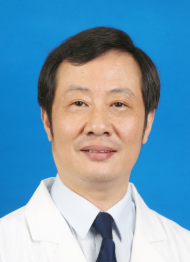 Xudong Yang (杨旭东)合作论文数Nanjing Stomatological Hospital44
 Qingang Hu (胡勤刚)合作论文数Nanjing Stomatological Hospital44
 MingXing Lu (卢明星)合作论文数28
 Guowen Sun (孙国文)合作论文数Nanjing Stomatological Hospital, Medical School of Nanjing University23
 Runzhi Deng (邓润智)合作论文数Nanjing Stomatological Hospital, Medical School of Nanjing University15GuoWen Sun (孙国文)合作论文数石家庄铁道大学材料科学与工程学院14
 Zhiyong Wang (王志勇)合作论文数Nanjing Stomatological Hospital, Medical School of Nanjing University12BingRong Zhou (周炳荣)合作论文数11Sufeng Zhao合作论文数10PU Yu-mei (蒲玉梅)合作论文数7MingYao Xu (徐明耀)合作论文数7
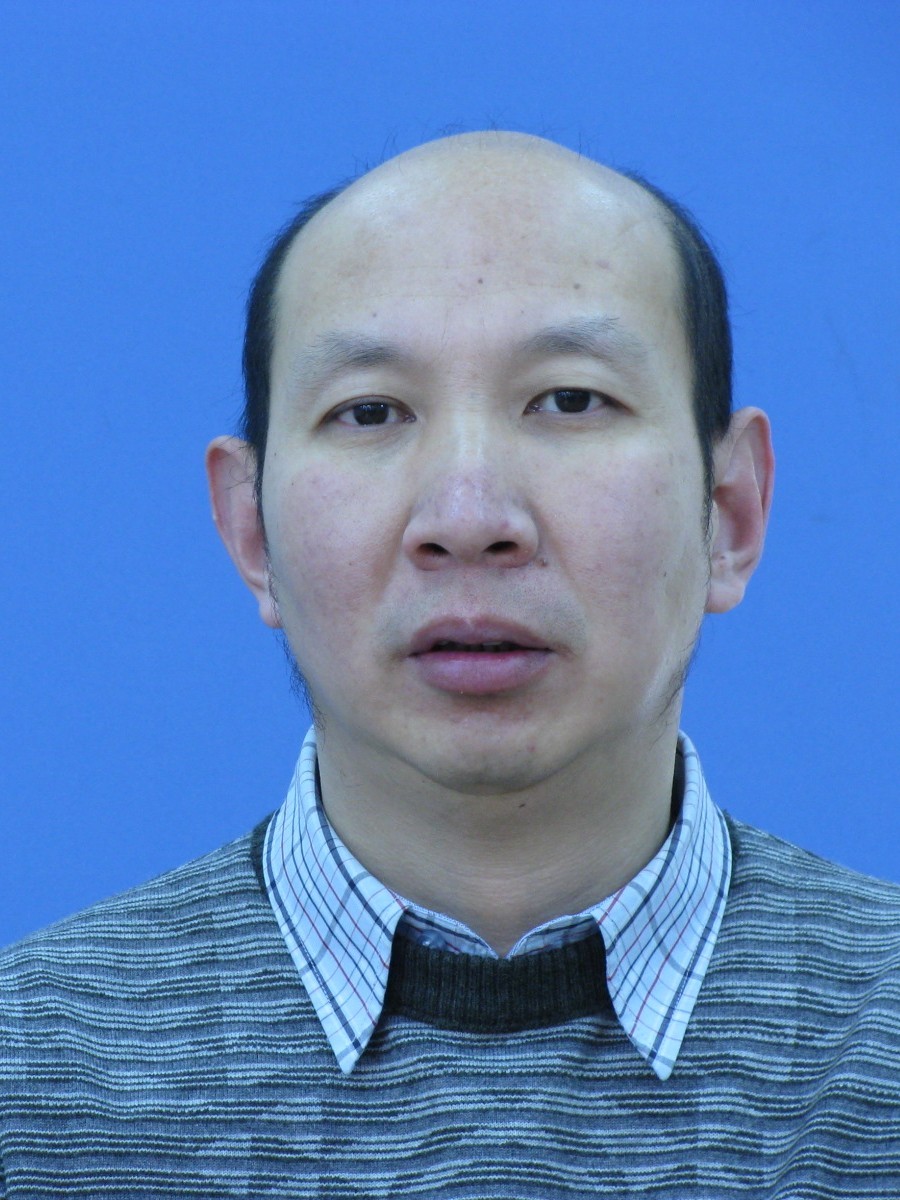 Xuandong Li (李宣东)合作论文数Department of Computer Science and Technology, Nanjing University;Software Institute, Nanjing University;School of Computer Science, Nanjing University5
 Huang Xiaofeng (黄晓峰)合作论文数5LanZhu Huang (黄兰柱)合作论文数4YinKai Zhang (张银凯)合作论文数4YiZhou Ceng (曾以周)合作论文数4Jun Cao (曹俊)合作论文数4Yuxin Wang (王育新)合作论文数4Yong Chen (陈勇)合作论文数4Mei LIU (刘梅)合作论文数3Jin Youren (金友仁)合作论文数3Min Liu (刘敏)合作论文数3JiaPing Yang (杨家平)合作论文数3JianMin Wen (文建民)合作论文数3Yong Lu (鲁勇)合作论文数3Fei Chen (陈菲)合作论文数3
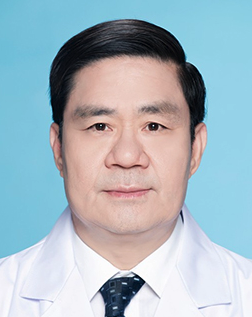 Jianmin Wen (温建民)合作论文数Wang Jing Hospital of CACMS3
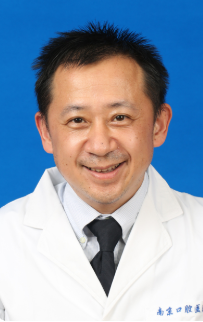 Xin Tong (童昕)合作论文数Nanjing Stomatological Hospital, Medical School of Nanjing University3
 Linzhang Wang (王林章)合作论文数School of Computer Science, Nanjing University3
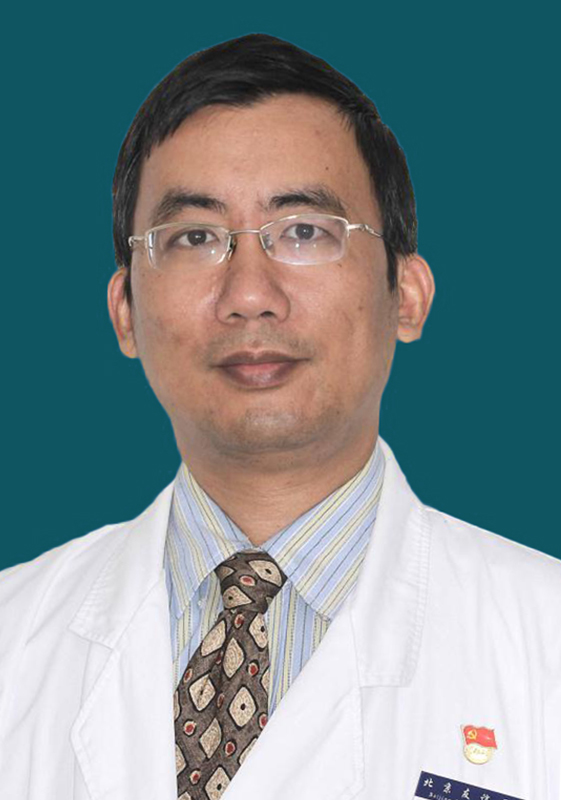 Xiaofeng Huang (黄晓峰)合作论文数Beijing Friendship Hospital, Capital Medical University3Haoliang Chen (陈昊亮)合作论文数2Kai-mao Yang (杨开懋)合作论文数2Jian-Sheng OU (欧建生)合作论文数2Yi-Fan ZHANG (张一帆)合作论文数2Dao-chun WANG (王道春)合作论文数2QIAN Hai-feng (钱海峰)合作论文数2Yuan Wei (韦元)合作论文数2WenHui Jiang (蒋文晖)合作论文数2ShiJin Da (达式金)合作论文数2LiPing Hu (胡黎萍)合作论文数2YuXin Wang (王育新)合作论文数2BaiQuan Shou (寿柏泉)合作论文数2WeiDong Shou (寿卫东)合作论文数2Jie Ding (丁洁)合作论文数2Xin Chen (陈欣)合作论文数2
 Junjie Chen (陈俊洁)合作论文数School of Computer Software, College of Intelligence and Computing, Tianjin University2
 Wei Han (韩伟)合作论文数Nanjing Stomatological Hospital, Medical School of Nanjing University2Chunlan Zheng (郑春兰)合作论文数2




