Objective:To summarize and analyze the current application status of oral mucosal graft (OMG) technique in the repair of ureteral strictures in China, and clarify the feasibility, safety and effectiveness of this technique.Methods:The 175 patients who underwent repair of ureteral stricture using oral mucosal patches from June 2015 to February 2022 were etrospectively analyzed in 14 medical centers in China, including 49 cases in Union Hospital, Tongji Medical College, Huazhong University of Science and Technology, 32 cases in Affiliated Seventh Medical Center of PLA General Hospital, 3 cases in The Second Hospital of Anhui Medical University, 6 cases in The First Affiliated Hospital of Zhengzhou University, 56 cases in Peking University First Hospital, 3 cases in Sir Run Run Shaw Hospital, Zhejiang University School of Medicine, 3 cases in Shanghai Sixth People' s Hospital, 4 cases in General Hospital of Estern Theater Command, 4 cases in Lanzhou University Second Hospital, 2 cases in Guizhou Province People 's Hospital, 2 cases in Peking University People' s Hospital, 5 cases in Jinzhou First People's Hospital, 5 cases in The First Affiliated Hospital of Wannan Medical College, 1 case in Shandong Provincial Hospital. In this study, 127 patients (72.6%) used lingual mucosal patches, 32(18.3%) labial mucosa, and 16(9.1%) buccal mucosa. The surgical approach for OMG ureteral reconstruction was mainly minimally invasive, with robot-assisted laparoscopy in 84 patients (48.0%), traditional laparoscopic surgery in 87 patients (49.7%), and open surgery in only 4 patients (2.3%). There were 133 males and 42 females with an average age of (35.0±17.2) years. The mean body mass index (BMI) and stenosis length were (23.1±4.1) kg/m 2 and (4.7±1.8) cm, respectively. The stricture was located in the left ureter in 116 patients, right ureter in 58 case and bilateral ureter in 1 case. The most common causes of ureteral stricture were endoscopic surgery in 88(50.3%)patients, congenital stricture in 55(31.4%)patients, failed ureteroplasty in 29(16.6%)patients, history of extracorporeal shock wave lithotripsy in 13(7.4%)patients, radiotherapy history in 3(1.7%)patients and other causes in 6(3.4%)patients. Strictures were mainly located in the upper ureter, accounting for 61.7% (108/175 cases), followed by 36.0% (63/175) at the ureteropelvic junction and 2.3%(4/175)in the middle ureter. According to the surgical methods, the patients were divided into robot-assisted laparoscopic surgery group ( n=84), traditional laparoscopic surgery group ( n=87)and open surgery group ( n=4). Subgroup analysis of patients in robot-assisted laparoscopic and traditional laparoscopic surgery groups was performed. There were no significant difference in preoperative data between the two groups except for age (32.0±18.3) years vs.(37.0±15.9)years, P=0.040], BMI[(22.5±4.3)kg/m 2 vs. (23.7±3.6)kg/m 2, P=0.028], and etiology of stenosis [endoscopic injury, 34(40.5%) vs. 53(60.9%), P=0.012]. Preoperative hydronephrosis and stricture length were assessed by CTU and ureterography. Ureterography 7-9 weeks after surgery showed patency of the reconstructed segment, or no recurrence of hydronephrosis was judged as success. Evaluate the operation method, operation time, success rate, length of OMG in repairing ureteral stricture between laparoscopic and robot-assisted groups. Results:The overall success rate of oral mucosal graft repair surgery reached 97.7%(171/175). The success rate of ureteral reconstruction in the two groups were 96.4%(81/84)and 98.9%(86/87), respectively ( P=0.351), and the difference was not statistically significant. There was no significant difference for operation time, intraoperative blood loss, and mean oral mucosal length between the robotic and laparoscopic groups[(244.7±85.8) min and (222.7±83.5)min ( P=0.116), (58.9±38.6) ml and (68.4±45.5) ml ( P=0.217), (5.0±2.0) cm and (4.6±1.5) cm ( P=0.350)], respectively.Postoperative complications were reported in 23 (13.1%) patients, such as fever, urinary leakage, lymphatic leakage, infection, but only 2 (1.4%) cases patients had complications of Clavien-Dindo score ≥ Ⅲ. The two patients developed urinary stricture after surgery with failed conservative treatment, and no urinary stricture occurred following endoscopic treatment.The short-term (three months after surgery)incidence of complications in the site where the oral mucosa was taken, such as difficulty in opening mouth, pain, and swelling, was 12.0% (21/175), and there was no significant difference for oral complications between patients harvesting different length of mucosal graft. Conclusions:Ureteroplasty with oral mucosal graft is a safe, feasible and reliable technique for ureteral reconstruction. At present, minimally invasive technology is the main surgical approach for ureteroplasty, and there is no significant difference in operation time and success rate between robotic surgery and laparoscopic surgery.
Objective:To explore the experiences of using wireless intelligent endoscopy system in rigid ureteroscopy and flexible fiberscopy for urinary calculi.Methods:80 ureteral stone patients who needed the treatment of rigid ureteroscopy or flexible fiberscopy were included, 40 cases were treated by conventional ureteroscopy: rigid ureteroscopy (20 cases) and flexible fiberscopy (20 cases) , 40 cases were treated by wireless intelligent ureteroscopy: rigid ureteroscopy (20 cases) and flexible fiberscopy (20 cases). The differences in preoperative preparation time, operative time, clarity, grip sense and image delay between conventional ureteroscope groups and flexible fiberscope groups were compared.Results:There was no statistically significant difference in preoperative preparation time, operative time, clarity, image delay or intraoperative grip feeling between the conventional rigid ureteroscopy group and the wireless intelligent rigid ureteroscopy group (P>0.05). There were no statistically significant differences in preoperative preparation time, operation time, clarity and image delay between the conventional flexible ureteroscopy group and the wireless intelligent flexible ureteroscopy group (P>0.05). The grip feeling of the wireless intelligent flexible ureteroscope group was better than that of the traditional flexible fiberscopy group, and the comparison between the two groups was statistically significant (P<0.05).Conclusion:Wireless intelligent abdominal surgery system is a safe and effective laparoscopic system in the treatment of endoscopic calculi, which can improve the grip feeling of the endoscopic lens and reduce the sense of fatigue of the operator, and has a wide application prospect.
腹腔镜在临床使用中不可避免的会发生故障.由于腹腔镜是集光学、电子、机械、材料等多门学科的综合性系统,所以判断及排除故障的办法不尽相同,现列举常见的故障现象及相应的解决方案,以供参考.
 Hanjiang Xu合作论文数1Hu Qingqing (胡庆庆)合作论文数1Chang-Sheng Zhan合作论文数1
 Kunlin Yang合作论文数1YuJie Xu (徐玉节)合作论文数1GongHui Li (李恭会)合作论文数1YiXiang Liao (廖义翔)合作论文数1Song Fan (樊松)合作论文数1YiNan Zhang (张沂南)合作论文数1JingPing Ge (葛京平)合作论文数1ShengJun Bao (包胜军)合作论文数1JianZhong Wang (王建忠)合作论文数1Ming Liu (刘明)合作论文数1
 Lei Zhao (赵磊)合作论文数Academic Division of Sports and Health, School of Sport Science, Beijing Sport University1
 Guangheng Luo (罗光恒)合作论文数Medical College, Guizhou University;Guizhou Provincial People's Hospital1
 Xiongjun Ye (叶雄俊)合作论文数Department of Urology, Peking University People's Hospital1
 Xingyuan Xiao (肖行远)合作论文数Zhongnan Hospital of Wuhan University1
 Xuesong Li (李学松)合作论文数Peking University First Hospital1
 Zongyao Hao (郝宗耀)合作论文数The First Affiliated Hospital of Anhui Medical University1
 Chaozhao Liang (梁朝朝)合作论文数The First Affiliated Hospital of Anhui Medical University1
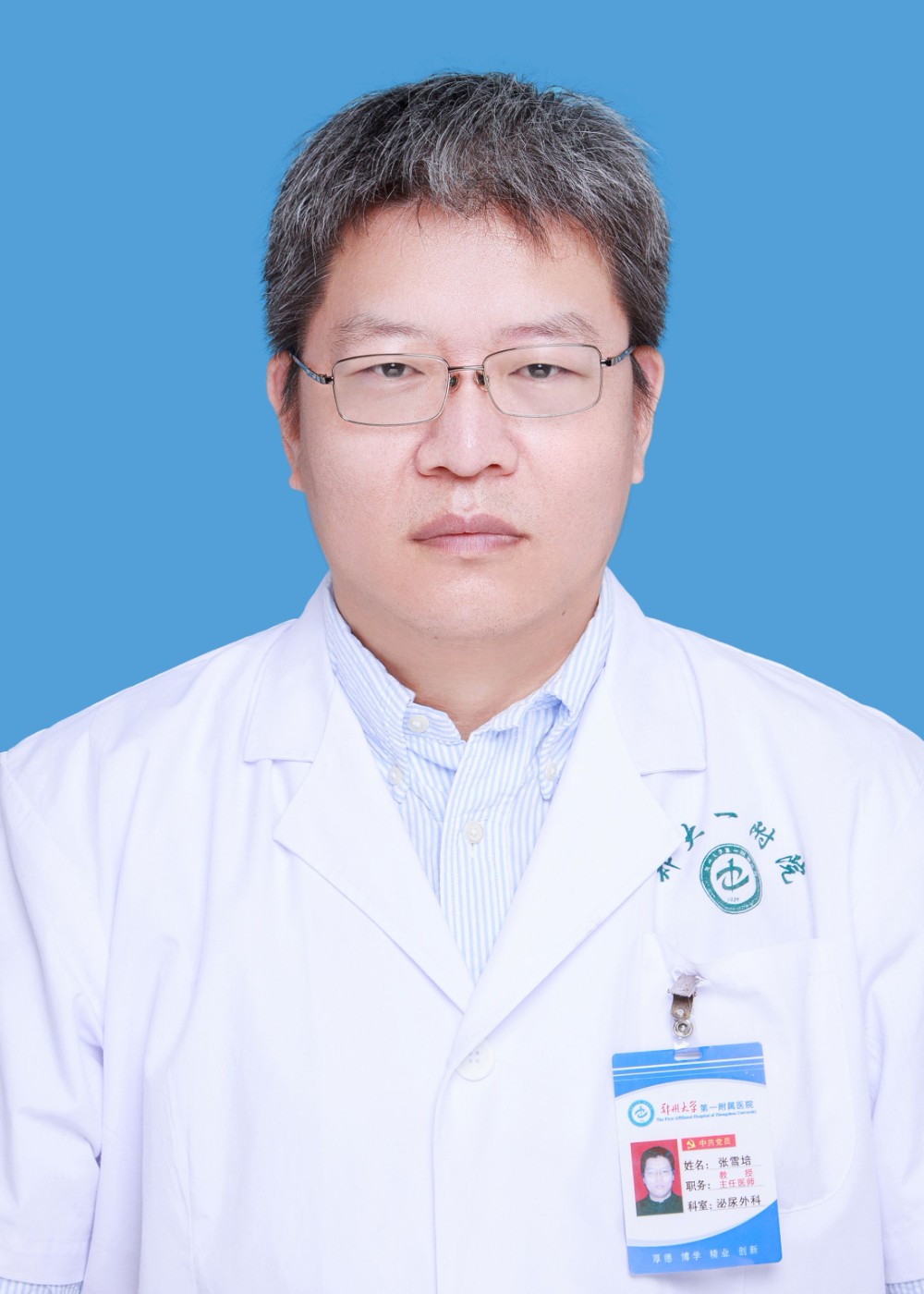 Xuepei Zhang (张雪培)合作论文数The First Affiliated Hospital of Zhengzhou University1Chuhuan Li (李楚欢)合作论文数1Jun Wu (吴俊)合作论文数1




