The metaverse signifies the amalgamation of virtual and tangible realms through human-computer interaction. The seamless integration of human, cyber, and environments within ubiquitous computing plays a pivotal role in fully harnessing the metaverse’s capabilities. Nevertheless, metaverse operating systems face substantial hurdles in terms of accessing ubiquitous resources, processing information while safeguarding privacy and security, and furnishing artificial intelligence capabilities to downstream applications. To tackle these challenges, this paper introduces the UbiMeta model, a specialized ubiquitous operating system designed specifically for the metaverse. It extends the capabilities of traditional ubiquitous operating systems and focuses on adapting downstream models and operational capacity to effectively function within the metaverse. UbiMeta comprises four layers: the Ubiquitous Resource Management Layer (URML), the Autonomous Information Mastery Layer (AIML), the General Intelligence Mechanism Layer (GIML), and the Metaverse Ecological Model Layer (MEML). The URML facilitates the seamless incorporation and management of various external devices and resources. It provides a framework for integrating and controlling these resources, including virtualization, abstraction, and reuse. The AIML is responsible for perceiving information and safeguarding privacy and security during storage and processing. The GIML leverages large-scale pre-trained deep-learning feature extractors to obtain effective features for processing information. The MEML focuses on constructing metaverse applications using the principles of Model-as-a-Service (MaaS) and the OODA loop (Observation, Orientation, Decision, Action). It leverages the vast amount of information collected by the URML and AIML layers to build a robust metaverse ecosystem. Furthermore, this study explores how UbiMeta enhances user experiences and fosters innovation in various metaverse domains. It highlights the potential of UbiMeta in revolutionizing medical healthcare, industrial practices, education, and agriculture within the metaverse.
This Open Access book presents methods and algorithms for mixed-criticality data in industrial wireless networks, designed to improve network QoS.
软件定义工业网络架构及其关键技术,正在推动工业网络系统进一步向着扁平化、全互联的方向发展.本文基于软件定义工业网络体系架构,借助其统一管控、灵活转发的优势,通过在转发平面和控制平面新功能设计,实现了采用多个路径传输同一业务数据的方法.该方法可以有效提高网络的可靠性,并且降低传输时延和时延抖动.
When software defined network (SDN) is used to deploy the industrial control network, the deployment schemes are different in actual according to the different industrial production business, environment and capital cost. In this paper, we use the in-band management mode to deploy the SDN network in an industrial environment. We design four deployment schemes of the in-band management mode for the industrial SDN network according to the specific requirements of industrial environment and propose an algorithm for controller location selection in the in-band management network. For the four schemes and the algorithm, we use the controller and switches to build a simulation environment according to different schemes and compare the performance between the in-band management and out-of-band management, which shows that the in-band management mode can set up a normal SDN industrial network with applicable network scale and throughput.
随着软件定义网络(SDN)的快速发展,其在工业领域也逐渐成为一种新的网络构建模式用以取代传统的工业生产网络.本文探讨了利用软件定义工业网络等技术,实现制造单元边缘侧的数据快速采集、分析与传递,打通设备层与生产制造以及研发端的数字链路,建设工厂内网络化集成,以实现大型制造企业的生产车间在多项目管理、知识驱动下的快速设计以及数据驱动下的先进制造,其符合现有工厂内网络对IT网络和OT网络深度融合的迫切需求.本文将开展基于软件定义工业网络设计和建设,提出基于软件定义工业网络架构与总体建设方案.
为了保障潜水器安全回收,设计了基于移动单信标测距的载人潜水器回收定位算法,并进行了系统可观测性分析.该算法无需事先布放海底基阵,利用船尾吊放通信机与潜水器的距离信息实现潜水器定位.首先利用母船GPS信息、船艏向信息和放缆长度估计吊放通信机位置,然后通过通信机和潜水器之间的成对距离信息进行潜水器位置初始化,最后利用扩展卡尔曼滤波进行潜水器位置追踪.试验数据处理的结果表明,算法定位误差在3%以内,定位结果能较好拟合超短基线定位系统,可以为载人潜水器回收提供有效的辅助定位.
考虑到实际水声信道复杂特性对水声通信的影响,对系统的通信容量进行计算分析,并研究了一种适用于水声信道的容量评估算法.文中通过对不同条件下的均衡器输出的后验符号特性进行统计分析,提出了一种基于后验高斯分布的符号方差分段转移函数模型.在此基础上,采用Maxwell-Boltzmann分布来改变均衡器输出符号的成形分布,即引入概率成形技术对实际的水声通信系统容量进行评估分析.最后通过对水池和湖试多径信道数据的处理,获得了不同调制方式下的通信容量.结果显示,在特定的信噪比区间内,概率成形技术比传统的等概率映射的容量提升最大可达0.5 bits/symbol.
随着SDN技术的不断发展,这一技术的思想逐渐被人们所接受,并且越来越多的应用在工业领域之中.但是在工业SDN架构下,难以解决PROFINET工业以太网协议在工业控制网络架构下的识别、解析以及处理问题,难以满足PROFINET工业以太网设备接入并建立通信关系等问题.因此本文设计了基于PROFINET工业以太网协议在工业SDN中的接入方法,包括PROFINET工业以太网协议在工业SDN交换机中的报文处理过程,PROFINET工业以太网协议在工业SDN控制器中的报文处理过程和PROFINET工业以太网设备接入处理过程,并指出了SDN中流表匹配项的具体匹配方式,为PROFINET工业以太网设备在工业SDN中的运行提供网络通信基础.从实际的执行效果上看,进一步提高了PROFINET工业以太网协议组网的使用效率和效果.
时钟同步是水声无线网各个节点协同观测的关键技术.该文针对水下节点长时时钟漂移率受周围环境影响产生变化的问题,提出一种适用于水下传感网络的时钟漂移率跟踪方法.该方法使用多模型描述时钟漂移率的变化,在使用现有高时延时间同步(Time Synchronization for High Latency, TSHL)水声网络授时协议和轻量级高时延授时(Tri-message)算法计算获得时钟漂移率的基础上,使用交互式多模型卡尔曼(Kalman)滤波对变时钟状态向量进行跟踪和估计,并在滤波过程中采用Sage-Husa自适应方法动态调整滤波参数,提高算法估计的准确性.仿真结果表明,使用提出的跟踪方法,时钟漂移率估计均方误差可从3.0×10⁴降低到5×10⁻¹⁰,算法性能优于现有授时方法.
Memristive devices have shown promising applications in various fields (e.g., non‐volatile memory, reconfigurable switches, and bio‐inspired neuromorphic computing). Despite the significant advances in this field, the exploration of nanomaterials with tunable composition, thickness, dimension, and conductivity for memristive devices is still in great necessity. Here, the transformation of the ultrathin film polydopamine (PDA) obtained at air/water interface from amorphous to quasi‐ordered structure is revealed. Owing to the unique feature, the self‐assembled PDA film at air/water interface is firstly employed as the active material in constructing write‐once‐read‐many‐times (WORM) memory devices. With an increase in the applied electric field, the device shows a switching from high resistance state (HRS, OFF state) to low resistance state (LRS, ON state) with a high ON/OFF current ratio of >10 3 . Furthermore, the abundant amidogen and phenolic hydroxyl group enable the in situ Ag nanoparticle decoration on the PDA film, which can be further used in the construction of anisotropic volatile memristors with a high ON/OFF current ratio (>10 4 ), exceptional stability and good integrability.
本文对工业互联网应用协议及数据互认标准的发展现状进行了分析,针对国内外现有的技术手段无法实现工业互联网中海量异构数据的实时接人、互认、集成等问题,提出在工业应用层中引入工业互联网低开销、高实时消息分发标准来解决数据高效接入的问题,引人工业互联网语义模型及边缘计算模型解决数据互认以及集成问题,实现工业互联网IT与OT的深度融合.
电子医用仪器在使用过程中,会产生干扰,并对仪器准确性造成一定程度干扰.因此,我们要进行抗干扰的应对,提高仪器使用的准确性.本文将进行分析,以供参考.
工业互联网是制造业与新一代信息技术深度融合的产物.工业互联网领域的研究将会促进我国工业现代化发展的不断深入,同时,制造业的转型升级成为工业互联网的重要驱动力.本文介绍了工业互联网的架构,并进一步分析了网络、平台、安全三大体系的体系架构和关键技术.
Proteins are the direct performer of life activity, while they are responsible for carrying through the func-tions of biological events. Protein machine is defined as the large and high-dimension complex of protein and bi-ological molecules, moreover also including the low di-mension compounds formed with proteins or other mole-cules, and single protein molecules with specific biolog-ical functions. The protein machine in the cell is highly dynamic. Membrane transport and transmembrane sig-nal transduction are important processes of cellular ac-tivity, which are closely related to cell fate and func-tion. Because of the diversity and complication of the protein machine, studying the mechanism of protein ma-chinery at the molecular level poses a great challenge to imaging technology. Focusing on the molecular mecha-nism of dynamic assembly and function regulation of protein machine in life process, we propose advanced technical strategy and research methods. We will im-prove the spatial and temporal resolution of imaging, re-alize the integration of spatio-temporal control and mul-timodal state, and develop various new imaging and re-lated technologies; eventually, we will reveal the mech-anism of membrane transport and transmembrane signal transduction by these techniques. This project includes the R&D of the next-generation high spatio-temporal resolution structured illumination microscopy ( SIM ) , the combination of atomic force microscopy and super-resolution fluorescence imaging, and the time-correla-tion super-resolution fluorescence microscopy/cryo-elec-tron microscopy, with the aim of solving biological prob-lems.
As one of the three main function aspects of the industrial Internet, networks provide infrastructure for the all-round interconnection of industrial elements. The existing “two-layer and three-level” industrial network is difficult to meet the development needs of the new models and services of the industrial Internet. The emerging network technologies can promote the evolution of the network architecture. The intra-factory network is developing in directions of integration, openness, and flexibility. The services of the extra-factory network are universal, refined, and flexible. At the end, the paper describes the networking framework of the industrial Internet, and suggests that industrial enterprises build intra-factory networks according to requirements for business, real-time performance, transmission methods, etc., and build extra-factory external networks by selecting three dedicated lines and one networking mode according to development requirements of different services.
Herein, the functional poly(vinylidene fluoride) (PVDF) film that has a superior UV-blocking performance was made through the surface-initiated activators regenerated by electron transfer atom-transfer radical polymerization (SI-AGET ATRP). The colorless polydopamine (PDA) initiator layer was adhered to the alkaline-pretreated PVDF film through the copolymerization of dopamine (DOPA) and initiator-bearing DOPA (DOPA-BIBB). Then the reactive organic UV absorbent [3-(4-benzoyl-3-hydroxyphenoxy)-2-hydroxypropyl] 2-methylprop-2-enoate (BPMA) was incorporated to the initiator layer by the SI-AGET ATRP method, resulting in the formation of a PBPMA-chain-grafted PVDF film (PVDF-g-PBPMA). Furthermore, the effects of the experimental conditions such as the BPMA concentration and reaction time on the performance of as-prepared modified films were investigated. The characterization results indicated the formation of the PBPMA film on the PVDF film surface and the outstanding UV-blocking performance of the modified f...
工业4.0、《中国制造2025》战略不断推动工业生产向网络化、智能化升级,基于SDN&TSN的网络架构以其灵活性、开放性、实时性、高效集中管控的特点普适于未来工业网络各种业务需求.SDN架构的控制平面与数据平面分离机制便于集中管控工业网络资源,灵活、合理地为不同QoS需求的业务分配不同的网络资源集,提高网络利用率的同时保障时间敏感应用的实时性需求.TSN主要技术包括时间窗口整形、队列调度、流过滤、路径控制等.未来工业网络架构的趋势是将SDN和TSN技术有机结合,通过集中式控制实现网络动态规划与调度以满足工业应用实时性要求.
Nowadays, there is no de facto programming language dedicated to the development of complex Internet of Things (IoT) applications containing different kinds of devices. JavaScript has great potential to become the mainstream application-development program language across IoT platforms, as JavaScript is supported by many engines which have different footprint sizes from the KB level to the MB level. However, there are still technical challenges in the coding efficiency and heterogeneous platform supports. In this paper, we propose a lightweight distributed JavaScript engine, WebletScript, to help IoT developers to build applications for a group of heterogeneous IoT devices. WebletScript can run on any device that supports normal C libraries. It enables automatic code slicing and distribution for an IoT application. Therefore, with one-time platform-independent code development, the application can be executed on multiple devices, such as a group of end devices, a smart gateway and the cloud system. Compared to the traditional solution, in which embedded application and cloud application are developed separately, our approach can reduce the lines of code effectively by 50% and reduce the cost of application update cost by 65%.
1 物联网产业发展缓慢 无线传感器网络(WSN)在2000年提出时,被认为是21世纪的革命性技术,但发展缓慢.这其中虽有技术原因,但并非主要因素,阻碍WSN发展的深层次原因有三个方面: 其一,技术分散化.
Nowadays, the rapid development of the Internet of Things facilitates human life and work, while it also brings great security risks to the society due to the frequent occurrence of various security issues. IoT device has the characteristics of large-scale deployment and single responsibility application, which makes it easy to cause a chain reaction and results in widespread privacy leakage and system security problems when the software vulnerability is identified. It is difficult to guarantee that there is no security hole in the IoT operating system which is usually designed for MCU and has no kernel mode. An alternative solution is to identify the security issues in the first time when the system is hijacked and suspend the suspicious task before it causes irreparable damage. This paper proposes KLRA (A Kernel Level Resource Auditing Tool) for IoT Operating System Security This tool collects the resource-sensitive events in the kernel and audit the the resource consumption pattern of the system at the same time. KLRA can take fine-grained events measure with low cost and report the relevant security warning in the first time when the behavior of the system is abnormal compared with daily operations for the real responsibility of this device. KLRA enables the IoT operating system for MCU to generate the security early warning and thereby provides a self-adaptive heuristic security mechanism for the entire IoT system.
 Li Cui (崔莉)合作论文数45
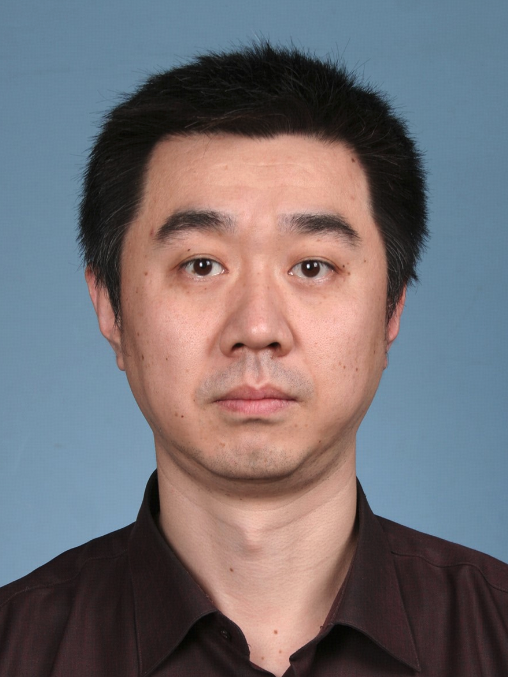 Ze Zhao (赵泽)合作论文数Institute of Computing Technology, Chinese Academy of Sciences;University of Chinese Academy of Sciences15
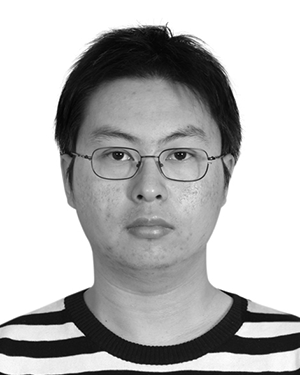 Hailong Shi合作论文数School of Public Health, China Medical University12
 Jiefan Qiu (邱杰凡)合作论文数College of Computer Science and Technology, Zhejiang University of Technology11Peng Ceng (曾鹏)合作论文数9Chenda Hou合作论文数Chinese Academy of Sciences9Le Zhang合作论文数6
 Zijian Wang (王子健)合作论文数Research Center for Eco-Environmental Sciences, Chinese Academy of Sciences6
 Haiming Chen (陈海明)合作论文数Department of Computer Science, Ningbo University6
 Zhaoliang Zhang (张昭良)合作论文数School of Chemistry and Chemical Engineering, University of Jinan5Ming YANG (杨明)合作论文数4
 Tingpei Huang (黄庭培)合作论文数College of Computer Science and Technology, China University of Petroleum4Wenzhen Du (杜文振)合作论文数3
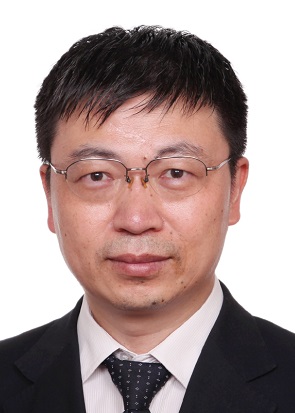 Min Zhu (朱敏)合作论文数Institute of Acoustics, Chinese Academy of Sciences;University of Chinese Academy of Sciences3Wei Liu (刘巍)合作论文数3Yanbo Wu (武岩波)合作论文数3Xueting Yu合作论文数2He Zhu合作论文数2jindi liu (刘金娣)合作论文数2ZhiBo Li (李志博)合作论文数2
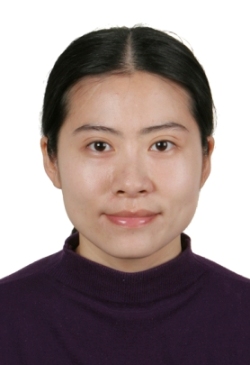 Xiaoling Wu (吴晓鸰)合作论文数School of Computer Science and Technology, Guangdong Uriversity of Technology2
 Zhiwei Xu (徐志伟)合作论文数State Key Laboratory of Computer Architecture, Institute of Computing Technology, Chinese Academy of Sciences;University of Chinese Academy of Sciences2Yan Chen合作论文数2
 Qiang Liu (刘强)合作论文数Wireless Sensor Network Laboratory, Institute of Computing Technology, Chinese Academy of Sciences2Chunli Hui (回春立)合作论文数2
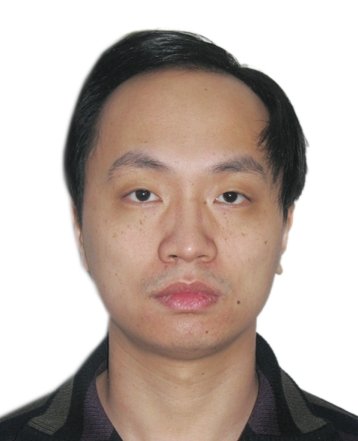 Xi Huang (黄希)合作论文数Institute of Computing Technology,Chinese Academy of Sciences,Beijing ;Graduate University of Chinese Academy of Sciences,Beijing2
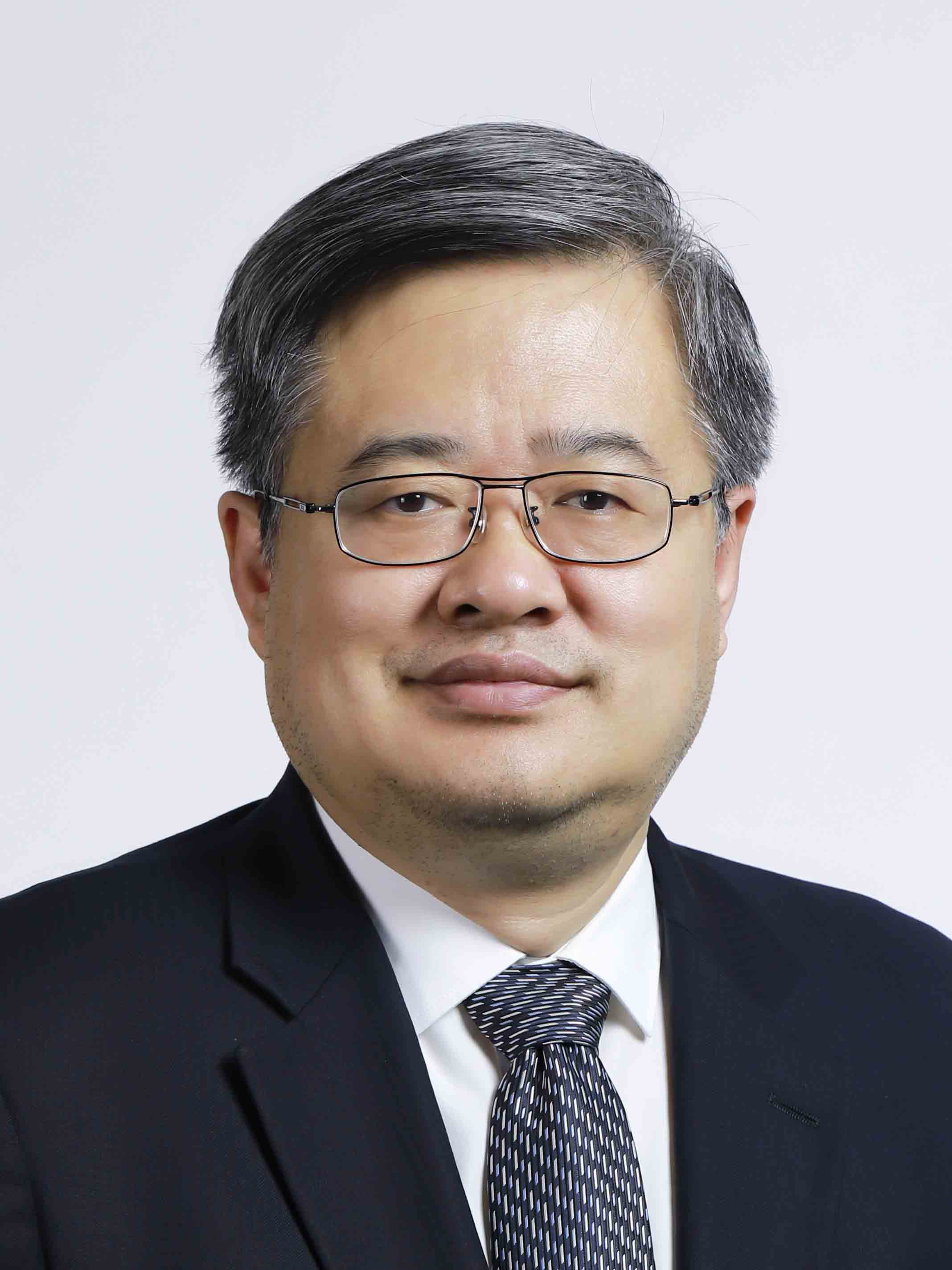 Haibin Yu (于海斌)合作论文数Shenyang Institute of Automation, Chinese Academy of Sciences;Institute of Al for Industries, Chinese Academy of Sciences;University of Chinese Academy of Sciences2
 Hainan Chen合作论文数Institute for Photogrammetry2S. X. Wan合作论文数1Yì Wáng合作论文数1Xiahong Zhou合作论文数1Sangjoon Park合作论文数1Jindi Liu合作论文数1Xisheng Wu合作论文数1You Xiaoyan (尤晓艳)合作论文数1
 Hengsheng Zhang合作论文数1
 Jinnan Piao合作论文数1
 Chi Xu (许驰)合作论文数University of Chinese Academy of Sciences;Shenyang Institute of Automation, Chinese Academy of Sciences1
 Changqing Xia (夏长清)合作论文数Shenyang Institute of Automation, Chinese Academy of Sciences;University of Chinese Academy of Sciences1
 Ninghui Sun (孙凝晖)合作论文数University of Chinese Academy of Sciences;Institute of Computing Technology, Chinese Academy of Sciences1
 Yang Meng (孟洋)合作论文数Institute of Physics, Chinese Academy of Sciences;University of Chinese Academy of Sciences1Xiaofang FANG (房小芳)合作论文数1
 Yang Wang合作论文数1PAN Hao (潘昊)合作论文数1Yi Liu合作论文数1Li BAI (白丽)合作论文数1Yang Liu合作论文数1Di LIU (刘迪)合作论文数1




