Objective To discuss the influences of seasonal changes on lung immune function in rats.Methods The phagocytic function of alveolar macrophage(AM) in bronchoalveolar lavage fluid(BALF) in four seasons were determined by using chicken RBC englobing method.The content of interleukin-6(IL-6),interferon-γ(IFN-γ) and sIgA in BALF were detected by applying ELISA.Results The content of IL-6 in BALF in the Winter Solstice was lower than that in the Autumnal Equinox with a significant difference(P0.05),and lower than that in the Spring Equinox and the Summer Solstice with a great significant difference(P0.01).The content of IFN-γ in the Autumnal Equinox and the Winter Solstice was lower than that in the Spring Equinox and the Summer Solstice with a significant difference(P0.05).The content of sIgA in the Autumnal Equinox was lower than that in the Spring Equinox and the Summer Solstice with a great significant difference(P0.01).The content of sIgA in the Winter Solstice was lower than that in the Spring Equinox and the Summer Solstice with a significant difference(P0.05).The phagocytic rate of AM showed a trend of higher in spring and summer,but lower in autumn and winter,and there was no significant difference among four seasons.Conclusion The lung immunity has a seasonal susceptibility showing hypoimmunity mainly in autumn.There is a tendency of higher in lung immunity in spring and summer and lower in autumn and winter,which accord with the characteristics of constringency in autumn and store in winter in the nature.The study has provided a test evidence for explaining the susceptibility of respiratory diseases in autumn and winter.
目的:探讨松果腺对大鼠肺脏免疫功能季节性变化影响的作用机理.方法:采用松果腺摘除动物模型,观察四季BALF中IL-2、IFN-γ、sIgA含量和AM吞噬率变化情况.结果:(1)春分时,IL-2和IFN-γ含量手术组显著低于生理组(P<0.05).(2)春分时,sIgA含量手术组显著低于生理蛆和伪手术组(P<0.05);秋分时,生理组非常显著低于伪手术组(P<0.01),手术组显著低于伪手术纽(P<0.05).(3)夏至时,AM吞噬率手术组显著低于生理组(P<0.05);冬至时,手术组显著低于伪手术组(P<0.05).结论:松果腺时大鼠肺脏免瘦调节以增强为主且有季节选择性,其影响机制较复杂.
objective To discuss the immunological connotation of modulating mechanism of corresponding to autumn,and to provide new ideas for the essence of Zangxiang and experimental basis to the cognition of pathology and physiology mechanism for seasonal attack of respiratory system diseases.Method we adopted pinealectomized rats model to measure rats index of spleen and thymus on vernal equinox and autumnal equinox( using weighting method),T lymphocyte transformation rate of spleen(using MTT assay), alveolar macrophages phagocytosis(using phagocytosis of chicken erythrocytes), IFN-γ in BALF(using ELISA assay), IL-10 in the lung tissues(using RIA).Results ① The indexes of spleen and thymus in the normal group and the sham operated group were lower on equinox than on vernal equinox with significant differences. The indexes of spleen and thymus in the model group showed no significant differences between equinox and vernal equinox.② T lymphocyte transformation rate of spleen in all three of the groups were lower on equinox than on vernal equinox with the remarkable differences (P0.01). T lymphocyte transformation rates of spleen in the sham operated group and the model group were obviously higher than in the normal group in the same season (P0.01). ③ The alveolar macrophages phagocytosis in the normal group was obviously lower on equinox than on vernal equinox with the significant differences.The differences on vernal equinox and equinox were disappeared in the sham operated group and the model group.④ IFN-γ levels in BALF in the normal group were slightly lower on equinox than on vernal equinox without the significant differences.They were slightly higher on autumnal equinox than on vernal equinox in the sham operated group and the model group without the significant differences. ⑤ IL-10 levels of lung tissues in the normal group were slightly lower on equinox than on vernal equinox without the significant differences.They were slightly higher on autumnal equinox than on vernal equinox in the sham operated group without the significant differences.They were slightly lower on equinox than on vernal equinox in the model group without the significant differences.Conclusions ① The seasonal rhythm of lower in and higher in spring is exist in the immune function in lung and body. It may be one of the pathology and physiology bases for respiratory system diseases frequently-occurring in autumn.② Pineal gland play a certain role in modulating the seasonal rhythm of immunity.③ The essence of corresponding to autumn is that the modulate ability of immune function in body and lung is lower in autumn.Pineal gland-Melatonin is one of the intermediary material of the lung immunity seasonal rhythm changes.
提出“肺应秋”的本质内涵在于机体应时而变的自稳调节,肺是机体在秋季起主要调节作用的自稳时间调节系统。肺在当旺的秋季,其肃降功能增强,并且处于支配地位,发挥着对自身肺系统及其他四脏重要的调控作用。而在其他季节则处于从属地位,协助或抑制其他四脏以维持机体应时而变的调节稳态。肺在秋季宣发卫气津血护卫肌表能力相对低下,表现为机体免疫力降低,易发呼吸系统疾病。正确把握“肺应秋”的本质内涵有利于指导临床用药。
提出“肺应秋”的本质内涵在于机体应时而变的自稳调节,肺是机体在秋季起主要调节作用的自稳时间调节系统。肺在当旺的秋季,其肃降功能增强,并且处于支配地位,发挥着对自身肺系统及其他四脏重要的调控作用。而在其他季节则处于从属地位,协助或抑制其他四脏以维持机体应时而变的调节稳态。肺在秋季宣发卫气津血护卫肌表能力相对低下,表现为机体免疫力降低,易发呼吸系统疾病。正确把握“肺应秋”的本质内涵有利于指导临床用药。
To discuss the connotation of in charge of the vital from the point of view of the mechanism of stable state by self modulation. It was brought forward that the virtue of in charge of the vital was concluded as lung-qi is in charge of the vital energy of the whole body through its self modulation from the point of the view of the mechanism of stable state by self modulation. Lung-qi can maintain the responsivity stable state through modulating the production and movement of vital energy of the whole body; lung modulating the body-qi so as to correspond to the can maintain the prophetic stable state. Lung is vigorous in autumn doesn't mean that lung-qi is most strong then, but mean that the tendency of constringency and decline of lung-qi are strongest while the upspread and outspread tendency are weaken, maybe due to the weak immunity, which is one of the characteristics of the self modulation rhythm during the autumn, and is one of the pathological and physiological bases of high incidence of respiratory diseases easily in autumn.
分析了当前关于“肺主气”的不同学术见解。从机体自稳调节角度提出“肺主气”包含了“肺调气”思想,认为肺气对人体之气的调节是“肺主气”的主要功能,包括对元气、宗气、营卫之气、脏腑之气等的生成和运行的调节过程;“肺调气以应秋”的实质是机体自稳调节,是人类长期适应自然环境所形成的一种避免自然伤害、保存自身生机的有效调节反应机制,具有免疫学基础。
Objective: To explore the internal mechanisms that spring and autumn affect the immune functions in SD rats,and provide the experimental evidence for the pathological and physiological mechanisms of respiratory system seasonal diseases.Method: The pineal extirpating rat model was employed, and the indexes of spleen and thymus gland and the phagocytosis function of alveolar macrophage were observed at vernal equinox and autumnal equinox respectively.Result:①The indexes of spleen and thymus in the normal group and the false operation group at autumnal equinox were significantly lower than those at vernal equinox(P0.05,P0.01);While in the operation group,there were no significant difference in the indexes of spleen and thymus between vernal equinox and autumnal equinox.②In the normal group,the phagocytosis function of alveolar macrophage at autumnal equinox was significantly lower than that at vernal equinox(P0.01);While in the false operation group and the operation group,there were no significant differences in the phagocytosis function between the two seasons.Conclusion:①There are seasonal rhythms of the functions in the spleen,thymus and alveolar macrophage in SD rats,which are lower in autumn than those in spring.②The melatonin in the pineal gland of SD rats may be the medial material relating with the seasonal changes of immune functions.[HJ1.3mm]
 Xiazhen Guo (郭霞珍)合作论文数International School, Beijing University of Chinese Medicine6
 Shuran Ma (马淑然)合作论文数School of Traditional Chinese Medicine, Beijing University of Chinese Medicine6
 Wei Su (苏薇)合作论文数5Yi Liang (梁怡)合作论文数4
 Xiaoyan Liu (刘晓燕)合作论文数School of Traditional Chinese Medicine, Beijing University of Chinese Medicine4ShuHong Zhao (赵树宏)合作论文数3
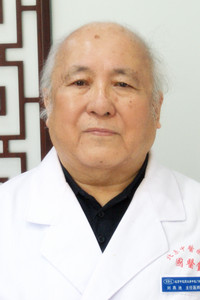 Yanchi Liu (刘燕池)合作论文数北京中医药大学国医堂中医门诊部3XiaoJing Gu (顾晓静)合作论文数1
 Weiling Yuan (袁卫玲)合作论文数Tianjin University of Traditional Chinese Medicine1
 Xiaojun Li (李晓君)合作论文数Beijing University of Chinese Medicine1Tongyu Wu (吴同玉)合作论文数福建中医药大学中医学院1




