血清糖抗原19-9(CA19-9)和癌胚抗原(CEA)检测具有便捷、快速、成本低、易普及、等优点,在基层医院中容易实现。本研究回顾性分析金华市人民医院收治的723例患者的临床资料,评估血清CA19-9和CEA对胰腺癌患者的诊断价值。结果表明,胰腺癌患者的血清CA19-9水平高于非胰腺癌患者,在出现淋巴结转移的患者中CA19-9的阳性表达率高于CEA的阳性表达率。血清CA19-9在基层医院对胰腺癌患者的筛查价值更高,CEA对病期进展的评估有辅助作用。
目的 构建一种新型的更接近疾病规律的胰腺癌吉西他滨耐药细胞及动物模型.方法 选择胰腺癌细胞株PANC-1通过体外细胞培养,裸鼠皮下成瘤后瘤块移植构建胰腺癌动物模型,腹腔吉西他滨化疗,选取瘤体最大的动物模型,获取瘤块,进行分离提取瘤体细胞进行培养,用于下一循环的动物模型构建,如此循环2次,获得耐药细胞株及动物模型.将原代细胞和耐药细胞分别进行体外及体内吉西他滨的耐药试验,分析验证耐药模型.通过微卫星序列测定鉴定耐药模型与亲代细胞的同源性.结果 建立胰腺癌吉西他滨耐药的细胞及动物模型,第一循环原位移植成功率为73.3%,吉西他滨腹腔灌注后死亡率为18.2%,瘤体最大的5个均值为(1.76±0.87)g,远处转移率11.1%;第二循环原位移植成功率80%,吉西他滨腹腔灌注后死亡率为8.3%,瘤体最大的5个均值为(2.16±1.12)g,远处转移率36.3%.两循环比较,瘤体大小及远处转移率差异有统计学意义(P<0.05).将第2循环后培养的胰腺癌吉西他滨耐药命名为PANC-1/R2.在5μg/dl、10μg/dl和20μg/dl浓度的吉西他滨作用下PANC-1和PANC-1/R2的抑制率分别是21.8%、37.1%、46.1%和12.6%、25.3%、36.8%.PANC-1和PANC-1/R2裸鼠皮下移植后3周成瘤,吉西他滨240mg/kg腹腔注射,1次/周,共4次,35d后瘤体大小分别是(1.87±0.69)g和(2.09±0.71)g,差异有统计学意义(P<0.05).人类基因组微卫星D14S68、D18S69、D20S199检测结果显示,亲代胰腺癌细胞、吉西他滨耐药胰腺癌细胞三个位点微卫星扩增大小完全相同的片段,而荷瘤裸鼠胰腺组织没有扩增出相应的带型.结论 应用体外细胞培养,体内化疗药物诱导的方法是可行的,该体系可用于各种耐药细胞的筛选,与原代细胞相比,筛选后的细胞明显耐药性增强.且构建的细胞株更符合机体多因素复杂环境下的耐药产生过程,是理想的耐药模型.且该方法构建的耐药细胞与亲代细胞具有相同的遗传位点,具有遗传同源性.但构建过程长,需要熟练和细致的操作,提高成功率,增加循环次数或可筛选更具耐药特性的细胞模型.
ObjectiveTo investigate laparoscopic transabdominal preperitoneal procedure(TAPP)value in the treatment of bilateral inguinal hernia.MethodsFrom July 2013 to December 2014 in our hospital,we performed TAPP treatment of bilateral inguinal hernia 21 cases. We established pneumoperitoneum after anesthesia,and satisfied the hernia contents back,and separated preperitoneal space,and free hernia,and free the spermatic cord or uterine round ligament,pubic separation gap(Retzius space)and the groin after a gap(Bogrus gap). At last the patch is complete coverage of bilateral pubic muscle hole,and weclosed the peritoneum cracks.Results21 cases were successfully completed by laparoscopic transabdominal preperitoneal procedure,including eight cases of intraoperative findings concealed hernia. The operation time 73~115min,the average 95min. The blood loss was 10 ~ 80 ml,average 32ml. Two cases developed hernial sac,and mass disappeared after subcutaneous aspiration. One case suffer from urinary retention,2d after indwelling catheter removal. Serious complications futile sheet rejection,no vital organs,vascular damage,no intestinal obstruction,abdominal hernia occurred. 19 cases were followed up 8 to 26 months,an average of 18 months,no recurrence.ConclusionsTAPP has its irreplaceable value bilateral inguinal hernia surgery in other waysand is safe,effective and feasible for bilateral inguinal hernia or suspected patients with bilateral inguinal hernia should be preferred.
目的探讨丹红注射液联合生长抑素治疗高脂血症性急性胰腺炎的效果。方法回顾性分析2009年1月至2012年12月本科室收治的40例高脂血症性急性胰腺炎患者的临床资料。将40例高脂血症性急性胰腺炎患者分成2组,治疗组20例,对照组20例。2组均予生长抑素治疗及常规综合治疗;治疗组除上述治疗外加用丹红注射液20mL加到5%葡萄糖250mL静脉滴注;每日一次;疗程5~10 d;观察2组疗效。结果治疗组5 d后轻症患者症状及体征缓解时间、血、尿淀粉酶转阴时间明显快于对照组,差异有显著性(P<0.05)。结论丹红注射液治疗高脂血症性急性胰腺炎可加快临床症状、体征的缓解,缩短病程。
Objective To evaluate postoperative delayed gastric emptying of the etiology,diagnosis and treatment.Methods 15 cases of delayed gastric emptying after abdominal surgery cases in the etiology and treatment were analyzed retrospectively.Results The functional delayed gastric emptying occurred in the abdominal surgery 4~14days,after non-surgical treatment,the recovery of gastric motility discharged from hospital,7 patients within 30 days of recovery,7 patients resumed within30~50 days,1 case was discharged after 72 days.Conclusion The delayed gastric emptying after abdominal surgery is multifactorial,upper gastrointestinal endoscopy is the diagnostic imaging and the disease the main secondary screening method.Usually adopt a non-surgical treatment cured.
Objective To investigate the protective effect of prostaglandin E1 (PGE1) on liver function in patients after hep-atectomy. Methods One hundred and eighteen patients scheduled to undergo major liver resection were randomly designated to group A(receiving conventional postoperative treatment n=36), group B (receiving conventional treatment plus intravenous in-jection of 20μg/d Lipo- PGE1 for 14d, n=40) and group C (undergoing portal vein infusion of 20μg Lipo- PGE1 immediately after portal vein clamping was finished during surgery plus the same regimen as group B, n=42). The levels of alanine transaminase (ALT) and cytokines TNF- α, IL- 6, IL- 10 and IFN- γin peripheral blood were measured before and 1, 3, 5, 9, 14 and 28 d after surgery, and the portal venous flow volume was also determined before and 1, 7 and 24 d after surgery. Results Al parameters among the three groups had no significant differences before surgery (al P>0.05). The levels of TNF- α, IL- 6 and IL- 10 in all groups were markedly increased after surgery and then returned to baseline gradual y, while these cytokines in groups B and C were increased significantly less and decreased shorter than those in group A (al P<0.05). The pre- and postoperative IFN- γlevels in group A showed no significant changes, but those in groups B and C were significantly increased and continued to rise until 28 d after surgery (al P<0.05).No difference was observed in portal venous flow volume before and after surgery in group A, while a continuous increase was found after surgery in groups B and C (al P<0.05). All the changes caused by PGE1 intervention were more evident in group C than those in group B. Conclusion PGE1 is beneficial for early recovery of liver function after hep-atectomy, which may be related to regulating cytokines levels and increasing the portal venous inflow.
 QiuLiang Yan (严秋亮)合作论文数3DeSheng Ni (倪德生)合作论文数3YouGen Zhu (朱友根)合作论文数2JiaMin Zhang (张家敏)合作论文数2Qinghuang Ye合作论文数1Cheng ZHANG (张骋)合作论文数1Guo-liang CHEN (陈国梁)合作论文数1YanFeng Ying (应延风)合作论文数1ShiAn Yu (俞世安)合作论文数1Bo Zhuang (庄波)合作论文数1YuFei Mao (毛宇飞)合作论文数1ShengJun Hu (胡胜军)合作论文数1XueMin Li (厉学民)合作论文数1Yan Chen (陈燕)合作论文数1Jinzhan Jiang (蒋进展)合作论文数1
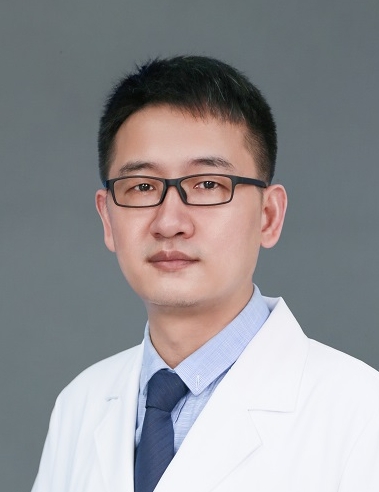 Jinhui Zhu (朱锦辉)合作论文数The Fourth Affiliated Hospital Zhejlang University School of Medicine1




