The evolution of visual generative models has long been constrained by fragmented architectures relying on disjoint text encoders and external VAEs. In this report, we present HiDream-O1-Image, a natively unified generative foundation model via pixel-space Diffusion Transformer, that pioneers a paradigm shift from modular architectures to an end-to-end in-context visual generation engine. By mapping raw image pixels, text tokens, and task-specific conditions into a single shared token space, HiDream-O1-Image achieves a structural unification of multimodal inputs within an Unified Transformer (UiT) architecture. This native encoding paradigm eliminates the need for separate VAEs or disjoint pre-trained text encoders, allowing the model to treat diverse generation and editing tasks as a consistent in-context reasoning process. Extensive experiments show that HiDream-O1-Image excels across various generation tasks, including text-to-image generation, instruction-based editing, and subject-driven personalization. Notably, with only 8B parameters, HiDream-O1-Image (8B) achieves performance parity with or even surpasses established state-of-the-art models with significantly larger parameters (e.g., 27B Qwen-Image). Crucially, to validate the immense scalability of this paradigm, we successfully scale the architecture up to over 200B parameters. Experimental results demonstrate that this massive-scale version HiDream-O1-Image-Pro (200B+) unlocks unprecedented generative capabilities and superior performance, establishing new state-of-the-art benchmarks. Ultimately, HiDream-O1-Image highlights the immense potential of natively unified architectures and charts a highly scalable path toward next-generation multimodal AI.
Recent advances in diffusion models have revolutionized the field of text-to-image (T2I) generation, pursuing high-fidelity image synthesis. Nevertheless, the fidelity of synthetic images from a specific prompt can vary significantly when using different initial noises (i.e., seeds), owing to the inherent stochastic nature of the diffusion process. A commonly adopted practice is to generate a stack of images by randomly varying seeds and then manually select the best one, which is time-consuming and computationally inefficient. To address this issue, we introduce Seed Selection and Optimization (SeSO), a new recipe of diffusion paradigm that automatically identifies and optimizes the “golden” seed for a prompt. We first systematically investigate the causes of quality variations across different seeds and reveal an inadequate training issue in most existing denoisers. Specifically, when sampling out-of-distribution seed for a specific prompt, the denoiser might fail to iteratively denoise latent code effectively, resulting in low-quality images. To seek the sweet spot of seed for any given prompt, we first learn a single-forward reward model that efficiently captures the relations between seeds and prompts without lengthy iterative denoising. SeSO executes this reward model to identify a candidate seed from a seed pool and then optimize this seed via gradient guidance to hunt for the golden seed suitable for this prompt. Our SeSO is appealing in that it is pluggable to any diffusion model. Extensive experiments demonstrate the superiority of SeSO in boosting existing text-to-image diffusion models by unlocking the golden seed.
Recent advances in diffusion models have brought remarkable visual fidelity to instruction-guided image editing. However, their global denoising process inherently entangles the edited region with the entire image context, leading to unintended spurious modifications and compromised adherence to editing instructions. In contrast, autoregressive models offer a distinct paradigm by formulating image synthesis as a sequential process over discrete visual tokens. Their causal and compositional mechanism naturally circumvents the adherence challenges of diffusion-based methods. In this paper, we present VAREdit, a visual autoregressive (VAR) framework that reframes image editing as a next-scale prediction problem. Conditioned on source image features and text instructions, VAREdit generates multi-scale target features to achieve precise edits. A core challenge in this paradigm is how to effectively condition the source image tokens. We observe that finest-scale source features cannot effectively guide the prediction of coarser target features. To bridge this gap, we introduce a Scale-Aligned Reference (SAR) module, which injects scale-matched conditioning information into the first self-attention layer. VAREdit demonstrates significant advancements in both editing adherence and efficiency. On EMU-Edit and PIE-Bench benchmarks, VAREdit outperforms leading diffusion-based methods by a substantial margin in terms of both CLIP and GPT scores. Moreover, VAREdit completes a 512$\times$512 editing in 1.2 seconds, making it 2.2$\times$ faster than the similarly sized UltraEdit.
Recent advances in subject-driven image generation using diffusion models have attracted considerable attention for their remarkable capabilities in producing high-quality images. Nevertheless, the potential of Visual Autoregressive (VAR) models, despite their unified architecture and efficient inference, remains underexplored. In this work, we present DreamVAR, a novel framework for subject-driven image synthesis built upon a VAR model that employs next-scale prediction. Technically, multi-scale features of the reference subject are first extracted by a visual tokenizer. Instead of interleaving these conditional features with target image tokens across scales, our DreamVAR pre-fills the full subject feature sequence prior to predicting target image tokens. This design simplifies autoregressive dependencies and mitigates the train-test discrepancy in multi-scale conditioning scenario within the VAR paradigm. DreamVAR further incorporates reinforcement learning to jointly enhance semantic alignment and subject consistency. Extensive experiments demonstrate that DreamVAR achieves superior appearance preservation compared to leading diffusion-based methods.
Recent advancements in multimodal AIGC have enabled impressive text-to-video synthesis, but a critical challenge remains: maintaining consistent identity of key subjects across generated frames. To address this limitation, we introduce the Identity-Preserving Video Generation (IPVG) grand challenge. This challenge aims to propel the field toward more controllable generative models by focusing community efforts on preserving identity during the video generation process. To support these efforts, we publicly release the Identity-Preserving Video Benchmark (VIP-200K), a novel dataset comprising approximately 500,000 video-prompt pairs with 200,000 unique identities, each coupled with a reference identity image. Through this grand challenge and dataset, we provide a fertile ground for developing solutions that lead to more user-steerable video synthesis systems. The challenge homepage is https://hidream-ai.github.io/ipvg-challenge.github.io/.
Recent advancements in image generative foundation models have prioritized quality improvements but often at the cost of increased computational complexity and inference latency. To address this critical trade-off, we introduce HiDream-I1, a new open-source image generative foundation model with 17B parameters that achieves state-of-the-art image generation quality within seconds. HiDream-I1 is constructed with a new sparse Diffusion Transformer (DiT) structure. Specifically, it starts with a dual-stream decoupled design of sparse DiT with dynamic Mixture-of-Experts (MoE) architecture, in which two separate encoders are first involved to independently process image and text tokens. Then, a single-stream sparse DiT structure with dynamic MoE architecture is adopted to trigger multi-model interaction for image generation in a cost-efficient manner. To support flexiable accessibility with varied model capabilities, we provide HiDream-I1 in three variants: HiDream-I1-Full, HiDream-I1-Dev, and HiDream-I1-Fast. Furthermore, we go beyond the typical text-to-image generation and remould HiDream-I1 with additional image conditions to perform precise, instruction-based editing on given images, yielding a new instruction-based image editing model namely HiDream-E1. Ultimately, by integrating text-to-image generation and instruction-based image editing, HiDream-I1 evolves to form a comprehensive image agent (HiDream-A1) capable of fully interactive image creation and refinement. To accelerate multi-modal AIGC research, we have open-sourced all the codes and model weights of HiDream-I1-Full, HiDream-I1-Dev, HiDream-I1-Fast, HiDream-E1 through our project websites: https://github.com/HiDream-ai/HiDream-I1 and https://github.com/HiDream-ai/HiDream-E1. All features can be directly experienced via https://vivago.ai/studio.
Autoregressive models are just at a tipping point where they could really take off for visual generation. In this paper, we propose to model token prediction using diffusion procedure particularly in masked autoregressive models for image generation. We look into the problem from two critical perspectives: progressively refining the unmasked tokens prediction via a denoising head with the autoregressive model, and representing masked tokens probability distribution by capitalizing on the interdependency across masked and unmasked tokens through a diffusion head. Our proposal harbors an innate agency that remains advantageous in the speed of sequence prediction, and strongly favors high capability in generating quality samples by leveraging the principles of denoising diffusion process. Extensive experiments on both class-conditional and text-to-image tasks demonstrate its superiority, achieving the state-of-the-art FID score of 1.47 and 5.27 on ImageNet and MSCOCO datasets, respectively. More remarkably, our approach leads to 45% speedup in the inference time of image generation against the diffusion models such as DiT-XL/2.
It is always well believed that pre-trained vision-language foundation models (e.g., CLIP) would substantially facilitate vision-language tasks. Nevertheless, there has been less evidence in support of the idea on describing novel objects in images. In this paper, we propose the Novel Object Transformer with CLIP (NOTC), a Transformer-based model that innovatively exploits the powerful vision-language representation ability of CLIP to enhance novel object captioning model's training and sentence decoding processes. Technically, given the primary bag-of-objects extracted by Faster R-CNN, NOTC first capitalize on an object distiller module to emphasize the most salient objects and infer the missing novel ones. The refined object words are additionally fed into the object-centric word predictor to generate sentence word-by-word. During training, we design a CLIP-based self-critical sequence training paradigm to select visually-grounded sampled sentence with higher CLIP score reward, which enables a joint training process of captioning model over out-domain training images with novel objects. Moreover, at inference, a new CLIP beam search algorithm is devised to enforce the existence of novel objects and encourage the partial word sequences with higher CLIP scores, thereby decoding both visually-grounded and comprehensive sentences. Extensive experiments are conducted on held-out COCO and nocaps datasets, and competitive performances are reported when compared to state-of-the-art approaches.
Recently Vision Transformer (ViT) and Convolution Neural Network (CNN) start to emerge as a hybrid deep architecture with better model capacity, generalization, and latency trade-off. Most of these hybrid architectures often directly stack self-attention module with static convolution or fuse their outputs through two pathways within each block. Instead, we present a new Transformer architecture (namely Stream-ViT) to novelly integrate ViT with streamlined convolutions, i.e., a series of high-to-low resolution convolutions. The kernels of each convolution are dynamically learnt on a basis of current input features plus pre-learnt kernels throughout the whole network. The new architecture incorporates a critical pathway to streamline kernel generation that triggers the interactions between dynamically learnt convolutions across different layers. Moreover, the introduction of a layer-wise streamlined convolution is functionally equivalent to a squeezed version of multi-branch convolution structure, thereby improving the capacity of self-attention module with enlarged cardinality in a cost-efficient manner. We validate the superiority of Stream-ViT over multiple vision tasks, and its performances surpass state-of-the-art ViT and CNN backbones with comparable FLOPs.
Recent advancements in image generative foundation models have prioritized quality improvements but often at the cost of increased computational complexity and inference latency. To address this critical trade-off, we introduce HiDream-I1, a new open-source image generative foundation model with 17B parameters that achieves state-of-the-art image generation quality within seconds. HiDream-I1 is constructed with a new sparse Diffusion Transformer (DiT) structure. Specifically, it starts with a dual-stream decoupled design of sparse DiT with dynamic Mixture-of-Experts (MoE) architecture, in which two separate encoders are first involved to independently process image and text tokens. Then, a single-stream sparse DiT structure with dynamic MoE architecture is adopted to trigger multi-model interaction for image generation in a cost-efficient manner. To support flexiable accessibility with varied model capabilities, we provide HiDream-I1 in three variants: HiDreamI1-Full, HiDream-I1-Dev, and HiDream-I1-Fast. Furthermore, we go beyond the typical text-to-image generation and remould HiDream-I1 with additional image conditions to perform precise instruction-based editing on given images, yielding a new image editing model namely HiDream-E1. We have open-sourced all the codes and model weights of HiDream-I1 and HiDream-E1: https://github.com/HiDream-ai/HiDream-I1 and https://github. com/HiDream-ai/HiDream-E1. These models quickly gained strong traction in the community, ranking among the top globally on the Hugging Face Models Trending list within just one week of launch. In under a month, it surpassed 280,000 downloads and has been officially integrated into the Diffusers library. It is now widely adopted by leading community tools and products, including ComfyUI, Recraft, WaveSpeedAI, fal.ai, and Pruna AI - reflecting the model's growing impact across the open-source AI ecosystem.
Autoregressive models have emerged as a powerful generative paradigm for visual generation. The current de-facto standard of next token prediction commonly operates over a single-scale sequence of dense image tokens, and is incapable of utilizing global context especially for early tokens prediction. In this paper, we introduce a new autoregressive design to model a hierarchy from a few low-resolution image tokens to the typical dense image tokens, and delve into a thorough hierarchical dependency across multi-scale image tokens. Technically, we present a Hierarchical Masked Autoregressive models (Hi-MAR) that pivot on low-resolution image tokens to trigger hierarchical autoregressive modeling in a multi-phase manner. Hi-MAR learns to predict a few image tokens in low resolution, functioning as intermediary pivots to reflect global structure, in the first phase. Such pivots act as the additional guidance to strengthen the next autoregressive modeling phase by shaping global structural awareness of typical dense image tokens. A new Diffusion Transformer head is further devised to amplify the global context among all tokens for mask token prediction. Extensive evaluations on both class-conditional and text-to-image generation tasks demonstrate that Hi-MAR outperforms typical AR baselines, while requiring fewer computational costs. Code is available at https://github.com/HiDream-ai/himar.
The hybrid deep models of Vision Transformer (ViT) and Convolution Neural Network (CNN) have emerged as a powerful class of backbones for vision tasks. Scaling up the input resolution of such hybrid backbones naturally strengthes model capacity, but inevitably suffers from heavy computational cost that scales quadratically. Instead, we present a new hybrid backbone with HIgh-Resolution Inputs (namely HIRI-ViT), that upgrades prevalent four-stage ViT to five-stage ViT tailored for high-resolution inputs. HIRI-ViT is built upon the seminal idea of decomposing the typical CNN operations into two parallel CNN branches in a cost-efficient manner. One high-resolution branch directly takes primary high-resolution features as inputs, but uses less convolution operations. The other low-resolution branch first performs down-sampling and then utilizes more convolution operations over such low-resolution features. Experiments on both recognition task (ImageNet-1K dataset) and dense prediction tasks (COCO and ADE20K datasets) demonstrate the superiority of HIRI-ViT. More remarkably, under comparable computational cost ( $\sim$ 5.0 GFLOPs), HIRI-ViT achieves to-date the best published Top-1 accuracy of 84.3% on ImageNet with 448×448 inputs, which absolutely improves 83.4% of iFormer-S by 0.9% with 224×224 inputs.
Diffusion models have recently brought a powerful revolution in image generation. Despite showing impressive generative capabilities, most of these models rely on the current sample to denoise the next one, possibly resulting in denoising instability. In this paper, we reinterpret the iterative denoising process as model optimization and leverage a moving average mechanism to ensemble all the prior samples. Instead of simply applying moving average to the denoised samples at different timesteps, we first map the denoised samples to data space and then perform moving average to avoid distribution shift across timesteps. In view that diffusion models evolve the recovery from low-frequency components to high-frequency details, we further decompose the samples into different frequency components and execute moving average separately on each component. We name the complete approach "Moving Average Sampling in Frequency domain (MASF)". MASF could be seamlessly integrated into mainstream pre-trained diffusion models and sampling schedules. Extensive experiments on both unconditional and conditional diffusion models demonstrate that our MASF leads to superior performances compared to the baselines, with almost negligible additional complexity cost.
Recently, zero-shot image captioning has gained increasing attention, where only text data is available for training. The remarkable progress in text-to-image diffusion model presents the potential to resolve this task by employing synthetic image-caption pairs generated by this pre-trained prior. Nonetheless, the defective details in the salient regions of the synthetic images introduce semantic misalignment between the synthetic image and text, leading to compromised results. To address this challenge, we propose a novel Patch-wise Cross-modal feature Mix-up (PCM) mechanism to adaptively mitigate the unfaithful contents in a fine-grained manner during training, which can be integrated into most of encoder-decoder frameworks, introducing our PCM-Net. Specifically, for each input image, salient visual concepts in the image are first detected considering the image-text similarity in CLIP space. Next, the patch-wise visual features of the input image are selectively fused with the textual features of the salient visual concepts, leading to a mixed-up feature map with less defective content. Finally, a visual-semantic encoder is exploited to refine the derived feature map, which is further incorporated into the sentence decoder for caption generation. Additionally, to facilitate the model training with synthetic data, a novel CLIP-weighted cross-entropy loss is devised to prioritize the high-quality image-text pairs over the low-quality counterparts. Extensive experiments on MSCOCO and Flickr30k datasets demonstrate the superiority of our PCM-Net compared with state-of-the-art VLMs-based approaches. It is noteworthy that our PCM-Net ranks first in both in-domain and cross-domain zero-shot image captioning. The synthetic dataset SynthImgCap and code are available at https://jianjieluo.github.io/SynthImgCap.
Diffusion models have led to the revolutionizing of generative modeling in numerous image synthesis tasks. Nevertheless, it is not trivial to directly apply diffusion models for synthesizing an image of a target person wearing a given in-shop garment, i.e., image-based virtual try-on (VTON) task. The difficulty originates from the aspect that the diffusion process should not only produce holistically high-fidelity photorealistic image of the target person, but also locally preserve every appearance and texture detail of the given garment. To address this, we shape a new Diffusion model, namely GarDiff, which triggers the garment-focused diffusion process with amplified guidance of both basic visual appearance and detailed textures (i.e., high-frequency details) derived from the given garment. GarDiff first remoulds a pre-trained latent diffusion model with additional appearance priors derived from the CLIP and VAE encodings of the reference garment. Meanwhile, a novel garment-focused adapter is integrated into the UNet of diffusion model, pursuing local fine-grained alignment with the visual appearance of reference garment and human pose. We specifically design an appearance loss over the synthesized garment to enhance the crucial, high-frequency details. Extensive experiments on VITON-HD and DressCode datasets demonstrate the superiority of our GarDiff when compared to state-of-the-art VTON approaches. Code is publicly available at: https://github.com/siqi0905/GarDiff/tree/master.
Diffusion Transformer (DiT) has emerged as the new trend of generative diffusion models on image generation. In view of extremely slow convergence in typical DiT, recent breakthroughs have been driven by mask strategy that significantly improves the training efficiency of DiT with additional intra-image contextual learning. Despite this progress, mask strategy still suffers from two inherent limitations: (a) training-inference discrepancy and (b) fuzzy relations between mask reconstruction generative diffusion process, resulting in sub-optimal training of DiT. In this work, we address these limitations by novelly unleashing the self-supervised discrimination knowledge to boost DiT training. Technically, we frame our DiT in a teacher-student manner. The teacher-student discriminative pairs are built on the diffusion noises along the same Probability Flow Ordinary Differential Equation (PF-ODE). Instead of applying mask reconstruction loss over both DiT encoder and decoder, we decouple DiT encoder and decoder to separately tackle discriminative and generative objectives. In particular, by encoding discriminative pairs with student and teacher DiT encoders, a new discriminative loss is designed to encourage the inter-image alignment in the self-supervised embedding space. After that, student samples are fed into student DiT decoder to perform the typical generative diffusion task. Extensive experiments are conducted on ImageNet dataset, and our method achieves a competitive balance between training cost and generative capacity.
Recent years have witnessed the success of large text-to-image diffusion models and their remarkable potential to generate high-quality images. The further pursuit of enhancing the editability of images has sparked significant interest in the downstream task of inpainting a novel object described by a text prompt within a designated region in the image. Nevertheless, the problem is not trivial from two aspects: 1) Solely relying on one single U-Net to align text prompt and visual object across all the denoising timesteps is insufficient to generate desired objects; 2) The controllability of object generation is not guaranteed in the intricate sampling space of diffusion model. In this paper, we propose to decompose the typical single-stage object inpainting into two cascaded processes: 1) semantic pre-inpainting that infers the semantic features of desired objects in a multi-modal feature space; 2) high-fieldity object generation in diffusion latent space that pivots on such inpainted semantic features. To achieve this, we cascade a Transformer-based semantic inpainter and an object inpainting diffusion model, leading to a novel CAscaded Transformer-Diffusion (CAT-Diffusion) framework for text-guided object inpainting. Technically, the semantic inpainter is trained to predict the semantic features of the target object conditioning on unmasked context and text prompt. The outputs of the semantic inpainter then act as the informative visual prompts to guide high-fieldity object generation through a reference adapter layer, leading to controllable object inpainting. Extensive evaluations on OpenImages-V6 and MSCOCO validate the superiority of CAT-Diffusion against the state-of-the-art methods. Code is available at https://github.com/Nnn-s/CATdiffusion.
Video captioning has been an emerging research topic in computer vision, which aims to generate a natural sentence to correctly reflect the visual content of a video. The well-established way of doing so is to rely on encoder-decoder paradigm by learning to encode the input video and decode the variable-length output sentence in a sequence-to-sequence manner. Nevertheless, these approaches often fail to produce complex and descriptive sentences as natural as those from human being, since the models are incapable of memorizing all visual contents and syntactic structures in the human-annotated video-sentence pairs. In this article, we uniquely introduce a Retrieval Augmentation Mechanism (RAM) that enables the explicit reference to existing video-sentence pairs within any encoder-decoder captioning model. Specifically, for each query video, a video-sentence retrieval model is first utilized to fetch semantically relevant sentences from the training sentence pool, coupled with the corresponding training videos. RAM then writes the relevant video-sentence pairs into memory and reads the memorized visual contents/syntactic structures in video-sentence pairs from memory to facilitate the word prediction at each timestep. Furthermore, we present Retrieval Augmented Convolutional Encoder-Decoder Network (R-ConvED), which novelly integrates RAM into convolutional encoder-decoder structure to boost video captioning. Extensive experiments on MSVD, MSR-VTT, Activity Net Captions, and VATEX datasets validate the superiority of our proposals and demonstrate quantitatively compelling results.
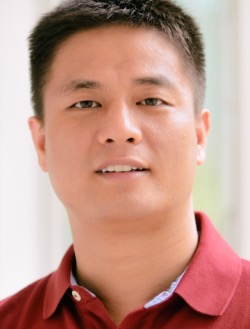 Ting Yao (姚霆)合作论文数HiDream.ai65
 Yingwei Pan (潘滢炜)合作论文数HiDream.ai63
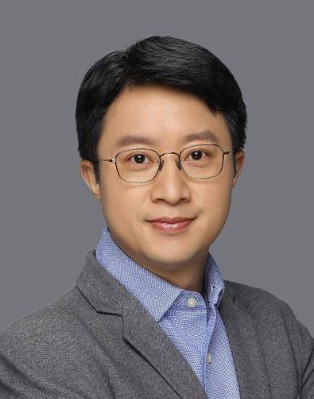 Tao Mei (梅涛)合作论文数HiDream.ai47
 Hongyang Chao (朝红阳)合作论文数School of Computer Science and Engineering, Sun Yat-sen University;School of Software, Sun Yat-sen University13
 Jingwen Chen合作论文数Sun Yat-sen University12Qi Cai合作论文数JD10
 Zhaofan Qiu (邱钊凡)合作论文数JD AI Research;Microsoft Research Asia;HiDream.ai9
 Jianjie Luo (罗剑杰)合作论文数School of Computer Science and Engineering, Sun Yat-Sen University8
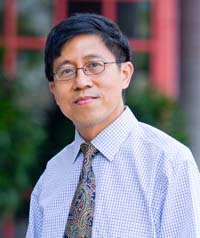 Chong-Wah Ngo合作论文数School of Computing and Information Systems, Singapore Management University6
 Yiheng Zhang合作论文数HiDream.ai4
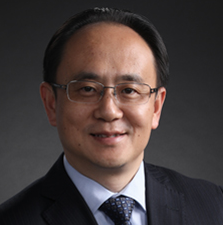 Yong Rui (芮勇)合作论文数Lenovo4
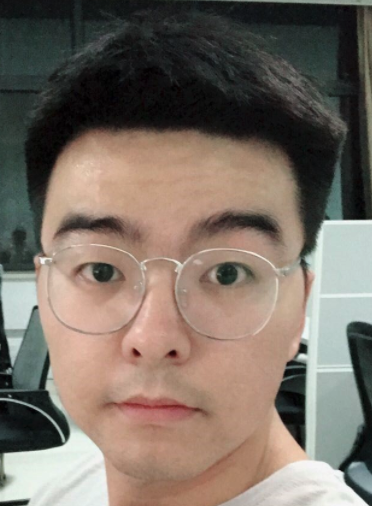 Yang Chen合作论文数University of Science and Technology of China4
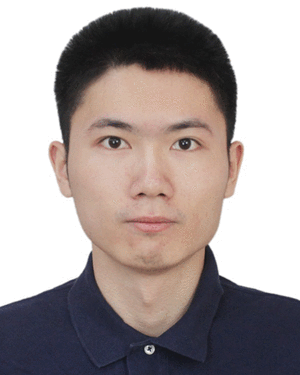 Fuchen Long合作论文数Vision and Multimedia Laboratory, JD Explore Academy4
 Jianlin Feng (冯剑琳)合作论文数School of Computer Science and Engineering, Sun Yat-sen University3Xuewei Ding合作论文数2Dong Li合作论文数University of Science and Technology of China2
 Jun Xu合作论文数JD2
 Yu Wang (王钰)合作论文数School of Artificial Intelligence, Shanghai Jiao Tong University;Shanghai AI Laboratory, Shanghai Jiao Tong University2
 Dan Zeng (曾丹)合作论文数School of Communication & Information Engineering, Shanghai University2Yanyong Zhang合作论文数1Yifu Chen合作论文数1Siqi Wan合作论文数1Guangting Zheng合作论文数School of Computer Science and Technology, University of Science and Technology of China1Qingyang Mao合作论文数University of Science and Technology of China1Rui Hu合作论文数1Joohyun Kim合作论文数1
 H Ben合作论文数1Yurui Qian合作论文数Dept Imaging & Intervent Radiol, Chinese Univ Hong Kong1
 Patrick Poirson合作论文数Snap Inc.1
 David M. Howcroft合作论文数Saarland University1
 Niki Parmar合作论文数Anthropic1
 Qi Liu (刘淇)合作论文数School of Data Science, University of Science and Technology of China;State Key Laboratory of Cognitive Intelligence, School of Computer Science and Technology, University of Science and Technology of China;Anhui Province Key Laboratory of Big Data Analysis and Application, School of Computer Science and Technology, University of Science and Technology of China1
 Meng Wang (汪萌)合作论文数School of Computer Science and Information Engineering, Hefei University of Technology1
 Jiasen Lu合作论文数Apple1
 Peter Anderson合作论文数Balyasny Asset Management L.P1
 Kelvin Xu合作论文数Google DeepMind1
 Rama Vedantam合作论文数1
 Kyunghyun Cho合作论文数Center for Data Science, New York University;Courant Institute of Mathematical Sciences, New York University;Genentech Research & Early Development1
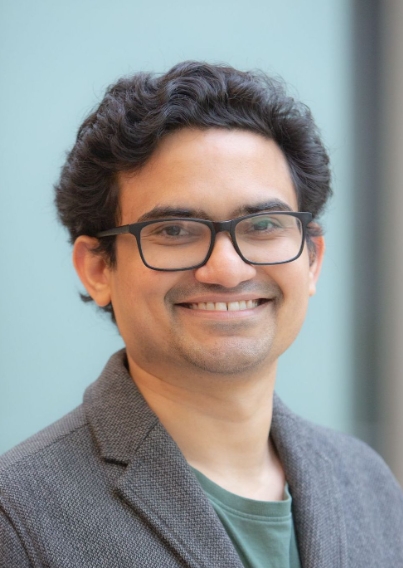 Dipendra Misra合作论文数Databricks1
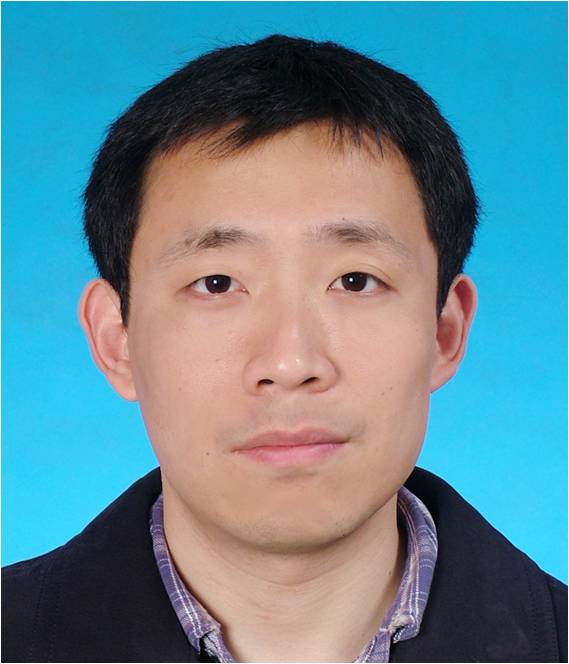 Weiyao Lin (林巍峣)合作论文数Department of Electronic Engineering, Shanghai Jiaotong University1
 Anya Belz合作论文数ADAPT Research Centre, Dublin City University;Faculty of Engineering and Computing, School of Computing, Dublin City University1
 Alane Suhr合作论文数Department of Electrical Engineering and Computer Sciences, University of California, Berkeley1
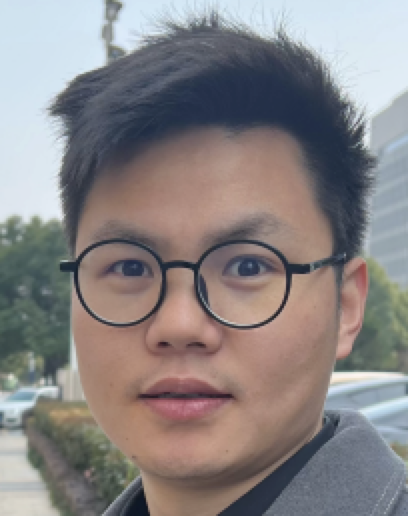 Mingyue Cheng (程明月)合作论文数School of Computer Science and Technology, University of Science and Technology of China;State Key Laboratory of Cognitive Intelligence, University of Science and Technology of China1
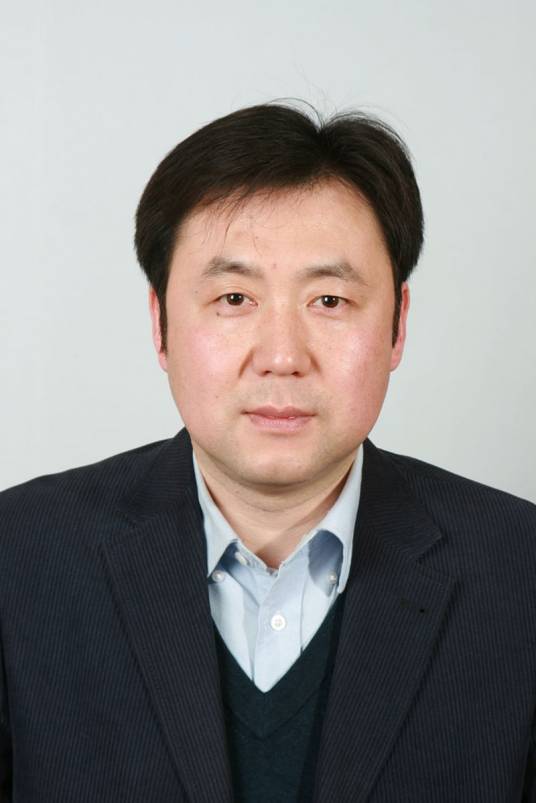 Houqiang Li (李厚强)合作论文数Department of Electronic Engineering and Information Science, University of Science and Technology of China;School of Information Science and Technology, University of Science and Technology of China1
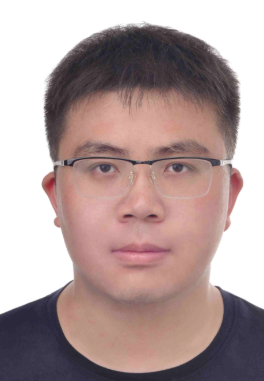 Jiajun Deng (邓家俊)合作论文数National University of Singapore1Jiahao Fan合作论文数Shanghai Jiao Tong University1
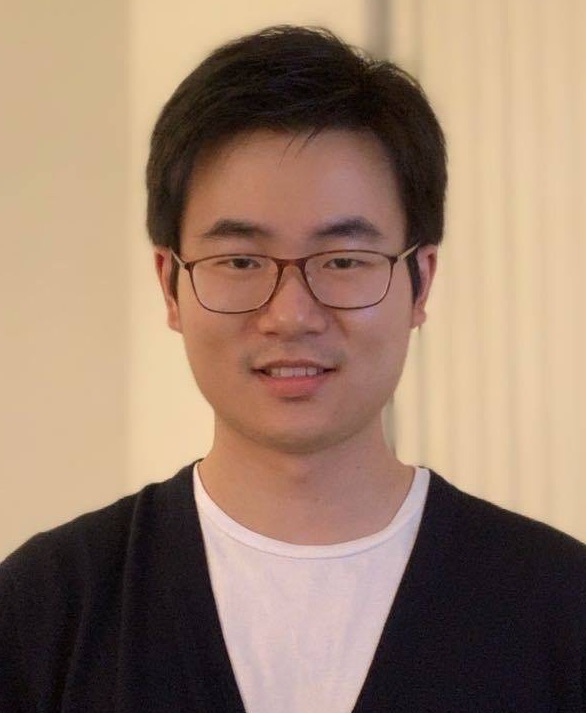 Licheng Yu (虞立成)合作论文数Facebook AI1
 Jing Wang (王静)合作论文数School of Control Science and Engineering, Shandong University1




