Nucleation site interaction during boiling process was investigated to demonstrate its effects on active site density and associated boiling heat transfer. Considering that nucleation site interaction is induced by non-uniform temperature distribution depending mainly on boiling wall properties and thickness, boiling experiments on the surface of different material plate walls with different thickness were conducted to reveal the nucleation site interaction. Plate material and thickness were found to have significant influence on the nucleate boiling heat transfer caused by the thermal interaction in the plate. This is quite distinct from the effect of single bubble-waiting period and growing period commonly expected.
Twisted Laguerre-Gaussian Schell model (TLGSM) beams are a novel type of partially coherent beams, which carry the twist phase and the vortex phase simultaneously. In this paper, the self-reconstruction (SR) of the TLGSM beam partially blocked by an opaque obstacle and propagating through a thin lens focusing system is studied in detail. Implementing the pseudo-mode expansion method, we represent the TLGSM beam as a superposition of spatially coherent modes, which is applicable for calculating the cross spectral density (CSD) and spectral degree of coherence (SDOC) of such a beam using the Fourier transform. The numerical results reveal that the twist parameter, a measure of the strength of a twist phase, determines the characteristics of the SR. In the case of the topological charge of the vortex is positive, the SR capability of spectral density is significantly improved with the increase of the twist parameter. The physical mechanism behind these phenomena is analyzed in detail from the point view of mode expansion. Further, the dependence of the side ring intensity and SR capability of the SDOC on the twist parameter are also investigated. It is found that the SR capability and side ring intensity of the SDOC are simultaneously enhanced for a large twist parameter, providing an efficient way to determine the number of topological charge. Our study results may find application in communication and information recovery applications.
Complicated partially coherent beams (PCBs) are useful in many applications, such as free-space optical communications, particle trapping and optical imaging, while usually it is hard to derive analytical propagation formulae for such beams, and one has to fall back on numerical methods. The conventional numerical methods have some intrinsic drawbacks. In this paper, we introduce an efficient tensor approach (ETA) for simulating paraxial propagation of arbitrary PCBs. The ETA is a direct reconstruction of the propagated PCB without aliasing and rippling problems, and the algorithm is simple and robust with a tensor/matrix multiplication as the main calculation. The validity of ETA is verified through comparing simulation results with analytical results, numerical integration results and experimental results, respectively. The ETA provides a fast and reliable way for simulating paraxial propagation of arbitrary PCBs.
Welcome to the WIT Press eLibrary - the home of the Transactions of the Wessex Institute collection, providing on-line access to papers presented at the Institute's prestigious international conferences and from its State-of-the-Art in Science & Engineering publications.
Un article, tel un dispositif electroluminescent, peut contenir des premier et second materiaux, le premier materiau pouvant emettre un premier rayonnement atteignant un premier maximum d'emission a une premiere longueur d'onde, le second materiau pouvant emettre un second rayonnement en reponse a la capture du premier rayonnement. Le second materiau peut atteindre un second maximum d'emission a une seconde longueur d'onde dans le spectre de lumiere visible. Dans un mode de realisation, le second materiau peut etre different du premier. Dans un autre mode de realisation, une difference entre la premiere longueur d'onde et la seconde longueur d'onde peut etre superieure ou egale a approximativement 70 nm. De plus, le second materiau peut contenir un materiau luminescent ayant pour formule Gd 3(x) Y 3(1-x) Al 5(y) Ga 5(1-y) O 12 , x etant superieur ou egal a approximativement 0,2 et inferieur ou egal a approximativement 0,99 et y etant superieur ou egal a approximativement 0,05 et inferieur ou egal a approximativement 0,99.
A theoretical investigation was conducted to explore multiplicity and stability of boiling on a thin cylinder with different heat generations. The steady temperature distributions of the boiling on the cylinder were calculated under different boundary conditions and heat generations, and multiplicity phenomena were found in the boiling distribution diagram. In the multiplicity regions with proper cylinder length, there can be two or three steady temperature distributions with different boiling modes. In addition, the linear stability analyses were employed to investigate boiling system, and the maximum eigenvalue was derived to determine the stability of steady distribution. The obtained maximum eigenvalue distribution was shown to correlate well with the steady temperature and heat flux distributions, and the multiplicity phenomena also existed in the boiling stability diagram. In the multiplicity region, only one steady temperature distribution of the boiling was unstable with positive eigenvalue, while the others were stable with negative eigenvalue. Compared with available experimental results, the present model can very well explain the multiplicity and stability of boiling on the wires or fins.
Altium Desinger summer 09 is a circuit board design software with more perfect software function, quick operation and strong rationality. To make the beginner grasp the PCB design process well, this paper will describe the whole process and analyze every step with a circuit example
The energy level alignment of CuPc and FePc on single-layer graphene/Ni(111) (SLG/Ni) substrate was investigated by using ultraviolet and X-ray photoelectron spectroscopy (UPS and XPS). The highest occupied molecular orbitals (HO-MOs) in a thick layer of CuPc and FePc lie at 1.04 eV and 0.90 eV, respectively, below the Fermi level of the SLG/Ni substrate. Weak adsorbate-substrate interaction leads to negligible interfacial dipole at the CuPc/SLG/Ni interface, while a large interfacial dipole (0.20 eV) was observed in the case of FePc/SLG/Ni interface, due to strong adsorbate-substrate coupling. In addition, a new interfacial electronic feature was observed for the first time in the case of FePc on SLG/Ni substrate. This interfacial state can be attributed to a charge transfer from the SLG/Ni substrate to unoccupied orbitals of FePc.
This chapter discusses mainly about five important physical concepts in liquid and gas systems, which are phase equilibrium, phase transition, interface, contact angle, and cluster. Phase refers to the physically distinctive form of a substance. From the view of thermodynamics, the states and conditions for phase equilibrium are described and some fundamentals for phase transition are introduced. A liquid-vapor interface is considered to be a very thin region having rapid changes in fluid or material properties from the bulk liquid to bulk vapor. Using surface excess quantity, the thermodynamic analysis can be conducted to explore the interfacial effects. Interface tension and Young-Laplace equation are discussed here. The contact angle, which is used to quantify the wettability of liquid, is defined as the angle between the liquid-vapor interface and the solid surface at the contact line. Contact angle equilibrium, hysteresis and dynamic are discussed. Clusters consisting of tens and hundred of atoms or molecules are a new class of compounds called atomic or molecular clusters. The number balance equation is formulated for activated molecules in clusters, with a comprehensive investigation of the dynamics of clusters formed with internal or external perturbations.
The nucleation process is investigated in terms of the nucleus formation, nucleus structure, inception nucleation phenomena, evolution process. The inception process of nucleation in a boiling system is studied by considering the surface adjoining effects. According to the supersaturation and chemical potential of the liquid near a flat surface, the stable layer, free energy peak and embryo bubble distribution would be further investigated. The evolution behavior of heterogeneous nucleation on a solid surface is analyzed in detail, and three main types of nucleation in ideal conical cavities are described as nucleation inside cavity, nucleation outside a cavity, and twice nucleation inside and outside a cavity.
A self-designed swirling air jet device with a five-hole probe was used to quantitatively analyze the free and submerged swirling air jet velocity field.Flow fields were measured for four swirling intensities while dimensionless velocity component distributions on different sections were obtained to show that the axial velocity distribution is related to the swirling intensity in the region near the device outlet.On the vertical section,the swirling jet axial velocity profiles present an M-shaped distribution,and then gradually develop to a saddle shape,and finally to a normal distribution and to zero.The tangential velocity profiles present a centrosymmetrical italic-S-shaped distribution,with the maximum velocities for different sections appearing at the same dimensionless radius.The radial velocity profiles show a "~" shaped distribution,with the radial velocity value being lower one order of magnitude than that of the tangential velocity or the axial velocity.The results also show that the axial and tangential velocities decrease faster in the axial direction with increasing swirling intensity.
Experimental investigations were conducted to observe bubble motion during subcooled boiling of water on heating wires, and theoretical models were proposed to describe the associated dynamical phenomena and understand the physical significance. Various kinds of bubble motion, such as sweeping, separation, collision, oscillation during leaping were further studied by the bubble dynamics model. Both experimental and theoretical evidences indicated that interfacial thermocapillary force played an important role in many bubble motions. The thermocapillary force can be induced by the bubble motion, the interaction between neighbor bubbles or the heating surface. The theoretical predictions are compared with the experimental observations is presented and discussed. Bubble dynamics including nucleation, bubble growth and departure have been intensively investigated in past decades. For boiling on a fine wire, however, some micro bubbles were found to move along the wire, to sweep back and forth, and to return to the wire after departure. Analyses were conducted to probe into the mechanisms behind.
Various forms of jet flows were observed in boiling experiments conducted on fine wires. The jet flows broke forth from nucleation sites like volcano erupting, or issued from stationary bubbles like tails. The jet flows were quite different from typical bubbles and brought distinct insight to boiling heat transfer mechanisms. A series of theoretical work was conducted to reveal the nature of the various forms of jet flows. Some of them, bubble-top jet flow and multi-jet flow, were successfully modeled.
Porous coatings are commonly used in electron device heat dissipation for enhancing heat transfer.Reling on working media fast movement because of boiling and condensing inside porous capillary core,heat pipe can realize high-desity and efficient heat transfer.Research on liquid backflow characteristics in thin porous coatings while boiling is significant to improve heat transfer efficient,heat dissipation flux,life.Pool-boiling experiments of different porous coatings in different liquid level were conducted to obtain bubble characteristics and boiling curve of thin porous coatings in high heat flux,and liquid backflow characteristics was analysed with the capillary theory.From the experiments results,liquid backflow mechanism in porous coatings may be understood and influential factors can be studied.Key wrods: porous coatings;pool boiling;bubble characteristics;boiling curve;liquid feedback
An experimental investigation was conducted to describe the oscillation behavior of water droplets on solid surfaces as air flew through over the droplets, and the dynamical process was recorded by using a high-speed CCD. Two liquid drop oscillation modes, forward-backward and upward-downward, and their mutual conversion were visually observed. A numerical simulation was also conducted to investigate the inner flow in an oscillating liquid droplet. A 2D model was proposed to describe the interfacial movements and the flow in oscillating droplets with shear stress induced by outside air flow. The 2D inner flow field was reconstructed to explore the liquid flow velocity and pressure profile and better understand the oscillating mechanisms.An experimental investigation was conducted to visually observe the dynamical characteristics of water droplets with evaporation and nucleation on stainless steel and polished silicon surfaces. The water droplet diameter, contacting area and spreading speed were measured at the surface temperature ranging from 110 degrees C to 190 degrees C. The spreading of water droplets during evaporation and nucleate boiling had a close relationship with the dynamic bubble behavior in the droplet as well as the surface properties. A model was proposed to describe the dynamical behavior of droplet spreading. Particularly, bubble volume, bubble interaction, surface temperature and surface properties had very strong influence on droplet spreading. Water droplets were easiest to spread at the surface temperature of 130 C, and the spreading tendency increased with increasing surface roughness. Using a high-speed video imaging system, the dynamical process of the evaporation and boiling behavior of a droplet was recorded. Infrared ray temperature measurement technique was employed to investigate the instantaneous characteristics of heat transfer as the droplet was boiled. In the transition boiling regime, the phase change behavior of a droplet displayed a cyclical process. Restricted cyclical, sole-bubble cyclical and metastable cyclical styles were observed as the surface temperature increased.
An experimental investigation was conducted to visually observe the boiling behavior in a 3D porous structure made of staggered glass beads, especially the bubble dynamics and pore-scale liquid flow around bubbles associated with the heat and mass transport at the bubble interface. The experiments show that the dynamic bubble behavior was significantly affected by the bead-packed structure, and several unique boiling phenomena caused by special pore geometry were observed and discussed. Intensive wetting of the liquid replenishment protected heated surface from full dryout. The bubble shape and primary bubble interface were described by using a force balance on the bubble. An introductory model was proposed to perform a theoretical analysis and explore the dryout process inside the pore structure. The theoretical results were compared with experimental data, and the present model provided a good explanation of the fundamental mechanisms and predicted the important influences of the bead-packed structure on dryout behavior.
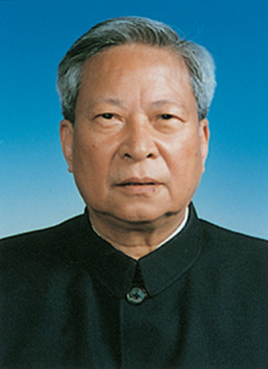 Buxuan Wang (王补宣)合作论文数Department of Energy and Power Engineering, Tsinghua University147
 Duu-Jong Lee合作论文数48Lihe Chai (柴立和)合作论文数25
 David M. Christopher (柯道友)合作论文数Department of Energy and Power Engineering, Tsinghua University16
 Hao Wang (王昊)合作论文数School of Mechanics and Engineering Science, Peking University15
 Bud Peterson合作论文数George W. Woodruff School of Mechanical Engineering, Georgia Institute of Technology12
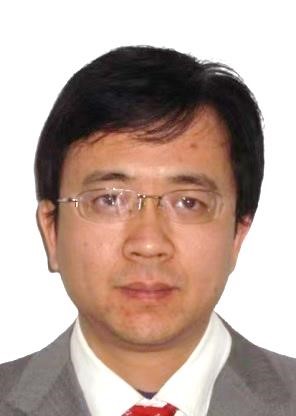 Xiaodong Wang (王晓东)合作论文数Technical Institute of Physics and Chemistry, Chinese Academy of Sciences;University of Chinese Academy of Sciences10DuZhong Li (李笃中)合作论文数9Jintao Zhang合作论文数9
 Yuanyuan Duan (段远源)合作论文数Department of Energy and Power Engineering, Tsinghua University8
 Jianfeng Lu (陆建峰)合作论文数School of Materials Science and Engineering, Sun Yat-sen University8
 Leping Zhou (周乐平)合作论文数Wu Zhonghua College, North China Electric Power University8H.Y. Hu合作论文数7T Tao合作论文数7yan yan (颜岩)合作论文数7
 Li Jia (贾力)合作论文数School of Mechanical, Electronic and Control Engineering, Beijing Jiaotong University7
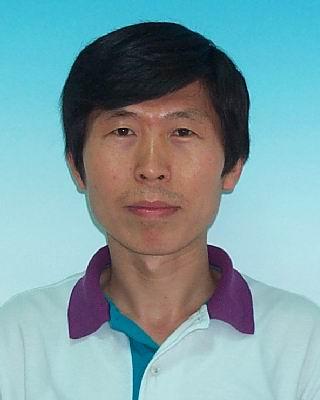 Jingchun Min (闵敬春)合作论文数School of Aerospace Engineering, Tsinghua University7XiaoDong Wang (王晓东)合作论文数6I. Conté合作论文数6JF Lu合作论文数5Hailing WU (吴海玲)合作论文数5Zhi-yong LIN (林志勇)合作论文数5
 Mingzhi Yu (于明志)合作论文数Department of Thermal Engineering, Shandong Jianzhu University5
 Jing Ding (丁静)合作论文数School of Materials Science and Engineering, Sun Yat-Sen University5
 Dongsheng Wen (文东升)合作论文数School of General Engineering, Beihang University;School of Engineering and Design, Technical University of Munich5Ay Su合作论文数5
 Wen-Wei Lin合作论文数wwlin@math.nctu.edu.tw5C. P. Chu合作论文数Department of Materials Engineering, National Pingtung University of Science and Technology5Gui Lu (陆规)合作论文数5
 Zhaohong Fang (方肇洪)合作论文数School of Thermal Engineering, Shandong Jianzhu University;Zhongrui New Energy5
 J. M. Ochterbeck合作论文数5H. Wang合作论文数4lixin yang (杨立新)合作论文数4tao tao (陶涛)合作论文数4Yong Tian合作论文数4Jiang Zou合作论文数4
 Chunhui Li (李春辉)合作论文数4ChunHui Li (李春辉)合作论文数4ZhiMin Li (李智敏)合作论文数4
 Wenxing Shi (石文星)合作论文数School of Architecture, Tsinghua university4
 Junming Li (李俊明)合作论文数Department of Energy and Power Engineering, Tsinghua University4Duanming Zhang (张端明)合作论文数4Jianhua Du合作论文数4Xingfang Hu合作论文数4Zhan-Peng Liang合作论文数4Yongnian Yan (颜永年)合作论文数4Ibrahima Conté合作论文数3Dj Lee合作论文数3




