Large Language Models (LLMs) have been increasingly studied as neural knowledge bases for supporting knowledge-intensive applications such as question answering and fact checking. However, the structural organization of their knowledge remains unexplored. Inspired by cognitive neuroscience findings, such as semantic clustering and priming, where knowing one fact increases the likelihood of recalling related facts, we investigate an analogous knowledge homophily pattern in LLMs. To this end, we map LLM knowledge into a graph representation through knowledge checking at both the triplet and entity levels. After that, we analyze the knowledgeability relationship between an entity and its neighbors, discovering that LLMs tend to possess a similar level of knowledge about entities positioned closer in the graph. Motivated by this homophily principle, we propose a Graph Neural Network (GNN) regression model to estimate entity-level knowledgeability scores for triplets by leveraging their neighborhood scores. The predicted knowledgeability enables us to prioritize checking less well-known triplets, thereby maximizing knowledge coverage under the same labeling budget. This not only improves the efficiency of active labeling for fine-tuning to inject knowledge into LLMs but also enhances multi-hop path retrieval in reasoning-intensive question answering.
With the widespread adoption of large vision-language models, the capacity for color vision in these models is crucial. However, the color vision abilities of large visual-language models have not yet been thoroughly explored. To address this gap, we define a color vision testing task for large vision-language models and construct a dataset [Anonymous Github Showing some of the data https://anonymous.4open.science/r/color-vision-test-dataset-3BCD] that covers multiple categories of test questions and tasks of varying difficulty levels. Furthermore, we analyze the types of errors made by large vision-language models and propose fine-tuning strategies to enhance their performance in color vision tests.
We introduce MoSA, a new parameter-efficient fine-tuning (PEFT) method that replaces low-rank factorization with randomized, fine-grained sharing of weight updates. Each adapted weight matrix is constructed by broadcasting a small set of learned scalars over a fixed tessellation, a pre-defined group assignment of weight entries of the weight matrix, producing expressive changes under the same parameter budget as low-rank adaptation (LoRA). MoSA requires no architectural changes and can be merged into the base model for zero-overhead inference. Across diverse language understanding and generation tasks, MoSA matches or surpasses strong PEFT baselines under strictly matched budgets. Analyses and ablations indicate that non-local parameter sharing acts as an effective regularizer, and that grouping design and budget allocation govern the expressivity–efficiency trade-off. These results position MoSA as a simple, scalable alternative to LoRA.
Text-based occluded person re-identification (TO-ReID) is a key challenge in cross-modal person retrieval, aiming to retrieve occluded pedestrian images using natural language descriptions. Existing methods typically rely on token-level masking strategies, which often overlook high-level textual structures and struggle to recover discriminative features from severely occluded regions. To address these limitations, we propose a Text-Guided Occlusion-Aware Reconstruction framework (TOAR), which introduces a multi-level occlusion-aware mechanism to enhance cross-modal retrieval robustness. Specifically, we first design a Syntax-Guided Group Masking strategy that elevates masked language modeling from the token level to the syntax-guided semantic group level. This strategy encourages the text encoder to learn robust concept-level representations that are critical for fine-grained alignment. Second, we develop an Occlusion-Aware Feature Reconstruction (OAFR) module to recover occluded visual features by leveraging implicitly identified visible patches, which are regarded as reliable according to internal reconstruction confidence. By focusing reconstruction on these trustworthy regions and propagating their semantic context to occluded areas, OAFR restores discriminative visual content while maintaining semantic consistency with textual guidance, even under severe occlusion. Extensive experiments demonstrate that the proposed framework achieves state-of-the-art performance on challenging occluded TO-ReID benchmarks. These results validate the effectiveness of TOAR and highlight the importance of explicitly modeling occlusion through semantics-guided masking and feature reconstruction.
Fine-tuning large language models often undermines their safety alignment, a problem further amplified by harmful fine-tuning attacks in which adversarial data removes safeguards and induces unsafe behaviors. We propose SPARD, a defense framework that integrates Safety-Projected Alternating optimization with Relevance-Diversity aware data selection. SPARD employs SPAG, which optimizes alternatively between utility updates and explicit safety projections with a set of safe data to enforce safety constraints. To curate safe data, we introduce a Relevance–Diversity Determinantal Point Process to select compact safe data, balancing task relevance and safety coverage. Experiments on GSM8K and OpenBookQA under four harmful fine-tuning attacks demonstrate that SPARD consistently achieves the lowest average attack success rates, substantially outperforming state-of-the-art defense methods, while maintaining high task accuracy.
Lifelong learning aims to preserve knowledge acquired from previous tasks while incorporating knowledge from a sequence of new tasks. However, most prior work explores only streams of homogeneous tasks (e.g., only classification tasks) and neglects the scenario of learning across heterogeneous tasks that possess different structures of outputs. In this work, we formalize this broader setting as lifelong heterogeneous learning (LHL). Departing from conventional lifelong learning, the task sequence of LHL spans different task types, and the learner needs to retain heterogeneous knowledge for different output space structures. To instantiate the LHL, we focus on LHL in the context of dense prediction (LHL4DP), a realistic and challenging scenario. To this end, we propose the Heterogeneity-Aware Distillation (HAD) method, an exemplar-free approach that preserves previously gained heterogeneous knowledge by self-distillation in each training phase. The proposed HAD comprises two complementary components, including a distribution-balanced heterogeneity-aware distillation loss to alleviate the global imbalance of prediction distribution and a salience-guided heterogeneity-aware distillation loss that concentrates learning on informative edge pixels extracted with the Sobel operator. Extensive experiments demonstrate that the proposed HAD method significantly outperforms existing methods in this new scenario.
Vision-Language Models (VLMs) have emerged as versatile solutions for zero-shot question answering (QA) across various domains. However, enabling VLMs to effectively comprehend structured graphs and perform accurate, efficient QA remains challenging. Existing approaches typically rely on one single graph topology representation (GTR), such as fixed-style visual images or unified text descriptions. This “one-size-fits-all” strategy often neglects model-specific and task-specific preferences, resulting in inaccurate or over-lengthy responses to graph-related queries. To address this, we propose the framework, which dynamically selects the optimal GTR for each query during inference, thereby enhancing the zero-shot graph QA capabilities of VLMs with a customizable accuracy and brevity trade-off. Extensive experiments show that DynamicGTR not only improves VLM-based graph algorithm QA performance but also successfully transfers the experience trained from synthetic graph algorithm tasks to real-world applications like link prediction and node classification, without any additional training. Additionally, DynamicGTR demonstrates strong transferability across tasks, domains, and models, suggesting its potential as a flexible solution for broad graph scenarios.
In explainable machine learning, counterfactual explanations reveal key factors influencing model decisions by constructing hypothetical scenarios (for example, “if the inputs changed, the outputs would differ.”). Most existing methods generate counterfactuals by minimizing the distance between the generated instance and the original input, as well as other constraints. However, prioritizing proximity can degrade plausibility and robustness. Our analysis attributes this trade-off to neglecting consistency with the target class’s local data distribution during counterfactual generation. To address this, we propose a new method that balances proximity, plausibility, and robustness by enforcing local distribution consistency. Specifically, we introduce a novel loss function consisting of two terms: Local Density Loss and Feature Deviation Loss. The Local Density Loss steers generated counterfactuals toward high-density regions of the target class, improving plausibility. The Feature Deviation Loss preserves proximity by restricting modifications to salient features, encouraging alignment with the target class in those dimensions, while minimizing changes to less important features to enhance robustness. Additionally, we propose an enhanced particle swarm optimization (PSO) algorithm that integrates feature weights into the velocity update to accelerate the targeted search. Extensive experiments and visualized case studies illustrate that our new method can effectively balance plausibility, robustness, and proximity.
Instruction tuning of Large Vision-language Models (LVLMs) has revolutionized the development of versatile models with zero-shot generalization across a wide range of downstream vision-language tasks. However, the diversity of different training tasks from various sources and formats would lead to inevitable task conflicts, where different tasks conflict for the same set of model parameters, resulting in sub-optimal instruction-following abilities. To address that, we propose the Mixture of Cluster-conditional LoRA Experts (MoCLE), a novel Mixture of Experts (MoE) architecture designed to activate task-customized model parameters based on instruction clusters. A separate universal expert is further incorporated to improve generalization abilities of MoCLE for novel instructions. Extensive experiments on InstructBLIP and LLaVA demonstrate the effectiveness of MoCLE.
Dynamic graphs are common in real‑world systems such as social media, recommender systems, and traffic networks. Existing dynamic graph models for link prediction often fall short in capturing the full complexity of temporal evolution. They tend to overlook fine‑grained variations in interaction order, struggle with dependencies that span long time horizons, and provide limited modeling of pair‑specific relational dynamics. To address those challenges, we propose Graph2Video, a video‑inspired framework that views the temporal neighborhood of a target link as a sequence of “graph frames”. By stacking temporally ordered subgraph frames into a “graph video”, Graph2Video leverages the inductive biases of video foundation models to capture both fine-grained local variations and long-range temporal dynamics. It generates a link-level embedding that serves as a lightweight, plug-and-play, link-centric memory unit. This embedding integrates seamlessly into existing dynamic graph encoders, effectively addressing the limitations of prior approaches. Extensive experiments on benchmark datasets show that Graph2Video outperforms state‑of‑the‑art baselines in the link prediction task on most cases. The results highlight that borrowing spatio‑temporal modeling techniques from computer vision provides a principled and effective avenue for advancing dynamic graph learning.
Existing deep reinforcement learning (DRL) agents suffer from severe reward instability during late-stage exploration, particularly when encountering novel states in complex continuous environments. A variety of existing studies focus on improving an agent's reward exploration. However, they ignore the instability problem that arises when the agent faces new states in the later stages of exploration. This paper proposes a novel companion learning network (CLN) based on the idea that the guidance can accelerate human learning efficiency and reduce the risk of making mistakes. The CLN integrates a short-term partner network to intensively learn localized environmental patterns, offering adaptive action guidance for recent states. Simultaneously, a global Qnetwork dynamically incorporates the partner's decaying guidance signals, balancing autonomous exploration with error mitigation. As training progresses, the partner's influence gradually diminishes, allowing the Qnetwork to solidify robust policies without persistent dependence. Extensive experiments on four OpenAI Gym environments demonstrate that the CLN can significantly improve the exploration stability in most tested scenarios, achieving up to 49% reduction in late-stage reward standard deviation compared to baseline DRL methods.
Large Vision-Language Models (LVLMs) consistently require new arenas to guide their expanding boundaries, yet their capabilities with hypergraphs remain unexplored. In the real world, hypergraphs have significant practical applications in areas such as life sciences and social communities. Recent advancements in LVLMs have shown promise in understanding complex topologies, yet there remains a lack of a benchmark to delineate the capabilities of LVLMs with hypergraphs, leaving the boundaries of their abilities unclear. To fill this gap, in this paper, we introduce , the first benchmark to evaluate the proficiency of LVLMs in hypergraph understanding and reasoning. provides a comprehensive assessment of 12 advanced LVLMs across 84,000 vision-language question-answering (QA) samples spanning 12 tasks, ranging from basic component counting to complex NP-hard problem reasoning. The involved hypergraphs contain multiscale synthetic structures and real-world citation and protein networks. Moreover, we examine the effects of 12 textual and visual hypergraph representations and introduce a generalizable router that improves LVLMs in hypergraph via learning adaptive representations. We believe that this work is a step forward in connecting hypergraphs with LVLMs.
Soft prompt learning methods are effective for adapting vision-language models (VLMs) to downstream tasks. Nevertheless, empirical evidence reveals a tendency of existing methods that they overfit seen classes and exhibit degraded performance on unseen classes. This limitation is due to the inherent bias in the training data towards the seen classes. To address this issue, we propose a novel soft prompt learning method, named Mixture-of-Prompts Distillation (MoPD), which can effectively transfer useful knowledge from hard prompts manually hand-crafted (a.k.a. teacher prompts) to the learnable soft prompt (a.k.a. student prompt), thereby enhancing the generalization ability of soft prompts on unseen classes. Moreover, the proposed MoPD method utilizes a gating network that learns to select hard prompts used for prompt distillation. Extensive experiments demonstrate that the proposed MoPD method outperforms state-of-the-art baselines especially on on unseen classes.
While adversarial prompt tuning can enhance robustness of vision-language models efficiently, we find that existing methods aggravate robust generalization overfitting on seen classes, leading to a rapid degradation in performance against adversarial examples of unseen classes as training progresses. We empirically identify that this degradation stems from the tendency of the model to learn pseudo-robust features (i.e., non-generalizable shortcuts). To mitigate this, we propose ADAPT (Adversarial Disentangled Prompt Tuning), a robust prompt tuning framework following the philosophy of “Learning What Not to Learn”. Specifically, ADAPT uses a dual-prompt mechanism with a target prompt and a pool of decoy prompts. During training, the decoy prompts are guided to entrap diverse pseudo-robust features, while the target prompt is constrained to be orthogonal to the decoys in the embedding space to learn robust features. By disentangling the robust features from the pseudo-robust features, ADAPT effectively prevents robust generalization overfitting. We further provide an analysis showing that the orthogonal loss bounds the effect of shifts in pseudo-robust features on unseen classes, yielding a testing error guarantee. Empirically, extensive experiments demonstrate that ADAPT substantially improves the robustness of the target prompt on unseen classes. The code is available at https://github.com/cheny02/ADAPT-ACMMM2026.
Recent breakthroughs in large language models (LLMs) have led to notable successes in complex reasoning tasks, such as mathematical problem solving. A common strategy for improving performance is parallel thinking, in which multiple reasoning traces are generated and the final prediction is made using aggregation schemes like majority voting or best-of-$N$ decoding. However, two key challenges persist. First, multi-sample decoding incurs substantial inference latency, especially for long-form outputs. Second, effective mechanisms for reliably assessing the correctness of individual reasoning traces are still limited. To address these challenges, we introduce One-Token Verification (OTV), a computational method that estimates reasoning correctness in a single forward pass during generation. OTV is activated by a learnable token and integrated into the LLM via low-rank adaptation to probe internal reasoning signals through the key-value cache, supporting token-level correctness estimation at any stage of generation without disrupting primary reasoning. Experiments on mathematical reasoning benchmarks demonstrate that OTV consistently surpasses existing verifiers. Additionally, OTV reduces token usage by up to $90\%$ through correctness-guided early termination, prioritizing shorter, more reliable solutions.
Inpatient medication recommendation requires clinicians to repeatedly select specific medications, doses, and routes as a patient's condition evolves. Existing benchmarks formulate this task as admission-level prediction over coarse drug codes with multi-hot diagnostic and procedure code inputs, failing to capture the per-timepoint, information-rich nature of real prescribing. We propose RxEval, a prescription-level benchmark that evaluates LLM prescribing capability by multiple-choice questions: each question presents a detailed patient profile and time-ordered clinical trajectory, requiring selection of specific medication-dose-route triples from real prescriptions and patient-specific distractors generated via reasoning-chain perturbation. RxEval comprises 1,547 questions spanning 584 patients, 18 diagnostic categories, and 969 unique medications. Evaluation of 16 LLMs shows that RxEval is both challenging and discriminative: F1 ranges from 45.18 to 77.10 across models, and the best Exact Match is only 46.10
Transfer learning aims to facilitate the learning of a target domain by transferring knowledge from a source domain. The source domain typically contains semantically meaningful samples (, images) to facilitate effective knowledge transfer. However, a recent study observes that the noise domain constructed from simple distributions (, Gaussian distributions) can serve as a surrogate source domain in the semi-supervised setting, where only a small proportion of target samples are labeled while most remain unlabeled. Based on this surprising observation, we formulate a novel problem termed (SSNA), which aims to leverage a synthetic noise domain to improve the generalization of the target domain. To address this problem, we first establish a generalization bound characterizing the effect of the noise domain on generalization, based on which we propose a Noise Adaptation Framework (NAF). Extensive experiments demonstrate that NAF effectively leverages the noise domain to tighten the generalization bound of the target domain, leading to improved performance. The codes are available at https://anonymous.4open.science/r/SSNA.
Diffusion Large Language Models (dLLMs) have emerged as a promising non-autoregressive generative paradigm. Given the prohibitive computational cost of full fine-tuning, Parameter-Efficient Fine-Tuning (PEFT) has become the standard approach. However, existing PEFT methods (e.g., LoRA), originally tailored for autoregressive models, rely on static parameters that are agnostic to the noise level. Consequently, they ignore the intrinsic dynamics of the diffusion process, where input distributions and generation difficulty shift significantly along the denoising trajectory, rendering them suboptimal for dLLMs. To address this, we propose oise-ware Low-ank daptation (NaRA), which introduces a low-rank core matrix generated by a lightweight, globally shared hypernetwork conditioned on the noise level. This design enables the update matrices to vary continuously along the diffusion process while keeping parameter and latency overhead negligible. We provide a theoretical justification for the proposed NaRA framework and empirically demonstrate consistent improvements over noise-agnostic baselines across commonsense reasoning, mathematical reasoning, and code generation benchmarks.
Style and content information, which are model-independent inherent properties of an image, serve as crucial information that deep neural networks depend on for classification tasks. However, most existing gradient-based attacks mainly distort content-related information through semantic distortion of the model's final output, neglecting the role of style information. To fully distort the inherent intrinsic information of the image, this paper proposes Semantic-Style joint Expectation Perturbations (SSEPs). Specifically, we first establish a style loss based on the kernel function from the feature space of the surrogate model and inject it into gradient-based attacks to form a Semantics-Style joint Loss (SSL) for generating joint perturbations. Subsequently, we use gradient normalization and the proposed dynamic gradient decomposition scheme to address the problems of multi-objective gradient magnitude differences and gradient conflicts that occur in SSL during optimization. Finally, we generate SSEPs by motivating the maximization of the expected loss, thereby enhancing the transferability of Adversarial Examples (AEs). On the ImageNet sub-dataset, extensive experiments show that AEs covered with SSEPs have high transferability. Compared to the baseline attack (MI-FGSM), our method achieves at least a 14% and 5% higher attack success rate for normally trained models and defense models, respectively. Compared with other classic and advanced gradient-based attacks and feature-level attacks, our method still has advantages in attack performance. Our code is available at: https://github.com/OUTOFTEN/TransferAttack-ssep
 Qiang Yang (杨强)合作论文数Department of Data Science and Artificial Intelligence, Faculty of Computer and Mathematical Sciences, Hong Kong Polytechnic University33
 Qianjin Feng (冯前进)合作论文数School of Biomedical Engineering, Southern Medical University21
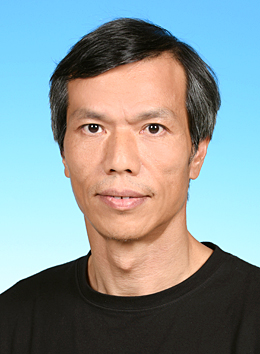 James Tin-Yau KWOK (郭天佑)合作论文数Department of Computer Science and Engineering, School of Engineering, Hong Kong University of Science and Technology20
 Sinno Jialin Pan合作论文数Department of Computer Science and Engineering, Faculty of Engineering, The Chinese University of Hong Kong20
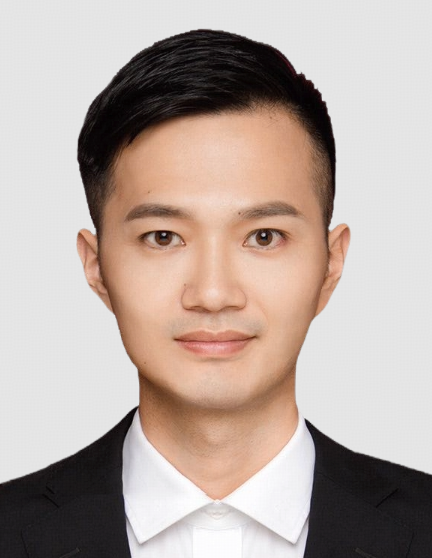 Weisen Jiang (江伟森)合作论文数Department of Computer Science and Engineering, Chinese University of Hong Kong18
 Feiyang Ye合作论文数Department of Computer Science and Engineering, Southern University of Science and Technology;Australian Artificial Intelligence Institute, University of Technology Sydney14
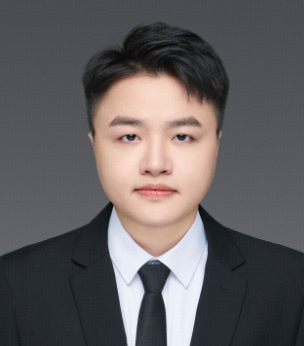 Zhenyuan Ning (宁振源)合作论文数School of Biomedical Engineering, Southern Medical University14
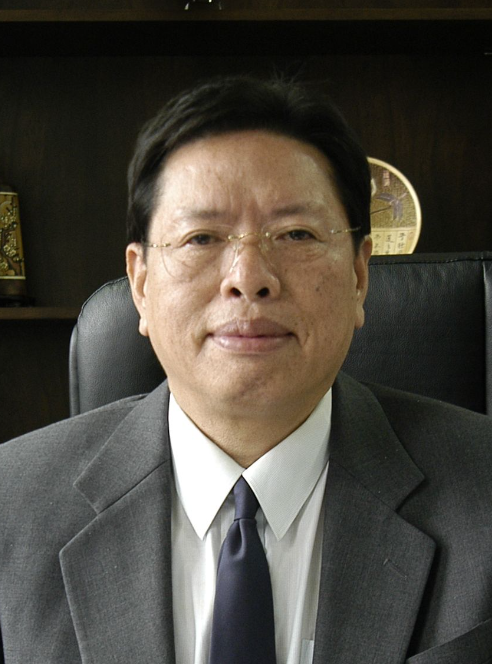 Wufan Chen (陈武凡)合作论文数School of Biomedical Engineering, Southern Medical University12
 Qiushi Huang合作论文数Southern University of Science and Technology;Computer Science Research Centre, University of Surrey10
 Baijiong Lin (林百炅)合作论文数The Hong Kong University of Science and Technology (Guangzhou)10
 Tom Ko Yu Ting (高汝霆)合作论文数Center for Language, Intelligence and Machines, Shenzhen Loop Area Institute10
 Yunhao Gou (苟耘豪)合作论文数Department of Computer Science and Engineering, Hong Kong University of Science and Technology;Huawei Noah’s Ark Lab9
 Ying Wei (魏颖)合作论文数College of Computer Science and Technology, Zhejiang University9
 Pengxin Guo合作论文数8
 Shujun Liang合作论文数Southern Med Univ, Sch Biomed Engn, Guangzhou 510515, Peoples R China8
 Tao Zhong合作论文数Southern Medical University,8
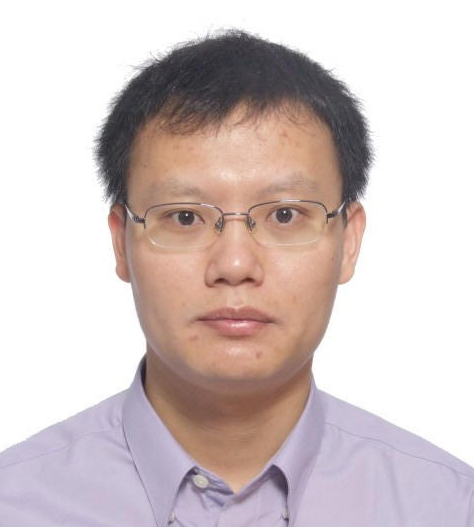 Zhenguo Li合作论文数Noah's Ark Lab, Huawei Technologies;Department of Computer Science and Engineering, Hong Kong University of Science and Technology7
 Dinggang Shen (沈定刚)合作论文数School of Biomedical Engineering, ShanghaiTech University;Image Display, Enhancement and Analysis Lab, ShanghaiTech University7
 Qiao Xiao (肖乔)合作论文数Eindhoven University of Technology6
 Zhixiong Yue合作论文数6Xuehao Wang合作论文数5Shuai Fu合作论文数5
 Zhan Zhuang (庄湛)合作论文数Department of Computer Science, College of Computing, City University of Hong Kong;Department of Computer Science and Engineering, Southern University of Science and Technology;ByteDance Seed5
 Haoyue Bai合作论文数Department of Computer Sciences, School of Computer, Data and Information Sciences, University of Wisconsin-Madison5
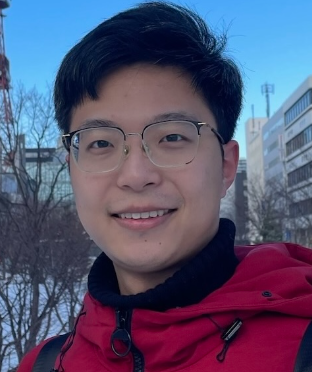 Zhili Liu (刘智立)合作论文数Department of Computer Science and Engineering, Hong Kong University of Science and Technology;AI theory Lab, Huawei Noah’s Ark Lab5
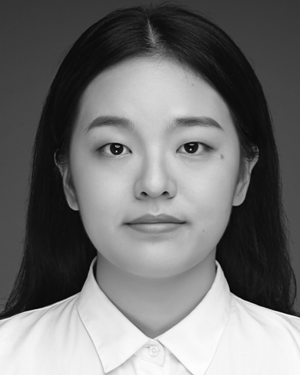 Qing Xiao合作论文数Southern Med Univ, Nanfang Hosp, Sch Biomed Engn, Guangzhou 510515, Guangdong, Peoples R China5
 H Lilian Tang合作论文数Computer Science Research Centre, School of Computer Science and Electronic Engineering, University of Surrey;Department of Computer Science, University of Surrey5
 Dit-Yan Yeung (楊瓞仁)合作论文数Department of Computer Science and Engineering, School of Engineering, The Hong Kong University of Science and Technology5
 Shuangyin Li (李双印)合作论文数School of Computer Science, South China Normal University5
 Kai Chen (陈铠)合作论文数Department of Computer Science and Engineering, School of Engineering, Hong Kong University of Science and Technology5Shuhao Chen合作论文数4
 Xubo Liu (刘徐博)合作论文数Meta4
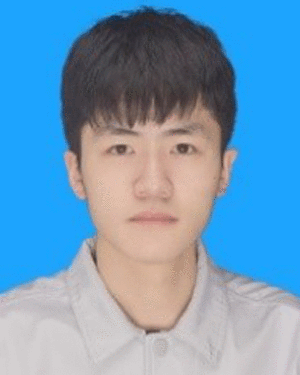 Denghui Du合作论文数4
 Gang Li合作论文数Department of Radiology, School of Medicine, University of North Carolina at Chapel Hill4
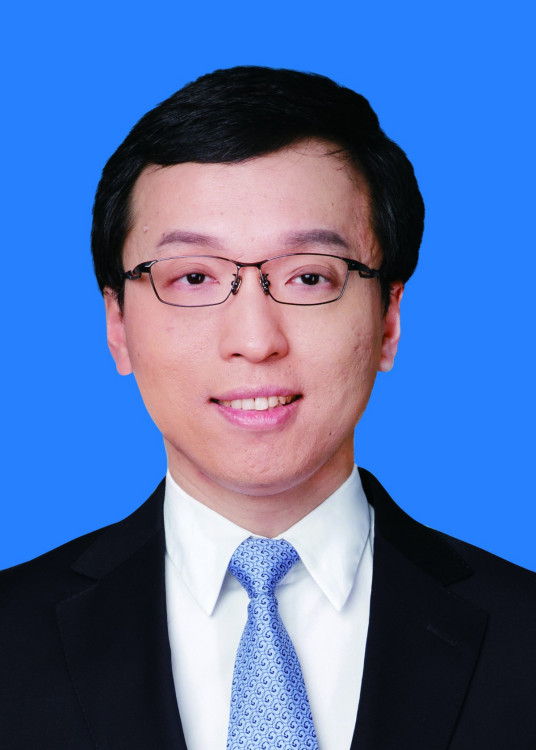 Wenyuan Dai (戴文渊)合作论文数4Paradigm4Han Shi合作论文数4
 Wenwu Wang合作论文数Centre for Vision, Speech and Signal Processing, School of Computer Science and Electronic Engineering, Faculty of Engineering and Physical Sciences, University of Surrey;Surrey Institute for People Centred Artificial Intelligence, University of Surrey4
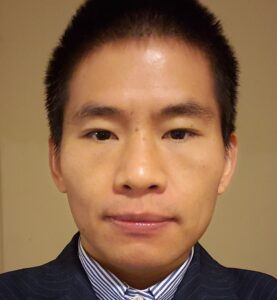 Li Wang合作论文数Developing Brain Computing Lab, University of North Carolina at Chapel Hill;Department of Radiology, School of Medicine, University of North Carolina at Chapel Hill4
 Guorong Wu合作论文数School of Medicine, University of North Carolina at Chapel Hill4
 Jun Lian合作论文数Department of Radiation Oncology, School of Medicine, University of North Carolina at Chapel Hill4
 Pew-Thian Yap合作论文数Image Analysis Core of Biomedical Research Imaging Center, University of North Carolina at Chapel Hill;Department of Radiology, School of Medicine, University of North Carolina at Chapel Hill4
 Rong Pan (潘嵘)合作论文数School of Computer Science and Engineering, Sun Yat-sen University4Xueyang Wu合作论文数3Yanbin Wei合作论文数3Shengzhou Zhong合作论文数3Zhengying Liu合作论文数3




