Aberrant innate immune responses contribute significantly to cellular senescence, yet the precise interplay between innate immunity and senescence remains poorly characterized. Here, we elucidate the pivotal role of nuclear respiratory factor 1 (NRF1) in orchestrating innate immune responses that drive senescence and the senescence-associated secretory phenotype (SASP). NRF1 deficiency delayed cellular senescence and ameliorated age-related deterioration in multiple organs. Mechanistically, NRF1 enhanced SASP by transcriptionally regulating TBK1 and IRF3, critical nodes in innate immunity essential for senescence induction. Conversely, NRF1 deficiency suppressed innate immune activation, thereby attenuating inflammation associated with senescence and aging. Additionally, DNA damage activated ATM kinase, which phosphorylated NRF1 at Ser393, augmenting the NRF1-TBK1/IRF3-type I interferon axis and exacerbating cellular senescence. Furthermore, NRF1 knockdown treatment effectively mitigated aging phenotypes and extended lifespan in aged mice. Collectively, our findings underscore the essential role of the ATM-NRF1-TBK1/IRF3-type I interferon axis in DNA damage-induced senescence, suggesting that targeted NRF1 modulation holds therapeutic promise for improving inflammaging.
Zygotic genome activation occurs in two-cell (2C) embryos, and a 2C-like state is also activated in sporadic (~1%) naïve embryonic stem cells in mice. Elevated chromatin accessibility is critical for the 2C-like state to occur, yet the underlying molecular mechanisms remain elusive. Zscan4 exhibits burst expression in 2C embryos and 2C-like cells. Here, we show that Zscan4 mediates chromatin remodeling to promote the chromatin accessibility for achieving the 2C-like state. Through coimmunoprecipitation/mass spectrometry, we identified that Zscan4 interacts with the corepressors Kap1/Trim28, Lsd1, and Hdac1, also with H3K9me3 modifiers Suv39h1/2, to transiently form a repressive chromatin complex. Then, Zscan4 mediates the degradation of these chromatin repressors by recruiting Trim25 as an E3 ligase, enabling the ubiquitination of Lsd1, Hdac1, and Suv39h1/2. Degradation of the chromatin repressors promotes the chromatin accessibility for activation of the 2C-like state. These findings reveal the molecular insights into the roles of Zscan4 in promoting full activation of the 2C-like state.
PDF file - 1232K, OPN promote clonogenicity of HT-29 cells on different concentrations.
PDF file - 1119K, A CD44v6 neutralizing antibody blocks the OPN-induced enhanced clonogenicity.
Mitochondrial biogenesis is the process of generating new mitochondria to maintain cellular homeostasis. Here, we report that viruses exploit mitochondrial biogenesis to antagonize innate antiviral immunity. We found that nuclear respiratory factor-1 (NRF1), a vital transcriptional factor involved in nuclear-mitochondrial interactions, is essential for RNA (VSV) or DNA (HSV-1) virus-induced mitochondrial biogenesis. NRF1 deficiency resulted in enhanced innate immunity, a diminished viral load, and morbidity in mice. Mechanistically, the inhibition of NRF1-mediated mitochondrial biogenesis aggravated virus-induced mitochondrial damage, promoted the release of mitochondrial DNA (mtDNA), increased the production of mitochondrial reactive oxygen species (mtROS), and activated the innate immune response. Notably, virus-activated kinase TBK1 phosphorylated NRF1 at Ser318 and thereby triggered the inactivation of the NRF1-TFAM axis during HSV-1 infection. A knock-in (KI) strategy that mimicked TBK1-NRF1 signaling revealed that interrupting the TBK1-NRF1 connection ablated mtDNA release and thereby attenuated the HSV-1-induced innate antiviral response. Our study reveals a previously unidentified antiviral mechanism that utilizes a NRF1-mediated negative feedback loop to modulate mitochondrial biogenesis and antagonize innate immune response.
PDF file - 1365K, Co-culture of HT-29 and macrophages promotes OPN secretion in macrophages.
线粒体不仅是细胞内的能量代谢中心,而且不断进行着生物发生、融合、分裂等以适应细胞内环境的变化.NRF1是核内重要的转录因子,对线粒体的生物发生过程有重要的调控作用.线粒体的功能变化与多种代谢性疾病密切相关,如肥胖、糖尿病等.高碳水化合物饮食能够引起过度肥胖及高血糖、糖尿病等症状,持续的高血糖对线粒体的状态也会有影响.在高糖诱导的小鼠肥胖模型中,持续的高血糖对棕色脂肪线粒体的影响尚不清楚.通过高糖饮食构建了肥胖小鼠模型,结果发现高糖饲喂小鼠能够显著引起脂肪的堆积,并且发现对棕色脂肪的影响最为显著.通过对线粒体关键蛋白的检测,发现持续的高血糖能够引起NRF1蛋白的表达下调,同时引起线粒体蛋白水平的显著下降.在体外培养的HeLa细胞中,也得到了相同的结果.实验表明高糖处理能够通过抑制NRF1抑制线粒体的生物发生,调控棕色脂肪对脂肪酸的代谢功能.
Supplementary Figures 1-6 from Phenylarsine Oxide Induces Apoptosis in Bax- and Bak-Deficient Cells through Upregulation of Bim
CRISPR-Cas9 is a new gene editing technology widely used in the research of modern life science. In order to upgrade the course content system, make the experimental teaching close to the scientific research practice, and improve the teaching quality of experimental courses, the genetics experiment course group of Nankai University designed the experiment named testing the effect of CRISPR-Cas9 gene editing byT7 endonuclease 1( T7E1).This experiment used HeLa whose mfn1 has been edited by CRISPR-Cas9 as experimental materials, extracted the genomic DNA, amplified the mfn1 gene fragment by PCR, recovered the fragment by cutting gel, denatured, annealed and tested the editing effect by T7E1.Though the 1% agarose gel electrophoresis, it is observed that the mfn1 gene fragment slightly larger than 500 bp has been cut into two DNA fragments whose size is about 250 bp. This indicated that CRISPR-Cas9 has edited the mfn1 successfully.
PDF file - 1132K, The promotion of OPN secretion in macrophages by colorectal cancer cells is partially CD44v6 dependent.
PDF file - 2531K, Supplementary Figure S1. PrPc is correlated with tumor grade, metastasis and outcomes. Supplementary Figure S2. PrPc co-expresses with CD44 and enriches CSC Supplementary Figure S3. PrPc confers greater metastatic capacity in spleen-to-liver metastasis Supplementary Figure S4. PrPc is functional importance for metastatic capacity Supplementary Figure S5. PrPc induces EMT in CCSCs Supplementary Table 1. Analysis of CD44+PrPc+, CD44+PrPc-, CD44-PrPc+, and CD44-PrPc- subpopulations from 31 CRC patients Supplementary Table 2. Tumor-initiating incidence of CD44+PrPc+, CD44+PrPc-, CD44-PrPc+ and CD44-PrPc- CRC subpopulations Supplementary Table 3. Primers for quantitative PCR
Ectopic lipid deposition and mitochondrial dysfunction are common etiologies of obesity and metabolic disorders. Excessive dietary uptake of saturated fatty acids (SFAs) causes mitochondrial dysfunction and metabolic disorders, while unsaturated fatty acids (UFAs) counterbalance these detrimental effects. It remains elusive how SFAs and UFAs differentially signal toward mitochondria for mitochondrial performance. We report here that saturated dietary fatty acids such as palmitic acid (PA), but not unsaturated oleic acid (OA), increase lysophosphatidylinositol (LPI) production to impact on the stability of the mitophagy receptor FUNDC1 and on mitochondrial quality. Mechanistically, PA shifts FUNDC1 from dimer to monomer via enhanced production of LPI. Monomeric FUNDC1 shows increased acetylation at K104 due to dissociation of HDAC3 and increased interaction with Tip60. Acetylated FUNDC1 can be further ubiquitinated by MARCH5 for proteasomal degradation. Conversely, OA antagonizes PA‐induced accumulation of LPI, and FUNDC1 monomerization and degradation. A fructose‐, palmitate‐, and cholesterol‐enriched (FPC) diet also affects FUNDC1 dimerization and promotes its degradation in a non‐alcoholic steatohepatitis (NASH) mouse model. We thus uncover a signaling pathway that orchestrates lipid metabolism with mitochondrial quality.
 Quan Chen (陈佺)合作论文数College of Life Sciences, Nankai University76
 Lei Liu (刘垒)合作论文数Institute of Zoology, Chinese Academy of Sciences23
 Xiaohui Wang (王晓辉)合作论文数Changchun Institute of Applied Chemistry, Chinese Academy of Sciences19
 Chenglong Mu合作论文数18
 Haijing Jin合作论文数Institute of Zoology, Chinese Academy of Sciences18
 Guanhua Rao合作论文数16
 Lei Du (杜蕾)合作论文数State Key Laboratory of Membrane Biology, Institute of Zoology, Chinese Academy of Sciences16
 Guo Chen合作论文数15
 Linbo Chen (陈林博)合作论文数Shool of History and Culture, Minzu University of China14Tian Zhao合作论文数Nankai Univ, State Key Lab Med Chem Biol, Tianjin Key Lab Prot Sci, Coll Life Sci, Tianjin 300071, Peoples R China13
 Hongyi Wang (王鸿懿)合作论文数Peking University People's Hospital13
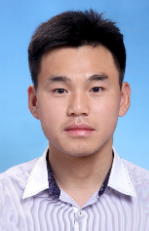 Hao Wu (吴浩)合作论文数College of Animal Science and Technology, Huazhong Agricultural University11Qian Luo合作论文数Nankai Univ, Tianjin Key Lab Prot Sci, Coll Life Sci, State Key Lab Med Chem Biol, Tianjin 300071, Peoples R China10Cheng Hongcheng合作论文数10Biao Ma合作论文数10
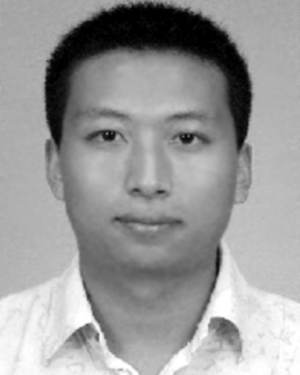 Baowei Li合作论文数10
 Li Huang (黄力)合作论文数State Key Laboratory of Microbial Resources, Institute of Microbiology, Chinese Academy of Sciences;University of Chinese Academy of Sciences10Qiangqiang Liu合作论文数Nankai Univ, Tianjin Key Lab Prot Sci, Coll Life Sci, State Key Lab Med Chem Biol, Tianjin 300071, Peoples R China9
 Yanjun Li (李岩君)合作论文数College of Pharmacy, Nankai University9
 Du Feng (冯杜)合作论文数State Key Laboratory of Respiratory Disease, Guangzhou Medical University;School of Basic Medical Sciences, Guangzhou Medical University9Kaili Ma (马开利)合作论文数9Weili Tian合作论文数8
 Huibi Xu (徐辉碧)合作论文数Huazhong University of Science and Technology8Jinhua Liu合作论文数Chinese Acad Med Sci & Peking Union Med Coll, Inst Hematol, Natl Clin Res Ctr Blood Dis, State Key Lab Expt Hematol, Tianjin, Peoples R China7Zhou Changqian合作论文数College of Life Sciences, Nankai University7Danfeng Xue合作论文数6Guangfeng Geng合作论文数6
 Ruize Gao合作论文数Nankai Univ, Tianjin Key Lab Prot Sci, Coll Life Sci, State Key Lab Med Chem Biol, Tianjin 300071, Peoples R China6
 Pingping Song合作论文数Nankai University, Nankai University6
 Youyong Lv (吕有勇)合作论文数Beijing Cancer Hospital6
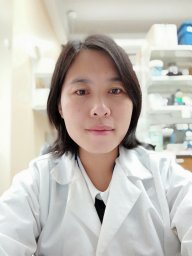 Hongxia Wang合作论文数Department of Human and Molecular Genetics, Virginia Commonwealth University School of Medicine5Yuanyuan Meng合作论文数5Jiaojiao Zhang合作论文数5Hong Lei合作论文数5Chuanmei Zhang合作论文数5Jie Li合作论文数University of Michigan5
 Jun Zhou (周军)合作论文数College of Life Sciences, Shandong Normal University;College of Life Sciences, Nankai University5
 Kaixun Huang (黄开勋)合作论文数School of Chemistry and Chemical Engineering, Huazhong University of Science and Technology5
 Ping Gao (高平)合作论文数Institute of Biomedical Innovation, Nanchang University5
 Lixia Zhao (赵利霞)合作论文数State Key Laboratory of Environmental Chemistry and Ecotoxicology, Research Center for Eco-environmental Sciences, Chinese Academy of Sciences5Biyun Ni合作论文数4Jianyu Feng (冯 健愉)合作论文数4LU Tie-Yuan (卢铁元)合作论文数4
 Jun Wang合作论文数Department of Pathology, Grossman School of Medicine, New York University4
 Nan Sui (隋南)合作论文数中国科学院心理研究所4
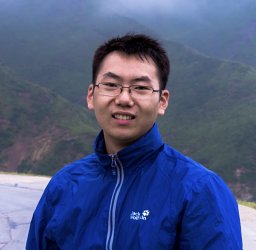 Weilin Zhang合作论文数Sichuan Normal University, Sichuan Normal University4
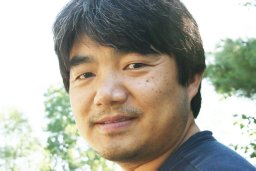 Liao Xudong合作论文数University Hospitals Case Medical Center, Case Western Reserve University4
 Chen Ziheng合作论文数1] Laboratory of Apoptosis and Mitochondrial Biology, University of Chinese Academy of Sciences4




