Q-matrix is an important component of most cognitive diagnosis models (CDMs); however, it mainly relies on subject matter experts' judgements in empirical studies, which introduces the possibility of misspecified q-entries. To address this, statistical Q-matrix validation methods have been proposed to aid experts' judgement. A few of these methods, including the multiple logistic regression-based (MLR-B) method and the Hull method, can be applied to general CDMs, but they are either time-consuming or lack accuracy under certain conditions. In this study, we combine the L1 regularization and MLR model to validate the Q-matrix. Specifically, an L1 penalty term is imposed on the log-likelihood of the MLR model to select the necessary attributes for each item. A simulation study with various factors was conducted to examine the performance of the new method against the two existing methods. The results show that the regularized MLR-B method (a) produces the highest Q-matrix recovery rate (QRR) and true positive rate (TPR) for most conditions, especially with a small sample size; (b) yields a slightly higher true negative rate (TNR) than either the MLR-B or the Hull method for most conditions; and (c) requires less computation time than the MLR-B method and similar computation time as the Hull method. A real data set is analysed for illustration purposes.
This study concerns the cognitive process of mathematical problem posing, conceptualized in three stages: understanding the task, constructing the problem, and expressing the problem. We used the eye tracker and think-aloud methods to deeply explore students’ behavior in these three stages of problem posing, especially focusing on investigating the influence of task situation format and mathematical maturity on students’ thinking. The study was conducted using a 2 × 2 mixed design: task situation format (with or without specific numerical information) × subject category (master’s students or sixth graders). Regarding the task situation format, students’ performance on tasks with numbers was found to be significantly better than that on tasks without numbers, which was reflected in the metrics of how well they understood the task and the complexity and clarity of the posed problems. In particular, students spent more fixation duration on understanding and processing the information in tasks without numbers; they had a longer fixation duration on parts involving presenting uncertain numerical information; in addition, the task situation format with or without numbers had an effect on students’ selection and processing of information related to the numbers, elements, and relationships rather than information regarding the context presented in the task. Regarding the subject category, we found that mathematical maturity did not predict the quantity of problems posed on either type of task. There was no significant main group difference found in the eye-movement metrics.
美术素养测评是学校美育质量监测中不可缺少的部分,但是过去长期不受重视,使美术素养测评在我国发展滞后,严重制约学校美育的高质量推进.鉴于目前国内缺乏美术素养测评工具的开发,本研究探析了小学生美术素养测评维度及其权重,并首次使用项目反应理论构建了小学生美术素养测评工具,该工具包含 25 道试题,分别考察了感知识别、美术表达、创意联结和审美鉴赏四个维度.预测试结果发现,本研究开发的测评工具整体难度适中且分布合理,区分度较高,信效度较好.试题难度分布范围较广,可对不同素养水平的学生进行测试,整套试题较为全面地反映学生的美术素养能力状况.研究从东、中、西部选择有代表性 5 个省 15 个区(县)的城市、乡村学校,共抽取 3695 名小学生对测评工具进行实践验证,结果发现模型和题目拟合度良好,绝大多数学生在测验题目上的作答能够较好地体现美术素养水平.
Items with the presence of differential item functioning (DIF) will compromise the validity and fairness of a test. Studies have investigated the DIF effect in the context of cognitive diagnostic assessment (CDA), and some DIF detection methods have been proposed. Most of these methods are mainly designed to perform the presence of DIF between two groups; however, empirical situations may contain more than two groups. To date, only a handful of studies have detected the DIF effect with multiple groups in the CDA context. This study uses the generalized logistic regression (GLR) method to detect DIF items by using the estimated attribute profile as matching criteria. A simulation study is conducted to examine the performance of the two GLR methods, GLR-based Wald test (GLR-Wald) and GLR-based likelihood ratio test (GLR-LRT), in detecting the DIF items, the results based on the ordinary Wald test are also reported. Results show that (1) both GLR-Wald and GLR-LRT have more reasonable performance in controlling Type I error rates than the ordinary Wald test in most conditions; (2) the GLR method also produces higher empirical rejection rates than the ordinary Wald test in most conditions; and (3) using the estimated attribute profile as the matching criteria can produce similar Type I error rates and empirical rejection rates for GLR-Wald and GLR-LRT. A real data example is also analyzed to illustrate the application of these DIF detection methods in multiple groups.
采用定性与定量结合的方法,系统地对南苏丹①小学数学新旧课标进行比较分析,结果表明:在整体框架结构方面,新课标研制要素更加多元化,操作性更强,具备更强的规范与指导功能;在课程理念与课程目标方面,新课标更契合南苏丹实际;在课程内容方面,新课标不仅在学习内容领域划分上更为科学、合理,而且在内容编排方面更好地体现了数学知识体系中各领域之间的逻辑联系,实现了"放低起点、减缓坡度、降低难度"的编写要求.此外,新课标增加的三个特色专题,使得课程知识体系的横向与纵向组织之间更加均衡,适切性更强.总之,与旧课标相比,新课标在整体框架方面呈现出新的特点,在课程理念、课程目标、课程内容等方面均有新的发展.
小学数学教材是一种国家事权,理应贯彻党的教育方针,落实劳动教育.小学数学教材也融入了一定的劳动教育内容.通过案例分析,研究小学数学教材发挥劳动教育功能的可行性、维度及过程,有助于老师们在教学实践中更好地挖掘,助力小学数学教材完成培根铸魂的育人使命.研究发现,小学数学教材因其内容的实践性、素材的广泛性、呈现的问题化等特点能对学生进行劳动教育,主要培养学生劳动的科学态度、效率观念、规范意识和创新精神等,要经历以学致思、由思而事、以事成人几个阶段.
With the gradual upgrading of intelligent education through information technology,the form of teacher education under technology empowerment has achieved significant changes.The innovation of teachers'intelligent education literacy under the background of emerging technology reform has become a key and difficult point in the application process of basic education AI.At present,the research on the intelligence education literacy of primary and secondary school teachers mostly stays at the theoretical level,lacking the research on the evaluation system based on the empirical system.Based on the analysis of relevant literature,policy evolution and practical exploration at home and abroad,combined with Delphi method,analytic hierarchy process and combination empowerment method,the research formed an evaluation index system of intelligent education literacy of primary and secondary school teachers,including four first level indicators of intelligent education awareness,intelligent education knowledge,intelligent education skills and intelligent education ethics,13 second level indicators and 44 observation points,and determined the weight coefficients of evaluation indicators at all levels.On this basis,the research conducted an empirical investigation on the intelligence education literacy of primary and secondary school teachers using evaluation tools to test the scientificity of the evaluation index system.
随着人工智能技术与教育教学的不断深度融合,教师智能教育素养已成为教师专业发展的重要内容,培养与提升教师智能教育素养工作引起政府和社会的广泛关注.为准确把握我国中小学教师智能素养发展现状,并为全面高效地提升教师智能教育素养提供决策依据,研究基于对国内外相关标准、框架及已有成果的深入比较分析,构建智能教育意识、知识、技能与伦理的中小学教师智能教育素养构成框架,并编制教师智能教育素养调查问卷开展实证研究,对中小学教师智能教育素养进行测算.研究发现,中小学教师智能教育素养在知识与技能维度得分低于意识与伦理维度;性别、教龄、职称、区域方面存在显著差异;普遍存在智能教育知识不足和智能教育技能羸弱问题.在此基础上,研究从"迷失自我"向"觉醒状态"的意识转化、"学科本位"到"跨界融合"的知识转变、"全面发力"到"适切嵌入"的技能推进、"被动受限"到"能动自觉"的伦理转变,提出强化教师智能教学主体意识的培养、坚持学科知识和智能技术紧密融合、强化智能教育应用的培训实效、恪守智能教育的伦理边界等四方面的提升路径.
(1) Background: This study determined the prevalence of adolescents that meet 24-HMGs alone and in combination, and their association with the risk of developing adolescent anxiety and depression. (2) Methods: Participants were drawn from 9420 K8 grade adolescents (age 14.53 ± 0.69 years; 54.78% boys) from the China Education Tracking Survey (CEPS) 2014–2015 tracking data. Data on depression and anxiety were collected from the results of the questionnaire in the CEPS for the adolescent mental health test. Compliance with the 24-HMG was defined as: physical activity time (PA) ≥ 60 min/day was defined as meeting the PA. Screen time (ST) ≤ 120 min/day was defined as meeting the ST. Adolescents aged 13 years achieved 9–11 h of sleep per night and adolescents aged 14–17 years achieved 8–10 h of sleep per night, defined as meeting sleep. Logistic regression models were used to examine the association between meeting and not meeting the recommendations and the risk of depression and anxiety in adolescents. (3) Results: Of the sample studied, 0.71% of adolescents met all three recommendations, 13.54% met two recommendations and 57.05% met one recommendation. Meeting sleep, meeting PA+ sleep, meeting ST + sleep, and meeting PA + ST + sleep were associated with a significantly lower risk of anxiety and depression in adolescents. Logistic regression results showed that differences in the effects of gender on the odds ratio (ORs) for depression and anxiety in adolescents were not significant. (4) Conclusions: This study determined the risk of developing depression and anxiety in adolescents who met the recommendations for 24-HMG alone and in combination. Overall, meeting more of the recommendations in the 24-HMGs was associated with lower anxiety and depression risk outcomes in adolescents. For boys, reducing the risk of depression and anxiety can be prioritised by meeting PA + ST + sleep, meeting ST + sleep and meeting sleep in the 24-HMGs. For girls, reducing the risk of depression and anxiety may be preferred by meeting PA + ST + sleep or meeting PA+ sleep and meeting sleep in 24-HMGs. However, only a small proportion of adolescents met all recommendations, highlighting the need to promote and support adherence to these behaviours.
教育信息化是西藏基础教育高质量发展的核心要素和重要动力.研究基于智能化时代教师智能教育素养影响因素的调查分析,从信息化管理机制、信息化基础设施、信息化教学资源以及教师信息化教学能力四个维度探析教育信息化促进西藏基础教育高质量发展的现状,文章以西藏七个市区的3134位中小学教师为调研对象,了解教育信息化促进西藏基础教育高质量的整体水平、发展差异.结果显示,现状规划初步形成但实践迟滞、基础设施配置均衡但保障滞后、教学资源供给基本充足但适切性缺乏、教师信息化教学意识较强但教学技能羸弱等共性表征.在差异性层面,初中阶段发展水平较弱,乡村地区仍需加大扶持力度.针对结果,提出坚持高位推动,强化西藏基础教育信息化的管理与应用机制牵引;协同多元主体,整合西藏教育信息化基础设施建设体系;消解"路径依赖",提升西藏自身适切性资源开发能力;凸显应用导向,提升教师信息化教学能力培训实效性等建议.
批判性思维倾向、问题提出与创造力有密不可分的关系,是创新教育的关键抓手.以随机选取260名五年级小学生为研究对象,基于已有研究开发"小学生平均数问题提出测试卷"和"小学生数学批判性思维倾向量表",从多方面探究了小学生批判性思维倾向与问题提出表现的现状以及两者之间的相关性.研究表明小学生批判性思维倾向较好,7个子维度表现由强到弱分别为:开放性、求知欲、成熟度、分析性、自信心、求真性、系统性;小学生具有一定的问题提出表现,超过一半的回答为合理且可解的数学问题,但是问题的扩展性和创新性还需进一步提升.两者整体呈中度正相关性,批判性思维倾向越强的小学生问题提出表现越好,而问题提出表现越好的小学生批判性思维倾向也越强,这为提高学生批判性思维和问题提出能力打开了新路径,为创新意识的培养注入了新思路.
世界范围内各国越来越重视赋权予教师,强调发展教师领导力.区县教研员作为区域基础教育教师专业成长的重要引路人,其领导力研究成为新时代教研员队伍建设的新课题.本研究基于系统论和变革型领导理论,从学术逻辑、历史逻辑、实践逻辑的视角,分析界定领导力、区县教研员领导力的内涵、构成要素等.区县教研员领导力包括基础层次的通识性领导力、拓展层次的专业性领导力.通识性领导力是指区县教研员为彰显其组织领导能力所必备的思想引领力、战略规划力、沟通合作力、资源统筹力、组织变革力、共同体建设力等;专业性领导力是指区县教研员引领、协同利益相关者,为持续实现共同的教研愿景而需要具备的教育决策咨询力、课程改革推进力、教学实践指导力、学业质量测评力、教师发展促进力、专题研究行动力.区县教研员领导力的提升可通过重塑区县教研员的领导文化,深化教研员领导力专题研修,加快区域教研共同体建设,健全赋权予教研的平台机制等方面来实现.
Promoting residents’ active participation in physical activity is not only an inherent requirement for the construction of "Healthy China",but also an inevitable choice to improve the health of Chinese residents.Exploring the potential influencing factors and mechanisms of residents’ physical activity behavior can guide the improvement of the physical activity level in China,which is one of the key points to further promote the implementation of the national fitness program smoothly.Based on the large sample data from the China Health and Nutrition Survey(CHNS),this study investigated the influence of health literacy on residents’ physical activity behavior and its mechanism.Results suggested that health literacy,health beliefs,age generation,gender,urban and rural categories,education level,spouse status,and personal income affect residents’ physical activity behavior.Health beliefs play a mediating role in the influence of health literacy on residents’ physical activity behavior.The publicity and popularization of physical health knowledge for different age’s residents should be strengthened to further improve their health beliefs and advocate residents’ active participation in physical exercise as an important element of a healthy lifestyle due to the significant role of improving residents’ health literacy and strengthening residents’ health beliefs in promoting residents’ physical exercise behavior.
高等教育国家级教学成果奖既代表着我国高等教育教学工作的最高水平,也是判断某一区域高等教育教学质量的重要评价指标.以西部地区高等教育国家级教学成果奖为研究对象,分析西部地区高校教育教学改革现状,研究发现:我国西部地区高等教育教学成果奖获奖项目数量占比较低,与东中部地区差异明显;获奖项目学科分布不均衡,工学类占比最多;获奖项目地域分布失衡,主要集中在陕、川、渝三省市;获奖项目主题分布过于集中,主要聚焦于人才培育模式和课堂教学改革两个方面.造成西部地区高等教育教学改革困境的成因主要表现为:教学竞争力弱,教育观念滞后;高水平领军人才短缺,缺乏申报教学成果奖的智力支撑;教学资源有限,优质教学资源严重不足;工具理性与价值理性的失衡导致西部高等教育服务能力不足.为此,提出西部地区高等教育教学改革的行动路向:由确定性思维迈向关系性思维,激发西部高校培育教学成果的内驱力;完善专业教师激励政策,弥补西部地区高水平人才建设短板;整合西部地区教学资源,完善多方合作机制;重构价值理性,强化学科特色.
宋乃庆教授认为新时代小学全科教师是按照高素质小学教师要求培养的,以学生学习发展为中心,具备跨学科知识、教学技能,以及将单一的不同学科知识进行统整的课程整合能力(如一专多能、一主多辅、两主多辅等),能够独立承担多门学科课程教学任务,并对学生进行综合素质培养的小学教师.宋乃庆教授认为培养小学全科教师不但可以纾解乡村教师结构性缺编难题,而且可以满足全面提升小学教师综合素质的现实需求,这既是借鉴发达国家经验、推动城乡教育优质均衡发展的有效途径,又是教育扶贫、乡村振兴的有力抓手.面向未来,宋乃庆教授认为小学全科教师培养需要从四个方面着手:第一,加强小学全科教师培养顶层设计,完善小学全科教师培养机制;第二,建立小学全科教师培养课程体系,做好小学全科教师培养教材资源建设工作;第三,建立由多元主体参与的激励机制,开展对小学全科教师的追踪评价;第四,打造多元和包容的文化空间,营造小学学科教师向全科教师转型的良好氛围等.
Background: This study determined the prevalence of older adults (aged 60–80 years) meeting the Canadian 24-HMG alone and in combination, and their association with the self-rated physical health and mental health of older adults. Methods: Participants were drawn from 4134 older adults aged 60–80 years (age, 67.37 ± 0.08 years; 46.87% male) from the China Health and Nutrition Survey (CHNS) 2015 database. Mental health and physical health scores were obtained based on self-rated mental health questionnaires and physical health of older adults. The criteria for meeting the 24-HMG were: physical activity time ≥ 150 min/week, sedentary time ≤ 480 min/day, screen time ≤ 180 min/day, sleep time 7–9 h (60–64 years) and sleep time 7–8 h (65 years and above). Logistic regression models were used to examine the association between meeting the 24-HMG guidelines number and category and older adults’ self-rated mental and physical health. Results: The proportion of older people meeting three of the 24-HMG guidelines was 1.16%, the proportion meeting two guidelines was 38.19% and the proportion meeting one guideline was 49.14%. The number of people meeting 24-HMG was closely related to the self-rated physical health and mental health of older people. The category meeting 24-HMG was closely related to the self-rated physical health and mental health of older people. Conclusions: Meeting more guidelines in the 24-HMG was strongly associated with older people’s self-rated mental health and physical health. However, only a small proportion of older people met all the recommendations, highlighting the need to promote and support adherence to these movement behaviours.
创新能力是创客教育培养学生的关键能力之一,创新能力评价在创客教育中至关重要.研究基于创客教育视角明确了初中生创新能力的内涵与操作型定义,通过定性与定量相结合的方法探析出初中生创新能力包含创新品质、创新思维、创新技能3个一级指标以及创新意识等9个二级指标,研制了《初中生创新能力测评量表》,构建了初中生创新能力测评模型Y=0.32 Y 1+0.29 Y 2+0.39 Y 3,并验证了测评模型的可行性、可操作性和有效性.运用该测评模型对重庆市12所学校3911名初中生进行应用验证,结果表明初中生创新能力达到中等以上水平,但在创新技能维度上得分较低,男生创新能力优于女生,初二、初三学生创新能力优于初一学生,城市学生创新能力优于农村学生,家庭经济状况较好的学生创新能力优于一般或不太好的学生.建议拓展创客教育学习场域,着重提升学生创新技能;加强创客项目的普及与分层,吸引更多女生参与创客项目;转变创客教育学习观念,提高新生群体学习兴趣;增强技术赋能与特色建设,促进城乡教育公平与均衡发展.
郭朝红:中国式教育评价体系的几点思考 评价是教育管理的重要手段之一.中国式教育评价体系的建立与完善,应根植于中华民族传统的管理智慧,即道、法、术、器、势.道以明向,法以立本,术以立策,器以成事,势以立人.有道无法,有术无器,或是有术无道,有器无法,都不能成为体系.
学生学习发展很大程度上取决并受限于学生所获得的学习机会,学习机会大小是影响教育质量的重要因素.问题提出教学是培养学生思维能力、创新能力、学习能力的重要途径.学习机会是问题提出教学的重要基础与独特价值.学习机会视角下,问题提出教学意蕴是指在学习机会公平化的前提下,促进每位学生学习机会的最大化与多元化,以保障个体未来社会生活中学习机会的再创造与学习发展.为促进问题提出教学的有效落实,教师在问题提出任务设计中应结合学生学习目标创设适切的任务,在教学过程中注重学生课堂参与和社会互动,尽可能创造更多高质量的学习机会;在机会分配过程中采用"风险公平"原则,以扩大学生的整体性"收益";注重多元课堂教学评价方式,努力让每个学生都有出彩的机会.
乡村教师培训是发展乡村教育、助力乡村振兴战略的重要举措,对促进我国城乡统筹、教育公平和高质量发展极具现实意义与实践价值,构建乡村教师培训长效动力机制成为当前乡村教师专业发展的迫切要求.然而,研究发现,乡村教师培训仍面临"动力不足""效率低""效果差"等现实阻隔.为此,研究基于嵌入性理论视角,从政治嵌入、文化嵌入、关系嵌入、认知嵌入等方面廓清乡村教师培训的动力逻辑,审视当前乡村教师培训动力机制失衡的问题,主要表现在:乡村教师制度脱嵌与规制缺位,文化场域断裂与异化,开放性和互动不足,认知错位与主体迷失,等等.未来应以发挥动力机制的积极作用为目标,从创新乡村教师培训制度、强化激励约束机制,立足乡村教师生命价值、重塑乡土文化场域,创建乡村教师培训网络、建立教师专业发展共同体,重塑教师角色认知、发挥教师的专业自觉性等方面为乡村教师培训动力机制建构提供参考.
 ZhiYong Zheng (郑智勇)合作论文数17
 Tao Xin (辛涛)合作论文数Collaborative Innovation Center of Assessment for Basic Education Quality, Institute of Advanced Studies in Humanities and Social Sciences, Beijing Normal University;Anhui Normal University14
 Lin Luo (罗琳)合作论文数Xuhui Postdoctoral Workstn, East China Normal Univ13
 Yongfeng Fan (范涌峰)合作论文数Faculty of Education, Southwest University12
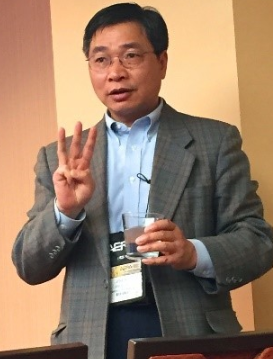 Jinfa Cai (蔡金法)合作论文数美国特拉华大学数学系12ShiYan Luo (罗士琰)合作论文数11
 Jindong Chang (常金栋)合作论文数School of Physical Education, Southwest University11Lin Xiao (肖林)合作论文数10
 Ting Chen (陈婷)合作论文数Faculty of Education, Southwest University10
 Changgen Pei (裴昌根)合作论文数College of Teacher Education, Southwest University10Kong-xiu KUANG (邝孔秀)合作论文数9
 Xiaojian Sun (孙小坚)合作论文数College of Teacher Education, Southwest University9
 Dequan Zhu (朱德全)合作论文数The Faculty of Education, Southwest University9
 Xin Yang (杨欣)合作论文数Faculty of Education, Southwest University8Guanghui Shen合作论文数7
 Lei Guo (郭磊)合作论文数Faculty of Psychology, Southwest University7
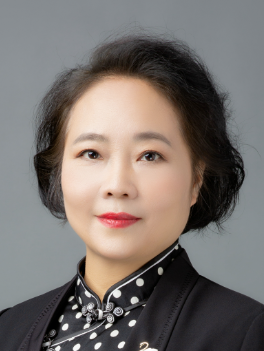 Huirong Zhang (张辉蓉)合作论文数The Faculty of Education, Southwest University7Gao Xin (高鑫)合作论文数6YuHui Yang (杨豫晖)合作论文数6Aihui Peng (彭爱辉)合作论文数The Faculty of Education, Southwest University6Ling Zhang (张玲)合作论文数5MingZhen Li (李明振)合作论文数5GuangWen Cheng (程广文)合作论文数5
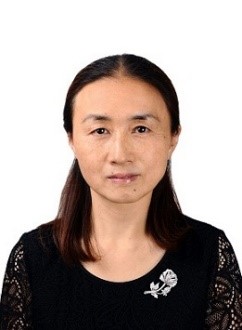 Tao Yang (杨涛)合作论文数China Basic Education Quality Monitoring Collaborative Innovation Center, Beijing Normal University5
 Zikun Gong (巩子坤)合作论文数Jing Hengyi School of Education Hangzhou Normal University5wanchun luo (罗万春)合作论文数4zhongmu chen (陈重穆)合作论文数4YunMing Song (宋运明)合作论文数4TianGui Fu (付天贵)合作论文数4BaoHe Song (宋宝和)合作论文数4YouRu Xie (谢幼如)合作论文数4YuanYan Hu (胡源艳)合作论文数4RanRan Xu (徐冉冉)合作论文数4QingYou Cai (蔡庆有)合作论文数4
 Xiaoheng Liao (廖晓衡)合作论文数School of Marxism Studies, Southwest University4
 Xinrong Yang (楊新榮)合作论文数Faculty of Education, University of Macau4
 Xinlian Li (李欣莲)合作论文数College of Teacher Education, Southwest University4
 Xuefu Xu (徐学福)合作论文数The Faculty of Education, Southwest University4
 Liming Yong合作论文数3Huaxia Li (李化侠)合作论文数3linhan zhouyuan (周圆林翰)合作论文数3Yali Yi合作论文数3Yali ZHU (朱亚丽)合作论文数3Xiaodong Zou (邹晓东)合作论文数3Sha-sha ZHANG (张莎莎)合作论文数3Nanshan SHEN (沈南山)合作论文数3Yu Jia (贾瑜)合作论文数3YanPing Huang (黄燕苹)合作论文数3DianZhou Zhang (张奠宙)合作论文数3




