Using data from the Chinese investor interactive platforms, this study finds that interactions between retail investors and firms regarding environmental issues lead to higher corporate environmental investments, primarily because these interactions reduce myopic management behaviour, thereby increasing firms' environmental investments. Further analysis reveals that this effect is particularly pronounced in private firms, those with lower financing constraints, and firms located in cities with heightened environmental awareness. Our findings shed light on the economic consequences of external stakeholders' interventions in environmental issues.
This letter examines the impact of political uncertainty on stock prices by utilizing a quasi-experiment, i.e. Taiwan accidentally fires a missile towards mainland China. As this missile accident was entirely unforeseen by investors in the market, it provided a complete exogenous shock causing political uncertainty. We find that the political uncertainty caused by the events has significant negative effects on stock prices, especially for firms that have economic and geographical connections with Taiwan or are adjacent to Taiwan.
SynopsisThe research problemThis study analyzes the relationship between product market competition (PMC) and stock price crash risk in China, especially for firms with weak corporate governance and a lower-quality information environment.MotivationEmerging capital markets like China have less-developed financial systems and institutions compared to developed capital markets like Europe and the United States, making them more susceptible to stock price crash risk. The impact of product market competition (PMC) on corporate decision-making has attracted considerable attention from scholars, especially given the increasingly intense and complex strategic competition in global markets and uncertainty in the world today. However, the effect of PMC on a firm's stock price crash risk has not been thoroughly explored. Therefore, this study investigated how PMC affects managers' tendency to hoard bad news and how this behavior contributes to the risk of stock price crashes.The test hypothesesWe tested two competing hypotheses: PMC is negatively correlated with crash risk, and PMC is positively correlated with crash risk.Target populationThis study should be of interest to stakeholders, including firm managers, practitioners, regulatory authorities, policymakers, and investors.Adopted methodologyThis study employed ordinary least squares (OLS), difference-in-differences analysis (DID), and path analysis.AnalysisUsing a sample of Chinese A-share listed manufacturing firms from 2000 to 2021, this study found that competitive pressure from the product market encouraged managers to hide bad news, thereby increasing future stock price crash risk. Moreover, we performed additional tests to examine how PMC affected stock price crash risk.FindingsWe found robust evidence that PMC significantly increases stock price crash risk. Further tests showed that the effect of PMC on crash risk is more pronounced for firms with weak corporate governance and a lower-quality information environment. We also provide evidence that firms in highly competitive industries tend to disclose fewer negative words in the management discussion and analysis section of the annual report and fewer risk factors in the internal control report. Moreover, we show that operational risk is the underlying driver through which PMC affects crash risk.
This paper studies whether the market can recognize the value of corporate governance mechanisms (ownership structure, board structure, and managerial incentives) of Chinese listed companies. We find that when companies are faced with “black swan” events, such as COVID-19, non-state-owned enterprise are found to be more valuable, that is, the stock price of non-state-owned enterprises are more immune to the negative shocks of COVID-19. For board structure, the arrangement of the duality of chairman and CEO is found to be more valuable and can effectively alleviate the negative shocks of the epidemic on the stock price. For managerial incentives mechanisms, it shows that management shareholding, management compensation, and executive stock options are all effective mechanisms and can better withstand the negative shocks of the COVID-19 epidemic on the stock price of companies. This paper sheds light on the value of corporate governance mechanisms in the Chinese capital market from the perspective of investors, which enriches literature in the field of corporate governance.
This study examines whether common ownership affects stock price crash risk (SPCR). Using 3,159 companies listed in China between 2006 and 2019, this paper finds that companies with common ownership are associated with lower SPCR. This finding can be explained by the monitoring effect of common ownership which holds that common ownership can curb the hoarding of bad news by managers and thereby reduces SPCR. We further show that the effect is more evident when common owners hold a relatively larger number of same-industry firms, when common owners hold more shares, and for state-owned-enterprises. Moreover, this paper also demonstrates how common ownership facilitates effective monitoring and finds that common ownership reduces earnings management and increases accounting conservatism in firms. Our evidence suggests that common ownership serves as an effective form of monitoring by constraining managers' opportunistic behaviour, thereby reducing SPCR.
监管方式存在滞后性等问题导致证监会对上市公司和中介机构的监管效果一直备受质疑.证监会从2016年开始执行的随机现场检查是主动的预防性监管,其监管效果如何是本文研究的重点.本文根据2016-2019年各地证监局披露的上市公司抽查名单,使用双重差分模型进行实证检验,结果发现,在随机现场检查引发的强监管威慑下,审计师对被随机检查的客户会更加谨慎,以最大程度避免审计失败带来的不利经济后果.本文还发现不同监管工作的联动作用会使审计师对被随机现场检查的公司更加谨慎.在进一步研究中发现,当公司治理水平更低、审计师声誉更高以及证监局采取放回抽样时,审计师会更加谨慎.研究结论为监管机构深入创新监管方式提供了经验证据.
This paper studies whether government's participation in product market, as a customer, affects supplier firms' stock price crash risk. Using a sample of U.S. firms from 1980 to 2015, we find robust evidence that the presence of major government customers is associated with a lower level of stock price crash risk for supplier firms. Further, we show that government customers can lower suppliers' crash risk by imposing monitoring activities on suppliers and/or reducing suppliers' operational risk, leading to a reduction in supplier managers' bad news hoarding behavior. Overall, our results indicate that government spending, as an important public policy, can significantly affect shareholders' value by mitigating stock price crash risk. (c) 2021 Elsevier Inc. All rights reserved.
本文以我国放松卖空管制为视角,探究其对内部人减持的影响.研究表明,卖空机制能够抑制企业内部人减持行为.机制分析发现,卖空对内部人减持的抑制作用是通过缓解股权高溢价实现的.进一步研究表明,卖空能够抑制大股东、董事以及管理层减持,但对监事减持无影响;卖空能够降低内部人减持的获利程度,并且在内部人减持动机更大时,对内部人减持的抑制作用更强;卖空通过约束内部人减持提升了股票定价效率,还有助于降低内部人增持行为.本文的研究结论丰富了卖空和内部人减持领域的文献,并对政府部门完善制度设计具有启示意义.
ABSTRACTUsing a sample of Chinese A-share listed companies from 2006 to 2016, this paper examines the impact of insider selling on audit fees. The results show that auditors of clients with higher insider selling tend to charge higher fees. Mechanism tests show that the presence of insider selling is associated with a higher level of audit risk, which in turn increases audit fees. Further tests show that, the positive relation between insider selling and audit fees is stronger for non-SOEs and BIG4 audited firms; auditors only charge higher audit fees for share selling of large shareholders and directors. These results indicate that auditors can identify the risk of insider selling and charge higher audit fees, and provide new insight into the economic consequence of insider selling and a new determinant of audit fees.
This paper examines the impact of multiple blockholders on earnings management when the main conflict of interest is between controlling shareholder and other shareholders. Using a sample of Chinese listed firms from 2000 to 2017 and controlling for potential sample selection and endogeneity, we find that firms with multiple blockholders tend to have higher earnings management than firms with a single controlling shareholder. The positive impact of multiple blockholders on earnings management is more pronounced when those blockholders are the same type – state or private. Earnings management is also enhanced with more large shareholders and higher relative ownership of other large shareholders to the controlling shareholder. The results are consistent with the cost-sharing hypothesis, where the other large shareholders shoulder the costs of earnings management with the controlling shareholder proportionally, but not the private benefits of control. Further tests show that the positive relation between multiple large shareholders and earnings management is less pronounced in firms with stronger internal or external governance. Overall, our paper demonstrates a potential dark side of multiple blockholders from the angle of financial reporting quality.
坚持创新发展战略,提高企业创新能力已成为我国的工作重点.针对重点企业发放政府补助是实现该战略目标的一项重要措施.然而针对政府补助是否有助于提高企业自主创新能力,国内外学者还存在争议.基于从,本文在新的政府补助准则推出之际,分析比较了新旧会计准则差异,并在此基础上运用信息不对称理论、委托代理理论、资源优化配置理论分析了新会计准则对企业创新的影响.
从所有权在创始人夫妻间配置分类来看,我国家族企业同时存在创始人独立持股和夫妻共同持股两种方式.由于家族企业创始人夫妻处于家族成员亲缘关系网络的核心位置,因此创始人夫妻所有权配置不可避免地会影响整个家族层面的所有权和管理权的配置,进而影响控股家族企业的绩效.基于此,本文从夫妻所有权配置出发,探讨分析了其对夫妻双方各自具有血缘关系家族成员的所有权和管理权分配以及对企业产生的影响.本研究丰富和发展了家族企业所有权和管理权分配的相关研究;同时,也对家族企业更好地设计股权结构具有较为重要的启示意义.
本文以1999-2016年A股上市公司为研究对象,探讨了CEO不担任董事这一董事会结构对企业绩效的影响.结果 表明,当CEO不担任董事时,企业绩效较差,这一结论在一系列稳健性检验和内生性处理后,依然保持不变.进一步研究发现,在企业经营风险较大、CEO更需要与董事会进行沟通交流时,以及在CEO来自外部聘用、与董事会进行信息交流更加依赖正式制度的情况下,上述效应更强.这说明,CEO不担任董事的董事会结构降低了CEO与董事会之间的信息沟通,进而降低了经营绩效.最后,本文研究发现,非董事CEO在薪酬—业绩敏感性以及管理费用率上与董事CEO没有显著差异,排除了CEO不担任董事的董事会结构降低了其董事会监督功能从而导致较差业绩的解释.这一系列结果表明,当CEO不担任董事时,会弱化CEO与董事会的信息沟通,降低企业决策以及执行的质量,最终降低企业的经营绩效.本文的结论不仅丰富了董事会治理有效性、CEO权力等相关领域的研究,同时,也对董事会治理实践具有一定的参考价值.
<span id="ChDivSummary" name="ChDivSummary" class="abstract-text">在集中的股权结构下,实际控制人掌握着企业资源支配权。已有文献探讨了公司董事和经理人性别的公司治理效应,但是尚未从实际控制人的视角进行研究。本文基于新兴资本市场的公司治理特征,以2003~2015年中国上市民营企业为样本,实证检验了实际控制人性别对其利益侵占行为的影响。结果表明,相比男性实际控制人,女性实际控制人更少地侵占中小股东利益。在一系列的稳健性检验后,本文的研究结论仍然成立。进一步的研究表明,除了女性实际控制人外,其他女性董事和女性CEO并不能影响实际控制人的利益侵占行为。最后,研究还发现,在内外部治理较弱的公司中,实际控制人性别对其利益侵占行为的影响更加明显。本文不仅从一个新的视角推进了高管性别如何影响企业公司治理的研究,也对政府职能部门制定相关政策提供了有益的政策启发。</span>
This study investigates the informational effect of stock liquidity on dividend payouts. Using a sample of Chinese listed firms during 2000–2014, we find a positive relation between stock liquidity and dividend payouts. This result is robust to the use of alternative measures of liquidity, and holds after we control for endogeneity concerns. In accord with our hypothesis that stock liquidity provides information and increases insiders' incentive to pay out dividends, we find that the positive relation between stock liquidity and dividend payouts is more pronounced when the information environment is opaque, and when conflict between controlling shareholders and minority investors is severe. Further, market reactions to regulatory stipulations requiring dividend payouts are more favorable for firms with low stock liquidity, suggesting that legal provisions and regulations are substitutes for stock liquidity. Finally, we rule out several alternative explanations concerning the governance of non-controlling blockholders and the alleviation of manager-shareholder agency conflict.
Can firms overcome credit constraints with a corporate culture of high integrity? We empirically address this question by studying their investment–cash flow sensitivities. We identify firms with a culture of integrity through textual analysis of public documents in a sample of Chinese listed firms and also through corporate culture statements. Our results show that firms with an integrity-focused culture have lower investment–cash flow sensitivity, even after we address endogeneity concerns. However, we also find that for the culture to reduce the investment–cash flow sensitivity, external stakeholders must be able to verify this culture through a low information asymmetry environment. Overall, our findings show that a corporate culture of high integrity can mitigate a firm’s external transaction costs.
<span id="ChDivSummary" name="ChDivSummary" class="abstract-text">董秘作为联结上市公司与外界利益相关者的桥梁,其最为重要的职能是负责上市公司的信息披露以及投资者关系管理。本文实证检验了董秘的财务经历是否可以降低企业内外部信息不对称,提升盈余的信息含量。我们发现,当董秘拥有财务经历时,企业的盈余信息含量更高;在控制内生性影响之后,我们的结论仍然成立;同时,当财务背景的董秘专业素质较高以及学历更高时,其发挥的作用更大。在此基础上,本文检验了其中的作用机制,实证结果表明,财务背景的董秘吸引了较多的分析师跟踪,增加了分析师预测的准确性,降低了分析师预测分歧度,以及提升了信息披露质量。最后,本文还发现财务经历的董秘有助于降低企业的融资成本,从而为董秘财务经历影响盈余信息含量这一研究结论提供进一步的证据支持。本文的研究发现丰富了高层梯队理论和资本市场效率理论。</span>
信息不对称是导致企业融资约束的重要原因之一.根据高层梯队理论,董秘作为专职从事信息披露工作的公司高管,其背景特征对降低企业内外部信息不对称,进而缓解融资约束理应产生重要影响.本文的实证结果表明:当董秘拥有财务经历时,其所在企业的投资现金流敏感性更低,即融资约束水平更低;以KZ指数和SA指数衡量融资约束以及控制内生性等检验所得结果与此一致.同时,我们还发现,董秘从事财务工作时间越长、专业水平越高,其缓解融资约束的作用越大.进一步检验结果表明,财务背景的董秘吸引了较多的分析师跟踪和机构投资者投资;并且,在信息不对称程度更严重的情景下,董秘财务经历对融资约束的缓解作用更大,从而表明该作用是通过降低信息不对称得以实现的.
<span id="ChDivSummary" name="ChDivSummary" class="abstract-text">已有文献认为,大股东的退出威胁可以缓解股东经理人利益冲突,降低经理人的代理成本。本文基于新兴资本市场的公司治理特征,实证检验了控股股东之外的其他大股东的退出威胁是否可以抑制控股股东的私利行为。以股权分置改革事件作为退出威胁的替代变量,本文的实证检验结果表明,大股东退出威胁显著降低了控股股东的私利行为,提升了企业业绩。同时,我们的研究还发现,当其他大股东退出对控股股东财富的影响更大(控股股东持股比例更高)、退出更可信(持股比例相对于控股股东更少)以及处于对控股股东外部约束更差的环境下(法律环境较差地区和非四大审计的公司),其退出威胁更为有效。进一步检验的结果表明,大股东的退出威胁还加强了经理人的薪酬—业绩敏感性,即缓解了股东经理人的利益冲突。本文从一个新的视角为大股东的退出威胁是一种有效的公司治理机制提供了来自于新兴资本市场的经验证据。</span>
 Beibei Shi (石贝贝)合作论文数School of International Trade and Economics, University of International Business and Economics11
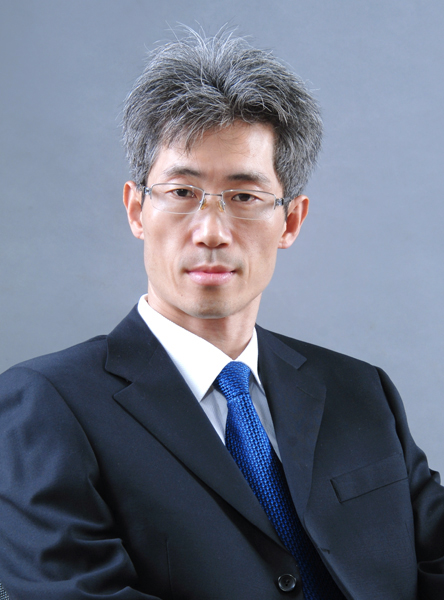 Fuxiu Jiang (姜付秀)合作论文数Business School, Renmin University of China6
 Xinni Cai合作论文数1Xiaotong Yang合作论文数1Liang Xu合作论文数1Yitong Liu合作论文数1YunTong Wang (王运通)合作论文数1HuaLing Yang (杨华领)合作论文数1HongXia Liu (刘红霞)合作论文数1
 Kenneth A. Kim合作论文数School of Economics and Management, Tongji University1
 Bing Zhu (朱冰)合作论文数School Of Accountancy, Central University Of Finance And Economics1
 Xue Wang (王雪)合作论文数China School of Banking and Finance, University of International Business and Economics1
 Ping Jiang (江萍 )合作论文数Academy of China Open Economy Studies, University of International Business and Economics;School of International Trade and Economics, University of International Business and Economics1
 John R. Nofsinger合作论文数College of Business and Economics, Washington State University1




