Objective To explore the enhanced effect of miR-199a-3p on radiotherapy sensitivity of glioma U251 by the targeting p21 protein activated kinase 4 (PAK4).Methods Human malignant glioma U251 was chosen for study.Following culture and radiation of the harvested cells,RT-PCR was used to detect the expression level of miR-199a-3p in the glioma tissues and cells of U251,CCK-8,cloning formation assay and flow cytometry were used to detect the effects of miR-199a-3p/PAK4 on the proliferation,cloning formation and apoptosis of glioma U251 cells when treated with irradiation.Results As compared with the U251 cells without radiation,the expression level of miR-199a-3p in the irradiated glioma tissues was lower(P < 0.05).The overexpression of miR-199a-3p could reduce the growth and clonal formation of U251 cells,and promoted cell apoptosis,when treated with 4 Gy-irradiation.Statistical significance could be noted,when comparisons were made between them(P < 0.05 or P < 0.01) MiR-199a-3p could inhibit the expression of PAK4 by direct binding to the 3'UTR of PAK4.Moreover,the overexpression of PAK4 could significantly weaken the roles of miR-199a-3p in the inhibition of U251 cell activity.Conclusion This study has demonstrated that miR-199a-3p could enhance the radiosensitivity of glioma by inhibiting the expression of PAK4.
The combination of Endostatin (ES) and Herpes Simplex Virus thymidine kinase (HSV-TK) gene therapy is known to have antitumor activity in bladder cancer. The potential effect of ES and TK therapy in glioma has not yet been investigated. In this study, pTK-internal ribosome entry site (IRES), pIRES-ES, and pTK-IRES-ES plasmids were constructed; pIRES empty vector served as the negative control. The recombinant constructs were transfected into human umbilical vein endothelial cells (HUVECs) ECV304 and C6 rat glioma cell line. Ganciclovir (GCV) was used to induce cell death in transfected C6 cells. We found that ECV304 cells expressing either ES or TK-ES showed reduced proliferation, decreased migration capacity, and increased apoptosis, as compared to untransfected cells or controls. pTK-IRES-ES/GCV or pTK-IRES/GCV significantly suppressed cell proliferation and induced cell apoptosis in C6 cells, as compared to the control. In addition, the administration of pIRES-ES, pTK-IRES/GCV, or pTK-IRES-ES/GCV therapy improved animal activity and behavior; was associated with prolonged animal survival, and a lower microvessel density (MVD) value in tumor tissues of C6 glioma rats. In comparison to others, dual gene therapy in form of pTK-IRES-ES/GCV had a significant antitumor activity against C6 glioma. These findings indicate combined TK and ES gene therapy was associated with a superior antitumor efficacy as compared to single gene therapy in C6 glioma.
Overexpression of leukemia/lymphoma-related factor (LRF), which is an erythroid myeloid ontogenic factor protein, occurs in different cancers, including glioma. LRF is also reported to have an oncogenic activity in various human cancers. This study investigated the effect of LRF knockdown on the regulation of glioma growth. LRF short hairpin RNA (shRNA) suppressed the expression of LRF protein in a glioma cell line (GL261-EGFP) compared to the negative control vector-transfected glioma cells. LRF knockdown also reduced glioma cell viability and enhanced cisplatin-induced apoptosis in glioma cells. AKT activation and the expression of various cell cycle-related genes were inhibited following LRF knockdown. The effect on growth and migration is related to dose response results of AKT and nuclear factor-kappa B (NF-κB) inhibitors. These data demonstrate that LRF may play a role in glioma progression, suggesting that inhibition of LRF expression using LRF shRNA should be further evaluated as a novel target for the control of glioma.
颅内动脉瘤(intracranial aneurysm,IAN)是颅内动脉先天发育异常或后天损伤等因素造成局部血管壁受损,在血流的冲击及各种因素的作用下形成的脑血管瘤样突起。研究表明,亚洲人群中颅内动脉瘤患病率约为2.5%-3%。据统计颅内动脉瘤破裂率为3%-6%,约2/3的蛛网膜下腔出血是由IAN破裂造成的[1-3]。IAN破裂出血死亡率和致残率极高,其中,10%-15%尚未来及就医直接死亡。
目的 探讨右美托咪定对颅脑外伤躁动患者镇静的有效性及安全性.方法 选取28例颅脑外伤躁动患者,给予右美托咪定首剂1μg/kg的负荷量于10 min静推完毕,之后给予0.2~0.7 μg· kg-1·h-1的维持量,镇静目标为Ramsay评分2~4分,于用药前及用药后1、6、12、24h检血气分析,记录动脉血氧分压、血氧饱和度及呼吸频率,并对比上述指标的改变.结果 所有患者接受镇静治疗30 min之内Ramsay评分均在2~4分,且所有患者均能被定时唤醒.使用右美托咪定后6、12、24h患者P02、SpO2较用药前明显升高(均P<0.05).用药后6、12、24h患者呼吸频率较用药前明显下降(均P<0.05).结论 右美托咪定镇静效果满意,可使患者随时保持可唤醒状态,且无呼吸抑制,安全性高,适用于神经外科颅脑外伤躁动患者的短期镇静.
脑血管病是导致人类死亡的三大病因之一,而其中缺血性脑血管病约占75%~80%,其发病机制涉及多方面复杂因素;蛋白质组学作为新兴学科从整体角度,系统地研究动态变化的蛋白质组成分构成及其活动规律,为探索该病机制开辟了新途径.本文旨在综述蛋白质组学概念和主要研究技术,以及脑缺血个体体液、脑缺血个体脑组织、体外模拟缺血的细胞模型三方面的脑缺血性疾病蛋白质组学研究现状,为进一步开展该病蛋白质水平研究奠定基础.
Objective To explore diagnosis feature of the lateral intraventricular meningiomas and microsurgical approaches for removing it.Method There were 24 patients with 24 tumors,of which,13 tumors on the left trigon,7 tumors on the right trigon,1 tumor on the right body,and 1 tumor strideon both lateral trigons and 2 tumors on the left temporal horn.All the 24 cases were diagnosed by MRI and/or CT and removed by microsurgical operation,of which,2 cases by neuroendoscopy-assisted microsurgical operation,15 cases by paramedian parieto-occipital approach,7 cases by middle temporal gyrus approach and 2 cases by transcallosal approach.Results All the 24 cases were diagnosed in coincidence between imaging and pathology and removed totally,of which,5 cases were removed wholly,19 cases were removed by piecemeal.18 cases were followed-up,10 cases were normal,3 cases were relapsed and removed totally again,2 cases and had 3 cases epilepsy,and had homonymous hemianopia.Conclusion CT and MRI are the most reliable diagnosis measure and microsurgical operation is the best treatment method for lateral intraventricular meningiomas.
我院采用YL-1型颅内血肿粉碎穿刺针[1]治疗多部位老年高血压中等量脑出血取得了良好的疗效.本文对出血量、出血部位以及手术时机的选择对治疗效果的影响做进一步探讨.
Objective To observe the effect of ischemic preconditioning on the expression of ICAM-1 induced by cerebral ischemia/reperfusion and to discuss the neuroprotective mechanism of ischemic preconditioning.Methods Using the model of 4-vessel occlusion and the technology of HE staining and immunohistochemical staining,we observed ICAM-1 expression and PMNLs infiltration.Results The expression of ICAM-1 and the quantity of PMNLs infiltration increased significantly after cerebral ischemia/reperfusion.Cerebral ischemic preconditioning inhibited the increase of neutrophils infiltration and ICAM-1 expression that induced by cerebral ischemia/reperfusion.Conclusions The results demonstrate that downregulate of ICAM-1 expression and the reduction of PMNLs infiltration are concerned with ischemic preconditioning neuroprotection.
 Shouyue Liu (刘守跃)合作论文数The Second Norman Bethune Hospital of Jilin University3
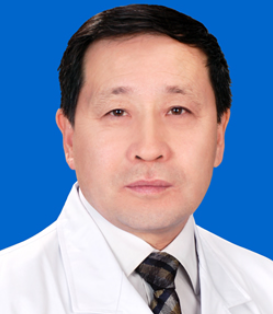 Yinan Luo (罗毅男)合作论文数The First Bethune Hospital, Jilin University3
 FanKai Meng (孟繁凯)合作论文数2
 Wenming Guan (关文明)合作论文数The Second Norman Bethune Hospital of Jilin University2Fengbo Su合作论文数1zhenxing zhang (张振兴)合作论文数1yue bao (鲍跃)合作论文数1Tao Xie合作论文数1Xubin SHANG (尚许彬)合作论文数1XingGuo Mu (穆兴国)合作论文数1HongLan Huang (黄红兰)合作论文数1HongQuan Yu (于洪泉)合作论文数1ShuJun Wang (王树军)合作论文数1
 Yin Zhao (赵胤)合作论文数The Second Norman Bethune Hospital of Jilin University1
 Long Yan (阎龙)合作论文数The Second Norman Bethune Hospital, Jilin University1
 Rui Huang (黄锐)合作论文数The Second Norman Bethune Hospital of Jilin University1
 Zhanchuan Liu (刘占川)合作论文数The Second Norman Bethune Hospital of Jilin University1
 Hailiang Wang (王海亮)合作论文数The Second Norman Bethune Hospital of Jilin University1
 Zhaohui Ni (倪兆慧)合作论文数Department of Nephrology, Renji Hospital, School of Medicine, Shanghai Jiao Tong University1Yan Chen (陈艳)合作论文数Department of Hematology, Peking University First Hospital1
 Jun Liu (刘军)合作论文数The Second Norman Bethune Hospital of Jilin University1
 Pengfei Ge (葛鹏飞)合作论文数Bethune First Hospital, Jilin University1Linsen Hu (胡林森)合作论文数1




