Pedestrians are regarded as homogeneous ones without their own individual characteristics in the current study on the capacity of subway stairways. But actually, pedestrians are different individuals with heterogeneous characteristics. Due to the lack of the research on this issue, this paper classifies persons into pedestrians in pairs, fast ones and common ones by introducing the concept of heterogeneous pedestrian and analyzing the observed data of the subway station stairway. Then the improved floor field model, a capacity simulation model of stairway is presented. We validate the precisions of the proposed model under the conditions of homogeneous and heterogeneous pedestrians. At last, three situations are simulated and analyzed based on different space occupied, different speed, different space occupied and speed respectively. The results show that the capacity of stairway is not a constant value and it changes with different component proportions of heterogeneous pedestrians. The heterogeneity of pedestrian has an important influence on the capacity of the stairway.
The major objective of this paper is to study the effects of heterogeneity on pedestrian dynamics in walkway of subway station. We analyze the observed data of the selected facility and find that walking speed and occupied space were varied in the population. In reality, pedestrians are heterogeneous individuals with different attributes. However, the research on how the heterogeneity affects the pedestrian dynamics in facilities of subway stations is insufficient. The improved floor field model is therefore presented to explore the effects of heterogeneity. Pedestrians are classified into pedestrians walking in pairs, fast pedestrians, and ordinary pedestrians. For convenience, they are denoted as P -pedestrians, F -pedestrians, and O -pedestrians, respectively. The proposed model is validated under homogeneous and heterogeneous conditions. Three pedestrian compositions are simulated to analyze the effects of heterogeneity on pedestrian dynamics. The results show that P -pedestrians have negative effect and F -pedestrians have positive effect. All of the results in this paper indicate that the capacity of walkway is not a constant value. It changes with different component proportions of heterogeneous pedestrians. The heterogeneity of pedestrian has an important influence on the pedestrian dynamics in the walkway of the subway station.
In this paper, the execution process of lane changing is considered in two-lane cellular automata models for traffic flow with homogeneous and heterogeneous composition. A set of assumptions have been proposed to normalize the execution of lane-changing. Both the execution process and slow-to-start rule are taken into account, and comparisons are made among basic STCA model, STCA-sts (combined with the slow-to-start rule) model and the new model (STCA-E). The simulation results show (i) STCA-E model is consistent with driver's lane changing motivation that the driver is always keeping the speed not lower than the current value; (ii) a two-dimension plane is found in the lane changing frequency-density figure, which may provide proof to three-phase traffic theory; (iii) along with increasing of slow trucks, more vehicles will make lane changing for a better traffic condition, and the 2D plane will become narrower.
选取北京城市轨道交通枢纽西直门站单双向客流条件下的步行通道进行调研,采集乘客步行速度,统计得到85%行人步速分布区间.基于AnyLogic软件构建客流交通模型,利用调研数据标定仿真参数.在仿真过程中通过改变通道宽度及客流量,输出通道内的区域密度数据,拟合宽度一密度函数曲线并建立函数模型.最终给出不同客流量条件下的通道宽度建议取值.
When peak-hour demand temporally exceeds the maximum loading capacity of a train during Urban Rail Transit ( URT) operation, passengers may not be able to board the next arrival train, and they may be forced to wait in queues for the following trains. As a key element of evaluating transportation service-level and optimizing train schedules, this paper establishes a model to calculate accurately passengers’ waiting times, based on queuing theory and train timetable. In view of passengers’ real-time arriving rates, OD ( Original-Destination ) distribution, headway and train’s capacity, a cumulative input-output algorithm is developed to solve empirical cases, and the tendency of multi-parameters is analyzed. In order to optimize timetable under oversaturated conditions theoretically, this paper proposes a cumulative approach for waiting time calculation, which can be applied for URT network or bidirectional oversaturated and normal passengers. The effectiveness of the proposed model and algorithm are evaluated with a real-world data set from a bi-directional URT network.
In order to study the capacity of stairway in urban rail transit hubs, pedestrian flow and density were collected by the survey of upward stairway and downward stairway in Beijing Xizhimen rail transit hub. With the survey data, this paper fits flow-density curves and establishes corresponding function models. Based on the traffic flow theory, it calculates the actual capacity of upward stairway and downward stairway, and makes a contrast with the Code for Metro Design. Furthermore, the suggested design capacity of stairway is given based on the level of service. The results will provide references for the design of stairway in urban rail transit hubs.
Considering the influencing factors on the capacity of stairways,this paper collects and processes the stairways' data in Xizhimen Station of Beijing metro to analyze the traffic characteristics of pedestrians on up and down stairways. The computation model of the actual capacity of stairways is built based on the traffic characteristics of pedestrians. To verify the validity of the model,the simulation is done with VISSIM. The actual capacity of stairways is almost identical with results get from the simulation,and they are both smaller than the maximum capacity of stairways stipulated in Code for Design of Metro.
In this paper, the spatiotemporal process of lane changing is considered in the cellular automaton models for traffic flow. The lane-changing time and the space required depend on the instantaneous velocity of the vehicle and following vehicle in the destination lane. The simulation is carried out in a two-lane homogeneous system. The speed change of the lane changing vehicle accords with the fundamental diagram and a 2D region is found in the lane changing frequency-velocity plane.
北京地铁西直门站是大型换乘站,采用单向换乘模式.根据西直门站的周边条件,从客流量、站内设施布局和标志设置入手,通过分析4号线建成后西直门站换乘流线及换乘客流的现状,指出了西直门站乘客换乘方式存在的主要问题.提出了优化换乘流线(方案1)及工程改造(方案2)两个优化方案,并对方案2的换乘客流进行了仿真及评价.方案2解决了西直门站3线换乘问题,提高了西直门站的换乘效率.
This paper selects such indexes as:line length,network density,repetition coefficient,non-linear coefficient,stop density,average distance between stops and stop coverage for the evaluation of public transportation network in Haidian district.It finds out the problems and analyses their causes in the process of laying the public bus network.
本文对英国、美国、日本的交通规划发展进行了回顾,同时回顾了建国以来不同阶段我国城市交通规划的理论、方法以及实践历程.指明我国交通规划中有待解决的问题,强调未来城市交通规划应坚持可持续发展理念.
Urban traffic is at development critical period in China.We may study and analyze foreign policy and make recommendations on urban transportation,which contribute to judge the urban traffic environment and policy stage characteristics.It is useful to support related research and practical work.
 Huixuan Li合作论文数6
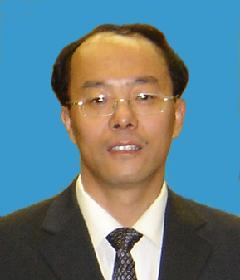 Zhenzhou Yuan (袁振洲)合作论文数School of Traffic and Transportation, Beijing Jiaotong University6Nie Guangyuan (聂广渊)合作论文数3
 Junfang Tian (田钧方)合作论文数College of Management and Economics, Tianjin University3
 Silin Zhang (张思林)合作论文数2
 Zhichao Cao合作论文数Beijing Jiaotong University, Northern Jiaotong University2
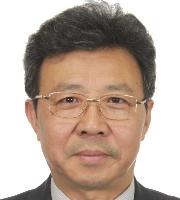 Chunfu Shao (邵春福)合作论文数School of Traffic and Transportation, Beijing Jiaotong University2Xun Ji合作论文数1YingDa Zhang (张颖达)合作论文数1




