Pedestrians are regarded as homogeneous ones without their own individual characteristics in the current study on the capacity of subway stairways. But actually, pedestrians are different individuals with heterogeneous characteristics. Due to the lack of the research on this issue, this paper classifies persons into pedestrians in pairs, fast ones and common ones by introducing the concept of heterogeneous pedestrian and analyzing the observed data of the subway station stairway. Then the improved floor field model, a capacity simulation model of stairway is presented. We validate the precisions of the proposed model under the conditions of homogeneous and heterogeneous pedestrians. At last, three situations are simulated and analyzed based on different space occupied, different speed, different space occupied and speed respectively. The results show that the capacity of stairway is not a constant value and it changes with different component proportions of heterogeneous pedestrians. The heterogeneity of pedestrian has an important influence on the capacity of the stairway.
The major objective of this paper is to study the effects of heterogeneity on pedestrian dynamics in walkway of subway station. We analyze the observed data of the selected facility and find that walking speed and occupied space were varied in the population. In reality, pedestrians are heterogeneous individuals with different attributes. However, the research on how the heterogeneity affects the pedestrian dynamics in facilities of subway stations is insufficient. The improved floor field model is therefore presented to explore the effects of heterogeneity. Pedestrians are classified into pedestrians walking in pairs, fast pedestrians, and ordinary pedestrians. For convenience, they are denoted as P -pedestrians, F -pedestrians, and O -pedestrians, respectively. The proposed model is validated under homogeneous and heterogeneous conditions. Three pedestrian compositions are simulated to analyze the effects of heterogeneity on pedestrian dynamics. The results show that P -pedestrians have negative effect and F -pedestrians have positive effect. All of the results in this paper indicate that the capacity of walkway is not a constant value. It changes with different component proportions of heterogeneous pedestrians. The heterogeneity of pedestrian has an important influence on the pedestrian dynamics in the walkway of the subway station.
In this paper, the execution process of lane changing is considered in two-lane cellular automata models for traffic flow with homogeneous and heterogeneous composition. A set of assumptions have been proposed to normalize the execution of lane-changing. Both the execution process and slow-to-start rule are taken into account, and comparisons are made among basic STCA model, STCA-sts (combined with the slow-to-start rule) model and the new model (STCA-E). The simulation results show (i) STCA-E model is consistent with driver's lane changing motivation that the driver is always keeping the speed not lower than the current value; (ii) a two-dimension plane is found in the lane changing frequency-density figure, which may provide proof to three-phase traffic theory; (iii) along with increasing of slow trucks, more vehicles will make lane changing for a better traffic condition, and the 2D plane will become narrower.
Under different lane change intention,lane-changing behavior can be divided by their microscopic charac-teristics into free-flow lane-changing (FLC)and strained lane-changing (SLC).They are investigated through statistical a-nalysis methods based on NGSIM data in this paper.In order to ensure the accuracy of the data,the parameters for a sin-gle lane change behavior are extracted based on a data smoothing process,and spatiotemporal constraint rules,which are developed to eliminate abnormal samples.This paper uses regression analyses to study the significant influence factors of lane-changing durations of FLC and SLC,and develops a semi-logarithmic model to compare them.In addition,a polyno-mial model is developed to fit the lateral trajectory,and 3 variance indicators are selected to evaluate the optimal fitting order.The results indicate that the mean duration of SLC is slightly longer than FLC.Even though the durations are af-fected by distinct factors and weights,the lateral trajectories of SLC and FLC can be fitted with similar 5th order of poly-nomial models,and the goodness of fits are both greater than 0.99.
Short-term traffic flow prediction is one of the essential issues in intelligent transportation systems (ITS). A new two-stage traffic flow prediction method named AKNN-AVL method is presented, which combines an advanced k-nearest neighbor (AKNN) method and balanced binary tree (AVL) data structure to improve the prediction accuracy. The AKNN method uses pattern recognition two times in the searching process, which considers the previous sequences of traffic flow to forecast the future traffic state. Clustering method and balanced binary tree technique are introduced to build case database to reduce the searching time. To illustrate the effects of these developments, the accuracies performance of AKNN-AVL method, k-nearest neighbor (KNN) method and the auto-regressive and moving average (ARMA) method are compared. These methods are calibrated and evaluated by the real-time data from a freeway traffic detector near North 3rd Ring Road in Beijing under both normal and incident traffic conditions. The comparisons show that the AKNN-AVL method with the optimal neighbor and pattern size outperforms both KNN method and ARMA method under both normal and incident traffic conditions. In addition, the combinations of clustering method and balanced binary tree technique to the prediction method can increase the searching speed and respond rapidly to case database fluctuations.
A new assumption is assumed to explain the mechanisms of traffic flow that in the noiseless limit, vehicles' space gap will oscillate around the desired space gap, rather than keep the desired space gap, in the homogeneous congested traffic flow. It means there are no steady states of congested traffic and contradicts with the fundamental diagram approach and three-phase traffic flow theory both of which admit the existence of steady states of congested traffic. In order to verify this assumption, a cellular automaton model with non-hypothetical congested steady state is proposed, which is based on the Nagel-Schreckenberg model with additional slow-to-start and the effective desired space gap. Simulations show that this new model can produce the synchronized flow, the transitions from free flow to synchronized flow to wide moving jams, and multiple congested patterns observed by the three-phase theory.
In this paper, the spatiotemporal process of lane changing is considered in the cellular automaton models for traffic flow. The lane-changing time and the space required depend on the instantaneous velocity of the vehicle and following vehicle in the destination lane. The simulation is carried out in a two-lane homogeneous system. The speed change of the lane changing vehicle accords with the fundamental diagram and a 2D region is found in the lane changing frequency-velocity plane.
A route-based dynamic traffic assignment (DTA) model is proposed with a mesoscopic traffic simulator. In this model, travelers determine their least cost routes from the original to destination with time-dependent shortest path algorithm. It ensures travelers can dynamically choose and change route according the real-time traffic information. The detail descriptions about the three modules in this model are discussed including vehicle generation module, traffic cell module, and vehicle speed and location update module. This simulation structure has the robust restage and expansibility, which provides an excellent framework for application in the traffic management.
The existing traffic flow models,including fundamental diagram and three-phase traffic theory,are conducted based on the highway traffic flow data.Because there exist significant differences between the highway and urban expressway traffic characteristics,the traffic flow models which developed based on highway traffic flow data,are not always suitable for the traffic flow conditions of the urban expressway.The measurement data of the urban expressway is used in this paper to develop the traffic flow models.The traffic flow models of speed-occupancy,traffic flow-occupancy,and speed-traffic flow are proposed using the linear regression analysis.The least square method is adopted to estimate the model parameters,and the significance of model fitting and parameters is tested by F-and T-test.Some key issues are investigated,such as the traffic states splitting and impacts between traffic flow parameters.The results demonstrate that the developed traffic flow models are feasible for the short-term traffic flow prediction and the traffic flow identification.
Based on dissecting green transportation concept and its essence, this paper puts forward a new understanding about the concept. Then it expounds some technical approaches to build a green transportation system from the following three aspects, spacial structure of land use, road network planning and transport development mode. At last, taking Eco New Area of a certain city as an example, this paper applies the concept and technical approaches to the green transportation planning of New Area. Further analyzing the planning strategies and implementation schemes of road network, public transit and non-motorized travel in Eco New Area, the green transportation concept is put into practice on the planning level.
Under the theoretical frameworks of both the traditional fundamental diagram approach and newly-developed three-phase traffic theory, with regard to the characteristics of traffic flow based on detection data, traffic flow was splitting into three traffic states, which include free traffic , congested traffic and jam traffic. In the light of traffic states definition, firstly, traffic flow parameters of road network at the same instant is transformed to fuzzy information granulation which is made up by L, R and U parameters. Then, Elman neural network is employed to realize traffic states prediction with three parameters of fuzzy information granulation as inputting. Subsequently, traffic states composite index is calculated by the prediction result to identify the traffic states. Finally, the empirical researches proceed by taking a region in Beijing urban expressway network, the research results show that the proposed methodology can realize identification of traffic states variation in road network, the identification accuracy is 93.33%, however, the identification accuracy of SVM method on the same condition is 86.67%.
北京地铁西直门站是大型换乘站,采用单向换乘模式.根据西直门站的周边条件,从客流量、站内设施布局和标志设置入手,通过分析4号线建成后西直门站换乘流线及换乘客流的现状,指出了西直门站乘客换乘方式存在的主要问题.提出了优化换乘流线(方案1)及工程改造(方案2)两个优化方案,并对方案2的换乘客流进行了仿真及评价.方案2解决了西直门站3线换乘问题,提高了西直门站的换乘效率.
This paper selects such indexes as:line length,network density,repetition coefficient,non-linear coefficient,stop density,average distance between stops and stop coverage for the evaluation of public transportation network in Haidian district.It finds out the problems and analyses their causes in the process of laying the public bus network.
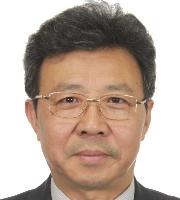 Chunfu Shao (邵春福)合作论文数School of Traffic and Transportation, Beijing Jiaotong University7
 Haoling Wu合作论文数6
 Junfang Tian (田钧方)合作论文数College of Management and Economics, Tianjin University5
 Zhenzhou Yuan (袁振洲)合作论文数School of Traffic and Transportation, Beijing Jiaotong University3Xun Ji合作论文数2YingDa Zhang (张颖达)合作论文数2
 Bobin Wang合作论文数Beijing Jiaotong University, Northern Jiaotong University2
 Chunjiao Dong (董春娇)合作论文数School of Traffic and Transportation, Beijing Jiaotong University2
 Chenqiang Zhu合作论文数1Xuejing MA (马雪婧)合作论文数1Meng MENG (孟猛)合作论文数1
 Silin Zhang (张思林)合作论文数1
 Zhichao Cao合作论文数Beijing Jiaotong University, Northern Jiaotong University1
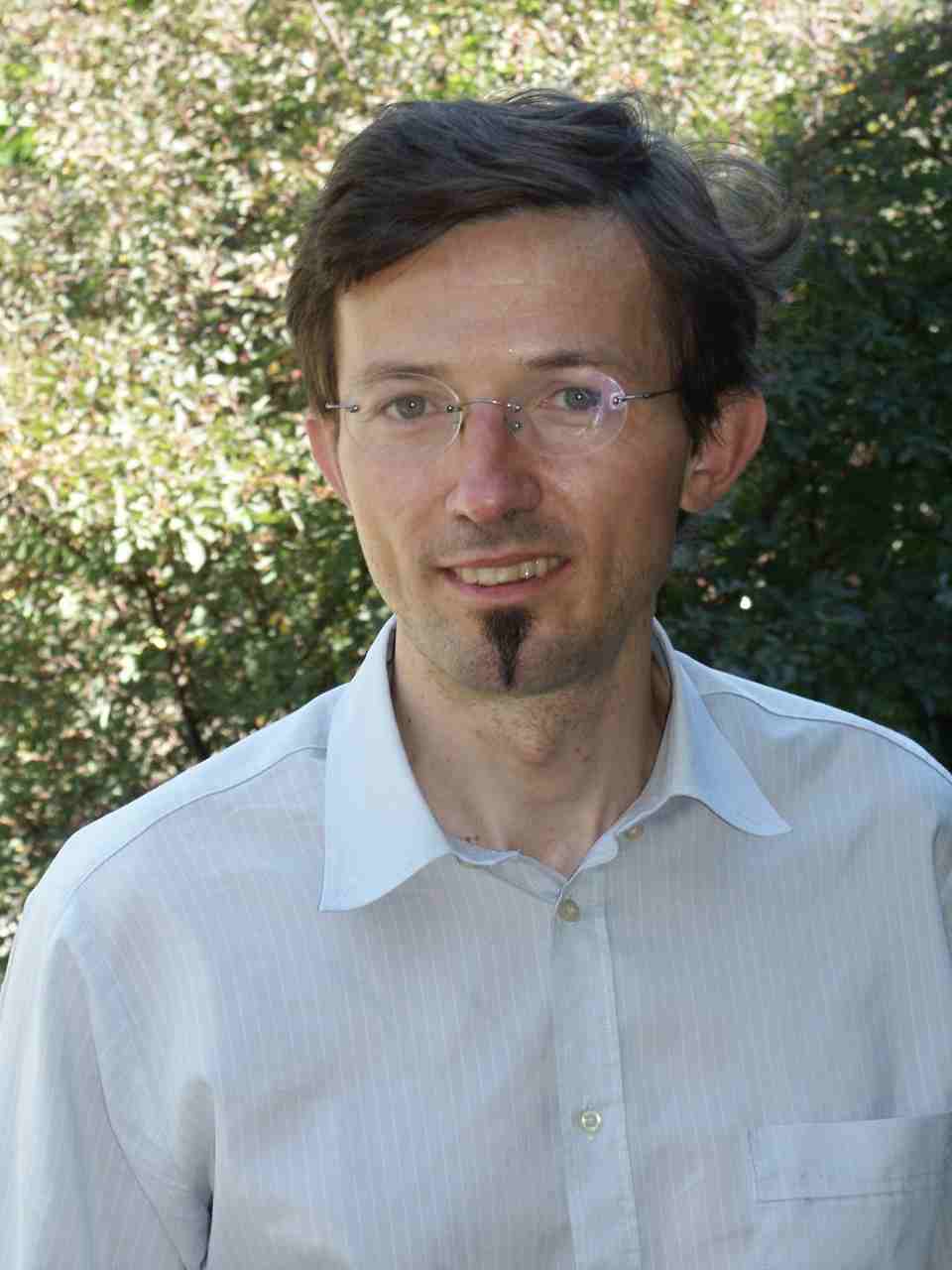 Martin Treiber合作论文数Institut für Wirtschaft und Verkehr, Dresden University of Technology1
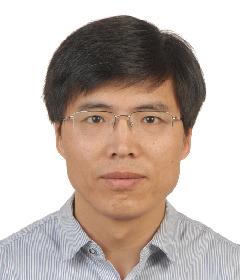 Bin Jia (贾斌)合作论文数School of Traffic and Transportation, Beijing Jiaotong University1
 Chengxiang (Tony) Zhuge (諸葛承祥)合作论文数Department of Land Surveying and Geo-Informatics, The Hong Kong Polytechnic University;The Hong Kong Polytechnic University Shenzhen Research Institute1




