Applying large-scale vision-language pre-trained models like CLIP to few-shot action recognition (FSAR) can significantly enhance both performance and efficiency. While several studies have recognized this advantage, most rely on full-parameter fine-tuning to adapt CLIP's visual encoder to FSAR data, which not only incurs high computational costs but also overlooks the potential of the visual encoder to engage in temporal modeling and focus on targeted semantics directly. To tackle these issues, we introduce MA-FSAR, a framework that employs the Parameter-Efficient Fine-Tuning (PEFT) technique to enhance the CLIP visual encoder in terms of action-related temporal and semantic representations. Our solution involves a token-level Fine-grained Multimodal Adaptation mechanism: a Global Temporal Adaptation captures motion cues from video sequences, while a Local Multimodal Adaptation integrates text-guided semantics from the support set to emphasize action-critical features. Additionally, we propose a prototype-level text-guided construction module to further enrich the temporal and semantic characteristics of video prototypes. Extensive experiments demonstrate our superior performance in various tasks using minor trainable parameters.
As audio-visual generative models evolve into world simulators, cross-modal synchronization stands as a critical proxy for assessing the consistency of world dynamics and causality in generated content. However, existing evaluation metrics presume structural correctness, reducing synchronization to mere temporal alignment. Consequently, they fail on generative outputs, especially when exhibiting structural hallucinations and asymmetric cross-modal relations, which currently mandate expert human annotation to assess synchronization. This dependency introduces a critical paradox: human evaluators rely on relative, reference-dependent comparisons, whereas automated metrics require reference-free, absolute scalars. We resolve this paradox by proposing a framework that distills relative human perception into a continuous, globally consistent metric. First, we introduce SynthSync, a dataset of generative failures ranked via pairwise human annotations. Second, we adapt the Omni-LLM equipped with a continuous latent projection to translate relative human rankings into continuous absolute values. Third, we propose Real-Valued Group Relative Policy Optimization (ℝ-GRPO) to internalize the global causal structure of synchronization via listwise score distributions. Empirically, our metric achieves state-of-the-art human preference alignment. We leverage this estimator to establish a standardized benchmark, advancing AV-Gen assessment from low-level signal correlation to visually grounded causality.
In this paper, we introduce DenseControl, a novel pipeline for generating dense crowd images. Specifically, DenseControl meticulously positions and sizes each generated instance to align precisely with the predefined coordinates and scales. Based on this, we further allow for control over the background, style, and attributes of instances. The motivation behind DenseControl stems from the observation of two main challenges in synthesizing crowd images: controlling signal embedding and maintaining topological integrity when imparting instance scale guidance. To address these, we first introduce the Isolated Object Embedding (IOE) map, a novel representation that facilitates spatial location control while mitigating the difficulties associated with learning projections for model. Secondly, we propose an Implicit Scale Embedding (ISE) strategy that seamlessly integrates with the IOE map to encode precise scale information. To further enhance the efficacy of combining ISE with the IOE map, we incorporate a Position Shortcut mechanism that enhances cross-attention to alleviate projection challenges. We evaluate DenseControl through two lenses: synthesis quality and applicability in latent applications. Experiments across different control conditions demonstrate DenseControl achieves state-of-the-art results in dense crowd image synthesis. Furthermore, we showcase applications in augmenting crowd analysis under data scarcity, transfer learning, and weather generalization scenes, to highlight the practical utility of DenseControl. The codebase will be released.
Video generation models produce visually compelling results but systematically violate physical commonsense – on VideoPhy-2, the best model achieves only 32.6
Reinforcement learning (RL) for large-scale Vision-Language-Action (VLA) models is severely bottlenecked by synchronization barriers and the high cost of environment data acquisition. To overcome these challenges, we propose AcceRL, a distributed asynchronous RL framework that physically isolates environment rollouts, model inference, and gradient updates. By eliminating the cascading long-tail idle bubbles inherent in synchronous systems, AcceRL maximizes hardware utilization and ensures scalable throughput. Furthermore, AcceRL features a modular design that supports the integration of diverse, plug-and-play world models into its distributed pipeline. Extensive experiments demonstrate that the base framework achieves highly competitive performance across all four LIBERO task suites. Systematically, the asynchronous architecture delivers a 2.4× throughput speedup over leading synchronous baselines. Algorithmically, by leveraging a world model pre-trained on 1,000 offline trajectories, AcceRL achieves up to a 200× improvement in online sample efficiency on LIBERO-Spatial, establishing a robust framework that is both sample-efficient and time-efficient for embodied AI. Code is included in the supplementary material. Code is available at https://github.com/distanceLu/AcceRL.
Autoregressive (AR) models excel at generating temporally coherent audio by producing tokens sequentially, yet they often falter in faithfully following complex textual prompts, especially those describing complex sound events. We uncover a surprising capability in AR audio generators: their early prefix tokens implicitly encode global semantic attributes of the final output, such as event count and sound-object category, revealing a form of implicit planning. Building on this insight, we propose Plan-Critic, a lightweight auxiliary model trained with a Generalized Advantage Estimation (GAE)-inspired objective to predict final instruction-following quality from partial generations. At inference time, Plan-Critic enables guided exploration: it evaluates candidate prefixes early, prunes low-fidelity trajectories, and reallocates computation to high-potential planning seeds. Our Plan-Critic-guided sampling achieves up to a 10-point improvement in CLAP score over the AR baseline-establishing a new state of the art in AR text-to-audio generation-while maintaining computational parity with standard best-of-N decoding. This work bridges the gap between causal generation and global semantic alignment, demonstrating that even strictly autoregressive models can plan ahead.
Fitting an underlying body model to 3D clothed human assets has been extensively studied, yet most approaches focus on either single-modal inputs such as point clouds or multi-view images alone, often requiring a known metric scale. This constraint is frequently impractical, especially for AI-generated assets where scale distortion is common. We propose OmniFit, a method that can seamlessly handle diverse multi-modal inputs, including full scans, partial depth observations, and image captures, while remaining scale-agnostic for both real and synthetic assets. Our key innovation is a simple yet effective conditional transformer decoder that directly maps surface points to dense body landmarks, which are then used for SMPL-X parameter fitting. In addition, an optional plug-and-play image adapter incorporates visual cues to compensate for missing geometric information. We further introduce a dedicated scale predictor that rescales subjects to canonical body proportions. OmniFit substantially outperforms state-of-the-art methods by 57.1 to 80.9 percent across daily and loose clothing scenarios. To the best of our knowledge, it is the first body fitting method to surpass multi-view optimization baselines and the first to achieve millimeter-level accuracy on the CAPE and 4D-DRESS benchmarks.
Multimodal Large Language Models (MLLMs) show promising results as decision-making engines for embodied agents operating in complex, physical environments. However, existing benchmarks often prioritize high-level planning or spatial reasoning, leaving the fine-grained action intelligence required for embodied physical interaction underexplored. To address this gap, we introduce CFG-Bench, a new benchmark designed to systematically evaluate this crucial capability. CFG-Bench consists of 1,368 curated videos paired with 19,562 three-modalities question-answer pairs targeting four cognitive abilities: 1) Physical Interaction, 2) Temporal-Causal Relation, 3) Intentional Understanding, and 4) Evaluative Judgment. Together, these dimensions provide a systematic framework for assessing a model's ability to translate visual observations into actionable knowledge, moving beyond mere surface-level recognition. Our comprehensive evaluation on CFG-Bench reveals that leading MLLMs struggle to produce detailed instructions for physical interactions and exhibit profound limitations in the higher-order reasoning of intention and evaluation. Moreover, supervised fine-tuning (SFT) on our data demonstrates that teaching an MLLMs to articulate fine-grained actions directly translates to significant performance gains on established embodied benchmarks. Our analysis highlights these limitations and offers insights for developing more capable and grounded embodied agents.
Forecasting the future anatomy of slow-evolving neurodegenerative diseases could enable earlier, more targeted intervention and improve clinical trial design, but it remains challenging because true progression signals are subtle in longitudinal MRI. In this low-signal regime, transferring modern generative sequence models directly is unreliable: training is dominated by stable baseline anatomy and confounded by dense, sample-specific nuisance variation. We first provide a theoretical analysis that explains these failures through two modes. Identity collapse occurs when optimization is driven toward reproducing the current anatomy, which prevents the model from learning faint temporal change. The continuous interpolation trap arises when standard smooth networks cannot separate localized biological drift from pervasive noise, which leads to spurious changes that diffuse across the volume. To address both issues, we propose Latent Drift, a progressive generative framework that learns change in a compressed semantic representation rather than synthesizing full-resolution anatomy. This design removes pixel-level identity from the prediction target and concentrates model capacity on progression-relevant dynamics. We further apply Finite Scalar Quantization to the learned change representation, which suppresses small, high-frequency nuisance fluctuations while preserving consistent structural drift. Experiments on longitudinal 3D brain MRI show that Latent Drift improves patient-specific neuro-forecasting over diffusion and autoregressive transformer baselines across generative fidelity and clinically relevant evaluation metrics. Project page: \href{https://cutepkq.github.io/latent-drift}{https://cutepkq.github.io/latent-drift}.
Unsupervised Domain Adaptation (UDA) seeks to transfer knowledge from a labeled source domain to an unlabeled target domain but often suffers from severe domain and scale gaps that degrade performance. Existing cross-attention-based transformers can align features across domains, yet they struggle to preserve content semantics under large appearance and scale variations. To explicitly address these challenges, we introduce the concept of beneficial noise, which regularizes cross-attention by injecting controlled perturbations, encouraging the model to ignore style distractions and focus on content. We propose the Domain-Adaptive Cross-Scale Matching (DACSM) framework, which consists of a Domain-Adaptive Transformer (DAT) for disentangling domain-shared content from domain-specific style, and a Cross-Scale Matching (CSM) module that adaptively aligns features across multiple resolutions. DAT incorporates beneficial noise into cross-attention, enabling progressive domain translation with enhanced robustness, yielding content-consistent and style-invariant representations. Meanwhile, CSM ensures semantic consistency under scale changes. Extensive experiments on VisDA-2017, Office-Home, and DomainNet demonstrate that DACSM achieves state-of-the-art performance, with up to +2.3
Post-training with reinforcement learning (RL) has recently shown strong promise for advancing multimodal agents beyond supervised imitation. However, RL remains limited by poor data efficiency, particularly in settings where interaction data are scarce and quickly become outdated. To address this challenge, GIPO (Gaussian Importance sampling Policy Optimization) is proposed as a policy optimization objective based on truncated importance sampling, replacing hard clipping with a log-ratio–based Gaussian trust weight to softly damp extreme importance ratios while maintaining non-zero gradients. Theoretical analysis shows that GIPO introduces an implicit, tunable constraint on the update magnitude, while concentration bounds guarantee robustness and stability under finite-sample estimation. Experimental results show that GIPO achieves state-of-the-art performance among clipping-based baselines across a wide range of replay buffer sizes, from near on-policy to highly stale data, while exhibiting superior bias–variance trade-off, high training stability and improved sample efficiency. Code is provided in supplementary material.
The advancement of autonomous driving systems hinges on the ability to achieve low-latency and high-accuracy perception. To address this critical need, this paper introduces Dynamic Routering Network (DyRoNet), a low-rank enhanced dynamic routing framework designed for streaming perception in autonomous driving systems. DyRoNet integrates a suite of pre-trained branch networks, each meticulously fine-tuned to function under distinct environmental conditions. At its core, the framework offers a speed router module, developed to assess and route input data to the most suitable branch for processing. This approach not only addresses the inherent limitations of conventional models in adapting to diverse driving conditions but also ensures the balance between performance and efficiency. Extensive experimental evaluations demonstrating the adaptability of DyRoNet to diverse branch selection strategies, resulting in significant performance enhancements across different scenarios. This work not only establishes a new benchmark for streaming perception but also provides valuable engineering insights for future work.1
Unsupervised Domain Adaptation (UDA) aims to transfer knowledge from a labeled source domain to an unlabeled target domain. Recent UDA methods based on Vision Transformers (ViTs) have achieved strong performance through attention-based feature alignment. However, we identify a key limitation: foreground object mismatch, where the discrepancy in foreground object size and spatial distribution across domains weakens attention consistency and hampers effective domain alignment. To address this issue, we propose the Progressive Focus Cross-Attention Mechanism (PCaM), which progressively filters out background information during cross-attention, allowing the model to focus on and fuse discriminative foreground semantics across domains. We further introduce an attentional guidance loss that explicitly directs attention toward task-relevant regions, enhancing cross-domain attention consistency. PCaM is lightweight, architecture-agnostic, and easy to integrate into existing ViT-based UDA pipelines. Extensive experiments on Office-Home, DomainNet, VisDA-2017, and remote sensing datasets demonstrate that PCaM significantly improves adaptation performance and achieves new state-of-the-art results, validating the effectiveness of attention-guided foreground fusion for domain adaptation.
In this paper, we propose a novel framework, Combo, for harmonious co-speech holistic 3D human motion generation and efficient customizable adaption. In particular, we identify that one fundamental challenge as the multiple-input-multiple-output (MIMO) nature of the generative model of interest. More concretely, on the input end, the model typically consumes both speech signals and character guidance (e.g., identity and emotion), which hinders further adaptation to varying guidance; on the output end, holistic human motions mainly consist of facial expressions and body movements, which are inherently correlated but non-trivial to coordinate in current data-driven generation process. In response to the above challenge, we propose tailored designs to both ends. For the former, we propose to pre-train on data regarding a fixed identity with neutral emotion, and defer the incorporation of customizable conditions (identity and emotion) to fine-tuning stage, which is boosted by our novel X-Adapter for parameter-efficient fine-tuning. For the latter, we propose a simple yet effective transformer design, DU-Trans, which first divides into two branches to learn individual features of face expression and body movements, and then unites those to learn a joint bi-directional distribution and directly predicts combined coefficients. Evaluated on BEAT2 and SHOW datasets, Combo is highly effective in generating high-quality motions but also efficient in transferring identity and emotion. Project website: https://xc-csc101.github.io/combo/.
Current state-of-the-art paradigms predominantly treat Text-to-Motion (T2M) generation as a direct translation problem, mapping symbolic language directly to continuous poses. While effective for simple actions, this System 1 approach faces a fundamental theoretical bottleneck we identify as the Semantic-Kinematic Impedance Mismatch: the inherent difficulty of grounding semantically dense, discrete linguistic intent into kinematically dense, high-frequency motion data in a single shot. In this paper, we argue that the solution lies in an architectural shift towards Latent System 2 Reasoning. Drawing inspiration from Hierarchical Motor Control in cognitive science, we propose Latent Motion Reasoning (LMR) that reformulates generation as a two-stage Think-then-Act decision process. Central to LMR is a novel Dual-Granularity Tokenizer that disentangles motion into two distinct manifolds: a compressed, semantically rich Reasoning Latent for planning global topology, and a high-frequency Execution Latent for preserving physical fidelity. By forcing the model to autoregressively reason (plan the coarse trajectory) before it moves (instantiates the frames), we effectively bridge the ineffability gap between language and physics. We demonstrate LMR's versatility by implementing it for two representative baselines: T2M-GPT (discrete) and MotionStreamer (continuous). Extensive experiments show that LMR yields non-trivial improvements in both semantic alignment and physical plausibility, validating that the optimal substrate for motion planning is not natural language, but a learned, motion-aligned concept space. Codes and demos can be found in https://chenhaoqcdyq.github.io/LMR/https://chenhaoqcdyq.github.io/LMR/
Recent advancements in tailored image synthesis have high-lighted the remarkable capabilities of pre-trained text-to-image frameworks in encapsulating individual identity traits from a collection of portrait photographs. However, these solutions may not accurately reflect the key characteristics of the input, leading to a loss of essential identity traits. To alleviate this issue, our study introduces a new framework for personalized portrait generation. This framework leverages reward optimization to refine the generation process, integrating a face recognition model into the reward function. It assesses the similarity between user-provided images and synthetic portraits to determine rewards. We utilize a pathwise estimator for gradient estimation, employing the Gumbel-Softmax technique to fulfill the differentiability requirement and incorporating a KL divergence regularizer to mitigate the risk of overfitting on reward. Our showcases indicate a marked improvement in preserving human identity in the generated portraits.
Recent advancements in text-to-image generation have made significant strides in customizing realistic human photos. Most of the existing methods focus on addressing efficiency issues to avoid resource-intensive and time-consuming subject-specific fine-tuning. However, they lack an in-depth exploration for identity preservation, thus suffering from significant degradation in real scenarios. We propose FaceChain-MMID in response to this challenge. First, we comprehensively represent facial identity using three factors: the face image to provide basic identity, the segmentation mask to refine the facial geometry, the text prompts to further supplement additional identity-related attributes. Building upon these multi-modal features, we propose a novel dividing and merging strategy to support highly identity-consistent personalized portrait generation. Specifically, the dividing stage ensures that each modality fully expresses its own information by training independent uni-modal conditional diffusion. The subsequent merging stage introduces an efficient modal-specific proxy module to sufficiently combine the noise from each branch at latent denoising steps, where incorporates identity-centric face pairs, a filtering mechanism, and truncated loss to enhance inter-modal complementarity. Extensive qualitative and quantitative experiments demonstrate the superior performance of our approach in preserving identity.
 Lei Shang合作论文数Tongyi Lab, Alibaba Group21
 Xuansong Xie合作论文数Damo Academy, Alibaba Group15
 Chao Xu (许超)合作论文数College of Control Science and Engineering, Zhejiang University14
 Hao Li (李昊)合作论文数Artificial Intelligence Innovation and Incubation (AI³) Institute, Fudan University12
 Weitao Chen合作论文数10
 Stan Z. Li (李子青)合作论文数School of Engineering, Westlake University10
 Siyuan Li (李思远)合作论文数School of Engineering, Westlake University;Zhejiang University;ByteDance9
 Zhipeng Zhou合作论文数Southeast University, Southeast Univ9
 Jiankang Deng (邓健康)合作论文数Department of Computing, Faculty of Engineering, Imperial College London8
 Wenxiong Kang (康文雄)合作论文数School of Automation Science and Engineering, South China University of Technology8
 Zelin Zang (臧泽林)合作论文数School of Engineering, Westlake University7
 Hongbin Xu合作论文数Chinese Acad Sci, Shenzhen Inst Adv Technol, ShenZhen Key Lab Comp Vis & Pattern Recognit, Shenzhen, Peoples R China7
 Yong Liu (刘勇)合作论文数Institute of Cyber-Systems and Control, College of Control Science and Engineering, Zhejiang University;Advanced Perception on Robotics and Intelligent Learning Lab, Zhejiang University7
 Kai Wang (王锴)合作论文数School of Computing, National University of Singapore;High Performance Computing for Artificial Intelligence Lab, National University of Singapore7Haoyu Xie (谢昊宇)合作论文数6
 Jian Zhao (赵健)合作论文数School of Artificial Intelligence, Optics and Electronics, Northwestern Polytechnical University;Evolutionary Visione+x Oriented Learning Lab, TeleAI of China Telecom6
 Jun Dan合作论文数Zhejiang University5
 Zicheng Liu (刘梓丞)合作论文数Center for Artificial Intelligence Research and Innovation, Westlake University5
 Zedong Wang合作论文数4
 You Yang合作论文数Department of Computer Science, School of Computing, National University of Singapore4
 Di Wu (吴迪)合作论文数College of Agriculture and Biotechnology, Zhejiang University4
 Rong Jin合作论文数Alibaba Group4
 Jiazheng Xing (幸家正)合作论文数Department of Control Science and Engineering, Zhejiang University3
 Shujun Wang Emma合作论文数Department of Biomedical Engineering, Faculty of Engineering, The Hong Kong Polytechnic University;Research Institute for Smart Ageing, The Hong Kong Polytechnic University;Research Institute for Artificial Intelligence of Things, The Hong Kong Polytechnic University3
 Qi Qian合作论文数Tongyi Lab, Alibaba Group;Machine Intelligence Technology Lab, Alibaba Group3
 Zhi-Qi Cheng合作论文数Tacoma School of Engineering & Technology, University of Washington3Chen Cheng合作论文数2Yingda Chen合作论文数2
 Senqiao Yang (杨森乔)合作论文数The Chinese University of Hong Kong;TikTok;SmartMore Ltd2
 Wenmeng Zhou (周文猛)合作论文数DAMO Academy2
 Yang Liu (刘洋)合作论文数Wangxuan Institute of Computer Technology, Peking University2
 Zangwei (Alex) Zheng (郑奘巍)合作论文数HPC-AI Tech2
 Haihong Xiao合作论文数2Mingze Sun合作论文数2Zhaopan XU (徐兆攀)合作论文数2
 Shan Luo合作论文数Department of Engineering, Faculty of Natural, Mathematical & Engineering Sciences, King's College London2
 Ziheng Qin合作论文数National University of Singapore2
 Xingjun Wang合作论文数2Jinxing Ye合作论文数Alibaba2
 Ruqi Huang (黄儒麒)合作论文数Tsinghua Shenzhen International Graduate School, Tsinghua University2Weiyang Jin (金卫阳)合作论文数2Ge Wang合作论文数Westlake University2
 Zheng Zhu (朱政)合作论文数GigaAI2Fei Wang (王飞)合作论文数College of Earth and Environmental Sciences, Lanzhou University2
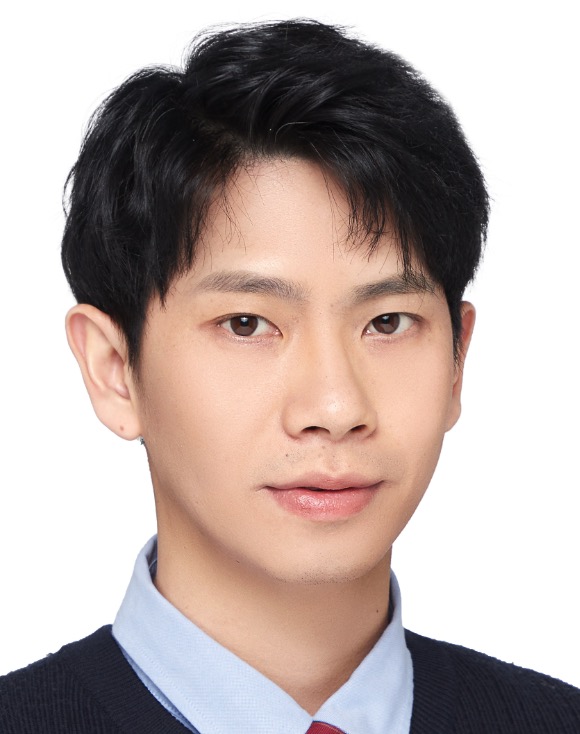 Shiming Chen (陈使明)合作论文数Department of Computer Vision, Mohamed bin Zayed University of Artificial Intelligence2
 Guo-Sen Xie合作论文数Nanjing University of Science and Technology2
 Xiaojiang Peng (彭小江)合作论文数College of Big Data and Internet, Shenzhen Technology University2
 Chang Liu合作论文数Department of ECE, College of Engineering, Northeastern University2




