Unified multimodal models (UMMs) aim to handle perception and generation in a single model. Yet existing UMMs still rely on a frozen, separately pretrained VAE for image generation, imposing a structural bottleneck. Naively removing it introduces a quality gap, as the model must learn both high-level structure and low-level details from raw pixels. In this paper, we propose Representation Forcing (RF), a technique that closes this gap by making representation prediction a native capability of the model. Concretely, RF forces the decoder to autoregressively predict visual representations as intermediate tokens before pixels; these tokens then stay in context to guide pixel diffusion within the same backbone. By turning representations from perception outputs into generation targets, RF eliminates the need for any external generative latent space. We find that RF benefits both understanding and generation. On image generation, our pixel-space model with RF matches state-of-the-art VAE-based unified models. On image understanding, pixel-space RF generally outperforms its VAE-based variant. Together, these results offer an effective step toward end-to-end, bottleneck-free UMMs.
Directly modeling the explicit likelihood of the raw data distribution is a key topic in the machine learning area, which achieves the scaling success in Large Language Models by autoregressive modeling. However, continuous AR modeling over visual pixel data suffers from extremely long sequences and high-dimensional spaces. In this paper, we present FARMER, a novel end-to-end generative framework that unifies Normalizing Flows (NFs) and Autoregressive (AR) models for tractable likelihood estimation and high-quality image synthesis directly from raw pixels. FARMER employs an invertible autoregressive flow to transform images into latent sequences, whose distribution is implicitly modeled by an autoregressive model. To address the redundancy and complexity in pixel-level modeling, we propose a self-supervised dimension reduction scheme that partitions NF latent channels into informative and redundant groups, enabling more effective and efficient AR modeling. Furthermore, we design a one-step distillation scheme to significantly accelerate inference speed and introduce a resampling-based classifier-free guidance algorithm to boost image generation quality. Extensive experiments demonstrate that FARMER achieves competitive performance compared to existing pixel-based generative models while providing exact likelihoods and scalable training.
We present Omni, a unified multimodal model natively trained on diverse modalities, including text, images, videos, 3D geometry, and hidden representations. We find that such training enables Context Unrolling, where the model explicitly reasons across multiple modal representations before producing predictions. This process enables the model to aggregate complementary information across heterogeneous modalities, facilitating a more faithful approximation of the shared multimodal knowledge manifold and improving downstream reasoning fidelity. As a result, Omni achieves strong performance on both multimodal generation and understanding benchmarks, while demonstrating advanced multimodal reasoning capabilities, including in-context generation of text, image, video, and 3D geometry.
Autoregressive (AR) video generative models rely on video tokenizers that compress pixels into discrete token sequences. The length of these token sequences is crucial for balancing reconstruction quality against downstream generation computational cost. Traditional video tokenizers apply a uniform token assignment across temporal blocks of different videos, often wasting tokens on simple, static, or repetitive segments while underserving dynamic or complex ones. To address this inefficiency, we introduce EVATok , a framework to produce E fficient V ideo A daptive Tok enizers. Our framework estimates optimal token assignments for each video to achieve the best quality-cost trade-off, develops lightweight routers for fast prediction of these optimal assignments, and trains adaptive tokenizers that encode videos based on the assignments predicted by routers. We demonstrate that EVATok delivers substantial improvements in efficiency and overall quality for video reconstruction and downstream AR generation. Enhanced by our advanced training recipe that integrates video semantic encoders, EVATok achieves superior reconstruction and state-of-the-art class-to-video generation on UCF-101, with at least 24.4\% savings in average token usage compared to the prior state-of-the-art LARP and our fixed-length baseline.
Accurate medical image segmentation is a core task in biomedical engineering and computer-assisted image analysis. Prompt-based segmentation models, such as Med-SAM, allow anatomical structures or lesions to be delineated from sparse user inputs, but two-dimensional clinical images often contain small targets, weak boundaries, heterogeneous lesion textures, and modality-specific noise. These factors can reduce the reliability of prompt-conditioned masks when early structural cues are weakened during deep encoder propagation. We propose HBF-BCER MedSAM, a prompt-preserving enhancement framework that primarily strengthens MedSAM image-encoder representations while retaining the original point- and box-prompt interface. Historical Branch Fusion (HBF) reinjects cross-layer structural summaries from previous enhanced blocks, whereas Balanced Convolutional Expert Routing (BCER) performs soft pixel-wise weighting of heterogeneous convolutional experts in bottleneck space under a load-balancing constraint. Experiments on REFUGE2, ISIC2016, and TNMIX under matched simulated-prompt protocols show consistent improvements over the matched MedSAM baseline. Dice/IoU increased from 82.1%/73.8% to 91.0%/83.7% for REFUGE2 optic cup segmentation, from 87.5%/78.6% to 95.9%/92.4% on ISIC2016, and from 81.6%/75.1% to 91.4%/85.1% on TNMIX. Qualitative comparisons, convergence analysis, and ablation studies further support the effectiveness of preserving historical structural evidence and applying adaptive local expert weighting for prompt-conditioned medical image segmentation.
Recent advances in diffusion-based video restoration (VR) demonstrate significant improvement in visual quality, yet yield a prohibitive computational cost during inference. While several distillation-based approaches have exhibited the potential of one-step image restoration, extending existing approaches to VR remains challenging and underexplored, particularly when dealing with high-resolution video in real-world settings. In this work, we propose a one-step diffusion-based VR model, termed as SeedVR2, which performs adversarial VR training against real data. To handle the challenging high-resolution VR within a single step, we introduce several enhancements to both model architecture and training procedures. Specifically, an adaptive window attention mechanism is proposed, where the window size is dynamically adjusted to fit the output resolutions, avoiding window inconsistency observed under high-resolution VR using window attention with a predefined window size. To stabilize and improve the adversarial post-training towards VR, we further verify the effectiveness of a series of losses, including a proposed feature matching loss without significantly sacrificing training efficiency. Extensive experiments show that SeedVR2 can achieve comparable or even better performance compared with existing VR approaches in a single step.
We propose continuous adversarial flow models, a type of continuous-time flow model trained with an adversarial objective. Unlike flow matching, which uses a fixed mean-squared-error criterion, our approach introduces a learned discriminator to guide training. This change in objective induces a different generalized distribution, which empirically produces samples that are better aligned with the target data distribution. Our method is primarily proposed for post-training existing flow-matching models, although it can also train models from scratch. On the ImageNet 256px generation task, our post-training substantially improves the guidance-free FID of latent-space SiT from 8.26 to 3.63 and of pixel-space JiT from 7.17 to 3.57. It also improves guided generation, reducing FID from 2.06 to 1.53 for SiT and from 1.86 to 1.80 for JiT. We further evaluate our approach on text-to-image generation, where it achieves improved results on both the GenEval and DPG benchmarks.
Promptable medical segmentation models can be sensitive to small targets, weak boundaries, heterogeneous texture, and inaccurate user prompts. We propose HBF-BCER, a prompt-preserving adaptation of the SAM ViT-B architecture for medical image segmentation. Historical Branch Fusion (HBF) reinjects aligned bottleneck summaries from previous enhanced encoder blocks, while Balanced Convolutional Expert Routing (BCER) applies load-balanced, pixel-wise soft weighting to heterogeneous convolutional experts. The evaluation uses fixed held-out evaluation sets, three training seeds, matched original SAM ViT-B, image-encoder and mask-decoder full fine-tuning, decoder-adapter, LoRA, and DoRA baselines, repeated prompt perturbations, paired statistics, and internal module ablations. HBF-BCER achieved Dice scores of 96.69±0.12% and 92.24±0.18% for REFUGE2 disc and cup, 96.18±0.31% for ISIC2016, and 92.08±0.19% for TNMIX. Image-encoder and mask-decoder full fine-tuning produced slightly higher Dice for the REFUGE2 disc and TNMIX, whereas HBF-BCER produced higher Dice for the REFUGE2 cup and ISIC2016 and the lowest HD95 on all four targets. Among the four paired comparisons with available per-image outputs, HBF-BCER showed significant gains for REFUGE2 cup versus SAM + Adapter and LoRA and for TNMIX versus SAM + Adapter; the ISIC2016 difference versus full fine-tuning was not significant. The method reduced trainable parameters by 81.5% relative to image-encoder and mask-decoder full fine-tuning but increased total parameters, FLOPs, and inference latency. These results support HBF-BCER as a parameter-efficient training strategy rather than a generally lightweight or uniformly superior model.
Visual generation with discrete tokens has gained significant attention as it enables a unified token prediction paradigm shared with language models, promising seamless multimodal architectures. However, current discrete generation methods remain limited to low-dimensional latent tokens (typically 8-32 dims), sacrificing the semantic richness essential for understanding. While high-dimensional pretrained representations (768-1024 dims) could bridge this gap, their discrete generation poses fundamental challenges. In this paper, we present Cubic Discrete Diffusion (CubiD), the first discrete generation model for high-dimensional representations. CubiD performs fine-grained masking throughout the high-dimensional discrete representation – any dimension at any position can be masked and predicted from partial observations. This enables the model to learn rich correlations both within and across spatial positions, with the number of generation steps fixed at T regardless of feature dimensionality, where T ≪ hwd. On ImageNet-256, CubiD achieves state-of-the-art discrete generation with strong scaling behavior from 900M to 3.7B parameters. Crucially, we validate that these discretized tokens preserve original representation capabilities, demonstrating that the same discrete tokens can effectively serve both understanding and generation tasks. We hope this work will inspire future research toward unified multimodal architectures. Code is available at: https://github.com/YuqingWang1029/CubiD.
To efficiently train large-scale models, low-bit gradient communication compresses full-precision gradients on local GPU nodes into low-precision ones for higher gradient synchronization efficiency among GPU nodes. However, it often degrades training quality due to compression information loss. To address this, we propose the Low-bit Communication Adaptor (LoCo), which compensates gradients on local GPU nodes before compression, ensuring efficient synchronization without compromising training quality. Specifically, LoCo designs a moving average of historical compensation errors to stably estimate concurrent compression error and then adopts it to compensate for the concurrent gradient compression, yielding a less lossless compression. This mechanism allows it to be compatible with general optimizers like Adam and sharding strategies like FSDP. Theoretical analysis shows that integrating LoCo into full-precision optimizers like Adam and SGD does not impair their convergence speed on non-convex problems. Experimental results show that across large-scale model training frameworks like Megatron-LM and PyTorch's FSDP, LoCo significantly improves communication efficiency, e.g., improving Adam's training speed by 14% to 40% without performance degradation on large language models like LLAMAs and MoEs.
Transformer-based approaches have recently made significant advancements in 3D human pose estimation from 2D inputs. Existing methods typically either consider the entire 2D skeleton for global features extraction or break it into independent parts for local features learning. However, capturing the spatial dependencies of the entire 2D skeleton does not effectively facilitate learning local spatial features, while partitioning the skeleton into independent segments disrupts the relevance of individual joints to the whole. In this paper, we propose a novel Origin-centric Part Transformer (OPFormer) block to address this issue through two steps: Skeleton Separation and Skeleton Recombination. Skeleton Separation separates the 2D skeleton into several distinct parts, enabling the extraction of fine-grained local spatial features that accurately reflect the geometric structure of the human body. Secondly, we introduce the concept of a human skeleton Origin, which serves as a central hub to reconnect different parts through Skeleton Recombination. The resulting local features, when fused with global features from the Spatial Transformer Encoder, yield more accurate 3D results. Comprehensive experiments conducted on the Human3.6M and MPI-INF-3DHP benchmark datasets verify that our approach attains state-of-the-art performance. It should be emphasized that OPFormer achieves a Mean Per Joint Position Error (MPJPE) of 37.6mm on the Human3.6M dataset without any additional training data.
This technical report presents a cost-efficient strategy for training a video generation foundation model. We present a mid-sized research model with approximately 7 billion parameters (7B) called Seaweed-7B trained from scratch using 665,000 H100 GPU hours. Despite being trained with moderate computational resources, Seaweed-7B demonstrates highly competitive performance compared to contemporary video generation models of much larger size. Design choices are especially crucial in a resource-constrained setting. This technical report highlights the key design decisions that enhance the performance of the medium-sized diffusion model. Empirically, we make two observations: (1) Seaweed-7B achieves performance comparable to, or even surpasses, larger models trained on substantially greater GPU resources, and (2) our model, which exhibits strong generalization ability, can be effectively adapted across a wide range of downstream applications either by lightweight fine-tuning or continue training. See the project page at https://seaweed.video/
Scaling video generation models is believed to be promising in building world models that adhere to fundamental physical laws. However, whether these models can discover physical laws purely from vision can be questioned. A world model learning the true law should give predictions robust to nuances and correctly extrapolate on unseen scenarios. In this work, we evaluate across three key scenarios: in-distribution, out-of-distribution, and combinatorial generalization. We developed a 2D simulation testbed for object movement and collisions to generate videos deterministically governed by one or more classical mechanics laws. We focus on the scaling behavior of training diffusion-based video generation models to predict object movements based on initial frames. Our scaling experiments show perfect generalization within the distribution, measurable scaling behavior for combinatorial generalization, but failure in out-of-distribution scenarios. Further experiments reveal two key insights about the generalization mechanisms of these models: (1) the models fail to abstract general physical rules and instead exhibit "case-based" generalization behavior, i.e., mimicking the closest training example; (2) when generalizing to new cases, models are observed to prioritize different factors when referencing training data: color > size > velocity > shape. Our study suggests that scaling alone is insufficient for video generation models to uncover fundamental physical laws.
Multimodal Diffusion Transformers (MM-DiTs) have recently emerged as a powerful framework for unified textvision synthesis, surpassing traditional U-Net architectures in generative tasks. One key innovation lies in its Multimodal Self-Attention (MM-SA) interaction where image and text tokens are concatenated and processed via selfattention. However, this mechanism poses significant challenges for editing, rendering conventional U-Net-based attention manipulation methods ineffective. To address this limitation, we propose QK-Edit, a training_free framework that exploits the unique attention dynamics of MM-DiTs for precise text-guided image and video editing. By introducing a novel query-key manipulation strategy, our method isolates and adjusts critical attention components to achieve an optimal balance between prompt fidelity and structural consistency. This enables seamless edits across various tasks, including object addition, object removal, object replacement, changing background, changing material, changing color, and style transformation. Notably, it can be easily implemented with feature replacement in inference. QK-Edit demonstrates superior editing performance on state-of-the-art models, such as FLUX and HunyuanVideo, effectively bridging the gap between generative power and editable flexibility in MM-DiTs, and paving the way for scalable multimodal content creation.
Video restoration poses non-trivial challenges in maintaining fidelity while recovering temporally consistent details from unknown degradations in the wild. Despite recent advances in diffusion-based restoration, these methods often face limitations in generation capability and sampling efficiency. In this work, we present SeedVR, a diffusion transformer designed to handle real-world video restoration with arbitrary length and resolution. The core design of SeedVR lies in the shifted window attention that facilitates effective restoration on long video sequences. SeedVR further supports variable-sized windows near the boundary of both spatial and temporal dimensions, overcoming the resolution constraints of traditional window attention. Equipped with contemporary practices, including causal video autoencoder, mixed image and video training, and progressive training, SeedVR achieves highly-competitive performance on both synthetic and real-world benchmarks, as well as AI-generated videos. Extensive experiments demonstrate SeedVR's superiority over existing methods for generic video restoration.
Autoregressive models have emerged as a powerful approach for visual generation but suffer from slow inference speed due to their sequential token-by-token prediction process. In this paper, we propose a simple yet effective approach for parallelized autoregressive visual generation that improves generation efficiency while preserving the advantages of autoregressive modeling. Our key insight is that parallel generation depends on visual token dependencies-tokens with weak dependencies can be generated in parallel, while strongly dependent adjacent tokens are difficult to generate together, as their independent sampling may lead to inconsistencies. Based on this observation, we develop a parallel generation strategy that generates distant tokens with weak dependencies in parallel while maintaining sequential generation for strongly dependent local tokens. Our approach can be seamlessly integrated into standard autoregressive models without modifying the architecture or tokenizer. Experiments on ImageNet and UCF-101 demonstrate that our method achieves a 3.6x speedup with comparable quality and up to 9.5x speedup with minimal quality degradation across both image and video generation tasks. We hope this work will inspire future research in efficient visual generation and unified autoregressive modeling. Project page: https: //yuqingwang1029.github.io/PAR-project.
Autoregressive visual generation models typically rely on tokenizers to compress images into tokens that can be predicted sequentially. A fundamental dilemma exists in token representation: discrete tokens enable straightforward modeling with standard cross-entropy loss, but suffer from information loss and tokenizer training instability; continuous tokens better preserve visual details, but require complex distribution modeling, complicating the generation pipeline. In this paper, we propose TokenBridge, which bridges this gap by maintaining the strong representation capacity of continuous tokens while preserving the modeling simplicity of discrete tokens. To achieve this, we decouple discretization from the tokenizer training process through post-training quantization that directly obtains discrete tokens from continuous representations. Specifically, we introduce a dimension-wise quantization strategy that independently discretizes each feature dimension, paired with a lightweight autoregressive prediction mechanism that efficiently model the resulting large token space. Extensive experiments show that our approach achieves reconstruction and generation quality on par with continuous methods while using standard categorical prediction. This work demonstrates that bridging discrete and continuous paradigms can effectively harness the strengths of both approaches, providing a promising direction for high-quality visual generation with simple autoregressive modeling. Project page: https://yuqingwang1029.github.io/TokenBridge.
Recent advances in video generation can produce realistic, minute-long single-shot videos with scalable diffusion transformers. However, real-world narrative videos require multi-shot scenes with visual and dynamic consistency across shots. In this work, we introduce Long Context Tuning (LCT), a training paradigm that expands the context window of pre-trained single-shot video diffusion models to learn scene-level consistency directly from data. Our method expands full attention mechanisms from individual shots to encompass all shots within a scene, incorporating interleaved 3D position embedding and an asynchronous noise strategy, enabling both joint and auto-regressive shot generation without additional parameters. Models with bidirectional attention after LCT can further be fine-tuned with context-causal attention, facilitating auto-regressive generation with efficient KV-cache. Experiments demonstrate single-shot models after LCT can produce coherent multi-shot scenes and exhibit emerging capabilities, including compositional generation and interactive shot extension, paving the way for more practical visual content creation. See https://guoyww.github.io/projects/long-context-video/ for more details.
Recent strides in video generation have paved the way for unified audio-visual generation. In this work, we present Seedance 1.5 pro, a foundational model engineered specifically for native, joint audio-video generation. Leveraging a dual-branch Diffusion Transformer architecture, the model integrates a cross-modal joint module with a specialized multi-stage data pipeline, achieving exceptional audio-visual synchronization and superior generation quality. To ensure practical utility, we implement meticulous post-training optimizations, including Supervised Fine-Tuning (SFT) on high-quality datasets and Reinforcement Learning from Human Feedback (RLHF) with multi-dimensional reward models. Furthermore, we introduce an acceleration framework that boosts inference speed by over 10X. Seedance 1.5 pro distinguishes itself through precise multilingual and dialect lip-syncing, dynamic cinematic camera control, and enhanced narrative coherence, positioning it as a robust engine for professional-grade content creation. Seedance 1.5 pro is now accessible on Volcano Engine at https://console.volcengine.com/ark/region:ark+cn-beijing/experience/vision?type=GenVideo.
Notable breakthroughs in diffusion modeling have propelled rapid improvements in video generation, yet current foundational model still face critical challenges in simultaneously balancing prompt following, motion plausibility, and visual quality. In this report, we introduce Seedance 1.0, a high-performance and inference-efficient video foundation generation model that integrates several core technical improvements: (i) multi-source data curation augmented with precision and meaningful video captioning, enabling comprehensive learning across diverse scenarios; (ii) an efficient architecture design with proposed training paradigm, which allows for natively supporting multi-shot generation and jointly learning of both text-to-video and image-to-video tasks. (iii) carefully-optimized post-training approaches leveraging fine-grained supervised fine-tuning, and video-specific RLHF with multi-dimensional reward mechanisms for comprehensive performance improvements; (iv) excellent model acceleration achieving ~10x inference speedup through multi-stage distillation strategies and system-level optimizations. Seedance 1.0 can generate a 5-second video at 1080p resolution only with 41.4 seconds (NVIDIA-L20). Compared to state-of-the-art video generation models, Seedance 1.0 stands out with high-quality and fast video generation having superior spatiotemporal fluidity with structural stability, precise instruction adherence in complex multi-subject contexts, native multi-shot narrative coherence with consistent subject representation.
 Zhou Zhao (赵洲)合作论文数College of Computer Science and Technology, Zhejiang University;College of Artificial Intelligence, Zhejiang University21
 Zhu Zhang合作论文数College of Computer Science, Zhejiang University14
 Jiashi Feng (冯佳时)合作论文数Tencent13
 Lei Zhao (赵磊)合作论文数College of Computer Science and Technology, Zhejiang University12
 Ceyuan Yang (杨策元)合作论文数ByteDance9
 Wei Xing (邢卫)合作论文数College of Computer Science and Technology, Zhejiang University;Department of Computer Science & Technology, Zhejiang University7
 Xihui Liu (刘希慧)合作论文数Department of Electrical and Electronic Engineering, Faculty of Engineering, The University of Hong Kong;Institute of Data Science, The University of Hong Kong;Department of AI and Data Science, The University of Hong Kong7
 Daquan Zhou (周大权)合作论文数School of Electronic and Computer Engineering, Peking University;Bytedance Inc.6
 Yuqing Wang合作论文数Institute of Data Science, The University of Hong Kong6Zijian Zhang合作论文数5
) Dongming Lu (鲁东明)合作论文数College of Computer Science and Technology, Zhejiang University5Xuefeng Xiao合作论文数4Yuxi Ren (任玉羲)合作论文数ByteDance Inc.4
Dongming Lu (鲁东明)合作论文数College of Computer Science and Technology, Zhejiang University5Xuefeng Xiao合作论文数4Yuxi Ren (任玉羲)合作论文数ByteDance Inc.4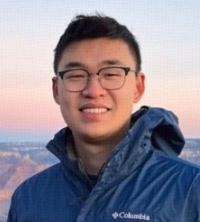 Shanchuan Lin (林山川)合作论文数ByteDance Seed4
 Jiyi Wu (吴吉义)合作论文数阿里巴巴商学院4
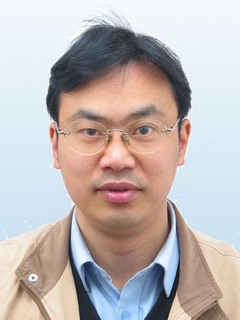 Huaizhong Lin (林怀忠)合作论文数Institute of Computer Software, College of Computer Science and Technology, Zhejiang University4Jiakai Sun合作论文数3Zehua Lan合作论文数3Jiehui Ju合作论文数3
 Zhanjie Zhang合作论文数Sch Artificial Intelligence & Comp Sci, Jiangnan Univ3
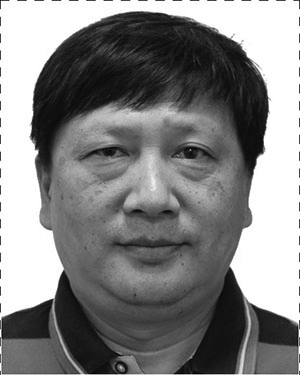 Chuan Xie合作论文数3XiaoLong Ma (马小龙)合作论文数3
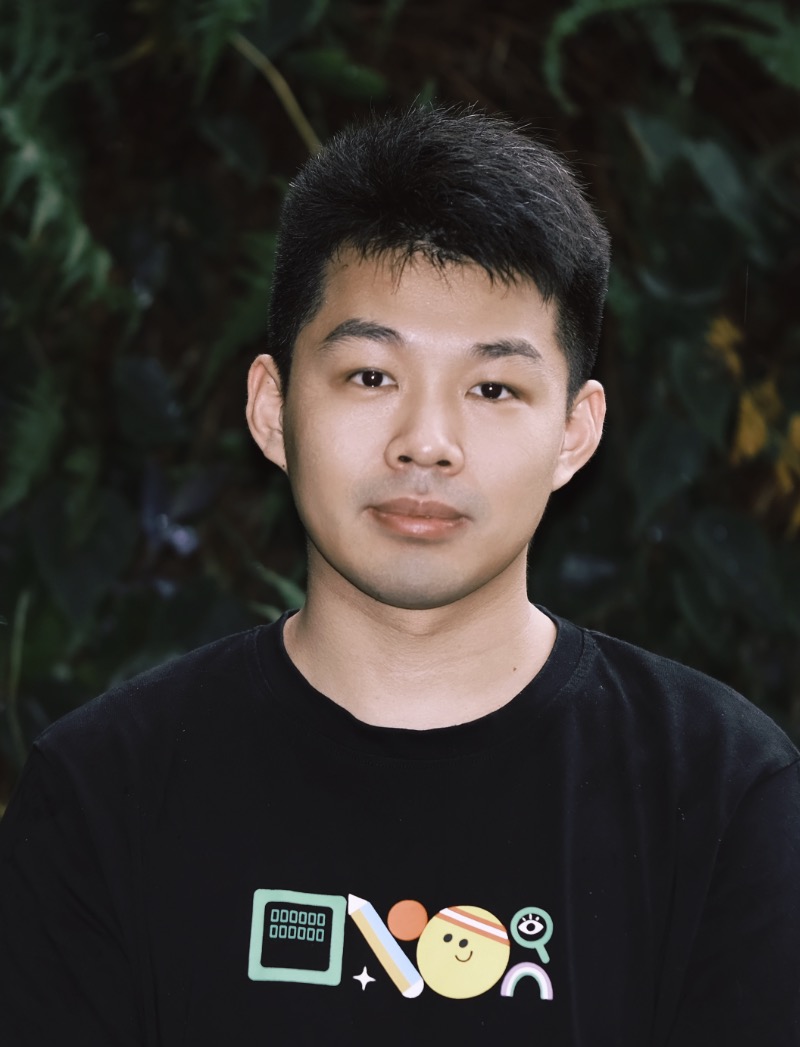 Bingyi Kang合作论文数TikTok3Gui Shan Xiang合作论文数3
 Jingkuan Song (宋井宽)合作论文数School of Computer Science and Technology, Tongji University3Jianhao Ding (丁建浩)合作论文数3
 Yang Zhao合作论文数Zhejiang University3
 Zilong Huang (黄子龙)合作论文数Tencent3
 Lu Jiang合作论文数Apple3
 Jun Hao Liew合作论文数ByteDance Research;TikTok3Jie Wu合作论文数ByteDance Inc.3
 Yao Teng (滕尧)合作论文数The University of Hong Kong2Yilin Zhao合作论文数2Tianwei Xiong合作论文数2
 Yuwei Guo合作论文数Multimedia Laboratory, The Chinese University of Hong Kong2zhijun sun合作论文数2Haoyuan Li合作论文数2
 Yuxuan Wang合作论文数ByteDance2
 Qiong Lu合作论文数2Rui Wang合作论文数2
 Qi Wang合作论文数Henan Univ Technol, Coll Biol Engn, Zhengzhou 450001, Peoples R China2xiaohua li合作论文数2
 Xingyu Xie合作论文数Department of Mathematics, National University of Singapore2
 Jianyi Wang (王健伊)合作论文数Apple2
 Haoqi Fan合作论文数ByteDance Seed2Baoxing Huai合作论文数Huawei Cloud & AI2
 Luping Liu (刘路平)合作论文数University of Hong Kong;Sea AI Lab2
 Zhiwu Qing合作论文数Key Laboratory of Image Processing and Intelligent Control, School of Artificial Intelligence and Automation, Huazhong University of Science and Technology;Tsinghua University2
 Guangyuan Li合作论文数School of Computer and Control Engineering, Yantai University2




