We study diffusion-based world models for reinforcement learning, which offer high generative fidelity but face critical efficiency challenges in control. Current methods either require heavyweight models at inference or rely on highly sequential imagination, both of which impose prohibitive computational costs. We propose Horizon Imagination (HI), an on-policy imagination process for discrete stochastic policies that denoises multiple future observations in parallel. HI incorporates a stabilization mechanism and a novel sampling schedule that decouples the denoising budget from the effective horizon over which denoising is applied while also supporting sub-frame budgets. Experiments on Atari 100K and Craftium show that our approach maintains control performance with a sub-frame budget of half the denoising steps and achieves superior generation quality under varied schedules. Code is released open-source https://anonymous.4open.science/r/horizon-3EA1.
Adapting pre-trained video generation models into controllable world models via latent actions is a promising step towards creating generalist world models. The dominant paradigm adopts a two-stage approach that trains latent action model (LAM) and the world model separately, resulting in redundant training and limiting their potential for co-adaptation. A conceptually simple and appealing idea is to directly replace the forward dynamic model in LAM with a powerful world model and training them jointly, but it is non-trivial and prone to representational collapse. In this work, we propose CoLA-World, which for the first time successfully realizes this synergistic paradigm, resolving the core challenge in joint learning through a critical warm-up phase that effectively aligns the representations of the from-scratch LAM with the pre-trained world model. This unlocks a co-evolution cycle: the world model acts as a knowledgeable tutor, providing gradients to shape a high-quality LAM, while the LAM offers a more precise and adaptable control interface to the world model. Empirically, CoLA-World matches or outperforms prior two-stage methods in both video simulation quality and downstream visual planning, establishing a robust and efficient new paradigm for the field.
Post-training Vision-Language-Action (VLA) models via reinforcement learning (RL) in learned world models has emerged as an effective strategy to adapt to new tasks without costly real-world interactions. However, while using imagined trajectories reduces the sample complexity of policy training, existing methods still heavily rely on task-specific data to fine-tune both the world and reward models, fundamentally limiting their scalability to unseen tasks. To overcome this, we argue that world and reward models should capture transferable physical priors that enable zero-shot inference. We propose RAW-Dream (Reinforcing VLAs in task-Agnostic World Dreams), a new paradigm that completely disentangles world model learning from downstream task dependencies. RAW-Dream utilizes a world model pre-trained on diverse task-free behaviors for predicting future rollouts, and an off-the-shelf Vision-Language Model (VLM) for reward generation. Because both components are task-agnostic, VLAs can be readily finetuned for any new task entirely within this zero-shot imagination. Furthermore, to mitigate world model hallucinations, we introduce a dual-noise verification mechanism to filter out unreliable rollouts. Extensive experiments across simulation and real-world settings demonstrate consistent performance gains, proving that generalized physical priors can effectively substitute for costly task-dependent data, offering a highly scalable roadmap for VLA adaptation.
We study diffusion-based world models for reinforcement learning, which offer high generative fidelity but face critical efficiency challenges in control. Current methods either require heavyweight models at inference or rely on highly sequential imagination, both of which impose prohibitive computational costs. We propose Horizon Imagination (HI), an on-policy imagination process for discrete stochastic policies that denoises multiple future observations in parallel. HI incorporates a stabilization mechanism and a novel sampling schedule that decouples the denoising budget from the effective horizon over which denoising is applied while also supporting sub-frame budgets. Experiments on Atari 100K and Craftium show that our approach maintains control performance with a sub-frame budget of half the denoising steps and achieves superior generation quality under varied schedules. Code is available at https://github.com/leor-c/horizon-imagination.
Unified Vision–Language Models (UVLMs) aim to advance multimodal learning by supporting both understanding and generation within a single framework. However, existing approaches largely focus on architectural unification while overlooking the need for explicit interaction between the two capabilities during task solving. As a result, current models treat understanding and generation as parallel skills rather than synergistic processes. To achieve real synergy, we introduce the interleaved Analyzing–Drafting problem-solving loop (AD-Loop), a new think paradigm that dynamically alternates between analytic and drafting operations. By interleaving textual thoughts with visual thoughts, AD-Loop enables models to iteratively refine both comprehension and outputs, fostering genuine synergy. To train this mechanism, we design a two-stage strategy: supervised learning on interleaved thought data to initialize alternation, followed by reinforcement learning to promote adaptive and autonomous control. Extensive experiments demonstrate that AD-Loop consistently improves performance across standard benchmarks for both understanding and generation, with strong transferability to various UVLMs architectures. Visual analyses further validate the effectiveness of implicit visual thoughts. These results highlight AD-Loop as a principled and broadly applicable strategy for synergizing comprehension and creation. Code and model will be available.
Vision-language-action (VLA) models inherit rich visual-semantic priors from pre-trained vision-language backbones, but adapting them to robotic control remains challenging. Full fine-tuning (FFT) is prone to overfitting on downstream robotic data and catastrophic forgetting of pretrained vision-language capabilities. Parameter-efficient fine-tuning (PEFT) better preserves pre-trained knowledge, yet existing PEFT methods still struggle to adapt effectively to robot control tasks. To address this gap, we propose VLA-GSE, a parameter-efficient VLA fine-tuning framework that improves control adaptation while retaining PEFT's knowledge preservation advantage. Specifically, VLA-GSE (Generalized and Specialized Experts) is initialized by spectrally decomposing the frozen backbone, assigning leading singular components to generalized experts (shared experts) and disjoint residual components to specialized experts (routed experts). This decomposition improves adaptation capacity under a fixed trainable-parameter budget. Under a comparable parameter budget, VLA-GSE updates only 2.51% of the full model parameters and consistently outperforms strong FFT and PEFT baselines. It achieves 81.2% average zero-shot success on LIBERO-Plus, preserves pre-trained VLM capability comparably to LoRA on multimodal understanding benchmarks, and improves real-world manipulation success under multiple distribution shifts. Code is available at: https://github.com/YuhuaJiang2002/VLA-GSE
Generative policies based on diffusion and flow matching have become a dominant paradigm for visuomotor robotic control. We show that replacing the standard Gaussian source distribution with WarmPrior, a simple temporally grounded prior constructed from readily available recent action history, consistently improves success rates on robotic manipulation tasks. We trace this gain to markedly straighter probability paths, echoing the effect of optimal-transport couplings in Rectified Flow. Beyond standard behavior cloning, WarmPrior also reshapes the exploration distribution in prior-space reinforcement learning, improving both sample efficiency and final performance. Collectively, these results identify the source distribution as an important and underexplored design axis in generative robot control.
Human demonstrations for robot imitation learning often contain mistakes and corrective behaviors, such as imprecise grasps, object misalignment, unstable contact, and repeated attempts. While these segments are commonly treated as noisy or suboptimal data, they provide valuable evidence about when execution deviates from a desirable path and how task feasibility can be restored. However, existing reward and value models often rely on monotonic progress assumptions, which capture coarse task advancement but may overlook local execution errors and corrective behaviors in imperfect demonstrations. In this work, we propose ReTVL (ReTry-Supervised Value Learning), a framework for learning mistake-sensitive value functions from mixed-quality robot demonstrations by leveraging retry events as sparse supervision. ReTVL captures the local degradation-and-recovery structure around mistakes by combining global progress calibration with local pairwise preference learning induced by sparsely annotated retry keypoints. The learned value model is then used to reweight demonstration chunks for downstream behavior cloning, reducing the influence of harmful execution errors while preserving useful corrective behaviors. Experiments on real-robot manipulation tasks show that ReTVL produces more fine-grained value estimates than progress-based baselines and improves imitation learning from imperfect demonstrations.
Vision-Language-Action (VLA) models have emerged as a popular paradigm for learning robot manipulation policies that can follow language instructions and generalize to novel scenarios. Recent works have begun to explore the incorporation of latent actions, abstract representations of motion between two frames, into VLA pre-training. In this paper, we introduce villa-X a novel Vision-Language-Latent-Action (ViLLA) framework that advances latent action modeling for learning generalizable robot manipulation policies. Our approach improves both how latent actions are learned and how they are incorporated into VLA pre-training. We demonstrate that villa-X can generate latent action plans in a zero-shot fashion, even for unseen embodiments and open-vocabulary symbolic understanding. This capability enables villa-X to achieve superior performance across diverse simulation tasks in SIMPLER and on two real-world robotic setups involving both gripper and dexterous hand manipulation. These results establish villa-X as a principled and scalable paradigm for learning generalizable robot manipulation policies. We believe it provides a strong foundation for future research.
World models aim to capture the dynamics of the environment, enabling agents to predict and plan for future states. In most scenarios of interest, the dynamics are highly centered on interactions among objects within the environment. This motivates the development of world models that operate on object-centric rather than monolithic representations, with the goal of more effectively capturing environment dynamics and enhancing compositional generalization. However, the development of object-centric world models has largely been explored in environments with limited visual complexity (such as basic geometries). It remains underexplored whether such models can generalize to more complex settings with diverse textures and cluttered scenes. In this paper, we fill this gap by introducing Dyn-O, an enhanced structured world model built upon object-centric representations. Compared to prior work in object-centric representations, Dyn-O improves in both learning representations and modeling dynamics. On the challenging Procgen games, we find that our method can learn object-centric world models directly from pixel observations, outperforming DreamerV3 in rollout prediction accuracy. Furthermore, by decoupling object-centric features into dynamics-agnostic and dynamics-aware components, we enable finer-grained manipulation of these features and generate more diverse imagined trajectories.
Scaling video generation models is believed to be promising in building world models that adhere to fundamental physical laws. However, whether these models can discover physical laws purely from vision can be questioned. A world model learning the true law should give predictions robust to nuances and correctly extrapolate on unseen scenarios. In this work, we evaluate across three key scenarios: in-distribution, out-of-distribution, and combinatorial generalization. We developed a 2D simulation testbed for object movement and collisions to generate videos deterministically governed by one or more classical mechanics laws. We focus on the scaling behavior of training diffusion-based video generation models to predict object movements based on initial frames. Our scaling experiments show perfect generalization within the distribution, measurable scaling behavior for combinatorial generalization, but failure in out-of-distribution scenarios. Further experiments reveal two key insights about the generalization mechanisms of these models: (1) the models fail to abstract general physical rules and instead exhibit "case-based" generalization behavior, i.e., mimicking the closest training example; (2) when generalizing to new cases, models are observed to prioritize different factors when referencing training data: color > size > velocity > shape. Our study suggests that scaling alone is insufficient for video generation models to uncover fundamental physical laws.
World models (WMs) represent the frontier of sample-efficient reinforcement learning, but their complexity leaves many promising improvements unrealized due to the significant expertise and effort required to identify and integrate them. Inspired by Rainbow, which showed that individually known improvements to DQN complement each other and can be effectively combined, we take on this challenge and ask whether the same principle applies to world model agents. We introduce Simulus, a modular token-based WM agent that integrates: (1) a flexible tokenization framework supporting arbitrary combinations of observation and action modalities; (2) intrinsic motivation for epistemic uncertainty reduction; (3) prioritized world model replay; and (4) regression-as-classification for reward and return prediction. Simulus achieves state-of-the-art sample efficiency for planning-free WMs across three diverse benchmarks: visual Atari 100K, continuous-control DMC Proprioception 500K, and symbolic Craftax-1M. Notably, intrinsic motivation proves beneficial even under the tight interaction budgets of sample-efficient RL, despite the risk of wasting scarce interactions on task-irrelevant experience. Ablation studies reveal that each component contributes individually, and their combination yields synergistic gains. Our code and model weights are publicly available at https://github.com/leor-c/Simulus.
Scaling vision-language-action (VLA) model pre-training requires large volumes of diverse, high-quality manipulation trajectories. Most current data is obtained via human teleoperation, which is expensive and difficult to scale. Reinforcement learning (RL) methods learn useful skills through autonomous exploration, making them a viable approach for generating data. However, standard RL training collapses to a narrow execution pattern, limiting its utility for large-scale pre-training. We propose Discover, Lea rn and Reinforce (DLR), an information-theoretic pattern discovery framework that generates multiple distinct, high-success behavioral patterns for VLA pretraining. Empirically, DLR generates a markedly more diverse trajectory corpus on LIBERO. Specifically, it learns multiple distinct, high-success strategies for the same task where standard RL discovers only one, and hence it covers substantially broader regions of the state-action space. When adapted to unseen downstream task suites, VLA models pretrained on our diverse RL data surpass counterparts trained on equal-sized standard RL datasets. Moreover, DLR exhibits positive data-scaling behavior that single-pattern RL lacks. These results position multi-pattern RL as a practical, scalable data engine for embodied foundation models.
Robust Markov Decision Processes (RMDPs) provide a framework for sequential decision-making that is robust to perturbations on the transition kernel. However, current RMDP methods are often limited to small-scale problems, hindering their use in high-dimensional domains. To bridge this gap, we present EWoK, a novel online approach to solve RMDP that Estimates the Worst transition Kernel to learn robust policies. Unlike previous works that regularize the policy or value updates, EWoK achieves robustness by simulating the worst scenarios for the agent while retaining complete flexibility in the learning process. Notably, EWoK can be applied on top of any off-the-shelf non-robust RL algorithm, enabling easy scaling to high-dimensional domains. Our experiments, spanning from simple Cartpole to high-dimensional DeepMind Control Suite environments, demonstrate the effectiveness and applicability of the EWoK paradigm as a practical method for learning robust policies.
Procedurally generated environments such as Procgen Benchmark provide a testbed for evaluating the agent's ability to robustly learn a relevant skill, by situating the agent in ever-changing levels. The diverse levels associated with varying contexts are naturally connected to curriculum learning. Existing works mainly focus on arranging the levels to explicitly form a curriculum. In this work, we take a close look at the learning process itself under the multi-level training in Procgen. Interestingly, the learning process exhibits a gradual shift from easy contexts to hard contexts, suggesting an implicit curriculum in multi-level training. Our analysis is made possible through C-Procgen, a benchmark we build upon Procgen that enables explicit control of the contexts. We believe our findings will foster a deeper understanding of learning in diverse contexts, and our benchmark will benefit future research in curriculum reinforcement learning.
Robust Markov Decision Processes (RMDPs) provide a framework for sequential decision-making that is robust to perturbations on the transition kernel. However, current RMDP methods are often limited to small-scale problems, hindering their use in realistic high-dimensional domains. To bridge this gap, we present **EWoK**, a novel approach for the online RMDP setting that **E**stimates the **Wo**rst transition **K**ernel to learn robust policies. Unlike previous works that regularize the policy or value updates, EWoK achieves robustness by simulating the worst scenarios for the agent while retaining complete flexibility in the learning process. Notably, EWoK can be applied on top of any off-the-shelf *non-robust* RL algorithm, enabling easy scaling to high-dimensional domains. Our experiments, spanning from simple Cartpole to high-dimensional MinAtar and DeepMind Control Suite environments, demonstrate the effectiveness and applicability of the EWoK paradigm as a practical method for learning robust policies.
We present an efficient robust value iteration for \texttt{s}-rectangular robust Markov Decision Processes (MDPs) with a time complexity comparable to standard (non-robust) MDPs which is significantly faster than any existing method. We do so by deriving the optimal robust Bellman operator in concrete forms using our $L_p$ water filling lemma. We unveil the exact form of the optimal policies, which turn out to be novel threshold policies with the probability of playing an action proportional to its advantage.
Motivated by the success of Transformers when applied to sequences of discrete symbols, token-based world models (TBWMs) were recently proposed as sample-efficient methods. In TBWMs, the world model consumes agent experience as a language-like sequence of tokens, where each observation constitutes a sub-sequence. However, during imagination, the sequential token-by-token generation of next observations results in a severe bottleneck, leading to long training times, poor GPU utilization, and limited representations. To resolve this bottleneck, we devise a novel Parallel Observation Prediction (POP) mechanism. POP augments a Retentive Network (RetNet) with a novel forward mode tailored to our reinforcement learning setting. We incorporate POP in a novel TBWM agent named REM (Retentive Environment Model), showcasing a 15.4x faster imagination compared to prior TBWMs. REM attains superhuman performance on 12 out of 26 games of the Atari 100K benchmark, while training in less than 12 hours. Our code is available at \url{https://github.com/leor-c/REM}.
Exploration under sparse rewards remains a key challenge in deep reinforcement learning. Recently, studying exploration in procedurally-generated environments has drawn increasing attention. Existing works generally combine lifelong intrinsic rewards and episodic intrinsic rewards to encourage exploration. Though various lifelong and episodic intrinsic rewards have been proposed, the individual contributions of the two kinds of intrinsic rewards to improving exploration are barely investigated. To bridge this gap, we disentangle these two parts and conduct ablative experiments. We consider lifelong and episodic intrinsic rewards used in prior works, and compare the performance of all lifelong-episodic combinations on the commonly used MiniGrid benchmark. Experimental results show that only using episodic intrinsic rewards can match or surpass prior state-of-the-art methods. On the other hand, only using lifelong intrinsic rewards hardly makes progress in exploration. This demonstrates that episodic intrinsic reward is more crucial than lifelong one in boosting exploration. Moreover, we find through experimental analysis that the lifelong intrinsic reward does not accurately reflect the novelty of states, which explains why it does not help much in improving exploration.
 Jiashi Feng (冯佳时)合作论文数Tencent15
 Shie Mannor合作论文数Jether Energy;Department of Electrical Engineering, Faculty of Electrical Engineering, Technion-Israel Institute of Technology;Machine Learning Center, Technion-Israel Institute of Technology;NVIDIA;Cornell-Tech12
 Navdeep Kumar合作论文数Department of Electrical and Computer Science, Technion - Israel Institute of Technology9
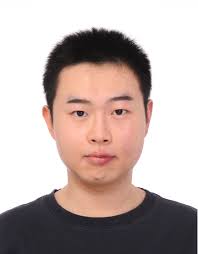 Kuangqi Zhou (周旷奇)合作论文数Zhongguancun Academy8
 Li Zhao合作论文数7
 Bingyi Kang合作论文数TikTok6
 Kfir Y. Levy合作论文数The Andrew and Erna Viterbi Faculty of Electrical and Computer Engineering, Technion - Israel Institute of Technology6
 Daquan Zhou (周大权)合作论文数School of Electronic and Computer Engineering, Peking University;Bytedance Inc.5
 Xinchao Wang合作论文数Department of Electrical and Computer Engineering, National University of Singapore5
 Bryan Hooi合作论文数Department of Computer Science, School of Computing, National University of Singapore;Institute of Data Science, National University of Singapore5
 Uri Gadot合作论文数Technion - Israel Institute of Technology4
 Jiang Bian合作论文数Microsoft Research Asia4
 Chuheng Zhang合作论文数Microsoft Research3
 Xiaojie Jin (靳潇杰)合作论文数School of Computer and Information Technology, Beijing Jiaotong University3
 Shuicheng Yan (颜水成)合作论文数Department of Computer Science, School of Computing, National University of Singapore3
 Jianchao Yang (杨建朝)合作论文数Bytedance Inc.3
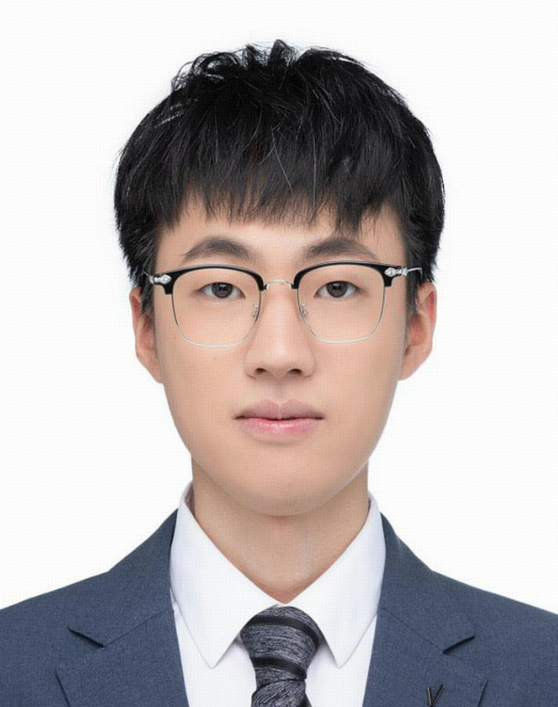 Qibin Hou (侯淇彬)合作论文数College of Computer Science, Nankai University3
 Lior Cohen合作论文数Technion - Israel Institute of Technology2
 Zhenxiong Tan合作论文数National University of Singapore2
 Jian Tang (唐建)合作论文数Department of Decision Sciences, HEC Montreal;Mila - Quebec Artificial Intelligence Institute;BioGeometry2
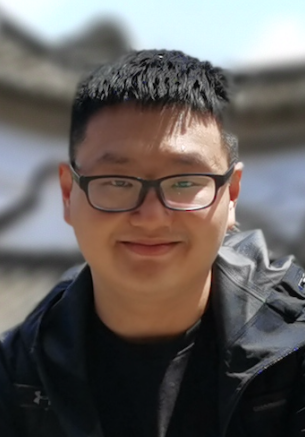 Tingyang Xu合作论文数Machine Learning Center, Tencent AI Lab2
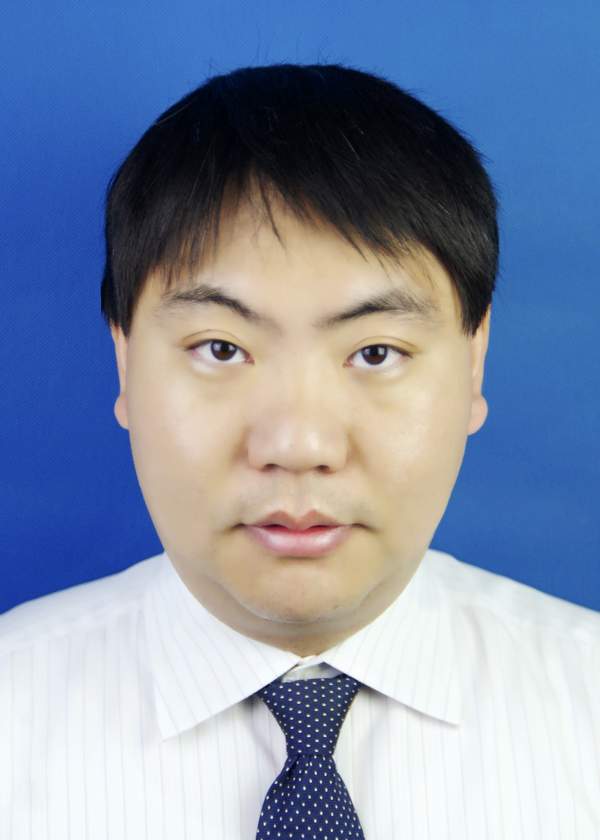 Jie Shao (邵杰)合作论文数Centre for Future Media, School of Computer Science and Engineering, University of Electronic Science and Technology of China2
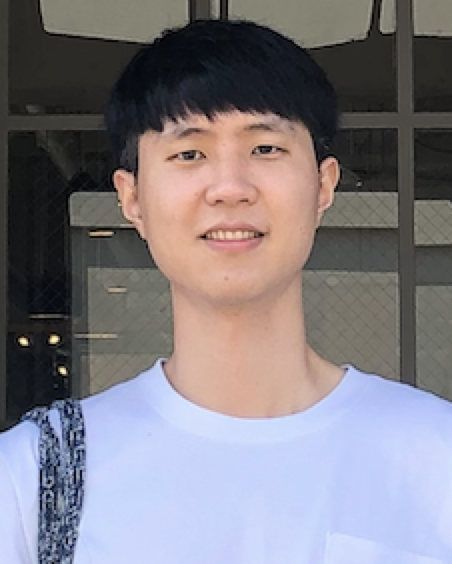 Kimin Lee合作论文数Graduate School of AI, Korea Advanced Institute of Science and Technology2
 Bobo Li合作论文数National University of Singapore1Yang Zhao合作论文数1
 Ofir Nabati合作论文数Technion - Israel Institute of Technology;Google1
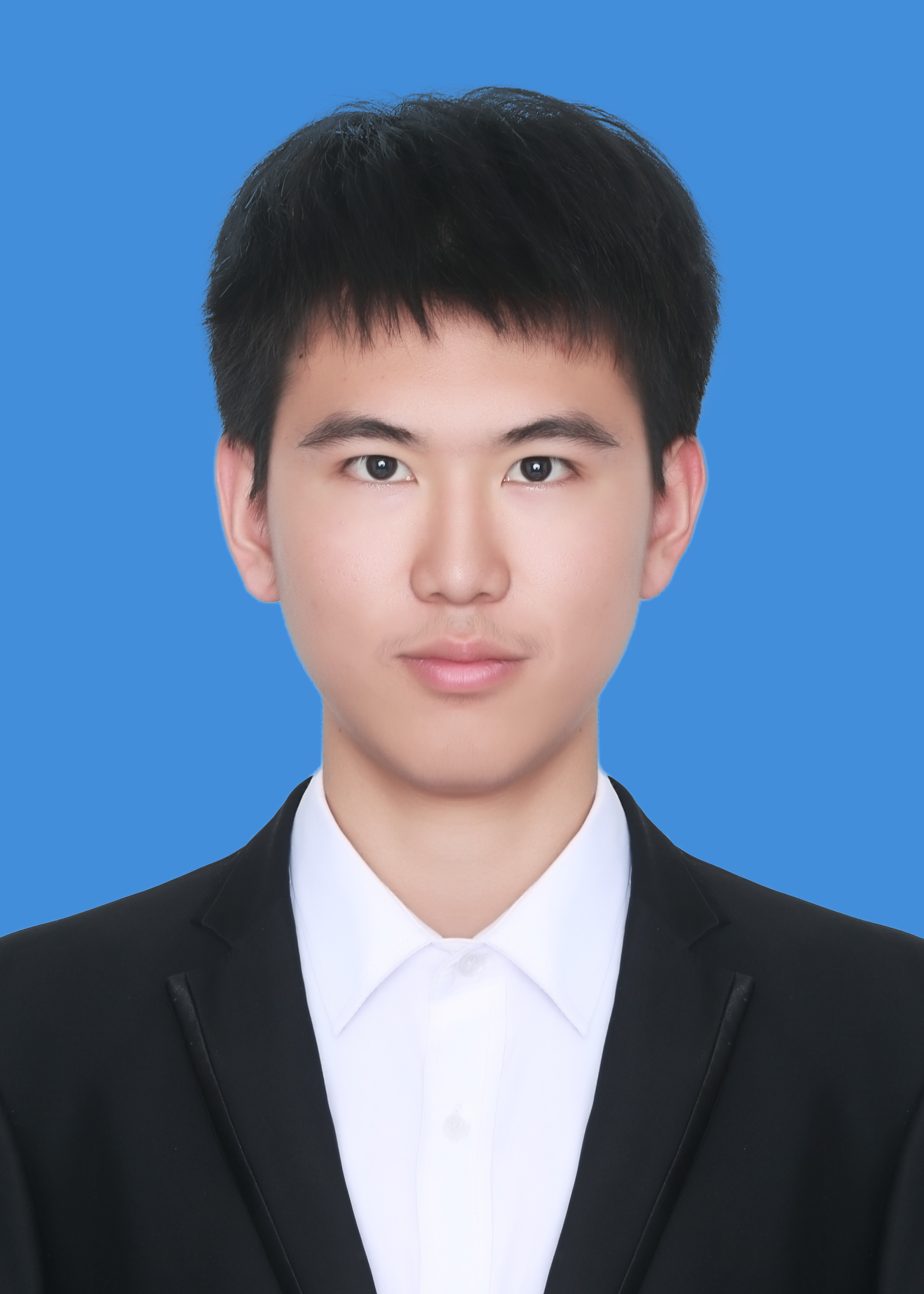 Yucen Wang (汪钰岑)合作论文数National Key Laboratory for Novel Software Technology, School of Computer Science, Nanjing University1
 Yanjiang Guo合作论文数Institute for Interdisciplinary Information Sciences, Tsinghua University1Qixin Zhang合作论文数College of Computing and Data Science, Nanyang Technological University1Yanfei Dong合作论文数1
 Rui Lu (卢睿)合作论文数Department of Automation, Tsinghua University;Institute for Interdisciplinary Information Sciences, Tsinghua University1
 Jianyu Chen (陈建宇)合作论文数Institute for Interdisciplinary Information Sciences, Tsinghua University;Shanghai Qi Zhi Institute;Robot Era1
 Fengzhuo Zhang (张丰卓)合作论文数National University of Singapore1Huan Xu合作论文数Machine Intelligence Technology Lab, Alibaba Group1
 Yingtian Zou合作论文数National University of Singapore1
 Zhaoran Wang合作论文数Departments of Industrial Engineering & Management Sciences, Northwestern University;Departments of Computer Science, Northwestern University1
 Zhijie Lin (林志杰)合作论文数ByteDance1
 Zizhao Wang合作论文数University of Texas at Austin;OpenAI1
 Shengqiong Wu (吴胜琼)合作论文数Department of Computer Science, University of Oxford1
 Yang Yue (乐洋)合作论文数Department of Automation, Tsinghua University1
 Xiangtai Li (李祥泰)合作论文数ByteDance1
 Boyi Liu合作论文数Snowflake1
 Jun Yang合作论文数Department of Mathematical Sciences, University of Copenhagen1
 Zhuoran Yang合作论文数1
 Xiu Su (苏修)合作论文数School of Artificial Intelligence, Central South University1
 Furu Wei (韦福如)合作论文数Microsoft Research Asia1
 Lei Cui (崔磊)合作论文数Microsoft Research Asia1
 Gao Huang (黄高)合作论文数Institute of Industrial Intelligence and Systems, Department of Automation, Tsinghua University1
 Xiaoyu Chen合作论文数Institute for Interdisciplinary Information Sciences, Tsinghua University1




