Diffusion models have become a leading framework in generative modeling, yet their theoretical understanding – especially for high-dimensional data concentrated on low-dimensional structures – remains incomplete. This paper investigates how diffusion models learn such structured data, focusing on two key aspects: statistical complexity and influence of data geometric properties. By modeling data as samples from a smooth Riemannian manifold, our analysis reveals crucial decompositions of score functions in diffusion models under different levels of injected noise. We also highlight the interplay of manifold curvature with the structures in the score function. These analyses enable an efficient neural network approximation to the score function, built upon which we further provide statistical rates for score estimation and distribution learning. Remarkably, the obtained statistical rates are governed by the intrinsic dimension of data and the manifold curvature. These results advance the statistical foundations of diffusion models, bridging theory and practice for generative modeling on manifolds.
Despite advances in multimodal large language models, autonomous web agents still struggle to reliably execute long-horizon tasks on complex and dynamic web interfaces. Existing agents often suffer from inaccurate element grounding, the absence of site-specific procedural knowledge, and unstable long-term task tracking and memory, particularly when operating over complex Document Object Model structures. To address these limitations, we introduce Avenir-Web, a web agent that achieves a new open-source state of the art on the Online-Mind2Web benchmark in real-world deployment. Avenir-Web leverages a Mixture of Grounding Experts, Experience-Imitation Planning for incorporating procedural priors, and a task-tracking checklist combined with adaptive memory to enable robust and seamless interaction across diverse user interface paradigms. We evaluate Avenir-Web on Online-Mind2Web, a rigorous benchmark of live and user-centered web tasks. Our results demonstrate that Avenir-Web significantly surpasses prior open-source agents and attains performance parity with top-tier proprietary models, thereby establishing a new open-source state of the art for reliable web agents on live websites.
Large Language Models (LLMs) have demonstrated remarkable capabilities across diverse tasks but remain fundamentally static, unable to adapt their internal parameters to novel tasks, evolving knowledge domains, or dynamic interaction contexts. As LLMs are increasingly deployed in open-ended, interactive environments, this static nature has become a critical bottleneck, necessitating agents that can adaptively reason, act, and evolve in real time. This paradigm shift – from scaling static models to developing self-evolving agents – has sparked growing interest in architectures and methods enabling continual learning and adaptation from data, interactions, and experiences. This survey provides the first systematic and comprehensive review of self-evolving agents, organizing the field around three foundational dimensions: what, when, and how to evolve. We examine evolutionary mechanisms across agent components (e.g., models, memory, tools, architecture), categorize adaptation methods by stages (e.g., intra-test-time, inter-test-time), and analyze the algorithmic and architectural designs that guide evolutionary adaptation (e.g., scalar rewards, textual feedback, single-agent and multi-agent systems). Additionally, we analyze evaluation metrics and benchmarks tailored for self-evolving agents, highlight applications in domains such as coding, education, and healthcare, and identify critical challenges and research directions in safety, scalability, and co-evolutionary dynamics. By providing a structured framework for understanding and designing self-evolving agents, this survey establishes a roadmap for advancing more adaptive, robust, and versatile agentic systems in both research and real-world deployments, and ultimately sheds light on the realization of Artificial Super Intelligence (ASI) where agents evolve autonomously and perform beyond human-level intelligence across tasks.
LLM agents achieve strong performance on complex reasoning tasks but incur high latency and compute cost. In practice, many queries fall within the capability boundary of cutting-edge LLMs and do not require full agent execution, making effective routing between LLMs and agents a key challenge. We study the problem of routing queries between lightweight LLM inference and full agent execution under realistic cold-start settings. To address this, we propose BoundaryRouter, a training-free routing framework that uses early behavioral experience and rubric-guided reasoning to decide whether to answer a query with direct LLM inference or escalate to an agent. BoundaryRouter builds a compact experience memory by executing both systems on a shared seed set and retrieves similar cases at inference time to guide routing decisions. To evaluate this method, we introduce RouteBench, a benchmark covering in-domain, paraphrased, and out-of-domain route settings. Experiments show that BoundaryRouter reduces inference time by 60.6
Looped Transformers scale sequential computation by applying a compact stack of physical blocks for multiple rounds, increasing unrolled depth without increasing stored parameters. This reuse changes the residual-scaling problem: in an untied Transformer, each residual branch receives and applies its own parameter update, whereas in a looped Transformer one shared update aggregates gradients from repeated visits and is read back by those same visits in the next linearized forward pass. We formalize this tied-depth effect through a first-order perturbation bound controlled by a visit-alignment coefficient κ_R. The bound recovers the DeepNorm exponent when visits decorrelate, but in the conservative aligned regime it requires the exponent to increase from 1/4 to 1/2 as loop count grows at fixed physical depth. The resulting method, DeepLoop, keeps the Post-LN DeepNorm architecture and sets α=(2N)^1/2 and β=(8N)^-1/2 for unrolled depth N. On GPT-style looped language models at GPT-2 small and GPT-2 medium scale, DeepLoop is neutral when no physical block is revisited and improves validation loss and downstream accuracy once recurrent depth is activated. These results show that stable recurrent depth requires residual scaling rules that account for parameter visits, not only nominal layer count.
Agentic reinforcement learning has advanced large language models (LLMs) to reason through long chain-of-thought trajectories while interleaving external tool use. Existing approaches assume a fixed inventory of tools, which limits the adaptability of LLM agents to new or evolving toolsets. We present AutoTool, a training framework that equips LLM agents with dynamic tool-selection capabilities throughout their reasoning trajectories. AutoTool employs a dual-phase optimization pipeline: (i) SFT and RL-based trajectory stabilization for coherent reasoning, and (ii) KL-regularized Plackett–Luce Ranking to refine consistent multi-step tool selection. We further build a 200k dataset with explicit tool-selection rationales across 1,000+ tools and 100+ tasks spanning mathematics, science, code generation, and multimodal reasoning. Across ten diverse benchmarks, we train two base models, Qwen3-8B and Qwen2.5-VL-7B, with AutoTool. With fewer parameters, AutoTool consistently outperforms advanced LLM agents and tool-integration methods, yielding average gains of 6.4\% in math & science reasoning, 4.5\% in search-based QA, 7.7\% in code generation, and 6.9\% in multimodal understanding. In addition, AutoTool exhibits stronger generalization by dynamically leveraging unseen tools from evolving toolsets during inference.
Future prediction is a complex task for LLM agents, requiring a high level of analytical thinking, information gathering, contextual understanding, and decision-making under uncertainty. Agents must not only gather and interpret vast amounts of dynamic information but also integrate diverse data sources, weigh uncertainties, and adapt predictions based on emerging trends, just as human experts do in fields like politics, economics, and finance. Despite its importance, no large-scale benchmark exists for evaluating agents on future prediction, largely due to challenges in handling real-time updates and retrieving timely, accurate answers. To address this, we introduce FutureX, a dynamic and live evaluation benchmark specifically designed for LLM agents performing future prediction tasks. FutureX is the largest and most diverse live benchmark for future prediction, supporting real-time daily updates and eliminating data contamination through an automated pipeline for question gathering and answer collection. We evaluate 25 LLM/agent models, including those with reasoning, search capabilities, and integration of external tools such as the open-source Deep Research Agent and closed-source Deep Research models. This comprehensive evaluation assesses agents’ adaptive reasoning and performance in dynamic environments. Our goal is to establish a dynamic, contamination-free evaluation standard that drives the development of LLM agents capable of performing at the level of professional human analysts in complex reasoning and predictive thinking.
Multi-agent systems (MAS) extend large language models (LLMs) from independent single-model reasoning to coordinative system-level intelligence. While existing LLM agents depend on text-based mediation for reasoning and communication, we take a step forward by enabling models to collaborate directly within the continuous latent space. We introduce LatentMAS, an end-to-end training-free framework that enables pure latent collaboration among LLM agents. In LatentMAS, each agent first performs auto-regressive latent thoughts generation through last-layer hidden embeddings instead of text. Then, a shared latent working memory preserves and transfers each agent's internal representations and latent thoughts, ensuring lossless information exchange without re-encoding. We provide detailed theoretical analyses showing that LatentMAS achieves higher expressiveness and lossless information preservation with lower overall complexity than standard text-based MAS. In addition, empirical evaluations across 9 comprehensive benchmarks spanning math and science reasoning, commonsense understanding, and code generation show that LatentMAS outperforms advanced single agents and text-based MAS baselines, achieving up to 14.6
As large language models evolve into tool-augmented agents, a central question remains unresolved: when is external tool use actually justified? Existing agent frameworks typically treat tools as ordinary actions and optimize for task success or reward, offering little principled distinction between epistemically necessary interaction and unnecessary delegation. This position paper argues that \textit{agents should invoke external tools only when epistemically necessary}. Here, epistemic necessity means that a task cannot be completed reliably via the agent’s internal reasoning over its current context, without any external interaction. We introduce the \textit{\textbf{Theory of Agent (ToA)}}, a framework that treats agents as making sequential decisions about whether remaining uncertainty should be resolved internally or delegated externally. From this perspective, common agent failure modes (e.g., overthinking and overacting) arise from miscalibrated decisions under uncertainty rather than deficiencies in reasoning or tool execution alone. We further discuss implications for training, evaluation, and agent design, highlighting that unnecessary delegation not only causes inefficiency but can impede the development of internal reasoning capability. Our position provides a normative criterion for tool use that complements existing decision-theoretic models and is essential for building agents that are not only correct, but increasingly intelligent.
Large Language Models (LLMs) have emerged as integral tools for reasoning, planning, and decision-making, drawing upon their extensive world knowledge and proficiency in language-related tasks. LLMs thus hold tremendous potential for natural language interaction within multi-agent systems to foster cooperation. However, LLM agents tend to over-report and comply with any instruction, which may result in information redundancy and confusion in multi-agent cooperation. Inspired by human organizations, this paper introduces a framework that imposes prompt-based organization structures on LLM agents to mitigate these problems. Through a series of experiments with embodied LLM agents and human-agent collaboration, our results highlight the impact of designated leadership on team efficiency, shedding light on the leadership qualities displayed by LLM agents and their spontaneous cooperative behaviors. Further, we harness the potential of LLMs to propose enhanced organizational prompts, via a Criticize-Reflect process, resulting in novel organization structures that reduce communication costs and enhance team efficiency.
Mixed-Integer Linear Programming (MILP) is a foundational tool for complex decision-making problems. However, the NP-hard nature of MILP presents a significant computational challenge, motivating the development of machine learning-based heuristic solutions to accelerate downstream solvers. While recent generative models have shown promise in learning powerful heuristics, they suffer from a critical limitation. That is, they model the distribution of only the integer variables and fail to capture the intricate coupling between integer and continuous variables, creating an information bottleneck and ultimately leading to suboptimal solutions. To this end, we propose Joint Continuous-Integer Flow for Mixed-Integer Linear Programming (FMIP), which is the first generative framework that models the joint distribution of both integer and continuous variables for MILP solutions. Built upon the joint modeling paradigm, a holistic guidance mechanism is designed to steer the generative trajectory, actively refining solutions toward optimality and feasibility during the inference process. Extensive experiments on eight standard MILP benchmarks demonstrate the superior performance of FMIP against existing baselines, reducing the primal gap by 41.34% on average. Moreover, we show that FMIP is fully compatible with arbitrary backbone networks and various downstream solvers, making it well-suited for a broad range of real-world MILP applications.
While modern Large Language Models (LLMs) and agentic artificial intelligence (AI) have demonstrated transformative capabilities in digital domains, the realization of embodied AI capable of real-world scientific discovery remains a difficult frontier. The advancements are hindered by the inherent complexity of integrating high-level reasoning, multimodal information processing and real-time physical execution. Here we introduce Qumus, the first AI quantum materials experimentalist. Physically embodied within a robotic mini-laboratory, Qumus is an intelligent, multimodal, and multi-agent system designed for the creation and nano-processing of atomically thin two-dimensional (2D) materials and stacked van der Waals (vdW) structures. Qumus autonomously navigates the full scientific cycle, from hypothesis generation and protocol planning to multi-step experimental execution, result analysis and reporting, acting as an experimentalist. Markedly, the system has achieved, for the first time, the AI-creation of graphene, as well as the first AI-fabrication of complex nanodevices including atomically thin field-effect transistors via vdW stacking. Qumus excels at these tasks by demonstrating autonomous error correction and closed-loop experimentation. Our results establish a generalizable framework for self-improving embodied AI systems that learn directly from the quantum world, opening a pathway toward accelerated discovery in quantum materials, electronics and beyond.
Large language models (LLMs) present significant deployment challenges due to their immense computational and memory requirements. While semi-structured pruning, particularly 2:4 sparsity, offers a path to practical hardware acceleration, existing methods often incur substantial performance degradation. To bridge this gap, we introduce ARMOR: (Adaptive Representation with Matrix-factORization), a novel one-shot post-training pruning algorithm. Instead of directly pruning weights, ARMOR factorizes each weight matrix into a 2:4 sparse core wrapped by two low-overhead, block diagonal matrices. These wrappers act as efficient pre and post-transformation error correctors, offering greater flexibility to preserve model quality compared to conventional 2:4 pruning techniques. The sparse core and block diagonal wrappers are chosen through a block coordinate descent algorithm that minimizes a layer-wise proxy loss. We theoretically prove this optimization is guaranteed to converge to a solution with a proxy loss less than or equal to state-of-the-art pruning algorithms. Experiments on Llama (Touvron et al., 2023; Dubey et al., 2024) and Qwen (Yang et al., 2025) model families demonstrate that ARMOR consistently and significantly outperforms state-of-the-art 2:4 pruning methods across a wide range of downstream tasks and perplexity evaluations. ARMOR achieves this superior performance while retaining the inference speedups and substantial memory usage reductions of 2:4 pruning, establishing a more effective trade-off between model compression and task accuracy
Classical Chinese, as the core carrier of Chinese culture, plays a crucial role in the inheritance and study of ancient literature. However, existing natural language processing models primarily optimize for Modern Chinese, resulting in inadequate performance on Classical Chinese. This paper presents a comprehensive solution for Classical Chinese language processing. By continuing pre-training and instruction fine-tuning on the LLaMA3-8B-Chinese model, we construct a large language model, WenyanGPT, which is specifically designed for Classical Chinese tasks. Additionally, we develop an evaluation benchmark dataset, WenyanBENCH. Experimental results on WenyanBENCH demonstrate that WenyanGPT significantly outperforms current advanced LLMs in various Classical Chinese tasks. We make the model's training data, instruction fine-tuning data[,] and evaluation benchmark dataset publicly available to promote further research and development in the field of Classical Chinese processing.
The rapid adoption of generative artificial intelligence (GenAI) in the biosciences is transforming biotechnology, medicine, and synthetic biology. Yet this advancement is intrinsically linked to new vulnerabilities, as GenAI lowers the barrier to misuse and introduces novel biosecurity threats, such as generating synthetic viral proteins or toxins. These dual-use risks are often overlooked, as existing safety guardrails remain fragile and can be circumvented through deceptive prompts or jailbreak techniques. In this Perspective, we first outline the current state of GenAI in the biosciences and emerging threat vectors ranging from jailbreak attacks and privacy risks to the dual-use challenges posed by autonomous AI agents. We then examine urgent gaps in regulation and oversight, drawing on insights from 130 expert interviews across academia, government, industry, and policy. A large majority (≈ 76%) expressed concern over AI misuse in biology, and 74% called for the development of new governance frameworks. Finally, we explore technical pathways to mitigation, advocating a multi-layered approach to GenAI safety. These defenses include rigorous data filtering, alignment with ethical principles during development, and real-time monitoring to block harmful requests. Together, these strategies provide a blueprint for embedding security throughout the GenAI lifecycle. As GenAI becomes integrated into the biosciences, safeguarding this frontier requires an immediate commitment to both adaptive governance and secure-by-design technologies.
Advanced diffusion models like Stable Diffusion 3, Omost, and FLUX have made notable strides in compositional text-to-image generation. However, these methods typically exhibit distinct strengths for compositional generation, with some excelling in handling attribute binding and others in spatial relationships. This disparity highlights the need for an approach that can leverage the complementary strengths of various models to comprehensively improve the composition capability. To this end, we introduce IterComp, a novel framework that aggregates composition-aware model preferences from multiple models and employs an iterative feedback learning approach to enhance compositional generation. Specifically, we curate a gallery of six powerful open-source diffusion models and evaluate their three key compositional metrics: attribute binding, spatial relationships, and non-spatial relationships. Based on these metrics, we develop a composition-aware model preference dataset comprising numerous image-rank pairs to train composition-aware reward models. Then, we propose an iterative feedback learning method to enhance compositionality in a closed-loop manner, enabling the progressive self-refinement of both the base diffusion model and reward models over multiple iterations. Detailed theoretical proof demonstrates the effectiveness of this method. Extensive experiments demonstrate our significant superiority over previous methods, particularly in multi-category object composition and complex semantic alignment. IterComp opens new research avenues in reward feedback learning for diffusion models and compositional generation. Code: https://github.com/YangLing0818/IterComp
The rapid adoption of generative AI (GenAI) in biotechnology offers immense potential but also raises serious safety concerns. AI models for protein engineering, genome editing, and molecular synthesis can be misused to enhance viral virulence, design toxins, or modify human embryos, while ethical and policy discussions lag behind technological advances. This Correspondence calls for proactive, built-in, AI-native safeguards within GenAI tools. With more research and development, emerging AI safety technologies—watermarking, alignment, anti-jailbreak methods, and unlearning—can complement governance policies and provide scalable biosecurity solutions. We also stress the global community’s role in researching, developing, testing, and implementing these measures to ensure the responsible GenAI deployment in biotechnology.
Physics provides fundamental laws that describe and predict the natural world. AI systems aspiring toward more general, real-world intelligence must therefore demonstrate strong physics problem-solving abilities: to formulate and apply physical laws for explaining and predicting physical processes. The International Physics Olympiad (IPhO)–the world's most prestigious physics competition–offers a rigorous benchmark for this purpose. We introduce Physics Supernova, an AI agent system with superior physics problem-solving abilities that match elite IPhO gold medalists. In IPhO 2025 theory problems, Physics Supernova attains 23.5/30 points, ranking 14th of 406 contestants and surpassing the median performance of human gold medalists. We extensively analyzed Physics Supernova's capabilities and flexibility across diverse physics tasks. These results show that principled tool integration within agent systems can deliver competitive improvements in solving challenging science problems. The codes are available at https://github.com/CharlesQ9/Physics-Supernova.
Verification is crucial for effective mathematical reasoning. We present a new temporal consistency method where verifiers iteratively refine their judgments based on the previous assessment. Unlike one-round verification or multi-model debate approaches, our method leverages consistency in a sequence of self-reflection actions to improve verification accuracy. Empirical evaluations across diverse mathematical process error identification benchmarks (Mathcheck, ProcessBench, and PRM800K) show consistent performance improvements over baseline methods. When applied to the recent DeepSeek R1 distilled models, our method demonstrates strong performance, enabling 7B/8B distilled models to outperform all 70B/72B models and GPT-4o on ProcessBench. Notably, the distilled 14B model with our method achieves performance comparable to Deepseek-R1.
The paper-to-video task converts a research paper into a structured video abstract, distilling key concepts, methods, and conclusions into an accessible, well-organized format. While state-of-the-art video generation models demonstrate potential, they are constrained by limited context windows, rigid video duration constraints, limited stylistic diversity, and an inability to represent domain-specific knowledge. To address these limitations, we introduce Preacher, the first paper-to-video agentic system. Preacher employs a topdown approach to decompose, summarize, and reformulate the paper, followed by bottom-up video generation, synthesizing diverse video segments into a coherent abstract. To align cross-modal representations, we define key scenes and introduce a Progressive Chain of Thought (P-CoT) for granular, iterative planning. Preacher successfully generates high-quality video abstracts across five research fields, demonstrating expertise beyond current video generation models. Code will be released at: https://github.com/GenVerse/Paper2Video
 Kaixuan Huang (黄凯旋)合作论文数Department of Electrical and Computer Engineering, Princeton University25
 Minshuo Chen (陈旻硕)合作论文数Princeton University23
 Le Cong (丛乐)合作论文数Department of Pathology, School of Medicine, Stanford University22
 Amrit Singh Bedi合作论文数Department of Computer Science, University of Central Florida18
 Lin F. Yang (杨林)合作论文数18
 Huazheng Wang合作论文数School of Electrical Engineering and Computer Science, College of Engineering, Oregon State University16
 Ming Yin合作论文数Princeton University;Amazon Web Services;UC Santa Barbara15
 Alec Koppel合作论文数JP Morgan AI Research14
 Zihao Li (李子灏)合作论文数Department of Electrical and Computer Engineering, Princeton University13
 Souradip Chakraborty合作论文数Department of Computer Science, Brendan Iribe Center for Computer Science and Engineering, University of Maryland13
 Ling Yang (杨灵)合作论文数Department of Electrical and Computer Engineering, School of Engineering and Applied Science, Princeton University13
 Hui Yuan (袁慧)合作论文数Department of Electrical and Computer Engineering, School of Engineering and Applied Science, Princeton University13
 Tuo Zhao (赵拓)合作论文数H. Milton Stewart School of Industrial and Systems Engineering, College of Engineering, Georgia Institute of Technology;Center for Statistical Science, Interdisciplinary Program, Georgia Institute of Technology;Algorithms & Randomness Center, Georgia Institute of Technology13
 Chengzhuo Ni合作论文数Two Sigma12
 Zaixi Zhang合作论文数Princeton AI Lab, Princeton University12
 Xuezhou Zhang合作论文数Faculty of Computing & Data Sciences, Boston University11
 Yaqi Duan合作论文数Department of Technology, Operations, and Statistics, Leonard N. Stern School of Business, New York University10
 Junyu Zhang合作论文数Department of Industrial Systems Engineering and Management, College of Design and Engineering, National University of Singapore;Princeton University10
 Furong Huang合作论文数Department of Computer Science, University of Maryland;Center for Machine Learning, University of Maryland;Institute for Advanced Computer Studies, University of Maryland10
 Xiang Ji合作论文数Department of Electrical and Computer Engineering, School of Engineering and Applied Science, Princeton University9
 Zhuoran Yang合作论文数9
 Dimitri P. Bertsekas合作论文数School of Computing and Augmented Intelligence, Arizona State University8
 Jiacheng Guo合作论文数Department of Electrical and Computer Engineering, School of Engineering and Applied Science, Princeton University7
 Anru Zhang合作论文数Department of Biostatistics and Bioinformatics, Duke University School of Medicine7
 Yichen Chen合作论文数Department of Computer Science,Princeton University7
 Yuchao Li合作论文数Alibaba Group7
 Yinyu Ye (叶荫宇)合作论文数Antai College of Economics & Management, Shanghai Jiao Tong University;School of Data Science, The Chinese University of Hong Kong, Shenzhen7
 Yu-Xiang Wang (王宇翔)合作论文数Department of Computer Science and Engineering, University of California, San Diego;Halıcıoğlu Data Science Institute, University of California, San Diego7
 Csaba Szepesvári合作论文数Department of Computing Science, Faculty of Science, University of Alberta;DeepMind;Alberta Machine Intelligence Institute7
 Dinesh Manocha合作论文数Department of Computer Science, University of Maryland7Yuanhao Qu合作论文数6
 Zheng Yu (俞铮)合作论文数DAMO Research Lab, Alibaba6
 Rongrong Ji (纪荣嵘)合作论文数School of Informatics, Xiamen University6
 Fei Chao (晁飞)合作论文数Department of Artificial Intelligence, School of Informatics, Xiamen University6
 Wei Lin (林伟)合作论文数Alibaba Group6
 Yukang Yang合作论文数Department of Electrical and Computer Engineering, Princeton University5
 Zhaoran Wang合作论文数Departments of Industrial Engineering & Management Sciences, Northwestern University;Departments of Computer Science, Northwestern University5
 Shilong Liu (刘世隆)合作论文数Princeton AI Lab, Princeton University5
 Chengkun Wang (王成坤)合作论文数School of Basic Medical Sciences, Nanjing Medical University5
 Li Shen (沈力)合作论文数School of Cyber Science and Technology, Sun Yat-sen University;Center for AI Theoretical Foundation and Systems, Shenzhen Loop Area Institute5Joseph Chahn Kim合作论文数4
 Jiaru Zou合作论文数Stanford University4
 Zeyu Jia (贾泽宇)合作论文数Department of Electrical Engineering and Computer Science, Massachusetts Institute of Technology4
 Soumya Suvra Ghosal合作论文数Adobe Research4Woon Sang Cho合作论文数4
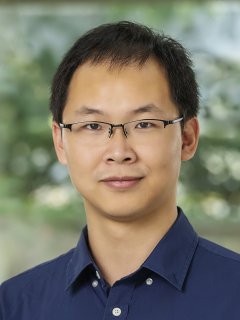 Chi Jin (金驰)合作论文数Department of Electrical and Computer Engineering, Princeton University;OpenAI4Ethan X. Fang合作论文数Department of Biostatistics & Bioinformatics, Duke University School of Medicine;Rhodes Information Initiative, Duke University;Fuqua School of Business, Duke University4
 Botao Hao (郝博韬)合作论文数Deepmind4
 Han Liu合作论文数Department of Computer Science, McCormick School of Engineering, Northwestern University;Department of Statistics, Northwestern University4




