建立声表面波气相色谱仪现场快速检测麝香中主要成分麝香酮的方法.取麝香样品经过超声、过滤后,使用声表面波气相色谱仪进行检测.DB-5毛细管色谱柱初始温度45?C,以10?C/s程序升温至180?C,检测器温度40?C.麝香酮在7 s内出峰,最低检测限为15.8 pg,精密度相对标准偏差值为2.10%~3.84%,重复性相对标准偏差值为4.23%,稳定性相对标准偏差值为4.49%,麝香酮溶液在0.2~10μg/mL质量浓度范围内线性良好.测试16组麝香样品,麝香酮含量在2.08%~3.83%范围内.麝香酮含量最高的为四川圭兴林麝,含量最低的为陕西凤县林麝.三年生的林麝和马麝中麝香酮含量均大于一年生的林麝和马麝.声表面波气相色谱仪检测麝香酮具有较好的响应特性、精密度、重复性和稳定性,建立的声表面波气相色谱方法能够实现麝香中主要成分麝香酮快速、准确的定量检测.
该文通过对声表面波谐振器指条厚度的优化提升了冷凝式气体传感器的灵敏度.基于流固耦合理论,利用有限元商业软件建立了有液膜负载和无液膜负载下的多物理场三维周期模型,并提取了相应的耦合模参量,利用耦合模模型及P矩阵级联技术,计算了不同指条厚度下液膜负载引起的传感器响应,获得了冷凝式声表面波气体传感器灵敏度随指条厚度的变化关系.实验中制备了6种不同电极厚度的声表面波谐振器,并利用甲基膦酸二甲酯实验样品完成了传感器的响应测试,验证了理论分析的正确性.结果表明,冷凝式声表面波气体传感器的灵敏度随指条厚度的增加先变大后减小,最优归一化电极厚度为6.4%~7.6%之间.该研究结果对进一步提升传感器灵敏度具有重要意义.
建立了同时检测唾液中苯丙胺和甲基苯丙胺的快速前处理和顶空-声表面波气相色谱方法.对前处理方法中的NaOH使用量、振荡速度以及振荡时间等参数进行了考察.结果显示,最佳前处理条件为NaOH使用量2.5 g、振荡速度800 r·min-1以及振荡时间4 min.最佳条件下,声表面波气相色谱仪测定苯丙胺和甲基苯丙胺的检出限分别为0.14μg·L-1和1.15μg·L-1,线性范围为5~75μg·L-1,线性相关系数分别为0.995和0.994.在12.5μg·L-1和25μg·L-1添加水平时,回收率范围为89.6%~106.9%,相对标准偏差为4.3%~8.1%(n=6).本方法采用快速前处理结合声表面波气相色谱仪,操作简单,检测灵敏度高、速度快,适用于公安机关毒驾现场检测初筛工作.
A new form of two-dimensional coupling-of-modes (2D-COM) equations considering power flow angle was proposed and verified experimentally. By adopting a wave vector relationship in elliptic approximation form, the parabolic 2D-COM equations were improved into an elliptic form which is applicable to the simulation of surface acoustic wave resonators considering power flow angle (PFA-SAWR). Combined the method with COMSOL PDE module, a complete simulation model for PFA-SAWR’s frequency response was established. Take the periodic grating structure on the AT-22° quartz substrate (PFA ≈5.4°) as an example, a case analysis was carried out based on this new simulation model. The accuracy of the model was confirmed by comparing the results of 3D FEM analysis. Then, in the experiment part, a PFA-SAWR on the AT-22° quartz substrate was fabricated and measured, the frequency responses obtained by simulation and experiments are in good agreement. Finally, a new resonator structure which can effectively suppress the transverse modes and improve the Q value of resonators was introduced. This new simulation model provides an effective technique for accurately analyzing and designing PFA-SAWRs.
应用声表面波气相色谱仪快速定性分析姜黄挥发油。声表面波气相色谱仪采用DB-5毛细管色谱柱,初始温度45℃,按6℃/s程序升温至160℃,将检测结果与气相色谱-质谱仪结果进行比较。在姜黄挥发油定性分析中,声表面波气相色谱仪20 s完成检测,而气相色谱-质谱仪需要30 min完成,声表面波气相色谱仪检测更高效;同时,声表面波气相色谱仪与气相色谱-质谱仪共同检测出姜黄挥发油中10种化学成分,且10种化学成分相对百分含量总和占挥发油总成分的90%以上,由于色谱柱长度区别,声表面波气相色谱仪检出的化学成分相对较少;定量分析中,对声表面波气相色谱仪进样方式进行了考察,顶空进样与液体进样对化学成分相对百分含量检测有较大差异;采用与气相色谱-质谱仪一致的液体进样方式,对姜黄挥发油中反式石竹烯定量分析,声表面波气相色谱仪最低检出限可以达到16.9 pg,在0.001624~0.01624 mg/mL范围内R=0.9976具有较好的线性关系,且精密度和重复性较好。声表面波气相色谱仪能够用于姜黄挥发油的快速定性和定量分析,为中药挥发油的分析提供了新的快捷的检测技术基础。
To accurately calculate the response of surface acoustic wave sensors with non-uniformly distributed loads, a two-dimensional segmentation method suitable for various load distribution patterns was established with the idea of channelization. In this method, the sensitive area of the sensor was divided into several channels in the direction of the aperture, and each channel was cut apart into several cells along the direction of acoustic wave propagation. Finally, the two-dimensional analysis of the non-uniform distributed load was completed since each cell was analyzed and cascaded. A Rayleigh surface acoustic wave (R-SAW) sensor was used to simulate and experiment in this paper. The results showed that the responses of SAW sensors under loads with the non-uniform distributions were simulated accurately by using a two-dimensional segmentation method. (c) 2021 Elsevier B.V. All rights reserved.
Introduction: A novel analytical method using fast gas chromatography combined with surface acoustic wave sensor (GC-SAW) was developed for rapid determination of the pharmacological volatiles of turmeric (Curcuma longa L.). Methods: The volatile compounds in 20 turmeric samples, collected from different parts and different origins, were assessed by the fast GC-SAW. In addition, gas chromatography–mass spectrometry (GC-MS) was employed to confirm the chemical composition of the main volatiles. The digital fingerprint of turmeric was established and analysed by principal component analysis and cluster analysis. Results: Curcumene (9.1%), β-sesquiphellandrene (5.1%) and ar-turmerone (69.63%) were confirmed as the main pharmacological volatiles of turmeric. The content of ar-turmerone in lateral rhizome turmeric was significantly higher than that of top rhizome and ungrouped turmeric. The contents of curcumene and β-sesquiphellandrene in top rhizome turmeric were higher than those in lateral and ungrouped turmeric. The 20 turmeric samples were divided into four categories, which reflected the quality characteristics of the turmeric from different parts and origins. Conclusion: The GC-SAW method can rapidly and accurately detect pharmacologically volatiles of turmeric, and it can be used in the quality control of turmeric.
This research proposed the design, fabrication, and experiments of a surface acoustic wave resonator (SAWR)-based multi-sized particles monitor. A wide range selection and monitoring of large coarse particles (LCP), inhalable particles (PM10), and fine inhalable particles (PM2.5) were achieved by combining high-performance 311 MHz SAWRs and a specially designed cascade impactor. This paper calculated the normalized sensitivity distribution of the chip to the mass loading effect, extracted the optimal response area for particle attachment, analyzed the influence of the distance between nozzle and chip surface on the particle distribution, and evaluated the collection efficiency of the specially designed 2 LPM (L/min) impactor through computational fluid dynamics simulation software. An experimental platform was built to conduct the response experiment of the sensor to particle-containing gas generated by the combustion of leaf fragments and repeatability test. We verified the results of the particle diameter captured at each stage. This research suggests that the sensor’s response had good linearity and repeatability, while the particles collected on the surface of the SAWR in each impactor stage met the desired diameter, observed through a microscope.
该文设计并制作了一种基于新型声表面波(SAW)单端对谐振器的金黄色葡萄球菌生物传感器,该传感器采用了叉指电极中间内置敏感区域的谐振器结构.首先基于微扰理论分析了SAW生物传感器的响应机理.然后结合耦合模理论分析,得到了该谐振器的频率响应曲线.通过网络分析仪测量,实际制作的SAW谐振器的频率响应与仿真结果一致,且具有高品质因数的优点.实验中采用该结构对金黄色葡萄球菌进行初步检测,结果表明检测结果线性度较好,为下一步实现SAW传感器特异性实时检测金黄色葡萄球菌奠定了基础.
In order to accurately investigate the disturbance of complex distributed mass loading on surface acoustic wave (SAW) propagation characteristics, two-dimensional coupling-of-modes (2-D COM) theory and finite element method (FEM) were used to simulate the responses of SAW sensors. By using the PDE mode of FEM software, four SAW resonators with the loads in different distribution patterns were modeled. Also, we fabricated and measured a series of SAW resonators accordingly. The results showed that the 2-D COM theory combined with the finite element method was able to simulate the transverse modes of the device and the disturbance of the mass loading on the transverse mode effectively, making the simulation more accurate.
建立了便携式声表面波气相色谱快速检测水中苯系物的方法.实验条件:检测器温度25 ?C,DB-5毛细管色谱柱:初始温度40 ?C,10 ?C/s程序升温至180 ?C.结果表明,氯苯、间二甲苯、苯乙烯、异丙苯保留时间分别为1.72 s、1.86 s、2.00 s、2.22 s,检出限分别为1.34μg/L、0.55μg/L、0.50μg/L、0.39μg/L,测得相对标准偏差值为4.08%~5.98%,回收率为82.7%~103.8%,且线性良好,线性相关系数为0.9946~0.9993.因此,该方法适用于水中苯系物的快速应急监测.
该文实验研究了退火温度对声表面波检测器电极表面粗糙度的影响.电极表面的粗糙度随着退火温度不同而变化,实验中分别选择常温(25 ?C)、200 ?C和300 ?C作为退火温度对两种镀膜方式制备的声表面波器件进行退火,最后得到退火温度和电极表面粗糙度的对应关系.从实验结果来看,退火温度为200 ?C时,得到的电极表面粗糙度最大.该研究为声表面波检测器表面粗糙度优化及灵敏度提升提供了基础.
In this paper, the effect of annealing temperatures on electrode surface roughness and on sensitivity of the SAW detectors in SAW GCS(surface acoustic wave gas Chromatography system) were studied. The electrode surface roughness of the surface acoustic wave (SAW) detector was changed by annealing at different temperatures. The annealing temperatures of 25°C, 200°C and 300°C were chosen for the experiment, and we got that 200°C had the largest electrode roughness. Finally, the SAW detectors obtained at different above mentioned annealing temperatures were used in SAW GC system to detect dimethyl methylphosphonate (DMMP). The responses have shown that with the increase of annealing temperature, the sensitivity improved obviously for DMMP.
Particulate matter 2.5 is of great harm to human health. We proposed a novel PM2.5 monitor based on surface acoustic wave (SAW), which mainly consists of a SAW dual-resonator oscillator, a thermophoresis unit, and a virtual impactor. In this paper, the FEM software COMSOL was used to simulate the heating characteristics of the micro-heater fabricated on the quartz substrate with different structures and materials, as well as the thermodeposition distribution of particles under different hot source locations. The response of the PM2.5 monitor was analyzed by considering the distribution of particles and the sensitivity relation of different areas on the surface of the SAW resonator. In addition, the structure of the SAW based PM2.5 monitor was optimized and designed. Finally, the micro-heater and the SAW resonator were manufactured and bonded to form the detection probe of the PM2.5 monitor, and their performances were verified by experiments.
目的 对羟亚胺制毒现场收集的残留物含有的挥发性和半挥发性成分进行分析.方法 使用声表面波气相色谱仪对羟亚胺残留物进行检测,并对相关的标准物质进行测定,再结合使用气相色谱-质谱的方法对测定结果进行验证.结果 声表面波气相色谱和气相色谱-质谱法分析结果显示,羟亚胺残留物中含有主成分羟亚胺,并含有合成羟亚胺的原料2-氯苯甲腈、环戊酮等.结论 声表面波气相色谱仪能够实现对羟亚胺残留物中挥发性和半挥发性成分的现场快速分析.本文提出的方法,具有待检样品无需前处理、分析速度快、能够实现现场检测等优点,为易制毒化学品及毒品的快速检测提供了高效、便捷的新途径.
As the interdigital transducer(IDTs) material in the SAW gas detector combined with the gas chromatography is vulnerable to the corrosion of the gas environment, this paper studied the influence of the Al/Au double-layer electrode structure on its sensitivity when the thickness of the Au is 0.04μm and the thickness of the Al increases continuously. The finite element software COMSOL was used to simulate the oscillating SAW gas detector in mode 1-3, and the classical coupling of modes (COM) theory was combined to extract the optimized structural parameters. Simulation results show that when the thickness of aluminum is approximately 3-4 times that of gold, the performance of the sensor is the best.
A simulation model to describe the real-time response mechanism of the surface acoustic wave (SAW) gas sensors was established. This model was based on the perturbation theory, the Langmuir formula and the fundamental transport equations. Perturbation theory was utilized to describe the relationship between the sensor's output and the mass loading on the detector's surface. The Langmuir formula and fundamental transport equations were quoted to depict the adsorption–desorption behavior of gas on the sensitive film. According to these theories, the mass loading curve was obtained by using the finite element method with COMSOL. By configuring a SAW gas sensor coated with zinc oxide quantum dots, an experiment was performed to measure the frequency shifts caused by adsorbing and desorbing dimethyl methyl phosphonate. Excellent repeatability was observed in gas sensing experiments. The simulation curve is consistent with the experimental results.
研究了谐振器指条厚度对质量型声表面波传感器灵敏度的影响.利用耦合模方程推导出耦合模参量与周期栅阵禁带边界频率的关系,结合有限元及P矩阵模型,获得了声表面波传感器灵敏度随指条厚度的变化关系.制备3种不同铝指条厚度(1600 (A),1900 (A),3100 (A))的声表面波谐振器,通过对其表面中心区域沉积SiO2层验证了计算结果.结果 表明:采用ST-X石英基底的声表面波谐振器对SiO2负载检测时,传感器的灵敏度随铝指条厚度的增加先变大后减小,最优归一化指条厚度为1.9%.分析表明,指条厚度对传感器灵敏度的影响主要来自于传播速度和耦合系数的共同作用,通过优化指条厚度的方法可改善传感器的灵敏度.
This paper presents an optimal design on surface wave acoustic based particulate matter 2.5 monitor by improving the hot source structure in the monitor system. A kind of micro-heater was made on the quartz glass substrate based on MEMS technology, replacing the semiconductor chilling plate as the hot source of the PM 2.5 monitor, and providing the temperature gradient field required for the particulate matter deposition. The structure of the monitor is optimized by integrating the fabricated micro-heater and the micro-channel module. In addition, the commercial software COMSOL is used to simulate the temperature distribution of the designed micro-heater. Finally, the performance of the MEMS micro-heater fabricated was experimentally verified.
声表面波(SAW)振荡器的频率稳定度是影响声表面波传感器检测下限与灵敏度的关键因素.因此,研究并改善声表面波振荡器的频率稳定度对传感器性能优化具有重要意义.本文针对电源电压等因素对SAW振荡器频率稳定度的影响进行分析及实验研究,并根据分析结果,提出相应的改善措施,应用于基于300 MHz两端对谐振器型振荡器的研制.试验结果表明,采取的改进措施有效降低了电源电压波动对振荡器频率稳定度的影响,而且其频率稳定度达到了1ppm/4h量级.
 Wen Wang (王文)合作论文数Institute of Acoustics, Chinese Academy of Sciences;University of Chinese Academy of Sciences62
 Honglang Li (李红浪)合作论文数University of Chinese Academy of Sciences;Institute of Acoustics, Chinese Academy of Sciences50
 Jiuling Liu (刘久玲)合作论文数Institute of Acoustics, Chinese Academy of Sciences;University of Chinese Academy of Sciences49
 Minghua Liu (刘鸣华)合作论文数University of Chinese Academy of Sciences;Institute of Chemistry, Chinese Academy of Sciences24
 Yabing Ke (柯亚兵)合作论文数24
 Shunzhou Li合作论文数21
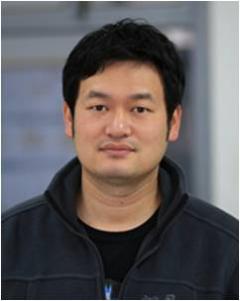 Yong Liang (梁勇)合作论文数Institute of Environment and Health, Jianghan University19
 Yong Pan (潘勇)合作论文数16
 Xiao Xie (谢骁)合作论文数School of Electronic Science and Engineering, Southeast University13Yahui Tian (田亚会)合作论文数Institute of Acoustics, Chinese Academy of Sciences12Yanyan LU (陆艳艳)合作论文数10Lina Cheng (程利娜)合作论文数9
 Wenchang Hao合作论文数8FangQian Xu (徐方迁)合作论文数7
 Haoliang Hu合作论文数7Xiudong Wang合作论文数7
 Caihong Zhang (张彩虹)合作论文数School of Chemistry and Chemical Engineering, Shanxi University7HongWei Zhu (朱宏伟)合作论文数6
 Gui Chen合作论文数6
 Jiansheng Liu (刘建胜)合作论文数Shanghai Institute of Optics and Fine Mechanics, Chinese Academy of Sciences6
 Ran You合作论文数5
 Lijun Wang (王立军)合作论文数Changchun Institute of Optics, Fine Mechanics and Physics, Chinese Academy of Sciences;University of Chinese Academy of Sciences5Yi-yu Zhao合作论文数5Liang Yong合作论文数5
 Chuan Dong (董川)合作论文数School of Chemistry and Chemical Engineering, Shanxi University;School of Environmental & Resource Sciences, Shanxi University5
 Chenghao Wang (汪承灏)合作论文数Institute of Acoustics, Chinese Academy of Sciences5
 Wei Luo (罗为)合作论文数School of Optical and Electronic Information, Huazhong University of Science and Technology5
 Xinlu Liu合作论文数5Jianying SHAO (邵剑瑛)合作论文数4Shu Xie合作论文数4
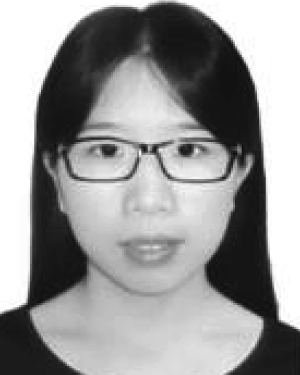 Yana Jia合作论文数4
 Ce Yuan合作论文数4Xiuting Shao (邵秀婷)合作论文数4Ning Mu (穆宁)合作论文数4Shengyu Shao合作论文数3Feida Cai (蔡飞达)合作论文数3Jiangsheng Liu合作论文数3Xiao-lin Qi合作论文数3Jiaoli Hou合作论文数3wenjia tian合作论文数3Wen-qiang ZHAO合作论文数3Xufeng Xue合作论文数3ZhiQun Lin (林智群)合作论文数3Yang Liu合作论文数3LIU Jian-sheng合作论文数2Yan An合作论文数2Zhiyuan Chen合作论文数2




