相比于人脸识别,表情识别是更细粒度的图像分类,不同表情之间的差异非常细微,一般的聚类算法难以处理面部表情数据的分类问题.本文提出了一种基于卷积神经网络的Expression-EigenFace特征聚类算法,对数据集样本进行预处理,通过人脸检测和定位技术,将人脸分割重组形成情绪特征脸;将处理后的特征脸送入预训练好的卷积网络进行提取特征;通过聚类算法对所提取的特征进行聚类,完成人脸面部表情聚类的过程.实验结果表明:相比没有经过任何处理的表情图像聚类,本文方法在调整兰德系数(adjusted rand index,ARI)、调整互信息(adjusted mutual information,AMI)和标准化互信息(normalized mutual information,NMI)这几个聚类评估指标上都有大幅提升,证明了所提出的特征脸聚类算法的有效性.
将多层核心集凝聚算法应用于函数型数据分析,并应用于金融数据聚类.首先,依托金融数据的函数型特征对其进行基函数展开;其次,对产生的高维数据进行特征提取;最后,用多层核心集凝聚算法进行聚类.实验对股票波动率曲线进行聚类,挖掘出股票数据波动的内在特征,可以客观地对股票板块进行划分.
为了改变传统的围绕考试的“高等数学”课程教学模式,笔者尝试建立基于“设计思想—提出问题—探索问题—推广应用—课后反思”过程的研讨班教学模式,与正常课堂授课相结合,提供深入学习数学思想和方法的平台;同时通过组织和指导学生参加各级别高等数学竞赛,建立起促进学习的激励机制;通过科学的学习方法和规范且系统的学习内容,有力促进大学生数学能力的提高。
To tackle the failure of traditional clustering algorithms in dealing with large-scale data, the paper proposes a density-based statistical merging algorithm for large data sets (DSML). The algorithm takes each feature of data points as a set of independent random variable, and gets statistical merger criteria from the independent bounded difference inequality. To begin with, DSML improves Leaders algorithm by using the statistical merger criteria, and makes the improved algorithm as the sampling algorithm to obtain representative points. Secondly, combined with the density and the neighborhood information of representative points, the algorithm uses statistical merger criteria again to complete the clustering of the whole data set. Theoretical analysis and experimental results show that, DSML algorithm has nearly linear time complexity, can handle arbitrary data sets, and is insensitive to noise data. This fully proves the validity of DSML algorithm for large data sets.
目的为准确描述图像的显著信息,提出一种结合整体一致性和局部差异性的显著性检测方法,并将显著性特征融入到目标分割中。方法首先,利用频率调谐法(IG)对目标整体特征的一致性进行显著性检测。然后,引入NIF算法检测显著目标的局部差异性。最后结合两种算法形成最终的显著性检测方法,并应用于图像目标分割。结果在公认的Weizmann数据集上验证本文方法显示目标的绝对效率并与其他算法对比,实验结果表明本文方法在精确率,召回率,F1-measure(分别为0.445 6,0.751 2,0.576 4)等方面优于当前流行的算法。并且在融合显著性的图像目标分割中,取得满意的实验结果。结论提出一种新的显著性检测算法,综合体现目标的整体和局部特征,并在公开数据集上取得较高的统计评价。实验结果表明,该算法能够对自然图像进行较准确的显著性检测,并成功地应用于自然图像的目标分割。
The ability of existing clustering algorithms to deal with noise is poor, and the speed is slow, instead this paper proposes a density-based statistical merging clustering algorithm ( DSMC ) . The new algorithm takes each group of data points as a set of independent random variables, and gathers statistical criteria from the independent bounded difference inequality. Meanwhile, combined with the density information of the data points, the DSMC al-gorithm takes the descending order of the density as the merging order in the process of condensation, and thereby achieves statistical merging of different types of data points. The experimental results with both artificial datasets and real datasets show that the DSMC algorithm can not only deal with convex data set, and also has good clustering effects on nonconvex shaped, overlapped and noisy, data sets. This proves that the algorithm has good applicability and validity.
Many classical clustering algorithms like Average-link, K-means, K-medoids, Clara, Clarans and so on are all based on a single cluster-center and are only apt to discover convex-structured clusters. Other methods, e.g., CURE and DBSCAN, use more than one point to represent a cluster and can find some well-separated clusters of arbitrary shape. However, they only consider the original scale of the input data;thus, they cannot depart over-lapped or noisy clusters. To this end, this paper is used to propose a multilevel core-set based agglomerative clustering algorithm (MulCA). The idea of MulCA is that the clustering structure is described by multi-level core set. Clustering process is achieved through procedure which the top of the core set automatically becomes the underlying data set. In addition, through the introduction of random sampling basedε-core set (RBC), MulCA algorithm is applied to large-scale data sets. A large number of numerical experiments fully verify the algorithm MulCA.
In the traditional fuzzy connectedness (FC) method, the notion of “hanging togetherness” of image elements specified by their fuzzy connectedness is presented sufficiently. However, the segmentation performance is largely determined by the specified fuzzy affinity; and the FC method generally has disadvantages such as sensitive to the noise, difficult to determine an appropriate threshold in the case of multiple seeds version, etc. While these defects can be overcome by our method, in which the density properties of image elements are taken into account, and each spel can be characterized by a Neighborhood Density Index (NDI). Based on NDI, a novel way to capture the global fuzzy connectedness is proposed, and related algorithms for fuzzy object extraction are presented. In the paper, detailed evaluations and analysis are made about the segmentation results returned by the proposed algorithms and algorithms of the FC method. Extensive experiments and comparisons are conducted to demonstrate the utility of such novel approach.
Coarsening phase is the most critical step among procedures in multilevel clustering algorithm. Some classi cal multilevel clustering algorithms, such as METIS (multilevel scheme for partitioning irregular graphs) and Graclus, use some criterions of vertex and edge weights to capture the collapsing of the vertex and edges and realize coarsening procedure. But there is the disadvantage that the coarsest dataset can not formulate the global information and struc ture of original dataset correctly. This paper proposes a core-sets coarsening method, which defines multilevel coresets to retain global information of layered dataset in perspective. Meanwhile, as the coarsest dataset has the same num ber as clustering, and each core point corresponds to a single class, the partitioning procedure need not be considered. Some numerical experiments verify the superiority and availability of the proposed algorithm.
In this paper, non-Euclidean metrics, such as kernel metric, Mahalanobis distance and the metric based on the shortest weighted path, are introduced into PAM and CURE clustering algorithms. The purpose is to have a detailed research on non-Euclidean metrics based clustering. Firstly, modified algorithms are established by replacing Euclidean metric with non-Euclidean metrics. Then these modified algorithms are applied on various data sets including UCI data sets as well as artificial data sets. Detailed evaluations and analysis have been made about the performances of different metrics. Experimental results demonstrate that the application scope of these clustering algorithms has been extended by adopting non-Euclidean metrics. As a result, we can conclude that the application of non-Euclidean metrics is of great importance.
Image segmentation remains one of the major challenges in image analysis.And soft image segmentation has been widely used due to its good effect.Fuzzy clustering algorithms are very popular in soft segmentation.A new soft image segmentation method based on center-free fuzzy clustering is proposed.The center-free fuzzy clustering is the modified version of the classical fuzzy C-means ( FCM ) clustering.Different from traditional fuzzy clustering , the center-free fuzzy clustering does not need to calculate the cluster center , so it can be applied to pairwise relational data.In the proposed method , the mean-shift method is chosen for initial segmentation firstly , then the center-free clustering is used to merge regions and the final segmented images are obtained at last.Experimental results show that the proposed method is better than other image segmentation methods based on traditional clustering.
The aim of this paper is to present a quantitative evaluation of five popular salience maps for object segmentation.First,five salience maps are revisited in terms of theory foundation.Second,human segmentation is taken as the ground truth of interesting objects pop-out to build three quantitative evaluation ratios of salience map to human segmentation.Finally,evaluation experiments are conducted on three image databases of Corel,MSRA and Weizmann.Results show some insights into the performances of these different salience maps in object segmentation.This research is believed meaningful and useful for the further development of salience-driven methods for object segmentation.
Interactive object segmentation is an active research area in recent decades. The common practice is to leave interactions to be set manually by users in advance. Often times, to get good interactions, one has to struggle with laborious local editing for re-correcting. Given the larger and larger databases occurred nowadays, it is impractical for one to draw manual interactions for each image. In this paper, we are to build a saliency-seeded mechanism to automatically capture good prior interactions. Our motivation is simple: the pixels that have different cues but from the same object are often good candidates for prior interactions, and those pixels at the same time are always with higher salience attracting human attentions. Adopting a newly-proposed idea, i.e., maximal similarity based region merging, we further develop a framework of saliency-seeded region merging for `automatic' interactive segmentation. Extensive experiments and comparisons are conducted on a wide variety of natural images. Results show that our framework can reliably segment many objects out from their surrounding backgrounds.
针对如何从层次聚类算法得到样本集的多种聚类结果中获得用户最满意的聚类结果,在深入研究聚类有效性的基础上,通过模糊相似性关系刻画聚类的类内致密性和类间分离性,建立了一个新的聚类有效性函数.在人工和实际数据集上的实验都表明了该有效性函数具有良好的性能.
In this paper, we discuss global stabilization procedure for convergence of a more general feedforward nonlinear systems.Our stabilizer consists of a nested saturation function, which is a nonlinear combination of saturation functions. We extend the existing stabilization results and prove that our stabilizer is exponential convergent.
The term 'saliency' which indicates the visual importance of pixels in an image has a significant effect in content-based image retrieval.A new image retrieval method was presented by exploring the saliency-weighted image features of color and texture,which did not require to segment those salient regions from images,but only to weigh the original features of color and texture by saliency of pixels.In such a way,the color and texture features of salient regions were naturally enhanced.Four popular saliency maps on images were tested and the experimental results showed the effectiveness of our method with higher retrieval accuracy.
How can we find a natural clustering of a “complex” dataset, which may contain an unknown number of overlapping clusters of arbitrary shape and be contaminated by noise? A tree-structured framework is proposed in this paper to purify such clusters by exploring the structural role of each data. In practice, each individual object within the internal organization of the data has its own specific role—“centroid”, hub or outlier—due to distinctive associations with their respective neighbors. Adjacent centroids always interact on each other and serve as mediate nodes of one tree being members of some cluster. Hubs closed to some centroid become leaf nodes responsible for the termination of the growth of trees. Outliers that weakly touch with any centroid are often discarded from any trees as global noise. All the data can thus be labeled by a specified criterion of “centroids”-connected structural consistency (CCSC). Free of domain-specific information, our framework with CCSC could widely adapt to many clustering-related applications. Theoretical and experimental contributions both confirm that our framework is easy to interpret and implement, efficient and effective in “complex” clustering.
We present a new object segmentation method that is based on active contours with combined saliency map.It is known that using saliency region can easily get the approximately location of the desired object in the map.In this paper,we use the saliency map to distinguish the desired object from the image when the background is full of noise,and then,to ensure the initial evolving curve in the active contours methods.Our methods improve the classical active contours methods by limiting the initial evolving curve just near the boundaries of the desired object.lt can still get better results although the background of the map is clutter,and,efficient with less time than these classical ones.
Fuzzy c-means (FCM) as a method of clustering has been steadily grown since its inception. This method as well as its derivatives is all to find an optimal assignment of c centers (also called means, prototypes or centroids) to c clusters by minimizing an intra-cluster variance criterion. Commonly, one has to select c data points as initial centers for the expected c clusters in advance. However, there may be no "true" cluster centers in many complex situations. For example, evidence shows that it is very hard to "pick" the good initial centers for the manifold-structured non-convex clusters. Perhaps this is why FCM does often not work well for those manifold clusters. Moreover, as is known, FCM is significantly sensitive to the initial choice of c cluster centers even if for the sphere-shaped clusters. A question naturally arises: is there a possible way that can make FCM free of cluster centers? To this end, we revisit FCM here and aim to give a cluster-center-free reformulation of FCM that minimizes the intra-cluster variance as well. Experimental results on both synthetic and real-world datasets indicate the enhanced effectiveness of our newly reformulated FCM in finding many challenging clusters.
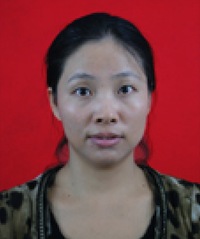 Jundi Ding (丁军娣)合作论文数School of Computer Science and Engineering, Nanjing University of Science & Technology19
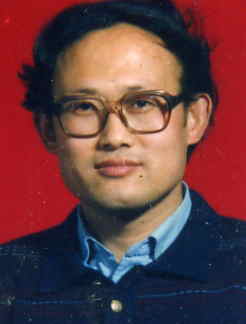 Songcan Chen (陈松灿)合作论文数College of Computer Science & Technology, Nanjing University of Aeronautics & Astronautics5
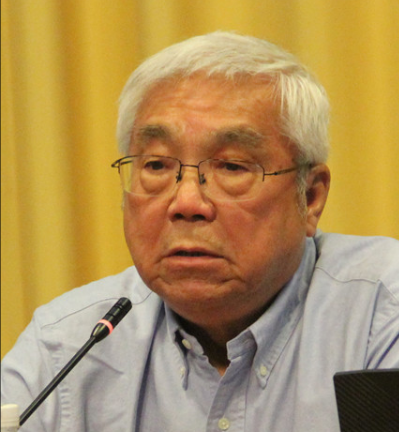 Jingyu Yang (杨静宇)合作论文数School of Computer Science and Engineering, Nanjing University of Science and Technology4
 Bei-Bei LIU (刘贝贝)合作论文数3
 Baojiang Zhong (钟宝江)合作论文数School of Computer Science and Technology, Soochow University3XiaoQing Hu合作论文数2Guoping Zou (邹国平)合作论文数2Sc Chen合作论文数1
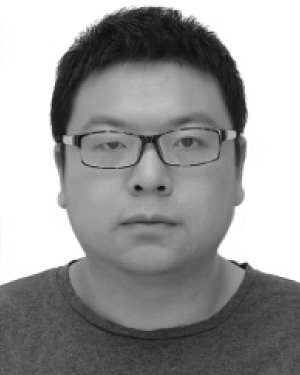 Ping Wang (王平)合作论文数1M Galun合作论文数1C Kenney合作论文数1Xiaoxiang Zhang (张小祥)合作论文数1
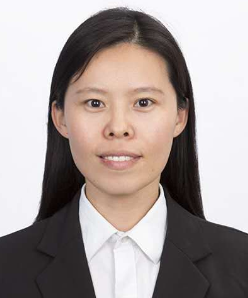 Junxia Li (李军侠)合作论文数School of Computer Science, Nanjing University of Information Science & Technology1
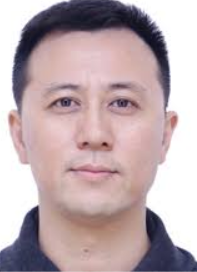 Xiaoxing Zhu (朱晓星)合作论文数College of Science, Nanjing University of Aeronautics and Astronautics1Qi Zhang (张琦)合作论文数Nanjing University of Aeronautics and Astronautics1Yuehong Tang (唐月红)合作论文数School of Mathematics, Nanjing University of Aeronautics and Astronautics1
 Zhengsheng Wang (王正盛)合作论文数Nanjing University of Aeronautics and Astronautics1Bo Wang (王博)合作论文数Nanjing University of Aeronautics and Astronautics1
 Qiong Peng合作论文数Chinese Academy of Sciences, Chinese Academy of Sciences1
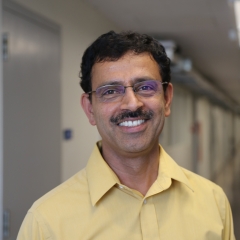 B.S. Manjunath合作论文数Center for Bio-image Informatics, University of California, Santa Barbara;Vision Research Lab, University of California, Santa Barbara;Center for Multimodal Big Data Science and Healthcare, University of California, Santa Barbara;Department of Electrical and Computer Engineering, The Robert Mehrabian College of Engineering, University of California, Santa Barbara1Fan Gao合作论文数1
 Tianping Chen (陈天平)合作论文数School of Mathematical Sciences, Fudan University1Yong Wang (王勇)合作论文数1
 Ronen Basri合作论文数Department of Computer Science and Applied Mathematics, Weizmann Institute of Science;Toyota Technological Institute at Chicago1Antonio Carlos Sobieranski合作论文数Universidade Federal de Santa Catarina;Departamento de Informática e Estatística;Laboratório de Processamento de Imagens e Computação Gráfica;Laboratório de Processamento de Imagens e Computação Gráfica, Universidade Federal de Santa Catarina1
 Achi Brandt合作论文数Department of Applied Mathematics & Computer Science, The Weizmann Institute of Science1
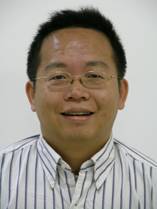 Tieru Wu (伍铁如)合作论文数School of Mathematics, Jilin University;School of Artificial Intelligence, Jilin University1
 Giuseppe Placidi合作论文数1
 Jesmin F. Khan合作论文数Department of Electrical and Computer Engineering, University of Alabama in Huntsville1
 Reza Adhami合作论文数Department of Electrical & Computer Engineering, University of Alabama in Huntsville1Hong Cao合作论文数1
 D. D. Abdala合作论文数Faculdade de Computação, Universidade Federal de Uberlândia1
 Leandro Coser合作论文数Universidade Federal de Santa Catarina;Departamento de Informática e Estatística;Laboratório de Processamento de Imagens e Computação Gráfica;Laboratório de Processamento de Imagens e Computação Gráfica, Universidade Federal de Santa Catarina1




