目的 比较单纯减压术与减压内固定融合术治疗复发性腰椎间盘突出症(RLDH)的疗效.方法 选择2017 年10 月至2021 年8 月新疆医科大学第六附属医院收治的73 例RLDH患者的临床资料,根据患者所接受术式情况分为单纯减压组(31 例)和减压内固定融合组(42 例).比较两组手术时间、术中出血量、卧床时间、脑脊液漏发生率,以及术前,术后3d、3 个月、6 个月、1 年的视觉模拟量表(VAS)评分和Oswestry功能障碍指数(ODI)评分.结果 单纯减压组手术时间、卧床时间短于减压内固定融合组,术中出血量少于减压内固定融合组,差异有统计学意义(P<0.05).两组脑脊液漏发生率比较差异无统计学意义(P>0.05).两组临床有效率比较差异无统计学意义(74.19%vs 71.43%;χ2 =0.069,P =0.793).两组术后VAS评分、ODI评分均呈下降趋势,与同组术前比较差异有统计学意义(P<0.05),两组各时间点VAS评分、ODI评分比较差异无统计学意义(P>0.05).结论 单纯减压术与减压内固定融合术均可有效治疗RLDH,单纯减压术在缩短手术时间、卧床时间,减少术中出血量方面更具优势.
背景:过去强直性脊柱后凸矫形往往注重局部畸形的矫正,忽略对于矢状面平衡的重建.目的:应用计算机辅助软件建立强直性脊柱炎后凸三维有限元模型,基于肺门-髋轴法重建脊柱矢状面平衡,设计个性化手术截骨方案,并模拟全脊椎截骨手术操作,计算分析其生物力学特性,并与两种未重建脊柱矢状面平衡模型进行对比.方法:收集来自新疆医科大学第六附属医院1例强直性脊柱炎后凸住院患者的CT数据,根据301分型确定后凸畸形为ⅢA型,将CT数据导入计算机建模软件中,建立强直性脊柱后凸畸形三维有限元模型.设计3种不同全脊椎截骨(VCR)手术方案的模型,分别为VCR30°,VCR32.2°和VCR40°,其中VCR32.2°使用肺门-髋轴测量方法测量L3预截骨角度为32.2°,另外构建2个未重建脊柱矢状面平衡模型,其中VCR30°设置为截骨角度为30°,VCR40°设置截骨角度为40°,在构建完成的3个模型上模拟全脊椎截骨术进行截骨,并对截骨矫形后3个模型的脊柱位移、钉棒系统、钛笼和截骨面进行有限元计算.结果 与结论:①总位移和24个椎体位移大小排序如下:VCR40°>VCR30°>VCR32.2°,VCR40°明显高于VCR32.2°,VCR30°和VCR32.2°两者由于截骨角度差异小,位移差距不显著;椎弓根螺钉、钛棒、钛笼以及截骨接触面的应力分布趋势;②不论是钉棒应力,还是钛笼应力,VCR40°都要高于其他2个模型和平均值,并且差异明显,VCR32.3°在3种模型中应力最小,也低于平均值,并且各节段等效应力分布均匀,没有出现应力集中的现象;③结果 证实,基于肺门-髋轴法重建脊柱矢状面平衡能够增加术后脊柱稳定性,且内固定应力分布更低,是一种合理、科学的手术方案设计.
背景:强直性脊柱炎后凸主要表现为矢状位畸形,截骨角度是术前需要解决的关键问题之一,矫正角度不足以及矫正过度都可能造成脊柱矢状位的二次失衡.目的:应用计算机辅助软件建立强直性脊柱炎后凸三维有限元模型,基于骨盆矢状位参数设计个性化手术截骨方案恢复矢状面平衡,并分析其生物力学特性.方法:收集新疆医科大学第六附属医院1例强直性脊柱炎后凸住院患者C1至骶尾骨的CT数据,根据301分型确定后凸畸形为ⅢA型.将CT数据导入计算机建模软件中,建立强直性脊柱后凸畸形三维有限元模型,测量骨盆入射角、骨盆倾斜角数值,并通过骨盆入射角计算出理论骨盆倾斜角角度.设计两种不同截骨方案的模型,其中模型2使用肺门-髋轴测量方法(重建矢状面平衡)测量L3预截骨角度为32.2°,模型1则在未重建矢状面平衡下设置截骨角度为40°,在构建完成的两个模型上模拟去松质骨截骨术,并对截骨矫形后模型的钉棒系统、截骨面进行有限元计算.结果 与结论:①有限元分析结果显示,在脊柱前屈工况下,6个固定节段中除S1节段外,其他5个固定节段模型1的螺钉应力均要高于模型2,钛棒和接骨面应力亦是如此;②在脊柱后伸工况中,由于截骨角度过大导致患者重心后移,使两者应力差异更加明显,其中差距最大的为L4节段螺钉,模型1明显高于模型2,差异为149.69 MPa;③截骨面的应力图显示,应力主要集中于截骨面的后方,而前方的应力普遍在12 MPa以下;④提示基于骨盆矢状位参数设计个性化截骨方案恢复强直性脊柱后凸矢状面平衡是合理、科学的,可在保证矫形效果的同时降低应力分布.
目的 整理分析32例主胸弯型青少年特发性脊柱侧凸(Lenke 1型AIS)患者术前影像学资料,探索该类型患者脊柱-骨盆整体矢状位序列的相关性.方法 Lenke 1型AIS患者拍摄站立位全脊柱站立位正侧位X线片以及左右侧屈位片(Bending位片),测量并记录站立位及Bending位冠状位Cobb角、颈椎矢状位曲度(C2-C7 Cobb角)、胸椎后凸角(T5-T12 Cobb角,TK)、腰椎前凸角(L1-L5 Cobb角,LL)、骨盆参数:骨盆入射角(Pelvic Incidence,PI)、骶骨倾斜角(Sacrum Slop,SS)、骨盆倾斜角(Pelvic Tilt,PT)、C7-S1及C2-C7 SVA(Sagittal Vertical Axis)、胸1倾斜角(T1 slope),选取30例健康青少年拍摄站立位全脊柱全长正侧位片测量颈椎矢状位曲度(C2-C7 Cobb角),分析两变量Pearson相关性分析及t检验作为统计方法分析统计学差异.结果 本组侧凸患者与健康青少年相比,C2-C7 Cobb角显著性增大(P<0.05).Lenke 1型AIS患者中颈椎后凸组,T5-T12 Cobb角显著降低(P<0.05),胸椎后凸角度C2-C7 Cobb角显著增大(P<0.05).C2-C7 Cobb与T5-T12 Cobb角呈负相关(P=0.008),与L1-L5 Cobb角呈正相关(P=0.005).C2-C7 Cobb角与冠状位Cobb角度、PI、SS、PT、C7-S1 SVA未见相关性(P>0.05).结论 Lenke 1型AIS患者颈椎矢状位序列异常者高于正常青少年组,颈椎矢状位序列与TK、T1 slope,而与胸腰椎冠状位角度及骨盆参数无关.
目的 比较腰椎间盘退变与超早期腰椎结核的MRI表现,从而达到鉴别的目的 .方法 收集20例为经手术后证实或者穿刺后被证实为腰椎间盘退变患者,20例为临床证实的脊柱结核,分析比较其MRI征象.结果 腰椎间盘早期退行性变与早期腰椎结核不同点表现在:①临床表现:腰椎间盘退变早期往往有下腰部疼痛,而椎体结核早期可无明显临床症状;②椎间盘改变:早期椎间盘退变就有信号的改变,包括终板退变和髓核退变.而椎体结核早期无明显改变,中后期椎间盘才会有改变;③相邻椎体骨质改变上:早期椎间盘退变相邻骨质无明显破坏,而早期结核可见椎体上下缘邻近终板部位虫蚀状、蜂窝状或小片状骨质破坏,骨破坏区周围伴有不同程度的炎性水肿;④椎旁软组织改变上:早期椎间盘退变无椎旁软组织改变,而早期腰椎结核可见椎旁和后方软组织肿胀.结论 早期椎间盘退变与早期腰椎结核各有一定MRI特点,鉴别有一定困难,需仔细鉴别.
背景:内固定融合术治疗退行性腰椎侧凸取得了良好的矫形效果.目前对不同节段固定对腰骶部生物力学研究较少,尚缺乏可靠的数据支持.目的:研究退行性腰椎侧凸手术采用不同节段固定融合术对S1螺钉应力分布的影响,为手术方式的选择提供依据.方法:抽取6具新鲜成人尸体按照三种不同固定方式分成L5-S1单节段组、L3-S1长节段组、T10-S1长节段组,分别采取8 Nm力矩的六自由度力学研究对S1螺钉所受应力进行测定,并采取统计学方法进行比较.结果:①前屈及后伸加载位时,L3-S1和T10-S1长节段固定的S1螺钉拔出力、横向力、弯矩较L5-S1单节段固定显著增加(P<0.05).②双侧屈加载位时,L3-S1和T10-S1长节段固定的S1螺钉横向力、弯矩较L5-S1单节段固定显著增加(P<0.05).③左、右旋加载位时,L3-S1和T10-S1长节段固定的S1螺钉所受弯矩较L5-S1单节段固定显著增加(P<0.05).结论:L3-S1和T10-S1长节段固定时,S1螺钉所受的应力较L5-S1单节段固定增加,故跨胸腰段固定融合可考虑行髂骨螺钉固定或S2螺钉固定,以减少远端骶骨螺钉应力.
目的 探讨无骨折脱位型颈椎脊髓损伤的治疗方案.方法 回顾性分析自2010-07-2015-03诊治的42例无骨折脱位型颈椎脊髓损伤,12例采用非手术治疗,19例采用颈椎前路椎间盘切除融合术或颈椎前路椎体次全切除融合术治疗,11例采用颈椎后路单开门扩大椎管减压术治疗.16例在受伤后7d内进行手术,14例在受伤7d后进行手术.结果 42例均顺利完成治疗,随访时间平均51.4(48~66)个月.前路内固定手术植骨均融合,后路手术减压后均未出现“关门”现象,术后均未出现内固定松动、脱位和断裂等并发症.末次随访时采用手术治疗患者JOA评分较采用非手术治疗患者高,术后3d及末次随访时损伤7d内手术者JOA评分较损伤7d后手术者高,差异有统计学意义(P<0.05).末次随访时Frankel等级:C级1例,D级8例,E级33例;末次随访时Frankel等级较治疗前改善,差异有统计学意义(P<0.05).结论 无骨折脱位型颈椎脊髓损伤早期手术可直接解除脊髓压迫并取得满意的临床疗效,值得临床推广.
BACKGROUND: Kyphosis in ankylosing spondylitis is a kind of spinal sagittal imbalance; due to center of gravity displaced and complicated biomechanical properties of the spine, the spinal biomechanics after kyphosis correction is little reported. OBJECTIVE: To establish a three-dimensional finite element model of the spine after osteotomy for kyphosis. METHODS: A three-dimensional finite element model of kyphosis in ankylosing spondylitis was established, simulating three kinds of osteotomy orthopedic programs (osteotomy angle in 20°, 30° and 40°), and the orthopedic effect and biomechanics were analyzed.RESULTS AND CONCLUSION: (1) The three-dimensional finite element model of finite element model of kyphosis in ankylosing spondylitis was established successfully, and simulated three kinds of osteotomy orthopedic programs at the angles of 20°, 30°, and 40°. (2) The best osteotomy angle was 30°, the stress distribution was less, and the stress on the T12, L1, L2, L4, L5, S1and rod was 7.346 1, 11.952, 72.783, 81.368, 28.144, 41.114, and 109.69 MPa, respectively. (3) Under 30°osteotomy angle, the postoperative Cobb angle is 1.4°, which not only obtains better orthopedic effect, but also reduces the incidence of complications caused by stress concentration.
BACKGROUND: The effect of pediclesubtraction osteotomy is obvious, and the incidence of correction degree loss is low. So, it has been the first choice for the correction of ankylosing spondylitis with kyphotic deformity. OBJECTIVE: To establish a three-dimensional finite element model of ankylosing spondylitis with kyphotic deformity by computer aided software, and to analyze the biomechanical characteristics.METHODS: A ankylosing spondylitis patient with kyphotic deformity was selected, and spinal full-length anteroposterior images were photographed, and the patient received magnetic resonance imaging. A three-dimensional model of ankylosing spondylitis with kyphotic deformity was established, and then a three-dimensional finite element model of ankylosing spondylitis with kyphotic deformity was generated. Three different types of models were established for three different surgeries at the osteotomy angle of 20°, 30° and 40°. Correction effect and biomechanics were analyzed. RESULTS AND CONCLUSION: (1) A three-dimensional finite element model of ankylosing spondylitis with kyphotic deformity was successfully established at the osteotomy angle of 20°, 30° and 40°. The maximum principal stresses of three different screw titanium rods were 54.632, 194.230, 394.860 Mpa. (2) Three different surgeries were successfully simulated. The correction degree of the model 3 was optimal, but the stress distribution was large; displacement was obvious. After internal fixation, the complications of stability and internal fixation failure increased. The model 2 had good correction degree, appropriate stress distribution, and decreased complications of fixation failure.
}~4j ;# # j +# F ¡¢£¤¡¥ ¦§; ̈©¢a «¬ ® ̄°±2 3 ́3v#μ¶· ̧F 16 CTo ̧¡¥ !"¦§; ̈©¢a »E L NO\ ¢1⁄4 cg m, «¬ " F 1⁄2¡¥3⁄4HI "¦§; ̈©¢a «¿¢1⁄4Y ÀÁ¡¥ L Âcg ÂÃÄÅ{  ¢aÆÇÈÉ; ̈©¬£¤ Ansys workbench 15.0 ¢aÊˬÌN%Í4*Ω 948 874 1 564 477JN% g '( ¢aÊˬÌN% Í4*Ω 931 969 1 548 812JN%ÆÏÐÑÑÒ8ÓÔ ÂÕÖvc 4× 6g  ØÙÚB¬Û® 40.946 67.26 493.64 304.05 75.359 146.31 MPa n ÜÚB® 391.01 MPaÆÝVÞßà 2 ÄÅ{ Y +Âá¡}~4â ã ×6g ¿äåæ®àç èR{NO`R{é êÕÖvë«êì#í î×6g F
Objective:To investigate the effect of arthroscopic treatment of meniscus injury of knee joint and the influence fac-tors of postoperative pain.Methods:82 cases of patients with meniscus injury of knee joint were studied,after one year,the curative effect was evaluated according to Ikeuchi knee evaluation grade,and the influencing factors of postoperative pain were analyzed.Re-sults:In all of the 82 patients,46 cases (56.10%)were excellent,28 cases (34.15%)were good,7 cases (8.54%)were common,1 case(1.22%)was poor,the excellent and good rate was 90.24%.74 patients with excellent and good postoperative efficacy were in-cluded into the non pain group,the other 8 cases were included into the pain group,there was no statistical difference between the two groups in gender,body mass index,Watanabe typing,and surgical typing (P>0.05 ).However,the rate of age,preoperative symptom duration and proportion of postoperative weight-bearing time<1 week in the pain group were higher than these in the non pain group, the difference was statistically significant (P<0.05).Conclusion:Arthroscopic treatment in the meniscus injury of knee joint has ex-act clinical curative effect,the patient’s age,duration of preoperative symptoms and the weight bearing time were related to the pain af-ter surgery.
目的 探讨颈椎前路手术早期并发症危险因素,为防治颈椎前路手术早期并发症提供科学依据.方法 回顾性分析自2010-01-2014-12新疆医科大学第六附属医院诊治的103例颈椎前路手术,采用单因素分析性别、年龄、民族、病程、瘫痪情况、术前合并症、手术方法、手术节段、麻醉方式、手术时间、出血量、病种等指标,采用Logistic回归分析对发生颈椎前路手术早期并发症的危险因素进行分析.结果 本组103例术后随访3~24个月,平均16个月.103例中发生并发症12例,发生率为11.65%.单因素分析发现,病种(x2=28.540,P<0.001)、瘫痪情况(x2=19.529,P<0.001)、术前合并症(x2=11.936,P=0.001)、手术方法(x2=12.718,P=0.005)与术后早期并发症的发生有关.对病种、瘫痪情况、术前合并症、手术方法4个因素进行多因素Logistic回归分析,结果显示患者的瘫痪情况和手术方法是影响颈椎前路手术早期并发症发生的独立危险因素(P<0.05).结论 颈椎前路手术时应严格把握手术适应证,根据患者个体情况选择适当的手术方式,从而避免或减少患者术后并发症的发生.
目的 探讨经皮椎体成形术(percutaneous vertebroplasty,PVP)治疗新鲜骨质疏松性椎体压缩骨折的疗效.方法 2011年1月~2012年12月共治疗骨质疏松性单椎体压缩骨折38例,其中男7例,女31例;年龄55~ 80岁(平均65.1岁).患者取俯卧位局麻下行单侧穿刺PVP.测量椎体高度的恢复情况和后凸角改善情况,视觉模拟量表(visual analogue scale,VAS)评分评价疼痛缓解程度,活动能力评分检测活动改善情况,并对并发症进行分析.结果 所有手术均顺利完成,每个椎体平均填充骨水泥3.5 mL.随访时间均>12个月.椎体前壁高度由术前(19.2±5.7) mm改善至术后(20.0±5.7) mm,椎体中间高度由术前(19.2±5.1) mm改善至术后(20.2±5.0) mm,差异有统计学意义(P<0.05);椎体后壁高度和Cobb角术前与术后相比,差异无统计学意义(P>0.05);VAS评分术前8.3±1.1,术后12个月时为1.1±0.6,术前、术后差异有统计学意义(P<0.05).活动能力评分术前3.1±0.9,术后12个月时为1.1±0.3,术前、术后差异有统计学意义(P<0.05).骨水泥渗漏9例.结论 PVP可有效治疗新鲜骨质疏松性椎体压缩骨折,创伤小,减轻疼痛,改善功能,无重大并发症.
目的 比较经Wiltse入路与传统后正中入路治疗胸腰椎骨折的临床疗效.方法 回顾性分析2011年1月-2013年1月行后路钉棒系统撑开复位内固定术治疗的胸腰椎骨折患者76例,骨折均属于AO分型的A型,术前美国脊髓损伤协会脊髓损伤分级均为E级.Wiltse入路35例(A组),男27例,女8例;年龄19~51岁,平均39.7岁.传统后正中入路41例(B组),男30例,女11例;年龄20~52岁,平均41.6岁.比较两组的切口长度、手术时间、术中出血量、术后引流量、椎体前缘高度恢复及后凸Cobb角矫正等指标和并发症发生情况.结果 所有手术均顺利完成.切口长度、手术时间、术中出血量及术后引流量A组分别为(8.3± 1.9) cm、(74.0±21.9) min、(125.0±46.7) mL及(51.0±42.6)mL;B组分别为(10.7±2.8) cm、(97.0±18.2)min、(245.0±56.1)mL及(190.0±72.3) mL,两组比较差异均有统计学意义(P<0.05).两组术后椎体前缘高度均有效恢复,后凸明显矫正,术前与术后比较差异有统计学意义(P<0.05),但两组间比较差异无统计学意义(P>0.05).两组间并发症发生率差异无统计学意义(P>0.05).结论 与传统后正中入路比较,Wiltse入路手术时间短,创伤小、出血少,术后恢复好.对于胸腰椎A型骨折是一种较好的选择.
Objective To evaluate the efficiency of treatment of chronic and painful vertebral compression fractures with percutaneous vertebroplasty in senior patients. Methods This retrospective study included 31 cases (8 male and 23 females, average age 66.3 years old) with chronic and painful vertebral compression fractures in the period of January 2011 to November 2012. All operations were finished successfully under local anesthesia on the surgical area with 1%lidocaine at prone position. body height and kyphotic angle of vertebral bodies were measured before and after operation,pain levels and activity was evaluated by VAS score and locomotor activity score before the operation, 1day, 1week,3 and 12 months after the operation. Complications of vertebroplasty also were recorded. Results All patients were followed up for 12 months. Respective pre-and post-treatment, the average anterior height of the vertebral body were 15.8±7.2mm and 16.1±7.4mm;and the average medium height of the vertebral body were 16.5±7.1mm and 16.7±7.1mm;and the average posterior height of the vertebral body were 26.9±5.0mm and 26.9±4.9mm;the average Cobb angle were 11.1±7.2°and 11.3± 6.8°. There was no significant difference between preoperation and postoperation (P>0.05). At the preoperation, 1 day, 1 week, 3 and 12 months postoperation, The average VAS score were 5.7±1.4、3.0±1.4、2.6±1.8、3.2±2.1and 3.2±2.0;locomotor activity score y were 2.0±0.7、1.2±0.4、1.2±0.4、1.2±0.4 and 1.4±0.5. the difference was statistically significant(P<0.05). Cement leakage happened in 5 patients without Neurological complications. Conclusion Percutaneous vertebroplasty partly decreases pain and increases mobility in senior patients with chronic painful vertebral compressive fractures, but has no effect on restoring vertebral height and kyphotic angle.
Objective To retrospectively compare the clinical outcomes of percutaneous vertebroplasty in the treatment of acute and chronic osteoporotic vertebral compression fractures. Methods 69 cases were treated by unilateral PVP for osteoporotic vertebral compression fractures. The patients were divided into two groups (acute group and chronic group) according to the course. Group A:38 cases with acute fractures. Group B:31 cases with chronic fractures. The VAS score, locomotor activity score, body height and kyphotic angle of vertebral bodies before and after operation were compared between the two groups. Results All patients were followed up for 12 months. VAS score decreased from 8.3±1.1 to 1.1±0.6 and locomotor activity score decreased from 3.1±0.9 to 1.1±0.3 in group A. VAS score decreased from 5.7±1.4 to 3.2±2.0 and locomotor activity score decreased from 2.0±0.7 to 1.4±0.5 in group B. the difference was statistically significant (P<0.05). the restoration rate of anterior and middle vertebral height in group A were better than group B after operation(P<0.05). There was no difference in the posterior vertebral height and the kyphotic correction rate between two groups prior to treatment and after treatment (P>0.05). Cement leakage happened in 9 patients in group A and 7 patients in group B. There were 3 adjacent vertebra fractures in group A. Conclusion The PVP is safe and effective for acute and chronic osteoporotic vertebral compression fractures.The curative effect and satisfaction of patients for acute fractures was better than chronic fractures.
90后医学生已经成为医学院校大学生的主体,他们在思想观念、价值取向、人生态度等方面都有一些新的特征.本文以90后医学生为研究对象,提出他们思想特的表现以及存在的问题,分析产生这些问题的原因,并通过感恩教育、艰苦朴素教育、重点探讨90后医学生教育的对策.
目的:对于上位腰椎不稳同时合并有下腰椎椎管狭窄的患者进行后路减压植骨内固定术后的临床疗效分析.方法:2004年10月~2008年10月手术治疗高位腰椎不稳合并下腰椎管狭窄患者40例均行一期后路多阶段腰椎内固定加椎管扩大减压椎体间融合器融合术治疗.结果:术中未有血管、神经等副损伤.后路椎弓根螺钉复位固定、椎管减压、椎间融合器融合术平均手术时间130 min,出血量约400 ml,术后所有患者全部下腰部疼痛及单侧沿坐骨神经放射性疼痛,均较术前明显减轻.40例患者平均随访36个月~60个月,平均48个月.随访患者临床症状均消失或大部分消失,无一例内固定松动及断裂,融合节段均骨性融合.结论:对于上位腰椎不稳同时合并有下腰椎椎管狭窄的患者一期进行后路手术,手术疗效肯定,术后效果满意.
OBJECTIVE:To explore the effectiveness of pedicle screw fixation combined with non-fusion technology for the treatment of thoracolumbar fracture (AO type A) through Wiltse paraspinal approach. METHODS:Between March 2011 and December 2012, 35 cases of thoracolumbar fractures were treated with pedicle screw fixation combined with non- fusion technology by Wiltse paraspinal approach. There were 27 males and 8 females, aged from 19 to 51 years (mean, 39.7 years). The time from injury to operation varied from 3 to 15 days (mean, 5.9 days). The causes of injury were traffic accident in 17 cases, falling from height in 11 cases, and crush trauma in 7 cases. All fractures were single-segment fracture, including Ts in 1 case, T9 in 2 cases, T10 in 2 cases, T11 in 3 cases, T12 in 12 cases, L1 in 10 cases, L2 in 4 cases, and L3 in 1 case. According to AO classification, there were 17 type A1 fractures (compression fracture), 3 type A2 fractures (splitting fracture), and 15 type A3 fractures (burst fracture). Based on American Spinal Injury Association (ASIA) spinal cord injury grade, all cases were in grade E before operation. Perioperative parameters were recorded; the anterior vertebral height and kyphotic Cobb angle of vertebral bodies were measured before and after operation to evaluate the effect of correction. RESULTS:The mean operating time was 74 minutes; the mean blood loss was 125 mL; and the mean drainage volume was 51 mL. Skin necrosis of incision occurred in 2 cases and was cured after dressing change; primary healing of incision was obtained in the others. All patients were followed up 15-24 months (mean, 17.3 months). No loosening or breakage of internal fixation was found. The internal fixator was removed at 12-19 months after operation (mean, 15 months). There were significant differences in Cobb's angle and anterior vertebral body height between before operation and immediately after operation, before internal fixator removal as well as at last follow- up (P < 0.05). There was no significant difference in anterior vertebral body height among the postoperative time points (P > 0.05). There was significant difference in Cobb's angle between immediately after operation and before internal fixator removal as well as at last follow-up (P < 0.05), but the difference was not significant between before internal fixator removal and at last follow-up (P > 0.05). The motion of fixed segment was restored after internal fixator removal. CONCLUSION:It is an effective method of pedicle screw fixation combined with non-fusion technology through Wiltse paraspinal approach for the treatment of thoracolumbar fracture (AO type A). The method has the advantages of simple operation and less trauma. It can effectively rebuild the height of vertebral body and correct kyphotic deformity.
[目的]研究经右侧颈前路切口清理结核自取髂骨植骨前路钛板固定治疗颈椎结核的手术方法、疗效及5年随访结果.[方法]收集2008年4月~2013年4月全部采用右侧颈前路病灶清除自体髂骨植骨内固定治疗颈椎结核病例,共10例,平均31岁.C45例,C53例,C62例.所有病例均采用一期病灶清除髂骨植骨内固定术,抗结核治疗9~12个月.[结果]平均随访30个月.颈椎生理弧度得以恢复,术后随访未见矫正角度明显丢失;神经功能恢复良好;术后3~6个月植骨融合,内固定器械无断裂,无结核病灶局部复发.[结论]在抗痨治疗的基础上,右侧颈前路手术清除结核病灶取髂骨钛板固定治疗中下颈椎结核,恢复病灶破坏椎体的高度、同时达到矫正后凸畸形的目的、解除结核病灶对脊髓神经的压迫、重建颈椎的稳定,有利于结核病灶的愈合.
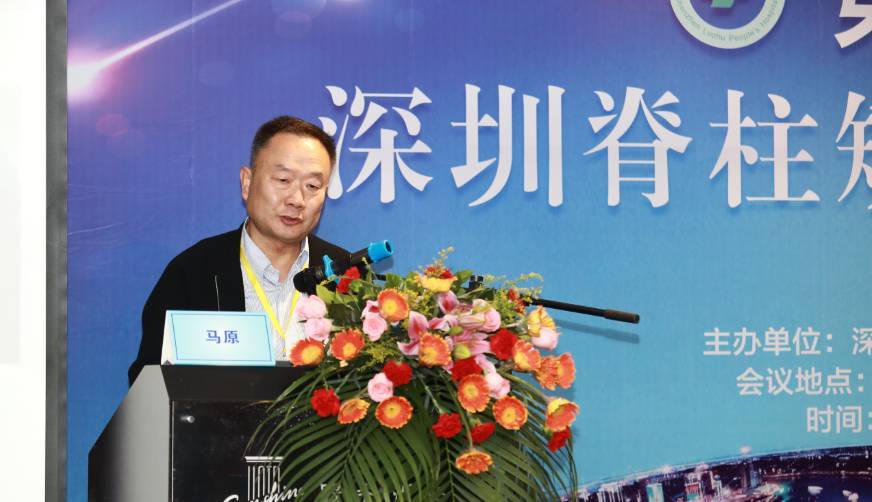 Yuan Ma (马原)合作论文数新疆医科大学第六附属医院脊柱外科17
 HuiZhong Tian (田慧中)合作论文数8Xu Zhu (朱旭)合作论文数5JiangTao Sui (眭江涛)合作论文数5Li Li (李栎)合作论文数5XiangYu Meng (孟祥玉)合作论文数5Jie Dai (代杰)合作论文数5Wu-tijiang SHA (沙吾提江)合作论文数3Hui LI (李辉)合作论文数3XiaoLiang Gao (高小亮)合作论文数3YongSheng Hu (胡永胜)合作论文数3Wei LIU (刘伟)合作论文数2Jun-jie CHENG (程俊杰)合作论文数2JunTao Zheng (郑君涛)合作论文数2JunYi Ma (马俊毅)合作论文数2WeiMin Huang (黄卫民)合作论文数2
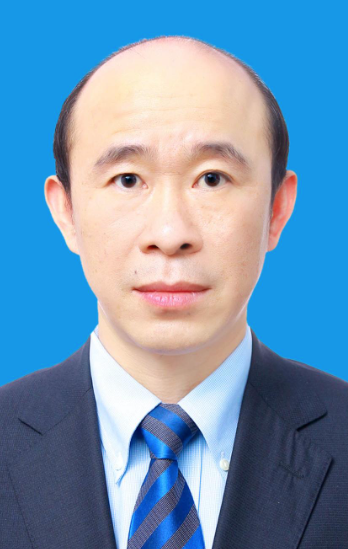 Weibin Sheng (盛伟斌)合作论文数The First Affiliated Hospital, Xinjiang Medical University2ChengWei Wang (王成伟)合作论文数2Huili Guo (郭惠丽)合作论文数2ling qi (齐玲)合作论文数1Hui Li (李辉)合作论文数1Yong Ma合作论文数1Rui WANG (汪睿)合作论文数1Jun Ren (任军)合作论文数1LuBing Li (李璐兵)合作论文数1XingHua Song (宋兴华)合作论文数1Gang Zhou (周纲)合作论文数1YuKun Zhang (张玉坤)合作论文数1Lei Li (李磊)合作论文数1junwei zhang (张俊伟)合作论文数1Hui Wei (魏辉)合作论文数1lei nie (聂磊)合作论文数1Rui Zhang (张锐)合作论文数1Qiang Lin (林强)合作论文数1Hailong Guo (郭海龙)合作论文数1Shaohuan Jia (贾绍环)合作论文数1




