Alfalfa (Medicago sativa L.) is a high-quality, high-protein forage, and the improvement and breeding of key traits are important for enhancing the productivity of alfalfa. Plant height is an important trait that affects crop yield, and its regulatory network mechanism has been widely reported in model plants, however, there are fewer studies on the developmental regulatory of plant height in alfalfa. In this study, we screened tall (WL525HQ) and short (WL343HQ) alfalfa materials through field experiments and analyzed the regulatory mechanism of plant height based on the multidimensional joint analysis of phenotype, cell, physiology, and molecular biology. The results showed that internode length was an important factor determining plant height in alfalfa, and cell size affected the internode elongation to a certain extent, whereas cell size was limited by cell wall. Moreover, changes in cell wall components play an important role in cell wall expansion, especially lignin synthesis. Transcriptome analysis showed that the high expression of hydrolase activity in T1 (initiation growth period) facilitates the expansion of the cell wall, the significant enrichment of the cellular modification process in T3 (rapid growth period) increases the cell size, and the synthesis of cell wall structural constituents and plant-type cell wall organization in T5 (growth stabilization) further improves and modifies the cell wall structure. Differential genes involved in cell wall biosynthesis and expansion were mainly enriched in cellulose synthesis, pectin cleavage, lignin formation, expansion protein (EXP), and xyloglucan endotransglycosidase (XTH). These findings elucidated the plant height regulation mechanisms throughout the alfalfa plant and provided a theoretical basis for the generation of ideal alfalfa plant height germplasm.
IntroductionAlfalfa (Medicago sativa L.) is a globally important legume crop with high nutritional and ecological value. Drought poses a serious threat to alfalfa acreage and yields. Spermine (Spm) has been shown to protect plants from drought damage. The aim of this study was to clarify the mechanism of exogenous Spm to improve drought resistance of alfalfa. MethodsIn this study, we root applied 0.1, 0.5, and 1 mM Spm to Gannong No. 3 (G3) alfalfa under drought stress, and then determined their physiological and metabolic changes. ResultsThe results showed that exogenous Spm increased chlorophyll content, chlorophyll fluorescence parameters and gas exchange parameters, enhanced antioxidant enzymes activity, improved ascorbic acid-glutathione (AsA-GSH) cycle, increased osmoregulatory substances content, reduced hydrogen peroxide and superoxide anion levels, and inhibited malondialdehyde accumulation in alfalfa under drought stress, thereby increasing plant height and leaf relative water content and enhancing drought tolerance of alfalfa. The redundancy analysis of the above physiological indicators showed that the addition of the optimal Spm to improve drought tolerance of alfalfa under drought stress was mainly achieved by increasing catalase activity and improving the ASA-GSH cycle. In addition, metabolomics analysis revealed that exogenous Spm increased the content of oxobutanedioic acid, citric acid, fumaric acid and malic acid to enhance the tricarboxylic acid cycle. Meanwhile, exogenous Spm increased endogenous Spm and proline (Pro) content to resist drought stress by enhancing Spm and Pro metabolism. Moreover, exogenous Spm increased the accumulation of the signaling substance abscisic acid. DiscussionIn conclusion, exogenous Spm enhanced drought resistance of alfalfa leaves under drought stress.
Megachile saussurei (Hymenoptera, Megachilidae) is a primary insect pollinator of alfalfa (Medicago sativa L.) in northwestern China. However, the mechanisms underlying the olfactory responses of M. saussurei induced by alfalfa volatiles is still unclear. Here, the interaction between MsauOBP4 and alfalfa floral volatiles was first elucidated. Results suggested that thirty-two alfalfa floral volatiles were identified and MsauOBP4 was successfully expressed with the consistent molecular mass as predicted results. MsauOBP4 displayed a broad binding spectrum to 32 volatiles, among which MsauOBP4 showed the strongest binding ability to (Z)-3-Hexen-1-ol. In the Y-tube olfactometer behavioral bioassay, M. saussurei elicited the most significant behavioral preference (Z)-3-Hexen-1-ol. MsauOBP4 showed an optimal binding feature to (Z)-3-Hexen-1-ol and valine was the key residue in binding the ligands. After silencing the MsauOBP4, the preference and EAG values of M. saussurei to (Z)-3-Hexen-1-ol were significantly decreased and selection rate of M. saussurei to alfalfa flowers dropped to 57.50 % from 83.33 %. These findings indicated that (Z)-3-Hexen-1-ol is a crucial component in the host location process mediated by MsauOBP4.
Plant height plays an important role in crop yield, product quality, and cultivation management. However, the physiological mechanisms that regulate the establishment of plant height in alfalfa plants remain unclear. Herein, we measured plant height traits, leaf characteristics, photosynthetic physiology, cell wall composition, and endogenous hormone contents of tall- and short-stalked alfalfa materials at different reproductive periods. We analyzed the physiology responsible for differences in plant height. The results demonstrated that the number of internodes in tall- and short-stalked alfalfa materials tended to converge with the advancement of the fertility period. Meanwhile, the average internode length (IL) of tall-stalked materials was significantly higher than that of short-stalked materials at different fertility periods, with internode length identified as the main trait determining the differences in alfalfa plant height. Leaf characteristics, which are closely related to photosynthetic capacity, are crucial energy sources supporting the expression of plant height traits, and we found that an increase in the number of leaves contributed to a proportional increase in plant height. Additionally, a significant positive correlation was observed between plant height and leaf dry weight per plant during the branching and early flowering stages of alfalfa. The leaves of alfalfa affect plant height through photosynthesis, with the budding stage identified as the key period for efficient light energy utilization. Plant height at the budding stage showed a significant positive correlation with soluble sugar (SS) content and a significant negative correlation with intercellular CO2 concentration. Moreover, we found that alfalfa plant height was significantly correlated with the contents of indole-3-acetic acid in stem tips (SIAA), gibberellin A3 in leaves (LGA3), zeatin in stem tips (SZT), and abscisic acid in leaves (LABA). Further investigation revealed that SS, SIAA, and LGA3 contents were important physiological indicators affecting alfalfa plant height. This study provides a theoretical basis for understanding the formation of alfalfa plant height traits and for genetic improvement studies.
Fatty acid and central carbon metabolism are crucial energy metabolism reactions. However, to date, few studies have examined their distribution characteristics within the alfalfa–rhizobia symbiotic system. To clarify the distributional differences and accumulation rates of fatty acids and central carbon with this system, we measured the plant phenotype, nodule formation, nitrogen fixation capacity, and key nitrogen metabolism enzyme activities of Medicago sativa ‘Gannong No. 9’ 35 days post-inoculation (dpi) with Sinorhizobia meliloti LL11. Additionally, we employed targeted metabolomics to analyze central carbon and fatty acid metabolites in various tissue samples of symbiotic and control (C.K.) plants, as well as in S. meliloti LL11. We found that plant height; root length; aboveground fresh and dry weights; underground fresh and dry weights; and nitrate reductase, nitrogen reductase, glutamine synthetase, and glutamate synthase activities were significantly higher in the leaves and roots of symbiotic plants than in those of C.K. plants. Compared to symbiotic plants, C.K. plants exhibited higher total central carbon and fatty acid metabolite content, accounting for 38.61% and 48.17% of C.K. plants, respectively. We detected 32 central carbon and 40 fatty acid metabolites in S. meliloti LL11, with succinate (343,180.8603 ng·mL−1) and hexadecanoic acid (4889.7783 ng·mL−1) being the most. In both symbiotic and C.K. plants, central carbon metabolite was considerably higher than the fatty acid metabolite central. Moreover, the carbon metabolites found in symbiotic plants were primarily distributed in pink nodule roots (PNRs), with malate exhibiting the highest content (4,800,612.3450 ng·g−1), accounting for 53.09% of total central carbon metabolite content. Fatty acid metabolites were mainly found in pink root nodules (P.N.s), which are sites of nitrogen fixation. Trans-10-nonadecenoic acid and hexadecanoic acid exhibited the highest contents, comprising >15% of the total fatty acid metabolite content. We found that petroselaidic acid is only present in P.N., which seems to be closely related to the nitrogen fixation reaction in P.N. In general, symbiotic plants transfer central carbon metabolites to nodules via PNRs to drive nitrogen fixation. However, in P.N.s, these metabolites are limited, leading to accumulation in PNRs. Fatty acid metabolites, crucial for nitrogen fixation, are prevalent in P.N.s. Conversely, C.K. plants without nitrogen fixation distribute these metabolites primarily to the stems, emphasizing growth. This study provides new insights into the energy metabolism of symbiotic nitrogen fixation.
Freezing stress is one of the most detrimental environmental factors that can seriously impact the growth, development, and distribution of alfalfa (Medicago sativa L.). Exogenous salicylic acid (SA) has been revealed as a cost-effective method of improving defense against freezing stress due to its predominant role in biotic and abiotic stress resistance. However, how the molecular mechanisms of SA improve freezing stress resistance in alfalfa is still unclear. Therefore, in this study, we used leaf samples of alfalfa seedlings pretreatment with 200 μM and 0 μM SA, which were exposed to freezing stress (-10°C) for 0, 0.5, 1, and 2h and allowed to recover at normal temperature in a growth chamber for 2 days, after which we detect the changes in the phenotypical, physiological, hormone content, and performed a transcriptome analysis to explain SA influence alfalfa in freezing stress. The results demonstrated that exogenous SA could improve the accumulation of free SA in alfalfa leaves primarily through the phenylalanine ammonia-lyase pathway. Moreover, the results of transcriptome analysis revealed that the mitogen-activated protein kinase (MAPK) signaling pathway-plant play a critical role in SA alleviating freezing stress. In addition, the weighted gene co-expression network analysis (WGCNA) found that MPK3, MPK9, WRKY22 (downstream target gene of MPK3), and TGACG-binding factor 1 (TGA1) are candidate hub genes involved in freezing stress defense, all of which are involved in the SA signaling pathway. Therefore, we conclude that SA could possibly induce MPK3 to regulate WRKY22 to participate in freezing stress to induced gene expression related to SA signaling pathway (NPR1-dependent pathway and NPR1-independent pathway), including the genes of non-expresser of pathogenesis-related gene 1 (NPR1), TGA1, pathogenesis-related 1 (PR1), superoxide dismutase (SOD), peroxidase (POD), ascorbate peroxidase (APX), glutathione-S-transferase (GST), and heat shock protein (HSP). This enhanced the production of antioxidant enzymes such as SOD, POD, and APX, which increases the freezing stress tolerance of alfalfa plants.
Alfalfa expresses significantly distinct sets of genes in response to infection with different rhizobial strains at the below species level (i.e., biotype or strain). However, differences in the transcriptomic profiles of two alfalfa cultivars nodulated by a single rhizobium strain have been largely unexamined. In this study, comparative RNA-seq analysis of two alfalfa cultivars, Medicago sativa cv. Gannong No. 3 (G3) and cv. Gannong No. 9 (G9) inoculated with one Ensifer meliloti strain LL2, with varying symbiotic performance, was conducted, followed by hub gene interaction network construction based on weighted gene co-expression network analysis (WGCNA). The G9-LL2 symbiotic system showed better nodule formation, nitrogen fixation, and growth characteristics than the G3-LL2 system. Compared with the non-inoculated control, the LL2-inoculated G9 plants (10,053) produced more differentially expressed genes (DEGs) than the LL2-inoculated G3 plants (7112). A group of 227 genes displayed completely distinguished expression in G9 (6.63 < log 2 (FC) < 15.45) and G3 (‒ 3.05 < log 2 (FC) < 12.05), which are primarily involved in encoding nodule-specific cysteine-rich peptides (NCRs), nodulin, and leghemoglobin. Although genes with predicted roles in nitrogen metabolism were primarily upregulated and almost all of those in ubiquitin-mediated proteolysis and plant–pathogen interaction were suppressed, interestingly, a consistently higher expression level measured by log 2 (FC) was observed in G9 plants. Hub gene interaction networks showed that NCRs, late nodulin, and genes related to plant immunity (TIR-NBS-LRR, defensin, thioredoxin, thionine, and polygalacturonase) regulate other genes at the source node positions. After successful initiation of nodulation in both alfalfa cultivars G3 and G9 by E. meliloti strain LL2, G9 achieved preferable outcomes of rhizobia–alfalfa symbiosis by equilibrating the antagonism and compatibility of plant immunity. It elevated PTI, suppressed defense and ETI, and enhanced nitrogen fixation and utilization efficiency by inducing the expression of genes encoding NIN, NFH1, LysM-RLK, LRP, NCRs, nodulin, and leghemoglobin. Hub genes were predominantly associated with highly specific rhizobia–alfalfa symbiosis positively governed by NCRs and fine-tuned immune antagonism, comprising NCRs, late nodulin, and TIR-NBS-LRR. These findings provide insights into the genetic mechanisms underlying the modification and efficient utilization of semi-compatible and incompatible rhizobial resources.
Drought stress is a major factor limiting agricultural development, and exogenous polyamines (PAs) can increase plant drought resistance by enhancing antioxidant activity, but few studies have examined whether endogenous PAs enhance the plant antioxidant system. Here, to investigate the effects of endogenous PAs on the antioxidant system of alfalfa under drought stress and the underlying mechanisms, two alfalfa cultivars, Longzhong (drought resistant) and Gannong No. 3 (drought sensitive), were used as test materials, and their seedlings were treated with polyethylene glycol (PEG-6000) for 8 days at -1.2 MPa to simulate drought stress. The levels of free PAs [putrescine (Put), spermidine (Spd) and spermine (Spm)], hydrogen peroxide (H2O2), malondialdehyde (MDA), key PA metabolism enzyme [arginine decarboxylase (ADC), ornithine decarboxylase (ODC), S-adenosylmethionine decarboxylase (SAMDC), polyamine oxidase (PAO), and diamine oxidase (DAO)] activities, and antioxidant enzyme [superoxide dismutase (SOD), catalase (CAT), and peroxidase (POD)] activities were measured. These physiological indicators were used for correlation analysis to investigate the relationship between PA metabolism and the antioxidant enzyme system. The results showed that PA synthesis in alfalfa under drought stress was dominated by the ADC pathway. Spd and Spm played an important role in improving drought tolerance. The high levels of ADC and SAMDC activities were facilitated by the conversion of Put to Spd and Spm. H2O2 generation by oxidative decomposition of PAs was mainly dependent on the oxidative decomposition of DAO but not PAO. Low DAO activity favored low H2O2 production. Spd, Spm, ADC, ODC and SAMDC were positively correlated with the antioxidant enzymes SOD, CAT and POD in both cultivars under drought. Therefore, we concluded that high ADC and SAMDC activities in alfalfa promoted the conversion of Put to Spd and Spm, leading to high accumulation of Spd and Spm and low Put accumulation. Low Put levels led to low H2O2 production through low DAO activity, and low H2O2 levels induced the expression of antioxidant enzymeencoding genes to improve antioxidant enzyme activity and reduce MDA accumulation and thereby enhanced drought resistance in alfalfa.
创新驱动和转型发展是新时代我国社会发展的主流,新时代草业的高质量发展亟需草学学科建设和创新型、复合型人才的支撑.草地农业生态系统及其"三个界面"理论在草学学科发展中具有统领性作用,基于"三个界面"理论"界"的内涵与"界面"耦合过程在人才培养和创新实践中的作用分析,构建了草学专业人才"三学四过程"的知识体系和道德素质培养体系,阐释了该体系生态生产兼顾、第一性生产和第二性生产兼具的特征,以及专业素质与国家粮食安全和环境安全责任结合的特点,为促进草学学科建设,培养草业创新人才,推进草业高质量发展提供科技支撑和人才保障.
根瘤菌是好氧型异养微生物,与豆科植物共生形成根瘤后可将N2转化为氨提供给植物,并消耗豆科植物光合作用产物.在豆科植物与根瘤菌共生过程中,根瘤菌侵染植物后在根瘤内分化为类菌体,类菌体将N2转化为不同类型的氨类物质提供给植物,与此同时,植物将光合作用的主要产物蔗糖转化为二羧酸盐(苹果酸盐为主)的碳源形式,为共生固氮及根瘤菌自身发育提供能源与动力.对豆科植物-根瘤菌共生系统中根瘤菌侵染过程、氮的转化与利用、氮碳代谢途径、氮碳互作关系进行综述,又对紫花苜蓿-根瘤菌共生系统中脂肪酸的合成、分解和利用以及脂肪酸能否作为氮代谢的能源进行了探讨,以期为苜蓿与根瘤菌共生系统间的能量信息传递提供理论依据,为提高共生系统固氮效率奠定坚实基础.
Freezing stress is a major limiting environmental factor that affects the productivity and distribution of alfalfa (Medicago sativa L.). There is growing evidence that enhancing freezing tolerance through resistance-related genes is one of the most efficient methods for solving this problem, whereas little is known about the complex regulatory mechanism of freezing stress. Herein, we performed transcriptome profiling of the leaves from two genotypes of alfalfa, freezing tolerance “Gannong NO.3” and freezing-sensitive “WL326GZ” exposure to −10°C to investigate which resistance-related genes could improve the freezing tolerance. Our results showed that a total of 121,366 genes were identified, and there were 7,245 differentially expressed genes (DEGs) between the control and treated leaves. In particular, the DEGs in “Gannong NO.3” were mainly enriched in the metabolic pathways and biosynthesis of secondary metabolites, and most of the DEGs in “WL326GZ” were enriched in the metabolic pathways, the biosynthesis of secondary metabolites, and plant-pathogen interactions. Moreover, the weighted gene co-expression network analysis (WGCNA) showed that ATP-binding cassette (ABC) C subfamily genes were strongly impacted by freezing stress, indicating that ABCC8 and ABCC3 are critical to develop the freezing tolerance. Moreover, our data revealed that numerous Ca2+ signal transduction and CBF/DREB1 pathway-related genes were severely impacted by the freezing resistance, which is believed to alleviate the damage caused by freezing stress. Altogether, these findings contribute the comprehensive information to understand the molecular mechanism of alfalfa adaptation to freezing stress and further provide functional candidate genes that can adapt to abiotic stress.
根瘤菌(Rhizobium)与豆科植物的共生结瘤固氮效应对提高植物产量和改善品质、减少工业化肥使用、推进农业高质量发展具有重要意义.根瘤菌侵入苜蓿植株后能在植株体内不断繁殖、运移并最终定殖到种子.种子内生根瘤菌可通过种子在代际间垂直续传且保持稳定的共生性状,结瘤固氮能力突出.通过接种将优良根瘤菌株导入其共生性状相向变异强烈的苜蓿植株,构建内生根瘤菌的苜蓿种子共生体,可以培育出与根瘤菌共生的苜蓿新种质或新品种.从苜蓿与根瘤菌共生结瘤固氮效应高效利用的角度出发,基于植物与微生物的共生特性,提出了"共生育种"的概念;介绍了苜蓿与根瘤菌共生育种的理论基础和实施过程,归纳了苜蓿与根瘤菌共生育种的一般性程序,为创制苜蓿与根瘤菌共生体种质和培育新品种奠定基础.
本研究通过测定紫花苜蓿分别与3种生活型禾草混播草地牧草生产力和生理指标对混播成分和比例的响应,为建植可持续高产的混播草地提供理论依据.结果显示:混播紫花苜蓿和苇状羊茅MDA含量减小,抗逆能力和光合能力增强;建植初期混播草地早熟禾M DA含量大于单播,抗逆生理和光合生理指标在豆禾比为7:3时小于单播,5:5和3:7时大于单播;混播无芒雀麦MDA含量大于单播,抗氧化指标在豆禾比为7:3时小于单播,5:5和3:7时大于单播,渗透调节物质含量和光合生理指标大于单播,说明紫花苜蓿与苇状羊茅混播时二者生理协同效应较好,建植初期豆禾比为7:3时紫花苜蓿对草地早熟禾和无芒雀麦有种间竞争胁迫,适当下调紫花苜蓿比例有利于草地早熟禾和无芒雀麦生长.隶属函数评价结果显示紫花苜蓿与丛生型苇状羊茅3:7混播时两种牧草生理表现最好,增产率和产量最高.
为探寻苜蓿种子内生根瘤菌的有效灭菌方法,试验以'甘农9号'紫花苜蓿(Medicago sativa'Gannong No.9')种子为材料,设置DF(碘伏浸泡6 min),DS(碘伏浸泡5 min→无菌水冲洗→ST液-0.9% 无菌氯化钠溶液和0.5% 吐温80浸1 min),SH3(3% 次氯酸钠浸泡6 min)和SH10(10% 次氯酸钠浸泡6 min)4种灭菌方法,分别以完整种子、去皮种子、种皮、子叶、胚、子叶+胚、子叶-胚连接处、幼苗为研究材料,以无菌水浸泡相应时间处理为对照,分析4种灭菌方法对供试材料内生根瘤菌的灭菌情况以及对种子萌发能力及幼苗生长的影响.结果表明:内生根瘤菌主要分布于紫花苜蓿种子的子叶+胚(52.7个·粒-1)中,种皮有少量分布(16个·粒-1),而在子叶+胚组织中内生根瘤菌主要分布于子叶-胚连接处(38.33个·粒-1),其余分布数量依次为子叶(9.67个·粒-1)、胚(4.17个·粒-1);DS处理可对种子完全灭菌,且DS处理下完整种子的发芽率、发芽势、发芽指数、胚芽长、胚根长和幼苗长与C K差异不显著.
The allelopathic theory has garnered considerable attention in the field of agricultural production for its efficient plant protection, rapid crop yield increase, and scientific establishment of the crop rotation system. To study the effects of the main maize allelochemical DIMBOA (2,4-Dihydroxy-7-methoxy-1,4-benzoxazin-3-one) on the growth and development of alfalfa under autotoxic coumarin stress, we treated alfalfa seedlings with DIMBOA under coumarin stress and non-stress conditions in this study. Results show that 0.0342 mM coumarin significantly inhibited alfalfa seed germination percentage(Gp), germination potential(GP), radicle length, germ length, seeding height, and simple viability index (SVI), with decreases of 37.29%, 59.91%, 7.60%, 30.90%, 13.27%, and 45.70%, respectively. An amount of 0.6 mM DIMBOA could promote alfalfa seed Gp, GP, radicle length, germ length, seeding height, dry fresh ratio, and SVI, with increases of 12.38%, 23.91%, 48.69%, 48.65%, 48.68%, 295.12%, and 67.17%, respectively. However, the addition of DIMBOA under conditions of coumarin stress could effectively alleviate coumarin effects on alfalfa seedlings. Coumarin + DIMBOA treatment for 24 h mainly decreased reactive oxygen species (ROSs) and malondialdehyde (MDA) as well as soluble protein and soluble sugar, increasing some antioxidant enzyme activities and antioxidant content to alleviate the oxidative damage of alfalfa caused by coumarin stress. Administration of treatment for 72 h significantly promoted the morphological development of alfalfa seeding roots. Administration of treatment for 96 h significantly enhanced the photosynthetic capacity of alfalfa seedlings. The results of principal component analysis demonstrated that chlorophyll b(Chl b)and net photosynthetic rate(Pn) were the key indicators for coumarin + DIMBOA treatment to promote photosynthesis in alfalfa seedlings. Additionally, root length, mean root diameter, and root volume were the key indicators of root growth and development. Coumarin + DIMBOA treatment primarily increased catalase(CAT), peroxidase (POD), and ascorbate peroxidase (APX) activity and antioxidants(ASA) while reducing MDA and superoxide anion radical(O2•−). This study strongly suggested that DIMBOA can effectively improve the tolerance of alfalfa seedlings to coumarin stress through a combination of effects on root morphology, photosynthesis, and physiological indicators.
为探索贮藏方法对紫花苜蓿种子内生根瘤菌传代能力的影响,将青色荧光蛋白标记根瘤菌g n5f(内源)和12531f(外源)接种于结荚期甘农5号紫花苜蓿.收获的种子,在25℃+自然湿度(S1)、25℃+硅胶干燥(S2)、4℃+冰箱冷藏湿度(S3)和-4℃+冰箱冷冻湿度(S4)条件下贮藏3年,然后播种于大田,次代植株苗期进行内生根瘤菌传代能力和传代有效性检测,以无菌水浇灌苜蓿植株后收获的种子为对照.结果表明:标记根瘤菌g n5f和12531f均可通过种子传代到次代植株.S1贮藏条件下,g n5f在次代植株根、茎、叶的定殖数量显著高于其他处理(P<0.05),次代植株苗期单株结瘤数、单株根瘤重、根瘤等级、固氮酶活性、单株叶片数、株高、根长、地上部分鲜重、地上部分干重、根鲜重、根干重较C K分别增加了37.00%、1183.54%、47.52%、23909.07%、38.72%、40.63%、33.82%、68.11%、137.73%、223.70%、600.00%.S2贮藏条件下,12531f在次代植株根部定殖数量最高,为560.63 cf u/g,次代植株苗期单株结瘤数、根瘤直径、根瘤等级、固氮酶活性、单株叶片数、株高、根长、地上部分鲜重、地上部分干重、根鲜重、根干重较C K分别增加了37.90%、21.33%、27.01%、288.21%、41.22%、39.40%、36.04%、72.37%、144.58%、284.05%、872.04%.适宜的贮藏方法有利于提高种子内生根瘤菌的传代能力和传代有效性,但因根瘤菌株种类和来源而异.gn5f内生种子在S1条件下贮藏、12531f内生种子在S2条件下贮藏分别有助于gn5f和12531f传代到次代植株并高效结瘤固氮,促进次代植株生长;且S2条件贮藏的12531f内生种子形成的次代植株结瘤指标和生长指标显著优于S1条件贮藏的g n5f内生种子形成的次代植株.
Alfalfa expresses significantly distinct sets of genes in response to infection by different rhizobia strains at the below-species level (i.e., biotype or strain). However, differences in the transcriptomic profiles of two alfalfa cultivars nodulated by a single rhizobium strain have been largely unexamined. In this study, the comparative RNA-seq analysis of two alfalfa cultivars, Medicago sativa cv. Gannong No. 3 and Gannong No. 9 inoculated with one Sinorhizobium meliloti strain LL2, with varying in symbiotic performance, was conducted, followed by a hub gene interaction network construction based on weighted gene co-expression network analysis (WGCNA). The G9-LL2 symbiotic system showed better nodule-formation, nitrogen-fixing, and growth characteristics than the G3-LL2 system. Compared with the uninoculated control (CK), the LL2-inoculated G9 plants (10053) produced more differentially expressed genes (DEGs) than the LL2-inoculated G3 plants (7112). A group of 227 (2623 shared) genes displayed completely distinguished expression in G9 (6.63 < log 2 (FC) < 15.45) and G3 (‒3.05 < log 2 (FC) < 12.05), which are primarily involved in encoding nodule-specific cysteine-rich peptides (NCRs), nodulin, and leghemoglobin. Although genes with predicted roles in nitrogen metabolism were primarily upregulated, and almost all of those in ubiquitin-mediated proteolysis and plant-pathogen interaction were suppressed, interestingly, a consistently higher expression level measured by log 2 (FC) was observed in G9 plants. Hub gene interaction networks showed that the NCRs, late nodulin, and genes related to plant immunity (TIR-NBS-LRR, defensin, thioredoxin, thionine, and polygalacturonase) regulated other genes at the source node positions. After the successful initiation of nodulation in both alfalfa cultivars G3 and G9 by S. meliloti strain LL2, G9 achieved preferable outcomes of rhizobia-alfalfa symbiosis by equilibrating the antagonism and compatibility of plant immunity. It elevated PTI and suppressed defense and ETI, as well as enhancing nitrogen fixation and utilization efficiency by inducing the expression of genes encoding NCRs, nodulin, and leghemoglobin. Hub genes predominantly underlying the highly specific rhizobia-alfalfa symbiosis, positively governed by NCRs and fine-tuned immune antagonism, comprise NCRs, late nodulin, and TIR-NBS-LRR. These findings provide insights into the genetic mechanisms underlying the modification and efficient utilization of semi-compatible and incompatible rhizobia resources.
为探究硼促进根瘤菌gn5f产胞外多糖和吲哚乙酸的调控机制,采用Label free蛋白质定量技术,分析硼对根瘤菌gn5f差异蛋白表达的影响.结果表明,最适硼浓度为100 mg·L-1,该浓度可以显著促进根瘤菌gn5f胞外多糖和吲哚乙酸(IAA)的分泌,同时最适浓度处理根瘤菌gn5f共鉴定到54个差异表达蛋白,其中7个上调蛋白,47个下调蛋白.生物信息学分析表明,这些差异蛋白与能量产生及转化,脂肪酸β氧化、糖异生、氨基酸代谢及各种代谢酶类等有关.100 mg·L-1硼促进根瘤菌gn5f产胞外多糖和IAA的机制为:硼通过促进烟酰胺腺嘌呤二核苷酸(NAD)依赖性琥珀酸半醛脱氢酶、乙酰辅酶A合成酶、琥珀酸半醛脱氢酶(NADP+)等差异蛋白上调,继而促进丙酮酸代谢、γ-氨基丁酸(GABA)旁路代谢,谷氨酸代谢等与三羧酸循环有关的代谢通路,为胞外多糖合成提供能量及所需要的各种前体物质(D-半乳糖残基,D-葡萄糖残基以及D-葡萄糖醛酸等),进而促进胞外多糖的合成;硼促进色氨酸合成,色氨酸在相关酶的作用下经吲哚-3-乙酰胺(IAM)或吲哚-3-丙酮酸途径合成IAA,继而促进IAA的合成.
以甘农5号紫花苜蓿(Medicago sativa'G a n n o n g N o.5')为材料,设置未添加硼且未接菌的紫花苜蓿为对照和添加不同硼浓度(0、0.05、1、5、10和100 mg·L?1)的两种根瘤菌菌液(Sinorhizobium meliloti LZgn5f和S.meliloti 12531f)接种紫花苜蓿幼苗根部,研究硼处理根瘤菌接种对不同时期根、茎、叶中可溶性糖含量的影响.结果表明:1 mg·L?1硼处理外源根瘤菌12531f和100 mg·L?1硼处理内源根瘤菌gn5f接种后,不同取样时期苜蓿根和茎中可溶性糖含量均高出对照和单独接菌处理,且可以促进不同时期苜蓿体内可溶性糖向根和茎中运输积累.综上所述,适宜的硼处理两菌株均可促进不同生长时期叶中可溶性糖向根和茎中运输积累,保持根、茎、叶中可溶性糖的动态平衡.
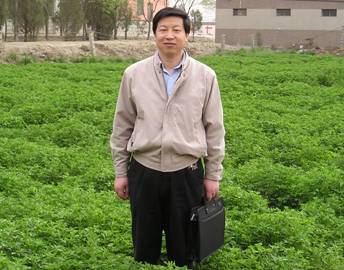 Shangli Shi (师尚礼)合作论文数甘肃农业大学草业学院46
 YangYang Miao (苗阳阳)合作论文数11WU Bei (武蓓)合作论文数6Baofu Lu (陆保福)合作论文数5Shuang-xia WEI (魏双霞)合作论文数5ZheHao Jiang (姜哲浩)合作论文数5Tong Zhou (周彤)合作论文数5Wenjuan Wang合作论文数4Fang Jing (景芳)合作论文数4CHEN Yonggang (陈永岗)合作论文数4Yun-ting ZHANG (张运婷)合作论文数4Yun A (阿芸)合作论文数4XiaoLong Li (李小龙)合作论文数4Jian Guan合作论文数3Jiamin Miao合作论文数3LI Zi-li (李自立)合作论文数3Fang Wu合作论文数3
 Cuimei Zhang (张翠梅)合作论文数College of Grassland Agriculture, Northwest A&F University3
 Lin Xu (徐麟)合作论文数National Key Laboratory of Plant Molecular Genetics, Institute of Plant Physiology and Ecology, Chinese Academy of Sciences;University of Chinese Academy of Sciences3CHEN Jian-gang (陈建纲)合作论文数2Xiaoyan Zhang合作论文数2Zong-chang HUANG (黄宗昌)合作论文数2ZHANG Hui-hui (张辉辉)合作论文数2Xia Wang合作论文数2Chang Liu合作论文数2Cheng-jun ZHANG (张成君)合作论文数2GuoLi Yin (尹国丽)合作论文数甘肃农业大学2JiangTao Kou (寇江涛)合作论文数2Long Chen (陈龙)合作论文数2
 Changning Li (李昌宁)合作论文数China Railway First Group CO.,Ltd2Tuo Yao (姚拓)合作论文数2
 Qiang Chai (柴强)合作论文数甘肃农业大学农学院2Pan Nan (南攀)合作论文数1Liangyan Rong合作论文数1
 Shoujiang Sun合作论文数1Guangzheng Sun合作论文数1WANG Hu-ning (王虎宁)合作论文数1LIU Chan-chan (刘旵旵)合作论文数1CHEN Xin-dong (陈新栋)合作论文数1Yan Xiang (闫翔)合作论文数1LI Xinglong (李兴龙)合作论文数1yajun an (安雅君)合作论文数1ZHAO Si-teng (赵思腾)合作论文数1Xiaolong Li合作论文数1Wei-Zhen Li合作论文数1Long He合作论文数1




