As a research topic integrating various subjects and technologies, Metaverse research has been a global concern in recent years. This study explores the hotspots and frontiers of academic research on the Metaverse based on a bibliometric analysis from 2012 to 2021. A keyword retrieval dataset related to Metaverse research was constructed based on expert consultation and manual reading of the literature, retrieving articles and conference papers from the Scopus database. Critical points in Metaverse research are represented in terms of research scale, keyword co-occurrence networks, keyword citation bursts, and international collaborative networks with the application of VOSviewer and CiteSpace’s bibliometric visualization software. The results indicate that Metaverse research is experiencing rapid growth, with countries/regions increasing their production at varying speeds. The results also indicate the three most prolific countries, the United States, China and Germany, for comparison, showing the leading topic as virtual reality in Metaverse research, and we find that there are differences in topic clustering and hotspot evolution among the three countries over the past decade. By determining the current research status and the overall development path of the Metaverse field, the paper intends to provide a reference for the future research development and technical application of the Metaverse.
营销是新时期推动情报服务深化与拓展的重要手段,通过总结浙江大学图书馆决策情报服务的营销经验,期望为高校图书馆更好地开展面向"双一流"建设的情报服务提供参考.以7Ps营销理论为指导,凝练出浙江大学图书馆决策情报服务的营销路径及策略.建议高校图书馆应时刻了解用户的需求变化,适时调整图书馆的业务布局和服务体系,搭建与用户间稳定的交流网络,构建及时有效的沟通机制.
海外归国人才的早期识别和引进后评估是"双一流"建设时期备受关注的话题,量化测度海归人才的学术竞争力具有重要意义.运用主成分分析法构建基于文献计量指标的海外归国人才学术竞争力评估模型,对A大学103位海外归国人才开展学术竞争力的多维测评,验证了该评估方法的有效性并探索其在高竞争性海外归国人才早期识别中的应用.基于文献计量的"四维评估法"能有效勾勒海归人才学术竞争力的整体画像,在人才引进工作中可提供重要参考.
ABSTRACT The role of reference and information service has been redefined in some Chinese university libraries. In these libraries the focus of reference and information service has transformed into information analysis. University libraries have been a participant in the management and evaluation in scientific research, technological innovation, and discipline construction. The information analysis service of Zhejiang University Library is a typical case. Zhejiang University library established an information analysis group in 2009 in reference and information service division. To further guarantee the professionalism of service, the information analysis service center was set up in 2018 as a separate division. Over the past decade, information analysis service has played the potential of library in supporting decision-making, scientific research and innovation, discipline construction, research performance evaluation, etc. Information analysis service makes the popularity and status of the university library improve continuously. The evolution of information analysis service of Zhejiang University Library is reviewed in this paper, from the initial stage to the expansion stage, and then to the establishment of professional division. Approaches to promote the progress of information analysis service are summarized. The future goals are also discussed from the perspectives of strengthening the innovation mind-set, librarian development, and information analysis literacy.
Objective. We focused on medical informatics journal publications rather than on conference proceedings by comparing and analyzing the data from journals and conferences from a broader perspective. The aim is to summarize the unique contributions of China to medical digitization and foster more multilevel international cooperation. Method. In February 2019, publications from 2008 to 2018 in three major English-language medical informatics journals were retrieved through Scopus, including the journals, namely, International Journal of Medical Informatics (IJMI, international community), JAMIA (United States), and Methods of Information in Medicine (MIM, Europe). Three major Chinese-language journals, namely, China Digital Medicine (CDM), Chinese Journal of Health Informatics and Management (CJHIM), and Chinese Journal of Medical Library and Information Science (CJMLIS), were searched within the major three Chinese literature databases. The datasets were preprocessed using the NLP package on Python, and a smart local moving algorithm was used as a clustering method for identifying the aforementioned journals. Result. Between 2008 and 2018, the total number of published papers and H-index of the three English-language journals was 1371 and 67 (IJMI), 1752 and 86 (JAMIA), and 637 and 35 (MIM), respectively. In the same period, the total number of published papers and H-index in the three Chinese-language journals was 6668 and 23 (CDM), 1668 and 22 (CJHIM), and 2557 and 25 (CJMLIS), respectively. IJMI, JAMIA, and MIM received submissions from 82, 59, and 62 countries/regions, respectively. By contrast, the three Chinese journals only received submissions from seven foreign countries. The proportions of authors from institutional affiliations were similar between the three English-language journals (IJMI, JAMIA, and MIM) and CJMLIS because the majority of the authors were from universities (81%, 74%, 73%, and 65.2%), followed by medical institutions (12%, 10%, 9%, and 23.4%) or research institutes (2%, 4%, 10%, and 4.3%). Furthermore, the proportions of the authors from enterprises were low (2%, 6%, 4%, and 0.3%) for all journals. However, the authors in CDM and CJHIM were mainly from medical institutions (50% and 40%), followed by universities (33% and 32%) and research institutes (3% and 4%). In addition, the proportions of enterprises were only 3% and 2%, respectively. Among the top five authors in three English-language journals (ranked in terms of the number of published papers), 100% had doctoral or master’s degrees, compared with only 60% in the Chinese journals. Additionally, 28204 different keywords were extracted from the aforementioned papers, covering 275 specific high-frequency key terms. Based on these key terms, four clusters were found in the English literature—“Health and Clinical Information Systems,” “Internet and Telemedicine,” “Medical Data Statistical Analysis,” and “EHRs and Information Management”—and three clusters were found in the Chinese literature: “Hospital Information Systems and EMR,” “Library Science and Bibliometrics Analysis,” and “Medical Reform Policy and Health Digitization.” Only two clusters are similar, and Chinese-language journals focus more on health information in technology and industrial applications than in medical informatics basic research. Conclusion. This study provides important insights into the development of medical informatics (MI) in China and Western countries showing that the medical informatics journals of China, the United States, and Europe have distinct characteristics. Specifically, first, compared with the Western journals, the number of papers published in the journals of professional associations in the field of MI in China is large and the application value is high, but the academic influence and academic value are relatively low; second, most of the authors of the Chinese papers are from hospitals, and most of the counterparts in the Western countries are from universities. The proportion of master’s or doctoral degrees in the former is also lower than that of the latter; furthermore, regarding paper themes, on the one hand, China MI has no theoretical and basic research on medical data statistics and consumer health based on the Internet and telemedicine; on the other hand, after nearly 10 years of hospital digital development, China has fully used the latecomer and application advantages in hospitals and, through extensive international cooperation, has made significant advancements in and contributions to the development of medical information.
[目的]探索运用科研管理分析工具SciVal助力期刊编辑及时发现研究热点、个性化选题及精准约稿的方法.[方法]以2016-2019年肿瘤领域论文为研究对象,基于SciVal的全域微观概念模型创建组稿专题,根据主题显著度遴选热点专题;根据SciVal的海量作者学术画像快速遴选肿瘤领域的国内外组稿专家.[结果]SciVal为肿瘤领域的选题策划提供全球基准数据,包括肿瘤领域全球研究热点52个,最新研究热点6个,肿瘤领域高影响力专家20位,核心学术团队4个.[结论]通过SciVal的文献数据挖掘技术来提炼研究热点并发掘核心团队的方法,可为期刊编辑的选题和组稿提供多元化的方法支持,也为大数据时代期刊的高质量发展提供有效途径.
[目的/意义]"双一流"建设对决策情报分析的针对性和精准性提出了更高的要求.在强调质量、特色、内涵的"一流"学科谋划中,学科情报分析已经切实地起到了决策支持作用.本文是学科建设决策情报服务的实际工作经验总结和思考.[方法/过程]以近年中美人工智能领域学术论文、专利和自然科学基金资助项目为数据基础,依据文献计量、综合统计、前沿识别、专家咨询等方法,分析中美两国人工智能领域的研究差距,为人工智能相关学科的科研规划、学科交叉会聚、人才引育等方面的决策制定提供有效的情报支持.[结果/结论]分析发现近年两国在人工智能领域的研究动能、研究主体、研究方向上都存在差异.中国科研动能更大,论文、专利和基金项目数都超过美国.中国的研究主体主要是高校,美国的研究主体除了高校还有企业.中美有共同的研究方向,也有各自的优势研究方向.研究差距的明晰可以为相关学科的建设提供决策支持.同时在研究差距分析中综合利用文献计量、统计、知识发现结合专家咨询的情报服务方法也可为同行提供参考.
国际合作论文是国际科研合作发展成果的重要载体,也是衡量一流大学学科建设不可或缺的核心指标.立足我国10所研究型大学国际合作论文,基于合作规模与合作率发展、合作网络地位变化、作者合作主导地位变化、合作国家网络变化等视角,剖析我国研究型大学国际合作态势与发展特征,并运用大学排行榜中新兴的相对计量指标,对国际合作成果绩效进行多个大学联盟间的比较.研究表明,我国研究型大学国际合作发展态势较好,研究规模逐年增大,国际合作核心地位突出,但与海外一流大学联盟比较,我国研究型高校的国际合作成果的影响力尚存在一定差距.
供给侧结构性改革带来的我国经济结构、效益的变化已经逐步显现.当前我国科技期刊存在供给侧结构性失衡的问题.科技期刊应当立足于我国科技、社会发展的真实需求,把握供给侧改革的战略契机,实现创新驱动,激发科技期刊的内生动力.
[目的]通过多维统计数据深度分析“中国科技期刊国际影响力提升计划”实施6年的效果,为完善资助机制,打造国际一流期刊群提供参考.[方法]逐年观测两期受资助期刊在2014—2019年间的影响力发展态势和载文量变化,并对各类期刊的资助效果进行统计学分析.[结果]期刊的影响力指标年度发展态势良好,70%期刊的影响因子百分位在受资助后有不同程度的提升;B、C两类期刊受资助后提升效果显著(P<0.05);截至2019年,第二期资助的A类期刊整体学术影响力显著优于B、C两类期刊(P<0.05).通过对载文量的分析发现,年均载文量下降5篇以上的期刊数量占比已超过了30%,2018年刊均载文量下降达34篇;18种期刊的载文量累计4年以上持续下降,其5年刊均载文量下降高达179篇.[结论]提升计划资助期刊的学术影响力指标提升显著;第二期提升计划更具战略眼光,精准的分类扶持已初现成效.部分期刊试图采用缩减载文量和非正常途径提升引用的方式来提高影响因子.运用定量方式评价期刊应采用多维指标,全面、动态地勾勒期刊学术竞争力的整体画像.
Objective: To achieve universal access to medical resources-a partial goal of the second ambitious health reform since 2010-the Chinese government aimed to build a regional medical consortium and enhance the efficiency of health information exchange (HIE). We analyzed the experience of constructing a medical consortium in Chinese hospitals, which was based on regional health information technology (RHIT) promoted by HIE. Method: In this longitudinal study, we analyzed the results of the annual surveys that were conducted by the China Hospital Information Management Association from 2006 to 2015. The survey results mainly concerned whether hospitals should join the regional medical consortium, the methods used for sharing inter-hospital medical data, and the out-of-hospital information interaction system. The Bass diffusion model was adopted to fit and predict the proportion of Chinese hospitals joining the consortium from 2006 to 2025. Result: As of 2015, the survey results of 7272 hospitals were obtained. The proportion of hospitals in partnership systems increased from 3.0% in 2007 to 57.2% in 2015. There has been a rapid development in the electronic sharing of medical data between hospitals. The proportion of hospitals that relied solely on paper documents for data interaction decreased from 43.3% in 2011 to 8.0% in 2015. There was a strong positive linear correlation between hospitals joining the consortium and the accessibility of electronic medical data exchange within hospitals (r = 0.925). The proportions of hospitals that supported dual referral systems and appointments, data browsing between hospitals and regional information systems, and remote consultation services increased to 65.0%, 61.6%, and 81.9% in 2015, as compared to 18.8%, 16.8%, and 10.9% in 2011, respectively. The Bass prediction model showed that the goal of recruiting 90% of the hospitals to the consortium by 2020 will likely be achieved (adjusted R-2 = 0.93). Conclusion: The Chinese government has applied a top-down, high-level design model to promote the rapid development of a medical consortium, in which the RHIT technologies are crucial technical enabler.
开展学科决策情报服务,有效支持学校的学科管理与决策,已成为“双一流”背景下高校图书馆义不容辞的责任.以浙江大学图书馆为例,介绍针对不同类型决策用户开展的实践案例,归纳了开展学科决策情报服务的常用情报学方法,总结了促进浙江大学图书馆情报服务发展的系列举措:建立联动型学科决策情报服务模式、加强队伍的专业性建设、发展增值型学科决策情报服务和提高服务质量的前瞻性布局.
尽 管 从 2000 年 开 始 AHA 主 导 的 国 际 复 苏 联 合 会(International Liaison Committee On Resuscitation, ILCOR)召集全球专家每隔 5 年制定 CPR 与心血管急救(emergency cardiovascular care, ECC)指南并大力推动全球 CPR 的培训和普及尽管这些努力让 CPR 质量不断得到提高,但令人遗憾的是每次新指南颁布后CPR患者的预后仍未见显著改善,且指南中总是有许多引起争议的问题仍悬而未决 [1].
智库服务可以有效提高图书馆影响力,是大学图书馆发展方向之一.浙江大学图书馆近几年进行了有效的探索和尝试.以浙江大学图书馆受国家科学技术奖励工作办公室委托完成的课题为例,总结该智库服务取得成功的实践特征,认为复合型情报研究队伍、跨机构协同工作机制和丰富的馆藏共同构成大学图书馆提供智库服务的支撑体系;同时,缺乏宏观视角、政策敏感度也成为现阶段高校图书馆进一步发展智库服务的障碍.提出建立保障机制,联合外界力量,构建高水平专家网络的大学图书馆智库服务建议.
BACKGROUND:As the second-largest economy in the world, China has invested considerable financial and policy support into hospital informatization since health care reform in 2010. However, the results and experience of such investments have not been compared with relevant research and applications in the United States and Europe.OBJECTIVES:From the perspective of professional conference proceedings, we comparatively analyzed the current situations, characteristics, hotspots, and trends of medical informatics (MI) development in China, the United States and Europe to help Chinese MI researchers and practitioners summarize their experiences and determine gaps compared to their American and European peers. We also aimed to educate foreign peers about the special contributions of the China MI circle and facilitate multilevel international cooperation.METHODS:English conference proceedings of the American Medical Informatics Association (AMIA) Annual Symposium (USA), Medical Informatics Europe (MIE, Europe) and World Conference on Medical Informatics (MEDINFO, Global) from 2007 to 2017 were searched within Scopus and Pubmed. Proceedings of Chinese MI conferences (CMIAAS, CHINC, CHITEC, CPMI) (China) were searched within Chinese databases CQVIP, CNKI and WanFang during the same period. The datasets were preprocessed via a Natural Language Processing (NLP) package on Python and were qualitatively and quantitatively analyzed via bibliometric methods.RESULTS:Overall, 2285, 1601, 1930 and 5431 papers were publicized from the AMIA Symposium (USA), MIE (Europe), MEDINFO (Global) and Chinese MI conferences (China) between 2007 and 2017, respectively, with an H-index of 32, 19, 19 and 3, respectively. The AMIA Symposium, MIE and MEDINFO received submissions from 43, 68 and 80 countries (or regions), respectively, but Chinese MI conferences (CMIAAS, CHINC, CHITEC, CPMI) only received submissions from 3 foreign countries. Author affiliations were quite similar among the AMIA Symposium, MIE and MEDINFO, as 67%, 75% and 70% of authors came from universities/colleges, respectively; 18%, 10% and 11% came from medical institutions, respectively; and 7%, 8% and 10% came from institutes, respectively. In contrast, the majority (54%) of authors in Chinese MI conferences came from medical institutions followed by universities/colleges (17%) and institutes (10%). Of the top 5 authors with the most publications in AMIA Symposium, MIE and MEDINFO, 14/15 of them had medical backgrounds, but only one author from the Chinese MI conferences majored in medicine. Electronic medical records (EMR) were included in the top 10 high-frequency keywords by all four conference groups, but the amount of time that this keyword appeared differed in 2009, 2011, 2012 and 2013, respectively.CONCLUSIONS:The MI annual conferences are all different among China, the United States and Europe. China lags in the theoretical and discipline bases but has made considerable investments in the past 10 years. China should fully use its second-mover advantage and application advantages and utilize international experiences and cooperation to make stronger contributions to global MI development.
为促进一流学科建设,对机构在某一学科领域竞争优势的发现和挖掘至关重要.文章基于SciVal跨学科科研分析平台,利用共引分析方法和学科领域发文规模、相对文献份额、相对引文份额和先进性指数这些指标来评估机构学科领域的显著竞争优势和潜在竞争优势.实践发现,这一基于共引分析等复杂计算方法发现学科领域竞争优势的方法在浙江大学计算机科学学科的分析上比较适用,参考文献分数化分配机制有利于计算机等交叉学科在竞争优势方面的充分体现.该方法有利于从事实数据角度揭示计算机科学学科竞争优势的布局和发展态势.文章为学科的发展、竞争力评价提供一种新的思路和方法,并进行了验证.
Background: China launched its second health reform in 2010 with considerable investments in medical informatics (MI). However, to the best of our knowledge, research on the outcomes of this ambitious undertaking has been limited.Objective: Our aim was to understand the development of MI and the state of continuing education in China and the United States from the perspective of conferences.Methods: We conducted a quantitative and qualitative analysis of four MI conferences in China and two in the United States: China Medical Information Association Annual Symposium (CMIAAS), China Hospital Information Network Annual Conference (CHINC), China Health Information Technology Exchange Annual Conference (CHITEC), China Annual Proceeding of Medical Informatics (CPMI) versus the American Medical Informatics Association (AMIA) and Healthcare Information and Management Systems Society (HIMSS). The scale, composition, and regional distribution of attendees, topics, and research fields for each conference were summarized and compared.Results: CMIAAS and CPMI are mainstream academic conferences, while CHINC and CHITEC are industry conferences in China. Compared to HIMSS 2016, the meeting duration of CHITEC was 3 versus 5 days, the number of conference sessions was 132 versus 950+, the number of attendees was 5000 versus 40,000+, the number of vendors was 152 versus 1400+, the number of subforums was 12 versus 230, the number of preconference education symposiums and workshops was 0 versus 12, and the duration of preconference educational symposiums and workshops was 0 versus 1 day. Compared to AMIA, the meeting duration of Chinese CMIAAS was 2 versus 5 days, the number of conference sessions was 42 versus 110, the number of attendees was 200 versus 2500+, the number of vendors was 5 versus 75+, and the number of subforums was 4 versus 10. The number of preconference tutorials and working groups was 0 versus 29, and the duration of tutorials and working group was 0 versus 1.5 days.Conclusions: Given the size of the Chinese economy and the substantial investment in MI, the output in terms of conferences remains low. The impact of conferences on continuing education to professionals is not significant. Chinese researchers and professionals should approach MI with greater rigor, including validated research methods, formal training, and effective continuing education, in order to utilize knowledge gained by other countries and to expand collaboration.
文章通过定义Scopus来源期刊的方法,建立了海洋科学相关论文的数据集.以此为基础,从文献计量学的角度对海洋科学领域的全球科研现状和研究热点进行了梳理分析.认为目前全球引领海洋科学研究的主要有美国、英国、澳大利亚等国,且科研热度不断上升.世界前沿热点集中在海洋生态、海洋污染、海洋渔业等领域.并提出了国内海洋科学研究的两点建议:提升论文质量,寻求大国合作.
Background: As the world's second-largest economy, China has launched health reforms for the second time and invested significant funding in medical informatics (MI) since 2010; however, few studies have been conducted on the outcomes of this ambitious cause.Objective: This study analyzed the features of major MI meetings held in China and compared them with similar MI conferences in the United States, aiming at informing researchers on the outcomes of MI in China and the U.S. from the professional conference perspective and encouraging greater international cooperation for the advancement of the field of medical informatics in China and, ultimately, the promotion of China's health reform.Methods: Qualitative and quantitative analyses of four MI meetings in China (i.e., CMIAAS, CHINC, CHITEC, and CPMI) and two in the U.S. (i.e., AMIA and HIMSS) were conducted.Furthermore, the size, constituent parts and regional allocation of participants, topics, and fields of research for each meeting were determined and compared.Results: From 1985 to 2016, approximately 45,000 individuals attended the CMIAAS and CPMI (academic), CHINC and CHITEC (industry), resulting in 5,085 documented articles.In contrast, in 2015, 38,000 and 3,700 individuals, respectively, attended the American HIMSS (industry) and AMIA (academic) conferences and published 1,926 papers in the latter.Compared to those of HIMSS in 2015, the meeting duration of Chinese industry CHITEC was 3 vs. 5 days, number of vendors was 100 vs. 1500+, number of sub-forums was 10 vs. 250; While compared to those of AMIA, the meeting duration of Chinese CMIAAS was 2 vs. 8 days, number of vendors was 5 vs. 65+, number of sub-forums was 4 vs. 26.HIMSS and AMIA were more open, international, and comprehensive in comparison to the aforementioned Chinese conferences. Conclusions:The current MI in China can be characterized as "hot in industry application, and cold in academic research."Taking into consideration the economic scale together with the huge investment in MI, conference yield and attendee diversity are still low in China.This study demonstrates an urgent
Background As the world’s second-largest economy, China has launched health reforms for the second time and invested significant funding in medical informatics (MI) since 2010; however, few studies have been conducted on the outcomes of this ambitious cause. Objective This study analyzed the features of major MI meetings held in China and compared them with similar MI conferences in the United States, aiming at informing researchers on the outcomes of MI in China and the US from the professional conference perspective and encouraging greater international cooperation for the advancement of the field of medical informatics in China and, ultimately, the promotion of China’s health reform. Methods Qualitative and quantitative analyses of four MI meetings in China (i.e., CMIAAS, CHINC, CHITEC, and CPMI) and two in the US (i.e., AMIA and HIMSS) were conducted. Furthermore, the size, constituent parts and regional allocation of participants, topics, and fields of research for each meeting were determined and compared. Results From 1985 to 2016, approximately 45,000 individuals attended the CMIAAS and CPMI (academic), CHINC and CHITEC (industry), resulting in 5,085 documented articles. In contrast, in 2015, 38,000 and 3,700 individuals, respectively, attended the American HIMSS (industry) and AMIA (academic) conferences and published 1,926 papers in the latter. Compared to those of HIMSS in 2015, the meeting duration of Chinese industry CHITEC was 3 vs. 5 days, the number of vendors was 100 vs. 1,500+, the number of sub-forums was 10 vs. 250; while compared to those of AMIA, the meeting duration of Chinese CMIAAS was 2 vs. 8 days, the number of vendors was 5 vs. 65+, the number of sub-forums was 4 vs. 26. HIMSS and AMIA were more open, international, and comprehensive in comparison to the aforementioned Chinese conferences. Conclusions The current MI in China can be characterized as “hot in industry application, and cold in academic research.” Taking into consideration the economic scale together with the huge investment in MI, conference yield and attendee diversity are still low in China. This study demonstrates an urgent necessity to elevate the medical informatics discipline in China and to expand research fields in order to maintain pace with the development of medical informatics in the US and other countries.
 Xiaojun He (何小军)合作论文数浙江大学医学院附属杭州市第一人民医院12
 Jianbo Lei (雷剑波)合作论文数School of Physical Science and Technology, Tiangong University6
 Jiajie Zhang (张家杰)合作论文数D. Bradley McWilliams School of Biomedical Informatics, University of Texas Health Science Center at Houston;Agency for Healthcare Research and Quality4HuiYun Shen (沈惠云)合作论文数3Wei Kun-Yan (蔚坤妍)合作论文数3Yi Li (李懿)合作论文数2ZhongAn Zhang (张忠安)合作论文数2JuFang Shao (邵菊芳)合作论文数2FangMin Ge (葛芳民)合作论文数2Ji Tian (田稷)合作论文数2
 Silong Zhang (张斯龙)合作论文数Zhejiang University2
 Chen Huang (黄晨)合作论文数Zhejiang University Library2Xiangyu Zhou合作论文数1Mengqi LIU (刘梦琪)合作论文数1
 Junyi Xin合作论文数1Wei Wang合作论文数1Dongxia Shen合作论文数1
 Siqi Dai合作论文数1SHEN Jin-lu (沈锦璐)合作论文数1Hui-xia CHEN (陈珲夏)合作论文数1Xiaomeng WU (吴肖梦)合作论文数1baiji wu (吴白洁)合作论文数1Li Liu合作论文数1Wei Wu合作论文数1Ting Chen合作论文数1LingYe Fan (范凌晔)合作论文数1HuaYa Xu (徐华娅)合作论文数1KaiFei Wang (王凯飞)合作论文数1XiaoLi Yin (尹晓莉)合作论文数1GuoGang Chen (陈国钢)合作论文数1Wei Zhu (朱威)合作论文数1ZhiMing Yin (殷之明)合作论文数1YiJun Chen (陈益君)合作论文数1
 Liang Wang (王亮)合作论文数School Of Management, Zhejiang University1
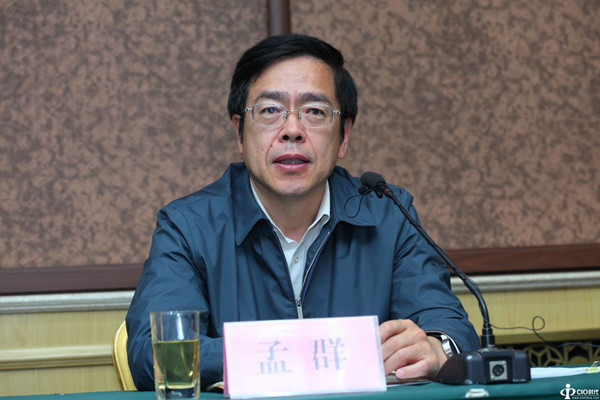 Qun Meng (孟群)合作论文数国家卫生计生委统计信息中心1Jian Shen (沈健)合作论文数1Yuxi Jia (贾玉玺)合作论文数1
 Hong Li (李红)合作论文数Sir Run Run Shaw Hospital, School of Medicine, Zhejiang University1
 Jun Liang合作论文数School of Engineering, Cardiff University1
 Xu Zheng (郑旭)合作论文数China-Japan Friendship Hospital1




