To compare the mid- to long-term clinical and radiological outcomes of the confluent L-shaped tunnel technique with the Y-graft technique for anatomic lateral ankle ligament reconstruction. This retrospective study involved 41 patients who underwent lateral ankle ligament reconstruction between 2013 and 2018. Based on the tunnel direction and tendon fixation method at the fibula side, patients were divided into two groups, with 17 patients in the L-shaped tunnel group and 24 patients in the Y-graft group. The American Orthopaedic Foot and Ankle Society (AOFAS) score, visual analogue scale (VAS) pain score, Tegner score, and Karlsson score were evaluated and compared preoperatively and at follow-up. Anterior talar translation and talar tilt at stress radiographs, postoperative sprain recurrence, range of motion (ROM) restriction, sensory disturbance, etc., were also collected and compared. The mean follow-up times were 72 and 42 months for the L-shaped group and Y-graft group, respectively. The median VAS pain score, Tegner score, AOFAS score, Karlsson score significantly improved from a preoperative level in both groups (all with p < 0.01). No significant difference was found between the two groups regarding the changes from preoperatively to postoperatively except for the VAS pain score reduction (1.58 ± 1.58 in the L-shaped group vs. 2.53 ± 1.29 in the Y-graft group, p = 0.035). The incidence of flexion–extension ROM restriction (≥ 5°) was significantly higher in the Y-graft group (41.2%) than in the L-shaped group (12.5%) (p = 0.035). Both the confluent L-shaped tunnel technique and the Y-graft technique significantly improved symptoms, ankle function, and radiographic outcomes in patients with chronic lateral ankle instability (CLAI) at mid- to long-term follow-up. The confluent L-shaped tunnel technique resulted in lower rates of flexion–extension ROM restriction, while the Y-graft technique showed better VAS pain reduction. This result could provide further evidence for the surgical treatment of CLAI. III.
Objective To explore the advantages and application value of "image-based learning"method in ultrasound technology for standardized residents training of radiologists. Methods There were 50 residents of other imaging departments who studied from 2010 to 2017 in the ultrasound department of Peking University Third Hospital of were divided into two groups: the control group and the experimental group. The experimental group was 25 doctors, the control group was 25 doctors. Image-based learning method was applied in the experimental group, while traditional teaching method was applied to the control group. By the end of the training, the training effect of image-based learning teaching method was evaluated by comparing the examination scores of the two groups after ultrasound training, and the satisfaction degree of image-based learning teaching method for experimental group was evaluated by questionnaire survey. Results The average examination score of experimental group after ultrasound training was significantly higher than that of the control group [(87. 74±6. 21) VS. (81. 99±9. 84),t= 2. 48,P<0. 05]. Meanwhile, 100. 0%(25/ 25) in the experimental group believed that the image-based learning teaching method was helpful to consolidate the knowledge of ultrasound, stimulated learning interest and clinical reasoning capacity and facilitated the learning of ultrasound skills. 96. 0% (24/ 25)in the experimental group agreed that the image-based learning teaching method was helpful to enhance self-learning ability and participation consciousness. Conclusions Image-based learning teaching method has a certain application value in the training of ultrasound skill of radiologists.
Combining with the feature of ultrasound medicine and obeying the basic principle of feedback, we introduced the sandwich feedback method into standardized training of residents. By telling residents where improvement was needed, residents could clearly know their goal in the process of training. The training pass rate in the sandwich feedback method group and the traditional teaching method group were compared and the results showed that the pass rate in the sandwich feedback method group was higher than that in the traditional teaching method group , indicating that the introduction of sandwich feedback method can help residents comprehend their abilities in time and find out their shortcomings and advantages, so as to improve continuously. In addition, it would effectively supervise and urge teachers to continuously improve their teaching awareness and level.
The training of residents majoring in ultrasound needs not only to pay attention to the teaching of speculative knowledge,but also to "look at pictures and talk",which is based on a large number of diagnostic ultrasound cases,training the residents to find,discover and discriminate the lesions from the ultrasonic images to finally form a sharp recognition and diagnosis ability.This study used the instant messaging tool WeChat to establish a virtual learning platform and implement a case based teaching process through this platform,which can avoid the limitations of time and space,and make the communication between teachers and students faster.According to the questionnaire survey,residents generally believed that the training mode can effectively improve learning efficiency and professional ability and hope to add this training mode to the basis of traditional teaching mode.The results of resident case analysis showed that the diagnostic accuracy of residents gradually increased during the training process.The model of WeChat platform combined with case teaching can provide new ideas and methods for standardized training of resident doctors in ultrasound specialty.
 Ling Jiang (江凌)合作论文数Department of Ultrasound, Peking University Third Hospital2
 Ligang Cui (崔立刚)合作论文数Peking University Third Hospital;Institute of Medical Technology, Health Science Center, Peking University2
 Yuqing Zhao合作论文数1Yanfang Jiang合作论文数1Zong-Chen Hou (侯宗辰)合作论文数1Tong Su合作论文数1AiJing Zhang (张爱京)合作论文数1
 Qinwei Guo (郭秦炜)合作论文数Department of Sports Medicine, Peking University Third Hospital;Institute of Sports Medicine of Peking University1
 Peng Fu (付鹏)合作论文数Ultrasound Diagnosis Department, Peking University Third Hospital1
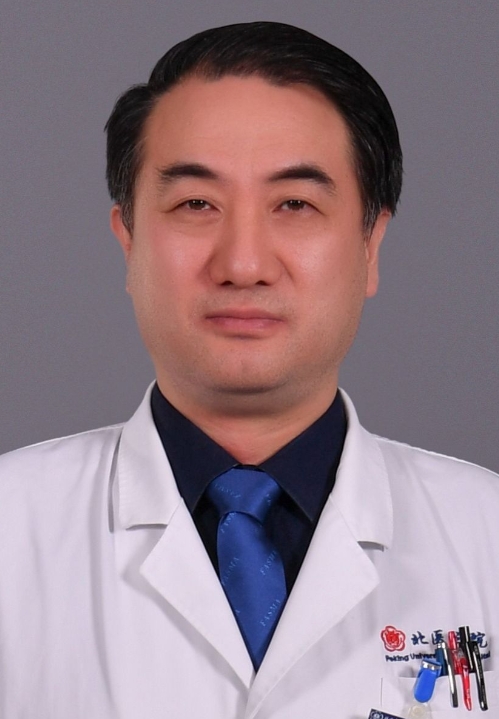 Chen Jiao (焦晨)合作论文数Institute of Sports Medicine, Peking University Third Hospital1
 Bo Zhao (赵博)合作论文数Department of Ultrasound Medicine, Peking University Third Hospital1
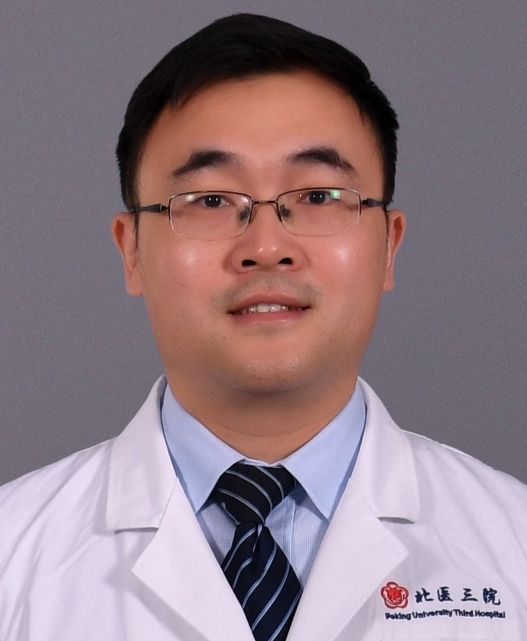 Dong Jiang (江东)合作论文数Institute of Sports Medicine, Peking University Third Hospital;Department of Sports Medicine, Peking University Third Hospital1
 Yan Sun (孙彦)合作论文数Department of Ultrasound, Peking University Third Hospital1Fan Zhang (张帆)合作论文数Department of Ultrasound, Peking University Third Hospital1
 Ping He (何萍)合作论文数Department of Ultrasound, Peking University Third Hospital1
 Yuelin Hu (胡跃林)合作论文数Peking University Third Hospital1




