目的 探讨儿童痉挛型脑瘫(SCP)选择性脊神经后根切断术(SPR)后疼痛管理措施.方法 回顾性分析52例双侧型单纯SCP患儿的临床资料,均接受SPR并椎板复位术;术中进行镇痛预处理(应用罗哌卡因和地塞米松混合液进行切口局部注射),术后采取舒芬太尼静脉持续输注和布洛芬定时口服的全身镇痛手段.应用Wong-Baker量表评分评估疼痛程度.结果 2例术后2~3h内情绪失控和明显躁动,亲属不能安抚,予水合氯醛或咪达唑仑镇静,症状缓解;其余患儿均能保持相对安静.术后未发生术区感染、术区血肿或伤口裂开等并发症.与术后8 h相比,术后24、48 h疼痛评分均明显降低(P<0.05),而不同性别之间无统计学差异(P>0.05).结论 舒芬太尼静脉持续泵入和布洛芬定时口服的全身镇痛手段、结合术中镇痛预处理,对SPR术后镇痛效果可靠,使患儿术后很早期就能耐受康复治疗,提高了手术与康复综合治疗的时效.
Objective:To analyze the postoperative complications of vagus nerve stimulation (VNS) in children with refractory epilepsy, and to explore the corresponding treatment strategies.Methods:A retrospective study was conducted on the clinical data of 294 children with refractory epilepsy who were treated with VNS at Department of Functional Neurosurgery, Beijing Children′s Hospital, Capital Medical University from September 2015 to December 2019 and followed up for more than 6 months. Postoperative complications were documented. Corresponding treatment and outcomes were summarized.Results:Among 294 patients, 23 cases (7.8%) had postoperative complications related to operation or hardware, including throat-related complications (4.4%, 13/294) which was mostly commonly observed, superficial incision infection(2.0%, 6/294), deep incision infection (1.4%, 4/294), subcutaneous hematoma around VNS device(0.7%, 2/294) and immune rejection (0.3%, 1/294). The local symptoms disappeared after anti-infection treatment in 6 children with superficial incision infection after operation. Among 4 children with deep incision infection, the infection was effectively controlled after removal of the VNS device and anti-infection treatment. In 2 children with subcutaneous hematoma around the stimulation device, the hematoma was resolved following pressure dressing and dressing change. In 1 child with immune rejection, the symptoms disappeared after all VNS devices were removed. In 13 children with throat complications, the symptoms disappeared after the programming of VNS and postoperative rehabilitation.Conclusions:The incidence of postoperative complications of VNS in children with refractory epilepsy is low, and throat complications and infections are the most common. The outcomes of various complications are satisfactory after corresponding treatment. Many technical aspects in surgical operations are associated with postoperative complications, and the standardized operation is a key factor in the prevention of complications.
目的 探讨选择性脊神经后根切断(SPR)术对遗传性痉挛性截瘫(HSP)患者的治疗效果.方法 分析4例HSP患者的临床资料;采用SPR手术及术后康复的综合治疗方案.手术方式为选择性腰骶段脊神经后根切断并椎板复位.对比治疗前与治疗后12个月时,患者的改良Asworth痉挛分级评分、关节活动度和Hoffer步行能力分级.结果 4例HSP患者均表现明显的痉挛状态,步态困难;其中3例为单纯型HSP,1例为复杂型HSP.4例患者SPR术后12个月的痉挛分级评分显示,MAS评分均值显著低于术前(均P<0.01);股角活动度平均改善11.3°,腘窝角活动度改善20.5°,足背屈角活动度改善4.0°.2例单纯型HSP患儿Hoffer步行活动能力得到改善,由Ⅱ级提高到Ⅲ级;1例单纯型HSP成人患者则没有改善,另外1例复杂型HSP患儿的步态和平衡变差.3例单纯型HSP患者的肌力无明显减退,1例复杂型HSP患者的肌力有减退.结论 SPR结合术后康复,可以有效缓解单纯型HSP患者的痉挛状态,改善患者的步态和移动能力.通过SPR缓解痉挛,有可能降低HSP患者肢体废用性肌萎缩的发生率.
 Tinghong Liu (刘婷红)合作论文数2
 Yangshuo Wang合作论文数2Jinshan Xu合作论文数2Feng Chen (陈峰)合作论文数2
 Tie Fang (方铁)合作论文数Beijing Children's Hospital, Capital Medical University2
 Shuli Liang (梁树立)合作论文数Bejjing Children's Hospital, Capital Medical University2ZiXing Jie (解自行)合作论文数1Jie Deng (邓劼)合作论文数1LiLi Zheng (郑莉莉)合作论文数1XiaoFei Wang (王晓飞)合作论文数1
 Chunhong Chen (陈春红)合作论文数Beijing Children's Hospital, Capital Medical University1
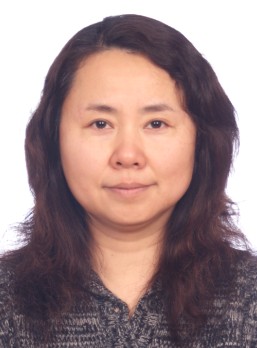 Changhong Ding (丁昌红)合作论文数首都医科大学附属北京儿童医院小儿神经中心1
 Fang Fang (方方)合作论文数首都医科大学附属北京儿童医院小儿神经中心1




