A RuPHOX/Pd catalyzed asymmetric allylic substitution cascade of α-carbonylamides with an allylic meso -dicarbonate has been developed, providing chiral 3-acyl bicyclolactams in high yields and with up to 99% ee and >20 : 1 dr.
An entry from the Cambridge Structural Database, the world’s repository for small molecule crystal structures. The entry contains experimental data from a crystal diffraction study. The deposited dataset for this entry is freely available from the CCDC and typically includes 3D coordinates, cell parameters, space group, experimental conditions and quality measures.
An efficient Pd-catalyzed asymmetric allylic substitution cascade of 4-hydroxy-2H-pyrones with meso-allyl dicarbonates has been developed for the synthesis of kinetic chiral tetrahydro-1H-pyrano[4,3-b]benzofuran-1-one products in ≤87% yield and ≤99% ee. The protocol was achieved via a temperature-controlled kinetic control process, which has been illustrated by means of the experimental results and control experiments. The reaction could be conducted on a gram scale, and the resulting product allows for several transformations.
Asymmetric desymmetrization has been demonstrated to be a powerful strategy for building stereocenters in asymmetric synthesis. Herein, a Pd/Cu catalyzed asymmetric desymmetrization reaction with a simple geminal dicarboxylate is reported. A wide scope of imino esters bearing an aryl or heteroaromatic group were compatible with this bimetallic catalytic system. The reactions proceeded smoothly, giving the desired products in good yields with high to excellent regio-, diastereo-, and enantioselectivity (up to 20 : 1 branched:linear, >20 : 1 dr, >99 % ee). Notably, the reaction favored branched selectivity, which is unusual for the Pd-catalyzed allylic alkylation reaction. In addition, the standard product could be easily transformed to other valuable molecules such as chiral allylic alcohols, carbamates, and organic boron compounds. Furthermore, DFT calculations were conducted to explain the origin of the branched selectivity.
The kinetic resolution of azaflavanones has been established via RuPHOX-Ru catalyzed asymmetric hydrogenation, providing chiral azaflavanones and azaflavanols in high yields with up to >20 : 1 dr and 99.7% ee.
Herein an efficient Pd-catalyzed asymmetric allylic substitution cascade of both (E)- and (Z)-but-2-ene-1,4-diyl dimethyl dicarbonates with α-substituted cyano ketones is described for the preparation of chiral 2,3-dihydrofurans in up to 97% yield with 98% ee. A suggested steric control process has been proposed to illustrate the differences in enantioselectivity between the reactions of (E)- and (Z)-allyl substrates. The cascade reaction could be conducted on a gram-scale, and the resulting product allows for several transformations.
A synthesis of chiral tetrahydroindoles has been developed via a Pd-catalyzed asymmetric allylic substitution annulation using unstable enolizable ketimines as nucleophiles and our previously developed Bu-t-RuPHOX as a chiral ligand. The reaction proceeds via an asymmetric desymmetrization of the meso-diacetatecycloalkenes, providing the desired chiral tetrahydroindoles in moderate to good yields and with up to 96% ee. The annulation reaction could be performed on a gram-scale in high yields and the resulting products can be transformed to several types of N-hetereobicyclic derivatives. In addition, a chiral cis-perhydroindolic acid derivative was also readily synthesized starting from a prepared chiral tetrahydroindole.
The desymmetrization of meso-dicarbonatecyclohexene with β-hydrazino carboxylic esters has been achieved via a RuPHOX/Pd-catalyzed allylic substitution cascade for the construction of chiral hexahydrocinnoline derivatives with high performance. Mechanistic studies reveal that the reaction exploits a pathway different from that of our previous work and that the first nitrogen nucleophilic process is the rate-determining step. The protocol could be conducted on a gram scale without any loss of catalytic behavior, and the corresponding chiral hexahydrocinnolines can undergo diverse transformations.
A Pd-catalyzed asymmetric allylic substitution cascade of allylic meso-dicarbonates with 3-oxo-nitriles has been developed for the synthesis of chiral bicyclic dihydrofurans bearing two vicinal carbon stereocenters. The reaction proceeds via an asymmetric desymmetrization process with the desired products being obtained in high yields and with up to 97% ee. The reaction was performed on a gram-scale and the corresponding bicyclic dihydrofurans could undergo several transformations. The methodology provides an efficient synthetic route to biologically active chiral bicyclic dihydrofurans derivatives.
(+)-Salvianolic acid A, one of the most active components in the traditional Chinese medicine Danshen, has been synthesized over 10 steps in 6.5% overall yield. Starting from inexpensive ortho-vanillin and sodium Danshensu (synthesized via asymmetric catalysis in our group), the process consists of the following: A Wittig reaction that gives the desire product with absolute E-configuration, a demethylation reaction with AlCl3 in a satisfactory yield, and a practical deprotection of allylic groups to afford the terminal product (+)-salvianolic acid A. The current synthetic technology possesses the advantages of using inexpensive starting materials, mild reaction conditions and has the potential for use in large scale synthesis.
Mucin-type O-glycosylation is the most abundant type of O-glycosylation. It is initiated by the members of the polypeptide N-acetyl-α-galactosaminyltransferase (ppGalNAc-T) family and closely associated with both physiological and pathological conditions, such as coronary artery disease or Alzheimer's disease. The lack of direct and selective inhibitors of ppGalNAc-Ts has largely impeded research progress in understanding the molecular events in mucin-type O-glycosylation. Here, we report that a small molecule, the plant flavonoid luteolin, selectively inhibits ppGalNAc-Ts in vitro and in cells. We found that luteolin inhibits ppGalNAc-T2 in a peptide/protein-competitive manner but not promiscuously (e.g. via aggregation-based activity). X-ray structural analysis revealed that luteolin binds to the PXP motif-binding site found in most protein substrates, which was further validated by comparing the interactions of luteolin with wild-type enzyme and with mutants using 1H NMR-based binding experiments. Functional studies disclosed that luteolin at least partially reduced production of β-amyloid protein by selectively inhibiting the activity of ppGalNAc-T isoforms. In conclusion, our study provides key structural and functional details on luteolin inhibiting ppGalNAc-T activity, opening up the way for further optimization of more potent and specific ppGalNAc-T inhibitors. Moreover, our findings may inform future investigations into site-specific O-GalNAc glycosylation and into the molecular mechanism of luteolin-mediated ppGalNAc-T inhibition.
A simple and efficient method for the benzylation of beta-ketoesters by employing copper salt as a catalyst was developed. The mild reaction system and a wide range of substrates with high yields make the protocol very practical. It provides a new route for the synthesis of alpha-benzyl-beta-ketoesters.
The recent progress in the development of the application of N-tosylhydrazones in the organic synthesis is summarized. Mainly, the advances in the areas of both metal-catalyzed cross-coupling and metal-free reactions with N-tosylhydrazones are introduced.
A highly enantioselective Friedel-Crafts alkylation reaction of indoles with acyclic α-substituted β-nitroacrylates is developed under the catalysis of Ni(ClO4)2-bisoxazoline complex at 1 mol % catalyst loading, affording chiral indolic β-nitroesters bearing all-carbon quaternary stereocenters in excellent yields and ees of up to 97%. Transformation of one of the products to β(2,2)-amino ester and tetrahydro-β-carboline through nitro reduction and sequential Pictet-Spengler cyclization was exemplified.
 Wanbin Zhang (张万斌)合作论文数School of Chemistry and Chemical Engineering, Shanghai Jiao Tong University;School of Pharmaceutical Sciences, Shanghai Jiao Tong University12
 Delong Liu (刘德龙)合作论文数School of Pharmaceutical Sciences, Shanghai Jiao Tong University8
 Jiefeng Shen (申杰峰)合作论文数College of Chemistry and Chemical Engineering, Donghua University3
 Yan Zheng合作论文数3
 Yicong Luo合作论文数2Youbin Peng合作论文数2Siqi Dong合作论文数2Ling Zhao合作论文数2Jianxun Ye合作论文数2Guanlin Li合作论文数2
 Yong Ye (叶勇)合作论文数School of Chemistry, Zhengzhou University2Shen Chong合作论文数2
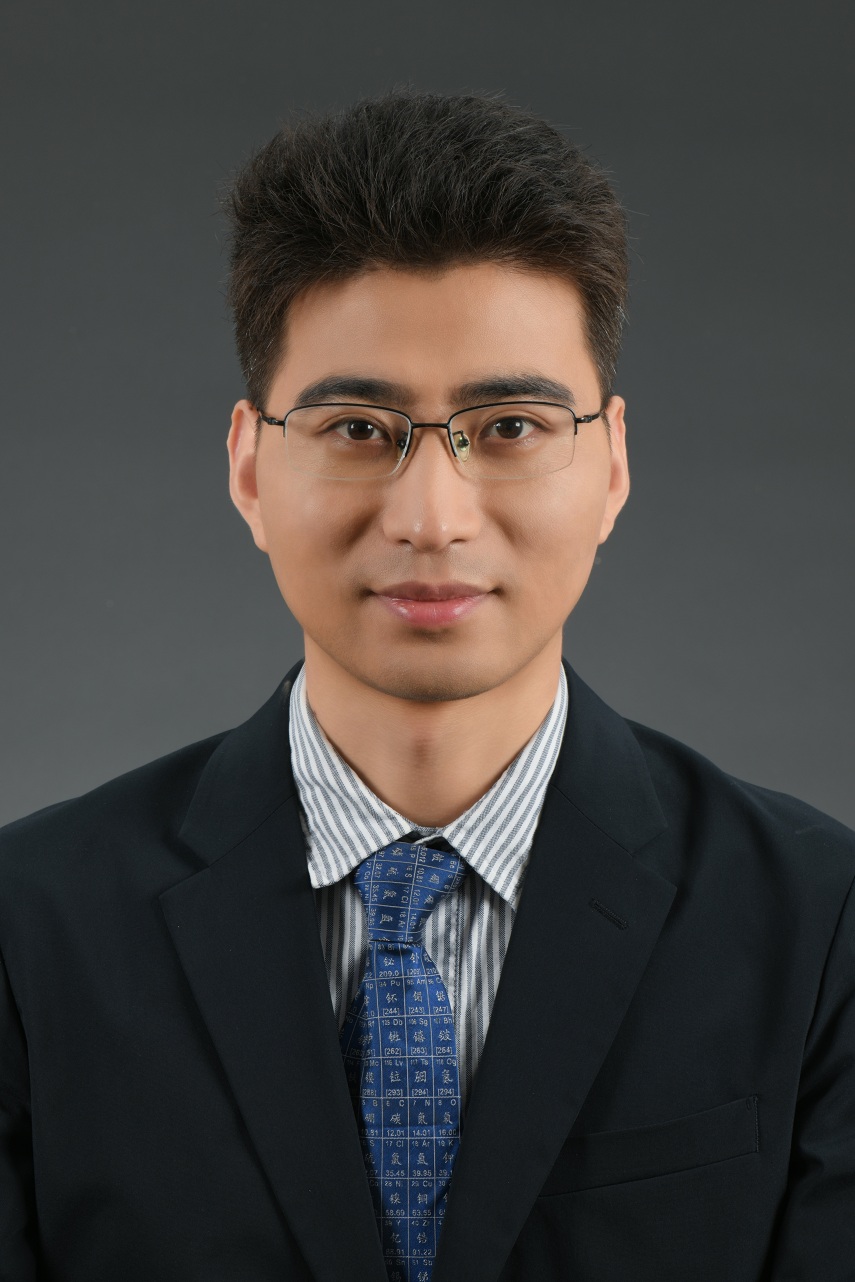 Xiaohong Huo (霍小红)合作论文数School of Chemistry and Chemical Engineering, Shanghai Jiao Tong University2
 Shang Shan (单尚)合作论文数College of Chemical Engineering, Zhejiang University of Technology2
 Yixia Jia (贾义霞)合作论文数School of Chemistry and Chemical Engineering, Tianjin University of Technology2Yashi Zou合作论文数1Zhaodi Li合作论文数1Daxu Fu合作论文数1Shaofeng Xu合作论文数1Jiayu Zhou合作论文数1Yue Zhu合作论文数1
 Zhijue Xu合作论文数1Yufei Lu合作论文数1
 Cheng Sheng合作论文数1Zhenliang Sun合作论文数1WeiJian Sheng (盛卫坚)合作论文数1
 Jing Li (李靖)合作论文数School of Chemistry & Chemical Engineering, Shaanxi Normal University1
 Pedro Merino Filella合作论文数Department of Organic Chemistry & Unit of Glycobiology, Institute of Biocomputation and Physics of Complex Systems, University of Zaragoza1
 Matilde de Las Rivas Gonzalez de Garay合作论文数1Lu Jishun合作论文数1
 Feng Liu (刘烽)合作论文数School of Chemistry and Chemical Engineering, Shanghai Jiao Tong University;Frontier Science Center for Transformative Molecules, Shanghai Jiao Tong University;School of Physics and Astronomy, Shanghai Jiao Tong University1Liu Ren-Rong合作论文数College of Chemical Engineering, Zhejiang University of Technology1Zhou Yueyang合作论文数1
 Fang Wu (吴方)合作论文数Shanghai Center for Systems Biomedicine, Shanghai Jiao Tong University1Hao Liu合作论文数Institute of High Energy Physics, Chinese Academy of Science1
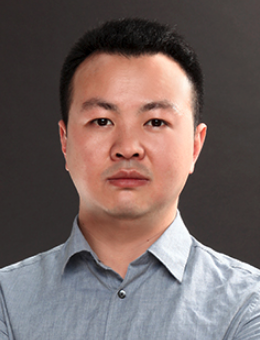 Xing Li (李杏)合作论文数School of Integrated Circuits, Shanghai Jiao Tong University1
 Liang Wu (吴量)合作论文数School of Chemistry and Chemical Engineering, Shanghai Jiao Tong University1
 Yan Zhang (张延)合作论文数Shanghai Center for Systems Biomedicine, Shanghai Jiao Tong University1
 Jianrong Gao (高建荣)合作论文数College of Chemical Engineering, Zhejiang University of Technology1
 Ramon Hurtado-Guerrero合作论文数College of Life, Sciences, University of Dundee1
 Jianquan Weng (翁建全)合作论文数College of Chemical Engineering, Zhejiang University of Technology1
 Congrong Wang (王从容)合作论文数Tongji University Medical School1
 Ignacio Delso合作论文数1




