以目前由权威机构在线发布和出版的新型冠状病毒肺炎诊疗方案中的中医方案3个英译本为研究对象,通过对比分析不同译本中的中医证型术语、中药方剂名、中药饮片、现代中药制剂名称等的翻译,发现当前中医英译翻译策略基本以异化法为主,具体方法上以直译和音译为主,术语翻译存在不统一甚至漏译、误译问题.
To understand the current British people's attitudes towards TCM and its influencing factors through a questionnaire survey; To provide data reference for the subsequent international dissemination of TCM. A sample of 200 British people (from Norwich and London) were selected randomly from June 5, 2021 to November 1, 2021 by snowball sampling method, and a questionnaire investigation was launched based on the design of demographic characteristics and Identity Scale of Chinese Medicine (CMIS) and etc. The average sores of CMIS were (71.53±0.76) points. 89.2% of British population showed no difference on attitudes towards TCM, and 10.8% of it showed more confidence in TCM. The single factor analysis showed that the age and education level mainly determine whether they accept TCM. The current attitudes towards TCM among British population are positive and optimistic. In the future, while maintaining the existing treatment advantages of TCM in the UK, it is necessary to conduct targeted promotions based on research of diseases for which TCM treatment has strengths in different age groups of local residents. Establishment of brands with TCM features is also a good way to increase the popularity of TCM. And multiple methods like new media, especially the coverage of local mainstream media, should be emphasized and used for the promotion of TCM and improvement of cognition level among British people.
医学誓言由来已久,在医学人文教育中起重要作用.英文医学誓言发展迅速,但至今缺乏英文版中医学誓言.本文在改写理论指导下,重点基于意识形态与诗学两个主要影响因素,参考已有译本,探索性地将《大医精诚》选段英文译写为中医学誓言.中西方在医学伦理方面有共通之处,因此中医学誓言的英文译写需要在意识形态上"求同存异".但《大医精诚》更突出表达了成为"大医"的两种精神:不管个人安危,视病患为自己亲人的"大仁"精神;为了人民的利益,不计个人得失,一心赴救的"大爱"精神.这种大仁大爱的精神,超越一般的道德准则和行为规范,是为"大医"的核心价值.
Abstract Background: An effective knot, which is used under the arthroscopy, must possess the optimal balance of knot security and loop security. The aim of this research was to assess the biomechanical performance of the Zhang’s knot, a new slip knot, comparing with Tennessee knot, Roeder knot, and SMC knot. Methods: The Zhang’s knot and other 3 arthroscopic sliding knots (Tennessee knot, Roeder knot, and SMC knot) were tied with 3 reversing half-hitches on alternating posts (RHAPs) following. A total of 60 specimen of 5 different types of knots were assessed, with the static surgeon’s knot as comparison. The knots were tied around a 30 mm circumference plastic post for a unified 30 mm loop circumference before locking the complex knots by tensioning the wrapping limb of the suture. The loop security (the capacity of knot maintaining a tight suture loop without slippage) was assessed based on the circumference of knots under 5 N preload; the knot security was assessed based on the maximum force to failure at 3 mm of crosshead displacement or suture breakage during single-pull load testing. Results: Regarding the loop circumferences, under 5 N preload, the Zhang’s knot was not significantly different from Tennessee knot (P = 0.396), but smaller than SMC knot (P = 0.029), Roeder knot (P = 0.007) and surgeon’s knot (P = 0.007). In term of load-to-failure, the Zhang’s knot was not significantly different from Tennessee knot (P = 0.077) and SMC knot (P = 0.903), but stronger than Roeder knot (P = 0.030) and surgeon’s knot (P < 0.001). Conclusions: The Zhang’s knot is easily reproducible and shows a great balance of loop security and knot security just as Tennessee knot with 3 RHAPs.
More than 19% of patients undergoing knee arthroscopies suffers from articular cartilage defects. The chondral or osteochondral lesion has negative impacts on the knee joints function and the life quality of patients. However, the treatment remains challenging as hyaline cartilage is not renewable. The purpose of this study was to systematically analyze the data of randomized controlled trials for comparing the postoperative outcomes between osteochondral autologous transplantation (OAT) and microfracture (MF) procedure. We hypothesized that the outcomes were better in OAT than MF procedure. A systematic literature search of the EMBASE, Pubmed, and Cochrane Library databases was conducted based on PRISMA (Preferred Reporting Items for Systematic Reviews and Meta-Analyses) guidelines. The outcome measures include: the rate of excellent or good results, the rate of return to sports, the failure rate, osteoarthritis rate, International Cartilage Repair Society (ICRS) score, Lysholm Knee Score, and Tegner scale. The statistical analysis was completed using Review Manager (RevMan, version 5.3) software. The systematic search identified 7 studies with a total of 346 patients. The pooled result showed significant differences between the two groups in the rate of return to sports and failure. The following outcome scores showed significant improvement (pre- vs postoperatively): Lysholm score (p = 0.02), Tegner scale (p < 0.00001), and ICRS score (p < 0.00001). The differences were not significant in the excellent or good results and the rate of osteoarthritis. The patients in OAT group may return to play quicker, even return to pre-injury level of activity compared to the MF group. OAT is better than MF procedure in accordance with Lysholm score, Tegner score, ICRS score, and the rate of failure. However, few studies have reported long-term outcomes and there has no uniform criteria for safe return to sports. Further research is needed. Level of Evidence: Level II, meta-analysis of randomized controlled trials.
中药功效术语的表述形式简练,内容复杂,译者在翻译时常常会因此陷入字面翻译的困境.解决这一困境需要深入了解术语的隐性逻辑.本文讨论了中药功效术语中的简写、因果、并列、互文四种隐性逻辑关系,提出了显性表达的医理阐释、语言分析、英文表达三个阶段.最后,以"固精"类功效术语为例,展示了中药功效术语隐性逻辑的显性表达过程,认为中药功效术语英译与中医药术语规范化密切相关,需要中医药领域、语言学领域、翻译学领域的多方合作才能保证原文的规范性和译文的准确性.
本文以"豁痰"功效术语为例,探索基于中药药性理论和药物临床应用研究的中药功效术语英译方法.通过查阅业内权威性较强、认可度较高的辞书辞典、教材和古代文献,筛选出具有"豁痰"功效药物,结合文献分析具有"豁痰"功效药物的中药药性和相关的临床应用,以把握每味药物"豁痰"功效的不同作用特点,同时检索业内英译标准、英文教材和英文辞典,将现有的"豁痰"功效术语英文翻译版本进行较为系统地梳理和分析,尝试给出能够体现每味药物"豁痰"作用特点的英译表述.本研究尝试应用中药药性理论和临床应用指导中药功效术语科学合理的英译,以期为功效术语正确英译找出科学的依据,同时探索建立中药功效术语翻译研究模式,弥补表观翻译的不足.
小儿遗尿是儿科常见病之一,传统意义上人们更多强调病机为脏腑虚弱、膀胱失约,但又不能以此解释小儿平日活动如常,眠中遗尿的问题.而从现代研究来看,小儿遗尿症的发生机制主要为神经系统控制能力的低下,睡眠觉醒反应障碍.麻黄是治疗小儿遗尿的常用中药,笔者对108则麻黄治疗小儿遗尿的医案进行分析,得出小儿遗尿的主要病机在"气化失常"而不在"虚".病机演变过程为三焦与肾阳气化失常,清阳不升,心窍被蒙,神明失用,因而小儿过于沉睡,有尿意时不能从眠中及时醒来,而发遗尿.兴阳化气、温肾开窍是治疗小儿遗尿症的关键.麻黄配伍石菖蒲,一主攻兴阳化气,一主攻醒神开窍,一主要走表,一主要入里,共奏兴阳化气开窍之效,可用于治疗各证型的小儿遗尿症,生麻黄兴阳化气之力更强.
《黄帝内经》逐渐成为中医英译研究的热点,其中关于"五神"概念的英译研究独树一帜.本研究通过厘清《黄帝内经》"五神"概念系统中"志意"一词的内涵,梳理了《黄帝内经》中含有"志意"的所有语篇,确定"志意"在各语篇中的内涵.在此基础上,对比分析现有的《黄帝内经》四部全译本中"志意"的译法,发现四个译本均存在不同程度的翻译问题,包括对原文概念理解不准确、过分强调译名统一以及概念含义相同但译名不统一等.为促进中医名词术语英译的标准化,翻译应遵循准确性、统一性和对应性原则.首先,在翻译时应明确原文内涵,确保翻译准确;其次,尽可能地保持相同含义的名词译名统一.同时,对于不同含义的名词,建议选择相应的译法,而不应过分强调译名统一.
 Dexian Jia (贾德贤)合作论文数School of Traditional Chinese Medicine, Beijing University of Chinese Medicine;International School, Beijing University of Chinese Medicine5
 Qing-xin Han合作论文数2Chang Zhou (周畅)合作论文数2Ming-yue NIU (牛明月)合作论文数2Xiao-kai WANG (王晓凯)合作论文数2Yue LIU (刘月)合作论文数2Jia Ma (马佳)合作论文数2Lei Zhang合作论文数1Deng Jiayong (邓嘉咏)合作论文数1Xiao-juan CHU (储晓娟)合作论文数1Jiayu WEN (温佳雨)合作论文数1Wang-chu XIE (谢望楚)合作论文数1Tingyao Hu (胡庭尧)合作论文数1Bo Jiang合作论文数1Sheng Zhang合作论文数1Xiao-Hua Liu合作论文数1
 Yan Li (李岩)合作论文数Beijing Sport University1
 Xiaoli Li (李晓莉)合作论文数School of Humanities, Beijing University of Chinese Medicine1
 Qian Wang (王谦)合作论文数School of Traditional Chinese Medicine, Beijing University of Chinese Medicine1
 Lepeng Wang (王乐鹏)合作论文数School of Humanities, Beijing University of Chinese Medicine1Jin Sun (孙晋)合作论文数1
 ShanShan Wang (王珊珊)合作论文数School of Humanities, Beijing University of Chinese Medicine1
 Ying Zhang (张颖)合作论文数School of Traditional Chinese Medicine, Beijing University of Chinese Medicine1
 Feng Chen (陈锋)合作论文数School of Humanities, Beijing University of Chinese Medicine1
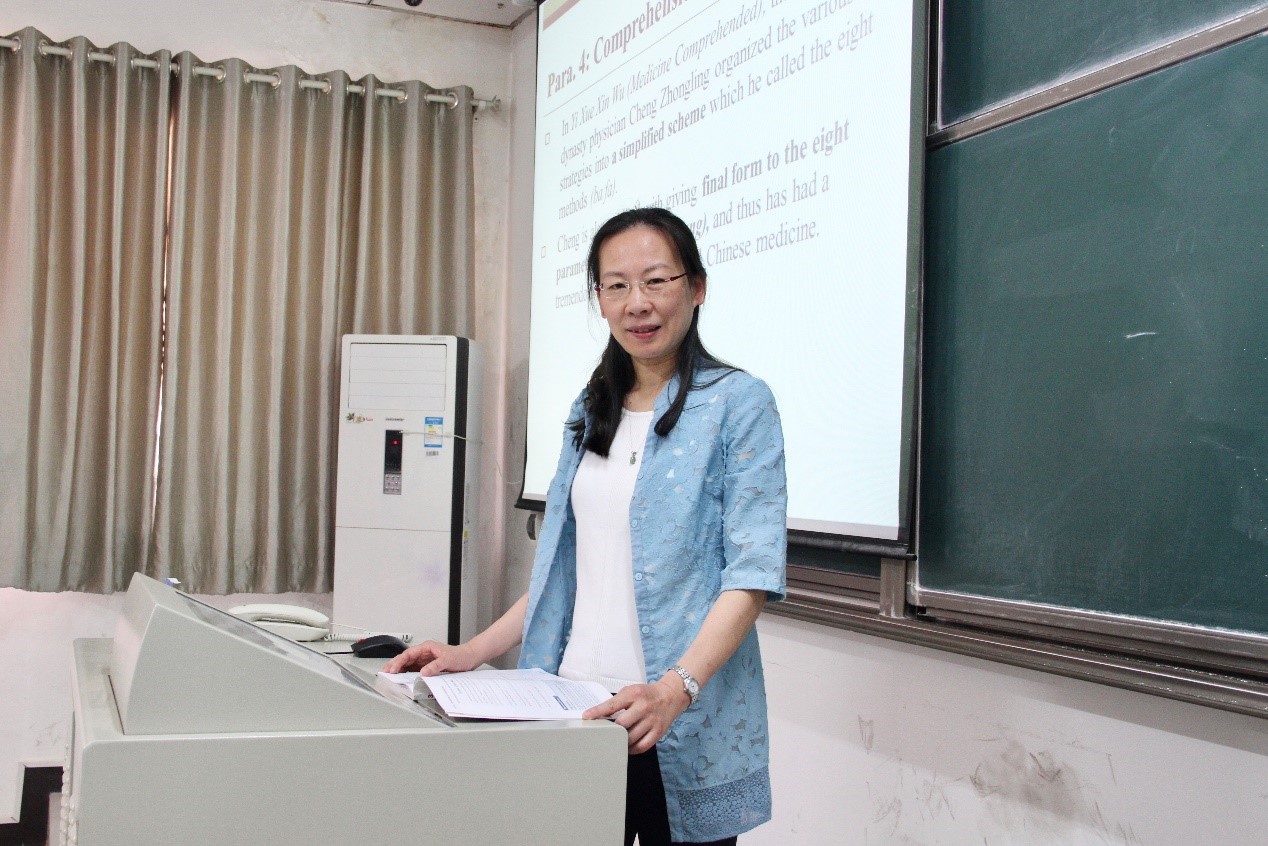 Lilan Du (都立澜)合作论文数School of Humanities, Beijing University of Chinese Medicine1




