Objective:To explore the application effect of three mode pre-rehabilitation strategy in gastric cancer patients after laparoscopic radical operation and its effect on the recovery of physical function and quality of life after operation.Methods:Totally 96 patients undergoing elective laparoscopic-assisted radical gastric cancer surgery admitted in the Second Affiliated Hospital of Anhui Medical University from January 2019 to September 2020 were divided into control group (48 cases) and observation group (48 cases) by the random number table. Finally two cases in control group were excluded. The control group received gastric cancer regular preoperative health guidance, the observation group received trimodal pre-habilitation strategy for 6-8 days on the basis of the control group. The perioperative indicators and complications were compared between the two groups. The 36-item Health Survey Summary (SF-36) scores were measured before and after intervention.Results:The first postoperative exhaust time, first out of bed time, first oral meal time, hospital stay in the observation group were (61.49 ± 6.71) hours, (19.54 ± 6.13) hours, (71.23 ± 6.79) days, (5.62 ± 1.03) days, which lower than (79.21 ± 8.15) hours, (22.95 ± 7.19) hours, (78.95 ± 7.21) days, (6.64 ± 1.17) days in the control group, and the differences were statistically significant between the two group ( t values were 2.48-11.53, all P<0.05). The incidence of complications was 6.25% (3/48) in the observation group and 21.74% (10/46) in the control group, and the difference was statistically significant between the two groups ( χ2=8.72, P<0.05). At 1 d before operation and 30 d after operation, the average scores of SF-36 were (68.74 ± 8.02), (65.85 ± 7.44) points in the observation group and (60.73 ± 7.43), (61.04 ± 6.85) points in the control group, and the differences were statistically significant ( t=5.02, 3.26, both P<0.05). Conclusions:Preoperative three mode pre-rehabilitation training for gastric cancer patients is beneficial to improving the state of exercise, nutrition and immune function, speeding up postoperative gastrointestinal function and overall rehabilitation, reducing the incidence of postoperative complications and improving the quality of life of patients.
目的:探讨结直肠癌造口病人心理障碍预测模型构建.方法:选取290例结直肠癌造口病人作为调查对象,随机选取70%(203例)的病例作为训练集,30%(87例)作为测试集,根据明尼苏达多相人格测试(MMPI)分为心理障碍组(MMPI≥60分)和非心理障碍组(MMPI<60分),比较训练集中2组一般资料情况,应用logistic回归模型分析影响结直肠癌造口病人心理障碍相关因素,采用R软件基于训练集建立列线图预测模型,并在测试集评估模型效能.结果:剔除无效问卷2份(训练集、测试集各1例),最终获得有效问卷288份,有效回收率为99.31%,其中训练集最终纳入202例,心理障碍组67例(33.17%),非心理障碍组135例(66.83%),2组性别、造口时间、自我管理能力评分、社会支持评定量表(SSRS)评分、造口并发症比较差异均有统计学意义(P<0.05~P<0.01);多因素logistic分析显示,性别为女性、造口时间长、自我管理能力评分高、SSRS评分高为结直肠癌造口病人心理障碍的保护因素,造口并发症为结直肠癌造口病人心理障碍发生的危险因素(P<0.05~P<0.01),上述因素预测结直肠癌造口病人心理障碍相关因素的一致性指数为0.804(95%CI:0.743~0.857),ROC曲线进一步验证显示,特异度88.50%,敏感度81.60%.外部验证显示该预测模型敏感性为85.71%,特异性为87.93%.结论:结直肠癌造口病人心理障碍情况较为严峻,性别、自我管理能力、社会支持、造口并发症、造口时间是心理障碍的影响因素,由此构建的预测模型具有较高的应用价值.
目的 评价以麻醉护士、外科护士、麻醉医生和外科医生共同参与的围术期多学科合作在腹腔镜腹股沟疝修补术患儿加速术后康复(ERAS)中应用效果.方法 选取2020年1~12月于我院择期行腹腔镜腹股沟疝修补术的106例患儿为研究对象,按随机数字表法结合手术先后顺序分为对照组(n=53)和干预组(n=53).对照组采用外科医生和外科护士常规的围术期治疗及护理,干预组采用ERAS理念下以麻醉护士、外科护士、麻醉医生和外科医生共同参与的围术期治疗及护理.比较2组患儿麻醉复苏留观时间、术后6h内平均疼痛评分、麻醉复苏期躁动发生率、首次进食饮水时间、首次下床活动时间及照顾者对医疗护理工作满意度的差异.结果 干预组患儿在麻醉复苏留观时间、术后6h内平均疼痛水平、麻醉复苏期躁动发生率、首次进食饮水时间及首次下床活动时间上均低于对照组;干预组患儿照顾者对医疗护理工作满意度评分高于对照组,差异均有统计学意义(P<0.05).结论 多学科合作模式联合ERAS理念提高了腹腔镜腹股沟疝修补术患儿麻醉复苏质量,促进了患儿术后生理功能的恢复,降低了术后的并发症,提高了患儿照顾者对医疗护理工作满意度.
目的:胃癌患者术后护理的研究.方法:随机在我院选择胃癌手术患者为研究对象,时间线为2021.01-2021.9,共60例,随机分为2组,一组为传统的护理干预(对照组);另一组为术前强化营养支持和心理干预(观察组),2组均为n=30.比较两组护理效果.结果:护理后,观察组术后康复情况好于对照组,(p < 0.05),护理后,观察组的生活质量高于对照组,(p < 0.05).结论:针对胃癌患者护理,临床实施手术前强化营养支持和心理干预的预康复策略,有积极的临床意义,具有较高借鉴价值.
本文从预康复的发展、应用现状等方面进行综述,为加速术后康复提供新思路.预康复策略是在加速康复外科理念的基础上提出的术前管理新策略.该策略包括运动、营养与心理干预等,通过有循证医学依据的多项医疗护理措施来指导和优化患者的手术康复,其应用可使护理人员更多参与到病情评估及治疗中.
Objective To evaluate the clinical effects of the totally laparoscopic and laparoscopic-assisted radical gastrectomy for gastric cancer,and evaluate the feasibility and safety of the two methods.Methods Eighty patients with gastric cancer undergoing radical D2 gastrectomy from Mar 2016 to Jul 2017 were enrolled.Patients were divided into totally laparoscopically hand-sewn escophagojejunostomy group (35 cases) and control group of hand-assisted laparoscopic esophagojejunostomy (45 cases).Results Compared with the control group,the operation time,blood loss,lymph node dissection in the control group were not significantly different [(256 ± 53) min vs.(248 ± 62) min,t =2.40,P > 0.05;(123 ±78)ml vs.(162±56)ml,t=-1.94,P>0.05;(28±6) vs.(30±7),t=-3.18,P>0.05].The postoperative ambulation time,first exhaust time,postoperative hospital stay,incision complications were all in favor of the totally laparoscopic group [(1.5 ± 0.7) d vs.(2.6 ± 0.6) d,t =-2.41,P < 0.05;(2.7 ±0.8)d vs.(4.0 ±1.2)d,t =-4.63,P<0.01;(6.8 ±0.8)d vs.(9.2 ± 1.6)d,t =-7.32,P<0.05].Conclusions Totally laparoscopic radical gastrectomy and hand-sewn esophagojejunostomy for gastric cancer is safe and reliable and has advantages such as less pain and fast recovery.
Objective:warm sponge bath with cold packs two physical cooling measures on the comparison of cooling effect of early childhood fever.Methods 82 cases of fever in children caused by respiratory tract infection were randomly divided into observation group(n = 42) and the control group(n = 40).Sponge bath with warm water to the observation group and control group to the cold packs.30 minutes,1 hour and 1 hour to monitor temperature changes.Results The speed of the cooling effect of the observation group than the control group.Conclusions Children with sponge bath with lukewarm water cooling can effectively dilate capillaries,taking body heat,children feel comfortable,and the method is simple,safe,convenient and easy to operate.
 Tian DAI (戴田)合作论文数3QingQuan Bi (毕清泉)合作论文数3Xin Wang (王昕)合作论文数2Zhining Liu合作论文数2
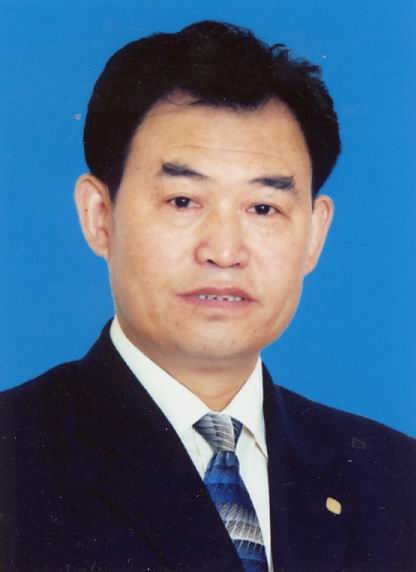 Dequan Wu (吴德全)合作论文数, Research Center for Endemic Disease, Harbin Medical University, Harbin , Heilongjiang Province, China2Guanming Bao (鲍官明)合作论文数1ZHANG Yun-lan (张云兰)合作论文数1Chang-qin DUAN (段昌琴)合作论文数1shulan li (李淑兰)合作论文数1Ye ZHANG (张野)合作论文数1Xiaohu Cheng合作论文数1Shan CHEN (陈珊)合作论文数1LianBang Zhou (周连帮)合作论文数1Rui Li (李锐)合作论文数1Miao Zhang (张淼)合作论文数1Heng Jiang (蒋恒)合作论文数1




