Elite humanoid soccer shooting requires whole-body stability, high-impulse whole-body interactions, and accuracy to targets. Motion tracking-driven reinforcement learning (RL) provides stability in whole-body movement coordination, but a fixed reference makes it hard to adapt to varied ball positions and strike timings; in contrast, task reward-driven RL struggles to explore and discover valid kicks from scratch. We therefore introduce RoboNaldo, a three-stage motion-guided curriculum RL framework for high-impulse humanoid interaction. A single human-kick reference is used as a scaffold and progressively shifts optimization towards shooting performance. The curriculum first learns a stable whole-body kicking prior, then adapts the kick to free-kick settings where the ball is stationary at random positions, and finally extends it to moving-ball shooting through a locomotion-command and kick-trigger interface. A high-level heuristic planner controls this interface during training, while alternative high-level controllers can drive the same low-level policy at inference. In simulation, RoboNaldo demonstrates free-kick shot error 48.6
Humanoid robots are envisioned to perform a wide range of tasks in human-centered environments, requiring controllers that combine agility with robust balance. Recent advances in locomotion and whole-body tracking have enabled impressive progress in either agile dynamic skills or stability-critical behaviors, but existing methods remain specialized, focusing on one capability while compromising the other. In this work, we introduce AMS (Agility Meets Stability), the first framework that unifies both dynamic motion tracking and extreme balance maintenance in a single policy. Our key insight is to leverage heterogeneous data sources: human motion capture datasets that provide rich, agile behaviors, and physically constrained synthetic balance motions that capture stability configurations. To reconcile the divergent optimization goals of agility and stability, we design a hybrid reward scheme that applies general tracking objectives across all data while injecting balance-specific priors only into synthetic motions. Further, an adaptive learning strategy with performance-driven sampling and motion-specific reward shaping enables efficient training across diverse motion distributions. We validate AMS extensively in simulation and on a real Unitree G1 humanoid. Experiments demonstrate that a single policy can execute agile skills such as dancing and running, while also performing zero-shot extreme balance motions like Ip Mans Squat, highlighting AMS as a versatile control paradigm for future humanoid applications.
End-to-end autonomous driving has emerged as a promising paradigm for directly mapping sensor inputs to planning maneuvers using learning-based modular integrations. However, existing imitation learning (IL)-based models suffer from generalization to hard cases, and a lack of corrective feedback loop under post-deployment. While reinforcement learning (RL) offers a potential solution to tackle hard cases with optimality, it is often hindered by overfitting to specific driving cases, resulting in catastrophic forgetting of generalizable knowledge and sample inefficiency. To overcome these challenges, we propose Reinforced Refinement with Self-aware Expansion (R2SE), a novel learning pipeline that constantly refines hard domain while keeping generalizable driving policy for model-agnostic end-to-end driving systems. Through reinforcement fine-tuning and policy expansion that facilitates continuous improvement, R2SE features three key components: 1) Generalist Pretraining with hard-case allocation trains a generalist imitation learning (IL) driving system while dynamically identifying failure-prone cases for targeted refinement; 2) Residual Reinforced Specialist Fine-tuning optimizes residual corrections using reinforcement learning (RL) to improve performance in hard case domain while preserving global driving knowledge; 3) Self-aware Adapter Expansion dynamically integrates specialist policies back into the generalist model, enhancing continuous performance improvement. Experimental results in closed-loop simulation and real-world datasets demonstrate improvements in generalization, safety, and long-horizon policy robustness over state-of-the-art E2E systems, highlighting the effectiveness of reinforce refinement for scalable autonomous driving.
Robotic manipulation with dexterous hands is a cornerstone of Embodied AI, yet its progress is stifled by the high cost of collecting embodiment-aware teleoperation data. While abundant egocentric videos of human hands offer a scalable alternative, the profound discrepancies in appearance, articulation, and camera viewpoints between human and robotic data raise significant challenges for co-training. Though existing general image-editing models demonstrate strong capabilities, they lack necessary embodiment-specific priors to fully bridge this gap. In this work, we present HandEdit, a unified large-scale embodiment-aware image-editing dataset and benchmark specifically designed to transform human hands and arms into various dexterous robotic embodiments within egocentric frames. HandEdit comprises over 200M editing instances derived from five diverse source datasets, covering 26 distinct URDFs, including 13 hand-only and 13 hand-arm configurations. Alongside the dataset, we establish a unified benchmark protocol with two tracks: Hand-only and Hand-Arm, supporting URDF-conditioned evaluation. We conduct extensive evaluations of 11 representative image-editing baselines using a multi-dimensional metric suite, including generic similarity metrics, VLM-based judgment, and embodiment-aware metrics. HandEdit serves as a critical resource at the intersection of image editing and robotics: it advances embodiment-aware editing models while enabling scalable dexterous robotic learning from abundant human video data, paving the way for more generalizable Embodied AI.
Understanding the road structure is essential for achieving autonomous driving. This intricate topic contains two fundamental components: the interconnections between lanes and the associations between lanes and traffic elements (e.g., traffic lights), where a comprehensive topology reasoning method is still absent. On one hand, existing map learning techniques face challenges in deriving lane connectivity using segmentation or laneline-based representations; or prior approaches focus on centerline detection while neglecting interaction modeling. On the other hand, the topic of assigning traffic elements to lanes is limited in the image domain, leaving the construction of the correspondence between image and 3D views an unexplored challenge. To address these issues, we present TopoNet, an end-to-end topology reasoning network for analyzing driving scenes. To capture the topology of driving environments effectively, we introduce three key designs: (1) an embedding module that integrates semantic knowledge from 2D elements into a unified feature space; (2) a curated scene graph neural network that models relationships and facilitates feature interactions within the network; (3) a scene knowledge graph devised to differentiate prior knowledge from various types of the scene topology avoiding arbitrary message transmission. We evaluate TopoNet on the challenging scene understanding benchmark, OpenLane-V2, where our approach outperforms all previous studies by a significant margin across all perceptual and topological metrics. The code is released at https://github.com/OpenDriveLab/TopoNet .
Data scaling has driven remarkable success in foundation models for natural language processing (NLP) and computer vision (CV), yet the principles of effective data scaling in robotic manipulation remain insufficiently understood. In this work, we investigate the nuanced role of data diversity in robot learning by examining three critical dimensions-task (what to do), embodiment (which robot to use), and expert (who demonstrates)-challenging the conventional intuition of "more diverse is better." Throughout extensive experiments on various robot platforms, we reveal that first, task diversity proves more critical than per-task demonstration quantity, with scene diversity playing a more important role than skill diversity for robustness and generalization under distribution shifts, second, multiembodiment pretraining data are nonessential for cross-embodiment transfer-models trained on high-quality single-embodiment data can efficiently transfer to different platforms, showing desirable scaling property during fine-tuning and its potential of replacing large-scale multiembodiment pretraining, and third, expert diversity, arising from individual operational preferences and stochastic variations in human demonstrations, can be confounding to policy learning, with action rate multimodality emerging as a key contributing factor. Based on this insight, we propose a distribution debiasing method to mitigate action rate ambiguity, the yielding GO-1-Pro achieves substantial performance gains of 15%, equivalent to using 2.5 & times; pretraining data. Collectively, these findings provide new perspectives and offer practical guidance on how to scale robotic manipulation datasets effectively. The code will be released.
Existing humanoid table tennis systems remain limited by their reliance on external sensing and their inability to achieve agile whole-body coordination for precise task execution. These limitations stem from two core challenges: achieving low-latency and robust onboard egocentric perception under fast robot motion, and obtaining sufficiently diverse task-aligned strike motions for learning precise yet natural whole-body behaviors. In this work, we present , a modular system for agile humanoid table tennis that unifies scalable whole-body skill learning with onboard egocentric perception, eliminating the need for external cameras during deployment. Our work advances prior humanoid table-tennis systems in three key aspects. First, we achieve agile and precise ball interaction with tightly coordinated whole-body control, rather than relying on decoupled upper- and lower-body behaviors. This enables the system to exhibit diverse strike motions, including explosive whole-body smashes and low crouching shots. Second, by augmenting and diversifying strike motions with a generative model, our framework benefits from scalable motion priors and produces natural, robust striking behaviors across a wide workspace. Third, to the best of our knowledge, we demonstrate the first humanoid table-tennis system capable of consecutive strikes using onboard sensing alone, despite the challenges of low-latency perception, ego-motion-induced instability, and limited field of view. Extensive real-world experiments demonstrate stable and precise ball exchanges under high-speed conditions, validating scalable, perception-driven whole-body skill learning for dynamic humanoid interaction tasks.
Handheld paradigms offer an efficient and intuitive way for collecting large-scale demonstration of robot manipulation. However, achieving contact-rich bimanual manipulation through these methods remains a pivotal challenge, which is substantially hindered by hardware adaptability and data efficacy. Prior hardware designs remain gripper-specific and often face a trade-off between tracking precision and portability. Furthermore, the lack of online feasibility checking during demonstration leads to poor replayability. More importantly, existing handheld setups struggle to collect interactive recovery data during robot execution, lacking the authentic tactile information necessary for robust policy refinement. To bridge these gaps, we present TAMEn, a tactile-aware manipulation engine for closed-loop data collection in contact-rich tasks. Our system features a cross-morphology wearable interface that enables rapid adaptation across heterogeneous grippers. To balance data quality and environmental diversity, we implement a dual-modal acquisition pipeline: a precision mode leveraging motion capture for high-fidelity demonstrations, and a portable mode utilizing VR-based tracking for in-the-wild acquisition and tactile-visualized recovery teleoperation. Building on this hardware, we unify large-scale tactile pretraining, task-specific bimanual demonstrations, and human-in-the-loop recovery data into a pyramid-structured data regime, enabling closed-loop policy refinement. Experiments show that our feasibility-aware pipeline significantly improves demonstration replayability, and that the proposed visuo-tactile learning framework increases task success rates from 34
Autonomous vehicles must operate safely in the real world, where errors can have severe consequences. Although modern end-to-end driving policies excel in routine scenarios, their reliability is limited by the scarcity of safety-critical “long-tail” events in real driving datasets. These rare interactions define the practical safety boundary of the learned policy, yet they are difficult to collect at scale in the real world. Here we show that this fundamental limitation can be addressed by post-training pre-trained driving models on synthesized high-stakes interactions. We introduce World Engine, a generative framework that reconstructs high-fidelity interactive environments from real-world logs and systematically extrapolates them into realistic safety-critical variations. This paradigm enables reinforcement-based post-training to align policies with safety constraints, circumventing the physical risks inherent in real-world exploration. On a public benchmark built on nuPlan, World Engine substantially reduces failures in rare safety-critical scenarios and yields significantly larger gains than scaling pre-training data alone. Furthermore, when deployed on a production-scale autonomous driving system, the resulting policy reduces simulated collisions and demonstrates measurable improvements in on-road testing, showing that post-training on synthesized, safety-critical interactions offers a scalable and effective pathway to safer autonomous driving. The full codebase suite, including training, is released to the public.
Despite the sustained scaling on model capacity and data acquisition, Vision-Language-Action (VLA) models remain brittle in contact-rich and dynamic manipulation tasks, where minor execution deviations can compound into failures. While reinforcement learning (RL) offers a principled path to robustness, on-policy RL in the physical world is constrained by safety risk, hardware cost, and environment reset. To bridge this gap, we present RISE, a scalable framework of robotic reinforcement learning via imagination. At its core is a Compositional World Model that (i) predicts multi-view future via a controllable dynamics model, and (ii) evaluates imagined outcomes with a progress value model, producing informative advantages for the policy improvement. Such compositional design allows state and value to be tailored by best-suited yet distinct architectures and objectives. These components are integrated into a closed-loop self-improving pipeline that continuously generates imaginary rollouts, estimates advantages, and updates the policy in imaginary space without costly physical interaction. Across three challenging real-world tasks, RISE yields significant improvement over prior art, with more than +35% absolute performance increase in dynamic brick sorting, +45% for backpack packing, and +35% for box closing, respectively.
Enabling robots with contact-rich manipulation remains a pivotal challenge in robot learning, which is substantially hindered by the data collection gap, including its inefficiency and limited sensor setup. While prior work has explored handheld paradigms, their rod-based mechanical structures remain rigid and unintuitive, providing limited tactile feedback and posing challenges for operators. Motivated by the dexterity and force feedback of human motion, we propose FreeTacMan, a human-centric and robot-free data collection system for accurate and efficient robot manipulation. Concretely, we design a wearable gripper with visuo-tactile sensors for data collection, which can be worn by human fingers for intuitive control. A high-precision optical tracking system is introduced to capture end-effector poses while synchronizing visual and tactile feedback simultaneously. We leverage FreeTacMan to collect a large-scale multimodal dataset, comprising over 3000k paired visuotactile images with end-effector poses, 10k demonstration trajectories across 50 diverse contact-rich manipulation tasks. FreeTacMan achieves multiple improvements in data collection performance over prior works and enables effective policy learning from self-collected datasets. By open-sourcing the hardware and the dataset, we aim to facilitate reproducibility and support research in visuo-tactile manipulation.
Solving complex, long-horizon robotic manipulation tasks requires a deep understanding of physical interactions, reasoning about their long-term consequences, and precise high-level planning. Vision-Language Models (VLMs) offer a general perceive-reason-act framework for this goal. However, previous approaches using reflective planning to guide VLMs in correcting actions encounter significant limitations. These methods rely on inefficient and often inaccurate implicit learning of state-values from noisy foresight predictions, evaluate only a single greedy future, and suffer from substantial inference latency. To address these limitations, we propose a novel test-time computation framework that decouples state evaluation from action generation. This provides a more direct and fine-grained supervisory signal for robust decision-making. Our method explicitly models the advantage of an action plan, quantified by its reduction in distance to the goal, and uses a scalable critic to estimate. To address the stochastic nature of single-trajectory evaluation, we employ beam search to explore multiple future paths and aggregate them during decoding to model their expected long-term returns, leading to more robust action generation. Additionally, we introduce a lightweight, confidence-based trigger that allows for early exit when direct predictions are reliable, invoking reflection only when necessary. Extensive experiments on diverse, unseen multi-stage robotic manipulation tasks demonstrate a 24.6% improvement in success rate over state-of-the-art baselines, while significantly reducing inference time by 56.5%.
Humanoid robots require precise locomotion and dexterous manipulation to per- form challenging locomanipulation tasks. Yet existing approaches, modular or end-to-end, are deficient in manipulation-aware locomotion. This confines the robot to a limited workspace, preventing it from performing large-space loco-manipulation. We attribute this to: (1) the challenge of acquiring loco- manipulation knowledge due to the scarcity of humanoid teleoperation data, and (2) the difficulty of faithfully and reliably executing locomotion commands, stem- ming from the limited precision and stability of existing RL controllers. To acquire richer loco-manipulation knowledge, we propose a unified latent learning frame- work that enables Vision-Language-Action (VLA) system to learn from low-cost action-free egocentric videos. Moreover, an efficient data collection pipeline is de- vised to augment the dataset and scale the benefits. To more precisely execute the desired locomotion commands, we present a loco–manipulation–oriented (LMO) RL policy specifically tailored for accurate and stable core loco-manipulation movements, such as advancing, turning, and squatting. Building on these com- ponents, we introduce WholeBodyVLA, a unified framework for humanoid loco- manipulation. To the best of our knowledge, WholeBodyVLA is one of its kind enabling large-space humanoid loco–manipulation. It is verified via comprehen- sive experiments on the AgiBot X2 humanoid, outperforming prior baseline by 21.3%. It also demonstrates strong generalization and high extensibility across a broad range of tasks. Code and checkpoints would be made public.
High-reliability long-horizon robotic manipulation has traditionally relied on large-scale data and compute to understand complex real-world dynamics. However, we identify that the primary bottleneck to real-world robustness is not resource scale alone, but the distributional shift among the human demonstration distribution, the inductive bias learned by the policy, and the test-time execution distribution – a systematic inconsistency that causes compounding errors in multi-stage tasks. To mitigate these inconsistencies, we propose χ_0, a resource-efficient framework with effective modules designated to achieve production-level robustness in robotic manipulation. Our approach builds off three technical pillars: (i) Model Arithmetic, a weight-space merging strategy that efficiently soaks up diverse distributions of different demonstrations, varying from object appearance to state variations; (ii) Stage Advantage, a stage-aware advantage estimator that provides stable, dense progress signals, overcoming the numerical instability of prior non-stage approaches; and (iii) Train-Deploy Alignment, which bridges the distribution gap via spatio-temporal augmentation, heuristic DAgger corrections, and temporal chunk-wise smoothing. χ_0 enables two sets of dual-arm robots to collaboratively orchestrate long-horizon garment manipulation, spanning tasks from flattening, folding, to hanging different clothes. Our method exhibits high-reliability autonomy; we are able to run the system from arbitrary initial state for consecutive 24 hours non-stop. Experiments validate that χ_0 surpasses the state-of-the-art π_0.5 in success rate by nearly 250
This paper introduces Test-time Correction (TTC), an online 3D detection system designed to rectify test-time errors using various auxiliary feedback, aiming to enhance the safety of deployed autonomous driving systems. Unlike conventional offline 3D detectors that remain fixed during inference, TTC enables immediate online error correction without retraining, allowing autonomous vehicles to adapt to new scenarios and reduce deployment risks. To achieve this, we equip existing 3D detectors with an Online Adapter (OA) module-a prompt-driven query generator for real-time correction. At the core of OA module are visual prompts: image-based descriptions of objects of interest derived from auxiliary feedback such as mismatches with 2D detections, road descriptions, or user clicks. These visual prompts, collected from risky objects during inference, are maintained in a visual prompt buffer to enable continuous correction in future frames. By leveraging this mechanism, TTC consistently detects risky objects, achieving reliable, adaptive, and versatile driving autonomy. Extensive experiments show that TTC significantly improves instant error rectification over frozen 3D detectors, even under limited labels, zero-shot settings, and adverse conditions. We hope this work inspires future research on post-deployment online rectification systems for autonomous driving.
Why must vision-language navigation be bound to detailed and verbose language instructions? While such details ease decision-making, they fundamentally contradict the goal for navigation in the real-world. Ideally, agents should possess the autonomy to navigate in unknown environments guided solely by simple and high-level intents. Realizing this ambition introduces a formidable challenge: Beyond-the-View Navigation (BVN), where agents must locate distant, unseen targets without dense and step-by-step guidance. Existing large language model (LLM)-based methods, though adept at following dense instructions, often suffer from short-sighted behaviors due to their reliance on short-horimzon supervision. Simply extending the supervision horizon, however, destabilizes LLM training. In this work, we identify that video generation models inherently benefit from long-horizon supervision to align with language instructions, rendering them uniquely suitable for BVN tasks. Capitalizing on this insight, we propose introducing the video generation model into this field for the first time. Yet, the prohibitive latency for generating videos spanning tens of seconds makes real-world deployment impractical. To bridge this gap, we propose SparseVideoNav, achieving sub-second trajectory inference guided by a generated sparse future spanning a 20-second horizon. This yields a remarkable 27x speed-up compared to the unoptimized counterpart. Extensive real-world zero-shot experiments demonstrate that SparseVideoNav achieves 2.5x the success rate of state-of-the-art LLM baselines on BVN tasks and marks the first realization of such capability in challenging night scenes.
Modern robot learning systems increasingly rely on dense progress or value signals to evaluate intermediate states, guide policy learning, and detect task completion, making the quality of these signals critical. Since such dense labels are rarely available at scale, normalized time within a demonstration is often used as a scalable substitute: later frames are treated as higher progress. However, this time-derived label is only a noisy proxy for physical task progress. In contact-rich manipulation, a robot may make progress and then lose it through slips, failed grasps, or partial undoing, while the time-derived label continues to increase monotonically. We introduce Unsupervised Robotic Value Correction (UR-VC), an offline, training-free method for correcting time-derived progress labels. UR-VC exploits a simple regularity in demonstration data: similar states often recur across different episodes, but at different timestamps. Instead of trusting the timestamp from a single trajectory, UR-VC retrieves similar states from other episodes and aggregates their time-derived labels to obtain a corrected progress estimate. UR-VC requires no manual progress labels, reward annotations, or additional value model. We evaluate UR-VC on real bimanual cloth flatten-and-fold data, a long-horizon deformable-object manipulation task with visible intermediate progress. The corrected labels capture local regressions and non-uniform progress that normalized time cannot represent, while preserving the overall task trend. We further use the corrected signal to construct advantage labels for VLA training, following recent advantage-conditioned policy learning. UR-VC shows a positive trend in real-robot task success under matched data, model, and training settings.
Human demonstrations offer rich environmental diversity and scale naturally, making them an appealing alternative to robot teleoperation. While this paradigm has advanced robot-arm manipulation, its potential for the more challenging, data-hungry problem of humanoid loco-manipulation remains largely unexplored. We present EgoHumanoid, the first framework to co-train a vision-language-action policy using abundant egocentric human demonstrations together with a limited amount of robot data, enabling humanoids to perform loco-manipulation across diverse real-world environments. To bridge the embodiment gap between humans and robots, including discrepancies in physical morphology and viewpoint, we introduce a systematic alignment pipeline spanning from hardware design to data processing. A portable system for scalable human data collection is developed, and we establish practical collection protocols to improve transferability. At the core of our human-to-humanoid alignment pipeline lies two key components. The view alignment reduces visual domain discrepancies caused by camera height and perspective variation. The action alignment maps human motions into a unified, kinematically feasible action space for humanoid control. Extensive real-world experiments demonstrate that incorporating robot-free egocentric data significantly outperforms robot-only baselines by 51%, particularly in unseen environments. Our analysis further reveals which behaviors transfer effectively and the potential for scaling human data.
Accurate segmentation of brain tumors is crucial for clinical diagnosis and treatment planning. This paper proposes a brain tumor segmentation method based on multi-scale attention guidance and dynamic weight optimization, applied to the precise segmentation of meningiomas, gliomas, and pituitary tumors. The method integrates a lightweight Mix Vision Transformer [Chen J-N, Sun S, He J, Torr P, Yuille A, Bai S, TransMix: Attend to mix for vision transformers, 2022 IEEE/CVF Conference on Computer Vision and Pattern Recognition (CVPR), IEEE, New Orleans, pp. 12125-12134, 2021.] as the backbone network, implements multi-scale feature interaction through a Channel-Spatial Dual Attention (CSDA) module, and employs a Dynamic Weight Decoder (DWD) to address class imbalance issues [Oh C, Li Y, Song K, Yun S, Han D, DaWin: Training-free dynamic weight interpolation for robust adaptation, 2025.]. Experimental results demonstrate that the proposed method achieves a mean Dice coefficient of 0.9165 (91.65%), outperforming existing approaches including Zig-RiR (87.90%) and TransUNet (85.07%) in both Dice coefficient and Hausdorff distance [Cheng Z, Liu M, Yan C, Wang S, Dynamic domain generalization for medical image segmentation, Neural Netw 184:107073, 2025.] metrics while maintaining a low parameter count (18.81M parameters, 43% fewer than comparable Transformer models).
 Hongyang Li (李弘扬)合作论文数Musketeers Foundation Institute of Data Science, The University of Hong Kong49
 Ping Luo (羅平)合作论文数Department of Computer Science, School of Computing and Data Science, The University of Hong Kong20
 Junchi Yan (严骏驰)合作论文数Department of Computer Science and Engineering, Shanghai Jiao Tong University;ReThinkLab, Shanghai Jiao Tong University18
 Yu Qiao (乔宇)合作论文数Multimedia Laboratory, Shenzhen Institutes of Advanced Technology, Chinese Academy of Sciences;Shanghai AI Laboratory;Shenzhen University of Advanced Technology15
 Tianyu Li (李天羽)合作论文数OpenDriveLab, Shanghai AI Laboratory;School of Computer Science, Fudan University14
 Xiaosong Jia (贾萧松)合作论文数Institute of Trustworthy Embodied AI, Fudan University12
 Chonghao Sima (司马崇昊)合作论文数The University of Hong Kong;Shanghai AI Lab12
 Jiazhi Yang (杨佳智)合作论文数Multimedia Laboratory, Chinese University of Hong Kong9
 Huijie Wang合作论文数9
 Yang Li (郦洋)合作论文数School of Artificial Intelligence, Shanghai Jiao Tong University;ReThinkLab, Shanghai Jiao Tong University9
 Penghao Wu合作论文数Nanyang Technological University9
 Kashyap Chitta合作论文数NVIDIA8
 Qingwen Bu (布清文)合作论文数Shanghai Jiao Tong University7
 Lewei Lu合作论文数SenseTime Research6
 Andreas Geiger合作论文数Department of Computer Science, University of Tübingen6
 Shenyuan Gao (高深远)合作论文数The Hong Kong University of Science and Technology5
 Jia Zeng合作论文数AI Planning and Cooperation Department, Huawei Noah’s Ark Lab5
 Hang Xu (徐航)合作论文数Huawei Noah‘s Ark Lab;2030 Lab, Huawei ADS5
 Tianwei Lin合作论文数Department of Computer Vision Technology, Baidu4
 Jifeng Dai (代季峰)合作论文数Department of Electronic Engineering, Tsinghua University4
 Chunjing Xu合作论文数Huawei Technologies Co. Ltd.4
 Senyao Du合作论文数3
 Yu-ke Li合作论文数Institute of Transportation Studies, University of California, Berkeley3Siqi Chai合作论文数3Yihang Qiu合作论文数3Peijin Jia合作论文数3
 Jianping Shi (石建萍)合作论文数SenseTime Group Limited3Xiangwei Geng合作论文数3
 Hanming Deng合作论文数Shanghai Jiao Tong Univ, Shanghai, Peoples R China3Xizhou Zhu合作论文数Shanghai AI Laboratory;Tsinghua University3
 Yao (Mark) Mu (穆尧)合作论文数AI Institute, School of Computer Science, Shanghai Jiao Tong University3
 Zhenbo Liu (刘镇波)合作论文数飞行器控制一体化技术国防科技重点实验室3
 Wenhai Wang (王文海)合作论文数Multimedia Laboratory, The Chinese University of Hong Kong3
 Dahua Lin (林達華)合作论文数Department of Information Engineering, The Chinese University of Hong Kong;Shanghai Artificial Intelligence Laboratory3
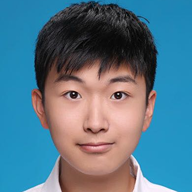 Haochen Liu (刘浩晨)合作论文数School of Mechanical and Aerospace Engineering, Nanyang Technological University2Bangjun Wang合作论文数2Hao Zhao (赵昊)合作论文数2Shengyin Jiang合作论文数2Yuting Wang合作论文数2
 Guanghui Ren (任广辉)合作论文数AgiBot2
 Jiangwei Xie合作论文数Sensetime2
 Chen Lyu (吕辰)合作论文数School of Mechanical & Aerospace Engineering, Nanyang Technological University;School of Electrical & Electronic Engineering, Nanyang Technological University2
 Huang Ran合作论文数2
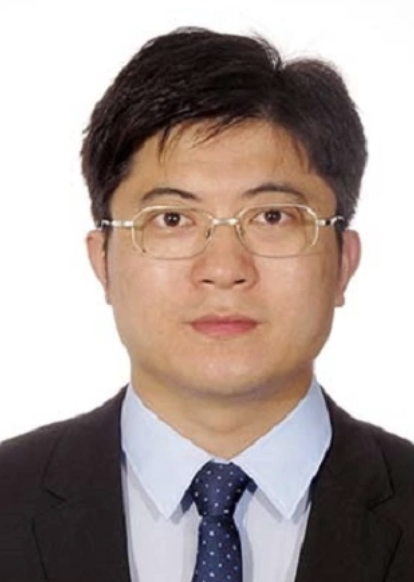 Guoying Gu (谷国迎)合作论文数Institute of Robotics, School of Mechanical Engineering, Shanghai Jiao Tong University2Yulu Gao (高玉录)合作论文数2
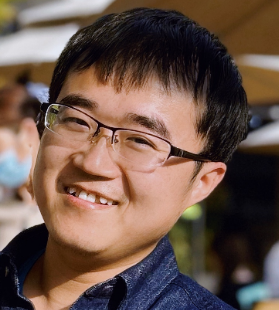 Xiangyu Yue (岳翔宇)合作论文数Multimedia Lab, Department of Information Engineering, Faculty of Engineering, The Chinese University of Hong Kong2Zetong Yang合作论文数Chinese University of Hong Kong2
 Yihan Hu合作论文数Applied Intuition2




