Russia has committed to carbon neutrality by 2060. However, its new nationally determined contribution (NDC) commits to keeping net greenhouse gas (GHG) emissions at 65–67
This paper explores the interaction between the energy costs/GDP ratio, energy prices, energy efficiency, “quality of energy’’, and economic growth. The relationships between the first three were formulated by the author back in 2007 in the form of three laws of energy transitions. The paper provides additional empirical evidence and theoretical support to these laws and looks into their implications for economic growth and climate mitigation policies. It argues for launching effective energy costs accounting at the national level to support such policies. It also argues that escalation of energy prices driven only by the growing share of higher quality energy resources does not impede, but stimulates economic growth. The paper shows, that improving energy efficiency results in the removal of the ‘limits of growth’ – affordability, resource and environmental limitations; but as it faces the ‘limits of change’, the trade-off between maximizing economic growth and minimizing GHG emissions is inevitable.
There is scientific consensus that limiting warming in line with the Paris Agreement goals requires reaching net zero CO2 emissions by mid-century and net negative emissions thereafter. Because of the entrenchment of current fossil fuel energy and feedstock demand estimated in almost all global modelled scenarios, 'abated' fossil fuel and industrial process and product use (IPPU) CO2 emissions, using carbon capture and storage (CCS) technologies to perform carbon management, are likely to be part of any transition. In addition to fossil fuel combustion, this will be primarily in cement & lime kilns, chemical production, and possibly waste incineration and iron and steel making, in processes producing maximally concentrated CO2 waste streams. Abated fossil fuel and IPPU CO2 emissions in the context of recent commitments, however, requires consideration of capture rates for fuel processing and end-use, permanence of storage, reduction of upstream production and end-use fugitive methane, and sufficient means to sequester residual emissions. Based on an assessment of evolving CCS technologies in existing sectors and jurisdictions, criteria are proposed for defining a benchmark for 'abated' fossil fuel and IPPU emissions as where near 100 % GHG abatement is to be eventually achieved, with N2O and fluorinated gases considered separately. This can be accomplished through: 1) CO2 capture rates of more than or equal to 95 % of CO2 emitted; 2) permanent storage of captured emissions; 3) reducing upstream and end-use fugitive methane emissions to <0.5 % and towards 0.2 % of gas production & an equivalent for coal; and 4) counterbalancing remaining emissions using permanent carbon dioxide removal. Application of these criteria to just steel and cement yields estimates of more than or equal to 1.37 Gt CO2 per year reductions after all other reasonable and lower cost actions are taken. At the same time, we acknowledge the value of capture rates below 95 %, so as long they are designed to enable eventual full abatement through process learning. We also discuss commercialisation and deployment policy for CCS, highlighting the need to integrate these criteria into international climate agreements.
The paper explores the assessments of Russia’s carbon neutrality prospects made by a number of Russian expert groups. It provides a discussion of how decarbonization trajectories should be identified—by using an ensemble of models or by a consortium. The main focus is on the analysis of forecasts of Russia’s energy sector development to 2060 and the assessments of the effects of using carbon pricing mechanisms. The focus is on the latest studies from expert groups published since Russia announced its goal of moving towards carbon neutrality by 2060. The key fork on the roadmaps to carbon neutrality is shown to be Forest Last versus Forest First. The analysis has shown that, while studies of 2060 decarbonization prospects are becoming more plentiful in Russia, not all of them are of adequate quality, and many are extremely conservative.
There is scientific consensus that limiting warming in line with the Paris Agreement goals requires reaching net zero CO2 emissions in the 2050s and net negative CO2 emissions thereafter. Because of the entrenchment of current fossil fuel energy and feedstock demand estimated in almost all global modelled scenarios, 'abated' fossil fuels, using carbon capture and storage (CCS) technologies, are likely to be part of any transition. This will be primarily in cement & lime kilns, chemical production, waste incineration, possibly iron and steel making, and processes designed to produce concentrated CO2 waste streams (e.g., oxycombustion for power). Any use of abated fossil fuels in the context of recent commitments, however, requires consideration of capture rates for fuel processing and end-use, permanence of storage, upstream production fugitive methane, and sufficient means to offset residual emissions. Based on an assessment of evolving CCS technologies and practices in existing sectors and jurisdictions, criteria are proposed for defining 'abated' fossil fuels where 100% GHG abatement is achieved on a lifecycle basis. This can be accomplished through: 1) CO2 capture rates of more than or equal to 90% of CO2 emitted; 2) permanent storage of captured emissions; 3) reducing upstream and end-use fugitive methane emissions to less than 0.5% and towards 0.2% of gas production, & an equivalent for coal; and 4) offsetting any remaining emissions through permanent carbon dioxide removal (CDR). We also discuss commercialization and deployment policy for CCS, including regulation and market mechanisms, highlighting the need to integrate these criteria into international climate agreements.
In its 2023 Climate Doctrine, Russia officially committed to carbon neutrality before 2060. However, on the roadmap fork to climate neutrality Russia’s Low Carbon Strategy chose the 2F (Forest First) pathway with the dominance of the natural solutions in the LULUCF sector and with a moderate decline or even growth (industry and agriculture) in other sectors. This paper focuses on a discussion of the roadmap to carbon neutrality. The roadmapping approach relies on a system of interconnected models for setting the scale of low carbon technologies and practices deployment. The paper concludes that excessive reliance on the 2F pathway is unrealistic, and only the Forest Last family of scenarios, which focuses on substantial reduction of GHG emissions across all sectors, is able to bring Russia to carbon neutrality in 2060. The paper also presents indicators to assess emission reductions by major sectors and discusses the need to reinforce the five pillars to support this pathway: technologies; regulations and programmes; incentives and financing; institutes; and human capital. These five pillars are required to effectively address three basic models of decisions-making (satisficing, optimization, and system transformation).
Decision-makers want to be reliably advised on the implications of the decisions they make. Very sophisticated models, which decision-makers are often unfamiliar with, are typically used to provide such assessments for large and complex systems. However, even having access to these models, decision-makers can rarely handle them. A model is best known to its developers, who, therefore, need to be contracted to estimate the effects of the proposed policies. This takes time and money, yet leaves the credibility of the results questionable in countries with a limited culture of cooperation between decision-makers and a modeling community. One possible, yet partial, solution is to use an ensemble of models. Another option is to use a set of compact meta-models to address specific policies and measures; the parameters of such compact models can be assessed using other, large and complex, models. Decision-makers can run these simple compact models on their own to make policy dialogue more operational and to have more confidence in the results. This paper presents one such model, which consists of 95 compact sub-models designed to outline comprehensive energy efficiency programs, along with the results of its pilot application for an illustrative set of policies. This application has shown, that such models may serve as an effective tool for a prompt policy dialogue with all stakeholders in compiling the policy package to untap the most of the available energy efficiency potential to meet sector-specific or economy-wide goals in terms of energy savings or energy intensity reduction.
This paper demonstrates an apparent long-term constancy of economy-wide energy expenditures relative to income – an inter-decadally-constrained sustainable (“Bashmakov-Newbery”) range of 4.2 ± 0.8 % relative to Gross Output, and 7.2 ± 1.5 % relative to GDP, based on data from industrialised countries. Initial evidence suggests the range to be narrower when external trade effects are accounted for. Statistically equivalent to a very-long-term price-to-energy-intensity elasticity of -1 (“Minus 1”), this indicates long-period economic dynamics including induced innovation and structural change, and we probe theories and policy implications. Either higher energy prices are fully offset by reduced energy intensity, or they later decline to match energy intensity improvements. Complementary theoretical approaches help to explain the observations but challenge the conventional economic logic that high environmental pricing should be the principal instrument to drive transformation. Rather, energy efficiency, innovation, deployment, structural change and pricing co-evolve, suggesting need for a diversity of complementary policy strategies implemented over extended periods of time.
COP27 in Egypt, 2022, brought the possibility of a commitment to phase out “unabated” fossil fuels, and recent UNFCCC climate negotiations in Bonn, June 2023, have demonstrated this will require that “abated” will need to be carefully and transparently defined to be consistent with the Paris Agreement goals. Recent literature and the IPCC AR6 WGIII scenario database indicate the role of fossil fuels in future net-zero energy and industrial systems. There needs to be a substantial reduction in overall fossil fuel use, use of CO2 capture and storage (CCS) on the remaining fossil fuels, and minimal use of unabated fossil fuels only where CCS is not possible. Upstream fugitive emissions of methane from coal, oil and gas extraction must also be reduced by 50-80% or more from current levels. Stricter requirements for systems compatible with the 1.5°C limit include all new and retrofit CO2 emitters employing 90-95%+ capture rates starting in the late 2020s and early 2030s. This is not practically feasible for most mobile, dispersed, and smaller volume emitters, which will require alternative mitigation measures. We elaborate on the standards required for abated fossil fuels and reflect as to whether they can be credibly met in the near term.
This paper presents a newly developed Russian energy efficiency and energy-related GHG emission accounting system (EE-EGHG-AS) and discusses the results obtained. This system is designed to account for the energy efficiency progress as achieved in 12 sectors and 80 economic activities and to capture the impacts of 7 factors with a focus on the technological factor. It helped to reveal that in 2015–2021, the technological factor contributed to the 4.3
This article compares the author’s projections of the global energy system evolution up to 2020 as made in the early 1990s, against the actual data. This type of analysis is a rare and therefore an interesting case. Typically, after projections for decades ahead have been published, no one bothers to compare them with the reality. Long-term projections are expected to outline possible states of the explored systems and to develop policy recommendations. The question of whether such projections can be trusted is always in minds of the projections’ “consumers” (decision-makers and experts), but very rarely a clear answer is provided. This paper fills this gap and shows that the “lessons of the future” can be learned based on well-structured models and analytical schemes.
The EU is expected to introduce the Carbon Border Adjustment Mechanism (CBAM) in 2026. The estimates of the resulting Russia’s economic loss, that can be found in the literature, appear to be blown up, static, and not directly related to the change in the incomes of Russian exporters. These estimates are driven by the authors’ speculations, rather than by the CBAM concept as announced by the EU. This paper aims to assess the potential implications of CBAM for the Russian raw materials exports. CBAM will launch a carbon intensity reduction race for industrial products. Those who will not be able to keep abreast of the leaders will be losing their market niches. Because Russia is freezing its current carbon intensity levels, it will see its CBAM exports shrink and, small at the beginning, export incomes reduction may gradually become substantial. At the same time, proactive GHG emission control in the industrial sector can help avoid the loss and even yield additional income.
William F Lamb1,2,∗, Thomas Wiedmann, Julia Pongratz, Robbie Andrew, Monica Crippa, Jos G J Olivier, Dominik Wiedenhofer, Giulio Mattioli, Alaa Al Khourdajie, Jo House, Shonali Pachauri, Maria Figueroa, Yamina Saheb, Raphael Slade, Klaus Hubacek, Laixiang Sun, Suzana Kahn Ribeiro, Smail Khennas, Stephane de la Rue du Can, Lazarus Chapungu, Steven J Davis, Igor Bashmakov, Hancheng Dai, Shobhakar Dhakal, Xianchun Tan, Yong Geng, Baihe Gu and Jan Minx 1 Mercator Research Institute on Global Commons and Climate Change, Torgauer Straße 12–15, 4 EUREF Campus #19, 10829 Berlin, Germany 2 School of Earth and Environment, University of Leeds, LS2 9JT Leeds, United Kingdom 3 Sustainability Assessment Program, School of Civil and Environmental Engineering, UNSW Sydney, Sydney, Australia 4 Max Planck Institute for Meteorology, Bundesstrasse 53, 20146 Hamburg, Germany 5 Department of Geography, Ludwig-Maximilians-Universität Munich, Luisenstrasse 37, 80333 Munich, Germany 6 CICERO Center for International Climate Research, Oslo, Norway 7 European Commission, Joint Research Centre, Ispra, VA, Italy 8 PBL Netherlands Environmental Assessment Agency, Den Haag, The Netherlands 9 Institute of Social Ecology, University of Natural Resources and Life Sciences, Schottenfeldgasse 29, 1070 Vienna, Austria 10 Department of Transport Planning, TU Dortmund University, August-Schmidt-Straße 10, 44227 Dortmund, Germany 11 Centre for Environmental Policy, Imperial College London, London, United Kingdom 12 School of Geographical Sciences, University of Bristol, University Road, BS8 1SS Bristol, United Kingdom 13 International Institute for Applied Systems Analysis (IIASA), Schlossplatz 1, 2361 Laxenburg, Austria 14 Department of Management Society and Communication, Copenhagen Business School, Copenhagen, Denmark 15 Openexp, 17 Bd Lefebvre, 75015 Paris, France 16 Integrated Research for Energy, Environment and Society, University of Groningen, 9747AG Groningen, The Netherlands 17 Department of Geographical Sciences, University of Maryland, College Park, MD 20742, United States of America 18 School of Finance and Management, SOAS University of London, WC1H 0XG London, United Kingdom 19 Institute of Blue andGreenDevelopment,Weihai Institute of Interdisciplinary Research, ShandongUniversity,Weihai 264209, People’s Republic of China 20 Federal University of Rio de Janeiro (Universidade Federal do Rio de Janeiro—UFRJ), Transport Engineering Programme (Programa de Engenharia de Transportes—PET), COPPE-UFRJ, Rio de Janeiro, Brazil 21 Energy and Climate Change Consultant, 25 Troubridge Walk, CV22 7LP Rugby, United Kingdom 22 Lawrence Berkeley National Laboratory, 1 Cyclotron Road, Berkeley, CA 94720, United States of America 23 Great Zimbabwe University, School of Natural Sciences, Off Old Great Zimbabwe Road, Box 1235, Masvingo, Zimbabwe 24 Department of Earth System Science, University of California, Irvine, CA, United States of America 25 Center for Energy Efficiency—XXI, Moscow, Russia 26 College of Environmental Sciences and Engineering, Peking University, Beijing, People’s Republic of China 27 Department of Energy, Environment and Climate Change, School of Environment, Resources and Development, Asian Institute of Technology, Klong Luang, Pathumthani 12120, Thailand 28 Institutes of Science and Development, Chinese Academy of Sciences, No. 15, Zhongguancun Beiyitiao, Haidian District, Beijing, People’s Republic of China 29 School of International and Public Affairs, Shanghai Jiao Tong University, No. 1954 Huashan Road, Shanghai, People’s Republic of China ∗ Author to whom any correspondence should be addressed.
FAQ 11.1:What are the key options to reduce industrial emissions?����������������������������������������� 1224 FAQ 11.2: How costly is industrial decarbonisation and will there be synergies or conflicts with sustainable development?����������������� 1224 FAQ 11.3:What needs to happen for a low-carbon industry transition? ������������� 1224
Global greenhouse gas (GHG) emissions can be traced to five economic sectors: energy, industry, buildings, transport and AFOLU (agriculture, forestry and other land uses). In this topical review, we synthesise the literature to explain recent trends in global and regional emissions in each of these sectors. To contextualise our review, we present estimates of GHG emissions trends by sector from 1990 to 2018, describing the major sources of emissions growth, stability and decline across ten global regions. Overall, the literature and data emphasise that progress towards reducing GHG emissions has been limited. The prominent global pattern is a continuation of underlying drivers with few signs of emerging limits to demand, nor of a deep shift towards the delivery of low and zero carbon services across sectors. We observe a moderate decarbonisation of energy systems in Europe and North America, driven by fuel switching and the increasing penetration of renewables. By contrast, in rapidly industrialising regions, fossil-based energy systems have continuously expanded, only very recently slowing down in their growth. Strong demand for materials, floor area, energy services and travel have driven emissions growth in the industry, buildings and transport sectors, particularly in Eastern Asia, Southern Asia and South-East Asia. An expansion of agriculture into carbon-dense tropical forest areas has driven recent increases in AFOLU emissions in Latin America, South-East Asia and Africa. Identifying, understanding, and tackling the most persistent and climate-damaging trends across sectors is a fundamental concern for research and policy as humanity treads deeper into the Anthropocene.
The article presents the key results of scenario projections that underpinned the Strategy for long-term low carbon economic development of the Russian Federation to 2050, including analysis of potential Russia’s GHG emission mitigation commitments to 2050 and assessment of relevant costs, benefits, and implications for Russia’s GDP. Low carbon transformation of the Russian economy is presented as a potential driver for economic growth that offers trillions-of-dollars-worth market niches for low carbon products by mid-21st century. Transition to low carbon economic growth is irreversible. Lagging behind in this technological race entails a security risk and technological backwardness hazards.
Many Russian and foreign economists are not sure, why it is essential to take efforts to improve energy efficiency in general and in Russia in particular. Unlike labour productivity improvement, energy efficiency improvements are viewed as desirable for the economic growth, yet not at all sine qua non, as economic growth is taken as mostly driven by labour and capital, with an inconspicuous shadow of energy vaguely swaying in the background. This paper aims to show the actual importance of improving energy efficiency to achieve economic growth. It highlights the contribution of energy efficiency in addressing five problems related to economic growth: removal of growth constraints by improving the affordability of energy; improvement of competitiveness; enhancement of multifactor productivity through a better ‘quality of energy’; mitigation of the natural resources scarcity; ensuring growth despite tough environmental limitations. Historically, 1 percent GDP per capita growth requires 0.5—0.8% reduction in GDP energy intensity. This latter value grows as the level of economic development increases.
The analysis of recent trends in the world energy development and of long-term energy development projections helps dispel 10 myths that have been viewed as copybook maxims, yet now are a barrier to forming an adequate vision of the future and effective development strategies. Many of these myths are rooted in the inability to see how the 'small on small scale' becomes 'big on big scale', and vice versa. Projection horizon to 2050 allows to see these metamorphoses, formulate the 'lessons of the future' for Russia's economic development, and to show why Russia needs to change its economic model and switch to low-carbon development path.
 Alaa Al Khourdajie合作论文数Centre for Environmental Policy, Faculty of Natural Sciences, Imperial College London6
 Anna Myshak合作论文数5
 Steven J. Davis合作论文数Sustainable Solutions Lab, School of Sustainability, Stanford University5Suzana Kahn Ribeiro合作论文数5jean e bogner合作论文数4
 Michael Grubb合作论文数Institute for Sustainable Resources, The Bartlett Faculty of the Built Environment, University College London4
 Terry Barker合作论文数University of East Anglia;Cambridge Centre for Climate Change Mitigation Research, University of Cambridge;Cambridge Econometrics4
 Yong Geng (耿涌)合作论文数China-UK Low Carbon College, Shanghai Jiao Tong University;School of Environmental Science and Engineering, Shanghai Jiao Tong University;School of International and Public Affairs, Shanghai Jiao Tong University4
 Stephane de la Rue du Can合作论文数4Kirsten Halsnaes合作论文数Risoe National Laboratory4Hans-Holger Rogner合作论文数3Ogunlade Davidson合作论文数3Jos G J Olivier合作论文数3
 Kiane de Kleijne合作论文数Corresponding author3
 Lazarus Chapungu合作论文数Exxaro Chair in Climate and Sustainability Transitions, University of South Africa3
 G. J. M. M. Nabuurs合作论文数Wageningen University & Research3
 Giulio Mattioli合作论文数Transport Research Group, TU Dortmund University3
 Dominik Wiedenhofer合作论文数Institute of Social Ecology, Department of Economics and Social Sciences, University of Natural Resources and Life Sciences, Vienna3
 William F. Lamb合作论文数Mercator Research Institute on Global Commons and Climate Change3
 Raphael B Slade合作论文数Centre for Environmental Policy, Faculty of Natural Sciences, Imperial College London3
 Xianchun Tan (谭显春)合作论文数Institutes of Science and Development, Chinese Academy of Sciences3
 Maria J Figueroa合作论文数3Jayant Sathaye合作论文数3Bert Metz合作论文数3
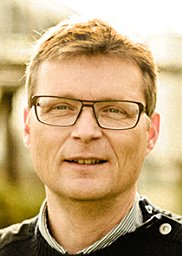 Lars J. Nilsson合作论文数Faculty of Engineering, Lund University3
 Tommy Wiedmann合作论文数School of Civil and Environmental Engineering, The University of New South Wales3
 Joyashree Roy合作论文数Environmental Energy;Technologies Division;Environmental Energy|Technologies Division3
 Shonali Pachauri合作论文数International Institute for Applied Systems Analysis3Heleen De Coninck合作论文数Energy Research Centre of the Netherlands3
 Nebojsa Nakicenovic合作论文数Transformative Institutional and Social Solutions Research Group, International Institute for Applied Systems Analysis3
 Julia Pongratz合作论文数Center for Ethics and Philosophy in Practice, Faculty of Philosophy, Ludwig Maximilian University of Munich;Fakultät für Geowissenschaften, Ludwig Maximilian University of Munich3Smail Khennas合作论文数3
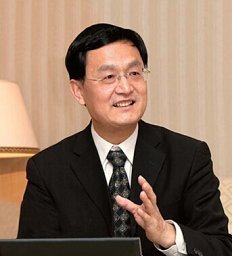 Laixiang Sun合作论文数International Institute for Applied Systems Analysis (IIASA), Laxenburg, Austria3
 Robbie Andrew合作论文数CICERO Center for International Climate ResearchAbout3
 Jan C. Minx合作论文数School of Earth and Environment, Faculty of Environment, University of Leeds;Priestley International Centre for Climate, University of Leeds;Mercator Research Institute on Global Commons and Climate Change gGmbH;Evidence for Climate Solutions Working Group, Potsdam Institute for Climate Impact Research3
 Shobhakar Dhakal合作论文数School of Environment, Resources and
Development, Asian Institute of Technology;Department of
Energy, Environment and Climate Change, Asian Institute of Technology3
Shobhakar Dhakal合作论文数School of Environment, Resources and
Development, Asian Institute of Technology;Department of
Energy, Environment and Climate Change, Asian Institute of Technology3 Chris Bataille合作论文数Energy and Materials Group;School of Resource and Environmental Management;Simon Fraser University;School of Resource and Environmental Management, Simon Fraser University3
 Yamina Saheb合作论文数OpenExp, 75 paris, lle de France, France3Monica Crippa合作论文数Lab Atmospher Chem, Paul Scherrer Inst3
 Baihe Gu合作论文数3Catrinus J. Jepma合作论文数3Jo House合作论文数2Sujata Gupta合作论文数2Leo Meyer合作论文数2priyaradshi shukla合作论文数2Bertjan Heij合作论文数2rutu dave合作论文数2shigeki kobayashi合作论文数2kenji yamaji合作论文数2




