ObjectiveTo develop a nutrition health literacy questionnaire for pupils of different grades based on item response theory and to validate the questionnaire with the Rasch model. MethodsAn index system for evaluating nutrition health literacy among pupils was established through literature study on researches and reports published at home and aboard and expert consultation for the complication of nutrition health literacy questionnaires for pupils of grade 1 – 2, 3 – 4, and 5 – 6. The developed questionnaires were then assessed among 1 074, 1 045 and 553 pupils of the three grade groups recruited with stratified random cluster sampling at 8 elementary schools in Beijing municipality, Xining city of Qinghai province and Taiyuan city of Shanxi province during June – July 2021. Based on Rasch model, the questionnaires' item discrimination, item reliability and item fitting were validated with unidimensional test, Wright map and other indicators using Winsteps software. ResultsValid responses were collected from 1 066, 921 and 543 pupils of the three grade groups, with an overall efficient rate of 94.7%. The questionnaires for the three grade groups were all consistent with the one-dimensional hypothesis and most of the items of the questions were of high goodness of fit. For the questionnaire towards pupils of grade 1 – 2, 3 – 4, and 5 – 6, the item discrimination indexes were 9.57, 6.03, and 13.68; the item reliability indexes were 0.99, 0.97, and 0.99; and the difficulty indexes were 2.72, – 0.18, and – 0.42, respectively, indicating a higher difficulty of the questionnaire for pupils of grade 1 – 2 and a lower difficulty of questionnaires for pupils of grade 3 – 4 and 5 – 6. ConclusionThe developed nutrition health literacy questionnaire for pupils of different grades fits with the Rasch model well and is of good reliability and discriminability; the questionnaire could be used in relevant surveys in pupils.
Objective:To summarize the progress and achievement of inpatient experience improvement in public hospitals in China from 2016 to 2021, so as to provide basis for further improving hospitalization experience and raising inpatient satisfaction.Methods:Based on the five Third-party Evaluations of China Healthcare Improvement Initiative from 2016 to 2021, descriptive trend analysis was conducted on inpatient process, cost and inpatient satisfaction, and the inpatient satisfaction in different regions and different types of institutions was compared.Results:The overall satisfaction of hospitalized patients in the fifth evaluation in 2021(98.5%)was higher than that in the first evaluation in 2016(96.2%). The western region and maternal and child institutions had the most obvious improvement in the comparison of regional and institutional types. The improvement of inpatients′ satisfaction with diet was not obvious. Inpatients were most dissatisfied with " high medical expenses" , " cumbersome procedures" and " long waiting time for bed" .Conclusions:From 2016 to 2021, the satisfaction of hospitalized patients has been consistently improved, but there is still room for improvement in non-medical services. Hospital meals for inpatient and relief of inpatient healthcare financial burden are the priorities for healthcare improvement and raising hospitalization satisfaction in the next stage.
目前我国儿童青少年健康素养水平亟待提高,但国内针对儿童青少年健康素养测评工具的研究十分有限,一方面是根据我国相关政策标准自制的测量工具,另一方面是国际已有测量工具的本土化.国外应用较多的儿童青少年健康素养测评工具,多将成人经典健康素养量表进行适宜化改造,评估儿童青少年健康素养水平.本文对国内外儿童青少年健康素养的定义及测评工具进行综述总结,以期为相关研究提供参考和依据.
目的 了解我国三级公立医院患者健康生活方式指导服务满意度现状及影响因素.方法 选取全国31个省(自治区、直辖市)及新疆生产建设兵团共143家三级公立医院门诊和住院患者进行调查.采用SPSS 25.0软件对数据进行统计学分析.结果 96.19%的门诊患者和98.71%的住院患者对所接受的健康生活方式指导服务满意.患者健康生活方式指导服务供需契合度高.户口类型、家庭实际年收入、医保类型、医院主管单位等是门诊患者满意度的影响因素.医院所在地区、主管单位、性别、家庭实际年收入等是住院患者满意度的影响因素.结论 医院应注重健康生活方式指导服务的多样性和针对性,既要注重服务细节,又要具有针对性.
Objective:To understand the practice of humanistic care and social worker voluntary service in public hospitals in China.Methods:From January to March 2021, 38 typical cases concerning " medical social worker and volunteer system" and " building a harmonious doctor-patient relationship through humanistic service" were collected by relying on the evaluation of China Healthcare Improvement Initiative. By means of statistics on the frequency of the subject words in the cases, hotspots of these hospitals in " paying attention to medical humanistic care and promoting social work voluntary service" were identified.Results:By classifying the keywords of the 38 cases, the hotspots mainly focused on strengthening the construction and management of social work volunteer platform and team, providing convenient and high-quality services, integrating humanistic care into diagnosis and treatment services, and building characteristic brand projects.Conclusions:The concept of humanistic care should be integrated into the hospital culture construction, the standardized and institutionalized development of humanistic care and volunteer work in the hospital should be promoted. Supporting measures should be introduced to promote the professional and stable development of talent team, and the routine service system should be established based on the needs assessment of both doctors and patients.
Objective:To explore the change trend of patients′ recognition of the medical reform effect and medical staff′s occupation and its relationship with medical experience, since the implementation of the China Healthcare Improvement Initiative(CHII), so as to provide reference for exploring the breakthrough point of consolidating the reform effect.Methods:Four indicators of the third-party assessment of patients were selected, which were " I think the medical reform has benefited patients" , " I think the doctor-patient relationship is improving in the past three years" , " I think medical personnel deserve social respect and recognition" , and " I am willing to let my children join the medical profession" . Descriptive and trend analysis were carried out on the survey results, and correlation analysis was carried out between the survey results and patients′ medical experience.Results:Compared with the baseline evaluation results(76.9% and 69.9%for outpatients, 87.3% and 85.6%for inpatients), the patients′ recognition of the sense of medical reform and the improvement of doctor-patient relationship in the fifth evaluation(86.2% and 89.1%for outpatients, 91.4% and 92.6%for inpatients)were significantly improved. The proportion of patients who thought the medical staff was worthy of respect and willing to let their children work in the hospital in the fifth evaluation(97.4%, 79.1%for outpatients, 98.7%, 85.1%for inpatients)were higher than the baseline evaluation results(92.3%, 71.0%for outpatients, 98.1%, 81.6%for inpatients). The above indicators were positively correlated with the patient′s medical experience.Conclusions:Since the implementation of CHII, patients′ recognition of the sense of medical reform and the improvement of doctor-patient relationship has been continuously improved, and patients′ respect and recognition of professional identity of medical personnel is at a high level and continues to improve. Improving medical experience has a positive effect on the improvement of patients′ sense of medical reform.
Objective:To summarize the progress and achievement of outpatient experience improvement in tertiary public hospitals from 2016 to 2021, so as to provide basis for further improving outpatient experience and raising outpatient satisfaction.Methods:Based on 5 round third-party evaluations of the China Healthcare Improvement Initiative from 2016 to 2021, descriptive trend analysis was conducted on the outpatient process and outpatient satisfaction, and stratified analysis was conducted on patient satisfaction in different regions and different types of institutions.Results:One hundred and thirty-six core sample hospitals were included in the 5 round evaluation, and 30 153 valid questionnaires were collected in the fifth evaluation in 2021.From 2016 to 2021, the overall satisfaction of outpatients in the 5 round evaluations was 91.4%, 87.3%, 90.1%, 91.1% and 95.4%, respectively. The satisfaction of outpatients to the medical services continued to improve. Outpatient treatment process has been continuously optimized, appointment registration has become the most commonly used way of outpatient registration. The satisfaction of outpatients to the process and environment of treatment in the western region was significantly improved.Conclusions:From 2016 to 2021, the overall satisfaction of outpatients has been consistently improved. Informatization helps to optimize the treatment process, but it is recommended that hospitals should provide special support for elderly outpatients.
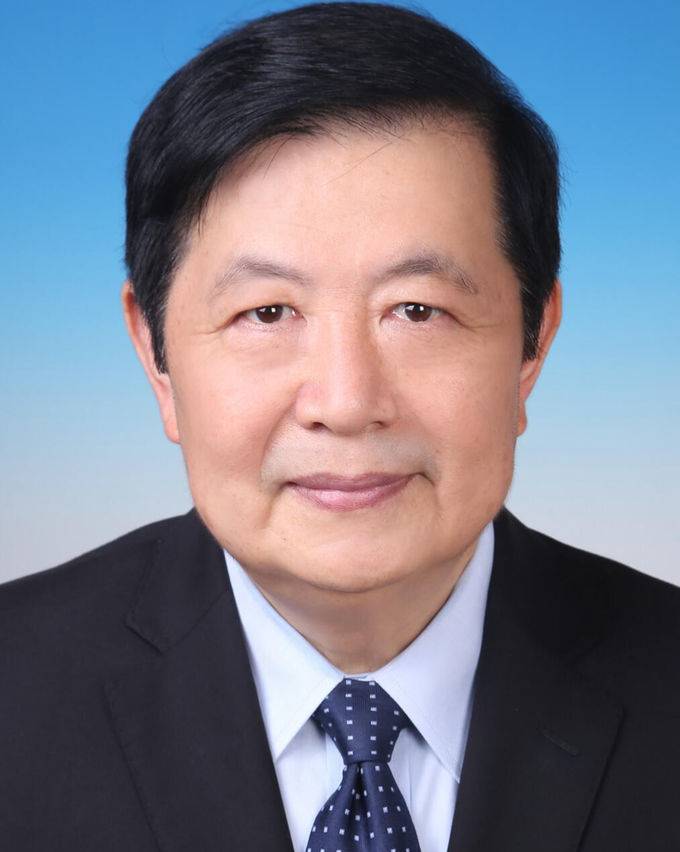 Yuanli Liu (刘远立)合作论文数School of Health Policy and Management, Peking Union Medical College7
 FAN Zixuan (樊子暄)合作论文数4yu zhang (张玉)合作论文数4Hanxin GU (顾晗昕)合作论文数3LinLin Hu (胡琳琳)合作论文数3
 Sun Jing合作论文数Menzies Hlth Inst Queensland, Griffith Univ3ZAN Ziqing (昝子晴)合作论文数2JIANG Zhongshi (姜中石)合作论文数2Huanqian WANG (王焕倩)合作论文数2
 LiLi You (尤莉莉)合作论文数School of Health Policy and Management, Chinese Academy of Medical Sciences2Yuou Zhang合作论文数1YANG Linghe (杨凌鹤)合作论文数1LIU Meicen (刘美岑)合作论文数1ChenYang Pei (裴晨阳)合作论文数1
 Jing Ma合作论文数Harvard Medical School, Harvard University1




