Referring Expression Comprehension (REC) is commonly studied under dataset-specific fine-tuning, resulting in specialist models with limited cross-dataset generalization. In this work, we revisit REC from the perspective of unified open-vocabulary grounding and identify representation degeneration as a key obstacle to scaling a single generalist model. To preserve representation diversity, we propose a holistic data-model co-design framework. Architecturally, we introduce the Modulated Attention-Contrastive Head (mACH) for efficient token-level vision-language alignment and a text-conditioned JEPA auxiliary stream that provides complementary gradient support to preserve alignment-active representations without inference overhead. On the data side, we introduce Objects365-Caption, enriching Objects365 with context-aware referring expressions for large-scale language supervision. We further provide a theoretical analysis showing that complementary gradient subspaces preserve alignment capacity and thereby scale representation diversity. Extensive experiments demonstrate that our single-checkpoint framework achieves highly competitive performance on standard REC benchmarks while exhibiting strong generalization across heterogeneous grounding datasets without benchmark-specific adaptation.
The significance of informative and robust point representations has been widely acknowledged for 3D scene understanding. Despite existing self-supervised pre-training counterparts demonstrating promising performance, the model collapse and structural information deficiency remain prevalent due to insufficient point discrimination difficulty, yielding unreliable expressions and suboptimal performance. In this paper, we present GaussianCross, a novel cross-modal self-supervised 3D representation learning architecture integrating feed-forward 3D Gaussian Splatting (3DGS) techniques to address current challenges. GaussianCross seamlessly converts scale-inconsistent 3D point clouds into a unified cuboid-normalized Gaussian representation without missing details, enabling stable and generalizable pre-training. Subsequently, a tri-attribute adaptive distillation splatting module is incorporated to construct a 3D feature field, facilitating synergetic feature capturing of appearance, geometry, and semantic cues to maintain cross-modal consistency. To validate GaussianCross, we perform extensive evaluations on various benchmarks, including ScanNet, ScanNet200, and S3DIS. In particular, GaussianCross shows a prominent parameter and data efficiency, achieving superior performance through linear probing (< 0.1% parameters) and limited data training (1% of scenes) compared to state-of-the-art methods. Furthermore, GaussianCross demonstrates strong generalization capabilities, improving the full fine-tuning accuracy by 9.3% mIoU and 6.1% AP50 on ScanNet200 semantic and instance segmentation tasks, respectively, supporting the effectiveness of our approach. The code, weights, and visualizations are publicly available at https://rayyoh.github.io/GaussianCross/.
Transmission lines crossing agricultural greenhouses are highly vulnerable to faults, as torn greenhouse films can be blown onto conductors during extreme weather, posing serious threats to power system security and stability. To mitigate this risk, we tackle the novel yet underexplored task of greenhouse film damage detection. Given the scarcity of labeled data for this task, we propose SoftTeacher-2O, a semi-supervised object detection framework that extends SoftTeacher with a two-fold optimization strategy. Specifically, we introduce (1) a teacher–student joint weighting scheme to improve the robustness of unsupervised classification loss, and (2) a decoupled EMA update mechanism that balances stable parameter updates with continuous teacher refinement. Experimental results on a real-world dataset show that our method achieves a 9.06% improvement over state-of-the-art baselines in greenhouse film damage detection.
Regarding the issue of polyethylene terephthalate (PET) waste proliferation, various methods-including physical, chemical, and biological approaches-have been proposed for PET depolymerization, with bio-enzymatic degradation emerging as a sustainable solution. However, this process is hindered by slow kinetics and enzyme thermal instability, necessitating the development of more efficient and mild strategies. This study innovatively explored enhancing the efficiency of enzyme-catalyzed PET degradation by utilizing magnetic nanoparticle modulation and the photothermal effects of photo-responsive materials. Hydrophobic Fe3O4 nanoparticles (NPs) formed nanochains that exhibited whirlpool motion under a rotating magnetic field, enhancing hydrolytic enzyme activity through microreaction. It revealed that at a concentration of 1 mg/mL Fe3O4 NPs and a magnetic field strength of 2 mT, hydrolysis efficiency increased by 38 %. Furthermore, exposure to light radiation significantly altered the physicochemical properties of plastics, including crystallinity, hydrophobicity, surface functional groups, and morphology. Photo-responsive materials exhibited a photothermal effect, increasing the temperature of the enzyme-catalyzed system and thereby enhancing degradation efficiency. Light pretreatment of MXene followed by PET hydrolase improved degradation efficiency by 148 %. The successful implementation of this innovative strategy holds promise for further advancing the practical application of bio-enzyme degradation of PET and making a substantial contribution to environmental protection efforts.
Feature fusion plays a pivotal role in achieving high performance in vision models, yet existing attention-based fusion techniques often suffer from substantial computational overhead and implementation complexity, particularly in resource-constrained settings. To address these limitations, we introduce the Plug-and-Play Hierarchical C2F Transformer (P^2HCT), a lightweight module that combines coarse-to-fine token selection with shared attention parameters to preserve spatial details while reducing inference cost. P^2HCT is trainable using coarse attention alone and can be seamlessly activated at inference to enhance accuracy without retraining. Integrated into real-time detectors such as YOLOv11-N/S/M, P^2HCT achieves mAP gains of 0.9%, 0.5%, and 0.4% on MS COCO with minimal latency increase. Similarly, embedding P^2HCT into ResNet-18/50/101 backbones improves ImageNet top-1 accuracy by 6.5%, 1.7%, and 1.0%, respectively. These results underscore P^2HCT's effectiveness as a hardware-friendly and general-purpose enhancement for both detection and classification tasks.
We devise an approach to tackle the problem of neural network robustness certification. We leverage a fast approximate bounding algorithm, which can be parallelized on GPU processors, to efficiently estimate the input range of all neurons in the network. The estimated bounds are then applied to construct a mixed-integer program that transforms the mission of verifying the robustness specification into an optimization problem. We propose several strategies to exploit the information gained from bounding steps to refine and simplify the program formulation. Finally, we evaluate the method on various benchmarks and compare it with some baselines.
Recently, transaction fraud costs billions of dollars to card issuers. With the increase in fraud rates, it is important to establish a comprehensive monitoring mechanism for detecting abnormal accounts that conform to the characteristics of online fraudulent activities. This paper primarily utilizes statistical methods and data mining techniques to analyze new signals that can represent the latest fraudulent transaction methods based on account static information, account transaction data and fraud blacklists collected by the financial big data system. To safeguard the financial security of customers, interpretable machine learning algorithms are also proposed to construct fraud detection model. Eventually, extensive experiments demonstrate that the proposed framework achieves state-of-the-art results with the highest F1 score, Recall and Accuracy.
The past decades have witnessed a surge in human fall detection with sensors, cameras, and wireless signals. Among them, Wi-Fi-based fall detection has been one of the most attractive solutions due to the ubiquitous and pervasive deployment of Wi-Fi infrastructures. However, these approaches are still difficult to be put into practical use. To push forward Wi-Fi-based fall detection for wide deployment, three major limitations concerning environmental diversity , motion diversity , and user diversity are required to be resolved. In this paper, we propose FallDar, a Wi-Fi-based deep learning-assisted fall detection system that outperforms state-of-the-art works on the three criteria simultaneously. First, to deal with environmental diversity, FallDar characterizes falls with the speed of the body, which is the most relevant and inherent feature of falling activities, making the system resilient to environmental changes. Second, to deal with motion diversity, FallDar simulates a large amount of fall data of various falling types with a DNN-based generative model. Training with these data, FallDar is endowed the capability of detecting more types of falls. Third, to deal with user diversity, FallDar proposes to incorporate the fall detection network with a user identification network. The network is designed to extract user-independent features, requiring no fall data from new users for system adjustment. We implement FallDar on commercial Wi-Fi devices and conduct experiments in home and office environments for six months. The evaluation results show that FallDar achieves a false alarm rate of 5.7% and a missed alarm rate of 3.4% across all factors, making a fundamental step towards ubiquitous fall detection with Wi-Fi.
This article mainly introduces the application research of X-ray detection technology in GIS equipment defect diagnosis, and provides a detailed introduction to three cases of X-ray detection technology applied in GIS fault diagnosis. This article mainly introduces the application of X-ray detection in the internal structure assembly of GIS, as well as the looseness and damage of any components; And introduced the impact of X-rays on PRDP spectra, as well as the application of medical CT3D imaging analysis. Finally, the effectiveness, safety, and feasibility of X-ray detection technology were summarized, and the main achievements and promotion suggestions of X-ray detection technology in GIS equipment defect diagnosis were elaborated.
The existence of adversarial examples highlights the vulnerability of neural networks and brings much interest to the formal verification of neural network robustness. To improve the scalability of neural network verification while approaching completeness, researchers have adopted the branch-and-bound (BaB) framework. Better branching can reduce the number of branches to explore and plays an important role in BaB verification methods. In this paper, we propose a new branching strategy. It utilizes a low-cost metric to make splitting decisions and supports branching on ReLU activation functions. We conduct experiments on widely used benchmarks to evaluate its performance. Simulation results demonstrate that this branching strategy effectively improves the verification efficiency and is better than the state-of-the-art strategies in overall performance.
Video instance segmentation has recently attracted a lot of attention due to the challenge of simultaneous segmentation and tracking in video clips. In this work, we propose a new video instance segmentation method, called Mask RFCT, which performs tracking via a precise feature vector matching by generating feature vectors from a recursive fully convolutional tracking branch. Our main contribution is the novel recursive fully convolutional tracker (RFCT) that generates corresponding feature vector for each instance within a bounding-box, which will be used for the following instance category assignment as tracking process. Model evaluation is conducted on YOUTUBE-VIS dataset. It shows that our Mask RFCT outperforms the baseline model, MaskTrack RCNN, obtaining an absolute gain of 2.8% for mean AP and 2.65% for mean AR. And we also conduct comparison experiments on different trackers we proposed and the baseline. We hope our work will provide a new method for architecture modification and instance tracking.
in recent years, job scams, especially online job scams, have become one of the most serious social problems worldwide and have brought great threats to the safety of people's lives and property. This study aimed to develop a machine learning predictive model for the authenticity of job postings to help people identify job scams and get access to real job opportunities. In this study, we considered the significant class imbalance in the dataset and used the TF-IDF method to extract text features from the text fields. The performance of various machine learning models was evaluated using balanced data generated through sampling techniques. The results show that the random forest model performs exceptionally well in handling balanced data and maintaining better accuracy (AC) and recall (RC) for both regular and generated balanced data. It also proved that TF-IDF is an effective method to extract features from text data.
Trajectory prediction has long been a basic task in traffic situation awareness. However, challenges in interactions, continuity, and multi-modal behavior have to be handled for more accurate prediction. In order to obtain a better performance, previous works have started to incorporate recurrent neural networks, graph neural networks, even transformer into their models. Some models construct the temporal and spatial features independently, and then synthesize the processed features to predict the trajectories; meantime other models construct the these features together and add modules to distinguish the features in pursuing of better effects. Their models, however, may have not jointly trained temporal and spatial modules so they may neglect agents’ temporal and spatial features that supposed to be pertinent, resulting in the separation among features and decrease its performance; in addition, those models encoding temporal and spatial features simultaneously are compelled to add functional modules to identify where is an agent’s histories. Given the above disadvantages, instead, we propose a novel agents-separated prediction-former. We think that the input can be taken in a two-dimension form but not in a sequence, which easily tackles the task of distinguishing the agents’ identity. Since we can only put in one scene in one time, we incorporate agents’ velocities through differential. Whereafter, we make it auto-regressive to confirm the trajectories’ temporal continuity. Thus, our model can jointly incorporate temporal and spatial features as well as identify each agent’s histories. Based on our novel idea, we then construct our final trajectory predictor adopting a probability model to obtain probability outputs to generate multi-modal trajectories that accord with the reality. Experiments reveals that our model can improve the performance in several proposed data sets.
Traffic state perception is key to controlling autonomous vehicles, and predicting the future trajectories of agents in the context is critical in perception of traffic states. However, agents are not separated but interacting with other agents, as well as the surrounding physical scene. Currently, the best models are based on graph neural network, but prior works normally include only position and timestep without other available and valuable information. Our model incorporates more information, conforming to evolving V2I (Vehicle-to-Infrastructure) technology. We have proposed a novel relative-position-wise attention mechanism and constructed the graph not only based on distance but on yaw angle and velocity. In the main dataset used in the trajectory predictions, our model has achieved state-of-the-art performance. We have contributed a simulated dataset named Shougang Dataset upon the map of Beijing Shougang Industrial Park. We have applied our model to Shougang Dataset and obtained an excellent performance in trajectory prediction.
In this article, a new fault diagnosis problem is formulated, which involves a large number of normal samples and in which almost all the fault classes are few-shot classes. Although this problem is common in many industrial scenarios, it remains a challenge overlooked in previous studies. To develop a novel solution for addressing this challenge, we employ long-tailed distribution in this work and name this new task the long-tailed fault diagnosis accordingly. Specifically, we divide the long-tailed fault diagnosis procedure into representation learning and classification. On this basis, we propose a method using progressively balanced supervised contrastive learning (PBS-SCL) for representation learning and a learnable linear classifier (LLC) for classification. The designed scheme consists of two phases. In the first phase, PBS-SCL is utilized to learn a more discriminative deep representation. In the second phase, an LLC is combined with the learned representation for better classification. Experiments are conducted on both the Tennessee Eastman process (TEP) benchmark dataset and a practical plasma etching process dataset. The results obtained show that the proposed method achieves significantly improved long-tailed fault diagnosis performance compared with existing methods.
It is hard to obtain sufficient fault samples in most real-world industrial scenarios. This has raised the need of addressing the critical issue of imbalanced fault diagnosis that remains a major challenge for popular fault diagnosis methods such as the autoencoder(AE). In this research, we propose a non-revisiting genetic cost-sensitive sparse autoencoder(NrGCS-SAE) solution, which not only incorporates cost-sensitive learning with sparse autoencoder but also solves the problem of class weights assignment. Specifically, sparse autoencoder is adopted as it has better generalization performance than autoencoder, and genetic algorithm(GA) is employed to optimize class weights that are initially unknown. In addition, a non-revisiting strategy is devised to prevent repeated evaluation of the same individual in different generations, which can help increase exploration ability and decrease computing costs. Computational experiments are used to evaluate the proposed NrGCS-SAE solution on the Tennessee Eastman(TE) dataset and the real plasma etching process dataset, which involves both binary imbalanced fault diagnosis and multi-class imbalanced faults diagnosis. As evidenced in the tests, NrGCS-SAE achieves improved performance and more importantly this improvement is consistent in different settings of experiments.
Industrial applications of fault detection and diagnosis face great challenges as they require not only accurate identification of faulty statuses but also the effective understandability of the results. In this paper, a two-step robust and understandable fault detection and diagnosis framework is developed to address this challenge by exploiting denoising sparse autoencoder and smooth integrated gradients. Specifically, denoising sparse autoencoder(DSAE) is utilized to detect faults in the first step. DSAE is more robust to noise corruption and has better generalization performance compared to the existing autoencoder-based methods. In the second step, smooth integrated gradients(SIG) is used to diagnose the root-cause variables of the faults detected. Smooth integrated gradients can provide a denoising effect on the feature importance. The proposed framework is evaluated through an application to the Tennessee Eastman process. As proved in the experiments, the presented DSAE-SIG method not only achieves higher diagnosis accuracy but also successfully identifies the potential root-cause variables of process disturbances.
Time Delay Neural Networks (TDNNs) are widely used in both DNN-HMM based hybrid speech recognition systems and recent end-to-end systems. Nevertheless, the receptive fields of TDNNs are limited and fixed, which is not desirable for tasks like speech recognition, where the temporal dynamics of speech are varied and affected by many factors. This paper proposes to use deformable TDNNs for adaptive temporal dynamics modeling in end-to-end speech recognition. Inspired by deformable ConvNets, deformable TDNNs augment the temporal sampling locations with additional offsets and learn the offsets automatically based on the ASR criterion, without additional supervision. Experiments show that deformable TDNNs obtain state-of-the-art results on WSJ benchmarks (1.42\%/3.45\% WER on WSJ eval92/dev93 respectively), outperforming standard TDNNs significantly. Furthermore, we propose the latency control mechanism for deformable TDNNs, which enables deformable TDNNs to do streaming ASR without accuracy degradation.
Most existing fault diagnosis methods may fail in the following three scenarios: (1) serial correlations exist in the process data; (2) fault data are much less than normal data; and (3) it is impractical to obtain enough labeled data. In this paper, a novel form of the bidirectional gated recurrent unit (BGRU) is developed to underpin effective and efficient fault diagnosis using cost sensitive active learning. Specifically, BGRU is devised to consider the dynamic behavior of a complex process. In the training phase of BGRU, the idea of weighting each training example is proposed to reduce the effect of class imbalance. Besides, in order to explore the unlabeled data, cost sensitive active learning is utilized to select the candidate instances. The effectiveness of the proposed method is evaluated on the Tennessee Eastman (TE) dataset and a real plasma etching process dataset. The experiment results show that the proposed cost senstive active learning bidirectional gated recurrent unit (CSALBGRU) method achieves better performance in both binary fault diagnosis and multi-class fault diagnosis. (C) 2020 Elsevier B.V. All rights reserved.
Physical unclonable function (PUF) generates unique secret keys from unavoidable IC manufacturing variations, which can eliminate high computation expense and additional key storage. The inherent flexibility and lower time-to-market have made field programmable gate array (FPGA) the platform of choice for faster implementation. However, logic elements on FPGA are predefined while some types of PUFs need strictly mirrored symmetric routing. This paper presents a robust and FPGA friendly PUF based on oscillator collapse (OC-PUF) with million number of challenge-response pairs (CRPs). Mirrored routes are obtained with a novel delay cell design and a signal path configuration technique. In the meanwhile, the response bias issues on FPGA is effectively resolved. Measured on Altera DE2-115, the average interchip hamming distance (inter-chip HD) of the proposed OC-PUF is 46.7%. After applying dynamic threshold with a value 255, intra-chip hamming distance (intra-chip HD) dropped to 5.46E-06 at nominal conditions.
 Heming Zhang (张和明)合作论文数Department of Automation, Tsinghua University12
 Hongwei Wang (王宏伟)合作论文数Zhejiang University-University of Illinois Urbana-Champaign Institute5
 Yanyan Xu合作论文数3
 Wenjia Zhang合作论文数Columbia University in the City of New York, Columbia University3Tianchu Zeng合作论文数2
 Chongdang Liu合作论文数Tsinghua Univ, Natl CIMS Engn Res Ctr, Beijing 100084, Peoples R China2Ning Gui (桂宁)合作论文数2
 Zhenming Peng (彭真明)合作论文数School of Information and Communication Engineering, University of Electronic Science and Technology of China2
 Jianming Hu (胡坚明)合作论文数Department of Automation, Tsinghua University2
 Shuting Tao合作论文数College of Computer Science and Technology, Zhejiang University;The Zhejiang University-University of Illinois Urbana-Champaign Institute, Zhejiang University1Yi X. Wang合作论文数1Kai Zhang合作论文数1Bin Wang (王斌)合作论文数1Yan Meng合作论文数1Qian Zhang合作论文数1Ke Ma合作论文数1Ruqin Huang合作论文数1Weiheng Wang合作论文数1
 Jiaxin Zhao合作论文数Department of Automation, Tsinghua University1Keyu An合作论文数1
 Moyun Liu合作论文数School of Mechanical Science and Engineering, Huazhong University of Science and Technology, Wuhan, China1
 Lei Yao合作论文数1Yixuan Chen合作论文数1Qiuting GUO (郭秋婷)合作论文数1Xu Huang合作论文数1SiHai Zhang (张思海)合作论文数1
 Bohan Yang (杨博翰)合作论文数School of Integrated Circuits, Tsinghua University1
 Jiaxun Lu合作论文数1
 Bo Gu合作论文数1
 Leibo Liu (刘雷波)合作论文数School of Integrated Circuits, Tsinghua University;Wuxi Micro Innovation Integrated Circuit Design Company Ltd.1Linjun Li合作论文数Zhejiang University1
 Yi Wang (王祎)合作论文数International School of Information Science and Engineering, Dalian University of Technology - Ritsumeikan University1
 Feng Liu (刘锋)合作论文数School of Electronic and Information Engineering, Beihang University1
 Yuan Lu (卢元)合作论文数Department of Chemical Engineering, Tsinghua University1
 Wei Hu (胡伟)合作论文数Department of Electrical Engineering, Tsinghua University1
 Min Zhu (朱民)合作论文数Department of Energy and Power Engineering, Tsinghua University1
 Yinan Wu (吴一楠)合作论文数College of Environmental Science and Engineering, Tongji University1
 Hairui Yang (杨海瑞)合作论文数Department of Energy and Power Engineering, Tsinghua University1Jingyuan Tian (田敬元)合作论文数1
 Mei Song (宋梅)合作论文数School of Electronic Engineering, Beijing University of Posts and Telecommunications1
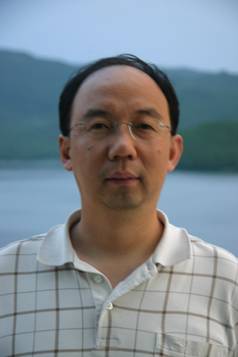 Yue Ma (马跃)合作论文数School of Computer Science, Beijing University of Posts and Telecommunications1
 Ting Wang合作论文数1
 Zheng Yang (杨铮)合作论文数1
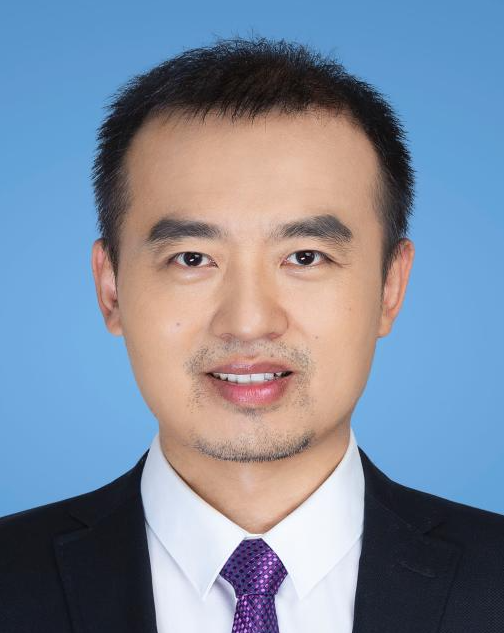 Yifei Wei (魏翼飞)合作论文数School of Electronic Engineering, Beijing University of Posts and Telecommunications1
 Lap-Pui Chau合作论文数Hong Kong Polytechnic University1
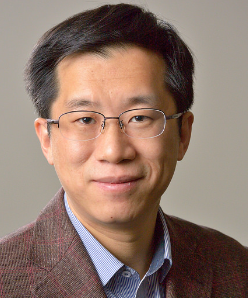 Zhijian Ou (欧智坚)合作论文数Department of Electronic Engineering, Tsinghua University1




