Objective: Microtia can profoundly influence health-related quality of life. The aim of this study was to investigate the psychosocial status of children and adolescents with unilateral and bilateral microtia before reconstruction surgery. Methods: Eighty-six patients with microtia from Peking Union Medical College Hospital (54 with unilateral microtia and 32 with bilateral microtia) responded to structured interviews before reconstruction surgery. The 3 clinically validated questionnaires were the Piers-Harris Children's Self-concept Scale (PHCSS), the Social Anxiety Scale for Children (SASC), and the Children's Loneliness Scale (CLS). Scores from the PHCSS and SASC were compared with Chinese norms. The total scores of the unilateral and bilateral groups were compared for all three questionnaires. Results: Males with unilateral and bilateral microtia had significantly different PHSCC scores than norms (both P < 0.05), and male patients overall had a total score that was 10.61 +/- 2.20 points lower than female patients overall. Patients who were 7-9 years-old in the unilateral group and 10 to 13 years-old in the bilateral group had lower total PHSCC scores than norms of the same age (both P < 0.05). There was no significant difference between patients and norms in the 14-16 years-old group. The SASC scores of patients were significantly higher than the norms (P < 0.05). The CLS score was significantly lower in the unilateral group than in the bilateral group (50.17 +/- 14.63 vs. 61.38 +/- 13.24, P < 0.05), but these two groups did not significantly differ in PHCSS and SASC scores. Conclusion: Compared to Chinese norms, children with unilateral and bilateral microtia had lower self-concept, especially males and those who were 7-13 years-old. Patients with microtia also had increased social anxiety and loneliness. Patients with bilateral microtia were more likely to report loneliness than those with unilateral microtia.
目的 了解单、双侧小耳畸形患者的心理状态,并研究其与正常人群以及单、双侧患者之间是否存在差异.方法 对70例先天性小耳畸形(单侧54例、双侧16例)患者进行横断面调查研究.采用三个国际通用的问卷,即儿童自我意识量表(PHCSS)、儿童孤独量表(CLS)和儿童社交焦虑量表(SASC),对患者进行社会心理状态调查.结果 70例小耳畸形患者均完成了三个问卷调查.单侧、双侧小耳畸形患者PHCSS平均总分分别为54.13±12.03和51.06±14.16,与常模比较,双侧小耳畸形患者PHCSS总分明显偏低,单侧患者躯体外貌、双侧幸福感与满足感、单双侧合群较正常儿童存在显著差异(P<0.05),两组间无统计学差异.CLS平均得分分别为50.17±14.56和61.38±13.03,单、双侧患者间有明显统计学差异(P<0.05).单、双侧患者SASC平均评分为5.20±4.15和6.75±4.00,总评分及社交回避及苦恼分量表与常模比较存在显著差异(P<0.05),两组间比较无统计学差异.结论 双侧先天性小耳畸形患者自我意识显著低于正常儿童,单、双侧患者间无明显差异.一半以上单、双侧患者均感到孤独感,双侧患者较单侧孤独感更严重.单、双侧患者较正常儿童表现出社交焦虑,单、双侧患者间无明显差异.
小耳畸形不仅导致患者外貌缺陷及听觉障碍,还严重影响患者及其家属的心理状况。本文从常用心理状况评估量表、小耳畸形对患者及家属的心理影响、导致小耳畸形患者心理异常的相关因素、耳廓再造手术对小耳畸形患者和家属心理的影响及小耳畸形患者成长过程中心理干预的注意事项等几个方面加以综述,为小耳畸形患者的心理干预及管理提供参考依据。
>慢性活动性EB病毒感染(chronic active Epstein-Barr virus,CAEBV)最早于1978年Virelizie等 [1] 首先报道,用来定义一组伴有EB病毒(EBV)感染的非典型性疾病。随着对该病的认识,后又有其他学者用不同名称定义该类疾病,直到1987年,CAEBV才最终被归纳定义 [2] 。大约95%的成
We introduce individual bias to the simulation model of exploration and exploitation and examine the joint effects of individual bias and other parameters, aiming to answer two questions: First, whether reducing individual bias can increase organizational objectivity? Second, whether measures, such as increasing organization size, can increase organizational objectivity in the presence of individual bias? Our results show that individual bias has both positive and negative effects, and reducing individual bias may be not beneficial when organization size is large or environment is turbulent. Diverse knowledge resulting from large organization size can help avoid the negative effects of individual bias when the bias is strong enough so that the individuals who are less limited by bias can be distinguished as the source of learning. Our results also suggest that increasing interpersonal learning, decreasing learning from the organization, task complexity, and environmental turbulence, and maintaining personnel turnover can improve organizational objectivity in the presence of individual bias.
After MgCl2 was dissolved in ethanol with the ratio of 1∶20 in mole at 120℃,the solution was cooled to 70℃ and transferred to the cooling liquid consisting of n-hexane(30 mL) and wax(0.3 g) at 0℃.Precipitate was produced.Filtrated and washed with n-hexane,the residue was dried by vacuum at 50℃,and MgCl2-CH3CH2OH particles were obtained.The size of the particles determined by TEM was at the range from 30 nm to 100 nm.The nano-sized particles of MgCl2-CH3CH2OH could become nano wires by self-assembly technology at room temperature.WAXD results showed that the crystallinity of the obtained nano-sized MgCl2-CH3CH2OH particles became poor,just a broad and weak signal at 2θ = 32° ~ 35° was observed,while MgCl2 showed four sharp signals at 2θ = 15°,30°,35° and 50°.The obtained particles were useful as support for preparing nano-sized Ziegler-Natta catalysts.It was confirmed that the prepared catalysts may efficiently polymerize ethylene to form polymer particles with 200 ~ 300 nm or 2 ~ 4 μm in diameter,respectively.
A new method was presented for preparing (co-)polyethylene with broad molecular weight distribution (MWD) and high molecular weight employed by the novel heterogeneous Ziegler-Natta catalysts via one-pot strategy. The preparation of these catalysts involved the introduction of alkoxy silane compounds as electron donors. The influences of the electron donors structure, as well as polymerization conditions such as temperature, molar ratio of Al/Ti, ethylene pressure and the concentration of 1-hexene in feed on the polymerization performance for ethylene (co-)polymerization, were investigated. The morphology of the catalyst particles was characterized by SEM and Ti content of these catalysts was characterized by ICP. The GPC results showed that the obtained homopolyethylene and ethylene/1-hexene copolymer had the widest molecular weight distribution up to ca 50 when diethoxy-isopropoxy-(t-butoxy)-silane (ED3) was used as internal electron donor. The C-13 NMR and FT-IR analysis indicated that these catalysts efficiently catalyzed the copolymerization of ethylene with 1-hexene. (C) 2012 The Korean Society of Industrial and Engineering Chemistry. Published by Elsevier B.V. All rights reserved.
The copolymerization of styrene with ethylene was promoted by CpTiCl3/BDGE/Zn/MAO catalyst system combining free radical polymerization with coordination polymerization via sequential monomer addition strategy in one-pot. The effect of polymerization conditions such as temperature, time, ethylene pressure, and Al/Ti molar ratio on the polymerization performance was investigated. The hydroxy-functionalized aPS-b-random copolymer-b-PE triblock copolymer was obtained by solvent extraction and determined by GPC, DSC, WAXD, and C-13-NMR. The DSC result indicated that the aPS-b-random copolymer-b-PE had a T-g at 87 degrees C and a T-m at 119 degrees C which attributed to the T-g of aPS segment and the T-m of PE segment, respectively. The microstructure of the hydroxy-functionalized aPS-b-random copolymer-b-PE was further confirmed by WAXD, C-13-NMR, and H-1-NMR analysis; and these results demonstrated that the obtained block copolymer consisted of aPS segment, S-E random copolymer segment, and crystalline PE segment. The connection polymerization of the hydroxy-functionalized aPS with random copolymer-b-PE was revealed by GPC results. (C) 2011 Wiley Periodicals, Inc. J Appl Polym Sci 120: 3171-3179, 2011
High efficient Ziegler-Natta catalysts supported on MgCl 2 were prepared by dissolving-precipitating of MgCl 2 with novel alkoxy silanes as the electron donors, which were used in ethylene polymerization. The influences of the structures and amounts of the electron donors on the properties and the morphology of the catalyst particles were investigated. The morphology of the catalyst particles and the Ti contents in the catalysts were characterized by means of SEM, WAXD and ICP. The effects of polymerization temperature and mole ratio of Al to Ti on the ethylene polymerization were studies. The activity of the catalyst with the diethoxy-isopropoxy-(t-butoxy)-silane(DEIPTBS) as the electron donor was the highest (8.1 × 10 6g/(mol ·g ·h)) under polymerization temperature 70°C, mole ratio of Al to Ti 90 and mole ratio of DEIPTBS to MgCl 2 0.20, and the relative molecular mass distribution of the obtained polyethylene was broad(48.0). The obtained polymer and copolymer were characterized by means of GPC, WAXD and FTIR.
The star-shaped polymethylmethacrylate (PMMA) was synthesized via radical polymerization promoted by metallocene complexes in the presence of initiator of tetra(2,3-epoxy propoxy)silane (Is) and reducing agent Zn. The effect of temperature, time, molar ratio of monomer to initiator, and the structure of metallocene complexes on the polymerization performance was investigated. The structure and properties of the obtained polymer were characterized by gel permeation chromatography, multiangle laser light scattering, H-1 NMR, C-13 NMR, and WAXD. The results indicated that the obtained polymer was atacticspecific and featured narrow molecular weight distribution (1.30-1.57). Star-shaped organosiloxane-functionalized PMMA was produced. (C) 2010 Wiley Periodicals, Inc. J Appl Polym Sci 120: 1652-1658, 2011
The authors prepared SiO_2-supported heterogeneous Ziegler-Natta catalyst by adding NiCl_2 or Ni(NO_3)_2, electron donors in turn,then loading TICl_4 on SiO_2 Polymers with broad relative molecular mass distribution were obtained either by homopolymerizing ethylene or by copolymerizing ethylene and 1-hexene in the presence of the catalyst with triethyl aluminum as cocatalyst.The effects of the amount of NiCl_2 or Ni(NO_3)_2, the structure and dosage of the electron donors,polymerization temperature and the content of 1-hexene on performance of the catalyst were researched,and the sensitivity to hydrogen modulation of the catalyst was also studied.The catalytic efficiency reached 3.5 kg/g and the relative molecular mass distribution of polyethylene was 15.8 when the mass ratio of NiCl_2 to SiO_2 was 1:10,molar ratio of 2-chloropyridine to SiO_2 was 1:10 and the polymerization temperature was 80℃.When ethylene and 1-hexene were copolymerized with the catalyst under the same conditions,the catalytic efficiency reached 3.7 kg/g,and the relative molecular mass distribution of the copolymer was 16.9 in case of setting 1-hexene content at 15 mL.
A novel di-support Ziegler-Natta catalyst TiCl4/SiO2-MgCl2 with high activity was prepared and used in copolymerization of ethylene with 1-hexene.The optimum catalyst preparation conditions were: n(TiCl4)∶n(MgCl2) 10,adding TiCl4 temperature-25 ℃,n(C2H5OH)∶n(MgCl2) 2.4 and m(SiO2)∶m(MgCl2) 1.The particle shape,size distribution and crystalline morphology of the catalyst were determined by means of laser granulometer,SEM and WAXD.The results showed that the catalyst particles were spherical with the 20-45 μm particle diameter.When mass fraction of Ti in the catalyst was 5.1%,the catalyst could effectively catalyze the copolymerization.The catalytic efficiency was 1.59 kg/g,number-average relative molecular mass of the obtained ethylene-1-hexene copolymer was 3.1×10⁴ g/mol and its relative molecular mass distribution was 16.3.
Comparison with the conventional Ziegler-Natta catalyst TiCl4/MgCl2 (I), the modified supported Ziegler-Natta catalysts (iso-PentylO)TiCl3/MgCl2 (II) and (BzO)TiCl3/MgCl2 (III) were prepared as efficient catalysts for copolymerization of ethylene with 1-octene. The complexes (II) and (III) were desirable for the production of random ethylene/1-octene copolymers coupled with higher molecular weight, higher comonomer incorporation within copolymer chain and good yield even at high temperature 80 degrees C and fairly low Al/Ti molar ratio of 100. The effects of catalysts ligands, Al/Ti molar ratio, polymerization temperature, as well as concentration of 1-octene on the catalytic activity, molecular weight and microstructure of the copolymer were investigated in detail. The structure and properties of the copolymers were characterized with C-13 NMR, CPC, DSC and WAXD. The kinetic results also indicate that these catalysts (II) and (III) show higher catalytic activity and the produced polymers feature higher molecular weight, because of lower ratio of K-trm/K-p and K-tra/K-p, and higher ratio of K-tra/K-trm which indicates that chain transfer to cocatalyst is predominant. (C) 2010 Elsevier Ltd. All rights reserved.
较全面地综述了配位聚合催化剂和聚合机理的研究进展:高效Ziegler-Natta催化剂催化丙烯、乙烯等烯烃高效聚合,可合成多种高性能聚烯烃,等规聚丙烯的等规度大于98.5%,不同结构和性能的聚乙烯包括线性低密度聚乙烯(LLDPE)、超低密度聚乙烯(VLDPE)、中密度聚乙烯(MDPE)、高密度聚乙烯(HDPE)、双/宽峰分布聚乙烯、超高分子量聚乙烯(UHMWPE)和超低密度双/宽峰分布聚乙烯等;茂金属催化剂催化苯乙烯、乙烯、丙烯、1-丁烯等烯烃的均聚合和共聚合,并概括了其聚合机理;非茂金属催化剂合成多组分、多立体结构嵌段的聚烯烃,极性聚烯烃及超支化聚烯烃等,介绍了链行走和链穿梭机理。展望了配位聚合的发展趋势,认为聚合过程的环境友好、产品使用过程的环境友好、聚烯烃的高性能化和功能化是从事配位聚合工作的全体人员努力的方向。
 Wantai Yang (杨万泰)合作论文数Department of Chemical Engineering, Tsinghua University;School of Materials Science and Engineering, Beijing University of Chemical Technology12
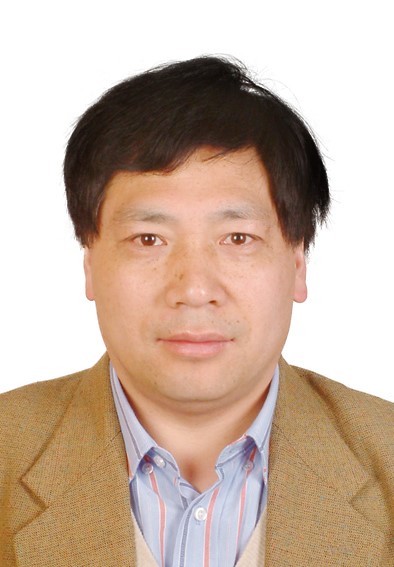 Qigu Huang (黄启谷)合作论文数College of Materials Science And Engineering, Beijing University of Chemical Technology12
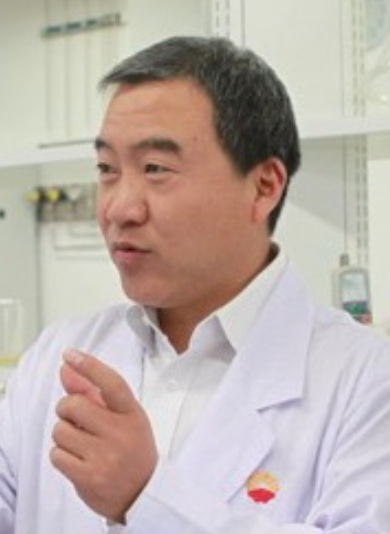 Jianjun Yi (义建军)合作论文数China National Petroleum Corporation11
 Kejing Gao合作论文数8Xiuli Dou (豆秀丽)合作论文数6zhi liu合作论文数4
 Xinli Zhang (张新莉)合作论文数4Hai-Bing Huang (黄海兵)合作论文数4Hongpeng Zhen (甄洪鹏)合作论文数4Mingge Zhang合作论文数4Xiaowei Chen (陈晓巍)合作论文数3Wei Liu (刘伟)合作论文数College of Chemical Engineering, Beijing University of Chemical Technology3
 Lifu Ma合作论文数3
 Yue Fan合作论文数2Yuan Kong (孔媛)合作论文数2Yaping Sheng合作论文数2Xiaomin Niu合作论文数1Y. Fan合作论文数1Xinmiao Fan合作论文数1Bo Xu合作论文数1Hongli Wang合作论文数1
 Hua Yang (杨华)合作论文数中国医学科学院北京协和医院1
 Jian Wang (王剑)合作论文数Peking Union Medical College Hospital1Haiyan Wu (吴海燕)合作论文数Chinese Academy of Medical Sciences & Peking Union Medical College1
 Renjing Liu (刘人境)合作论文数The School of Management, Xi'an Jiaotong University;School of Marxism, Xi'an Jiaotong University1




